
(A version of this post was originally published as part of the story of John Jackett, 2024)
Reading time: 20 minutes
Cornwall’s largely unexpected victory in the Final of the 1908 RFU County Championship against Durham is a story many people think they know. Bert Solomon. A pasty on the goalposts. Redruth RFC. Thousands of fans. Endless renditions of ‘Trelawny’, and so on.
What is largely overlooked these days is the heavily influential role in this victory of Cornwall’s captain, John Jackett, and other key players. Triumph is normally ascribed to Solomon’s mercurial genius, masking Jackett’s development of the side over several seasons, a development that would ultimately bear fruit in 19081.
Also forgotten is the fact that the internal squabbles of the Cornwall RFU (CRFU) in the build-up very nearly scuppered its team’s chances of victory. It was only after the final whistle at Redruth on Saturday March 28, 1908 that some semblance of unity in Cornish rugby was achieved.
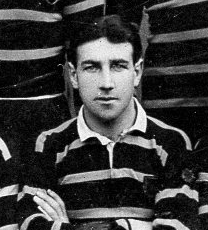
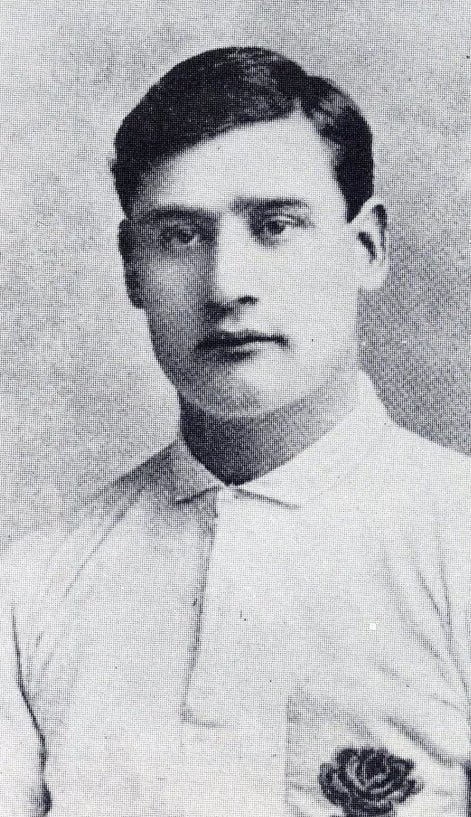
To begin to see why all this might be so, we need to begin with a discussion of Cornwall’s very first Championship campaigns, which were less than inspirational, to say the least.
They’d first entered the South Western Division (joining Devon, Somerset and Gloucestershire) of the County Championship in the 1892-3 season, and for some years following had been the region’s whipping boys.
From that inaugural year up to the start of the 1900-01 season, they’d played 23 matches…and lost each one3.

In the press, resignation was prevalent. Before the 1893-4 fixture against Devon, the pundit ‘Spectator’ had already thrown in the towel:
Victory will undoubtedly rest with the Devonians…
Cornish Post and Mining News, November 24 1893, p3
Spectator was correct. At Exeter, Devon stuffed Cornwall 38-3, majorising four of an eyewatering six tries.
That said, Cornwall were in a tough draw. After the formation of the Northern Union in 1895 had broken the dominance of the Lancashire and Yorkshire XVs, Rugby Union’s power-base switched to the West Country. In the years John Jackett played for Cornwall (52 times from 1898-1911), Devon won the Championship in 1899, 1901, 1906 and 1911. Gloucestershire won in 19104.
Cornish insularity, hostility to the CRFU and inter-club rivalry were contributory factors to Cornwall’s poor showings too.
On the eve of the Devon match mentioned above, two Penzance players were named in the line-up5. In the event, the club withdrew their players’ services in protest at the CRFU’s decision to move the venue of the forthcoming fixture against Gloucestershire from Penzance to Redruth, their committee arguing that
…the removal has been done improperly and illegally.
Cornish Telegraph, November 30 1893, p5
Although 1897’s campaign was another whitewash, the journalist ‘Impartial’ (who was anything but) saw a glimmer of hope – and an opportunity to have a sly dig at Devonport Albion, a club long suspected of acquiring players by offering them cushy local jobs6. Cornwall had
…shewn a bolder front to their opponents. With a few big industries (a dockyard for instance) we shall be able to cope with the adjacent shires…
Cornishman, April 21 1898, p6
Was it time to be even bolder? Blood some youth? What did Cornwall have to lose?
By October 1898, Falmouth’s twenty year-old full-back John Jackett was a Cornwall player, and was being tipped for a bright future7. The upturn in the team’s fortunes though was far from immediate. Cornwall only registered their maiden Championship victory, against Somerset in the 1900-01 season. 3,000 in Redruth witnessed the two tries to nil win. Jackett played a prominent role:
…the Falmouthian did all that was required of him in a style unequalled by any custodian turned out by Cornwall…Jackett…came out of the ordeal with flying colours.
‘Touch’, Cornish Telegraph, November 14 1900, p8
(Also playing well that day was a young fly-half from Redruth, James ‘Maffer’ Davey.)
This victory however was a false dawn. Cornwall didn’t win another Championship fixture until the 1904-5 round, when they beat Gloucestershire 18-9 in Bristol8.
It was Jackett’s first game as captain. By now, he had had playing experience with Plymouth and Devonport Albion. He would shortly sign for the formidable Leicester Tigers and be selected for England. In other words, he was hitting his peak. It was therefore no coincidence that this was also the beginning of a new era for Cornish rugby. Belief. Flair. Success.
And it was John Jackett who threw down the gauntlet. Here’s his opening statement – at 10 – in that match. There was
…a sensational incident, for from the first scrimmage J. Jackett slipped past Butcher and found a clear field in front of him, save for the full back. On reaching the latter, he punted, and then ensued a foot race for the line…
‘The Bounder’, Cornish Echo, November 4 1904, p2
It didn’t, alas, result in a try, but Gloucestershire were stunned. Cornish XVs didn’t normally play with such gay abandon. Jackett gave his men confidence, coupled with a fast, open game plan based on what he’d seen at Devonport Albion and would shortly experience with Leicester. This is how it’s going to be.
With handling “worthy of a first-class Welsh team”9, Cornwall were easy winners, Jackett kicking the crucial three goals which bested the home XV’s three tries.
He’d been given the tools for the job too. The CRFU had for once picked a team based
…on form, instead of reputation…
‘The Bounder’, Cornish Echo, November 4 1904, p2
And four of those form-horses that day would be with Jackett in 1908: his brother Dick, the wing Barrie Bennetts (Penzance and Richmond), and two more forwards, Nick Tregurtha of St Ives and John G. Milton of Camborne School of Mines. (Bennetts and Milton would also win international honours10.)
They went on to beat Somerset, but came unstuck against Devon. Jackett, maybe not a natural 10, was criticised in both games for demonstrating the fly-half’s cardinal sin: greed11.
Cornwall reached the playoffs, did the double over Somerset, but once more Devon proved the stumbling block. Jackett’s men had failed to win the South West Division, but Cornwall had notched up their most successful Championship to date12.
They were no longer the South West’s makeweights. They were competitors. But it was Devon, always Devon, that thwarted them. In 1905-6 they lost 19-0 in Devonport; in 1906-7 they were on the wrong side of an agonisingly tight 8-6 scoreline at Camborne13.
Cornwall had never beaten Devon in the Championship. If they wanted to progress, they would have to overcome one of the strongest XVs in the whole Championship.
*
The 1907-8 campaign started well. Somerset were hammered 25-6 in the opener at Taunton. Jackett by now had reverted to 15, with cross-kicks that held The Cidermen back. A youngster from Redruth, Bert Solomon, was a constant threat in the centre. Also, a Leicester team-mate of Jackett, as big and physical as brother Dick, who claimed he was Cornish and said his name was Fred Jackson (which it wasn’t), kicked five goals14.
But then it unravelled in Plymouth against their old nemesis, Devon, who won 17-8 in atrocious conditions. Their pack dominated, which gave the Devonians’ scrum-half, Raphael Jago, an open invitation to make a real menace of himself. Starved of decent possession, Maffer Davey, recently returned from the Transvaal15, had a game to forget at 10. Bert Solomon’s partner at centre failed to create space for the wunderkind to work his magic.
Jackett was one of the few to finish the game with any credit. Cornwall were gutted. Not another season as bridesmaids.
There was a glimmer of hope: if Somerset lost to Devon, and The Pasties beat Gloucestershire, the latter three XVs would have to meet again to determine the South West’s champion16.
In a roundabout way, it was at this point that Cornwall’s luck began to change. A frozen Redruth pitch postponed the Gloucestershire fixture. Gloucestershire appealed to the RFU, arguing that, as Cornwall had failed to protect their pitch, they (Gloucestershire) ought to be given home advantage for the rearrangement.
They weren’t, and the postponement meant that Jackett, at first doubtful, could make the rearranged date. On Saturday January 25 1908, a crowd of 5,000 in Redruth watched Cornwall hand the reluctant visitors a 34-10 beating17.
To the playoffs. Devon were coming to Redruth.
It’s one of those fixtures where you wish you had been there with the other 6,000 fans to watch, or at least be lucky enough to stumble across some archive footage of the match at Kresen Kernow. For Cornwall finally realised
…the ambition of years – to thrash Devon…
West Briton, February 17 1908, p3
Jackett, as was his wont on winning the toss, elected to play uphill in the first half: let them come at us, then we’ll have a crack later on. His display overall was described as “faultless”. Fred Jackson’s kicking saw him carried off the field by a delirious mob. Maffer Davey was a general at 10. And yes, Bert Solomon scored that try:
He feinted to send Bennetts in, and the latter was so perfectly deceived that he actually proceeded to dive for the line…Solomon then with a clear course coolly romped over…
West Briton, February 17 1908, p3
Cornwall 21, Devon 3. No longer world-weary harbingers of doom, the Press were talking up the Cornishmen as likely winners of the whole Championship. What of Gloucestershire, next victims in the playoffs?
…[they] will have to show a vast improvement on their form of a fortnight ago to make even a draw of it.
West Briton, February 17 1908, p3
And what of Middlesex, potential opponents in the semi-final? They were dismissed as mere
…Varsity men and public school boys, who will probably crack up when opposed to the hurricane tactics of the Cornishmen…
West Briton, February 17 1908, p3
Not only were Cornwall going to win, they were going to rough up some toffs. The Cornish rugby identity was already resolutely working class – and proud of it.
Gloucestershire lost at home 15-3, giving Cornwall the South West Division18. The CRFU won the toss to decide the venue of the semi against Middlesex. Cornwall would have home advantage. The burning issue was, which club would have the honour of hosting? The CRFU’s Hon. Secretary, W. Dennis Lawry (a Penzance man), proposed Redruth.
A Falmouth representative proposed his own club, stating
…Redruth had had its share.
Cornishman, February 27 1908, p4
Falmouth threatened to boycott the CRFU when their proposal was dismissed. Redruth’s representative, William Hichens19, played the martyr. Getting the ground ready for such a big fixture was a “great amount of work”, but
…they should do everything for the team…He would sink his own feelings and take on the work again.
Cornishman, February 27 1908, p4
Furthermore, John Jackett
…had said that he knew every inch of the [Redruth] ground, and that was a very important thing…
Cornishman, February 27 1908, p4
Redruth’s slope fitted his gameplan.
Camborne grumbled too, and expected to host the Final – nobody seemed to doubt Cornwall would make it. But for now, Middlesex would come to Redruth. Hichens made a show of rolling his sleeves up…and doubtless afforded himself a smug grin in private20.
Jackett won the toss, and made his team play uphill first. After a tight initial forty, it was a try apiece. However,
Gradually the homesters wore down the visitors…
Cornish Echo, March 13 1908, p8
John Milton, a South African-born, six-foot, 15-stone beast of a forward, took two Middlesex men with him over the line. Shortly after, swift passing ignited by Maffer Davey put Bennetts in on the wing. Another try in the closing minutes was the coup de grace.
Cornwall 19, Middlesex 3. It might have been closer, were it not for John Jackett. He was judged
…a tower of strength…he saved his side as no other full back in England could possibly do…
Cornish Echo, March 3 1908, p8
This set up the Final, against Durham.
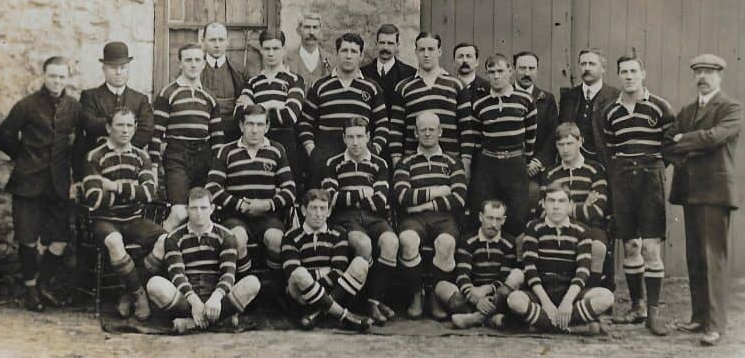
Cornwall’s XV for the Final contained seven men who had been, or would shortly be awarded, international honours. It also contained four from Devonport Albion, which amply demonstrates how ‘attractive’ a club it must have been. Wing Barrie Bennetts, scrum half Tommy Wedge, Bert Solomon and mining students Arthur ‘Ajax’ Wilson and John ‘Jumbo’ Milton all represented England. John Jackett and Maffer Davey played for England and toured with the British Lions. Fred Jackson, though not capped by England, went on the same 1908 Lions Tour as Jackett and Davey21.
Additionally, Dick Jackett had been an international trialist, and is reckoned to be the best player never to win recognition by England22.
This is surely the greatest Cornwall XV. It needed to be. Durham boasted six internationals themselves, and ‘The Monkey Hangers’, as they were known, had been County Champions in 1900, 1902, 1903 and 1905 (they shared the title with Devon in 1907)23.
This was the game of the season. The two best sides in the land. Today’s equivalent would be the Gallagher Premiership Final.
As with the Middlesex match, Cornwall had drawn home advantage. Predictably, within the CRFU debate raged as to which club would host the great occasion.
Charles Bryant, of Camborne RFC, proposed his ground. Improvements had been made to the facilities, and besides,
To have four matches at Redruth and none at Camborne is not a fair nor a proper thing.
Cornubian and Redruth Times, March 19 1908, p3
Clearly Bryant couldn’t give a tinker’s damn about the hopes or merits any other rugby club in Cornwall had of being hosts. William Hichens stamped all over his proposal. Gone was his feigned reluctance to preside over yet another county match:
They [Camborne] did nothing until they saw everything was going successfully at Redruth…such a puerile argument…
Cornubian and Redruth Times, March 19 1908, p3
Hichens claimed to have the players’ interests at heart, but Bryant was far from pacified:
You take it we shall not continue members of this Union if you have all the matches at Redruth…
Cornubian and Redruth Times, March 19 1908, p3
This was not the last time Bryant and Hichens locked horns, nor the last time Camborne threatened to quit the CRFU24.
Ultimately, Hichens and the team’s sentiments held sway. Jackett had been approached on whether the venue ought to be changed for the Final. His response was succinct:
Certainly not…
Cornubian and Redruth Times, March 19 1908, p3
Redruth it was. The West Briton‘s big game preview ran profiles of the Cornwall XV. Here’s what ‘The Celt’ said of John Jackett:
He is perhaps the soundest full-back that has represented England in recent years for he possesses great kicking power, fine judgment, and is a deadly tackler…
March 26 1908, p3
This match would be the pinnacle of his four years as leader of Cornwall. He’d taken them from tournament also-rans to being one victory away from the accolade of The Best in the Land. Yes, he’d played for England. Yes, he’d led his Cornish XV against the All Blacks and the Springboks. He was doing great things at Leicester.
But in a few months, John Jackett would be thirty. Not the young gun anymore. There surely wouldn’t be many more chances, if any, to lead Cornwall in a Cup Final, to win some silverware. To be the first. To make history.
He must have wanted it badly.

So did his team. So did the 17,000 spectators shoehorned into hastily-erected stands in Redruth. This was easily the club’s biggest gate until the 1969 Final, when an estimated 23-25,000 were packed in to watch Lancashire win 12-9. As we have seen, county matches regularly drew crowds of between 3-6,000, but 1908’s gate was off the scale. Crammed in amongst the fans that day was a young lad from Four Lanes, Bill Osborne, who would, where watching Cornish rugby was concerned, have the happy knack of being in the right place at the right time25.
Not that they were all there to cheer on Cornwall. A member of the Durham contingent displayed their mascot – a lynched toy monkey – on a very visible gallows: the crossbar of one of the goalposts.
For balance, a pasty in a paper bag was strung up on the ‘posts at the opposite end of the pitch.
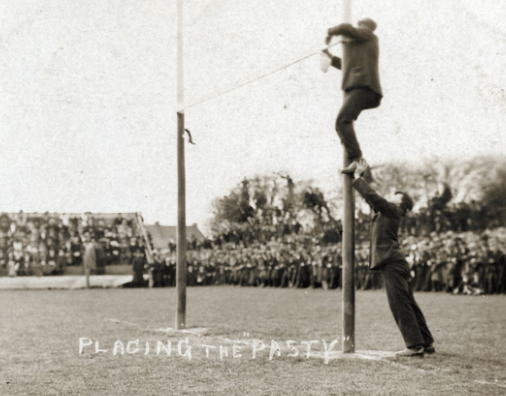
The reporters present (and here we can imagine ‘Impartial’, ‘The Bounder’ et al) suffered the indignity of having some railings crash on them, suspending play for a time. Finally, all was ready.
The ground was firm, which suited Cornwall’s fast play. Durham had won the toss, and elected to start downhill. Jackett gave his best poker face. Fine with us, boy.
From the get-go, he was on it. Cornwall’s tactics – indeed, Jackett’s own – were to absorb pressure in the first half and catch their opponents on the break. It required steely resolve, and a full-back up to the task.
That was Jackett. His trademark (said trademark being a great distance) kicks relieved the pressure. His tackles kept Durham honest, and their scoreboard quiet. Rushes were stopped. Dribbles cleared up. And, when the opportunity came, the flair men were waiting. Durham cleared messily, and Bennetts pounced, putting Solomon in for a try. Jackson failed to majorise.
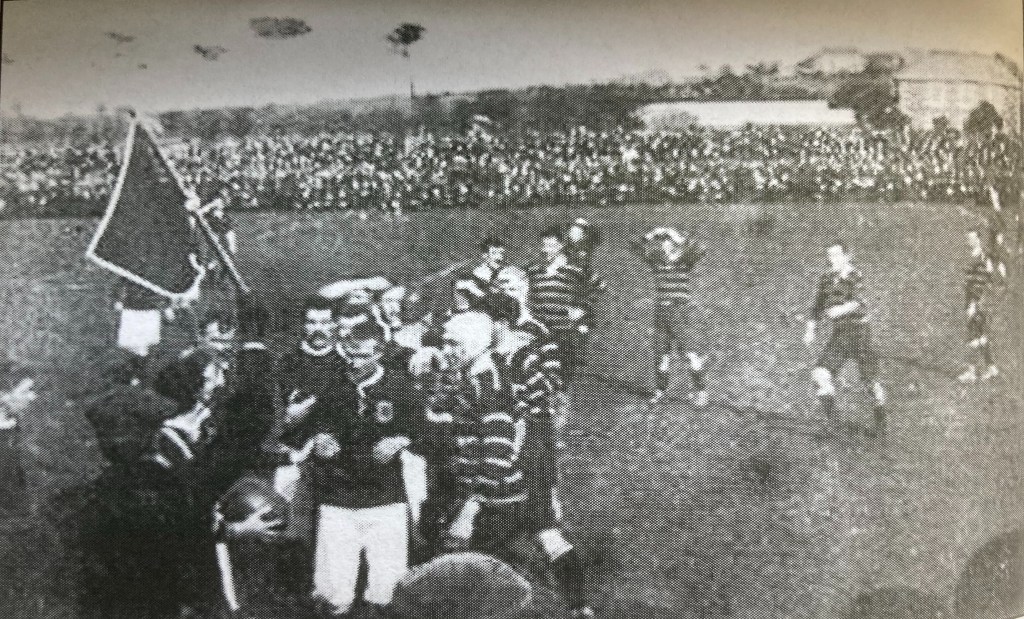
More pressure from Durham. More last-ditch efforts from Jackett. Another Durham attack – and Solomon intercepted, drew the 15, and put in Bennetts for a second try. Jackson walloped over the conversion.
Excitement was mounting. Is it our day?
Jackett was punishing Durham, his kicks covering half the pitch. Time and again the visitors’ heavy forwards had to turn and trudge back up the slope after another Jackett bomb had sailed over their heads.
Half time. Cornwall led by a goal and a try to one penalty.
The second half followed the first, except Durham were now playing against the gradient, and had to chase the game. Jackett by now was torturing the Monkey Hangers, his punts keeping them exclusively in their own 25.
And then it happened.
Solomon broke from a Davey pass, with Bennetts outside him. In a similar situation, previously Solomon had passed to his wing, but not this time. The dummy. The swerve. The acceleration. The uproar in Redruth as Solomon ghosted over the line, a brace of Durham defenders trying in vain to halt a phantom. Photographers were on hand to immortalise what has become the Final’s seminal moment.


Although Nick Tregurtha bagged another try late on, Solomon’s score put the result beyond doubt. Durham had barely got to the half-way line in the second half – thanks to John Jackett.
Cornwall 17, Durham 3. History had been made. Jackett was more than aware of his XV’s monumental achievement. In Cornwall, he later said, rugby is
…not of the first class…[teams] are composed mostly of miners and fishermen, and the way they make up their fixture lists is to play each other three or four times a season…So you can well see why Cornwall should always be more or less a weak rugby county…
Yorkshire Evening Post, February 3 1912, p3
In an era when the RFU was consciously trying to eradicate working-class influences from the game, Cornwall’s victory with ‘miners and fishermen’ was a sweet kick in the face of The Establishment. Jackett, in flagging up his players’ backgrounds and the circumstances of Cornish rugby, realised this.
John Jackett did many great – and several controversial – things in his life. But ‘Cornwall, County Champions, 1908’, has to be his greatest achievement.
Fred Jackson might have kicked 38 points in the competition prior to the Final28. The Final itself might be remembered as Bert Solomon’s match, and he was indeed the “outstanding star” on the day29.
But John Jackett gave
…an International display…No one knows better than the forwards what an advantage such a sound touch-finder is…Time after time he gained three parts of the field with his kicking…
West Briton, March 30 1908, p4
Add to this his tackling, his nous, his leadership, and you begin to realise that Cornwall could not have done it without him.
If you think this presumptuous of me, in 1909 Cornwall were the Championship Finalists again. Again, their opponents were Durham. This time, however, the venue was Hartlepool.
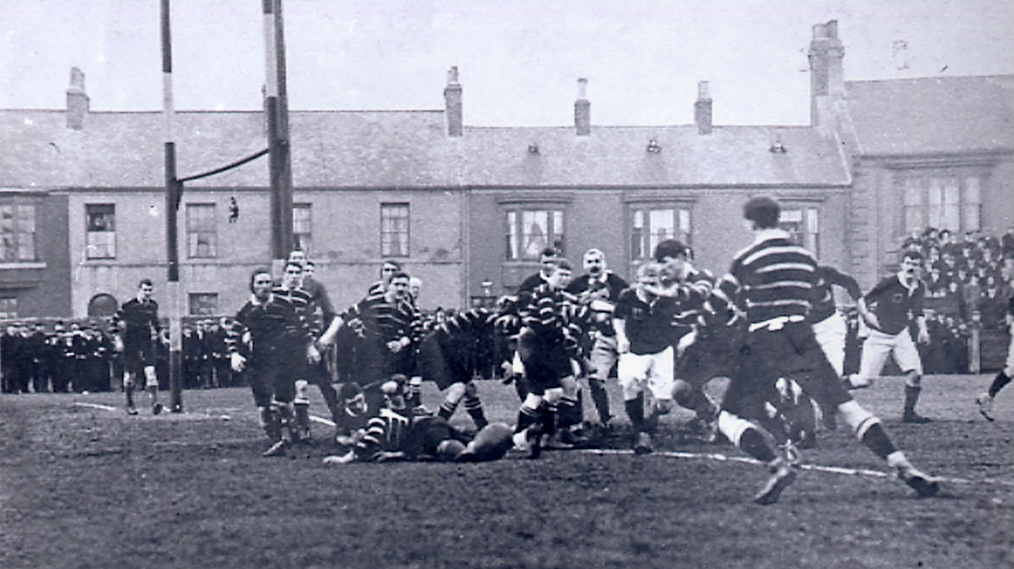
This time, Cornwall lost, 12-0. This time, Jackett played through injury. This time, as a result, his kicking wasn’t up to scratch.
But no matter. At the post-match dinner it was anticipated that the two XVs would line up in next season’s Final, and that Cornwall would win…31
A below-par Jackett was also evident when Cornwall played Australia at the White City Stadium in the 1908 London Olympics.

The whole tournament was something of a farce. Only two XVs – Cornwall and Australia – entered, with France failing to raise a side. Thus only one match was played. Cornwall lost 32-3, but were guaranteed silver medals.
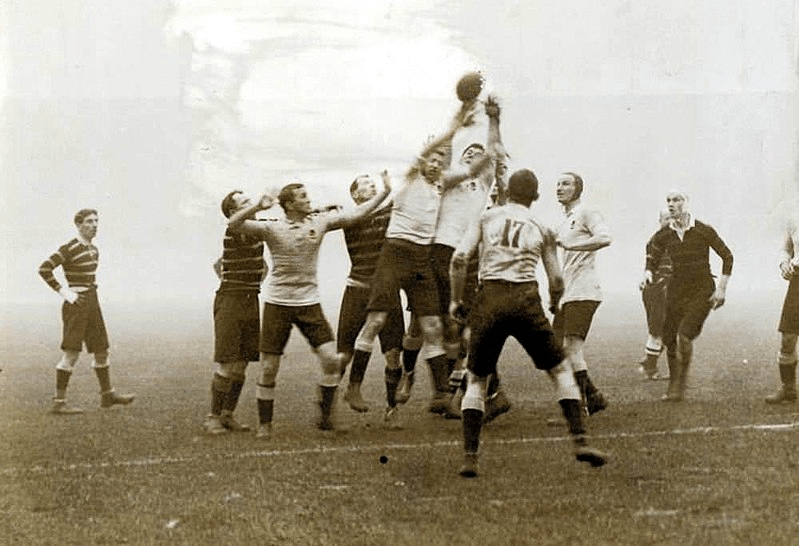
Jackett, along with Maffer Davey, had only recently returned from New Zealand with the British Lions. His play, for once,
…was a disappointment and seemed stale…
Cornish Telegraph, October 29 1908, p8
No doubt he was exhausted, and out of condition after weeks spent at sea. He didn’t even get a consolation medal. Only one was ever awarded, and the players drew lots for it. The lucky winner was St Ives’ Thomas ‘Chicky’ Wedge, and to this day the medal remains at his old clubhouse34. Here’s a replica:

After 1909, Cornwall would reach the Championship Final in 1928, 1958, 1969 and 1989. But it wouldn’t be until 1991, against Yorkshire at Twickenham, that they would again be victorious. Bill Osborne, the lad who saw the 1908 triumph in Redruth, was 103 in 1991 and witnessed that Final too. He watched Chris Alcock’s Cornwall do something that, at the time, only John Jackett and his ‘miners and fishermen’ had also managed, 83 years previously35.
They must have both been sweet moments.
Many thanks for reading; follow this link for more top blogs on all things Cornwall: https://blog.feedspot.com/cornwall_blogs/
Do you enjoy my work?
All content on my website is absolutely FREE. However managing and researching my blog is costly! Please donate a small sum to help me produce more fascinating tales from Cornwall’s past!
Your contribution is greatly appreciated.
DonateReferences
- For more on Jackett, see: https://the-cornish-historian.com/2024/06/29/in-search-of-john-jackett-king-of-cornish-sport-part-one/. For more on Solomon, see: Bert Solomon: A Rugby Phenomenon, by Allen Buckley, Truran, 2007.
- Images from: https://www.trelawnysarmy.org/ta/Pictures/cornwall-team-1908.html, and https://cornwallyesteryear.com/cornish-rugby-once-a-way-of-life-by-michael-tangye/
- Tom Salmon, The First Hundred Years: The Story of Rugby Football in Cornwall, CRFU, 1983, p115.
- For the full list of winners, see: https://en.wikipedia.org/wiki/County_Championship_(rugby_union)
- Cornish Post and Mining News, November 24 1893, p3.
- For more on Albion’s activities, see: https://the-cornish-historian.com/2024/02/03/the-great-cornish-rugby-split/
- He took part in a trial in October; by November, he was making his debut against Devon – as a Penzance player. Cornish Post and Mining News, October 21, p5, and November 3, p5.
- For the results, see Tom Salmon, The First Hundred Years, p115.
- ‘The Bounder’, Cornish Echo, November 4 1904, p2.
- For more on Barrie Bennetts, see: https://en.wikipedia.org/wiki/Barrie_Bennetts. For more on Milton, see: https://www.bedfordschool.org.uk/head-masters-assembly-values/. For more on Tregurtha, see: https://en.wikipedia.org/wiki/Nicholas_Tregurtha
- Cornish Echo, November 18 1904, p6; West Briton, November 28 1904, p3.
- Cornishman, March 30 1905, p6.
- Tom Salmon, The First Hundred Years, p116.
- Cornubian and Redruth Times, November 7 1907, p3. The story of Fred Jackson, who played with Jackett at Leicester and the 1908 British Lions, is one of the most fascinating in all sport. See: Tom Mather, Rugby’s Greatest Mystery: Who Really Was F. S. Jackson?, London League Publications, 2012, and https://the-cornish-historian.com/2024/07/20/in-search-of-john-jackett-part-four-the-king-of-cornish-sport/
- For more on Davey, see: https://en.wikipedia.org/wiki/James_Davey_(rugby_union)
- Cornish Telegraph, December 12 1907, p3.
- The CRFU had to front Gloucestershire’s expenses as a slap on the wrist for neglecting the Redruth pitch – but must have been mighty glad to retain home advantage. Lake’s Falmouth Packet, January 24 1908, p6; Royal Cornwall Gazette, January 30 1908, p7.
- West Briton, February 24 1908, p4.
- Hichens was formerly President of the CRFU from 1896-1905, and also President of Redruth RFC from 1893-1903. Not renowned for his diplomacy in CRFU meetings, another taste of his style can be seen in an article of mine here: https://the-cornish-historian.com/2024/02/03/the-great-cornish-rugby-split/
- Cornishman, February 27 1908, p4.
- For more on Barrie Bennetts, see: https://en.wikipedia.org/wiki/Barrie_Bennetts. For more on Milton, see: https://www.bedfordschool.org.uk/head-masters-assembly-values/. For more on ‘Chicky’ Wedge, see: https://en.wikipedia.org/wiki/Thomas_Wedge_(rugby_union). For more on Davey, see: https://en.wikipedia.org/wiki/James_Davey_(rugby_union). For more on Solomon, see: Bert Solomon: A Rugby Phenomenon, by Allen Buckley, Truran, 2007. For more on Wilson, see: https://worldrugbymuseum.com/from-the-vaults/players/lest-we-forget-arthur-james-wilson-england-31-07-1917. For Fred Jackson’s amazing story, see: Rugby’s Greatest Mystery: Who Really Was F. S. Jackson? by Tom Mather, London League Publications, 2012.
- See his obituary in the West Briton, July 28 1960, p4.
- For a grisly explanation of the ‘Monkey Hanger’ moniker, see: https://www.historic-uk.com/HistoryUK/HistoryofEngland/The-Hanging-of-the-Hartlepool-Monkey/. For a full list of County Champions, see: https://en.wikipedia.org/wiki/County_Championship_(rugby_union)
- See my post on the subject here: https://the-cornish-historian.com/2024/02/03/the-great-cornish-rugby-split/
- Unless otherwise stated, the narrative of the Cornwall-Durham Final is taken from the West Briton, March 30 1908, p4. The information on the 1969 Final is from: https://en.wikipedia.org/wiki/County_Championship_(rugby_union)
- Image from: Tom Mather, Rugby’s Greatest Mystery, p26.
- The first image is from Hellfire Awaits: 150 Years of Redruth RFC, by Nick Serpell, Pitch Publishing, 2025, the second from Tom Salmon, The First Hundred Years, p6.
- West Briton, March 26 1908, p3.
- West Briton, March 30 1908, p4.
- Image from: Image from: https://worldrugbymuseum.com/from-the-vaults/club-rugby/durham-countys-golden-era
- West Briton, March 29 1909, p3. As of 2024, Cornwall have won the Championship in: 1908, 1991, 1999, 2015, 2016, 2019 and 2022. They have been runners-up on eleven occasions. Information from: https://en.wikipedia.org/wiki/County_Championship_(rugby_union)
- Image from: https://en.wikipedia.org/wiki/White_City_Stadium
- Image from: https://en.wikipedia.org/wiki/Rugby_union_at_the_1908_Summer_Olympics
- See: https://en.wikipedia.org/wiki/Rugby_union_at_the_1908_Summer_Olympics#
- As mentioned in Nick Serpell’s Hellfire Awaits: 150 Years of Redruth RFC, Pitch Publishing, 2025, p120-1.
 Francis Edwards ~ The Cornish Historian
Hello! I’m not sure if my message got through. I am a great fan of your research/writing, and would like to send a donation, if you have a PayPal account? Please let me know. Very best wishes, Rhona Smythe
LikeLike
Dear Rhona, lovely to hear from you and delighted that you enjoy my blog! Sorry I’m looking into the PayPal thing and will let you know when it’s been sorted. Thanks so much for your support – every bit helps me to keep writing! Regards, Francis
LikeLike
Dear Francis, Good to hear! I’m sure you wouldn’t regret setting up PayPal. It’s a tiny bit fiddly with the bank at the start – but thereafter you can use it safely to pay or be paid, without giving out bank or card details, and at no cost. (I believe business transactions incur a fee, but charitable/ well-wisher/ friend donations don’t.) Please let me know if you pursue it and succeed! All the best meanwhile, Rhona
LikeLike