
Reading time: 30 minutes
We built something up that was world class. From Cornwall. ~ Richard Pascoe
Alright, rosbif? ~ Bernard Hinault
I meet Richard, or Ricci as he’s known in the cycling world, at the Saint Piran Café and Bike Hire, Bissoe1. Driving from the west, you go through Scorrier, Crofthandy, Wheal Maiden, United Downs and the Bissoe Valley. You’re certainly off the beaten track, and when arriving I was put in mind of the remote cycling hubs you’d normally expect to run across in the Forest of Dean. Though it’s an early morning in March, the place is bustling with dog-walkers, joggers and hardy cyclists. It’s easy to imagine biking one of the numerous trails hereabouts on a hot summer’s day, returning in the early evening when the sun is hitting the numerous picnic tables, and enjoying some well-earned refreshment. (They’re licensed, before you ask.)
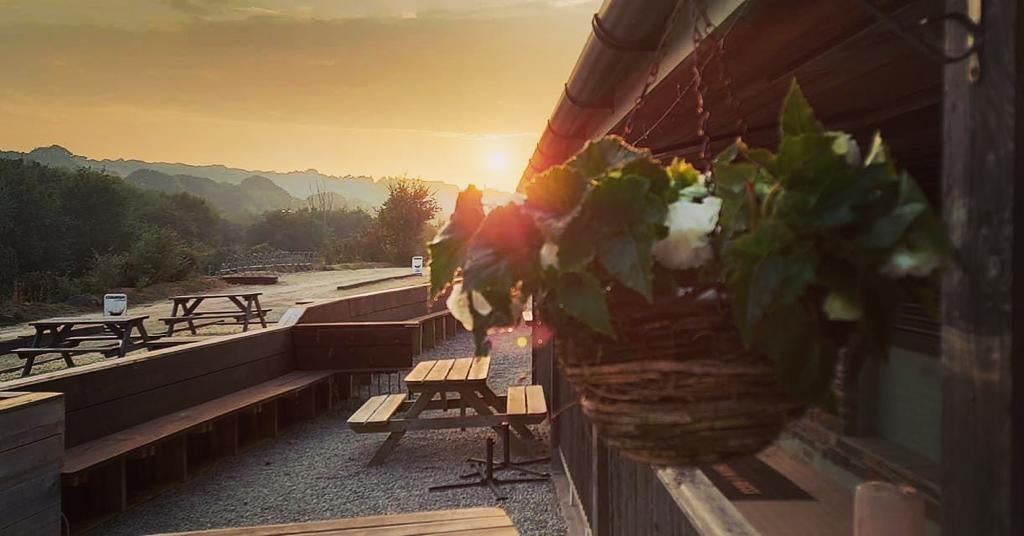
I’ve time to reflect on this because I’m slightly early, and Richard is slightly late. If I’m being honest, I count myself lucky to have secured this interview, because Richard Pascoe is a significant figure in not just Cornish, but British cycling too. He’s a successful businessman; besides the Bissoe venture he’s meeting me at, he’s owned the Bike Chain at Mount Ambrose for 40 years. Soon he’ll also be opening a Saint Piran Service Course store at the old Mining Exchange in Redruth, as part of the Buttermarket redevelopment2.
Think about it: Saint Piran at a mining exchange. You couldn’t be more Cornish if you tried. And Richard Pascoe is all about Cornwall.
But remember I said British cycling. In the early 2020s, Richard’s Saint Piran Pro Cycling outfit was one of only two teams in Britain operating on the UCI Continental Tour (Ineos Grenadiers are two steps above this, at World Tour level). They raced in around 30 events annually and placed 6th on General Classification in the 2023 Tour of Britain. One rider in Richard’s stable, Charlie Tanfield, won the Team Pursuit Silver Medal at the 2024 Paris Olympics. Another, Jack Rootkin-Grey, is now a World Tour rider with EF Education. Richard counts Mark Cavendish and Sir Bradley Wiggins as friends. He’s done charity rides with Stephen Roche. He’s ridden mountains with double Tour de France winner Alberto ‘The Kid’ Contador, whom he later describes as being able to climb ‘like an angel’3.
Now, he’s about to meet me. I’m hardly William Fotheringham or Daniel Friebe, but I am Cornish, and Richard likes my work. Plus, I suspect that, for one reason and another, he isn’t overly keen on being interviewed by Cycling Weekly nowadays. Call it intuition.
In he comes, bringing more hustle and bustle with him, greeting his team, greeting everyone. The man exudes garrulous energy. He sees me, cracks a joke, orders coffee and porridge, and we’re off. But he takes a while to settle. He fidgets. He checks his phone. You get the impression of a man spinning several plates at once, which is understandable because that, metaphorically speaking, is exactly what he’s doing. Gradually, the concerns of the morning shift to the background…
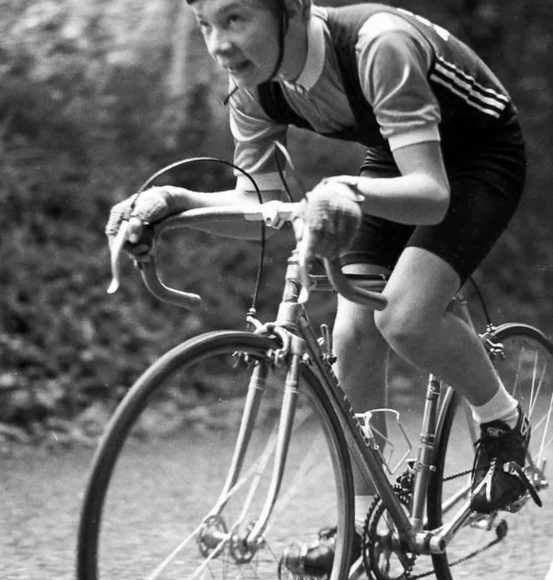
A Redruth boy, Richard showed early promise at chess, and as a scrum-half played rugby to a high standard, being coached by Redruth and Cornwall greats Harold Stevens and Terry Pryor. Richard graduated from Lancaster University in the early 1980s with a degree in Management Sciences, but at this stage running a business was far from his mind:
It was to cycle and train harder for another three years…when you’ve got an ambition, follow it. Was it [the degree] a fall-back? Yeah, course it was!
While in Lancashire, Richard joined CC Bowland, and within a year had achieved elite-level racing status. For all his self-deprecation, he clearly had guts and talent. In 1986 he finished 9th in the 94-mile Battle of Sedgemoor, in Somerset. Conditions were so bad only 23 of the 44-strong field finished5:
I wasn’t particularly talented at one thing, but pretty good in most…I could repeat a lot of things. I could continually close a gap, or do a sprint, repeatability was probably one of the good things that I could do. But to be honest, on the big mountain stages, and the climbers were top ten over the mountains, I’d be 12th, or of it was a sprint, the top five sprinters would be first, and I’d be sixth…so always on the edge of things. I had a very talented brain, I could read a race, feel a race, but you’ve got to have the minerals to do it as well.
I did go from third to first category in a year, there were 50 of us in the country at the time out of 10,000 cyclists. But I probably tried stepping up too soon, going abroad…I probably should’ve taken more care and built up more of an endurance base…but you follow your dream, don’t you? You’ve got to live in France and go and race!
The 1980s saw professional cycling, and the Tour de France in particular, become more cosmopolitan. In Britain, Channel 4 began broadcasting the race, a move which coincided with the emergence of several non-continental cycling stars: Sean Kelly, Stephen Roche, Robert Millar, Sean Yates and of course Greg Lemond6:
There were some pretty iconic figures then…but there are some very good characters around now, every year there are exceptional people, world-class people…look at Cavendish, he was media gold, he would say it as it was, and Bradley Wiggins? I’d say we’ve become quite good friends, we’ve had some ups and downs, last year’s Tour of Britain, we probably spent four or five hours together, sitting drinking coffee, talking about life…what a character!
But Lemond…he went to France and spoke English, there was Kelly, there was Roche, I’ve been fortunate enough in my lifetime to become acquainted with some of them, it’s quite nice to share your stories.
Like Lemond, Richard went to France, more precisely Brittany, but came equipped with more than a smattering of the native tongue:
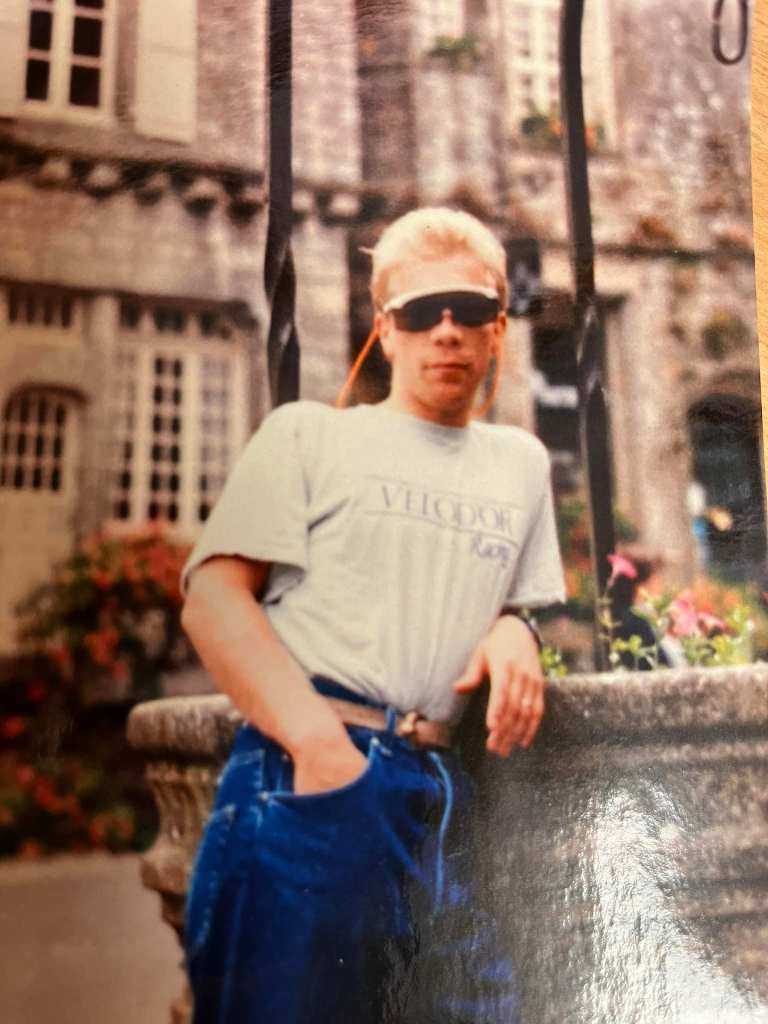
When you’re on a team of young lads, you don’t want to be just saying ‘yes’ or ‘no’ at breakfast…I speak French like a Spanish cow now! I lived with a family, which was great, they were really good to me. I called them my French family, they were well immersed in Brittany, in cycling…eventually I lived in the Palais Saint-Georges [in Rennes], which was effectively the fire station, and literally it looked like Buckingham Palace. I had my own room in the rafters, I think the ceiling height was something like 40 feet, what an impressive room!
Below is an image of Richard’s digs when in Rennes. Small wonder he looks back on that time with fondness:

He had a career to pursue as well, signing up for CC Rennes, a feeder club for a more prestigious outfit:
They linked straight into La Redoute-Motobécane8…the French system was very interesting, little bit like rugby to a certain extent in Cornwall and the South West, you would have a team attached to a pro team, say five feeder teams, feeding that pro team, and those setups still exist today.
I think we can learn a lot from France, and Belgium. We should be incorporating some of their structure into the UK…on the World stage we’re doing fantastic, domestically I think the scene has got some way to go.
It’s apparent that, no matter where you’re from, one thing counts in professional cycling. How you race:
I was never at the front of the race, when the good guys were riding, I never saw them! But when you’ve grovelled in the gutter, we used to call it riding on the rivets, (‘cos years ago they used to have rivets on the end of saddles), then that makes you one of the brethren. I found, that if you made the effort with the French, they would treat you as family…but they always loved a winner, if you were winning they loved you, and if you weren’t winning…but if you made the effort, and you spoke to people, it’s just human dignity and manners.
Though trying to immerse himself in French culture and the local racing scene, Richard could always count on a familiar face if things got tough:
At the time, we were classed as sort of semi-pros, at one stage we had eight first category cyclists in Cornwall, with a little bit of Devon, out of the 50 in the UK, so that was huge. Danny Deakin was on an elite licence, Gary Bryant from St Austell…Nick Giles lived in Newquay. There was five or six that came through, which was exceptional for a county of this size, but I think that gravitated around what my father [Len Pascoe] did. Then there were pockets of really good people, at Redruth School you had Chris Raine, that set up Redruth Cycling Club, there was 30-40 of us there.
Once you got the schools primed, people take to it. It’s a very individualistic sport, you show a little bit of talent, you then go where the races are, ride better races, then you get selected…so that regional basis was probably as strong as what I’ve known in my lifetime.
So Danny and I were very good friends, we would meet up at a race, and it was amazing. You’d try and skulk at the back and chat, which you couldn’t do, because you had to speak French all the time!

Or maybe have a breather. It’s stating the obvious, but professional cycling is one of the most extreme sports on the planet. As Robert Millar said,
Most bike riders at that level aren’t normal human beings. What they are thinking and how they go about what they want to do are not what a normal person would call nice or sane.
William Fotheringham, Bernard Hinault and the Fall and Rise of French Cycling, Yellow Jersey Press, 2015, p161
This was the milieu in which Richard found himself:
You were either full-time, in which case you were in one of the five or six essentially French pro teams, and then if not you were then sitting in one of the feeder structures. So it was almost like a downgrade, you’d be called an elite rider in the UK, it was almost like they’d kick you down [in France] to make you prove yourself. So you’d ride all the place-to-place races, they’re called sort of semi-classics, they’re two steps away from the big stuff, which is your dream.
My first year, I look back, and I think I raced 72 times. So if you think each race was over 100 miles, for four hours, and you were doing three races a week, probably too many! Your races were always 400 miles a week, so 20,000 miles a year, which was your base.
As we’ve learnt, certainly in recent years, it’s about looking at performance, and looking after the individual, it’s not all about the miles.
Richard rode before the use of banned blood-booster EPO became rife in the pro peloton during the 1990s. I fell out of love with the Tour de France in those years because it seemed to me that what I was watching onscreen wasn’t real, it was in some way enhanced, or false. Lance Armstrong, Bjarne Riis, Floyd Landis, Marco Pantani, the Festina scandal…It was only later that, instead of shunning the sport, I tried to understand just why these men took the steps they did, to cheat en masse. The answer lies within the nature of the sport itself, the driven, single-minded nature of the men at cycling’s peak, and the massive financial incentives dangled in front of them. What I found, sadly, is that no generation is entirely clean10.
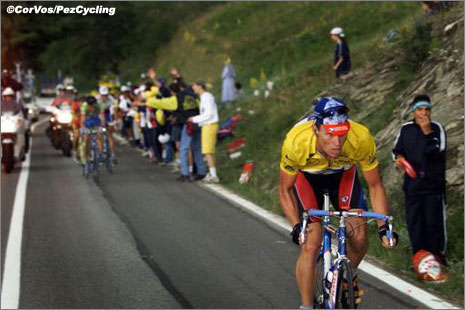
Considering this, Richard is really choosing his words:
It’s really difficult…You’ve got to be good to race at the top level anyway, so whatever you’re doing isn’t going to dramatically change your performance, you still have to have the gene-pool and you have to have the minerals.
It was a time that was…look, it’s a brutal sport, and I’ve seen it as a mentor of world-class cyclists, if you don’t perform, there’s no bread on the table, I’ve seen it as a team owner, if you don’t go to these races, if you don’t get invited to these races, then you’re not going again, then you don’t get the start money, then the team ceases to exist…
I mean, I understand the pressures, I really do, but [the 1990s] were an era where you could see that there were classy people that were, y’know, their performances were starting to become remarkable…it was the appearance of a manufactured state…
But you look at racing now, riders are having two or three good days, and then occasionally a bad day, which is indicative of a more level playing field. [A cyclist’s form] is finite now. Once you’re at that level, it’s how you’re looked after. And the care these days, and the science, it’s absolutely awe-inspiring.
Look, [taking performance-enhancing drugs] is not something I condone obviously, but when I rode…yeah, it happened.
Richard wasn’t in France very long. I was curious to know when he had the moment that every young professional sportsperson dreads: the realisation that I ain’t gonna make it…
The first pedal stroke! With every rider that passes through your hands now, you can more or less see where they are instantly. It’s very hard, because you’ve got somebody that’s worked for years…
You try and train harder, you try and race smarter…but I had a particularly good race, there was six of us in a break, and we had something like a [lead of] a minute and a half, ten miles to go. I’m thinking, Yeah, I’m gonna get top six in a really big race, this is unbelievable. And we were doing 30mph. With the gears that we had, we couldn’t do any more revs, literally maxed out.
And then, we did a mile, and the chalkboard [a motorcyclist displaying a hand-written time gap] came up, it had gone from one minute 30 to 45 seconds! We did another mile, and it was 20 seconds…
We looked behind, and one rider was coming across [from the peloton]. Suddenly I felt a little tap on the shoulder, and I turned around. And it was [Bernard] Hinault, and he said to me something like
‘Alright, rosbif?’
Tap on the shoulder, world-class cyclist, can’t remember where we were riding or what the race was…and…he just rode away from us…

You get the sense Richard still can’t quite believe what he saw. Okay, Hinault won the Tour five times and at his peak dominated the peloton like nobody else has managed to do since. But the race where he skinned Richard wasn’t the Tour or, for him, even a major race. No, while Richard and his cohorts had their balls to the wall, Hinault was training.
You just know there’s class, and you can tell classy riders…But the bottom line is, I wasn’t good enough as a cyclist, so I always felt my life was characterised by failure.
To be, in his own words, riding on the rivets, and having the next level laid bare in such a fashion, perhaps told Richard all he needed to know. But he (quite literally) isn’t a man to sit still for long. What he perceived as failure was rapidly turned into an opportunity.
I came up with the business to try and fund my racing, and I was coming up with some innovative stuff at the time. We were making locally, clothing, padded shorts, sales were amazing, we were exporting, doing mail order, funnily enough in Cycling Weekly! We did very well with the mail order, that was growing and growing, exponentially…Lamorna Leisurewear13 used to make the clothing.
Every business needs seed money though:
The Enterprise Allowance Scheme14 made a hell of a bleddy difference at the start. I thought I could race in this country, and run a business – you can’t. You can’t suddenly travel from Cornwall to Newcastle, come back home…Y’know, France, Belgium, that’s where the structure was. You just couldn’t do it [here]. And I suppose my head fell off, in real terms!
We just threw all that ambition into the business, Ricci…And that grew to be quite an animal, quite a size.
Richard was 23 when he opened the Bike Chain. At a time when every other bike shop still seemed to be selling Raleighs or was jumping on the mountain bike bandwagon, Bike Chain was different. European. Continental. Serious. Young and upwardly mobile, Richard was not without his detractors15:
One man said at the time, ‘There’s no money in bikes, you won’t make a success of it,’ which hurt really…It was hard, I was ambitious, I was brash, but if you’re going to stand up and do something, you’ve got to put yourself above the parapet…
People in the Establishment as well, I’ve seen distributors come and go, that wouldn’t supply us, all come and gone. Customers would drive down from Scotland to have a handmade bike, and they still do! We go full circle, we’re building bikes again, we’ve got our own relationship going with some bicycle manufacturers now. Funnily enough, out of all the kerfuffle we had with the team, it taught us who to deal with…
And we’re going to expand, at a time where everywhere else is closing.
Witness Aldridge’s bike shop in Camborne, which finally closed for business last year. But a shop wasn’t enough for Richard. During the May Bank Holiday of 1988, Redruth closed its streets for a crowd of 4,000 to watch 40 high standard cyclists race pell-mell through the town16. Richard had been the principal organiser:
They told me it couldn’t be done…you only get 10,000 people in Redruth for two reasons. One is a fire, the other is a bike race! It was Redruth Town Council, and I had a conversation with them, and said ‘I want to put a cycle race on in the town centre’, and they said ‘What do you know about cycling?’ So I went along to a Council meeting, they asked me ‘How do you know it’s going to be a success?’ I said, ‘Well, because we’ll run it, there’s no guarantee, but that’s life!’
To their credit, they agreed to underwrite the cost, then we could make it a success. They underwrote £7,500 that first year, which was a lot of money then. And I think we went into profit in year one. So we got that money back, we closed the streets, two days racing, there was also a road race at Leedstown, then it grew to a time trial on the bypass, and we ran it for seven, eight, nine years…
Malcolm Elliott rode, Dave Rayner rode, some real big hitters…17
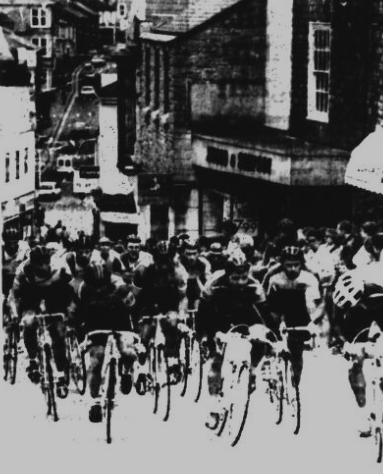

In the early 1990s, the series of races came to be known as The Celtic Challenge, with Cornish, Irish, Scots, Welsh and Breton riders regularly taking part. Redruth was the only town in the South West to close its streets for bike racing18.
In 1988 a 65-mile sponsored ride from the Bike Chain to Lands End and back raised £600 (£1,640 today) for the British Heart Foundation. In 1990 The Celtic Challenge road race was 85 miles and coincided with the start of the Tour of Britain’s progenitor, the Milk Race, which that year rolled out of Penzance19.

I had imagined Bissoe’s Saint Piran Café, which opened over 25 years ago, to be another step in Richard’s masterplan. A gap in the market, an opportunity…
I bought it with my heart, didn’t I? I paid a lot of money for it, but it was part of The Mineral Tramways20, visitor numbers were really low, it was kind of just a stopping place. So I thought we could do a lot with it.
It’s only been in the last few years that I’ve really focused on it. Suddenly we’ve got commercial kitchens, new chefs, breakfast menu, lunch menu, quality produce…We’ve tried to make it a beacon of excellence, but we’re not shouting about it, we’re growing the business organically…
I bought it with real ambition…about 18-20 years ago I took a project to the RDA (Regional Development Agency). The plan was to have five of these in Cornwall: one here, one at the Eden Project, one at Goonhilly, one at Mounts Bay, one at Heartlands. If you’ve got five centres, you start getting people round, you’ve got activity, you’ve got transport, you’ve got health…
I took it to the head of the RDA, who said We’re not giving you the money because you’re in the private sector…that conversation didn’t last long! Typical me!
But The Mineral Tramways are so unrepresented, and yet with a bit of sideways thought, clever investment, you wouldn’t need to spend thousands, they’re old railway lines, mountain bikes’ll roll over them easy, bit of bleddy weeding and you’re done!
So Bissoe was a dream to connect Cornwall, but let’s just develop the facility here and let people come and enjoy it, and get out on their bikes…
Look, we want to keep employment here, we’ve got The Buttermarket, we’ve got The Mining Exchange in two months, and we want to make that a flagship store. We’ll make it work! It’s a high-end concept, but we want to be all things to all people, I want people to be able to buy a mountain bike at a cheap rate and go out cycling. I want both.

We’ve got our online presence, which we’re growing. It’s a commercial look this year. We also want to build up the Saint Piran Café as well, and make sure more people come through and enjoy…
And we’ve got one or two really good business projects, we’re developing prototype wheels and a frameset, but all these things take time.
Speaking of bikes, how did the idea to run a professional team germinate?
It was always out of failure…I’d helped to set up clubs, and it all goes through the same pattern, you want people that get involved, they’ve got passion, yet it’s all on a voluntary basis. And that’s like a lot of sport in this country; problem is those people get burnt out in three years, five years, they come and they go…
Big headline: I don’t think there’s any space, at the moment, for volunteers in sport…we should be rewarding our volunteers. We cannot keep relying on them for nothing. Because they fall over, and it’s that falling over that stops the progression of the club. But it happens in every club, no matter what, the direction, the drive, and it can stall because the resources aren’t there.
You set clubs up, and all of a sudden you’re on a committee, and the drive goes…but it should be about the young people, about the progression of talent out of Cornwall, it’s what I’ve always said…
I set up One and All Cycling21, and that was huge. Became one of the biggest clubs in the country, had 400 members, national academies…and then committees get involved, and sadly my DNA doesn’t mix very well…
So I set up the ‘Bike Chain Ricci’ team, obviously based around the business, we had success at the Olympics, great racers, national champions. It [the knowledge] was always there, when I’d raced in this country for CC Bowland, and eight of us in that team were in the top 50 in the country, you learnt what excellence in a team looked like…
Why ‘Saint Piran’?
I wanted something that was clearly connected with the region. I was really lucky, the typeface, the brand, is owned by myself. One and All had come and gone, and I thought, ‘Right, what does something need to look like, if you could start something that was pure at the beginning, with no interference?’
I reached out to [former Team Sky racer] Jon Tiernan-Locke, who’d had a bit of bad press22, talented boy from Devon, and I was driving back from his place in North Cornwall, trying to think of some names, and I saw this sign, think it was for St Tudy…
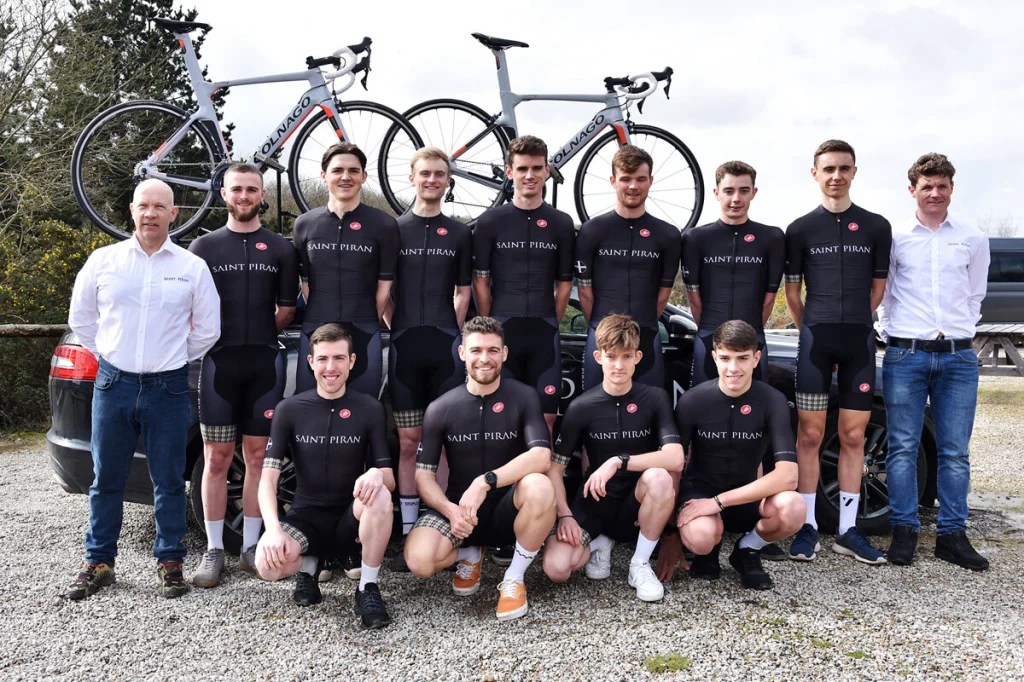
What about the Cornish tartan?
Don’t ask how much it cost! But now we own it, there’s no issues with copyright or what have you. We got things right with a lot of stuff, and that Cornish tartan looks great. But we were a club team, we were literally a club team, but you’ve got to start somewhere. Build your brand, build your subscription, build the community…
Look, you set up sponsorship on your jersey, and let’s just say you’ve got your accountants, and they help you for two to three years…but after twenty years, you’ve exhausted all your avenues in Cornwall.
So I learnt from the other sports, I thought, plain, classic, everybody wants one, build it into a brand…
I now say that the Saint Piran team was used to build the brand, so we can do lots of things with it, and at the end of the day we’re a local company supporting local people: staff, jobs, employment. We should look at that, focus on that, and make sure that those people are being built up…
Of course, cyclists of all ages and abilities can ride under the Saint Piran banner, and this is what Richard is keen to stress:
What we’re trying to do now is open up, from the bottom. So we’ve got Saint Piran Delivra, which is Cornish for ‘free’. So you can join our cycling club for free. It doesn’t cost you anything to join. No money, no cost, with a host of benefits. You wear the blue jersey, you’re in the organisation, you support the values.
I thought, if you had a UCI team, then a UK elite team and so on, get it all under one umbrella, in-house, that would be a more meaningful structure, with a broad base. Essentially that’s what they do in Belgium and France. It’s what I admire about their system: if you’re in a French feeder team, 1,000 members, 700 of those will be leisure cyclists, 200 fourth category, 80 third, 60 second, 15-20 elite and then maybe one or two pros. But what they do, they all wear the same helmet! So those at the bottom would buy and the top would get for free.
Whereas with our club system in our country, it’s Oh, we don’t do that. We don’t buy into the reward schemes, we don’t buy into it collectively, but I think it’s a great model. So why don’t we incorporate that into our structure? Which is what I did…
So if you’ve got everything under the one structure, it is about the ones that are making it through to the top…Oh, but that’s not fair, what about inclusion?…But there’s no cost to join us, so it is all-inclusive, there’s no barrier.
The scale of the operation, and the challenges faced by Richard and his team to get the project off the ground, and achieve what they did with the resources they had, are staggering:
We were innovative, we would try and do things, on a budget that was incomparable. When you’re spending your own money, you think smart!
Budget: all in, for everything, a million pounds. For everything. Vehicles, hotels, race entries, riders, it’s just…and you think, if you look at UAE, or Ineos, or anybody, they’re probably operating on £50-100 million disposable, because they’ve already got the vehicles etc…
We built something up that was world class. From Cornwall. You’re saddened that it’s not there at the moment…the infrastructure’s there, the knowledge…it’s all there…
We would race in Belgium on a Sunday. You can’t really train properly again until Wednesday morning, time you travelled overnight Monday, you’re absolutely mullered on Tuesday, can’t do nothing till Wednesday! Whereas the World Tour teams, straight in the hotel, sleep there, ride the next day…it’s rest, rest is the problem.
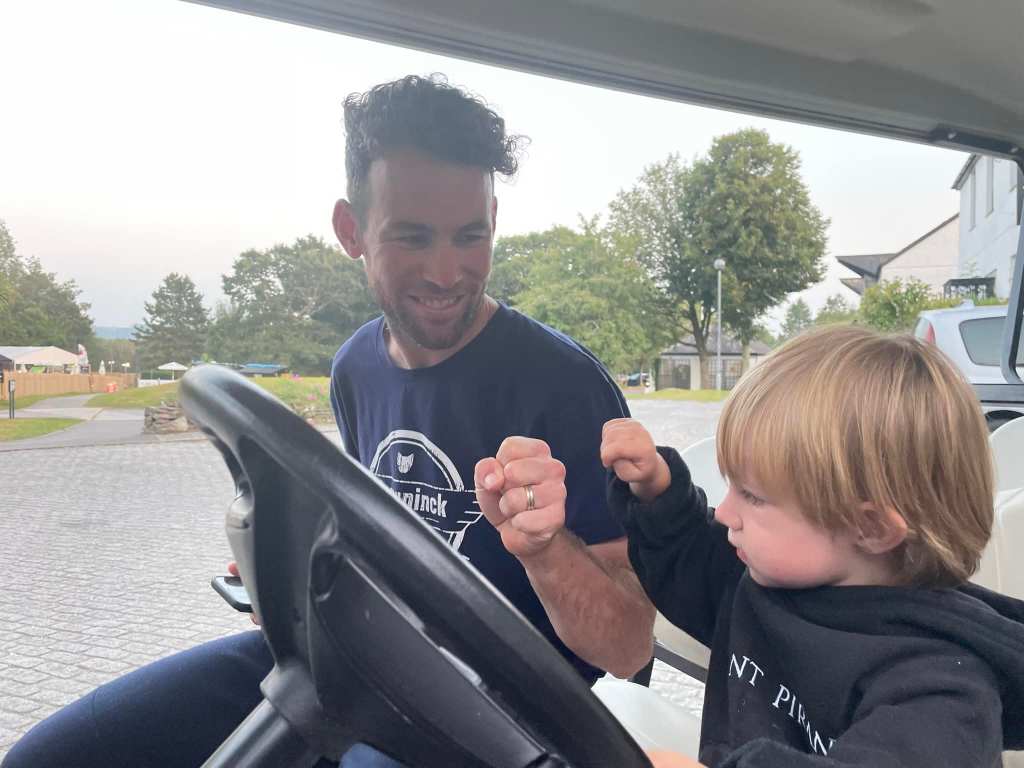
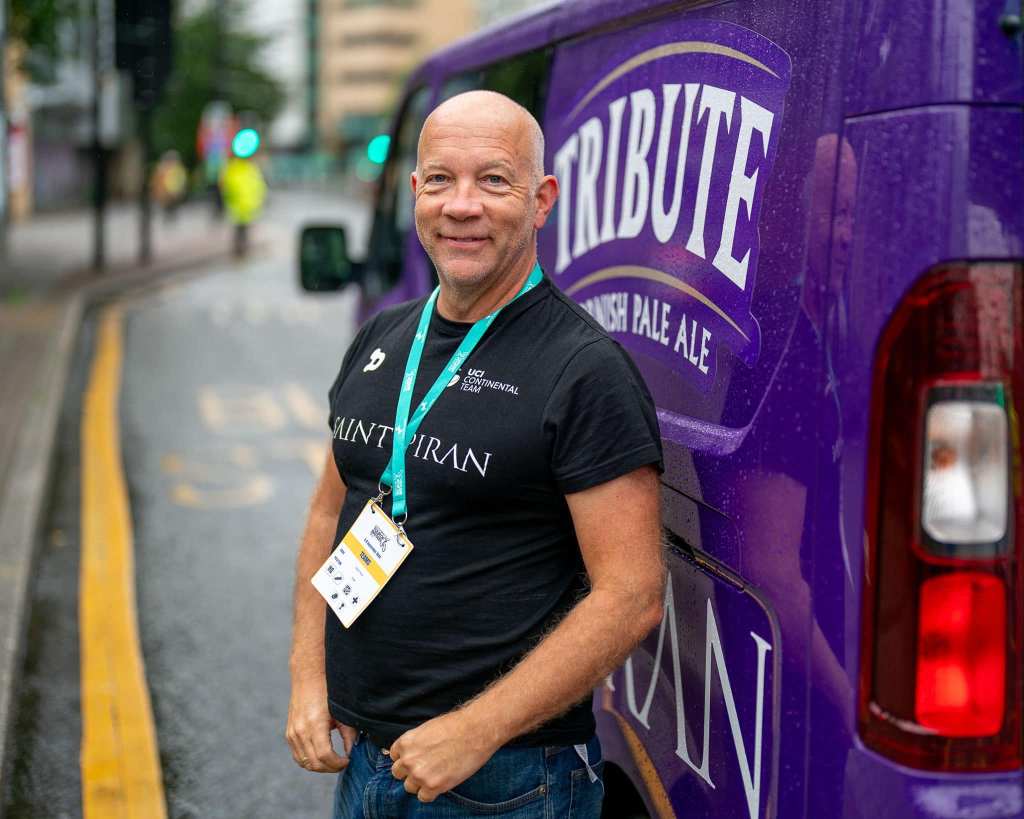
To give more perspective, in the early 2020s Saint Piran was one of only two UCI continental teams operating in the UK. The other was Trinity Racing, run by Andrew McQuaid24.
I love him – he’s a team owner! Of course there was healthy rivalry, any domestic race in the UK, we smashed his riders, which was great! But he had a better programme, they rode the Baby Giro [the U23 Giro d’Italia] for Christ’s sake! He knew what he was doing, he was an agent too, so if his riders made it, he was getting paid, so it was self-fulfilling. He gave me one piece of advice:
Never trust anybody in cycling..!
Rivalry’s good. You need rivalry, but once you’re on the continent, you work together. If one of their riders needs a bottle, or food, you just do it.
But he’s had to stop this year because you can’t fund it in the UK. His way was by selling advertising, ours was more inclusive, we needed everybody, the media, the magazines, and sadly we didn’t get everybody.
Formed in 2018 as an Elite National team, by 2021 Saint Piran had progressed to the UCI Continental level. Next steps were UCI Pro, then UCI World, and UCI World means the Tour de France. In his mind’s eye, Richard was catching up with Bernard Hinault. In 2021 Tom Mazzone won the Grand Prix de la Somme. In 2022 Alexander Richardson won the Grand Prix de la ville de Nogent-sur-Oise. Saint Piran held all three podium places of the prestigious Lincoln Grand Prix in 2023. In 2024 they took a stage of the Tour of Japan25.
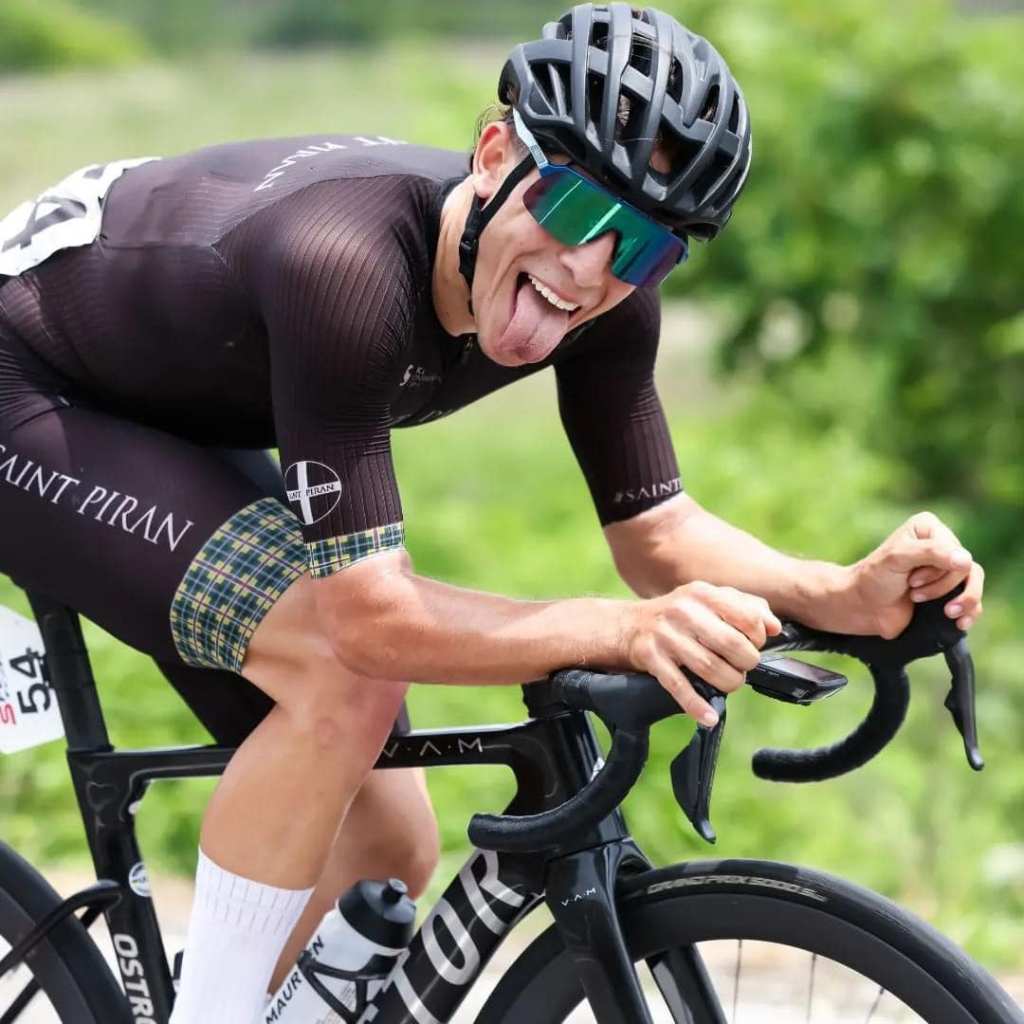
In the 2023 Tour of Britain, Zeb Kyffin finished sixth on General Classification. He was 23 seconds behind overall winner Wout van Aert which, if you know your cycling, gives you some idea of the standards Saint Piran had reached26. I followed the 2024 Tour of Britain religiously, and was bellowing at my screen right along with a certain Team Principal:
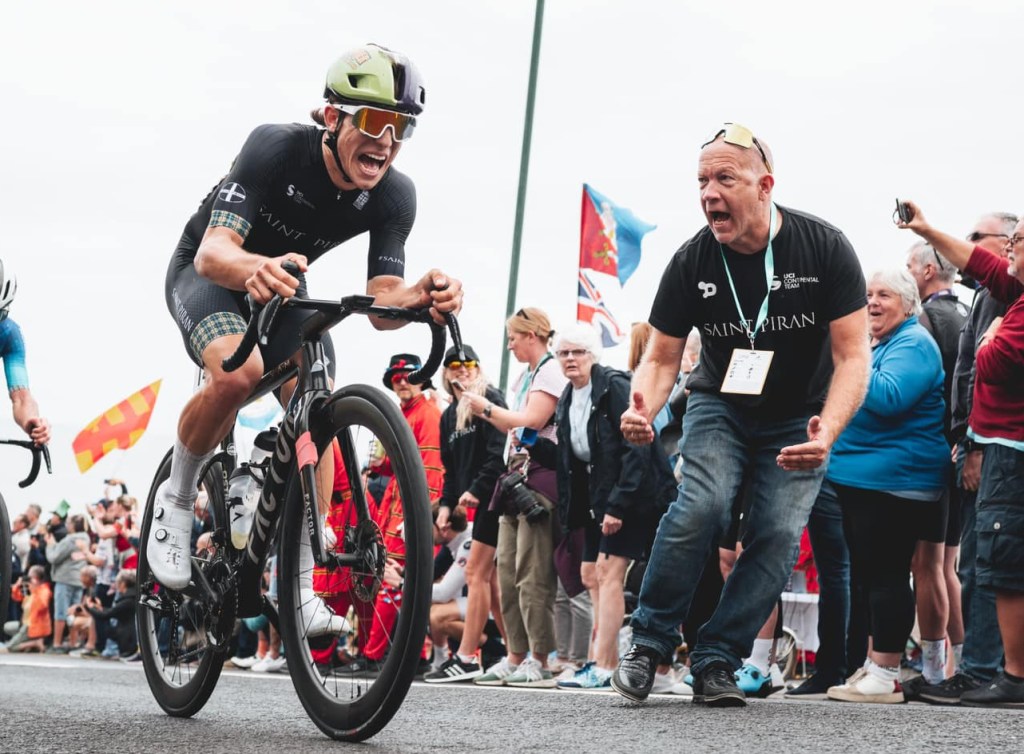
Yet by November 2024, it was all over. The Pro and Women’s Elite teams would not be lining up in 2025.

In June 2022, bikes totalling £30K were stolen from a Saint Piran team vehicle in the Netherlands. As Richard said at the time,
Teams such as ours, particularly at a continental level, cannot afford to sustain these losses.
Cycling Weekly, June 21 202227
Later that year, it was reported that Saint Piran had engaged lawyers to recover £100K in costs from bike manufacturer Lapierre. The firm had issued 60 machines to Saint Piran, but the team stated that these bikes were ‘potentially susceptible to failure’, and therefore declined to use them28.
Forced to look elsewhere for bikes, Saint Piran sourced machines from China. In October 2024, an article in Cycling Weekly, which was subsequently picked up by Cycling News claimed Saint Piran were using frames that were not UCI-approved – the Chinese frames. More damningly, it claimed the Team had tried to disguise this by fixing UCI stickers to the bikes themselves29.
Richard was quoted in the Cycling Weekly article:
Saint Piran acted on the advice of the manufacturer and an external expert and understood they were in line with UCI regulations at all times. It appears that advice was incorrect. We have now reported this to the UCI and will abide by their ruling.
Cycling Weekly, October 17 2024
The UCI made the following statement:
The UCI can confirm that an investigation is currently underway regarding the potential use of a non-homologated frameset by UCI Continental team Saint Piran in past events on the UCI International Calendar.
Cycling News, October 17 202430
Due to these reports, and the ensuing investigation, Saint Piran rapidly lost £500K in sponsorship. Chickenfeed to a team like Lotto-Soudal, but when your budget is only £1M, it effectively broke Saint Piran. Where does Richard sit with all this?
Because you’re under investigation, it’s hard to go for a licence. We’re in disciplinary now. We didn’t register some black frames. Was it our responsibility to? Yes. Our team representative that we had at the time hadn’t registered them. We bought them off a wholesaler who bought them off a manufacturer. The manufacturer per se should have had the dialogue with [the UCI], but it was post-Covid and we were on those bikes because the Lapierre machines failed.
They’ll probably say, Look, this wasn’t great, and there’ll have to be ratification, but we all make mistakes in whatever process you’re doing, and we wouldn’t have made that mistake if the [Lapierre] machines hadn’t failed on us. We were trying to race UCI races, and if you don’t meet those obligations, you get fined! I reckon it’ll take the length of this year, then we can have a fresh optic for 2026.
We had a great sponsorship arrangement with Lapierre [in 2022], and the bikes failed. And bizarrely enough, five weeks ago, they’ve done a worldwide recall on the bikes.
In January of this year, Lapierre recalled the very models Saint Piran had claimed were faulty back in 202231.
Richard is taking all this on the chin – he readily admits an error was made. What rankles is the presentation of him and Saint Piran in the media:
To lose that momentum because of an article, it shows the power of the media. But bizarrely that very same magazine is supposed to be promoting cycling within the UK. Taking away 20 riders, six staff, £500K in sponsors, overnight…
I used to spend £100K a year with Cycling Weekly, and later on they write some very dubious reports. How can you be in the cycling industry, that’s supposed to be about the benefit of sport, and write an article that helps destroy a team?
Indeed, he claims the closure of Saint Piran was
Pump-primed by the media. It’s tinged with quite a bit of sadness really. We were looking at a bigger budget, getting more sponsors in, you’re trying to set something up, you’re trying to pass it on to the next generation. That was our next step, this year, we had riders under contract that were absolutely phenomenal. We would have gone up, and we were sustainable.
What’s done is done. Is there a way back for Saint Piran Pro Cycling?
Not running a professional cycling team, I’ve suddenly got 70 hours a week back! We’ve got some very healthy conversations going on currently, and I need to decide whether I return to the sport, and in what format. But there has to be a change in the way certain things are done.
There would have to be conditions, to protect myself and my family. I had a car accident last year, my father was dying, we were moving house, and the business pressures…it’s been a year! I think you need your media partners onside…it’s there, and the knowledge is there, but it has to be done with certain conditions, because otherwise you’re sacrificing your own personal health.
Saint Piran were ranked among the top 50 cycling teams in the world. When you see that, you think, wow, all that happened from little old Cornwall…
Let’s all hope it happens again soon.
(If you missed my previous Cornish Sporting Hero, Rugby League star Graham Paul, click here.)
Many thanks for reading; follow this link for more top blogs on all things Cornwall: https://blog.feedspot.com/cornwall_blogs/
Do you enjoy my work?
All content on my website is absolutely FREE. However managing and researching my blog is costly! Please donate a small sum to help me produce more fascinating tales from Cornwall’s past!
Your contribution is greatly appreciated.
DonateReferences
- I highly recommend: https://saintpirancafe.com/
- For more on The Buttermarket, see: https://www.buttermarket.org/. See the Saint Piran press release here: https://saintpiranprocycling.com/news-stories/2025/2/26/saint-piran-service-course-to-open-new-cycling-hub-in-redruths-historic-mining-exchange
- For more on Charlie Tanfield, see: https://saintpiranprocycling.com/news-stories/2024/1/20/define-redemption-lets-talk-about-charlie-tanfield-. For more on Jack Rootkin-Gray, go to: https://en.wikipedia.org/wiki/Jack_Rootkin-Gray. Stephen Roche is one of only three riders (the other two being Eddie Merckx and Tadej Pogacar) to win the Tour de France, Giro d’Italia and the World Championship Road Race in the same year (1987): https://en.wikipedia.org/wiki/Stephen_Roche. For more on Contador, see: https://en.wikipedia.org/wiki/Alberto_Contador
- In fact, it’s the title of Fignon’s fascinating autobiography: We Were Young and Carefree, Yellow Jersey Press, 2010.
- Bristol Evening Post, August 5 1986, p31.
- For more on the rise of British involvement in the Tour de France, see William Fotheringham’s Roule Britannia: A History of Britons in the Tour de France, Yellow Jersey Press, 2005.
- Image from: https://en.wikipedia.org/wiki/Saint_George_Palace
- See: https://en.wikipedia.org/wiki/La_Redoute_(cycling_team)
- Len Pascoe passed away earlier this year: https://www.falmouthpacket.co.uk/educationservices/fpeducationschools/24998255.funeral-cornish-cycling-legend-len-pascoe-redruth/
- There’s a whole sub-genre of cycling literature that examines the use of drugs in the sport. I recommend: Put Me Back on My Bike: In Search of Tom Simpson, by William Fotheringham; The Secret Race: Inside the Hidden World of the Tour de France, by Tyler Hamilton; Racing Through the Dark, by David Millar; The Death of Marco Pantani, by Matt Rendell; and Seven Deadly Sins: My Pursuit of Lance Armstrong, by David Walsh.
- David Walsh, Seven Deadly Sins: My Pursuit of Lance Armstrong, Simon & Schuster, 2012, p65. Image from: https://pezcyclingnews.com/features/armstrong-contador-what-really-happened/
- Quote from: William Fotheringham, Bernard Hinault and the Fall and Rise of French Cycling, Yellow Jersey Press, 2015, p91. Image from: https://bikeretrogrouch.blogspot.com/2015/07/badger-badass-bernard-hinault.html
- This company sadly went bust in 2013: https://www.thegazette.co.uk/notice/L-56622-242
- For more on the Scheme, see: https://en.wikipedia.org/wiki/Enterprise_Allowance_Scheme
- Even the Cornish Press flagged up Richard’s youth: West Briton, December 3 1987, p8.
- West Briton, June 2 1988, p29.
- For more on Malcolm Elliott and Dave Rayner, see: https://en.wikipedia.org/wiki/Malcolm_Elliott, https://en.wikipedia.org/wiki/Dave_Rayner_(cyclist)
- West Briton, March 29 1990, p4; May 23 1991, p7.
- West Briton, March 17 1988, p12; February 8 1990, p19.
- Fore more information on The Mineral Tramways, see: https://www.cornwall.gov.uk/environment/countryside/cycle-routes-and-trails/the-mineral-tramways/
- See: https://www.oneandallcycling.com/
- See: https://en.wikipedia.org/wiki/Jonathan_Tiernan-Locke
- Image from: Image from: https://saintpiranprocycling.com/news-stories/2020/3/9/saint-piran-2020-team-launch
- See: https://trinityracing.co.uk/
- Information from: https://en.wikipedia.org/wiki/Saint_Piran_(cycling_team)
- For the 2023 Tour of Britain, see: https://en.wikipedia.org/wiki/Saint_Piran_(cycling_team). Wout van Aert rides for Team Jumbo-Visma and has won stages of the Tour de France: https://en.wikipedia.org/wiki/Wout_van_Aert
- Article here: https://www.cyclingweekly.com/racing/british-racing/tens-of-thousands-of-pounds-of-bikes-stolen-from-saint-piran-team
- Article here: https://www.cyclingweekly.com/news/british-team-saint-piran-and-lapierre-uk-distributor-call-in-lawyers-over-pound100000-dispute
- See the articles at: https://www.cyclingweekly.com/racing/exclusive-british-professional-team-glued-fake-uci-compliance-stickers-to-bikes-purchased-from-china; https://www.cyclingnews.com/news/british-continental-team-saint-piran-admit-to-faking-uci-approval-for-unmarked-chinese-frames/
- From: https://www.cyclingnews.com/news/british-continental-team-saint-piran-admit-to-faking-uci-approval-for-unmarked-chinese-frames/
- See: https://www.cyclingweekly.com/news/lapierre-issues-stop-ride-notice-and-recalls-aircode-drs-and-xelius-sl3-over-safety-issue-with-fork
 Francis Edwards ~ The Cornish Historian
2 thoughts on “Cornish Sporting Heroes, #3: Richard Pascoe, Saint Piran Cycling”