
Reading time: 20 minutes
(If you missed Part One, click HERE.)
Early 1920s Cornwall must have been a tough place. Men were returning home from the trenches only to leave again as the mining industry collapsed. Dolcoath Mine laid off 200 men in November 1920; most of them left for Canada days later1. By 1921 there were 3,000 unemployed miners in Cornwall. The solution was plain:
…our local distress may become even more acute, unless mitigated by emigration, and if any miner has a chance to leave the county or the country, he will be wise to take it.
Cornishman, June 22 1921, p5
Not all left to work underground. Some were lucky enough to have talent in another area, which might prove just as lucrative, and hopefully not as hazardous. That area was rugby football, and several men in post-war Cornwall left to seek their fortune as professionals with the northern union or, after 1922, the rugby league.
As with part one, this is a work in progress, and I hope to uncover more untold stories along the way.
Ernest Rodda (1894-1936), Camborne RFC
Four caps for Cornwall, 1918-192
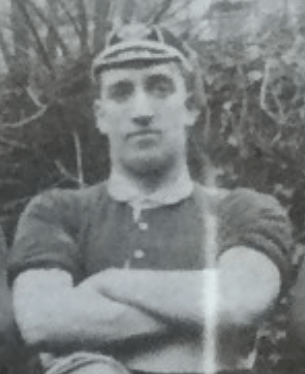
The son of a grocer from Crowan and the brother of miners, Ernest Rodda (though sometimes his christian name is given as Nick) became a miner himself. He also grew into a formidable forward for Camborne, taking his playing (and underground) skills to South Africa. In the immediate post-war era he was rapidly capped for Cornwall, and took part in two international trials3.
Signing for Rochdale Hornets in early 1920, he played alongside another former Camborne player who had gone north before the war, Sam Carter4. Tragically for Ernest, he was to play no part in the Hornets’ 1922 Challenge Cup glory. A leg injury sustained in March 1922 put him out for the rest of the season5. But there was worse to come.
By the opening of the 1922-23 season, Ernest, though recognised in Rochdale as a ‘grand player’ was still not fit6. In fact, his career was over, and his leg had to be amputated. He entered the licensing trade, managing the Eagle Hotel in Rochdale with his wife. Ernest died in 19367.
William J McLean (1896-1977), Camborne RFC
One cap for Cornwall, 1920

Illogan boy William John McLean (sometimes MacLean) was a surface worker at a mine from his mid-teens. During the war, he was stationed in Egypt, and played rugby for the Duke of Cornwall’s Light Infantry against a battalion of Welshmen. McLean missed a chance to score, but the Cornishmen still won8.
McLean was a scrum-half, standing 5ft 7 and weighing only 10 stone 8. He must have been an opportunistic kind of player, as reports have him attempting snap drop-goals. His one chance for Cornwall came in February 1919, but William had little to do behind a big Cornish pack intent on keeping the ball. Little good it did them; Devon won 13-39.
By the summer of 1920, he was a northern union player for Rochdale, though the 1921 census captures him on a visit to Cornwall. William stated that he was an unemployed foundry labourer. Of course, he would have had match fees from the Hornets to keep him afloat10.
There would have been one or two familiar faces in Lancashire, such as Sam Carter and Ernest Rodda, but William didn’t settle. In 1925 he and his family emigrated to America. William found a job with the Anaconda Copper Mining Co., and the McLeans resided in Butte, Montana11.
One war wasn’t enough for William. In 1942 he was drafted, along with his son, William Donald, who had been born in Camborne in 192312. In June 1944, William Donald was a fifth grade technician, or radio operator, in occupied France. When shellfire severed his company’s communication lines, he volunteered to break cover and repair the damages, being severely injured in the subsequent shelling.
He survived, and was awarded the Bronze Star, the news reaching Cornwall13.
William John died in 1977; William Donald in 1984. Father and son lived out their lives in Butte1.
Tommy Harris (1896-1962), Redruth RFC
Six caps for Cornwall, 1919-20
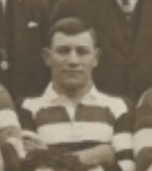
The northern union agents disguised as Devon fans – and keeping their broad Lancastrian accents under wraps – must have thought he was worth pursuing. They were at Plymouth in November 1920 watching Devon’s pack dominate Cornwall’s in an 8-3 victory, but one Cornish forward definitely caught the eye. What would he be like on the front foot? they must have wondered. Exchanging nods and winks, the northern men resolved to get their man. But they needed to be quick, and they needed to make a good offer. Other agents from other clubs were abroad, and it was only a matter of time before one of their competitors approached him.
They caught up with their quarry at the Cornwall team’s hotel, and offered him £250 there and then if he would sign. However their tense negotiations were blown by the team secretary, who ended up chasing one of the agents down a Plymouth street. The player said no – for now15.
Unperturbed, the Lancastrians set off for Cornwall. They must have spoken to their parent club on the way down. Look, this chap’s the real deal, we’ve got to get him, a star in the making… The club in question, Rochdale Hornets, must have given the green light. Up the offer.
The sought-after player was Redruth’s Tommy Harris. He had previously played for St Day and the army (one being preparation for the other), and was noted to have a ‘splendid physique’16. Cornwall had played Devon on Saturday November 27. By Tuesday the 30th, Harris was on a train to Rochdale, a cheque for a cool £300 in his pocket, and a guarantee of a job as a brick setter17. In 2025, Tommy’s £300 is worth £11,600.
The Hornets were putting together a monster pack. Sam Carter and Devon’s Dickie Paddon were now experienced veterans. Ernest Rodda looked a good investment. Recent acquisitions included Louis Corsi and Dai Edwards from Wales. The missing piece of the jigsaw was Tommy Harris. Here’s his profile:
…one of the finest scrimmagers the Hornets have ever had. A rare tackler and a terror to opposing backs by reason of his hustling tactics. The right type of man for a gruelling cup-tie.
Rochdale Times, April 26 1922, p7
He certainly was the right man. In the 1922 Challenge Cup Final, Rochdale beat Hull 10-9 in front of 35,000 fans at Headingley18. It was their first – and, to date, only – success in the competition.
Further glory awaited. In October 1924 Tommy represented the England rugby league team against Other Nationalities at Headingley. The news was heard in Cornwall, and old friends could read of Tommy’s prowess as a
…sturdy Western scrummager…he had played regularly for Cornwall, and was regarded as that county’s crack forward.
Cornubian and Redruth Times, October 30 1924, p6
It was Tommy’s only England cap. Nevertheless he was Cornwall’s first rugby league international.
After a spell as a newsagent in Oldham, Tommy returned to Redruth in 1931. With the same sense of the appropriate as Sam Carter, Tommy honoured the town that had made his career by naming his fine Mount Ambrose house ‘Rochdale’19. He ran his own timber business and was an active Methodist, later becoming a member of the Home Guard.
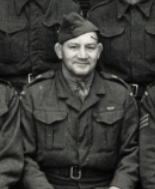
Tommy died in 1962, a respected and upstanding member of Redruth’s community20. But there was one thing he wasn’t able to do. As an ex-professional, he could never visit his old club again.
Edwin Pascoe (1902-1973), Camborne RFC
Uncapped
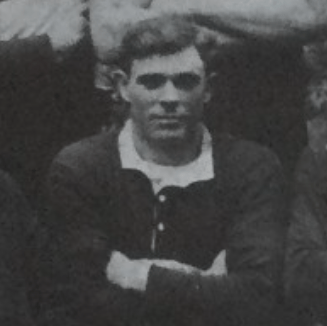
Edwin Pascoe was born in Poulton-le-Fylde, Lancashire, to parents from Redruth. In 1921 he was an apprentice engineer at Holmans, and a flying wing for Camborne RFC21.
Exactly when he signed for Rochdale Hornets is currently unknown, but he certainly went, and he was certainly back in Cornwall by 1927. In December of that year his amateur status had been reinstated, and he was permitted to play soccer for Falmouth AFC. He died in 197322.
Ernie ‘Tatsie’ Wills (c1895-1936), Camborne RFC
Four caps for Cornwall, 1918-21
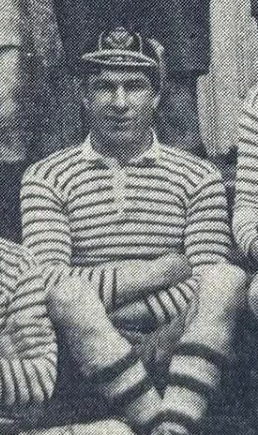
Early 1920s Rochdale had a burgeoning Cornish community, all centred round the town’s rugby club. Besides the signings at the very beginning of the 1900s, Sam Carter and Tom Morrissey still had connections with the Hornets, and then there was Ernest Rodda, William McLean, Edwin Pascoe and Tommy Harris. We can imagine them gathering in Sam’s pub, The Golden Fleece, to talk over old times23.
In late 1922 Camborne’s full-back Ernie ‘Tatsie’ Wills made the journey to Lancashire too, along with his wife and infant son. Noted as a ‘sound tackler with a good kick’, he was good enough for Cornwall and good enough to guest for Plymouth Albion24.
Rochdale’s agents must have reckoned he was good enough for them too. Ernie reputedly received, in cash, £350 to sign for the Hornets. That’s over £17K in 2025. This money must have felt like a big sigh of relief for Ernie. Before the agents came knocking, he had been an unemployed miner25.
For whatever reason, Ernie decided that rugby league wasn’t to his liking, and the family returned to Cornwall in around 1930. The money appears to have evaporated too, because Ernie went back to work underground.
In 1936 he was killed instantly in a fall of ground on the 90 fathom level at Porkellis Mine. He left a widow and two children26.
Fred Rule (1911-1981), Redruth RFC
11 caps for Cornwall, 1928-32
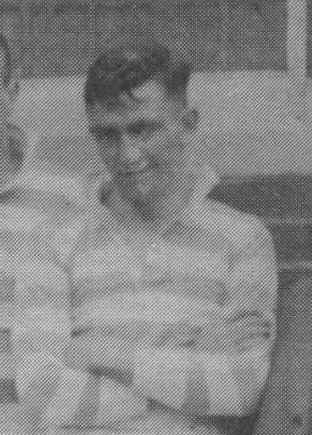
Fred Rule came from Miners’ Row, Redruth, and had the same social background as the previous Cornish codebreakers28.
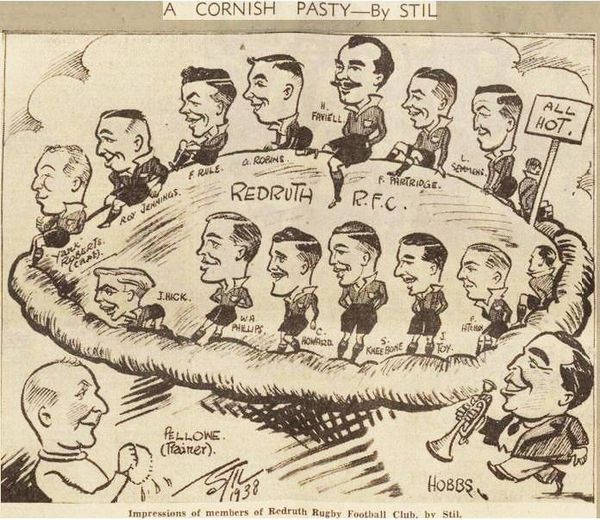
He was a precocious talent as a fly-half, making himself a regular for the outstanding Redruth side of the 1930s:
He was a Cornwall regular too, but it came as something of a shock in the spring of 1933 when Halifax snapped him up. It was an offer Fred couldn’t refuse: £300 to sign on, and wages of £4/week. Nearly as surprising in retrospect is the reaction of Redruth RFC and the CRFU:
At a meeting at Redruth, today, Cornwall Rugby Executive decided to send a letter of thanks to Rule for his services to Cornish rugby.
Cornishman, April 6 1933, p12
At a Redruth committee meeting later that year, it was said that
Rule was a magnificent footballer…He seemed to have further honours before him. Rule’s loss would be severely felt, but no one blamed him for the step he took. He had the best wishes of his fellow players, the club committee and supporters.
West Briton, July 20 1933, p6
Fred was 21, stood 5ft 9, weighed 11st 4 and marked for great things in rugby league29. Halifax got him a job on the buses and waited for their investment to pay off30. A crowd of 10,000 watched his debut against St Helens. Fred
…made a striking debut…He scored a sparkling try, and was in many good moves…
Yorkshire Post and Leeds Intelligencer, April 10 1933, p15
But it seems Fred couldn’t quite settle. From being Halifax’s playmaker, in 1934 we find him in a very different role on the wing, as the club experimented with a new half-back pairing31. A knee injury in 1936 put him in the infirmary, and by 1937 he was on Halifax’s transfer list32. Fred survived, but was on the fringes and missed out on his club’s 1938 Challenge Cup triumph.
In 1946, he requested a transfer himself, and a year later suffered the ignominy of Halifax putting him up for a free transfer33.
Fred’s experience of both codes stood him in good stead, and he was appointed coach of the Halifax rugby union team in 194934. Clearly union clubs in league’s northern stronghold weren’t too fussy about the amateur credentials of their training staff. Even at this stage of his career Fred was noted as being
…unsurpassed for versatility, enthusiasm and skill.
Halifax Evening Courier, January 29 1946, p4
Fred died in Halifax in 198135.
Fred Bone (1913-1965), Redruth RFC
Seven caps for Cornwall, 1934-35
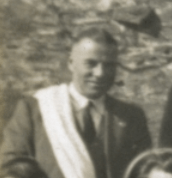
Fred Bone was the son of a tin smelter from Radnor, and later worked at East Pool Mine himself36. As a rugby player he was a scrum-half schoolboy international, who went on to represent a combined Devon and Cornwall XV against the 1935 All Blacks. The latter won in Devonport 35-6, but the tourists reckoned Bone
…the best scrum half they played against during their recent tour…
Daily Mirror, February 14 1936, p29
Players don’t come more highly recommended than that. Halifax, possibly shopping around for a player to partner Fred Rule, acquired the 5ft 8, 11 stone 23 year-old in 193637. Such a player wasn’t cheap, but Halifax clearly had their chequebook out in the mid 1930s. They offered the star Welsh fly-half Will Davies a £1,000 (£61K in 2025) fee to sign, which he declined. Bone’s fee was unspecified, but from what Halifax were prepared to offer Davies, he must have done very well from the arrangement38.
Redruth and the CRFU may have been able to force grins and give Fred Rule a glorious send off, but as far as I’m aware Bone’s decision to switch codes garnered no such reaction. Indeed, it was seen as a ‘big loss’ to Cornish rugby39.
For all the hype, Fred sadly failed to live up to expectations. Barely a year after arriving in Halifax, he had been transferred to Batley. By the autumn of 1938, Batley had him on their transfer list too. Though he had a steady job in Halifax riveting boilers, Fred and his wife Lily returned to Cornwall40.
As an ex-professional rugby league player, you would have thought that Fred could have no involvement with his old union club, Redruth. Officially, this is true, but Fred seems to have found a loophole. Here’s the Redruth Reserves XV of 1955, the detail of which heads this section. Fred is standing, far left:
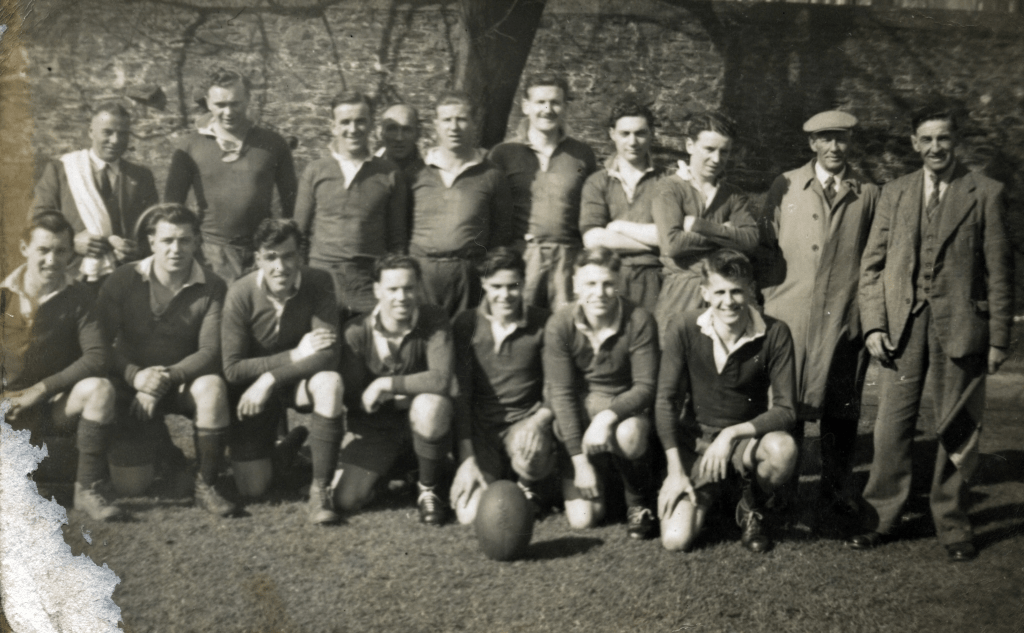
Nick Serpell spoke with a Redruth fan of the era who recalled that Fred joined the St John Ambulance Brigade, and obviously ensured he was on-hand to provide first aid (with a healthy dose of encouragement and advice, no doubt) on match days. He may have even been a kind of unofficial trainer. Other photos from the time confirm Fred was a member of Redruth’s St John branch41.
You have to admire Fred’s ingenuity and cheek. He died in 196542.
Francis St Clair Gregory (1910-1986), Redruth RFC
11 caps for Cornwall, 1933-35
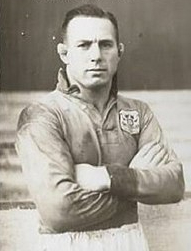
One of Cornwall’s greatest sportspeople certainly had humble beginnings. The 1921 census tells us that young Francis was living in St Wenn, near Bodmin. His father was already dead, and his mother was a charwoman. By 1936, aged 24, he was 5ft 11 and a chunky 14 stone. He was also a champion Cornish and all-in wrestler as well as a star forward for Redruth43.
In fact, it’s difficult to decide exactly which sport Gregory demonstrated more aptitude for. Even the man himself was unsure. As he said in 1965,
Rugby was a tough sport in those days. I suppose Rugby helped my wrestling and wrestling helped my Rugby – a bit of each.
Qtd in Cornish Wrestling: A History, by Mike Tripp, Federation of Old Cornwall Societies, 2023, p126
As a Cornish wrestler, Francis was rarely defeated, generally as a heavyweight. When he toured Brittany as part of a team in 1930, he was the only Cornishman to win in his weight category, a rare feat. After visiting the town in Brittany of the same name, he adopted the sobriquet ‘St Clair’, and as Francis St Clair Gregory he took up professional all-in wrestling.
Most famously, his November 1955 bout with Mike Marino was the first live broadcast of British professional wrestling, and he continued the sport until 1963, when he became a Manchester publican44.
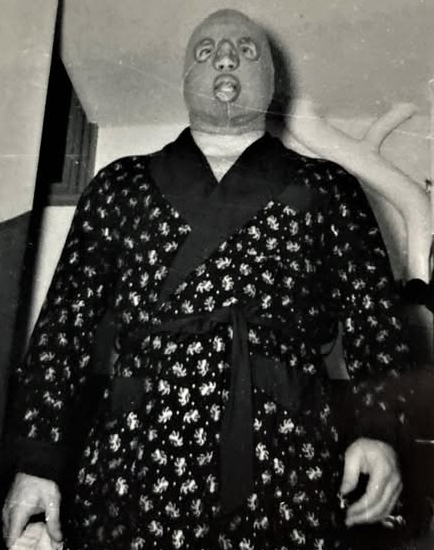
Throughout the 1950s he grappled with wrestlers who rejoiced in such ring names as ‘The Dark Owl’, ‘The Wrestling Witch Doctor’ and ‘Count Bartelli’45. My personal favourite is Count Bartelli, who was in fact a man called Geoff Condliffe, from Crewe. Here he is:
Like the two Freds, Rule and Bone, Gregory’s signing for Wigan in the summer of 1936 was a keenly-felt loss to Cornish rugby. He had been a ‘tower of strength’ for Redruth, and had also represented Devon and Cornwall against the 1935 All Blacks. As a local celebrity, crowds of team mates and fans gathered at Redruth railway station to cheer off the man regarded as
…one of the strongest and cleverest forwards in the country.
West Briton, August 27 1936, p11
Francis represented Wigan on 49 occasions, and then on a further 79 occasions for Warrington. Unfortunately neither club won the Challenge Cup during his playing years, but he did represent England against Wales in 193947.
When pushing for international rugby recognition, Francis would still wrestle. In early 1939 he tackled ‘The Black Eagle’ at Whitley Bay, his fame in one discipline drawing a big crowd in the other. He lived on in Manchester, dying there in 198648.
Union’s loss was league’s gain.
Spencer Vibart (1919-1999), Camborne RFC
Seven caps for Cornwall, 1937
Spencer Vibart’s father was St Austell cricket club’s professional, at a time when such a job was poorly paid (and obviously seasonal)49. In his early teens Spencer was a local flyweight boxer, taking on the wonderfully named Nipper Rowe in 1934:
Vibart put his face in the way of a hot left in the third, and got his nose coloured…Rowe floored him for two with a right and left to the jaw…
Cornish Post and Mining News, January 13 1934, p6
Somehow Spencer scraped a draw, and he must have beefed up his frame rapidly. Aged just 18 in 1937, he was selected as a forward for Cornwall following some muscular games for Camborne RFC50. But his union career was brief. By August 1938, he had signed for Salford, at the time standing 5ft 11 and weighing 13 stone51.
War was to interrupt Spencer’s playing career, and by 1940 he had joined the Navy. But he did get the chance to play union again. As the amateur/professional distinctions were relaxed during the conflict, he played a charity game at Camborne in 1944. By the 1950s, he was a Plymouth policeman, yet Spencer’s fame came in another area52.
He established a reputation as a record-breaking bass fisherman, his hauls making the national newspapers. He returned to Camborne, and died there in 199953.
Jack Knowles (1914-2007), Redruth RFC, Camborne RFC
Six caps for Cornwall, 1936-37
Camborne RFC were looking forward to the 1938-39 season with some optimism. With the exception of Spencer Vibart, their squad was largely unchanged and over the past few seasons had been bolstered by talent from arch-rivals Redruth.
The talent in question was centre Alfred Solomon, the son of legendary Bert, and Renfred John ‘Jack’ Knowles, a wing who knew where the try-line was. In those years, to leave Redruth for Camborne or vice versa took genuine courage. Such a decision could see you sent to Coventry, or worse. Alfred Solomon never played for Cornwall; it’s believed the Redruth-dominated CRFU would never condone selecting the turncoat Solomon54.
Knowles had won caps for Cornwall, and Camborne anticipated another playing year of high scoring with him and Solomon in the back line. Yet in early September all this unravelled, as it was announced that Knowles had played in a trial for Batley, breaking his hand in the process but showing enough of his worth for the rugby league club to quickly snap him up. Though ‘his many friends’ wished him success, the news was another blow to Cornish rugby55.
At the time Jack was the 24 year-old son of a St Day labourer. He stood 5ft 7 and weighed 11 stone. He had Cornwall rugby honours as a schoolboy and, as a featherweight wrestler, was Cornish champion in 1935 and had toured Brittany. After three seasons with Redruth he had joined Camborne56.
Jack only played 16 games for Batley. By the time war broke out, he was back in Camborne, managing a gents’ outfitters, but wasn’t there for long. He saw service in Africa, rising to the rank of sergeant, and was discharged in 1946. He died in 200757.
(With thanks to Nick Serpell.)
Harry Glanville (1921-1992), Camborne RFC
Uncapped
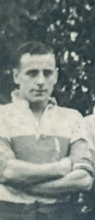
In 1939 Harry Glanville was a plumber’s apprentice in Camborne58. He doesn’t appear to have played rugby until after the war, when he was a full-back of some note. Against a West Cornwall XV in 1946 he
…kicked well and displayed great coolness in going down to the rushes by the Cornish forwards.
Cornishman May 2 1946, p6
By the end of the 1945-46 season, he was Camborne’s ‘star’ player59. In June 1947 he signed for Oldham, thus paving the way for a certain John Collins to take over at full-back for Camborne60.
Harry only made 20 appearances for Oldham, being put on the transfer list in 1950. He died in Manchester in 199261.
Graham Paul (born 1934), Penzance-Newlyn RFC
12 caps for Cornwall, 1957-58
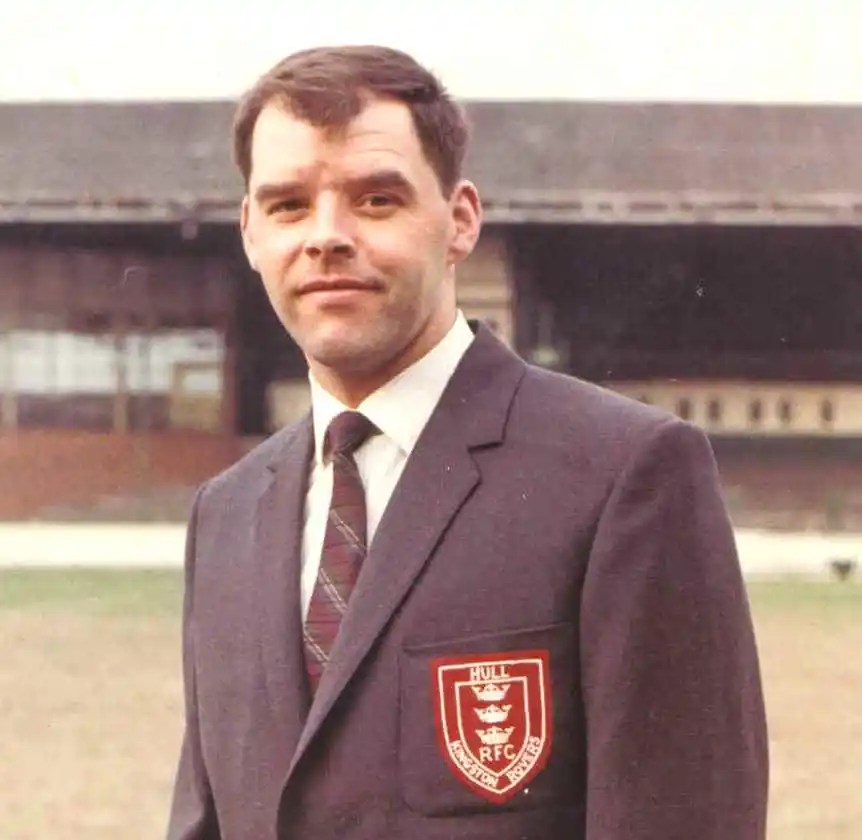
The son of a laundry worker, Graham Paul grew up in a cramped Penzance terrace62. He joined the RAF aged 17, and qualified as a PTI. Eventually being based at RAF St Mawgan, he played rugby as a fly-half for Penzance-Newlyn, forming a deadly partnership with Peter Michell.
Picked as a duo for Cornwall’s 1957-58 County Championship campaign, the team famously made it all the way to the final, against Warwickshire at Coventry. The game has since gone down as the toughest final ever played. Graham created Cornwall’s only try, but missed snap attempts at drop-goals.
It was at this point that Graham found himself at a crossroads. His time in the RAF was nearly up, and his roots would count against him gaining further recognition as a rugby player. As he told me,
I didn’t have the background. You done okay, but you’ve come out of Daniel Place, and they’re never going to let you forget it.
An upcountry union club who Graham had played for in the early 1950s got in touch, quietly offering him a teaching job if he would play for them again. Using this as a bargaining tool, Graham spoke to Penzance-Newlyn, who told him to drop the whole thing.
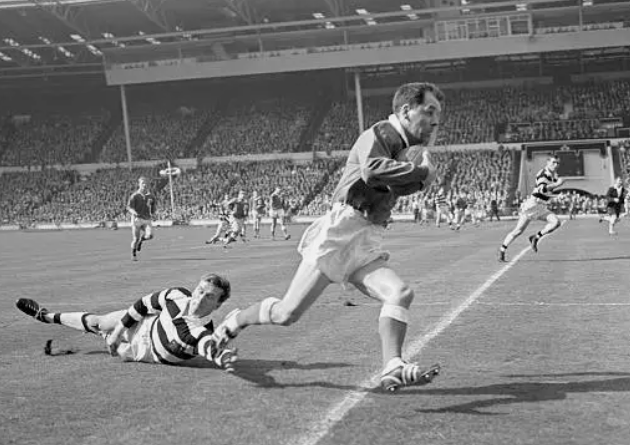
Soon, he was getting phone calls from a rugby league agent, and accepted a generous signing on fee from Hull KR in early 1958. His team mates were awestruck at the news. Hull concluded Graham’s amazing speed off the mark would be better served on the wing, and he scored over 100 tries for the club. In the process, the press christened him ‘The Cornish Express’. In 1964, he played in (and lost) the Challenge Cup Final at Wembley, in front of 80,000 fans:
Graham and his family returned to Cornwall in 1965, but it wasn’t until 1991 that he was permitted to enter his old union club again. Even then, it took a Cornishman on the RFU committee, Bill Bishop, to fix it.
Graham and his wife Helena live quietly in Newlyn.
Jimmy Jenkin (1930-2002), Penzance-Newlyn RFC
21 caps for Cornwall, 1950-58
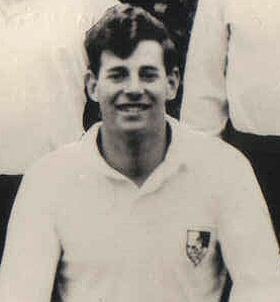
If Graham Paul was unlucky to play in two finals and lose both, Jimmy Jenkin was doubly so. A schoolteacher from Mousehole, Jenkin made over 300 appearances for Penzance-Newlyn before signing for Hull KR shortly after Graham made the move himself. These blows rocked the union club, but as one of their committee admitted,
The club did what they could, but they could not compete with the offers that Rugby League clubs were able to make.
West Briton, June 18 1959, p2
Before this, Jimmy as a Cornwall regular had hoped to make the 1957-58 County Championship, but injury ruled him out. He also missed out on the 1964 Challenge Cup final.
He retired from rugby in 1967, taking a teaching post in Sidmouth, and died there in 200263.
Ivor Phillips (born 1939), St Ives RFC
Two caps for Cornwall, 1960

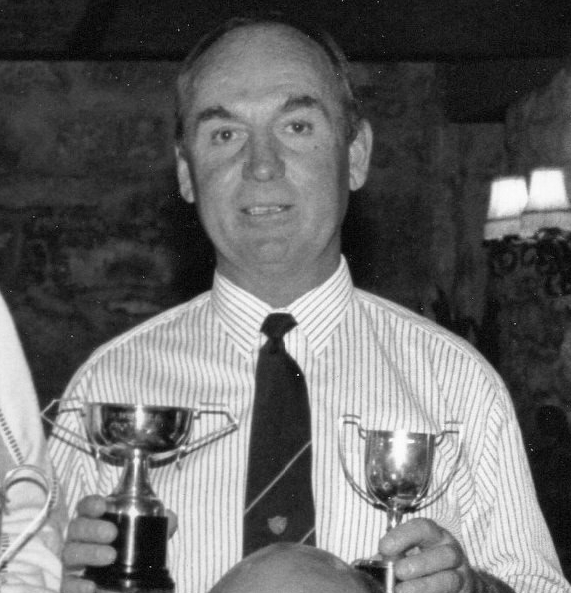
As much a cricketer as a rugby player, Ivor Phillips was a tyro wing for St Ives in the late 1950s. He scored for the club in their famous victory over Cardiff in 1958 (only the second time the Welsh XV lost in Cornwall), and then scored all 13 points in a victory over Hayle in 1959: two tries, two conversions and a penalty64.
He was picked to play against Gloucestershire in the 1960-61 County Championship (having previously featured in two friendlies), but never made it. Having shortly been released from National Service in the Royal Marines (and representing the Combined Services XV in Italy), he signed for Warrington in late 196065.
Sadly, over the best part of five years Ivor only made eight full appearances, and was transferred to Swinton in 196566.
Ivor returned to Cornwall, becoming a stalwart of St Ives CC. He now lives in Plymouth.
Ivor Phillips is, to the best of my knowledge, the last Cornish rugby codebreaker. Between 1899 and 1960, 24 Cornishmen – that we know of – left rugby union to join the rugby league. This has been their story.
Many thanks for reading; follow this link for more top blogs on all things Cornwall: https://blog.feedspot.com/cornwall_blogs/
Do you enjoy my work?
All content on my website is absolutely FREE. However managing and researching my blog is costly! Please donate a small sum to help me produce more fascinating tales from Cornwall’s past!
Your contribution is greatly appreciated.
DonateReferences
- Cornish Post and Mining News, November 6 1920, p5.
- Appearances for Cornwall are taken from Tom Salmon’s The First Hundred Years: The Story of Rugby Football in Cornwall, CRFU, 1983, although there are some errors. McLean’s one cap for Cornwall came in 1920, not 1919. Ivor Phillips played twice, not once.
- 1901 and 1911 census; Western Morning News, February 2 1920 p3; West Briton, February 5 1920, p3; October 29 1936, p7.
- Halifax Evening Courier, April 9 1921, p3; for more on Carter’s career see https://the-cornish-historian.com/2025/06/21/cornwalls-rugby-codebreakers-part-one/
- Rochdale Times, March 29 1922, p6.
- Rochdale Times, September 2 1922, p10.
- Rochdale Observer, October 24 1936, p10.
- 1911 census; Cornishman, March 12 1919, p4.
- U.S. World War Two Draft Registration Cards, 1942; Western Morning News, December 19 1919, p3; West Briton, February 19 1920, p3.
- Cornishman, August 4 1920.
- U.S. World War Two Draft Registration Cards, 1942.
- U.S. World War Two Draft Registration Cards, 1942; U.S World War Two Draft Cards 1940-1947.
- Cornishman, June 14 1945, p7.
- https://www.findagrave.com/memorial/127579913/william_john-mclean/photo; https://www.findagrave.com/memorial/101130991/william-donald-mclean
- West Briton, November 29 1920, p2 and June 28 1962, p2; Western Morning News, November 29 1920, p3.
- West Briton, December 2 1920, p4.
- West Briton, December 2 1920, p4; 1921 census.
- Rochdale Times, May 3 1922, p6.
- Sam Carter named his house in Camborne ‘Buersil’, after a district of Rochdale. See: https://the-cornish-historian.com/2025/06/21/cornwalls-rugby-codebreakers-part-one/
- West Briton, May 31 1962, p3, and June 28, p2.
- 1921 census.
- West Briton, December 1 1927, p3; England and Wales Civil Registration Death Index 1916-2007, vol. 7a, p127.
- See part one of Cornwall’s Rugby Codebreakers here: https://the-cornish-historian.com/2025/06/21/cornwalls-rugby-codebreakers-part-one/
- 1921 census, Yorkshire Post and Leeds Intelligencer, September 30 1922, p14.
- 1921 census, Yorkshire Post and Leeds Intelligencer, September 30 1922, p14.
- Cornishman, May 28 1936, p5.
- Image from: https://orl-heritagetrust.org.uk/app/uploads/2019/11/19811004-Halifax.pdf
- 1921 census.
- Halifax Evening Courier, April 6 1933, p5.
- 1939 England and Wales Register, line 17, schedule 169, Kenn/Halifax, registration district 496/2.
- Halifax Evening Courier, September 14 1934, p6.
- Halifax Evening Courier, May 11 1936, p7; Leeds Mercury, January 30 1937, p9.
- Halifax Evening Courier, January 29 1946, p4, April 10 1947, p2.
- Halifax Evening Courier, August 4 1948, p4.
- England and Wales Civil Registration Death Index 1916-2007, vol. 4, p1020.
- 1921 census.
- Hull Daily Mail, February 14 1936, p19.
- Halifax Evening Courier, February 22 1936, p12.
- Western Mail, February 14 1936, p3.
- Halifax Evening Courier, May 29 1937, p12; Western Morning News, October 8 1938, p14; 1939 England and Wales Register, line 31, schedule 105, Kenn/Halifax, registration district 496/2.
- See: https://www.cornishmemory.com/item/BRA_22_009
- England and Wales Civil Registration Death Index 1916-2007, vol. 7a, p154.
- West Briton, August 27 1936, p11.
- Cornish Wrestling: A History, by Mike Tripp, Federation of Old Cornwall Societies, 2023, p126.
- Evening Despatch (Warwickshire), March 2 1954, p2; Staffordshire Sentinel, November 21 1955, p10; Skegness News, August 14 1959, p3.
- See: https://www.northwichguardian.co.uk/news/10711479.crewe-wrestling-legend-remembered-victoria-centre-event/
- From: https://en.wikipedia.org/wiki/Francis_Gregory_(sportsman)
- Shields Daily News, January 31 1939, p6; England and Wales Civil Registration Death Index 1916-2007, vol. 38, p1219.
- 1921 census.
- West Briton, October 14 1937, p8.
- Cornish Post and Mining News, August 20 1938, p5; Leeds Mercury, August 27 1938, p11.
- Cornishman, August 8 1940, p3, January 6 1944, p8; West Briton, July 23 1959, p2.
- Sunday Express, June 9 1968, p28; England and Wales Civil Registration Death Index 1916-2007, register #D55, district 3551, entry #118.
- Cornishman, August 25 1938, p3; Bert Solomon: A Rugby Phenomenon, by Allen Buckley, Truran, 2007, p45.
- Cornishman September 1 1938, p6.
- 1921 census; Leeds Mercury, August 22 1938, p11; Cornishman, September 1 1938, p6. Reports also state that Jack had scored 41 tries for Camborne the previous season, but this cannot be confirmed. The tally is only mentioned in relation to his signing for Batley, and Reg Parnell, with 36 tries in 1926-27, has long been recognised as Camborne’s top try scorer until Dave Weeks scored 39 in 1985-86. See: https://the-cornish-historian.com/2025/04/26/camborne-rfcs-top-try-scorers/
- See: https://batleybulldogs.co.uk/batley-rlfc-heritage-roll-of-honour/; 1939 England and Wales Register, line 7, schedule 154, Camborne-Redruth, registration district Redruth 299-2; UK, British Army World War Two Medal Cards, 1939-1945 for Renfred Knowles. Ancestry, Public Member Photos and Scanned Documents, Renfred Knowles.
- 1939 England and Wales Register, line 9, schedule 12, Camborne-Redruth, registration district Redruth 299-1.
- Cornishman, April 25 1946, p6.
- Halifax Evening Courier, June 3 1947, p2. For more on John Collins, see: https://the-cornish-historian.com/2025/05/03/cornish-sporting-heroes-4-john-collins-camborne-cornwall-and-england-rugby/
- Western Morning News, January 28 1950, p8; England and Wales Civil Registration Death Index 1916-2007, vol. 38, p867.
- In early 2025 I was honoured to interview Graham: https://the-cornish-historian.com/2025/04/12/cornish-sporting-heroes-2-graham-paul-the-cornish-express/
- See: https://www.pirates-rfc.co.uk/history/players/jimmy_jenkin.html, and https://en.wikipedia.org/wiki/1963%E2%80%9364_Challenge_Cup
- Western Mail, April 16 1958, p14; West Briton, April 4 1959, p2.
- West Briton, October 13 1960, p2; Liverpool Echo, January 28 1965, p18.
- Liverpool Echo, January 28 1965, p18, and https://www.warringtonrugbyheritage.com/players-all-timelist
 Francis Edwards ~ The Cornish Historian
2 thoughts on “Cornwall’s Rugby Codebreakers: Part Two”