Reading time: ten minutes
Thanks for any information
In June 2025 I received a communication from a lady in California called Julie Kong. She had found a trophy in her late father’s closet, wrapped in a blanket. She recalled her grandmother’s second husband, Jack Sobey, had owned the trophy. How it came to be in Sobey’s possession was unknown.
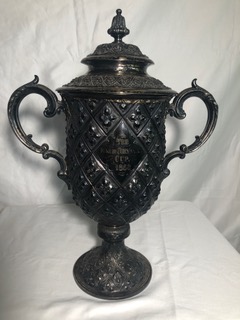
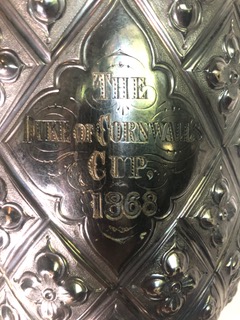
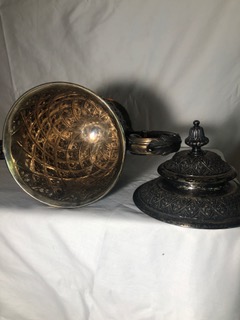
The sterling silver trophy is 11 inches high, and weighs 35 ounces. Engraved on the front, and presumably why she was emailing me in the first place, is the following:

Julie’s initial email concluded with ‘Thanks for any information you can give me.’
Sensing a challenge as well as a story, I got digging.
The hallmarks are as you have stated
The first thing I wanted to do was confirm the trophy was genuine. Julie sent me a photo of the hallmarks:
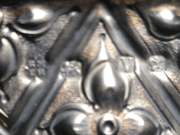
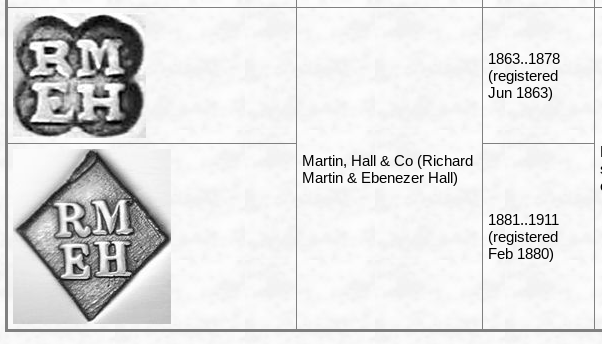
Starting from the left, the first stamp reads ‘RMEH’. This was the maker’s mark of a Sheffield firm, Martin, Hall & Co, and dated the cup to between 1863 and 1878:
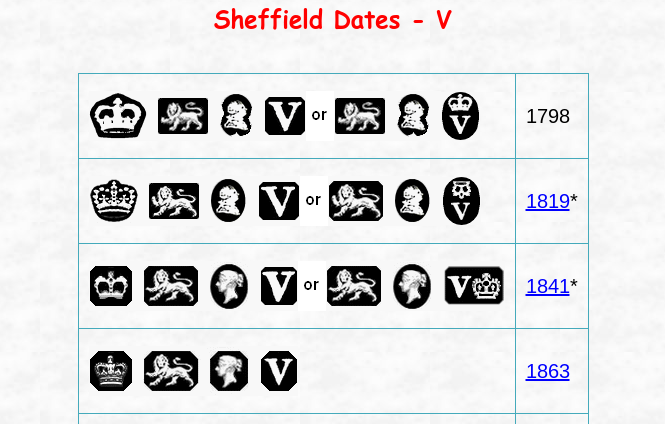
Beside RMEH is a lion, the lion passant. This confirms the cup is sterling silver. The crown, on the far right, is the symbol for a piece that was made in Sheffield. The ‘V’ denotes the year of manufacture. This dated the origin of the trophy to 1863:
As my knowledge of antique silverware ain’t what it used to be, I got all this verified by Payne & Son, an independent Oxford silversmith. They told me that ‘the hallmarks are as you have stated.’ Another silverware expert valued the trophy at around £1000.3
So far, so good. Now for the big questions: who originally owned the cup, how did it come to be in their possession, and how did it get to California?
Wrestling?
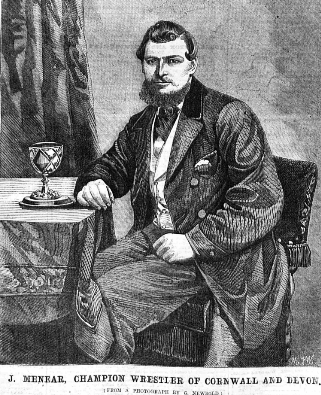
It was at this point that I allowed myself to be seduced by the notion that Julie’s trophy was a wrestling trophy. I knew they were rather ubiquitous, and could turn up in odd places. For example, a trophy won by a Cornishman in South Africa in 1910 was (literally) unearthed by workmen at Tolvaddon, near Camborne, in 2010.4
I learned that London’s Cornwall and Devon Wrestling Society had presented a brand new trophy at their Easter competition in 1863, in honour of their patron (and future Edward VII), the Duke of Cornwall. This date fitted with the manufacture of the trophy currently in California. A Cornish wrestler, Joseph Menear, won the Duke of Cornwall’s cup so often in the 1860s that, certainly by 1869, the society had let him keep the cup in perpetuity. Was the trophy in California Joseph Menear’s long lost cup?
As you can see by the image of Menear above, it wasn’t, but I did get to write about Cornish wrestling in London.5 It seems the Duke of Cornwall had more than one trophy named after him in the 1860s. Besides the one in California and Joseph Menear’s, the Royal Cornwall Regatta presented one as well in 1865.6
How, then, was I going to prove beyond doubt the provenance of Julie’s trophy? Thankfully the answer was staring me in the face.
The Royal Cornwall County Races
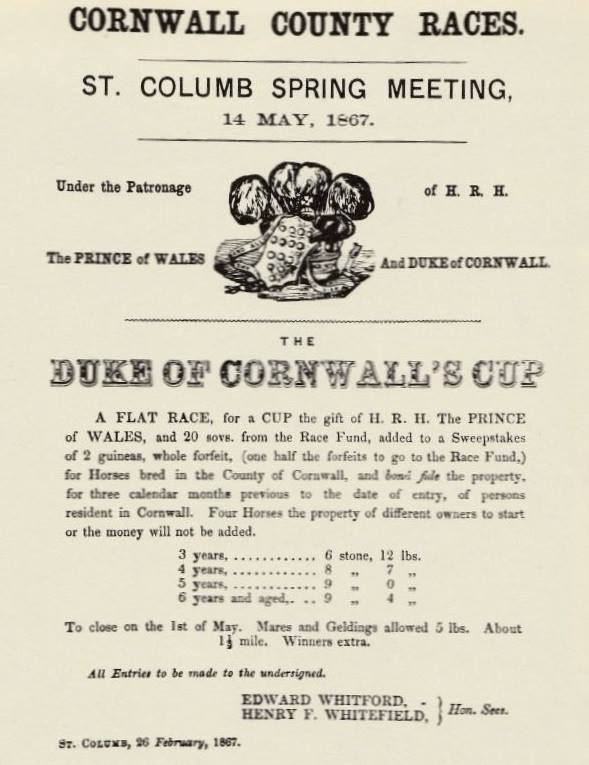
John Hicks Sobey was born in 1838 in Eggbuckland, Devon, to Cornish parents.7 The Sobeys were prosperous, owning the 530 acre Rooke Farm, near Chapel Amble in the St Kew parish. A grade two listed building, nowadays Rooke Farm is a self-catering holiday home.8 John inherited in the 1860s, taking on all the trappings of the gentleman farmer.
A Freemason by 1863, he employed a groom and had some impressive stables. Of the 17 horses at Rooke Farm, several were kept purely for racing, including one in particular, the ‘celebrated’ Why Not.9
Sobey’s passion for horse racing coincided with this particular sport of kings enjoying something of a renaissance in 1860s Cornwall. In 1861 the County Races, in abeyance since 1854, were rejuvenated and took place on a course at New Downs, about two miles from St Columb and possibly close to today’s Trebudannon course.10 The Cornish country set no longer had to venture into Devon for their sport, and by 1862 the races were already firmly established as an important date on the south-west gentry’s social calendar:
From an early hour, visitors began to flock … from all parts of the County: every sort of conveyance seemed to have been put into requisition. The parties from Devonshire, and the eastern parts of the county, came either to Bodmin or St Austell by train and then drove to St Columb, while those from Truro, Redruth, &c., came in cabs, chaises, dog-carts and vehicles of every description.
Royal Cornwall Gazette, May 23 1862, p8
There was a grandstand, refreshment booths, shows, entertainments; in fact it was the perfect place for those with money, and those with money who wanted more money, to see and to be seen. Indeed, newspapers were careful to mention the names of the most important people present.11
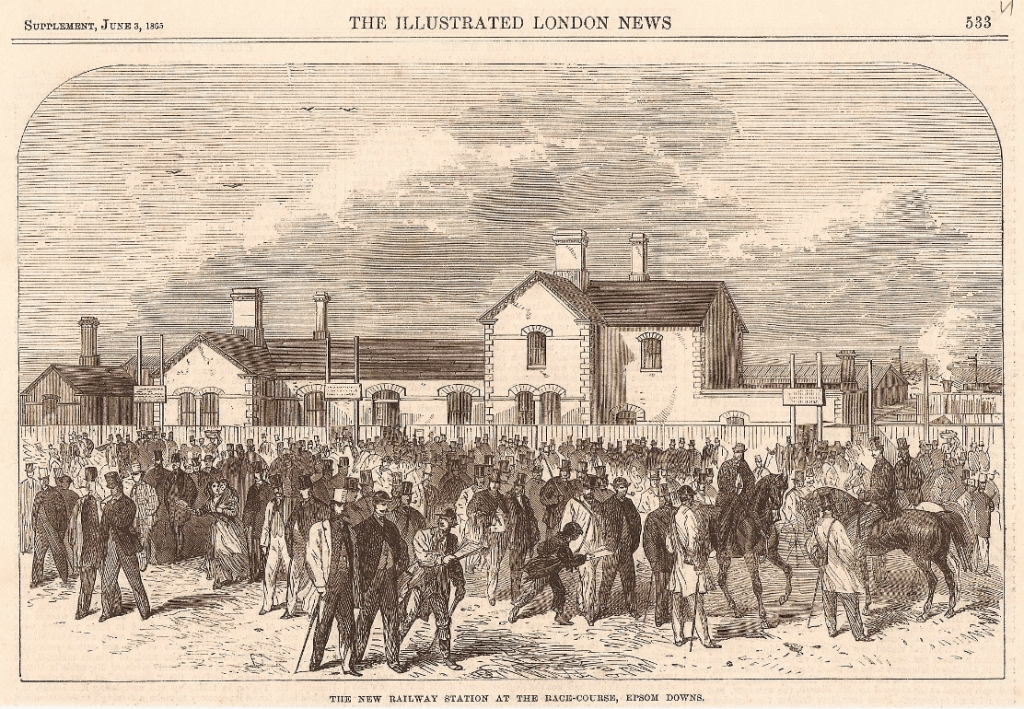
By 1863 the races, held on a single day, Tuesday, 5 May, attracted thousands of spectators. One reporter described the whole affair as ‘the Epsom of the County of Cornwall’.12 A year later Prince Albert Edward, Duke of Cornwall and a known lover of the turf, gave his name to the gathering. Henceforth, the meet would be termed ‘The Royal Cornwall County Races’, and Edward donated a cup to be offered as a prize.13
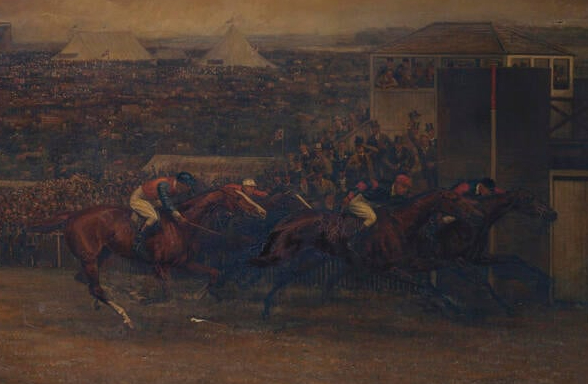
By 1867, John Sobey was competing in races around Cornwall. At Fowey, riding Why Not, he placed fourth in a £5 hurdle race. Why Not had undoubted ability, but was temperamental. The horse had chances to win, but bolted in one heat and refused to take a hurdle in the final. Sobey had brought another of his stable to the meet, but Why Not clearly had something extra.15 If Sobey was planning his racing calendar, then Why Not was the one to take to the Cornish Epsom, and race for the big prizes.
On Tuesday, 19 May 1868, several thousand had gathered at New Downs for that day’s entertainment, though on the whole it was reported that the field was a disappointing one.16 Not that Sobey would have minded. The race he had entered, for the Duke of Cornwall’s Cup, only contained two other competitors, thus greatly reducing his odds.
It was no contest.17 Why Not ran a barnstorming race, finishing a clear four lengths clear of the nearest challenger. Sobey swept up 20 guineas, pocketed the sweepstakes, and of course lifted aloft that year’s sterling silver Duke of Cornwall’s Cup:
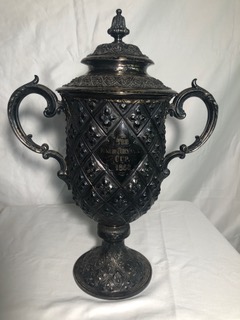
Sobey raced Why Not for the cup again in 1869, but had to be content with third.19 Then he must have made a decision. In August 1871 Rooke Farm was up for auction. Everything was under the hammer, all the buildings, 120 sheep, 60-head of cattle, farming implements, hogsheads of cider, even his 17 horses including, of course, the famed Why Not. One item most definitely not for sale, though, was Sobey’s prized cup. A farewell dinner, attended by 30 local gentlemen, was held in Wadebridge to see Sobey off. He was going to America.20
He arrived in New York on 6 November, 1871. With him was his young son, Herbert. And his Rooke Farm housekeeper, Mary Williams.
Tragedy
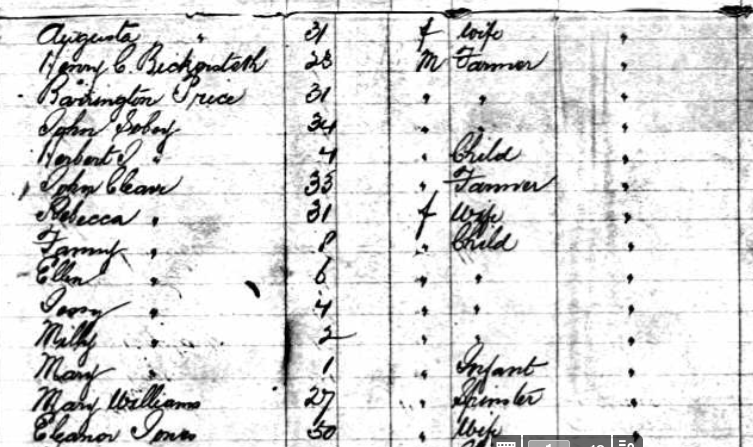
Sobey was a bachelor.21 I’m really not prepared to speculate on the nature of his relationship with Mary Grose Williams, who was born in St Kew in 1843.22 Nor am I going to hypothesise that his decision to emigrate – with his son and his housekeeper – was influenced by any suggestion of a scandal in Cornwall as regards that relationship. Nothing I’ve found points in that direction.
Be that as it may, some time in 1867 John’s son, Herbert, was born in Cornwall. It had to have been around this year because, tragically, father and son drowned at Point of Timber, Antioch, on 13 June 1874. John Hicks Sobey’s death was heard of in Cornwall, but no mention was made of Herbert’s.23 Herbert was around seven at the time of his death:

Sobey’s second son, Arthur Lyne Sobey, was born in around 1872. In the 1880 U.S. federal census, he’s the stepson of Melvin Grover, whose wife (and Arthur’s mother), Mary, was born in England. Arthur had a brother, who had been born on February 10, 1874: John Hicks Sobey. On his social security application, this John Hicks Sobey had to provide his parents’ names, which he duly did: John Hicks Sobey Snr., and Mary G. Williams.25
Somehow or other, the Duke of Cornwall’s Cup passed to the young John Hicks Sobey.
John Hicks Sobey
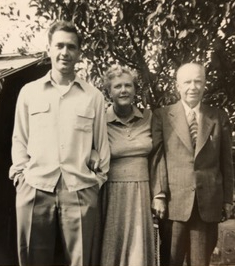
John’s first wife, Lillie, died in 1923. They had two sons, Darrell and Russell.26 Both died within a year of each other in the 1940s.27 In the 1940 U.S. federal census, John is living in Sacramento and remarried to Helen who herself had children by her first marriage. One of John’s three stepchildren is Julie Kong’s father.
John Hicks Sobey died in 1958.28 Eventually, the Duke of Cornwall’s Cup, a time-capsule from Victorian Cornwall with a hundred more stories to tell, was inherited by Julie’s late father, John Wade. Now it’s hers. The last words belong to her. John Hicks Sobey
… raised all three children like they were his own. I think that’s why the trophy meant so much to my dad … I feel like it must hold some valuable history.
Many thanks for reading; follow this link for more top blogs on all things Cornwall: https://blog.feedspot.com/cornwall_blogs/
Do you enjoy my work?
All content on my website is absolutely FREE. However managing and researching my blog is costly! Please donate a small sum to help me produce more fascinating tales from Cornwall’s past!
Your contribution is greatly appreciated.
DonateReferences
- See: https://www.silvermakersmarks.co.uk/Makers/Sheffield-R.html
- See: https://www.silvermakersmarks.co.uk/Dates/Sheffield/Date%20Letters%20V.html
- Email correspondence, July 24 and 18 August 2025. See: https://www.payneandson.co.uk/, https://www.antiquesinoxford.co.uk/
- See: http://news.bbc.co.uk/local/cornwall/hi/people_and_places/history/newsid_8595000/8595221.stm
- See: https://the-cornish-historian.com/2025/08/02/joseph-menear-and-cornish-wrestling-in-london/
- Bell’s Life, August 26 1865, p1.
- England & Wales, Civil Registration Birth Index, 1837-1915, Apr-May-Jun 1838, vol. 9, p398, 1861 census.
- See: https://historicengland.org.uk/listing/the-list/list-entry/1129867, and https://www.rookecottages.net/about-rooke
- United Grand Lodge of England, 1863-1887, Register of Contributions: Country and Foreign Lodges, 322-420 (1832); 258-335 (1863). Royal Cornwall Gazette, August 19 1871, p1, 1871 census.
- The ‘New Downs’ location is mentioned in Lake’s Falmouth Packet, May 20 1865, p1. For the Trebudannon course, see: https://www.pointtopoint.co.uk/courses/808
- Royal Cornwall Gazette, May 23 1862, p8.
- Royal Cornwall Gazette, May 8 1863, p8.
- Cornish Telegraph, May 4 1864, p3.
- From: https://www.rct.uk/collection/406757/minoru-winning-the-derby-26-may-1909-0
- Royal Cornwall Gazette, April 4 1867, p8.
- How many attended the Royal Cornwall County Races? In 1865, for example, 6,000 were present for the events. Lake’s Falmouth Packet, May 20 1865, p1.
- Royal Cornwall Gazette, May 21 1868, p5.
- Stanley Weintraub, The Importance of Being Edward: King in Waiting, 1841-901, John Murray, 2000, p156-187.
- Cornubian and Redruth Times, May 21 1869, p3.
- Royal Cornwall Gazette, August 19 1871, p1; West Briton, October 5 1871, p5.
- England & Wales, National Probate Calendar, (Index of Wills and Administrations) 1858-1995. On John’s death, everything reverted to his widowed mother.
- See: https://www.cornwall-opc-database.org/search-database/more-info/?t=baptisms&id=5659731
- Cornish Telegraph, July 15 1874, p3.
- From: https://www.findagrave.com/memorial/28511243/john-hicks-sobey?
- U.S., Social Security Applications and Claims Index, 1936-2007.
- 1900 U.S. federal census, and: https://www.findagrave.com/memorial/93841273/lillie-julia-sobey?
- California Death Index, 1940-1997.
- From: https://www.findagrave.com/memorial/93841334/john-hicks-sobey?
 Francis Edwards ~ The Cornish Historian
What an incredible story! Your research is equally incredible – thank you so much for the work that you put into all of your research.Kind regardsAlan Mitchell
LikeLiked by 1 person
Mr Edwards, thank you for this. It’s impressive, to say the least. Our family was completely stumped by the existence of this trophy. Only you could’ve solved this mystery.
LikeLiked by 1 person
Many thanks – was a great thing to investigate
LikeLike
Thank you for writing such an amazing article. There was so much detail and history wrapped around the trophy. I throughly enjoyed reading it. You uncovered things I never new! I can’t believe you solved the mystery of the Duke of Cornwall’s Cup from 1868. Thank you from the bottom of my heart.
Sincerely, Julie Kong
LikeLiked by 1 person
Absolutely my pleasure! Thanks for approaching me with such a fascinating piece of history x
LikeLike
What a fascinating read! My mother (Julie Kong) has told me all the research you’ve conducted on this long lost trophy! Thank you for shedding light on an important part of my family’s history. Your research means a great deal to us!!
LikeLike
I really enjoyed reading this piece. Thank you for taking the time to research this trophy. It holds great significance for our family, and thanks to your efforts, we’ve uncovered a fascinating part of our history.
LikeLiked by 1 person