Reading time: 20 minutes
Cornwall is not often in the big sport news of the day. ~ Daily News (London), 6 Feb 1928. Page 15
The Black and the Gold: The Story of Cornish Rugby, by Nick Serpell and myself, will be published in autumn 2027. This post complements our chapter on Cornish rugby between the wars.
Cornish rugby’s state of play
Cornish rugby fans at the onset of the 1927/28 season would have had little to shout about. Since the resumption of the County Championship in 1919/20, the Cornwall XV’s performances had been, well, dire.
From 1919 to the end of the 1926/27 campaign, Cornwall had played 24 Championship matches. They had won just four, losing 18 and drawing two. Cornwall had conceded 270 points and scored 188. Not once had the Cornish team won the South West Division (comprising themselves plus Devon, Somerset and Gloucestershire) and proceeded to the tournament’s knockout stages. Cornwall had also laid claim to the South West Division’s wooden spoon, for losing all their fixtures, in three separate seasons (1919/20, 1920/21 and 1923/24).1
Like I said, dire.
Among the corridors of power in the Cornwall RFU (hereafter, the CRFU), mindless optimism in the face of consistently woeful showings was the order of the day. At a CRFU meeting in May 1923, secretary W. Dennis Lawry (who would die in office a year later), said he had ‘every hope and confidence’ that:
in the season 1923-4 we shall again occupy the proud position we held in the past.
Cornishman, 30 May 1923. Page seven
For that 1923/24 season, Cornwall lost all three Championship games and scored a mere 18 points. Lawry could recall the glory days of 1908, when the Cornish XV were top of the tree, and how he must have wished he was back there.2
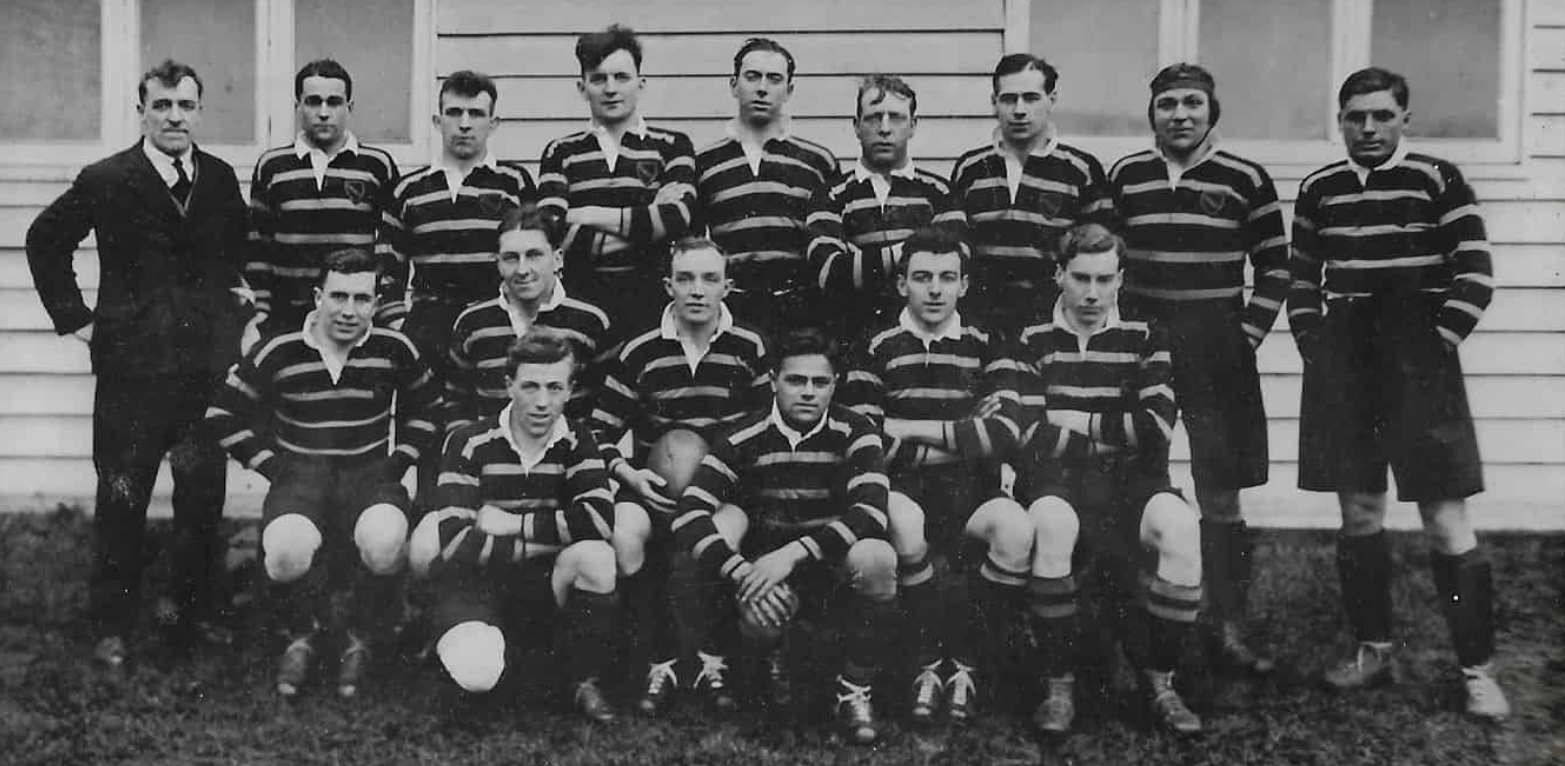
At the start of the 1927/28 season, the CRFU had only nine senior clubs (Camborne, Camborne School of Mines, Falmouth, Hayle, Newlyn, Penryn, Penzance, Redruth and St Ives) to pick their representative teams from. No new rugby ground had been broken east of Truro. Cornwall’s Elementary Schools RFU had only been formed in October 1925, and the Old Boys’ RFU (to cater for 14- to 16-year-olds) would not exist until January 1928.3 Although these schemes would in time prove immensely successful, obviously any promising young bloods were currently far too young to be fully blooded.
Stalwarts of seasons past, such as Redruth’s Harvey Ham and James Richards, or Hayle’s Albert Gibson, were by now past their prime. Others, like Camborne’s Herbert Wakeham and Leonard Hammer, both international trialists, had left Cornwall for work.5
Small wonder that the CRFU, faced with a dearth of local talent, looked past the Tamar for players. Fred Gilbert (from Plymouth) and Ernie Gardner (Cardiff) were both naval men who played for Devonport Services. Both qualified for Cornwall through residency, yet never represented a Cornish club. This policy was controversial, with the CRFU having to defend itself in print over their selections.6
However Gilbert and Gardner, who after all both won England caps, hadn’t come to Cornwall’s aid since 1922.
Likely lads, though, were beginning to appear. The Falmouth forward Ivor Jackett demanded attention, and not just for the fact that he was the nephew of John and Dick Jackett, rugby heroes of days gone by. Camborne’s Foster Selwood, a miner, had pedigree too: his elder brother had been an England trialist. His teammate and partner in the scrum, Bill Biddick, was softly spoken yet utterly unflinching on the pitch.7
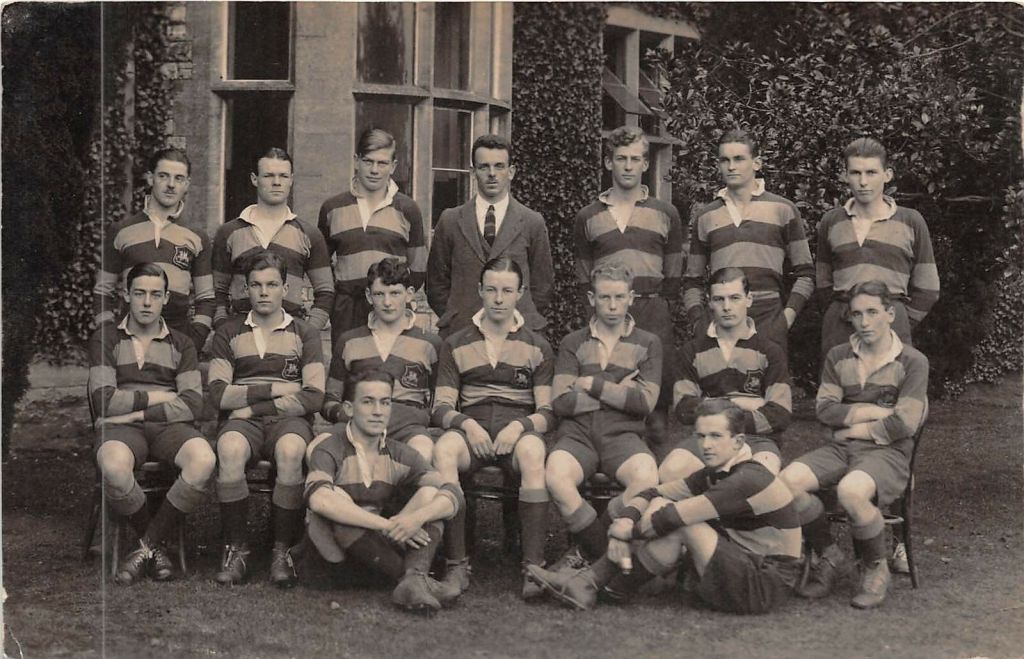
Outside, the Penryn wing George Jago was good enough to have been snapped up by Plymouth Albion; the machinist had been a regular since 1922 and Cornwall’s skipper since 1926. The other wing, Redruth’s Len Roberts, was maturing nicely. Centre Phil Collins’ tackles were so hard opposition fans would regularly heckle him. His new threequarter partner was the up and coming Redruth talent, Roy Jennings, a product of Taunton School’s rugby nursery. Fans were already tipping him for big things.8
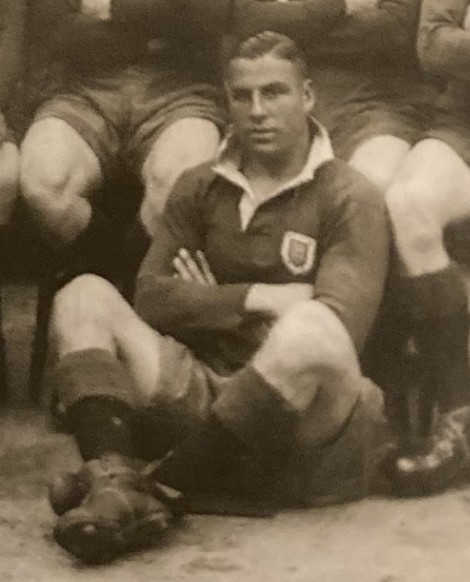
Then there was Camborne’s half-back, the all-round sportsman Fred Rogers. His Indian parentage resulted in him possessing a nickname so un-PC I’ll refrain from repeating it.9
This nucleus had been in the vanguard of a slight upturn in Cornwall’s rugby fortunes. Maybe those fans with shorter memories believed things weren’t so bad after all. Of those four Championship victories mentioned earlier, two had occurred in the 1926/27 tournament.
A convincing 27-12 result over Somerset at Wellington was followed in December 1926 by a 13-3 win at Camborne over a Gloucestershire XV weakened by international trial call-ups.10 Even though it was Devon, undefeated in the South West Division (Cornwall went down to them 12-0 at Torquay), who qualified for the knockouts, this was still the Cornishmen’s best performance in the competition since before the War.
Suddenly it looked as if Cornish rugby might have something to shout about in the near future. As the CRFU’s new secretary, Percy Holman, remarked:
I am pleased to be able to report … an increasing interest being taken in the county matches.
Cornishman, 18 May 1927. Page two
Now there was substance behind all the talk. Could the Cornish XV go a stage further in 1927/28?
Paint London black and gold
The portents for a successful Championship campaign were good. Cornwall’s first two matches would be on home turf, and their back division would be bolstered by the Torpoint-born, Devonport Services full-back Charles G. Gosling.
Though only 20, you could tell Gosling was a thoroughbred. He must have been a ferocious tackler, if the photograph below is anything to go by:
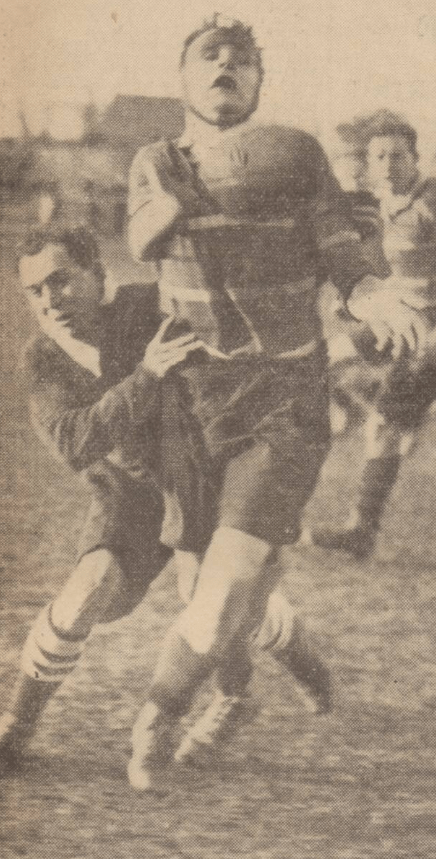
His Cornwall career was relatively brief (just 12 caps), but he represented the Royal Navy and was England’s reserve full-back in 1928. Awarded the OBE in 1945, by 1957 Gosling was the Admiralty’s Director of Officer Appointments.11
Gosling would debut for Cornwall against Somerset at Redruth, on 22 October.12
For 75 minutes, the crowd of 5,000 were treated to a grim spectacle. Somerset missed two kickable penalties. Collins broke and attempted a kick-pass to Jennings, who was so far offside even his home support could see it. Forward rumble followed forward rumble. Roberts and Jago had to go looking for the ball. It was that kind of game. Five minutes to go and it was still nil-nil.
Suddenly Cornwall snapped out of their stupor. Collins and Roberts dribbled the ball ahead. The pack, thought to be too light overall, charged ahead and caught the Somerset 15 napping. The path was clear for Collins to dive and score in the corner. Gosling missed the conversion from way out on the touchline. Three minutes to go.
Somerset roared back into Cornwall’s half, and spun the ball wide from a lineout. They were clear. They could score. They could equalise. Fred Rogers, small of stature but big of heart, slammed the Somerset attacker to the turf, and his forwards rapidly came to assist.
Everyone breathed. A few minutes of robust defending later and Cornwall were victorious, 3-0. Changes would have to be made up front, but of Gosling it was said that:
no full back has ever tackled better for Cornwall since before the war …
St Austell Gazette and Cornwall County News, 26 Oct 1927. Page seven
Next up, at Camborne on 12 November, were Devon. Last minute shuffling in the pack meant that Foster Selwood came in for Bill Biddick, and Ivor Jackett, originally left out, got the nod with James Matthews, a Newlyn fisherman. Jago led his men out as the band struck up ‘Trelawny’. The 7,000 fans crammed into the Recreation Ground went wild.13
In 1930 a columnist satirised a game of Cornish rugby as being where:
30 of the strongest young fellows of Redruth and Penzance were let loose against each other and victory was a matter of the survival of the fittest.
Western Daily Press, 22 Nov 1930. Page four
It was also an unfortunate rule of Cornish rugby that, no matter how big, ugly and heavy their forwards were, Devon’s were invariably more so. But on 12 November, 1927 this didn’t matter.
Cornwall’s pack were lighter and faster, and none more so than Foster Selwood. Fielding the ball outside Devon’s 22, he gassed his man on the outside and then simply rammed through the opposition’s full-back to score in the corner. Gosling missed a tough kick, and Cornwall were 3-0 up.
It wasn’t all plain sailing. With Redruth’s highly-rated half Jack Andrew limping and practically a passenger, the game became a classic war of attrition. Then Jennings intercepted and sprinted 50 yards, with Jackett screaming for the ball outside him. Jennings did what all good centres do: draw the 15, and put your man in for the try.
Jackett fumbled the pass. Jennings may have reflected that he should have done the other thing that all good centres do: sell the full-back the dummy and score yourself. Minutes later, Devon equalised with a penalty. Was this when the game turned?
Fortunately Gosling, who was clearly the find of many a season, and Jago tackled like demons. In the dying minutes it was skipper Jago who triggered the winning move. His cross-kick had Devon scrambling, and Fred Rogers, who knew where to be and what to do, grabbed the loose ball and fed to Jennings. Jennings, to Collins. Collins didn’t fluff his lines. The conversion went wide. Cornwall won 6-3. Their
Indomitable spirit …
St Austell Gazette and Cornwall County News, 16 Nov 1927. Page eight
… had prevailed. This was a big win. Cornwall hadn’t beaten Devon in the Championship since 1922. A mere draw at Gloucester on 3 December would be enough to give them the South West Division.
Biddick came back in for Ivor Jackett, who must have rued that dropped pass. James Matthews was to play his final game for Cornwall. A GWR excursion from Penzance ensured plenty of Cornish support was among the 5,000 spectators.14
Gloucestershire, having lost their opening two matches, were playing for pride on home turf. The first half, and most of the second, was theirs. A try had put them 3-0 up, and going into the final quarter everyone from Cornwall was looking worried. Attacks from Jago and Roberts had been rebuffed. Jennings had missed a penalty. A loss here would mean playoffs. It was looking ominous.
Then Cornwall were awarded a penalty on the half-way line, dead centre. The ball was thrown to Roy Jennings, who possessed a massive hoof. Think Elliot Daly, rather than George Ford. The crowd hushed. He can’t miss this.
Jennings rocked back a few paces, took aim, moved forward and put his laces through the leather. It was a Boys’ Own kind of kick, slammed hard and high and true enough to cross the uprights fully 50 metres away. That lad’ll play for England one day.15 Cornwall 3, Gloucestershire 3.
It was enough. Cornwall were going to London to play Middlesex in the semi-final. The Cornish XV hadn’t been there since the 1908 Olympics (when they were silver to Australia’s gold), and no Cornish club had ever played there. Camborne RFC led the way, ‘making a first visit to London’ when they took on Surrey’s Old Blues in March 1930, and were photographed by the cenotaph:16
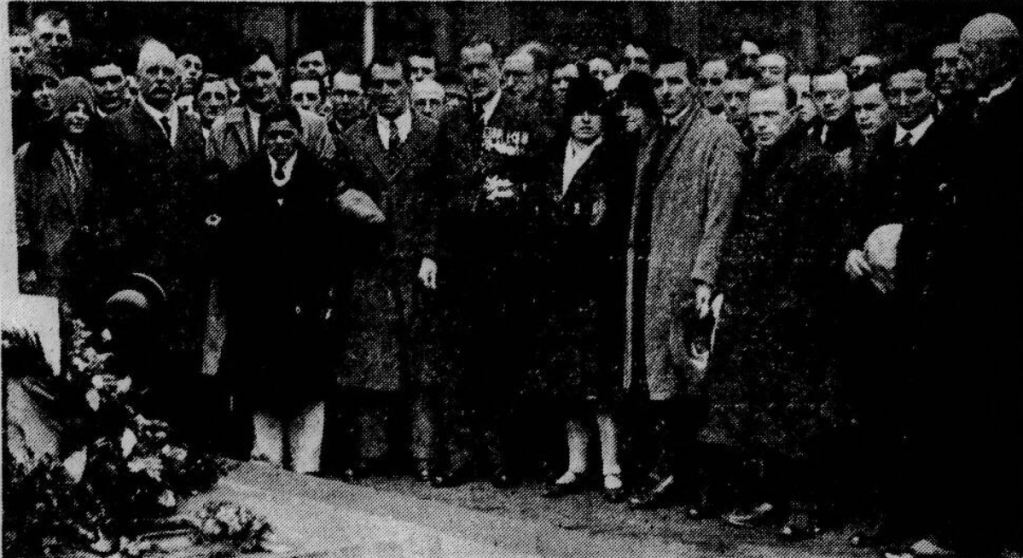
Cornish rugby was back on the map, but no one gave Cornwall a prayer. Even the Cornish press was less than belligerent. Back in 1908, Cornwall’s XV had developed something of a swagger, and when that team had lined up against Middlesex in their own semi-final, the Londoners were dismissed as a bunch of lily-livered toffs:
Varsity men and public school boys, who will probably crack up when opposed to the hurricane tactics of the Cornishmen …
West Briton, 17 Feb 1908. Page three
On 4 February 1928, at Twickenham no less, this current Cornish XV would be playing a Middlesex side containing six internationals, including England’s current captain, Ronald Cove-Smith, who would win a Grand Slam in April 1928. They also boasted his predecessor, Wavell Wakefield, a Grand Slam winner himself:
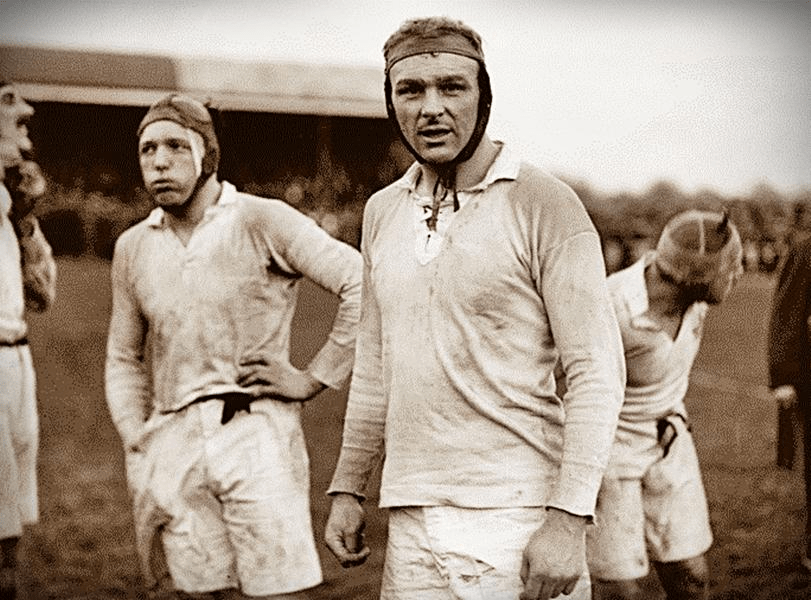
Wakefield’s presence on the pitch alone was intimidatory. Fame and success aside, his belief in the sheer physicality of rugby led him to declare that:
it is one of the glories of rugger that you can put your shoulder into a man with all your strength … knowing that if you stave in a rib or two of his he will bear no grudge against you.
From: Collins, T. A Social History of English Rugby Union. Routledge, 2009. Page 74
All of which led the Cornish newspapers to produce low-key pronouncements. For example:
Middlesex will undoubtedly have a powerful XV, but they are not unbeatable, and Cornwall’s style may easily upset their machinery.
St Austell Gazette and Cornwall County News, 12 Feb 1928. Page seven
The CRFU were aware of all this. They needed to give their team every possible chance. For a start, they needed the right team. In an unprecedented move, a trial match prior to the semi-final was held in January, Cornwall versus The Rest.18 From this game the following XV was selected:
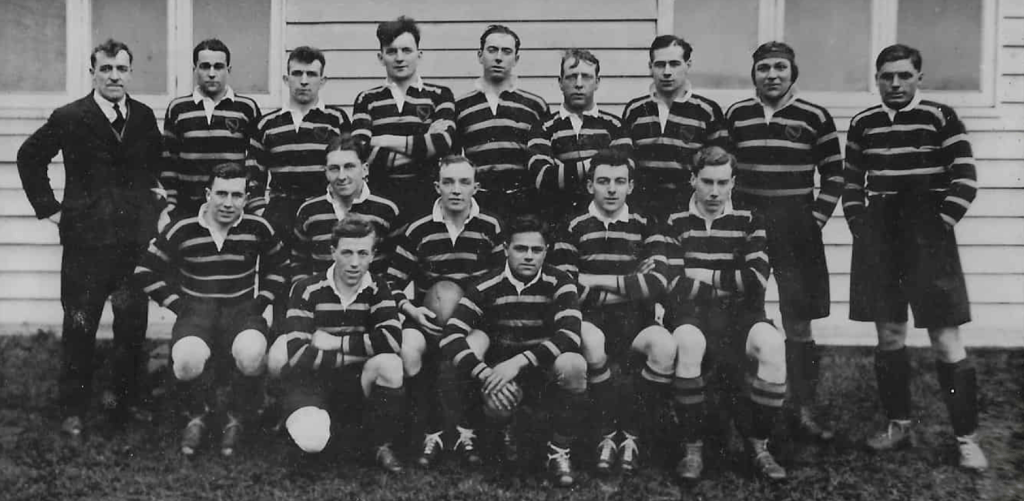
Of the players not yet mentioned, Hugh Maddrell had learned his rugby at Cheltenham College prior to taking up a career in agriculture. PC Edgar Brooker would be a policeman for 30 years, retiring in 1958. Gwennap-born farmer’s boy Percy Evans was there to add some steel: in 1926 he had been suspended for kicking a prone opponent. Nicky Peake had exceptional swimming ability and courage: he saved two girls from drowning in 1931. Joseph Hollow was a tough labourer from Phillack. Their trainer, George Thomas, knew all about big matches: he had played for Cornwall against the 1924 All Blacks.20
This Cornish team were also, as Sir Edward Nicholl of the London Cornish Association remarked:
Cornish born and bred …
Cornishman, 8 Feb 1928. Page six
The CRFU had the men, now they needed the support. They needed to make Twickenham their own. They needed to paint London black and gold.
Back in December 1927 the London Cornish Association had been contacted by the Union, requesting their hospitality and assistance. The GWR was encouraged to lay on an excursion train for a legion of Cornish fans, and local clubs were exhorted to advertise and encourage the cut-price travelling deal.21
The CRFU certainly created a buzz. In early 1928 the owner of Camborne’s Cinedrome approached the Union with a proposal to film the Middlesex game and tour it on Cornwall’s burgeoning cinema network. The proceeds were to be split 50/50. Alas, the deal fell through.22
The miners, machinists, fishermen and policemen of the Cornwall XV arrived at Paddington via the Riviera Express on the Friday evening. Waiting for them were the dignitaries of the London Cornish Association, who greeted them like conquering heroes.23
A black tie dinner had been laid on at a swanky London hotel. Many of the men, used to croust breaks of bread and dripping, must have found it something of a culture shock. Back down west, Camborne’s biggest attraction one Christmas had been the Relief Committee’s food depot.24 Here in London it was all cigar smoke and brilliantine:
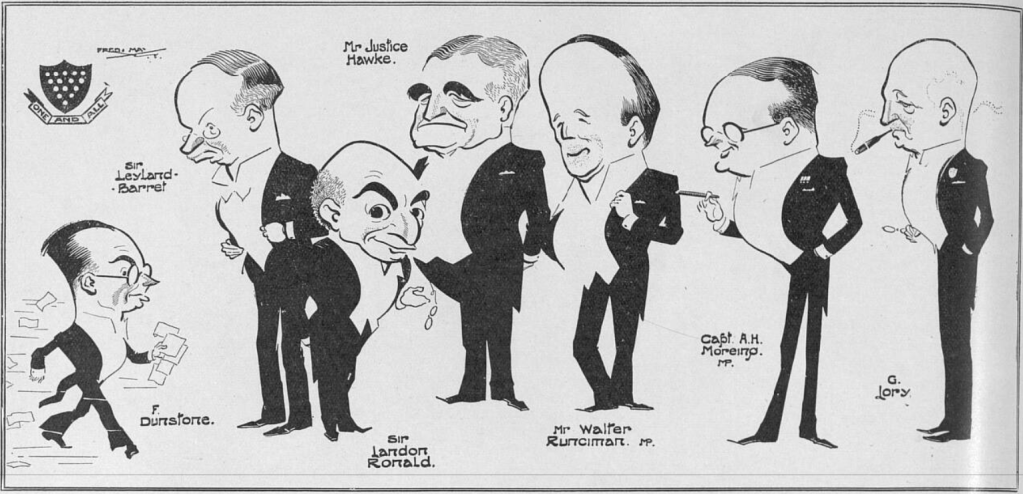
Wavell Wakefield was present, grinning outwardly (and doubtless cringing inwardly) at the good-natured jibes about his team’s chances. Later, the Cornish contingent were whisked to the Palace Theatre to patronise a hit play, where they were cheered to the rafters.
Some plans fell through. Dismal weather meant Twickenham was unplayable, scuppering the Association’s scheme of a hardcore grouping of 200 Cornish seats around which the excursionists could congregate. The game had to be switched to Richmond, but no matter. The 1,260 fans stepping on to Paddington’s platform at 6am on matchday were unperturbed. Wherever their team were playing, they would make their presence felt.
This early version of Trelawny’s Army certainly baffled London’s rugby cognoscenti:
Some of these before the match caused considerable amusement by tying a Cornish pastie [sic] to one of the crossbars. Attempts at community singing were made, but there was more laughter than song.
Daily News (London), 6 Feb 1928. Page 15
In other words, this was a typical Cornish rugby crowd, acting like many Cornish rugby crowds before and since – and acting in a manner alien to their opposition’s. The ground was heavy and the weather damp. It might have been a Saturday afternoon back home.
Middlesex, though, had come to play, and their threequarters attempted to run the Cornishmen off the pitch. But Cornwall had a pack with speed where it lacked beef, with Jackett, Evans, Peake and Brooker working like terriers in defence. Jago and Gosling, whenever the line was breached, were always there. Half-time, and it was nil-nil. Middlesex were blowing hard, and must have wondered who was writing the script.
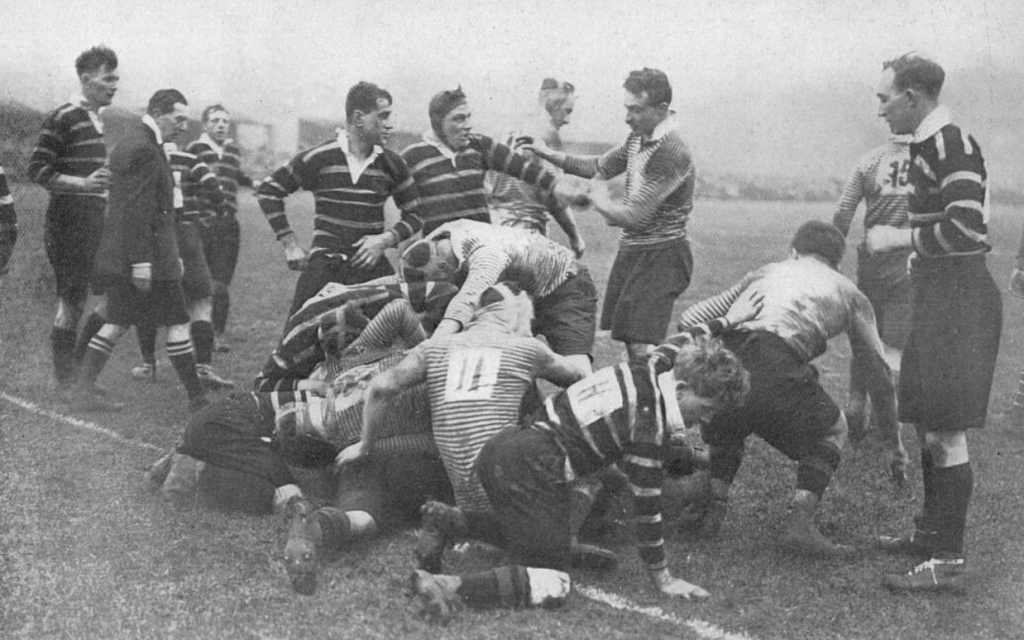
Cornwall, on the other hand, had extensive experience of tight matches. If you could say one thing about the 1928 XV, they certainly knew how to take a game deep, and see who would blink first.
This time, it was Cornwall. With an hour played Middlesex scored, and though the try was unconverted it put them 3-0 up. Whilst the kick was being lined up, Jago gathered his men under the ‘posts and gave them a rocket. They hadn’t come all this bleddy way to lose, and their fans hadn’t spent money they could ill-afford to see them lose. Find a way.
Cornwall, fired up and with a pack led by Biddick (who must have spent the afternoon engaged in a private war with Wakefield) battered the Londoners’ line. Their support hollered them on, and on, and on. Eight minutes left, and the ball rolled loose from yet another Cornish rush. Jack Andrew, limping again, couldn’t reach it. But Fred Rogers could. Unchallenged he darted in, grabbed the ball, and scored. Pandemonium reigned.
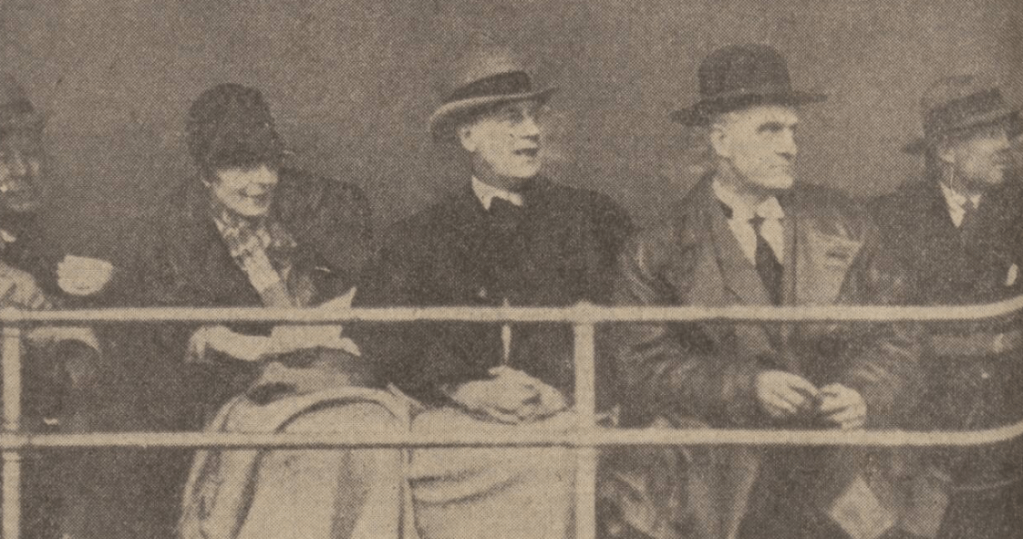
Then the crowd hushed for Jennings to take the conversion. Mercifully it was a straightforward one, and lest we forget, Cornwall hadn’t converted a try all championship. This time, Roy delivered. Cornwall 5, Middlesex 3. Who’s laughing now, pard?
The victory was described in London as a ‘sensation’.25 The CRFU received a letter of congratulation from the future Edward VIII. Wavell Wakefield later rated Bill Biddick the toughest opponent he ever faced – praise indeed. Fred Rogers was a good enough cricketer to play with Harold Larwood and Bill Voce, but he must have dined out on that try for evermore.26 The headline over his obituary in 1981 read:

John Jackett’s ghost
The final, in Bradford on 10 March, would be against Yorkshire, champions as recently as 1926. They weren’t a big-name XV, but they were certainly big, and they were on home turf.27
A thousand Cornish fans made the 400-mile trip and, bedecked in their black and gold livery, took Bradford over that Saturday. Camborne’s Wesleyan chapel had let it be known that Bradford’s own nonconformist place of worship would be open as a left-luggage office for the hordes of travellers, but few would have dispensed with their overcoats. In freezing temperatures, the pitch was equal parts mud and snow, and most of the match was played in a blizzard.
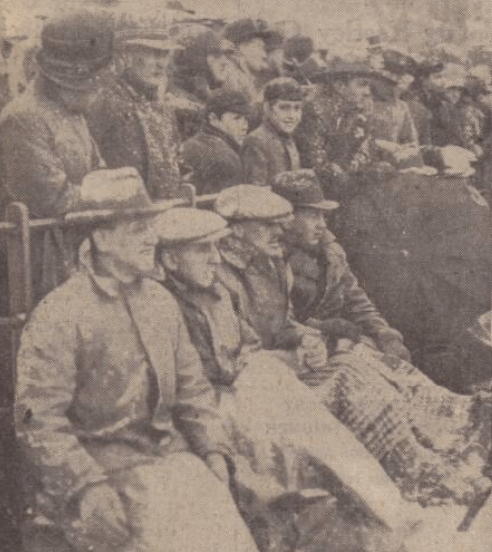
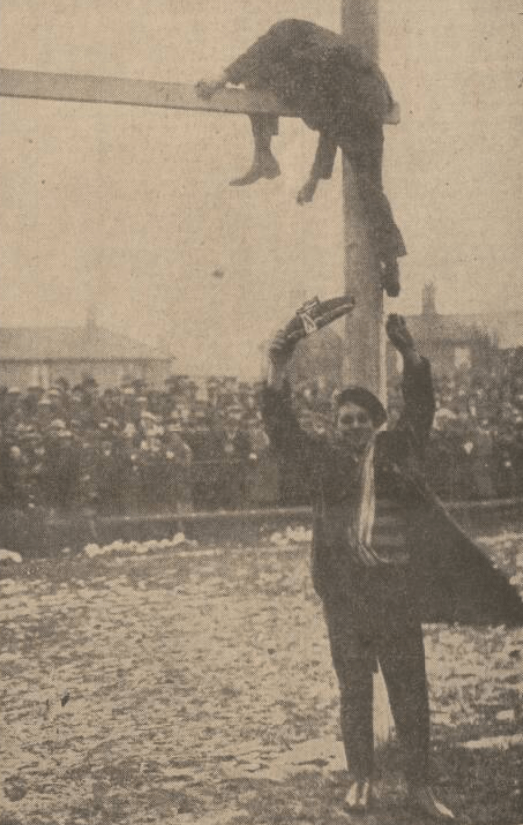
The Cornwall XV – unchanged after that famous win over Middlesex – had journeyed up on the Thursday and were engaged in a light warm-up on Friday morning when a motorcar purred into the ground. Out stepped a middle-aged man of handsome bearing. Ivor Jackett must have grinned. The man was his uncle, John Jackett, long a native of Dewsbury, come to sprinkle his magic on the Cornishmen. He wasn’t missing this game.
Nor were other ex-pats, men who had signed for the northern union/rugby league in years past, but never forgot their roots. There was Tommy Harris and Harry Launce, Ernest Rodda and Sam Carter. Tom Morrissey couldn’t make it, but his wife was there.28 Cornwall’s hotel was swarming with well-wishers, stepping over the piles of good luck telegrams that had winged in from America, Canada, South Africa, Australia. The Bradford Cornish Association provided hospitality to rival anything their London counterparts laid on.
In all 14,000 braved the elements. What they witnessed was, at the time, the toughest Championship final ever played. One eyewitness noted that:
knock-outs were numerous …
St Austell Gazette and Cornwall County News, 14 Mar 1928. Page three
Even local rugby league players, curious observers of what was the rival code’s biggest domestic game of the season, were astounded at the brutality on display. Jennings had called a mark in midfield; on doing so he was knocked flat and twisted his ankle. Cornwall were shorn of a major attacking option, but in reality they were always behind the game. Yorkshire took the lead after ten minutes and never relinquished it.
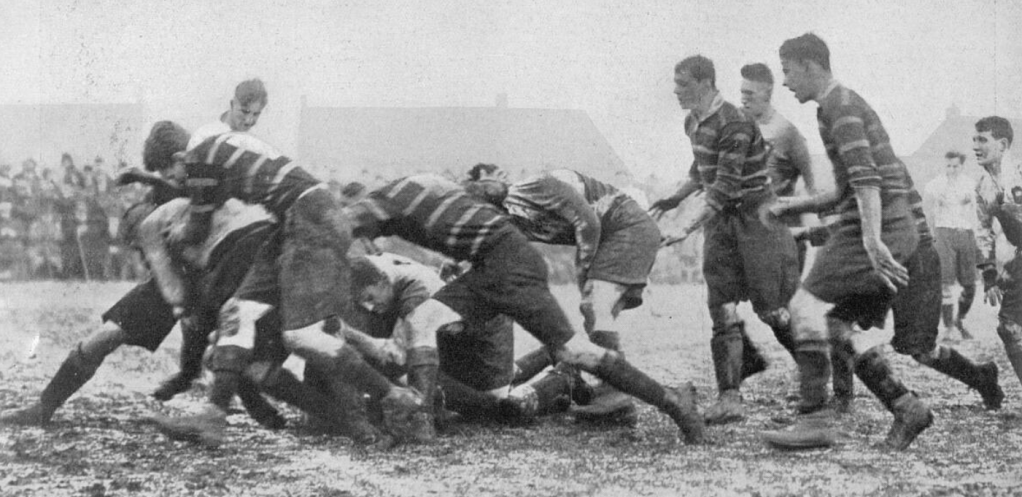
But they were given a game of rugby. Twice Cornwall came within a point of their total. The final quarter, as the snow pelted down, was essentially a melee, as the visitors’ hysterical support hoped for another opportunist try to equal the one in Richmond. But it never happened. Phil Collins was the only man to cross Yorkshire’s line, who won 12-8.
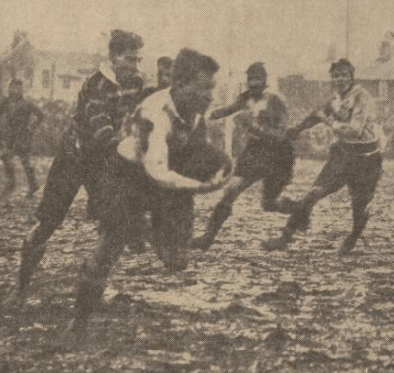
The Cornwall XV hurrahed the home support in the grandstand, and came away with enhanced reputations as sportsmen and hardcases extraordinaire. Surely next season would be the one?
End of an era
It wasn’t. In 1928/29 Cornwall won nothing except the South West Division’s wooden spoon, and only scored a measly 13 points. Joseph Hollow, Percy Evans and Charles Gosling only had, at best, a few more seasons of rugby for Cornwall. Just four men from the 1928 final – Roy Jennings, Phil Collins, Len Roberts and Foster Selwood – were playing for Cornwall by the mid-1930s.
Ivor Jackett was possibly a better fencer; he was still competing in notable tournaments in the 1950s. George Jago travelled to America. In 1930 he was scoring tries for Yale.29
Cornwall wouldn’t reach another Championship final until 1958. But it wasn’t until 1991 that, as hooker Graham Dawe remarked, the ghost of 1908 – indeed, the ghost of John Jackett – was finally laid to rest.30
Many thanks for reading; follow this link for more top blogs on all things Cornwall: https://blog.feedspot.com/cornwall_blogs/
Do you enjoy my work?
All content on my website is absolutely FREE. However managing and researching my blog is costly! Please donate a small sum to help me produce more fascinating tales from Cornwall’s past!
Your contribution is greatly appreciated.
DonateReferences
- Figures are from: Salmon, T. The First Hundred Years: The Story of Rugby Football in Cornwall. CRFU, 1983.
- Read the story of the 1908 Championship here: https://the-cornish-historian.com/2025/03/28/1908-and-all-that/
- CRFU Committee Minutes, 27 Oct 1925; West Briton, 19 Jan 1928. Page three.
- Image from: Serpell, N. Hellfire Awaits: 150 Years of Redruth RFC. Pitch Publishing, 2025. See my profile of Fred here: https://the-cornish-historian.com/2025/06/28/cornwalls-rugby-codebreakers-part-two/
- See my profiles of Herbert and Leonard here: https://the-cornish-historian.com/2025/12/13/cornish-rugbys-england-trialists-1919-to-1939/
- For example: Cornish Post and Mining News, 5 Nov 1921, page three, and 31 May 1924, page seven.
- See the story of John Jackett here: https://the-cornish-historian.com/2024/06/29/in-search-of-john-jackett-king-of-cornish-sport-part-one/. A profile of Dick Jackett is here, along with mentions of Bill Biddick and the elder Selwood: https://the-cornish-historian.com/2025/12/13/cornish-rugbys-england-trialists-1919-to-1939/
- St Austell Gazette and Cornwall County News, 27 Oct 1926. Page eight. Phil Collins’ son, the great John Collins, recalls his father’s defensive efforts being booed by irate opposition support.
- West Briton, 26 Mar 1981. Page 44.
- Gloucestershire Citizen, 11 Dec 1926. Page three.
- Gosling’s naval career is summarised here: https://www.unithistories.com/officers/RN_officersG3.html#Gosling_CG
- The game is summarised from: St Austell Gazette and Cornwall County News, 26 Oct 1927. Page seven.
- The game is summarised from: St Austell Gazette and Cornwall County News, 16 Nov 1927. Page eight.
- The game is summarised from: Cornish Post and Mining News, 10 Dec 1927. Page six.
- Of course, Roy never did. See here: https://the-cornish-historian.com/2025/12/13/cornish-rugbys-england-trialists-1919-to-1939/
- Daily Express, 3 Mar 1930. Page 17. Technically, the Blues’ ground at Fairlop only became part of Greater London in 1965, but nobody seemed too bothered back in 1930.
- Image from: https://www.rugbymeet.com/news/388222062086/wavell-wakefield-il-barone-di-kendal. For more on Wakefield, see: https://en.wikipedia.org/wiki/Wavell_Wakefield,_1st_Baron_Wakefield_of_Kendal. For more on Cove-Smith, see: https://en.wikipedia.org/wiki/Ronald_Cove-Smith
- Cornishman, 18 Jan 1928. Page six.
- Image from: https://www.crfu.co.uk/home/gallery/
- Searle, K. One & All: A History of Policing in Cornwall: The Cornwall Constabulary 1857–1967. Halsgrove, 2005. Page 158. Cornishman, 17 Feb 1926, page two; 1 Dec 1926, page seven; 20 Aug 1931, page four. 1921 census. For more on the 1924 Cornwall-New Zealand fixture, see: https://the-cornish-historian.com/2024/09/21/the-magnificent-seven-meet-the-invincibles/
- CRFU Committee Minutes, 14 Dec 1927.
- CRFU Committee Minutes, 12 Jan 1928.
- The build-up and the match itself is summarised from: Daily News (London), 6 Feb 1928, page 15, Cornishman, 8 Feb 1928, page six.
- Cornishman, 4 Jan 1922. Page two.
- Illustrated Sporting and Dramatic News, 11 Feb 1928. Page 290.
- CRFU Committee Minutes, 8 Feb 1928. West Briton, 5 Jan 1984. Page six. Larwood and Voce played at Camborne in the 1930s: https://the-cornish-historian.com/2023/04/28/bodyline-at-north-roskear/
- The build-up and the match is summarised from: Cornish Post and Mining News, 3 Mar 1928, page eight, Daily News (London), 8 Mar 1928, page 12, St Austell Gazette and Cornwall County News, 14 Mar 1928, page three.
- See: https://the-cornish-historian.com/2025/06/21/cornwalls-rugby-codebreakers-part-one/, and https://the-cornish-historian.com/2025/06/28/cornwalls-rugby-codebreakers-part-two/
- The New York Times, 30 Mar 1930. Page one. Express and Echo, 24 May 1956. Page nine. Blackwell, H. C. From a Dark Stream: The Story of Cornwall’s Amazing People and Their Impact on the World. Truran, 1986. Page 219.
- Yorkshire Post, 22 Apr 1991. Page 20.
 Francis Edwards ~ The Cornish Historian