Reading time: ten minutes
Mine and Nick Serpell’s forthcoming book The Black and the Gold: The Story of Cornish Rugby will have a complementary website. This will carry all the facts, figures, stats and images that we feel are relevant to the book itself.
One of our webpages, ‘The Internationals’, seeks to list all the Cornish players, men, women, union and league, who have represented a country at senior level. We’ve applied the following criteria: players have to have been born in Cornwall and/or have Cornish parentage, or they have to have played for a Cornish club at senior level.1
With that it mind, the first Cornish-born rugby international represented South Africa…
Devon are beating Cornwall – again
It’s Saturday, 12 January 1889. The Devon rugby team have spent five hours travelling to Redruth for a game against Cornwall. On arriving in the town the locals greet them with ‘loud and deep … expressions of contempt.’2 The Recreation Ground, where they are to play, is equally uninviting. The pitch’s pronounced slope makes its lower half a quagmire. Poor gate and entrance organisation puts a thin crowd of around 600 in a bad mood.
To make matters worse, there’s no referee, and a search party is sent off to find a man brave enough to officiate. Play finally gets under way, just as whatever heat and light there is from the sun begins to dissipate. The only positive thing to say about the conditions is it isn’t raining.
Devon win by a try to nil, then rapidly evaporate back over the Tamar. The fixture is truly unworthy of further mention, were it not for the fact that, making his Cornwall debut, indeed, his only run-out for the Cornishmen, was a man called Wilfred Trenery.
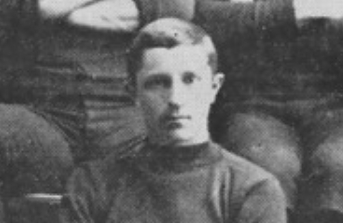
Wilfred Eldred Trenery
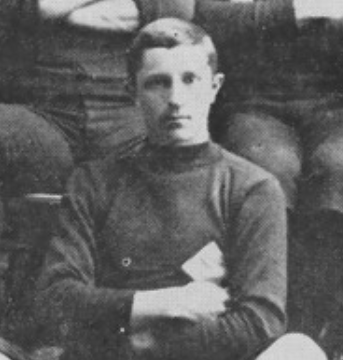
Wilfred was born in 1867, this being registered in Redruth.4 In the 1871 census he’s living with his family in Fore Street, Phillack. His father, locally-born Eldred, is a chemist and grocer.
Eldred Trenery must have been prosperous; by 1901 the family business had relocated to Islington. For some reason, following in his father’s successful footsteps wasn’t for Wilfred, who was the eldest son. He became a miner and moved further west. He also took up rugby football, joining Penzance RFC as a forward. In February 1889 we find him playing alongside a doyen of the early years of the Cornwall RFU, W. Dennis Lawry.5
Obviously, Wilfred must have had some talent. In November 1888 he was selected for an East v West Cornwall trial match at Falmouth, acquitting himself well enough to gain selection for the next trial at Redruth in December.
These games provide a snapshot of the game in its infancy. Cornish rugby had no clubs east of Truro; the ‘west’ team comprised men from Camborne, Hayle and Penzance; the ‘east’ from Redruth, Falmouth and Truro. The East had 14 men; the West, 16. The second trial was to be between a team of 15 and one of 20.
The Cornwall RFU had only been in existence since 1884, and had yet to affiliate with the RFU. Wilfred’s debut match against Devon was only the tenth game Cornwall had ever played, and all against their nearest foes. They’d only won twice. The CRFU would not enter a XV into the County Championship until 1892.6
By which time, Wilfred had already played international rugby.
Cornish rugby in South Africa
Wilfred of course wasn’t the first Cornishman to emigrate to South Africa, but he was certainly the first Cornish rugby player there of note. He broke a path that was to be followed by a great of the game: Redruth’s James ‘Maffer’ Davey:
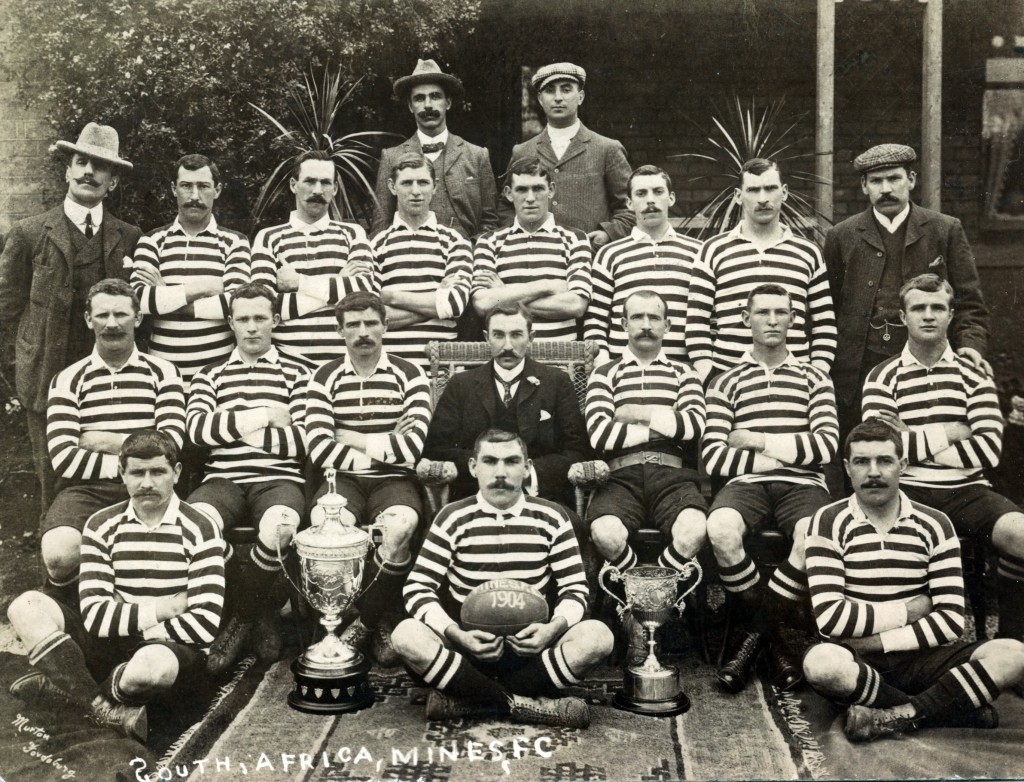
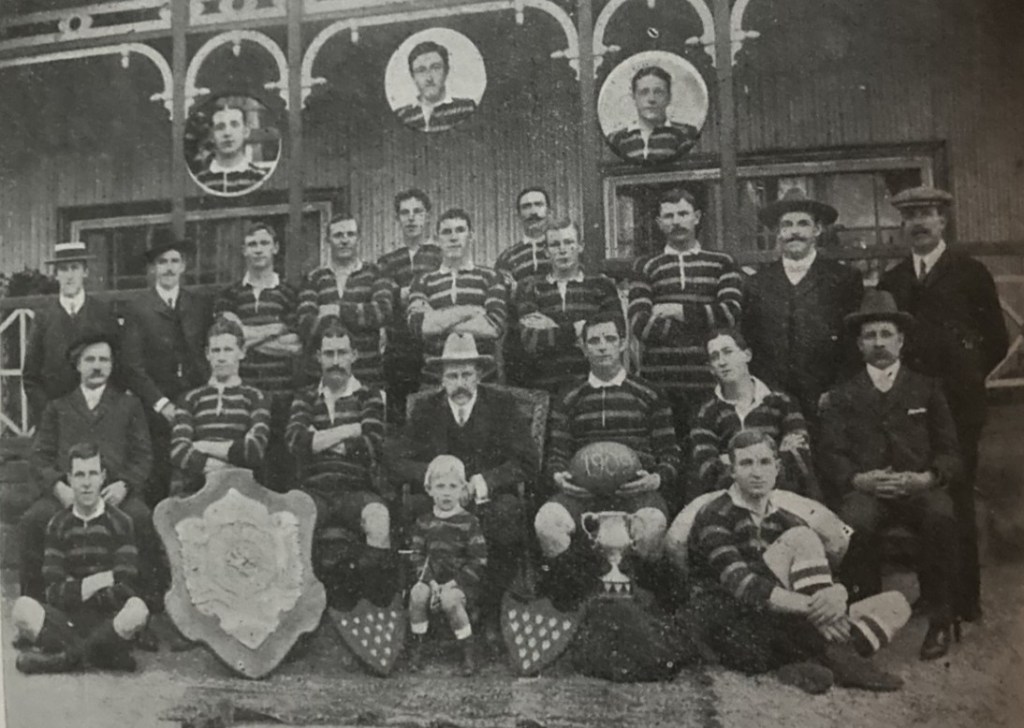
Maffer wasn’t alone. The Randfontein squad of 1909 features 12 Cornishmen. One, Alfred Rodda, had an England trial; another, Richard Davey, won the 1908 County Championship with his namesake, Maffer Davey:
Shortly after that loss to Devon in January 1889, Wilfred left Cornwall for South Africa. He found work at the De Beers diamond mine, Kimberley and picked up rugby once more, turning out for Pirates RFC, though he must have quickly switched allegiance to clubs in the Kimberley region.9 Wilfred was in the right place at the right time. South African rugby, also in its infancy, would shortly receive a prestigious touring party, the 1891 British Isles squad, and play their first ever internationals.
Springbok #20
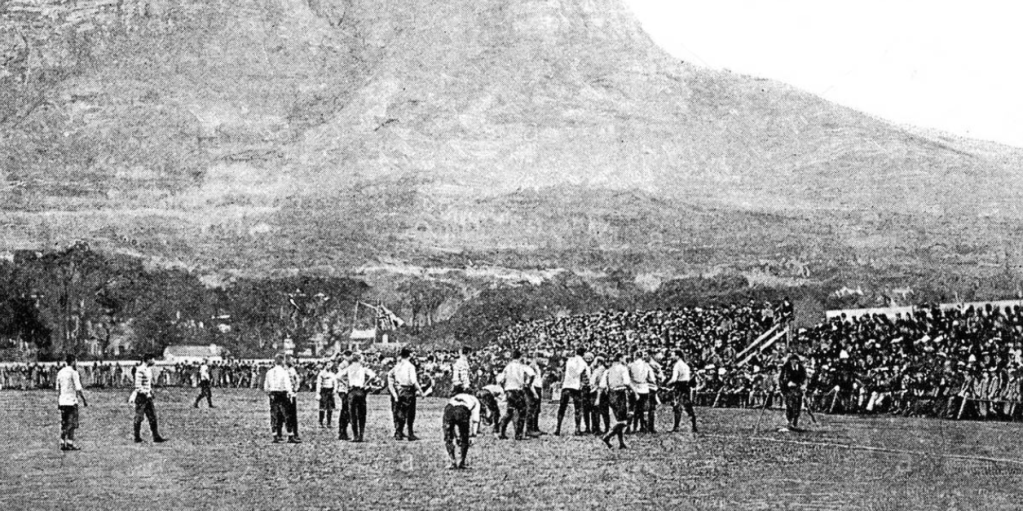
It’s called a British & Irish Lions tour now, but in reality this was a squad of Oxford and Cambridge Blues with a few Scotsmen thrown in. The 1891 tour was, though, the first officially RFU-sanctioned tour of a team from the British Isles. And they could certainly play. They were undefeated in 20 matches, scoring 226 points and conceding only one.11
Their visit to South Africa was certainly viewed enthusiastically in that country. According to the South African Empire,
this, the most characteristic of English outdoor sports, has taken firm hold, and football is played in almost every village … at all the large centres, such as Cape-town, Kimberley, Port Elizabeth, Johannesburg … football clubs flourish vigourously.
from: Sporting Life, 24 Jun 1891. Page six
A tour of a team from the mother country was welcomed with open arms. Wilfred got three opportunities to see the British Isles XV up close and personal. He was selected for the Cape Colony match on 13 July, and then for the Griqualand West XV at Kimberley on 20 July. His showing in the second match elevated his status in South African rugby circles:
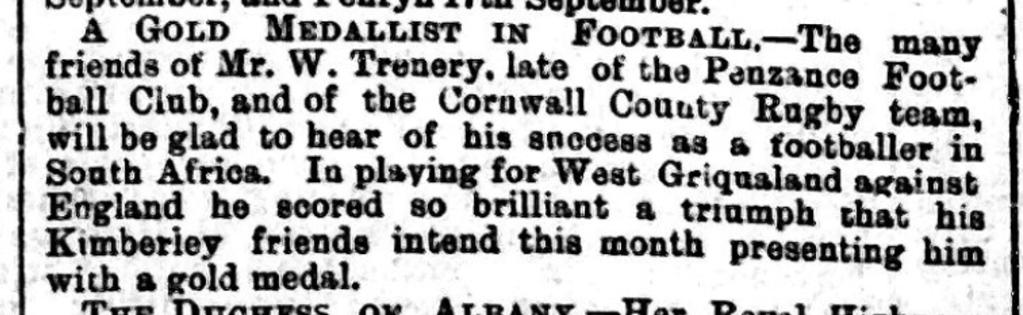
What was the ‘brilliant triumph’? He can’t have scored; the British Isles beat Griqualand 3-0. Clearly, Wilfred must have put in a hell of a performance. He didn’t make the cut for South Africa’s first international match ever, against the British Isles at Port Elizabeth on 30 July, but he lined up for the second, in Kimberley on 29 August. Wilfred, in a South African XV with two Englishmen and a Scotsman, was retrospectively given the Springbok heritage number 20.
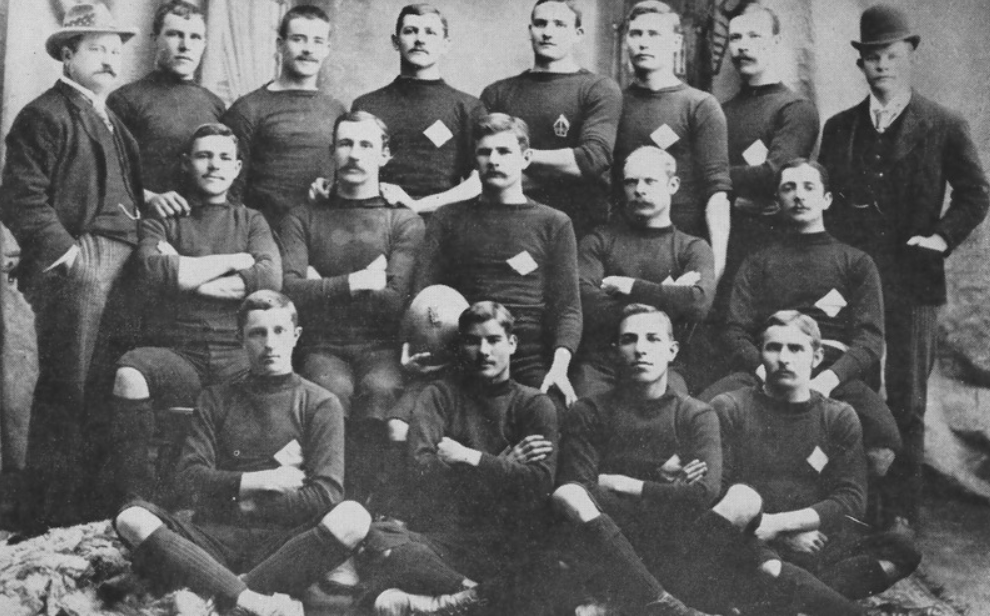
Middle, l to r: Fred Alexander (Malmesbury), Bob Shand, Bob Snedden (Dunfermline, captain), Oupa Versfeld, Ben Duff
Front, l to r: Wilfred Trenery, Jackie Powell, Toski Smith, Harry Boyes12
It was the tightest game of the entire tour.13 The British Isles, despite opting for the four threequarter system recently pioneered in Wales, never looked like touching down and were given a tremendous battle up front. Indeed, South Africa were unlucky not to score themselves, and were it not for a solitary drop goal and the fact that one of the home XV had to be stretchered off in the second half, the game would have ended in a hard-fought scoreless draw. As it was, the British Isles won 3-0.
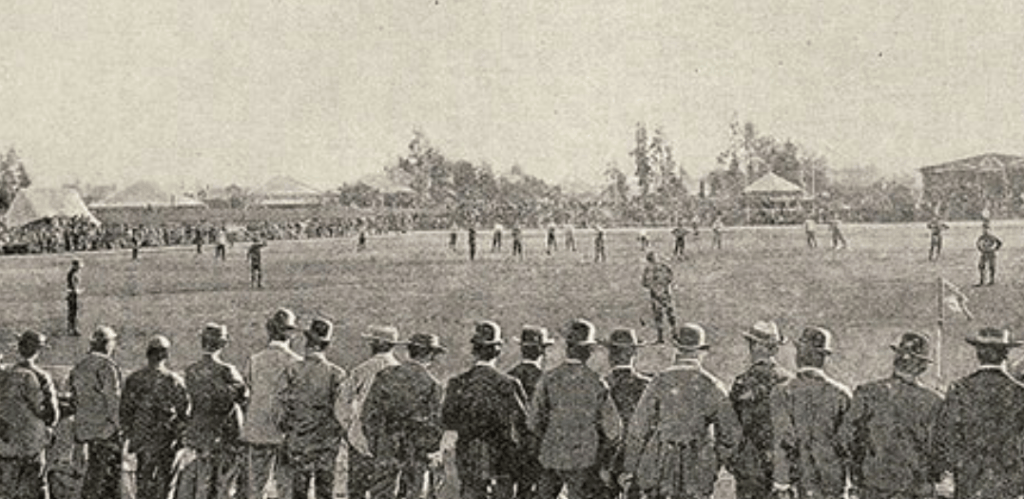
Barry ‘Fairy’ Heatlie, the Worcester-born Springbok, later recalled that
We lost only by a drop goal from a mark to nil. I remember that mark well, as I had only just failed to tackle Mitchell before he made it just on our side of the halfway line. Maclagan went up to him to tell him what to do and he replied, ‘It’s all right Bill, I’ll drop a goal’ – and by Jove, he did, and won the match.15
The injured South African was Wilfred himself, but not before he had put in an almighty shift. His performance was noted in Cornwall with pride:
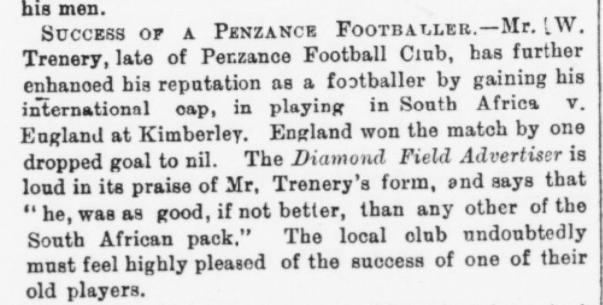
Wilfred never got another opportunity to show the rugby world how good he was.
Tragedy
Kimberley became Wilfred’s home, and it’s unclear if he ever returned to Cornwall. In 1895 he married a local widow, Annie May née Halloran, and the couple had two sons.16 He was also heavily involved with De Beers RFC, being a playing member of the club up until 1903.
By 1905 he was dead, aged 36:
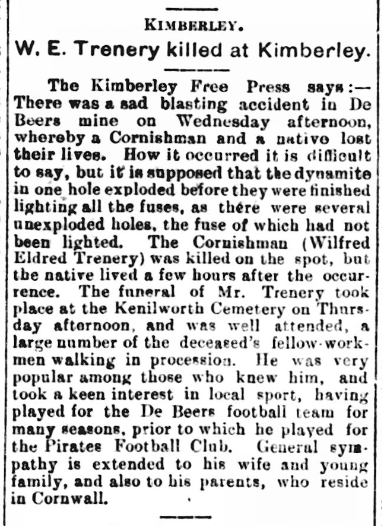
Annie lived on in Kimberley, dying in 1953.
With thanks to Nerina Gill and Nick Serpell
Many thanks for reading; follow this link for more top blogs on all things Cornwall: https://blog.feedspot.com/cornwall_blogs/
Do you enjoy my work?
All content on my website is absolutely FREE. However managing and researching my blog is costly! Please donate a small sum to help me produce more fascinating tales from Cornwall’s past!
Your contribution is greatly appreciated.
References
- The CRFU website lists John Maxwell Batten as the earliest Cornish international. He played for England in 1874 and the CRFU claim he represented Penzance and Cornwall. I can find no record of him ever having done so; in any case Penzance RFC (1876) and the CRFU (1884) came into existence after he played for England. Batten was born in the Raj; his grandfather was born in Cornwall (1778) but moved to Hertfordshire. In fact, Batten actually played for Tavistock and represented Devon at least twice: Western Times, 14 Jan 1878. Page two. Exeter and Plymouth Gazette, 28 Dec 1881. Page three.
- The report of this match is taken from: Western Times, 14 Jan 1889. Page three.
- Image from: SA 0 Britain 3, Springbok Rugby History.
- England & Wales, Civil Registration Birth Index, 1837-1915, vol. 5c, page 275. Trenery is also profiled by Springbok Rugby History: Wilfred Trenery
- West Briton, 21 Feb 1889. Page three.
- West Briton, 8 Oct 1888. Page three. Cornish Telegraph, 8 Nov 1888. Page three. Statistics from: Salmon, T. The First Hundred Years: The Story of Rugby Football in Cornwall. CRFU, 1983.
- Image from Cornish Memory.
- Image from: Pelmear, K. Rugby in the Duchy: An Official History of the Great Game in Cornwall. CRFU, 1960. Page 12.
- From Trenery’s Springbok profile: Wilfred Trenery
- Image from: 1891 British Lions tour to South Africa – Wikipedia
- See: 1888-1899 – Touring tradition begins in 19th century – The British & Irish Lions Website, and 1891 British Lions tour to South Africa – Wikipedia
- From: SA 0 Britain 3
- Morning Advertiser, 31 Aug 1891. Page two.
- From: TODAY IN KIMBERLEY’S HISTORY 29 AUGUST – Kimberley City Info
- From: TODAY IN KIMBERLEY’S HISTORY 29 AUGUST – Kimberley City Info
- National Archives, South Africa. With thanks to Nick Serpell.

