A few months back I wangled a platform on the Cornwall Writers website, a “community of writers living in or inspired by Cornwall”. At the time I was looking for ways of promoting myself and, as this site is mainly for up-and-coming authors and writers I thought it would be a good thing for yours truly to be present there too. Check out the homepage, and you can see me, nestled in beside Winston Graham and Rosamund Pilcher, desperately hoping some of their fame and talent will rub off on me.
Of course, neither Graham nor Pilcher sought permission or had to fling themselves through several metaphorical hoops to warrant inclusion on the site. Indeed we’ll never know what they think of their inclusion; the site’s owner has arbitrarily entered their details in the hope of lending the whole affair some status and authenticity. That’s what I think anyway.
I include here some of my more important and relevant responses to the site’s “Author Interview“. The rather more twee questions I haven’t bothered with here and, at the time, only answered them under duress. For any of you looking for my motivations as a writer, especially of fiction, read on.
One deceptively simple lesson I learnt from the Cornwall Writers website is this: build your own website. Then it’s yours, and yours alone.
HHhH, by Laurent Binet. Recommended.
What are your favourite books?
My favourite novel at the moment is “HHhH” by Laurent Binet, about the assassination of the Nazi SS Chief Heydrich by Czech agents of the SOE in 1942. It’s a fascinating and ultimately harrowing tale, but it’s the questions Binet raises about the process of actually writing historical fiction that I find thought-provoking. Binet’s argument is that, to attempt to fictionally reconstruct an historical event (eg. to invent characters, dialogue, thoughts etc) is a pointless exercise that waters down the impact that particular event might have had. Throughout his book he constantly criticises other novels about Heydrich’s death to make his point. As a writer of historical fiction myself, Binet’s criticism of his own genre made me analyse what I was constructing with my own story about the Camborne Riots: should I invent characters? How can I empathise with people who lived nearly 150 years ago? Why not just write the actual facts, as Binet did with Heydrich? Binet, though, has an advantage over me. In writing about the assassination of Heydrich, all the principle characters in his story are well known and documented. In writing about the Camborne Riots, no names or identities of the most important protagonists – the rioters themselves – have come to light. So what else could I do but make some up? Just because none were ever caught, does that mean they shouldn’t be written about in some small way? Writing a story about the Camborne Riots of 1873 without the rioters would be like writing the story of Heydrich’s death without…without, well, Heydrich himself!
Another recent top read of mine is “Gallows Pole” by Benjamin Myers. This is another historical novel, telling the tale of the Cragg Vale Coiners, a ruthless band of 18th century counterfeiters from the Yorkshire Dales. Like my novel, Myers only had the bare newspaper articles and a few stray documents on which to hang his tale, and although some of the language is overwrought with gravitas, he’s managed to create an entirely plausible world in which the story takes place. Myers, of course, lives in Cragg Vale and is intimate with the area and its surrounds. Coming from Camborne and knowing something of the character and culture of the town put me at an advantage when coming to write a story so unique to the area. I could visualise the events so clearly when reading the articles on the riots because, quite simply, I’d grown up on the same streets as which they’d taken place.
Gallows Pole, by Benjamin Myers. Recommended.
What’s your favourite genre?
My favourite genre is obviously historical fiction, but that’s not to say I have issues with the form. A publisher rejected my manuscript on the grounds that my novel lacked a big historical character – in other words, it lacked a selling point. So, police brutality, mob vengeance, street violence and wanton vandalism aren’t good selling points?! I considered writing WG Grace into the cricket match that opens my story, or having Prime Minister Gladstone take the train to Camborne to view the devastation for himself, but then realised that this was an utterly fatuous exercise. A good story should stand alone, and not be propped up by cheap effects. Granted, it seems any novel featuring Hitler (or one of Henry VIII’s wives, say) will be successful, but so should stories that feature the forgotten, the maligned, and the exploited – like the Cragg Vale Coiners. Or the Camborne rioters. Especially a story about how the forgotten, maligned and exploited people get one over on their oppressors – like my novel! Just because an historical novel features a luminary from the past – “Champion”, by Stephen Deutsch, includes the German boxer Max Schmeling, for example – doesn’t necessarily make it a great read.
Champion, by Stephen Deutsch. Not recommended.
Why do you write?
Generally, I’ve always enjoyed writing, I’ve often been told I’m rather good at it. My job isn’t especially stimulating intellectually and I find writing a decent way of keeping myself fresh. More specifically, I wrote this story about the Camborne Riots of 1873 because I’ve come to believe that representations of Cornwall in the media as a tourist hot-spot marginalise areas of the county that lack traditional tourist attractions. Camborne, with few jobs, no coastline, and no sandy beach, is one of these places. If I couldn’t promote Camborne as a tourist attraction, why not promote the town for what it was once famous for, its mines? I suppose you might argue that my novel promotes Camborne as an anti-tourist attraction, but I believe Cornwall’s mining heritage is as important and as relevant as the tourism industry that props the county’s economy up today.
What inspired your story?
When growing up in Camborne, the last few mines were closing, my dad got made redundant from Compair Holmans (the manufacturer of mining equipment), and my grandad retired from working underground too. Camborne in the 1980s, it seemed to me, was closing down. I was drunk in Camborne’s Red Jackets pub (more than once) back in the 1990s and recall seeing a faux-Victorian newspaper print briefly commemorating the story of the riots tacked to one of the walls. Years later, I found a short online article about the tumult which got my interest going, and I got hold of all the contemporary newspaper articles on the subject. It was fascinating. Brawlers, boozers, corrupt policemen, imprisoned women, Methodist preachers, miners, brutal punch-ups…Camborne, at its boomtown peak, suddenly reappeared. This was Camborne, before it had closed down. It was as if, back in 1873, someone had drafted a story for me to write in the future. Why not, I said to myself, write a story about Camborne as it was, a rich, prosperous, almost lawless town, before the mines closed and tourism came along? The newspapers largely told the story from the perspective of the authorities: the rioters’ activities were generally condemned. Why not write the story from the point of view of the rioters, their lives, their concerns, their motivations? In the end I did two things. I wrote a novel, supposedly the “true” account of the riots, narrated by one of the rioters who also happened to be my great-grandfather. I also launched a website (https://camborneriot1873.com/), which is the historical side to my novel and features most of my research into the subject and analysis of the primary sources. The novel takes the suggestion of complicity, between the townspeople and rioters against the police, that was hinted at in the newspapers, and reveals that, in fact, a plot existed in the town to rid Camborne of the policemen once and for all. For a few short days, the rioters were victorious. And the entire town was involved in hiding the perpetrators’ identities.
What do you find inspiring about Cornwall?
Its history. And here I’m not talking about the various Celtic crosses, Iron Age settlements, dolmens etc, but the other relics of Cornwall’s past: the ruined engine houses, the wastelands where housing estates can’t be built on account of being too undermined, the commemorative buildings of mine dignitaries that are now blocks of flats. So you could say that the Cornish landscape inspires me: the landscape of a dead industry. Another relic that interests me is the Cornish language, and how various words have passed into common usage, even if those who use them fail to recognise them as “Cornish”. All these inspirations find their way into my novel. Cornish culture, or aspects of it, inspire me as well. The importance of sport, especially cricket and rugby, and the local rivalries they give lend to, finds its way into my story: the opening chapter features a cricket match. Cornish insularity and the Cornish people’s traditional mistrust of outsiders is also present in my writing. It’s not insignificant that Camborne’s police chief in 1873 was from the Isle of Wight – you might say that was a mark against him from the start!
Tregenna House, Camborne. Once home to Josiah Thomas, Manager of Dolcoath, the deepest and biggest mine in Britain. Now an old people’s home. Courtesy of Kresen Kernow, ref. corn05093
How do you think Cornwall has shaped your writing?
“The Camborne Riots of 1873” is a grim tale. I’ve been told as much. Yes, it’s earthy, yes, it’s funny, but there’s no getting away from the fact that this is a coarse, grimy, violent slice of life from Victorian England’s underbelly. Did I mean it to be like this? Should I have written a Cornish novel with rugged heroes, windswept heaths and swooning maidens? No, I couldn’t. The Cornwall, the Camborne, that I grew up in, back in the 1980s, could be a grim, grimy place. I suppose it boils down to the old saw: write about what you know. I knew foul language, heavy drinkers, and streetfights, so it followed that this was what I would write about. Camborne’s riots were the perfect inspiration for me to write a novel – it’s the Cornwall I know.
What do you think influenced this story?
In terms of the phonetic dialect which I use throughout, Irvine Welsh and Roddy Doyle. I’ve been told that my use of dialect can challenge the reader (much like Welsh and Doyle) but, after a chapter or so, your reading mind adjusts. The series of Flashman novels proved heavily influential too: a fictional character is inserted into real-life events, and provides the reader with his own, often caustic, observations on these events. But, whereas Flashman was (apart from a shameless cad) a supposedly educated, well-to-do Victorian celebrity, my narrator is an illiterate teenager. George MacDonald Fraser’s level of historical research for his Flashman books have always impressed me and I sought to emulate his eye for authenticity in my own work.
Recommended.
Recommended.
Recommended.
If you would like to discover more about my novel, see my recent post, or contact me!
… the town even had a club called ‘The Unemployed RFC’ …1
The Black and the Gold: The Story of Cornish Rugby, by Nick Serpell and myself, will be published in autumn 2027. This post complements our chapter on Cornish rugby between the wars.
An unemployed rugby team?
Courtesy Alan Truscott
The above image is taken from the Cornwall RFU’s (hereafter: the CRFU) 1934/35 season handbook. Although we may sadly reflect on the fact that many clubs listed are no longer in existence, Cornish rugby nowadays stretches from Land’s End to the Tamar and is no longer confined to a few localised pockets.
For me, the name of one long-defunct club raises more eyebrows than the others: Camborne Unemployed RFC. The rest were all formed around a town or village, or around a certain belief, such as the Camborne Wesleyans. The Cornish Wanderers were an invitation-only club who also purported to serve a higher purpose:
to improve the spirit as well as the play of Cornish Rugger … and so eliminate any undesirable form of play from the game.
Cornishman, 3 Sep 1931. Page five
Rugby clubs had also commonly formed around a certain profession. Before 1900 you had the Camborne Butchers’ XV, and the Camborne Shop Assistants RFC.2 But here, in the Unemployed RFC, was something unheralded: a club formed for men who had no collective identity other than that of being out of work.
This had never happened in Cornwall before, and has only happened once since, when the employment training agency Direct Mission had a team in the mid-1990s. Additionally, Cornwall had not one but two unemployed rugby clubs. I can find only one other unemployed rugby club operating in the 1930s, and that was in Neath.3
Cornwall’s unemployed sports’ clubs were not confined to rugby. I can’t find an unemployed cricket XI, but in 1933 there was talk of a whole unemployed football league being formed in the St Austell area. This venture appears to have been stillborn, but nevertheless an unemployed soccer team was active in the Bodmin region during the 1930s.4
Let’s return to unemployed rugby, and our first clue: the CRFU’s list of affiliated clubs in 1934/35. The other thing that strikes us about the Camborne Unemployed RFC is their level of organisation. They were members of the game’s governing body. They had a base – Commercial Hotel. They had a secretary: the 1939 England and Wales Register lists Charles Trenowden as an iron foundry labourer. Clearly this wasn’t an entity as casual as a group of men, out of work and bored, kicking a ball around a field and half-jokingly describing themselves as the ‘Unemployed RFC’.
If Camborne Unemployed RFC was set up on similar lines to other, more conventional Cornish rugby clubs, then we may infer they also operated similarly. They must have had a squad, a ground, a committee, training sessions and a fixture list. They must have had – and this is not something you’d generally associate with the unemployed – some kind of financial backing.
The biggest question to ask however is this: why did unemployed rugby clubs come to exist in Cornwall at this moment? One reason is economic, the other social.
Evil, but inevitable
West Briton, 16 Dec 1934. Page nine
The above table shows the total number of unemployed people in mid and west Cornwall (St Ives excepted) in November 1934. Of that total, 8,649, it states that 1,192 are either employed casually or on short time. So, 7,457 people were definitively unemployed.
No corresponding figures for east Cornwall have been found, but in 1933 2,085 people were out of work in Bodmin, Bude, Callington, Camelford, Gunnislake, Lanuceston, Liskeard, Saltash, Torpoint and Wadebridge.5 Let’s say 2,000 for east Cornwall, and 7,400 for mid and west Cornwall.
For Cornwall as a whole, this gives us a rough unemployment figure of 9,400 (out of a population of approximately 317,9006) at around the time unemployed sports’ clubs were coming into existence.
To put this into perspective, Cornwall’s population at the end of 2022 has been put at 568,210. In December 2023, the Cornish unemployment figure was at 7,400.7 There are lies and damn lies, but one doesn’t need the exact figures to realise that 1930s Cornwall must have been a desperately tough place to live.
It was tough pretty much everywhere else, as the effects of the Wall Street Crash began to get a grip. In 1931 the UK’s total unemployed hit 2.5 million – in December 2025 this figure was 1.88 million.8
In 1934 the Government identified four ‘special areas’ (Scotland, South Wales, West Cumberland and Tyneside) where industry had collapsed and required emergency grants. The Cornish press campaigned for Camborne and Redruth to receive similar treatment. One imagines many communities felt the same.9
What all this means is that, for practically the first time, ‘the unemployed’ almost became a distinct social class of their own. In Cornwall it wasn’t just the miners and the clayworkers who were on the dole, or just Camborne, Redruth and St Austell where economic depression was rife, as it had been in the early 1920s. Now the unemployed were everywhere, even, as the above table shows, in Newquay, whose popularity as a resort increased throughout the 1930s.10 No government scheme or socialist utopianism would make unemployment miraculously disappear. As A. J. P. Taylor stated:
unemployment was an evil, but inevitable …
English History 1914-1945. Clarendon Press, 1986. Page 270
Cornwall’s unemployed could read in the Cornishman of how their brethren had gained another 84,000 members throughout the land in a single month.11 They could also hear of ‘increasingly ugly’ criticism of the Government by their opposite numbers in South Wales.12
The unemployed had their own movement: the National Unemployed Workers’ Movement (NUWM). They even had their own literature, such as Walter Greenwood’s 1933 classic Love on the Dole, or George Orwell’s The Road to Wigan Pier (1937). They were the subject of campaigns by the Labour Party, trade unionists, the Communists and the Independent Labour Party (ILP). Besides being out of work, the unemployed had a focus for their discontent: the Government’s incredibly unpopular Means Test policy, introduced in 1934, relieved men of their benefits if other household members were in work. Newquay’s branch of the Labour Party described the test as an ‘inhumanity and injustice’ in 1935.13
The situation in Redruth could have been lifted straight from the pages of Greenwood or Orwell. Men littered the streets, with nothing to do except hug the walls ‘for shelter’. All they had ever known was the dole:
scores of young men who have never done a day’s work in their lives, while there are also hundreds of middle-aged or older men who will never work again.
St Austell Gazette and Cornwall County News, 4 Jan 1933. Page eight
This was the problem: being unemployed was no longer an unpleasant but hopefully brief prospect. In 1930s Cornwall, there was a serious danger that you would spend your entire life on the dole.
In 1932 the Hayle branch of the NUWM protested at the treatment of that town’s unemployed, citing ‘undernourished’ and ‘scantily clad’ women and children.15 A year later Helston’s NUWM organised a march in protest at the Means Test. An ILP candidate stood for election to Truro council, appealing to the unemployed to vote him in.16
In 1933 the NUWM and ILP of Camborne and Redruth combined to hold a demonstration against the Means Test, war and fascism.17 Another march took place there in 1935:
St Austell Gazette and Cornwall County News, 6 Feb 1935. Page eight
The authorities were appreciably wary of all this unrest. In 1938 Bodmin’s Conservative MP attacked all ‘left-wing’ movements (which for him meant anything and anyone to the left of the Tories) as tools of the Communistic world design:
All the woes of scarcity, poverty and perhaps even of hunger were then exploited to the full … Arising out of that discontent was encouraged … action in the form of riots.
Newquay Express and Cornwall County Chronicle, 17 Feb 1938. Page six
The unemployed here were less people than stooges of the revolution. Love on the Dole may have been a bestseller and a hit play, but its subject matter, including a police baton-charge on a group of unemployed protestors, was controversial. The novel had in fact been banned in several countries, and plans to make it into a film were constantly thwarted by the censor until 1941. The author, Walter Greenwood, then resident in Polperro, was dumbfounded:
Why the ban? The theme of unemployment?
Daily Herald, 27 Feb 1940. Page five
Cornwall’s cinemagoers could finally watch Love on the Dole at the St Austell Odeon in late 1941, but by then life had already imitated art. In 1939 striking miners at South Crofty, Camborne had been the target of their own police baton-charge.18
Luckily, not all took such a dim view of the ‘inevitable evil’ of unemployment. Many tried to help.
The social service movement
Camborne’s Social Service Centre opens at the Commercial Hotel in September 1934. One of the women present is Gladys F Holman, its first secretary. St Austell Gazette and Cornwall County News, 19 Sep 1934. Page eight
In early 1934 Edward, Prince of Wales spoke to the nation over the wireless. His concern was ‘the intolerable nightmare of unemployment’, and what could be done about this ‘national emergency’:
if everyone were to take some small piece of voluntary service … a determined and sustained effort in the years to come … creating a new spirit of good fellowship amongst all sorts of conditions of men and women …
Edward wasn’t talking into the ether, and he had made a similar appeal a few years earlier. His words, coupled with the UK’s dire economic situation, reinforced the efforts of the National Council of Social Service, which had been formed in 1919.20 This meant that, when the Depression hit, there was already a national infrastructure of people willing to undertake voluntary social work and aid the unemployed.
Edward, Prince of Wales made a point of frequently visiting poverty-stricken districts – though this is also the man who shook hands with Hitler in 1937. Image from the BBC Archive
Cynics may argue that having the unemployed occupied with things other than protest marches and left-wing politics was the best way of keeping the peace. Yet everywhere, even in Cornwall, various councils and committees looked to the unemployed to complete various schemes.
Helston Cricket Club’s new pavilion was built, at the behest of the town council, by their unemployed men. Victoria Park, Nanpean, the home of Nanpean Rovers RFC, was once a china clay pit reclaimed by the efforts of the out of work. Labour had commenced there under the auspices of the local social service committee. This new movement – the social service movement – was gathering momentum.21
Falmouth’s centre was at the local YMCA, and many destitute families went there over Christmas 1934 for bags of kindling. St Austell’s centre had a market garden maintained by their unemployed men, and by 1937 they were being taught upholstery. A children’s playground at Lanner was completed thanks to a grant from the National Social Service Committee – and the labour of the village’s unemployed.22
The Whitemoor Institute, which opened in 1934, was built by the graft of men on the dole:
St Austell Gazette and Cornwall County News, 28 Nov 1934. Page ten
The people who ran and assisted these centres did so voluntarily. Those who attended, though they could expect to be fed and watered, also gave their time and efforts of their own volition. But the growing of vegetables, the mending of shoes , hewing of logs and building work made direct and worthwhile contributions to their local communities. When Truro’s Social Service Centre reopened in 1936, the obvious was stated:
Every time I have been there I have found the men working, which is infinitely better than that they should be standing on street corners.
West Briton, 3 Sep 1934. Page four
As a counterpoint to what Edward, Prince of Wales would have termed this ‘good fellowship’, not all areas were as fortunate as the ones described. In November 1935 there were around 600 people out of work in the Penzance district, but nobody there was prepared to help.23 The unemployed were allowed cut-price admission to many sporting events, but this was a privilege frequently abused. When Cornwall took on the Police RFU’s XV in 1933, the CRFU resolved to:
admit the unemployed at half-price but not to advertise the fact.
CRFU Committee Minutes, 14 Oct 1933
Additionally, many out of work men, with a sense of misplaced pride, avoided the social service centres as they believed to do so would affect them with the canker of ‘charity’.24
In short, you needed dedicated volunteers, from all walks of life, to make a social service centre work. For a time, one of the better-organised ones was in Camborne.
Rugby on the dole
The new centre, based at the Commercial Hotel, had considerable backing.25 The hotel itself needed it: extensive cleaning and renovating was required to make it fit for purpose, which gives us some notion of how destitute Camborne was in the 1930s. I mean, imagine an empty and rundown hotel in Newquay.
The chairman of Camborne’s major engineering firm, J. Leonard Holman, and his wife, Gladys, were behind the venture from the start. Gladys in particular was tireless as the centre’s secretary, with her influential husband ensuring the Commercial had a plethora of departments and activities on its opening in September 1934.
There was boot repairing, woodwork and handicraft classes. An allotment garden scheme was planned in conjunction with the Society of Friends. Ambulance training was touted. The education class had 30 willing members. In the first instance, there was a physical training class. Open five days a week, the centre must have been a hive of activity.
Almost immediately, and perhaps inevitably, there was talk of a rugby club for the unemployed. Every community needs its representative team. In fact, there was already an unemployed XV in existence – and it had been instigated by the out of work themselves.
Back in November 1933 the Camborne Unemployment Committee noted ‘the unemployed’ wished to form their own rugby club, and appealed on their behalf for jerseys and a ball. From this point, things moved quickly. On Thursday, 4 January 1934, St Austell-based Hornets RFC took on the Unemployed RFC at Camborne’s Recreation Ground. The home XV won, 6-3.27
Hornets RFC were in the vanguard of rugby in east Cornwall. Formed in 1933 with the distinguished Sir Arthur Quiller-Couch as president, by 1939 they were an established senior club. St Austell Gazette and Cornwall County News, 22 Jan 1936. Page eight
News of this new team in Camborne pricked jealous ears in nearby Redruth. Not to be outdone, by February 1934 the Redruth Unemployed RFC had been founded. Before you ask, it’s unclear if the two teams actually played each other.28
As noted earlier, an individual’s sense of unemployment was often one of permanency in 1930s Cornwall. ‘Unemployment’ on a grand scale was perhaps here to stay, a ‘chronic condition’, noted one journalist, and maybe explains why sports’ teams formed by those and for those on the dole occurred during these years. They certainly had as much, if not more, staying power than teams formed around fading industries. For example, Porkellis United RFC, a mining team, only lasted four seasons, from 1929/30 to 1932/33. Redruth Unemployed were still playing in 1938.29
Gradually Cornwall’s two unemployed rugby clubs came to be associated with their respective towns’ social service centres until, in time, reports referred to them as the ‘Social Service’ RFCs. Camborne Unemployed RFC could boast J. Leonard and Gladys Holman as president and vice-president. Probably as a direct result, Camborne RFC allowed the Unemployed use of their pitch, changing rooms and baths on Thursdays (match days) free of charge.30
What was the relative standard of these teams, on Cornwall’s junior rugby circuit? Though reports are scarce, there are clues. Camborne Unemployed travelled to Liskeard on Boxing Day 1935 and lost 20-8. It was noted to be their first defeat of the season, though it’s unclear how many matches they had played by that point. Their 29-strong squad numbered erstwhile Camborne RFC players, such as the Boase brothers, Hannibal John and William James.31
Perhaps the most talented of the Camborne Unemployed’s ranks was their Welsh full-back, Cliff Ford. In 1927 he had skippered Pontypool to victories over the New Zealand Māori XV and the New South Wales Waratahs, feats remembered and celebrated in the town to this day. Before leaving Pontypool due to lack of work and a smallpox epidemic, Cliff had been Wales’ reserve 15.32
Cliff found work at Camborne’s New Dolcoath/North Roskear mine, but of course this venture had been abandoned by 1930. Small wonder he was active with Camborne Unemployed RFC, as well as with the town’s senior club. He died in Bristol in 1953, and if you ask anyone in Pontypool, Cliff Ford was one of the great uncapped Welsh players.33
From left: Cliff Ford, Irene Griffiths and Chairman Arthur James just before Pontypool took on the NSW Waratahs. Western Mail, 9 Dec 1927. Page nine
Despite all the good intentions and inclusiveness of the social service movement and their rugby teams, it was hard, nay impossible, to negate the competitive nature of Cornish rugby. After Camborne Unemployed lost at Liskeard in December 1935, for the return fixture those at the town’s Social Service Centre pulled out all the stops. In the process, maybe they forgot what they had set out to achieve – the spirit of good fellowship, as the Prince of Wales had it. Nine regular Camborne RFC players were called up, and who cared if they were on the dole or not. Even Redruth’s British Lion full-back, Roy Jennings, guested.
Liskeard won, 6-3. Maybe it served Camborne Social Services right.34
Disbanded
West Briton, 8 Aug 1940. Page five
What caused the end of the unemployed rugby clubs? Fixture limitations must have been a factor. Although Camborne Social Services played (and beat) Redruth Highway on a Saturday in 1936, for the most part unemployed rugby took place on a Thursday. The clubs’ pitches and facilities which the unemployed teams borrowed would have had their own matches on a Saturday, with their own followings, and no club, however benevolently-minded, could be expected to take their generosity that far.35
Redruth Social Service were practically forced by this state of affairs to play Redruth Wanderers in 1938. The latter club were made up of shop assistants, who, by dint of their professions, could only play on Thursdays, which was early closing day. Even the Wanderers’ annual dinners took place on a Thursday.36
If it was unemployment that brought these clubs together, then it was employment, perhaps thankfully, that could break them up. As men found work (or left the area in search of work), they would leave the social service centres too. The 1939 England and Wales Register lists the Boase brothers, for example, being employed as labourers.
What ultimately put paid to sport on the dole – and the sufferings of mass unemployment in general – was the outbreak of war. As the above table shows, by August 1940 there were 2,700 unemployed people in mid and west Cornwall, compared to 8,640 in 1934. The Means Test in its most despised form was also abolished during the early 1940s, and the post-war Labour Government’s socialist reforms (the National Health, Insurance and Assistance Acts) ushered in the welfare state.37 But surely, nobody really wanted the Unemployed RFCs to become established and powerful centres of the game in Cornwall, and we must be grateful that such entities haven’t existed, with the brief exception of Direct Mission RFC, since the 1930s.
With special thanks to Pontypool RFC Supporters Group
All content on my website is absolutely FREE. However managing and researching my blog is costly! Please donate a small sum to help me produce more fascinating tales from Cornwall’s past!
Porthcawl Guardian, 3 Nov 1933. Page six. Direct Mission RFC were losing 71-11 to Helston Reserves in late 1993, and to St Agnes in 1994. West Briton, 9 Dec 1993, page 30, 3 Mar 1994, page 22.
St Austell Gazette and Cornwall County News, 22 Mar 1933, page one. Newquay Express and Cornwall County Chronicle, 29 Mar 1934, page 15.
St Austell Gazette and Cornwall County News, 2 Mar 1932, page two, 16 Aug 1933, page four.
West Briton, 27 Dec 1934, page 6, 4 Feb 1935, page three, 28 Feb 1935, page nine. Newquay Express and Cornwall County Chronicle, 1 Apr 1937. Page seven.
Cornishman, 21 Nov 1935. Page eight.
West Briton, 17 Dec 1936. Page four.
Most of the following is summarised from: Cornish Post and Mining News, 14 Apr 1934. Page three. Cornishman, 4 Jul 1935. Page two.
Cornwall is not often in the big sport news of the day. ~ Daily News (London), 6 Feb 1928. Page 15
The Black and the Gold: The Story of Cornish Rugby, by Nick Serpell and myself, will be published in autumn 2027. This post complements our chapter on Cornish rugby between the wars.
Cornish rugby’s state of play
Cornish rugby fans at the onset of the 1927/28 season would have had little to shout about. Since the resumption of the County Championship in 1919/20, the Cornwall XV’s performances had been, well, dire.
From 1919 to the end of the 1926/27 campaign, Cornwall had played 24 Championship matches. They had won just four, losing 18 and drawing two. Cornwall had conceded 270 points and scored 188. Not once had the Cornish team won the South West Division (comprising themselves plus Devon, Somerset and Gloucestershire) and proceeded to the tournament’s knockout stages. Cornwall had also laid claim to the South West Division’s wooden spoon, for losing all their fixtures, in three separate seasons (1919/20, 1920/21 and 1923/24).1
Like I said, dire.
Among the corridors of power in the Cornwall RFU (hereafter, the CRFU), mindless optimism in the face of consistently woeful showings was the order of the day. At a CRFU meeting in May 1923, secretary W. Dennis Lawry (who would die in office a year later), said he had ‘every hope and confidence’ that:
in the season 1923-4 we shall again occupy the proud position we held in the past.
Cornishman, 30 May 1923. Page seven
For that 1923/24 season, Cornwall lost all three Championship games and scored a mere 18 points. Lawry could recall the glory days of 1908, when the Cornish XV were top of the tree, and how he must have wished he was back there.2
At the start of the 1927/28 season, the CRFU had only nine senior clubs (Camborne, Camborne School of Mines, Falmouth, Hayle, Newlyn, Penryn, Penzance, Redruth and St Ives) to pick their representative teams from. No new rugby ground had been broken east of Truro. Cornwall’s Elementary Schools RFU had only been formed in October 1925, and the Old Boys’ RFU (to cater for 14- to 16-year-olds) would not exist until January 1928.3 Although these schemes would in time prove immensely successful, obviously any promising young bloods were currently far too young to be fully blooded.
Redruth’s Fred Bone (pictured here in 1935) was a scrum-half who represented Cornwall and England as a schoolboy. As an adult Fred played for Cornwall and the Cornwall and Devon XV against the 1935 All Blacks, before signing for the rugby league club Halifax in 1936.4
Stalwarts of seasons past, such as Redruth’s Harvey Ham and James Richards, or Hayle’s Albert Gibson, were by now past their prime. Others, like Camborne’s Herbert Wakeham and Leonard Hammer, both international trialists, had left Cornwall for work.5
Small wonder that the CRFU, faced with a dearth of local talent, looked past the Tamar for players. Fred Gilbert (from Plymouth) and Ernie Gardner (Cardiff) were both naval men who played for Devonport Services. Both qualified for Cornwall through residency, yet never represented a Cornish club. This policy was controversial, with the CRFU having to defend itself in print over their selections.6
However Gilbert and Gardner, who after all both won England caps, hadn’t come to Cornwall’s aid since 1922.
Likely lads, though, were beginning to appear. The Falmouth forward Ivor Jackett demanded attention, and not just for the fact that he was the nephew of John and Dick Jackett, rugby heroes of days gone by. Camborne’s Foster Selwood, a miner, had pedigree too: his elder brother had been an England trialist. His teammate and partner in the scrum, Bill Biddick, was softly spoken yet utterly unflinching on the pitch.7
Outside, the Penryn wing George Jago was good enough to have been snapped up by Plymouth Albion; the machinist had been a regular since 1922 and Cornwall’s skipper since 1926. The other wing, Redruth’s Len Roberts, was maturing nicely. Centre Phil Collins’ tackles were so hard opposition fans would regularly heckle him. His new threequarter partner was the up and coming Redruth talent, Roy Jennings, a product of Taunton School’s rugby nursery. Fans were already tipping him for big things.8
Taunton School, 1922/23. A young Roy Jennings is seated right. With special thanks to John Brown, Archivist, Taunton School.
Then there was Camborne’s half-back, the all-round sportsman Fred Rogers. His Indian parentage resulted in him possessing a nickname so un-PC I’ll refrain from repeating it.9
This nucleus had been in the vanguard of a slight upturn in Cornwall’s rugby fortunes. Maybe those fans with shorter memories believed things weren’t so bad after all. Of those four Championship victories mentioned earlier, two had occurred in the 1926/27 tournament.
A convincing 27-12 result over Somerset at Wellington was followed in December 1926 by a 13-3 win at Camborne over a Gloucestershire XV weakened by international trial call-ups.10 Even though it was Devon, undefeated in the South West Division (Cornwall went down to them 12-0 at Torquay), who qualified for the knockouts, this was still the Cornishmen’s best performance in the competition since before the War.
Suddenly it looked as if Cornish rugby might have something to shout about in the near future. As the CRFU’s new secretary, Percy Holman, remarked:
I am pleased to be able to report … an increasing interest being taken in the county matches.
Cornishman, 18 May 1927. Page two
Now there was substance behind all the talk. Could the Cornish XV go a stage further in 1927/28?
Paint London black and gold
The portents for a successful Championship campaign were good. Cornwall’s first two matches would be on home turf, and their back division would be bolstered by the Torpoint-born, Devonport Services full-back Charles G. Gosling.
Though only 20, you could tell Gosling was a thoroughbred. He must have been a ferocious tackler, if the photograph below is anything to go by:
Gosling’s victim looks like he’s been shot. Western Morning News, 22 Feb 1934. Page ten
His Cornwall career was relatively brief (just 12 caps), but he represented the Royal Navy and was England’s reserve full-back in 1928. Awarded the OBE in 1945, by 1957 Gosling was the Admiralty’s Director of Officer Appointments.11
Gosling would debut for Cornwall against Somerset at Redruth, on 22 October.12
For 75 minutes, the crowd of 5,000 were treated to a grim spectacle. Somerset missed two kickable penalties. Collins broke and attempted a kick-pass to Jennings, who was so far offside even his home support could see it. Forward rumble followed forward rumble. Roberts and Jago had to go looking for the ball. It was that kind of game. Five minutes to go and it was still nil-nil.
Suddenly Cornwall snapped out of their stupor. Collins and Roberts dribbled the ball ahead. The pack, thought to be too light overall, charged ahead and caught the Somerset 15 napping. The path was clear for Collins to dive and score in the corner. Gosling missed the conversion from way out on the touchline. Three minutes to go.
Somerset roared back into Cornwall’s half, and spun the ball wide from a lineout. They were clear. They could score. They could equalise. Fred Rogers, small of stature but big of heart, slammed the Somerset attacker to the turf, and his forwards rapidly came to assist.
Everyone breathed. A few minutes of robust defending later and Cornwall were victorious, 3-0. Changes would have to be made up front, but of Gosling it was said that:
no full back has ever tackled better for Cornwall since before the war …
St Austell Gazette and Cornwall County News, 26 Oct 1927. Page seven
Next up, at Camborne on 12 November, were Devon. Last minute shuffling in the pack meant that Foster Selwood came in for Bill Biddick, and Ivor Jackett, originally left out, got the nod with James Matthews, a Newlyn fisherman. Jago led his men out as the band struck up ‘Trelawny’. The 7,000 fans crammed into the Recreation Ground went wild.13
In 1930 a columnist satirised a game of Cornish rugby as being where:
30 of the strongest young fellows of Redruth and Penzance were let loose against each other and victory was a matter of the survival of the fittest.
Western Daily Press, 22 Nov 1930. Page four
It was also an unfortunate rule of Cornish rugby that, no matter how big, ugly and heavy their forwards were, Devon’s were invariably more so. But on 12 November, 1927 this didn’t matter.
Cornwall’s pack were lighter and faster, and none more so than Foster Selwood. Fielding the ball outside Devon’s 22, he gassed his man on the outside and then simply rammed through the opposition’s full-back to score in the corner. Gosling missed a tough kick, and Cornwall were 3-0 up.
It wasn’t all plain sailing. With Redruth’s highly-rated half Jack Andrew limping and practically a passenger, the game became a classic war of attrition. Then Jennings intercepted and sprinted 50 yards, with Jackett screaming for the ball outside him. Jennings did what all good centres do: draw the 15, and put your man in for the try.
Jackett fumbled the pass. Jennings may have reflected that he should have done the other thing that all good centres do: sell the full-back the dummy and score yourself. Minutes later, Devon equalised with a penalty. Was this when the game turned?
Fortunately Gosling, who was clearly the find of many a season, and Jago tackled like demons. In the dying minutes it was skipper Jago who triggered the winning move. His cross-kick had Devon scrambling, and Fred Rogers, who knew where to be and what to do, grabbed the loose ball and fed to Jennings. Jennings, to Collins. Collins didn’t fluff his lines. The conversion went wide. Cornwall won 6-3. Their
Indomitable spirit …
St Austell Gazette and Cornwall County News, 16 Nov 1927. Page eight
… had prevailed. This was a big win. Cornwall hadn’t beaten Devon in the Championship since 1922. A mere draw at Gloucester on 3 December would be enough to give them the South West Division.
Biddick came back in for Ivor Jackett, who must have rued that dropped pass. James Matthews was to play his final game for Cornwall. A GWR excursion from Penzance ensured plenty of Cornish support was among the 5,000 spectators.14
Gloucestershire, having lost their opening two matches, were playing for pride on home turf. The first half, and most of the second, was theirs. A try had put them 3-0 up, and going into the final quarter everyone from Cornwall was looking worried. Attacks from Jago and Roberts had been rebuffed. Jennings had missed a penalty. A loss here would mean playoffs. It was looking ominous.
Then Cornwall were awarded a penalty on the half-way line, dead centre. The ball was thrown to Roy Jennings, who possessed a massive hoof. Think Elliot Daly, rather than George Ford. The crowd hushed. He can’t miss this.
Jennings rocked back a few paces, took aim, moved forward and put his laces through the leather. It was a Boys’ Own kind of kick, slammed hard and high and true enough to cross the uprights fully 50 metres away. That lad’ll play for England one day.15 Cornwall 3, Gloucestershire 3.
It was enough. Cornwall were going to London to play Middlesex in the semi-final. The Cornish XV hadn’t been there since the 1908 Olympics (when they were silver to Australia’s gold), and no Cornish club had ever played there. Camborne RFC led the way, ‘making a first visit to London’ when they took on Surrey’s Old Blues in March 1930, and were photographed by the cenotaph:16
West Briton, 6 Mar 1930. Page ten. The gentleman standing centre with the medals is probably Edward Nicholl of the London Cornish Association. To his right in the dark overcoat, Fred Rogers looks chilled to the bone. Behind him stands Bill Biddick. To Nicholls’ left in the light overcoat is Phil Collins
Cornish rugby was back on the map, but no one gave Cornwall a prayer. Even the Cornish press was less than belligerent. Back in 1908, Cornwall’s XV had developed something of a swagger, and when that team had lined up against Middlesex in their own semi-final, the Londoners were dismissed as a bunch of lily-livered toffs:
Varsity men and public school boys, who will probably crack up when opposed to the hurricane tactics of the Cornishmen …
West Briton, 17 Feb 1908. Page three
On 4 February 1928, at Twickenham no less, this current Cornish XV would be playing a Middlesex side containing six internationals, including England’s current captain, Ronald Cove-Smith, who would win a Grand Slam in April 1928. They also boasted his predecessor, Wavell Wakefield, a Grand Slam winner himself:
Not so much posing for the camera as challenging it: Wavell Wakefield17
Wakefield’s presence on the pitch alone was intimidatory. Fame and success aside, his belief in the sheer physicality of rugby led him to declare that:
it is one of the glories of rugger that you can put your shoulder into a man with all your strength … knowing that if you stave in a rib or two of his he will bear no grudge against you.
From: Collins, T. A Social History of English Rugby Union. Routledge, 2009. Page 74
All of which led the Cornish newspapers to produce low-key pronouncements. For example:
Middlesex will undoubtedly have a powerful XV, but they are not unbeatable, and Cornwall’s style may easily upset their machinery.
St Austell Gazette and Cornwall County News, 12 Feb 1928. Page seven
The CRFU were aware of all this. They needed to give their team every possible chance. For a start, they needed the right team. In an unprecedented move, a trial match prior to the semi-final was held in January, Cornwall versus The Rest.18 From this game the following XV was selected:
Standing, l to r: George Thomas (trainer), Hugh Maddrell (Penzance), Foster Selwood (Camborne), Bill Biddick (Camborne), Edgar Brooker (Redruth), Percy Evans (Camborne), Ivor Jackett (Falmouth), Nicky Peake (Newlyn and Plymouth Albion), Joseph Hollow (Redruth). Seated, l to r: Charles Gosling (Devonport Services), Roy Jennings (Redruth), George Jago (Penryn and Plymouth Albion), Phil Collins (Camborne), Len Roberts (Redruth). Kneeling, l to r: Jack Andrew (Redruth), Fred Rogers (Camborne).19
Of the players not yet mentioned, Hugh Maddrell had learned his rugby at Cheltenham College prior to taking up a career in agriculture. PC Edgar Brooker would be a policeman for 30 years, retiring in 1958. Gwennap-born farmer’s boy Percy Evans was there to add some steel: in 1926 he had been suspended for kicking a prone opponent. Nicky Peake had exceptional swimming ability and courage: he saved two girls from drowning in 1931. Joseph Hollow was a tough labourer from Phillack. Their trainer, George Thomas, knew all about big matches: he had played for Cornwall against the 1924 All Blacks.20
This Cornish team were also, as Sir Edward Nicholl of the London Cornish Association remarked:
Cornish born and bred …
Cornishman, 8 Feb 1928. Page six
The CRFU had the men, now they needed the support. They needed to make Twickenham their own. They needed to paint London black and gold.
Back in December 1927 the London Cornish Association had been contacted by the Union, requesting their hospitality and assistance. The GWR was encouraged to lay on an excursion train for a legion of Cornish fans, and local clubs were exhorted to advertise and encourage the cut-price travelling deal.21
The CRFU certainly created a buzz. In early 1928 the owner of Camborne’s Cinedrome approached the Union with a proposal to film the Middlesex game and tour it on Cornwall’s burgeoning cinema network. The proceeds were to be split 50/50. Alas, the deal fell through.22
The miners, machinists, fishermen and policemen of the Cornwall XV arrived at Paddington via the Riviera Express on the Friday evening. Waiting for them were the dignitaries of the London Cornish Association, who greeted them like conquering heroes.23
A black tie dinner had been laid on at a swanky London hotel. Many of the men, used to croust breaks of bread and dripping, must have found it something of a culture shock. Back down west, Camborne’s biggest attraction one Christmas had been the Relief Committee’s food depot.24 Here in London it was all cigar smoke and brilliantine:
How an illustrator saw the Association’s 38th annual banquet. The Tatler, 18 Apr 1928. Page iv
Wavell Wakefield was present, grinning outwardly (and doubtless cringing inwardly) at the good-natured jibes about his team’s chances. Later, the Cornish contingent were whisked to the Palace Theatre to patronise a hit play, where they were cheered to the rafters.
Some plans fell through. Dismal weather meant Twickenham was unplayable, scuppering the Association’s scheme of a hardcore grouping of 200 Cornish seats around which the excursionists could congregate. The game had to be switched to Richmond, but no matter. The 1,260 fans stepping on to Paddington’s platform at 6am on matchday were unperturbed. Wherever their team were playing, they would make their presence felt.
This early version of Trelawny’s Army certainly baffled London’s rugby cognoscenti:
Some of these before the match caused considerable amusement by tying a Cornish pastie [sic] to one of the crossbars. Attempts at community singing were made, but there was more laughter than song.
Daily News (London), 6 Feb 1928. Page 15
In other words, this was a typical Cornish rugby crowd, acting like many Cornish rugby crowds before and since – and acting in a manner alien to their opposition’s. The ground was heavy and the weather damp. It might have been a Saturday afternoon back home.
Middlesex, though, had come to play, and their threequarters attempted to run the Cornishmen off the pitch. But Cornwall had a pack with speed where it lacked beef, with Jackett, Evans, Peake and Brooker working like terriers in defence. Jago and Gosling, whenever the line was breached, were always there. Half-time, and it was nil-nil. Middlesex were blowing hard, and must have wondered who was writing the script.
Illustrated Sporting and Dramatic News, 11 Feb 1928. Page 290
Cornwall, on the other hand, had extensive experience of tight matches. If you could say one thing about the 1928 XV, they certainly knew how to take a game deep, and see who would blink first.
This time, it was Cornwall. With an hour played Middlesex scored, and though the try was unconverted it put them 3-0 up. Whilst the kick was being lined up, Jago gathered his men under the ‘posts and gave them a rocket. They hadn’t come all this bleddy way to lose, and their fans hadn’t spent money they could ill-afford to see them lose. Find a way.
Cornwall, fired up and with a pack led by Biddick (who must have spent the afternoon engaged in a private war with Wakefield) battered the Londoners’ line. Their support hollered them on, and on, and on. Eight minutes left, and the ball rolled loose from yet another Cornish rush. Jack Andrew, limping again, couldn’t reach it. But Fred Rogers could. Unchallenged he darted in, grabbed the ball, and scored. Pandemonium reigned.
The London Cornish dignitaries finally have something to cheer about. Western Morning News, 6 Feb 1928. Page ten
Then the crowd hushed for Jennings to take the conversion. Mercifully it was a straightforward one, and lest we forget, Cornwall hadn’t converted a try all championship. This time, Roy delivered. Cornwall 5, Middlesex 3. Who’s laughing now, pard?
The victory was described in London as a ‘sensation’.25 The CRFU received a letter of congratulation from the future Edward VIII. Wavell Wakefield later rated Bill Biddick the toughest opponent he ever faced – praise indeed. Fred Rogers was a good enough cricketer to play with Harold Larwood and Bill Voce, but he must have dined out on that try for evermore.26 The headline over his obituary in 1981 read:
West Briton, 26 Mar 1981. Page 44
John Jackett’s ghost
The final, in Bradford on 10 March, would be against Yorkshire, champions as recently as 1926. They weren’t a big-name XV, but they were certainly big, and they were on home turf.27
A thousand Cornish fans made the 400-mile trip and, bedecked in their black and gold livery, took Bradford over that Saturday. Camborne’s Wesleyan chapel had let it be known that Bradford’s own nonconformist place of worship would be open as a left-luggage office for the hordes of travellers, but few would have dispensed with their overcoats. In freezing temperatures, the pitch was equal parts mud and snow, and most of the match was played in a blizzard.
Hardy fans at Bradford’s Lidget Green ground. Leeds Mercury, 12 Mar 1928. Page ten
Note the state of the pitch while two Cornwall supporters do what’s necessary. Western Morning News, 12 Mar 1928. Page ten
The Cornwall XV – unchanged after that famous win over Middlesex – had journeyed up on the Thursday and were engaged in a light warm-up on Friday morning when a motorcar purred into the ground. Out stepped a middle-aged man of handsome bearing. Ivor Jackett must have grinned. The man was his uncle, John Jackett, long a native of Dewsbury, come to sprinkle his magic on the Cornishmen. He wasn’t missing this game.
Nor were other ex-pats, men who had signed for the northern union/rugby league in years past, but never forgot their roots. There was Tommy Harris and Harry Launce, Ernest Rodda and Sam Carter. Tom Morrissey couldn’t make it, but his wife was there.28 Cornwall’s hotel was swarming with well-wishers, stepping over the piles of good luck telegrams that had winged in from America, Canada, South Africa, Australia. The Bradford Cornish Association provided hospitality to rival anything their London counterparts laid on.
In all 14,000 braved the elements. What they witnessed was, at the time, the toughest Championship final ever played. One eyewitness noted that:
knock-outs were numerous …
St Austell Gazette and Cornwall County News, 14 Mar 1928. Page three
Even local rugby league players, curious observers of what was the rival code’s biggest domestic game of the season, were astounded at the brutality on display. Jennings had called a mark in midfield; on doing so he was knocked flat and twisted his ankle. Cornwall were shorn of a major attacking option, but in reality they were always behind the game. Yorkshire took the lead after ten minutes and never relinquished it.
Illustrated Sporting and Dramatic News, 17 Mar 1928. Page 600
But they were given a game of rugby. Twice Cornwall came within a point of their total. The final quarter, as the snow pelted down, was essentially a melee, as the visitors’ hysterical support hoped for another opportunist try to equal the one in Richmond. But it never happened. Phil Collins was the only man to cross Yorkshire’s line, who won 12-8.
Yorkshire break in the quagmire. Western Morning News, 12 Mar 1928. Page ten
The Cornwall XV hurrahed the home support in the grandstand, and came away with enhanced reputations as sportsmen and hardcases extraordinaire. Surely next season would be the one?
End of an era
It wasn’t. In 1928/29 Cornwall won nothing except the South West Division’s wooden spoon, and only scored a measly 13 points. Joseph Hollow, Percy Evans and Charles Gosling only had, at best, a few more seasons of rugby for Cornwall. Just four men from the 1928 final – Roy Jennings, Phil Collins, Len Roberts and Foster Selwood – were playing for Cornwall by the mid-1930s.
Ivor Jackett was possibly a better fencer; he was still competing in notable tournaments in the 1950s. George Jago travelled to America. In 1930 he was scoring tries for Yale.29
Cornwall wouldn’t reach another Championship final until 1958. But it wasn’t until 1991 that, as hooker Graham Dawe remarked, the ghost of 1908 – indeed, the ghost of John Jackett – was finally laid to rest.30
All content on my website is absolutely FREE. However managing and researching my blog is costly! Please donate a small sum to help me produce more fascinating tales from Cornwall’s past!
St Austell Gazette and Cornwall County News, 27 Oct 1926. Page eight. Phil Collins’ son, the great John Collins, recalls his father’s defensive efforts being booed by irate opposition support.
Daily Express, 3 Mar 1930. Page 17. Technically, the Blues’ ground at Fairlop only became part of Greater London in 1965, but nobody seemed too bothered back in 1930.
Searle, K. One & All: A History of Policing in Cornwall: The Cornwall Constabulary 1857–1967. Halsgrove, 2005. Page 158. Cornishman, 17 Feb 1926, page two; 1 Dec 1926, page seven; 20 Aug 1931, page four. 1921 census. For more on the 1924 Cornwall-New Zealand fixture, see: https://the-cornish-historian.com/2024/09/21/the-magnificent-seven-meet-the-invincibles/
CRFU Committee Minutes, 14 Dec 1927.
CRFU Committee Minutes, 12 Jan 1928.
The build-up and the match itself is summarised from: Daily News (London), 6 Feb 1928, page 15, Cornishman, 8 Feb 1928, page six.
Cornishman, 4 Jan 1922. Page two.
Illustrated Sporting and Dramatic News, 11 Feb 1928. Page 290.
The build-up and the match is summarised from: Cornish Post and Mining News, 3 Mar 1928, page eight, Daily News (London), 8 Mar 1928, page 12, St Austell Gazette and Cornwall County News, 14 Mar 1928, page three.
The New York Times, 30 Mar 1930. Page one. Express and Echo, 24 May 1956. Page nine. Blackwell, H. C. From a Dark Stream: The Story of Cornwall’s Amazing People and Their Impact on the World. Truran, 1986. Page 219.
Wishing all my subscribers a very happy 2026! The previous year for me was:
20 new posts
37,000 website views
Over one million social media views
39 new website subscribers
Six interviews
Three presentations (Redruth School, Institute of Cornish Studies, Trevithick Society), and
Several chapters of a co-authored book on the history of Cornish rugby.
As many of you will know, I produce all my work on Cornish history in between the joys of a family and the demands of a full-time job. I must say that being unemployed for five months in 2025 did increase my productivity somewhat!
My writing though is more than a hobby; it’s my passion. Your continued support and enjoyment of my work gives me all the reason I need to keep delving deeper into Cornish history. Keep it up, and please spread the word!
Stay tuned for 2026…
Do you enjoy my work?
All content on my website is absolutely FREE. However managing and researching my blog is costly! Please donate a small sum to help me produce more fascinating tales from Cornwall’s past!
The trouble about being a Rugby selector is that you can never be right. ~ Howard Marshall (Oxford University and Harlequins), 19391
Cornwall’s rugby history
Regular readers of my blog will be aware that Nick Serpell (Hellfire Awaits: 150 Years of Redruth RFC) and myself are writing a history of Cornish rugby. Hitting the stands in late 2027, it will be the first book-length study of Cornwall’s national sport, from the 1870s to the present.2
My recent rugby posts, on the Cornishmen who switched codes from amateur rugby union to professional league, and the Camborne School of Mines players who perished in World War One, are related to the forthcoming publication and complement it.3 So, when I eventually say in the book that 24 players joined the rugby league, or that the School of Mines RFC lost more members in the war than any other Cornish club, I’ll have the groundwork – the posts – to back these assertions up.
The piece you are about to read has been developed with a similar purpose in mind. In the book, I will probably say something like the following:
Between 1919 and 1939, although eight Cornish-born players were awarded England trials, and a ninth trialist had made Cornwall their home, not one became a full international. We have to ask why.
I can then refer back to this post, and you will know that the total of nine trialists is a fact, and that I’m not just making it all up.
This number is important for two reasons. Firstly, between Redruth’s Bert Solomon in 1910 and Falmouth’s Jim George in 1947, not one single Cornishman represented England. In terms of international recognition, that’s an incredibly long period, even if we take into account two world wars.
Secondly, three players who represented Cornwall on the pitch did in fact play for England between the wars. These men are however only ‘Cornish’ in the broadest possible sense. They might have played rugby for Cornwall, yet none ever represented a Cornish club, nor were born on the right side of the Tamar.4
Naval men Ernie Gardner, Fred Gilbert and Charles Webb all played for Devonport Services RFC. Gardner hailed from Cardiff, and Gilbert and Webb were both born in Plymouth. The trio quite possibly qualified for Cornwall through residency, yet Webb and Gardner also played for Devon.5
Why, then, did Gardner, Gilbert and Webb represent England, yet eight Cornishmen (and one club-playing resident) did not? Why were so many fine Cornish players overlooked by the RFU’s selection committee in those years?
Mine and Nick’s book seeks to answer these questions; this post doesn’t. Here we will examine the lives and careers of nine men who, even now, many people recall as being good enough to merit international recognition.
Honourable mentions
Randfontein United RFC, 1909. Insets: R. Eathorne (Redruth), R. Difford (W. Province), J. Gough (Transvaal). Standing: A. Edwards (Camborne), W. Varker (St Agnes), W. Walker (Transvaal), W. Hearne (Transvaal), T. Richards (Camborne), Alfred Rodda (Camborne), E. Whelan (Transvaal), W. Beckerleg (Camborne), W. Pearce (Redruth), A. Tippet (Transvaal), A. Lithgow (Transvaal). Seated: J. Andrews (Illogan), C. Rotham (Transvaal), W. Pearce (Newlyn), C. Ferguson (Pres., Transvaal), Richard Davey (Capt., Redruth), B. Hambridge (Transvaal), A. Hosking (Pendeen). Ground: B. Thomas (Camborne), Ferguson jnr., T. Moll (W. Province). Davey was a member of Cornwall’s 1908 Championship XV6
Although they appeared in trial matches before the war, two men are worthy of inclusion here. Camborne RFC’s Alfred Rodda (1881-1926), a miner, was the first Cornishman to be awarded a trial cap. He appeared in two such matches before emigrating to South Africa with 15 others in 1902. He married in Johannesburg in 1905 and appeared for several rugby teams, including Randfontein.
Fred’s life was marred by tragedy. His wife and three young children drowned when their ship, the Galway Castle, was sunk by U-boats in 1918. Fred was only 45 when he died of phthisis.7
Dick Jackett on the water. Image courtesy Mr John Jackett, Falmouth
Dick Jackett (1881-1960) is a Falmouth and Cornwall rugby legend. Such was the wealth of sporting talent in his family, however, that he wasn’t even the best player in the Jackett household. That title must go to his older brother, John, but Dick was no slouch.8
Dick represented Cornwall well into his 40s, his tally of 70 caps being a record on his retirement. Even now, only Stack Stevens, Peter Hendy, Bonzo Johns and Tony Cook have played more matches.9
He was a key member of the monster pack that helped Cornwall win the County Championship in 1908, and an Olympic silver medal that same year. Though recalled most vividly by Falmouth RFC, Dick was also a high-profile signing for Redruth, and latterly followed his brother to Leicester, in the days when such a move was by invitation only.
Yet Dick never played for England. From 1904 to 1911, he played in five trial matches and had to pull out of a sixth. Had he been successful in 1905, he would have debuted alongside brother John against New Zealand. A nod in 1906 would have seen Dick take the field against the Springboks. Even in 1910 the London ‘papers still rated him ‘one of the best forwards in the West’, whose claims for inclusion were ‘hotly supported’ by many pundits.10
But it was not to be.11 On his death in 1960, one of Cornwall’s strongest, toughest forwards of all time was described as:
the county’s unluckiest player.
West Briton, 28 Jul 1960. Page 14
As we shall see, several more can lay claim to that unfortunate accolade.
Between England’s first international match in 1871 and the RFU’s long-delayed decision to turn the game professional in 1995, only four miners were ever capped.13
Ernest Rodda, the son of a grocer from Crowan, wasn’t one of them.
For the 1920 Five Nations championship, England’s dream XV was to materialise after three trial matches. A nominal international team would be pitted against ‘North’ and ‘South’ XVs, leading to a final game against ‘The Rest’. Commentators and armchair selectors prepared themselves:
Theoretically it is a good idea, for in the exhaustive process of selection and alteration the very best side of all should be come upon. But unfortunately things do not work out so smoothly or sequentially.
‘Astral’, Daily News, 17 Dec 1919. Page nine
Ernest, with a burgeoning reputation in the West Country (and South Africa, where he had worked) as a powerful forward, was picked for the South XV which ran in four first-half tries against England at Twickenham on 20 December 1919, eventually winning 19-14. This was not the ‘smooth, sequential’ process the selectors had been hoping for, but it generated plenty of column inches.14
Ernest was the only Cornishman selected for the South, though he had men from Gloucester, Plymouth and Newton Abbot for company. The other players were all from London clubs or the principal universities. Nonetheless, he must have shone, for the selectors had another look at him for the Rest in the final trial on 3 January 1920. This time though the England XV won convincingly 30-16, solving much selectorial consternation and denying many journalists the opportunity to further sharpen their pencils.15
Ernest didn’t hang around for the next season’s trials. By late January or early February 1920, he had signed professional terms for the northern union’s Rochdale Hornets. Indeed, northern scouts were probably present at the trial matches, on the alert for burly working class lads willing to back their own talent.16
Ernest took the gamble, but it didn’t pay off. A leg injury kept him out of the Rochdale team that won the 1922 Challenge Cup, though another Cornishman, Redruth’s Tommy Harris, played in the final. In fact the injury was so bad that Ernest’s leg had to be amputated. He entered the licensing trade, managing Rochdale’s Eagle Hotel. Ernest died in 1936, with the Cornwall RFU sending condolences to his widow.17
Herbert Wakeham (1897-1963), Camborne RFC
Three trials and 23 caps for Cornwall
Herbert Wakeham in 1925. Image courtesy Leslie Fiedler
The Five Nations championship was, in these years, generally the only opportunity to play, or watch, international rugby. Additionally, from 1932 to 1939, the Five Nations in fact reverted to the Home Nations: France, with accusations of professionalism in their game, had been expelled, meaning even less fixtures. The now-annual Autumn Nations Series did not exist. New Zealand only visited in 1924/25 and 1935/36, with their Māori side coming over in 1926/27. The New South Wales Waratahs toured in 1927/28. South Africa visited in 1931/32. There was no televised rugby, with the BBC in its infancy.
Without a recognised league system, outside of the Five/Home Nations the trial matches by definition and intention had to feature the best rugby in the land. Teams were selected from key domestic and County Championship matches. For example, in 1925 a selector watched Devon trample all over Cornwall to win 6-0 in Redruth, and promptly awarded four Devon forwards a trial. When Harlequins hosted the Army in 1927, the selectors requested a Yorkshire wing play for the latter, in order that they might have a better look at him.18
Although the final trial was always held at Twickenham, the first two varied in location. If you couldn’t make an international, a trial in your locale was often the next best thing. When the South played England at Bristol in 1921, a crowd of 15,000 saw the latter win 29-14. Another 15,000 turned up for a trial at Birkenhead in 1923. Reports of trial matches even began to be broadcast over the wireless. If you owned a radio in London in late 1928, you could be treated to a 15-minute report of the trial in Newcastle.19
Trial matches were prestigious events, with those selected to represent the various XVs either already full internationals or potentially on their way to becoming one. Such occasions were marked with the presentation of a trial cap. Here’s a couple of Herbert Wakeham’s:
From left: a trial cap, a Camborne RFC 1919/20 season cap (when green and not cherry and white was the colour of choice), a Cornwall 1919/20 cap, and a trial cap from 1920, hence ‘XX’. Courtesy Pamela Best
Herbert was a rock-drill salesman for the Camborne firm Climax, and had rapidly gained a reputation as a ‘fast and clever’ forward in the immediate post-war era.20
That said, his selection for the South at Leicester in December 1920 was far from seamless. Trial XVs, often announced weeks in advance of the actual fixture, were regularly altered on account of injuries or work commitments. Herbert, not named in the original side, was such a last-minute call-up the West Briton thought he was in the England XV. One national ‘paper omitted his inclusion altogether on the day of the match, but the Daily Express got it right.21
Being thrust into an unfamiliar team chock-full of university dons, medical students and big club players would have fazed many, but not Herbert. His experience as a travelling salesman may have helped, but Herbert definitely did the talking on the pitch. Though an 18,000 crowd watched England hammer the South 31-8, Herbert did enough to merit selection for the Rest at Twickenham in the final trial.
Playing opposite him were two future England greats, Ronald Cove-Smith and Wavell Wakefield, and Herbert can’t have impressed as much on this occasion. England went on to win the 1921 Grand Slam.22
At this time he was also offered a northern union contract, but Herbert had a steady enough job to allow him to say no. In late 1921 Climax sent him to South Africa; he only returned in 1924. Luckily for Herbert, he was able to keep his rugby hand in by playing for Transvaal’s Pirates RFC.
Such form meant Herbert could be selected for Cornwall against the 1924/25 ‘Invincible’ All Blacks at Camborne RFC. Though he had to leave the pitch towards the end of the game with an injury and New Zealand won emphatically 29-0, once more Herbert was in the mix for higher honours.
Picked to play alongside Wavell Wakefield for the South against the North, this was Herbert’s big chance. Wakefield had already led England to two Grand Slams and was revolutionising the game, but Herbert got no further.23
In 1927 Herbert sailed once more, this time for Malaya. A bout of malaria contracted while he was overseas put an end to his rugby career. Remembered on his death as a ‘tower of strength’ for any XV he represented, even now Camborne RFC recall Herbert Wakeham as one of their greatest players.24
William H Taylor (1891-1963), Hayle RFC and Guy’s Hospital
One trial and ten caps for Cornwall
The Guy’s Hospital XV that won the Inter-Hospitals Cup in 1922. William Taylor stands fourth from left25
A forward from Hayle Towans, William Taylor first played for Cornwall before the war. By 1921 he was studying dentistry at, and playing rugby for, Guy’s Hospital, London.
Though nowadays Guy’s have joined forces with two other old hospital teams and lurk in the Kent Metropolitan leagues, by 1922 they could already boast 15 England internationals. They would win the annual Inter-Hospital Cup for fun and trial matches regularly featured their players. When Ernest Rodda trialled for the South in December 1919, two Guy’s players were in his XV – and one in the England side. Perhaps unsurprisingly, William was picked for the South XV to meet England at Devonport on 16 December 1922.26
Starting opposite William in England’s pack was Ernie Gardner, and he had Fred Gilbert with him in the South XV. As both trial XVs had been named nearly two weeks before the actual fixture, the South still had two spots in the pack to fill. A selector was duly dispatched to Camborne, having been briefed to find the required men from the Cornwall-Gloucestershire game on 9 December.
The Press reckoned that Cornwall, with ‘several good players in the front rank’, had three likely lads vying for the two vacancies. These were Redruth’s James Richards, who would later lead Cornwall against the All Blacks, and Camborne’s Bill Biddick and Richard Selwood.27
Jack Richards flanked by the opposition in 1924…
…and Bill Biddick about to take the field in the 1928 County Championship semi-final versus Middlesex28
Cornwall went down 9-7. Nobody on the losing team got the nod, but fate conspired at the last minute. An injury to a South forward days before the match gave someone a chance. Question was, who?29
Richard in 1923, sporting a trial cap similar to Herbert Wakeham’s. Image courtesy Kelly Hamblin
The 1911 census tells us that Camborne lad Richard was already a miner at the tender age of 14. His kid brother, Foster Selwood, would go on to win 11 Cornwall caps and play in the 1928 County Championship final defeat to Yorkshire at Bradford.
Back in 1922, Richard may not have been under any illusions as to his chances of further trial opportunities. As a second- or even third-choice pick, he would have had to put in a barnstorming performance to get the selectors’ juices flowing.
In a dour match at Devonport, England overcame the South pretty easily. Richard got no mention in the reports, and neither did William Taylor. This match, however, is the only occasion between 1919 and 1939 that four Cornwall players appeared together in a trial. The Devonport duo of Ernie Gardner and Fred Gilbert (aged 39) would go on to represent England in their 1923 Grand Slam season.31
Leonard Hammer (1895-1979), Camborne RFC and Birmingham
One trial and 13 caps for Cornwall; also represented the North Midlands
From the Birmingham Daily Gazette, 14 Oct 1924. Page seven
It’s hard to believe the cherubic youth pictured below in 1920 was not only a Cornwall player but a Western Front veteran:
Courtesy Pamela Best
But Leonard Hammer was. An office clerk at one of Camborne’s major engineering concerns (whether Holmans or Climax, the 1921 census is unclear), he formed a deadly partnership in the centre for Camborne with Phil Collins. Leonard was more the speed and the flair, Phil the brutal defensive force.
The 1922/23 season was Leonard’s peak, at least in Cornwall. Given the Camborne captaincy, he ran in 24 tries, at the time a club record. He also attracted the eye of the northern union outfit Halifax, who were so bowled over by his talent they practically handed him a blank cheque. Like Herbert Wakeham, his white-collar job and decent wage meant Leonard could politely decline.
A rather more imposing mien in 1923. Courtesy Kelly Hamblin
Although as stated there was no league structure, the national ‘papers strived to give their readers a sense of the major clubs’ form, and Camborne’s numbers under Hammer began to stack up. In March 1923 it was noted that the club had won 24 of 32 fixtures and racked up 470 points against such XVs as Llanelli, St Bart’s Hospital, Plymouth Albion, Devonport Services and Bath. Only one other team in the land, Nuneaton, could boast better stats. Surely this guy Hammer was worth a look?32
In preparation for the 1924 Five Nations, England altered their trial format, reviving a system not seen since before the war. First, the North would play the South, then the Probables would play the Possibles, and finally the Rest would play England. Hammer got the nod for the South.33
At Birkenhead on 1 December, the North defeated the South 24-13. The South’s back division, featuring Hammer, was panned by the critics as being:
appallingly experimental …
Gloucester Citizen, 8 Dec 1923. Page seven
It was Leonard’s first and last chance. While England took the 1924 Grand Slam, he accepted a job with a Birmingham firm and joined the city’s rugby club. Leonard took his Cornish form with him and rapidly became a popular player, representing the North Midlands against the touring New Zealanders in October 1924. Needless to say, the latter won easily by 40 points to three.34
But Leonard never forgot his roots. On a visit to Camborne in 1949, he was invited to kick off the Feast Monday match against Redruth, being described as a ‘star’ of yesteryear.35
Roy Jennings (1905-1968), Redruth RFC
Five trials and 61 caps for Cornwall
Redruth’s brylcreem boy. The Tatler, 16 Nov 1938. Page 314
As Howard Marshall wrote in 1939, a rugby selector could never be right. In the case of Roy Jennings, they got it very wrong.
Of the 57 inter-war trials, only two were held in Cornwall. The first – indeed the first in Cornwall ever – was a Probables-Possibles match that took place at Camborne on Saturday, 15 December 1928. This trial, coming after the Cornish XV had reached the County Championship final in March of that year, put Cornish rugby back on the map.36
Two of Cornwall’s ‘army’ of fans doing what was necessary at Bradford in 1928. From the Western Morning News, 12 Mar 1928. Page ten
As you can probably imagine, Camborne RFC pulled out all the stops, with the town also rolling out several metaphorical red carpets. As the game was likely to finish around 4 p.m., Camborne’s hostelries were granted permission to open at that hour and not the customary, later time of 5.30 p.m. (Beacon’s, Troon’s and Barripper’s pubs had no such luck.) All Cornish rugby that Saturday was suspended. Many players joined the 8,000 spectators at the Recreation Ground for what was billed as the ‘cream’ of English rugby.37
The Possibles bested the Probables 19-16, and such was the level of upcountry rugby on display that:
if the numerous Cornish players who witnessed the play took full note of what was served up, and attempt to play it in their future matches, then Rugby in Cornwall should have a great uplift.
St. Austell Gazette and Cornwall County News, 19 Dec 1928. Page seven
All the forwards had allotted scrummaging positions; Cornish packs still adhered to the outmoded ‘first up, first down’ approach. Shortened lineouts were non-existent, making play more open and faster. Always the objective was to move the ball wide, quickly, and in this respect the threequarters on show gained much admiration.
There was only one sour note. No Cornishman had been given the opportunity to show his mettle. Prior to the announcement of the XVs, two locals had received hints to make themselves ready.
One was Camborne’s Bill Biddick. Wavell Wakefield, an England skipper so hard he believed breaking an opponent’s ribs was part of the game, and whose (unsuccessful) tactics against the 1924/25 All Blacks was to systematically beat the shit out of them, rated Biddick the toughest man he ever faced. Yet he was never selected for a trial.38
The other was Redruth’s centre Roy Jennings, who instead spent the match running touch. He was better than that, and perhaps the opportunity to see modern play close up made him so.
The son of a nonconformist saddler who himself became a hotelier, Roy Jennings is an undisputed Redruth and Cornwall rugby legend. Nick Serpell is of the opinion that:
The legend of Bert Solomon can sometimes overshadow the achievements of later players in the history of the club, but there is a case for suggesting that the contribution of Roy Jennings was as great, if not greater, than that of Solomon.
Hellfire Awaits: 150 Years of Redruth RFC. Pitch Publishing, 2025. Page 190
Roy regularly racked up a hundred points a season, and played at the top of his game well into his (and the decade’s) late thirties. Renowned for his speed, vision, versatility, finishing and toughness (he once finished a match minus two teeth and a broken nose), Roy was a vital part of the immensely successful Redruth side of the 1930s.
The embodiment of Cornish rugby. From the Western Morning News, 19 Oct 1938. Page 12
The Daily Express‘s regular ‘Rugby Club Records’ table was a handy barometer of leading teams’ form in these years. Indeed, to be included in its alphabetical list was often an indication that your side mattered nationally. In December 1934 Cornwall’s two biggest clubs were in the mix. Camborne were between Burton and Cambridge University, while Pontypridd and Richmond flanked Redruth.39
As road and transport conditions improved, the Cornish kingpin XVs could more frequently visit, and host, notable clubs from up the line. In the 1932/33 season Redruth played Bath, Coventry, Cardiff and London’s St Bart’s Hospital, losing only to the Somerset club.
Therefore, Cornish county and club rugby’s increased visibility in the late 1920s and early 1930s meant Roy didn’t drop off the selectors’ radar. He was picked for the 1929/30 season’s opening trial at Northampton. In Cornwall, they believed it was his just desserts:
A deserving honour … unquestionably one of the finest three-quarters in the West of England …
West Briton, 5 Dec 1929. Page three
The old Redruth international and British Lion, James ‘Maffer’ Davey, rated him second only to Bert Solomon, and second to nobody currently playing. Roy’s XV lost, but he scored a try and kicked two conversions. It was more than enough.40
Roy proceeded to represent the Possibles at Gloucester on 21 December 1929. Again, his XV narrowly lost. Roy’s attacking play was criticised in the Western Daily Press as being inferior to his Bristolian partner in the centre, but as the Bristol-produced Press would have probably said their man was better if he hadn’t played at all, we can safely discredit this.41
It was the opinion of the selectors that mattered, and they put Roy in for the Rest at Twickenham’s final trial.
England won 29-7, but Roy buried a massive penalty and was rated ‘the best’ of the Rest’s back line. But was his best in a team that shipped six tries going to get him through the door?42
It wasn’t. The RFU handed out nine new caps, their decision to blood youth justified in the Five Nations opener at Cardiff with an 11-3 win over Wales. These appearances in three consecutive trials allied to a selectorial policy of rebuilding would be Roy’s biggest chance.43
His reputation as the great nearly-man of English rugby grew, and not just with sympathetic Cornish commentators. It was a status reinforced by his inclusion in the 1930 British Lions squad that toured Australia and New Zealand. Operating mainly as a wing, Roy ran in 12 tries, including a hat-trick, but a chipped shoulder-blade meant he missed out on the Tests.44
The 1930 British Lions on deck with the ship’s cat. Roy, one of the 160-odd uncapped players to become a Lion, has his legs crossed far right45
Roy got another shot. In November 1931 he skippered the Cornwall XV that took a significant win over Devon, then starred at full-back for the Cornwall and Devon side that held, with only 14 men, the touring Springboks to a 3-3 draw later that month. It put him back in the hunt. (With him in both teams were Charles Webb and Cecil Greenwood-Penny, both of whom feature again.)46
The 1931/32 trials had an odd sequence. With France exiled, the 1932 competition would be a Home Nations tournament, yet England were scheduled to meet South Africa on 2 January. The RFU decided to schedule two trials beforehand, and a third after the international matches had begun. The experiment was much-maligned and not repeated.
For Roy, it meant having the less arduous path of only two trials to shine in. He represented the South against the North, and was then invited to represent England – at 15 – against the Rest at Twickenham. Roy was in the box seat.
England lost. Roy missed a kick, and received an injury early in the game. It was his last trial.47
Disbelief bordering on incredulity at his exclusion grew as the seasons went on. In 1933 the RFU cut its nose off to spite its face by handing their number one full-back, Bristol’s Tom Brown, a life ban for speaking to a rugby league club. England could do worse, reckoned both the Daily Mirror and the Daily News, than to give Roy Jennings – lest we forget, a centre by trade – his chance.48
It never happened. In 1938, with Roy notching up his 60th cap for Cornwall, the question was still asked:
the only wonder is that he has not been capped for England … there are undoubtedly several full backs who have been more fortunate and less accomplished.
The Tatler, 19 Jan 1938. Page 124
Redruth’s glamourous brylcreem boy continued to delight his home fans, giving them something to cheer about during the tough years of the 1930s. On his death in 1968, he was judged to be the best player never to get an England cap. Not just the best Cornish player, but the best period. Why this was so has never been satisfactorily answered.49
Cecil Greenwood-Penny (1911-1970), Penzance RFC and Camborne School of Mines
One trial and nine caps for Cornwall
Penzance RFC, 1932. Cecil Greenwood-Penny stands second from right50
Cornwall and Devon’s performance against the 1931 Springboks raised a lot of eyebrows in the right places. The South team that met the North shortly after that fixture featured seven members of that side. The three Cornwall players were Roy Jennings, Navy marine Charles Webb (who went on to make 12 England appearances), and forward Cecil Greenwood-Penny. He was described as a:
finely-built young Camborne School of Mines player … [who] was one of the most prominent of the combined counties’ pack against the South Africans …
Western Morning News, 24 Nov 1931. Page 12
Then as now, any man who could front up to a Springbok pack attracted attention. However it was Cecil’s only trial.
The son of a Devon medical practitioner, Cecil was born in Marazion and played his first rugby for Penzance. He attended Camborne School of Mines from 1929 to 1932, winning his trial cap whilst a mining student. After completing his studies, he returned to Penzance.
Cecil’s engineering career meant his time on a rugby pitch was to be truncated. He appears to have had various postings in Kenya and Dutch Guiana, and rose to the rank of lieutenant in World War Two. He died in Malawi in 1970.51
Harry Faviell (1916-1977), Harlequins and Redruth RFC
Two trials and five caps for Cornwall; also represented the Eastern Counties
Harry about to score for Harlequins against Oxford University at Twickenham in 1934. From The Illustrated Sporting and Dramatic News, 23 Nov 1934. Page 384
The second trial game to be held in Cornwall was to be hosted by Falmouth RFC in December 1933. Roy Jennings and Camborne’s Phil Collins (whose son John would go all the way) were called up as reserves, but neither got on the pitch.52 In fact, nobody got on the pitch: a hard frost meant the fixture was cancelled. It was rescheduled for later that month, but at Twickenham. The future RFU President Percy Holman took pains to point out that:
the difficulties of Christmas travel probably had a good deal to do with the decision not to hold the match so far away from the centres as Falmouth.
Cornishman, 21 Dec 1933. Page eight
I’m sure all the Cornish rugby fans left seeking refunds for their rail tickets to the original match were delighted.
Falmouth did get their trial a year later. Yet again, no Cornishmen were selected. Three were on standby, to be left unused: the hosting club’s Cliff Roberts, Len Roberts (Redruth) and F J Dale (St Ives). Nevertheless, 5,000 spectators were finally treated to a real spectacle of running rugby, as the Possibles and Probables tied at 12-all.53
The next year, 1935, Henry Louis Vere Faviell joined Redruth from Harlequins, but don’t let his name, or the name of his original club fool you into making assumptions about his background. In fact Harry had been born in Barnstaple, and came to Cornwall in order to begin an apprenticeship at Holmans.54
What is not in any doubt is Harry’s rugby pedigree. A wing of uncanny speed and finishing ability, before crossing the Tamar he had played for the Eastern Counties and already had an international trial match. One of his final acts before leaving London was to turn out for the Barbarians.55
He was probably Roy Jennings’ dream wing – and Roy was Harry’s dream centre. Together for Redruth they were truly lethal. In Harry’s first season for the club, 1935/36, he chalked up an amazing 53 tries. His new team ran up 447 points against all Cornish opposition, and conceded a paltry 27.56
Harry shreds Camborne in 1936. From: Nick Serpell, Hellfire Awaits, 2025
What havoc they might have wrought together for England is sadly unknowable. Harry had one more trial, at Bristol in 1936, but was on the receiving end of the one thing every winger hates. The lack of opportunity to show off:
The pity was that Faviell got no chances to show his pace.
Daily Mirror, 21 Dec 1936. Page 27
Harry made Cornwall his home. A Redruth teammate, Harold Curnow (himself a trial reservist in 1937) taught him Cornish wrestling, though several Redruth players of the time, including Roy Jennings, could have showed him how to make a clean back: Harry and a number of the Redruth XV took part in a tournament at Pool in 1937. But speed in all its myriad forms was always his thing. He was fined for being caught flooring his roadster over the limit in 1938.57
A lieutenant in the war, Harry was made MD of Holmans’ West African operation in 1963, covering Ghana, Nairobi and Sierra Leone. Yet he died back in Devon.58
Frank Maurice Noel Heath (1915-1993), Penzance RFC and Cambridge University
Harry Faviell’s final trial in 1936 featured seven Varsity players, which at the time came as no surprise:
the high standard of Varsity Rugby this season receives a just reward.
Daily Mirror, 10 Dec 1936. Page 30
One university man in the pack was Frank Heath. Born at Lamorna, his father Frank Snr was a painter of the Newlyn School, popularly known as the ‘sunshine artist’. Frank Jnr was probably one of those demon schoolboy sportsmen who are good at everything. Like another trialist, Cecil Greenwood-Penny, Frank learnt his rugby at St Erbyn’s School, Penzance. Later he captained Clifton College at both cricket and rugby, turning out for Penzance in the latter discipline when home on holiday. Moving up to Caius College, Cambridge he became Cornwall’s first rugby blue since before the war.60
Frank made it through to the final trial for the Rest at Twickenham in January 1937. West Cornwall held its breath.61
England won, 16-0. The game was so poor the selectors had to postpone picking the full England XV. Both sets of forwards were described as ‘slovenly’.62
Frank Heath was Cornwall’s last unsuccessful trialist before the war. Redruth’s Les Semmens was to continue this unfortunate pattern in 1948.63
All content on my website is absolutely FREE. However managing and researching my blog is costly! Please donate a small sum to help me produce more fascinating tales from Cornwall’s past!
The two previous histories are: Pelmear, K. Rugby in the Duchy: An Official History of the Great Game in Cornwall. CRFU, 1960. Salmon, T. The First Hundred Years: The Story of Rugby Football in Cornwall. CRFU, 1983.
London Daily Chronicle, 20 Dec 1910. Page nine. Lloyd’s Weekly Newspaper, 8 Jan 1911. Page 27.
London Daily Chronicle, 14 Nov 1904. Page nine. 16 Nov 1906. Page 11. 26 Nov 1906. Page seven. Cornish Telegraph, 30 Nov 1905. Page six. Daily Mirror, 28 Nov 1911. Page 14. The Morning Post, 29 Nov 1911. Page four. Daily Express, 30 Nov 1911. Page eight.
Appearances for Cornwall are taken from Tom Salmon’s The First Hundred Years: The Story of Rugby Football in Cornwall, CRFU, 1983.
Collins, T. A Social History of English Rugby Union. Routledge, 2009. Page 217.
Daily News, 22 Dec 1919. Page nine.
Daily News, 11 Dec 1919. Page two. 3 Jan 1920. Page seven. Pall Mall Gazette, 3 Jan 1920. Page 12.
Exeter and Plymouth Gazette, 7 Dec 1925. Page six. Athletic News, 31 Jan 1927. Page four.
The Weekly Dispatch, 18 Dec 1921. Page 11. Gloucester Citizen, 1 Dec 1923. Page ten. Western Daily Press, 1 Dec 1928. Page ten.
West Briton, 16 Dec 1920. Page three.
London Daily Chronicle, 9 Dec 1920. Page 12. West Briton, 16 Dec 1920. Page three. Daily Herald, 18 Dec 1920. Page eight. Daily Express, 18 Dec 1920. Page eight.
Weekly Dispatch, 19 Dec 1920. Page ten. 2 Jan 1921. Page ten.
St. Austell Gazette and Cornwall County News, 21 Dec 1927. Page eight.
St. Austell Gazette and Cornwall County News, 19 Dec 1928. Page seven. Also the Western Morning News, 12 Dec 1928. Page four.
Collins, T. A Social History of English Rugby Union. Routledge, 2009. Pages 72-4. West Briton, 5 Jan 1984. Page six.
Daily Express, 28 Dec 1934. Page 12.
Western Morning News, 3 Dec 1929. Page six. Daily News, 4 Dec 1929. Page 15. West Briton, 5 Dec 1929. Page three. Western Daily Press, 9 Dec 1929. Page four.
St. Austell Gazette and Cornwall County News, 11 Nov 1931. Page seven. Salmon, T. The First Hundred Years: The Story of Rugby Football in Cornwall. CRFU, 1983. Page 131.
Western Morning News, 24 Nov 1931. Page 12. 10 Dec 1931. Page 11. 1 Jan 1932. Page three. Western Daily Press, 21 Dec 1931. Page two. Daily Express, 16 Feb 1932. Page 12. Sunday Mirror, 28 Feb 1932. Page 26.
Daily Mirror, 11 Nov 1933. Page 24. Daily News, 14 Nov 1933. Page 14. Collins, T. A Social History of English Rugby Union. Routledge, 2009. Page 118.
Bristol Evening Post, Oct 12 1968. Page eight. See also: Serpell, N. Hellfire Awaits: 150 Years of Redruth RFC. Pitch Publishing, 2025. Pages 172-207 and 261.
The Cornishman, 12 Nov 1936. Page three. See also: https://www.frankheath.com/gallery/6/1920-1936. Pelmear, K. Rugby in the Duchy: An Official History of the Great Game in Cornwall. CRFU, 1960. Page 21.
The Cornishman, 24 Dec 1936. Page five.
Weekly Dispatch, 3 Jan 1937. Page 21.
St. Austell Gazette and Cornwall County News, 17 Nov 1948. Page two.
With that serious matter attended to, the County Rugby Championship was revived in season 1919–20. ~ Kenneth Pelmear, Rugby in the Duchy, CRFU, 1960
Lest we forget
Nick Serpell (Hellfire Awaits: 150 Years of Redruth RFC) and myself are currently writing the first book-length history of Cornish rugby, to be published in late 2027. This will build on two previous histories, shatter a few comfortable myths and bring the story of Cornwall’s national sport right up to the present.1 It will also seek to reveal several unheard or forgotten aspects of our winter game.
A previously unexamined facet of Cornish rugby concerns the game during World War One. The long-held assumption is that, as no official rugby was played, then nothing rugby-related can have happened. The years from 1914 to 1918 can be glibly summarised in a neat sentence, like the quote that opened this post. And why not? In August 1914 the CRFU resolved to let the Cornish XVs honour their fixtures as much as possible, but this quickly proved untenable, such was the rush to join up. One by one, the clubs abandoned their matches. So inactive was Cornwall’s rugby calendar that the CRFU didn’t reconvene until January 1919.2
That’s one way of looking at it.
Another way is to appreciate that World War One heralded what one historian has accurately called the age of catastrophe.3 Socially, economically and politically, the nineteenth century, its entire structure of feeling, had not so much been ended as destroyed. The liberal bourgeois democracies of the late 1800s, their empires and capitalist economies, lay shattered. In their place on the world stage came revolutionaries, communists, socialists, Bolsheviks, anarchists, fascists and Nazis. Meanwhile, 20 million people had been either killed or wounded.
Additionally, rugby union’s governing body, the RFU, allied itself to the war effort like no other sport.4 As one historian has stated:
Rugby union saw itself as the very embodiment of the public school imperial ideal: masculine, militaristic and patriotic.
Collins, T. A Social History of English Rugby Union. Routledge, 2009. Page 49
The harrowing results of this campaign and the mindset that allowed it to happen are well documented. Of the England XV that beat Scotland to win the Grand Slam in March 1914, six were killed in action. (Scotland lost six of their team too.) Twenty-seven England internationals died during the war.
But it doesn’t stop there. Rosslyn Park RFC lost 109 of its 350 members who served. Of the 30 who played in the 1912 Varsity Match, 13 were to die. Studies of numerous team photographs taken in late 1913 or early 1914 have led some to conclude that the death rate for rugby players was around a horrifying 30 per cent. That’s four to five players for every XV.5 The RFU thought this was glorious. As the former international (and future RFU president) Bob Oakes put it:
We now know how splendidly the Rugby footballer, in common with every British soldier, fought – aye, and how magnificently he died!
From: Collins, T. A Social History of English Rugby Union. Routledge, 2009. Page 62
If ever you’re walking to Northampton RFC’s stadium at Franklin Gardens from the carpark at Sixfields, you’ll probably find yourself strolling along Edgar Mobbs Way. Mobbs, a wing for Northampton and England, was at first judged too old to enlist and formed his own battalion of fellow sportsmen. He rose to the rank of lieutenant colonel and was killed at the battle of Passchendaele in 1917.
Such was the level of warlike dedication the RFU demanded of its players – and the price they paid. His sacrifice is also commemorated on the trophy which shares its name with the Australian international Mark Ella.6
We can conclude then that the relationship between rugby and war is worthy of study. Mine and Nick’s forthcoming book, amongst many other things, considers this relationship as it applies to Cornwall, and will not be discussed here. What this post seeks to do is remember as best we can a group of men whose Cornish rugby club saw more players killed in the war than any other. This post also tries to demonstrate just why this was so. The club in question is the Camborne School of Mines RFC.
CSM
The only remaining building of the original Camborne School of Mines. The school relocated to Pool before finally becoming part of the University of Exeter at Penryn Campus in 2005. Image copyright Ashley Dace
With its rigorous and lengthy courses, steep fees and qualifications respected worldwide, the Camborne School of Mines was a university in all but name. Advertisements in internationally circulated journals ensured entrants were not just from Britain, but from around the world. In their specialist field, the Camborne school was second only to the Royal School of Mines in South Kensington. Young men, mainly from middle class, public school backgrounds took Camborne and Cornwall to as many distant locations as the Cousin Jacks and Cousin Jennies did.7
The school’s rugby club, formed in 1896, was a force to be reckoned with in this period. By 1914, four of its students were England internationals. Two alumni were in the victorious 1908 Cornwall XV.8
In fact, it was hard to tell which team in Camborne – Camborne RFC, or Camborne School of Mines RFC – held ascendancy. Camborne RFC didn’t even compete in the 1896/97 season, and spent that playing year in abeyance. Journalists began to write of the ‘Camborne Students’ and ‘Camborne Town’ in match reports, thus giving the latter club its nickname. C’mon Town…9
On the declaration of war the students flocked to the colours. By Christmas 1914, 47 of them (and three of their teachers) were in the services, 23 of whom had gained commissions. Only two new students enrolled in September 1915.10 The roll of honour, on display at the school’s new home of Exeter University’s Tremough campus, Penryn, lists 79 pupils who died in the conflict.
The Roll of Honour website also lists the school’s fallen. This has been supplemented by biographical details for each entrant, and here I must congratulate Carol Richards and Martin Edwards on the work they have done. The CSM Association has also produced an impressive booklet on the subject.11
How many played rugby, or were connected to the game? The above webpage gives no clues, but the Association’s memorial booklet has details of some of the school’s most famous sportsmen. Furthermore, it has identified two members of the 1911/12 XV:
Edward Dickson and Percy Whitehead both died on the Western Front. Image courtesy CSM Association
In January 1921 the school’s Memorial Committee observed that, of their fallen:
Quite a large number of them stand out as football players. Some of them players with much more than a local reputation.
The Cornishman, 19 Jan 1921. Page two
The names of 11 rugby footballers are listed and, most painfully of all, in some instances their nicknames are also given. But even this number is an underestimate. What follows is, as best I can make it, Camborne School of Mines RFC’s Roll of Honour. I’ve also included those who were involved in the club’s administration.
Born in Tunbridge, Bilks Balcombe attended Camborne School of Mines from 1905 to 1908, and the Memorial Committee in 1921 remembered him as a fine forward for the club. A Cornwall trialist in October 1907, he was unlucky to miss selection and the County Championship glory that came with it in March 1908.12
From 1910 to 1914, Bilks worked for mining companies in Brazil and Mexico, before returning home to enlist with the Royal Engineers. He eventually rose to the rank of Major, was wounded whilst on the first Somme advance in 1916, and was awarded the MC. He was further decorated with a bar in September 1918 for conspicuous gallantry, including rescuing an isolated detachment of men under heavy machine-gun fire.
Charles Balcombe died of his wounds on 29 October, 1918. He was 31.13
John Rowland Barratt
On Saturday, 26 January 1914, Camborne Town hosted the Camborne Students. It was their third fixture of the season. Appearing at scrum-half for the Students was John Barratt, whom the report noted for his ‘good work’, but it was not enough. His XV failed to register a score and Town won comfortably.14
Coming to Camborne from Cheltenham in 1911, John had been an army reservist before joining the Royal Army Service Corps and attaining the rank of lieutenant. He died in France on 24 January, 1919. He was 25.
A Londoner, William Bellasis must have been something of a demon sportsman. During his time as a student at Camborne, from 1903 to 1905, he not only played rugby for the school but also enjoyed football and cricket. In 1907 he represented Cornwall’s hockey team.15
William became a private with the East African Mounted Rifles. He died in November 1914 in German East Africa. He was 29.
Morley Berryman
Morley was a Troon boy, the son of a builder. He was a teammate of John Barratt and a member of the XV that lost to Camborne in January 1914. He played on the wing, but isn’t mentioned in the report, which tells us something about the Students’ lack of attacking play that day.
Morley responded to Kitchener’s call and joined a newly-formed battalion of the Duke of Cornwall’s Light Infantry (DCLI). Private Berryman was taken prisoner and died in Turkey in August 1916. He was 21.
Born in Cheltenham, Humphrey represented Cornwall as a forward just once, against Gloucestershire in January 1906. John Jackett was in charge, and the XV contained men (for example, Bert Solomon, Nick Tregurtha and Tommy Wedge) that would win the County Championship with him in 1908. But their time was not now. In poor weather at Redruth, the game ended in a pointless draw. Humphrey also played alongside two fellow students, the brothers Henry and John Milton.17
Humphrey attended the Camborne school from 1903 to 1906, and was an outstanding student. He was awarded a place on a postgraduate course, which he took in Mysore, India. He then managed a mine in Newfoundland, and was surveyor of a Brazilian gold mine.
In May 1915 he was a lieutenant with the tunnelling section of the Royal Engineers, and later that year was posted to France. Humphrey was on the Western Front barely five weeks before he was killed in action. He was 31.18
Frederick Crathorne
Not a player, but an administrator: Fred was a student and secretary of the rugby club during the time Humphrey Braithwaite was there. The post was no sinecure. In December 1905 he successfully argued that a referee’s decision to send one of his players off was incorrect and should be overturned. That Fred had to put his case before a CRFU committee chaired by the indomitable Willie Hichens means he had some courage and considerable powers of persuasion.19
Fred had already worked for a year in Swaziland before coming to Camborne; after graduating he held various surveying and assaying positions in Africa, particularly on the Gold Coast. He returned to England in 1915.
As a lieutenant, Fred was attached to the 252nd Tunnelling Company, Royal Engineers. He was killed in action on the Western Front in January 1916. He was 37.20
William Westaway Daw
William, who heralded from Torquay, was mentioned by the school’s Memorial Committee in 1921 as a solid forward for the rugby club. Previous to studying at Camborne from 1900 to 1904 he had been educated in Norway and King’s College London.
After working as an engineer in West Africa and Mexico, in 1908 he returned to Cornwall and managed the Parbola Mine, Gwinear. In 1911 he went back to Africa to oversee mining concerns there.
William became a lieutenant with the Royal Engineers and died of pneumonia in France in November 1918. He was 35.21
Edward John Quale Dickson
‘Kaffir’
Detail of Dickson from the 1911/12 XV
As his un-PC nickname suggests, Dickson, who attended the Camborne school from 1908 to 1911, had been born in South Africa. His talent as a rugby forward lay in his ability to control the ball with his feet, an important aspect of the game in those years. In a match against Camborne in 1910 he dribbled the ball practically the entire length of the pitch, but was denied a try, and had to come off with a dislocated finger. His XV lost.22
He took up mining appointments in Mexico, and during the Revolution there carried out several missions against various bands of armed insurgents.
Commissioned with the Royal Engineers in 1915, Edward achieved the rank of captain and was awarded the Military Cross. He was killed in action in Belgium, in October 1917. His Commanding Officer wrote of him that:
If ever there was a gallant officer he was one, looked up to by all and loved by all.
Though the Memorial Committee mentioned John’s merits as a rugby player in 1921, perhaps he wasn’t a model student. In 1908, the Cape Colony-born John’s last year at the school, he pleaded guilty and was fined for disorderly conduct in Camborne.24
He became a captain with the Northamptonshire regiment and was killed in action in France, in April 1915. He was 27.
Harold Gowans Ferguson
Harold, who studied in Camborne from 1911 to 1913, came from London. A Redruth team inspired by Dick Jackett and Bert Solomon were too much for the students’ side of which Harold was a forward in 1913, but he did earn his 1st XV cap that year. One of his teammates for that Redruth match was Edward Huddy.25
Harold became a major with the Royal Engineers and saw two years’ duty in France, winning the Military Cross. He died in London in November 1918, a result of double pneumonia following influenza. He was 28.26
Harold Greatwood
Harold attended the school from 1905 to 1908, and was born in Tiverton. A back with a massive kick, he made a ‘remarkable’ clearance for the students against Falmouth in 1908, but his team still lost.27
From 1909 to 1912 he was a surveyor for some Brazilian gold mines before returning to England and joining the Royal Geographical Society. He then travelled to Ceylon (Sri Lanka) before taking up his former position in Brazil. A commission in the Royal Field Artillery was offered him in 1916.28
Lt Greatwood died of his wounds in October 1917 in France. He was 30.
Edward Huddy
Image courtesy Kresen Kernow, ref. AD2583/1
As we can see above, Devon-born Edward was a 2nd XV regular, but he did make the odd appearance for the students’ chiefs, alongside Harold Ferguson.
Edward took the rank of lieutenant with the Gloucestershire regiment and was posted to the Western Front. He was killed in action on 30 July 1916 at the Battle of the Somme. He was 24.29
John McMaster Hutchinson
John Hutchinson, a Scotsman who attended the school from 1906 to 1909, played in the same Cornwall trial as Charles Balcombe. Like ‘Bilks’, John’s ambitions on a rugby pitch would get no further.30
John however was a top student. He gained a first class certificate on completing his course, and won prizes in geometry and hydrostatics competitions. An impressive career beckoned. He spent three years at Broken Hill, New South Wales and was home on leave when war broke out.
John became a lieutenant with the 9th Gordon Highlanders and was killed in action during the final stages of the Battle of the Somme in October 1916. He was 29.
Alexander Downing Johnson
On Thursday, 23 April 1903, five mining students were up before the beak, charged with causing a disturbance and assaulting police officers. The fracas predictably originated in:
… connection with a football match, where some ill-feeling was engendered.
Reports of the incident outside Cornwall greatly inflated the events, presenting the students as desperadoes armed with revolvers and knives. In truth, it was a minor disagreement between ‘town and gown’, the miscreants apologised, were bound over to keep the peace, and all was forgotten. One of the youngsters in the dock was Alexander Johnson.31
Johnson, from County Kildare, was a player as well as a brawler, being remembered as such by the school’s Memorial Committee in 1921. On graduating he worked for four years in South Africa, and from 1908 to 1912 worked in Rhodesia (Zimbabwe), eventually being put in charge of a gold mine.
He resigned his post in November 1914 and joined the South Staffordshires, achieving the rank of captain. He was killed in action at the Battle of Loos in September 1915. He was 34.32
A vicar’s son from Monmouthshire, Colin was as much a career soldier as a mining engineer. He attended the school from 1897 to 1900, but must have left pretty rapidly to serve as a trooper in the South African Constabulary, fighting the Boers. At or around this time he was also prospecting in Alaska. Somehow he found the time (and the energy) to represent the school both as a rugby and football player.33
Colin held surveying and engineering posts in the Transvaal and Nigeria throughout the 1900s; on the declaration of war he joined the North Nigerian Regiment.
Wounded in May 1915, Colin was invalided home, but not for long. That autumn he was appointed captain with the Shropshire Light Infantry. Colin was killed in action on the Western Front in September 1916. A fellow officer wrote:
His company was the leading company, and it was thanks to his fine and gallant leading the whole attack was such a magnificent success. After having captured the first trench he was killed, collecting his men to go and attack the second.
A student from 1906 to 1908, William was born in the Orange Free State and was a fine full-back. When St Ives defeated the students 14-3 in early 1909, his strong tackling and clearance kicks ensured his XV weren’t completely embarrassed.35
William sailed for Natal in 1911, but enlisted and was made a captain with the Royal Engineers. He died of his wounds in February 1917, on the Western Front. He was 30.
Ernest Edward Milton
A student from London in the early 1900s, Ernest played rugby, but at first not for the school. The Camborne rock-drill engineering firm, Holmans, formed a team in 1903 and Ernest turned out for them, scoring a try in their victory over Hayle. In August 1903 he crushed two of his fingers in an engine at the firm’s works. No bones were broken, but Ernest’s name disappears from match reports around this time. In 1907, though, he seems to have made a comeback, this time turning out for the school in a defeat by Camborne, alongside William Madore and George Roberts.36
Upon completing his studies, Ernest travelled to Bolivia where he worked as a mining engineer. Like so many others, he returned to England to enlist and became a lieutenant with the Royal Engineers. Ernest was killed in action in France in January 1917. His major wrote that:
The company loses a valuable officer, who was very popular with all ranks.
Marylebone Mercury, 3 Feb 1917. Page two
Ernest was 32.
George Herbert Milton
Ernest’s younger brother, George attended the school from 1907 to 1909. Like Ernest (indeed, like all the Milton boys), he was a keen sportsman, representing the school at rugby but progressing to represent Cornwall as a hockey player too.37
George worked at a Colombian gold mine for three years before taking up a post in Bolivia. From there he went to Nigeria, but returned to England in autumn 1915.
George became a lieutenant with the Royal Field Artillery, and was killed in action in France in October 1917. He was 29.38
The war years were not kind to the Milton family. John G ‘Jumbo’ Milton died aged 30 of pneumonia in South Africa in June 1915. Besides playing rugby for the school, he had represented Cornwall as a forward on 17 occasions, being a member of the 1908 Championship XV. He also won five caps for England.39
Henry Cecil Milton survived the war, but was wounded in France as a captain with the DCLI. He won ten caps for Cornwall whilst a mining student, and a solitary cap for England. He died in 1961.40
Charles Hercules Augustus Francis Newton
Newton was Edward Huddy’s skipper. Image courtesy Kresen Kernow, ref. AD2583/1
With a name like that, why wouldn’t you make him captain of a rugby team? London-born Newton studied in Camborne from 1910 to 1912, and perhaps best personifies here English rugby’s intention to embody imperialism and militarism. His father, Sir Francis Newton, was a senior colonial administrator, mainly in what is now Zimbabwe. In 1924 he was appointed High Commissioner of Southern Rhodesia.41
It was probably natural with such a background that, on declaration of war, Charles would join up. He became a lieutenant with the King’s Royal Rifle Corps. Charles may have carried the name of a mythical hero, but he was all too human. He was killed in action in Belgium, in March 1916. He was 26.
Ian came to Camborne from Perth, Scotland, in 1902. The Memorial Committee recalled him as a fine forward; in 1904 he appeared for the students against ‘Town’ alongside Humphrey Braithwaite and Henry Milton. As so often in this period, the match featured no little violence and a Camborne player was forced to leave the field with an injury sustained in a fracas. The game ended in a 13-all draw.42
Upon completing his studies, Ian worked as a surveyor in North Wales, before spending three years at a Tasmanian gold mine. He then travelled to Nigeria, and was home in Scotland when war broke out.
Ian rose to the rank of captain in the Lothian Regiment, and was killed in action at the Battle of Loos in September 1915. His body was never recovered. He was 30.43
George Jewell Roberts
A Perranporth lad, George was a mining student from 1906 to 1909. In 1907, appearing for his school with Ernest Milton and William Madore, he scored a try against Camborne from a five-yard scrum. It was the students’ only touchdown as they went down 18–5.44
George’s qualifications took him all over. He had a year in Spain and two years in Egypt before sailing to Minnesota. He cut his career short on the outbreak of war and returned home to enlist.
A lieutenant with the Royal Engineers, George died of his wounds in June 1916, near Ypres. He was 27.45
William Roland Turner
William only attended the school from 1913 to 1914, but he did get a chance to play rugby. With Morley Berryman and John Barratt, he was a member of the XV that lost a low-scoring match against Camborne in January 1914. A missed tackle by Turner at full-back allowed Town to cross the line, but luckily for him the try was disallowed.46
Originally from London, William became a lieutenant with the Royal Engineers’ 250th Tunnelling Company. He succumbed to wounds in November 1917, on the Western Front. He was 29.
Percy Neil Whitehead
‘Snowball’
Detail of Whitehead from the 1911/12 XV
Devon-born Snowball had it all. Before arriving in Camborne in 1910 he had been educated at Charterhouse and Cambridge. No slouch on a rugby pitch, he was a Cornwall trialist in 1912.47
He joined the Royal Engineers in 1915 and eventually attained the rank of captain. In August 1916 he was awarded the Military Cross for the following piece of conspicuous gallantry:
When a party of our troops had lost their direction during an attack, he immediately went out and led them to the correct line. At the enemy’s parapet he was wounded in two places at point blank range, but was rescued.
Evening Mail, 26 Aug 1916. Page six
Percy was killed in action on the Western Front in March 1918. He was 29.
Arthur James Wilson
‘Ajax’, 17 caps for Cornwall, 1907–1909
A languid Wilson when at Glenalmond College
…and trying to live up to his nickname with Cornwall in 190848
One of Camborne School of Mines greatest forwards was born in Newcastle. Arthur’s rugby career was brief but memorable. He won the County Championship with Cornwall in 1908, and played in their unsuccessful bid for a gold medal against Australia at that year’s London Olympics. A year later he was capped by England, assisting them to victory over Ireland. In the same XV were Edgar Mobbs and Ronald Poulton-Palmer, two of English rugby’s most famous casualties.
He worked in mines along the Gold Coast and in South Africa, and also as a tea planter in India.
Arthur joined the Royal Fusiliers as a private, and was killed at some point during the opening stages of the Battle of Passchendaele in July 1917. His body was never recovered. He was 29.49
The Officer Class
A rugby team of officer cadets, Scotland, 1916. Image courtesy Imperial War Museum
That these 24 men all played rugby for, or were involved with Camborne School of Mines RFC doesn’t in any way explain why they were killed in World War One. Indeed, the fact that they played rugby at all is only important because the RFU insisted it should be so, and I appreciate that this post in no little way perpetuates the RFU’s own myth. No other sport carries its death-toll with such pride.
Indeed, how important was the game of rugby football to these men? All embarked on successful professional careers after completing their courses in Camborne; none seem to have continued playing the game, or taken an active interest in it, when their studies were over. One, Fred Crathorne, doesn’t seem to have played at all. Even the most successful, Arthur Wilson, abandoned rugby to sail to Africa.
Yet they all came back to fight. Patriotism and defence of the Empire, therefore, meant more to these men than facing up to Camborne RFC on a damp Saturday afternoon as a welcome break between lessons. Here we begin to see just why these men joined up, and were killed.
Public schools, said Cardinal Henry Manning (1808–1892):
have made England what it is – able to subdue the earth.
From: Davenport-Hines, R. Enemies Within: Communists, the Cambridge Spies and the Making of Modern Britain. William Collins, 2019. Page 174
Public schools were muscular, Christian, middle class and British. They sought to prepare their pupils for an adult life as members of the ruling cadre, at home and abroad. Nationalism, toughness, conformity, camaraderie and emotional repression were virtues that were instilled with a will. Was not rugby football developed in public schools with these very aims in mind?50
Look at where our rugby players schooled before coming to Camborne. The Milton brothers went to Bedford School, as did William Madore. Snowball Whitehead went to Charterhouse. Charles Balcombe attended Felsted School. Arthur Wilson boarded at Glenalmond College.
They were as much sons of the British Empire as they were of the Industrial Revolution. Almost pre-programmed to answer the call to arms when their country was in danger, their breeding and education also qualified them as leaders of men – the officer class.
It also greatly increased their chances of getting killed. In World War One, ten per cent of all combatant men died; for officers, this figure doubles to 20 per cent.51
Of the 24 members of the Camborne School of Mines RFC who were killed in World War One, 12 were lieutenants, seven were captains, two were majors and three were privates.
One historian writes that:
The toll taken on those recruited was hideous. Young middle-class men – the archetypal rugby players – became junior officers, first in the sights of machine-gunners as they led charges out of the trenches.
Richards, H. A Game for Hooligans: The History of Rugby Union. Mainstream Publishing, 2007. Page 107
Therein lies the tragedy of the men of Camborne School of Mines RFC. We will remember them.
The ‘killed in action’ stamp that appears on the photograph of the 1910/11 XV that heads this post is taken from the service papers of my great-uncle, William George Edwards. He was in killed in action on the Western Front in July 1916.
All content on my website is absolutely FREE. However managing and researching my blog is costly! Please donate a small sum to help me produce more fascinating tales from Cornwall’s past!
Pelmear, K. Rugby in the Duchy: An Official History of the Great Game in Cornwall. CRFU, 1960. Salmon, T. The First Hundred Years: The Story of Rugby Football in Cornwall. CRFU, 1983.
The Cornishman, 27 Aug 1914. Page two. West Briton, 23 Jan 1919. Page four.
Hobsbawm, E. Age of Extremes: The Short Twentieth Century 1914–1991. Abacus, 1995.
Collins, T. A Social History of English Rugby Union. Routledge, 2009. Cooper, S. After the Final Whistle: The First Rugby World Cup and the First World War. The History Press, 2016.
Cooper, S. After the Final Whistle: The First Rugby World Cup and the First World War. The History Press, 2016.
Piper, L. The Camborne School of Mines: The History of Mining Education in Cornwall. Trevithick Society, 2013.
See: https://roll-of-honour.com/Cornwall/CamborneSchoolOfMines.html. The player’s biographical details, unless otherwise stated, are taken from here. See also: Richards, C. In Grateful Memory of the Men of Camborne Mining School Who Gave Their Lives for King and Country in the Great War 1914-1918. Camborne School of Mines Association, 2014.
The Cornishman, 26 May 1904. Page five. Royal Cornwall Gazette, 26 Jan 1905. Page three. West Briton, 28 Feb 1907. Page three. Western Morning News, 21 Mar 1907. Page seven.
Information from: Salmon, T. The First Hundred Years: The Story of Rugby Football in Cornwall. CRFU, 1983.
We haven’t had a stoppage like this for ages – not since the week before last ~ I’m All Right Jack (1959)
We’re organised, see? ~ Hue and Cry (1947)
Workers of the world, unite
In the years leading up to World War One, Britain experienced labour unrest on an unprecedented scale. Winston Churchill sent the infantry into the Welsh valleys as 30,000 striking miners ground the coal industry to a halt. Gunboats patrolled the Mersey, menacing intransigent dockers.
The country’s working class demonstrated steely resolve. London’s stevedores only returned to work under the threat of their children being left to starve. Railway workers refused to handle goods destined for Ireland, in a show of solidarity with their striking comrades in Dublin. All the unrest, observes one historian,
… demonstrated for the first time since the days of the Chartists that the working class could take the ruling class by the throat.
Tony Collins, Raising the Red Flag: Marxism, Labourism, and the Roots of British Communism 1884-1921, Haymarket Books, 2023, p45
The Russian Revolution of 1917 and the subsequent seizure of power by the Bolsheviks raised the bar of socialist ambition. Britain’s leading communists undertook arduous journeys to the new workers’ paradise and sought the advice of Comrade Lenin. In the summer of 1920, the Communist Party of Great Britain was founded in London.1
Socialist revolution in Britain was a very real threat2
These turbulent years saw a genuine commitment from vast swathes of the British working class toward protest and organised walkouts. Anything could be achieved by the simple act of downing tools. For what sadly seems like the last time in labour history, Britain’s proletarians had the whip hand in employment relations and exploited this advantage to its fullest.
Seeing what could potentially be achieved by the politics of striking, the younger generation followed suit.
Abolish the cane
New York’s newspaper boys went on strike for two weeks in 1899 and effectively halted news distribution in the city. These little scamps however are from St Louis. Photo by Lewis Hine3
In 1911 over 60 towns in the UK experienced school strikes, mainly over the issue of corporal punishment.4 Several places of learning in the Edgehill district of Liverpool suffered walkouts, scholars committed acts of vandalism on protest marches and loyalist students were thrashed. The strikers’ demands were as follows:
An extra half-day holiday each week.
Abolition of the cane.
No school fees.
Monitors to be paid one penny each week.
Cornish and Devon Post, September 16 1911, p3
The ringleader shortly discovered the cane was still held in high regard by the school authorities, and the newspapers made light of the whole affair, describing it as a ‘Comedy’.5 This serves to belittle or marginalise the efforts of the children who were trying to improve their lot, a recurring feature of strike reportage. Dismissing a school strike as little more than a spontaneous prank does such acts a disservice. We would do well to recall that the longest running strike in British history – from 1914 to 1939 – centred around a school.6
Striking St Austell clayworkers stretcher away an injured miner after a run-in with the police. Daily Graphic, September 3 19137
Considering Cornwall, in 1914 the boys and girls of Bugle Council School organised themselves. It was their opinion that a new teacher had been treating them too harshly. To ‘convince the authorities’ of the gravity of their plight the children appointed a deputation, left the school to parade through the streets of Bugle and presented themselves at the school manager’s home.8
The juvenile strikers had chanted slogans – and taken inspiration – from the recent clay strike in nearby St Austell, but there was no police baton-charge in Bugle. Indeed, the strike only lasted an afternoon.
Blisland’s schoolchildren also walked out in 1914, as did their compatriots at Lanteglos-by-Fowey in 1919.9 By far the most serious Cornish school strike, though, took place at Polruan in 1922.
The strike is important as it reveals, for better or worse, certain features of Cornish society at the time. Most evident is a fear or mistrust of outsiders that borders on the xenophobic (many would argue that this is an integral part of the Cornish character). There is also a semi-pathological mistrust of authority, and that that authority is inherently venal and corrupt. Post-war British and European society was bitterly divided between workers and employers, haves and have-nots, patricians and plebeians:
… crowns and thrones had perished, aristocracies had been vanquished, great estates and splendid possessions had been confiscated, and venerable titles abolished … Ordered, stable, traditional societies had been torn apart, as revolution was followed by civil war and anarchy …
David Cannadine, Class in Britain, Penguin, 2000, p127
Of course, Britain did not experience revolution, civil war or anarchy. But that doesn’t mean to say that many people at the time actively fomented such a state of affairs.
Another factor is the reverence held by many communities for those who had proven themselves in the recent conflict, in direct contrast to those (shirkers, conscientious objectors, cowards) who hadn’t. The final element to consider is the Polruan parents’ influence on their disgruntled offspring. Did the idea to strike form in the adults’ minds first, or did the children take the lead?
Boasting a total of 65 attendees, in December 1921 the school’s headmaster, Mr Widlake, was due to retire. Of the 12 candidates seeking his post, there were two front-runners.
James R. Roberts was in his late twenties and originally from St Agnes; he was the assistant head at Polruan. Although he had only recently gained his teaching certificate, Roberts had ten years’ experience in the job, at two other Cornish village schools, Millbrook and Fourlanesend. Popular with his pupils, Roberts also had a touch of glamour. He had seen action on the Macedonian Front during the war and had been wounded in 1918. He already had Mr Widlake’s vote for the job. In short, Roberts’ application was compelling.11
Samuel L. Tipping, a certified teacher from 1905, was 39 and from Liverpool. He had married a Polruan girl and wanted to move his family back to Cornwall. During the war, he had been on home service with the Royal Garrison Artillery. The only applicant from outside Cornwall, Tipping had vast experience of inner-city schools and must have been a teacher of the highest calibre.12
The six school managers, all locals, met before Widlake’s departure to appoint the new headmaster. The selection was to be informed by the following criteria: experience, qualifications and war service. The successful candidate was voted in by four to two, and the announcement was made on 8 November.
Polruan Boys’ new headmaster was to be Samuel Tipping. He would receive a higher salary than if Roberts had been awarded the post, which was taken to mean a greater strain on the ratepayers’ wallets.13
Then the problems started.
Flying pickets
Something seems to have upset a young employee of the Parkgate Iron and Steel Co., Rotherham, in 190114
Almost immediately, the parents took action. A deputation sent a written appeal to the school managers, requesting they rescind their decision and appoint Roberts as the new head. When this fell on deaf ears, they appealed to the County Education Authority, with similar results.
The parents then requested the managers meet them with the aim of coming to an agreement, but this was declined. The authorities’ stonewalling was a mistake. A petition, signed by 118 Polruan inhabitants, was sent to the managers on 3 December. The final paragraph carried a threat:
We again appeal to you to earnestly do your utmost to appoint the right man in the right place, thus preventing any calamity which might take place on the re-opening of the school after the Christmas holidays.
Monday, 9 January 1922. When Polruan Boys’ School reopened after the seasonal break, only half the 60-odd pupils showed up.
The managers arrived to formally welcome Tipping to his new post, then rapidly made themselves scarce. Trouble was on the way, in the form of around 30 pubescent protest marchers.
After striding up and down Polruan’s streets, chanting the slogans which had been painted on the their banners (‘Up Roberts!’ and ‘Down Tipping!’), the boys formed a picket outside the school.
For the next six hours, a miniature riot took place as the strikers made their presence known. The school was bombarded with stones and turves, while some of the bolder lads scrambled up the window ledges and gave their feelings full voice.
Inside, lessons were impossible. Tipping must have been wondering what the hell he’d done to merit such a reception. A local newspaper made it plain. Most of Polruan were incredulous that Roberts had lost out, seeing as he was
… very popular with the boys and the inhabitants, the latter of whom considered that as he is a Cornishman and had been on active service in Salonika he should have been appointed.
Cornish Guardian, January 13 1922, p5
The following day, Polruan Boys’ School was under police guard. An extra officer was drafted in, and he spent most of his shift confiscating numerous banners and flags from the still-parading children. Little good it did him; no sooner would he relieve one striker of their placard then it would be replaced by a budding adult.16
Had the children planned the protest and strike themselves, and their parents merely provided their equipment? Or had the children been directed to take the actions they did?
Either way, this was obviously no spur-of-the-moment appeal. The Polruan School Strike had a certain level of complicity on the part of the children and their parents. Convincing 30 kids to spend the best part of the day marching around outdoors – in January – would be difficult to achieve had not the children felt as passionately about the appointment of Tipping as their elders.
One thing we must also realise is that no adults were ever reported to have taken part in the protests, no matter how much they were involved in the preliminary objections.
This was a children’s act of defiance, which their parents rubber-stamped.
The strike was quickly condemned in the press as undemocratic and ill-informed. In a political democracy,
… we must be very careful how far we object to the decisions come to by duly elected public authorities … we don’t get rid of them by incitement to disorder and law-breaking.
Cornish Guardian, January 20 1922, p5
Furthermore, the same columnist stated that the strike ‘has been given an importance which it hardly deserves.’ It is with great irony, then, that three pages later in the same edition of the Cornish Guardian, we discover that one of their stringers had visited Polruan on Thursday, 17 January, to better cover the ‘scene of action’.
The only action that day, with the strike now in its second week, was stirred up by the reporter themselves. Most of the 24 striking boys had gone winkle picking. When some did appear, they appeared nonplussed by the visitor’s erroneous insistence that their travelling companion was a detective from Scotland Yard.
On the front door of a local matriarch, though, was chalked the legend ‘Up Roberts, down Tipping’, and the inhabitant needed little prompting to speak plainly on behalf of Polruan’s community:
Why should the managers appoint Mr Tipping because his wife is a Polruan girl? Why didn’t they appoint Mr Roberts, who is a Cornishman, instead of a foreigner from Liverpool?
Cornish Guardian, January 20 1922, p8
The lady also asserted that Tipping had ‘got round’ the managers when he visited Polruan the previous summer. The authorities ought to be defied, because they had gone against the wishes of the ratepayers. The boys would ‘never’ go back to school with Tipping at the helm.
The Guardian‘s journalist found the school itself peaceful, albeit with two policemen standing guard, chilled to the marrow. The dispute was at a stalemate: the boys would not return unless Roberts supplanted Tipping, which is something the authorities were powerless to do. Talk had replaced action.
There were rumours of the girls’ school walking out in sympathy, and those boys attending lessons were pejoratively described as ‘black legs’ by the strikers. The reporter fomented a chorus of boos and jeers from a crowd of 50 locals who were sympathetic toward the strike, but you got the sense it was only going to end one way.
We the undersigned
The National Union of School Students was only formed in the 1970s18
The strike was comparatively easy to neutralise. Its young protagonists and the their backers were not involved in a more traditional dispute of employer-employee relations and were thus neither members of, nor recognised by, any trade union.
Their grievance as they saw it – the appointment of the wrong man as headteacher – had none of the universal appeal of the 1911 school strikes, which focused on the issue of corporal punishment. No solidarity walkouts, even from Polruan Girls’ School, would be forthcoming.
The strike was therefore localised and its participants isolated. Even within the school itself, only 24 of the 65 boys remained steadfast in their conviction. Apparently nobody considered clubbing together to hire a stand-in teacher, or take it upon themselves to provide some tuition for the strikers. It would have reinforced their status before the authorities.
On Monday, 23 January, with the strike about to enter its fourth week, twenty Polruan parents made their way to Liskeard Police Court. The charge contained in the summons, issued on the 16th, was that of
… failing to send their boys to school.
Cornubian and Redruth Times, January 26 1922, p5
Immediately the summons had been received in Polruan then the prosecutor received the following in a letter:
We the undersigned as parents and ratepayers declare that our boys will not attend school at Polruan until Mr Roberts is appointed headmaster of the Boys’ School, and Mr. Tipping withdrawn from the school.
Cornubian and Redruth Times, January 26 1922, p5
For all the bombast, the parents unanimously pleaded guilty and coughed up their five shilling fines. But they had their say in court.19
One remarked that it was unfair Tipping got the job. The word in Polruan was that he had been assured of the post in the summer; Mrs Tipping had told all who would listen. The whole thing was a fit-up.
Walter Olsen, who had a young teenager and a five year-old out on strike, declared it was ‘nothing but right’ that Roberts should have got the job.
Mariner Henry Smith, whose son William was ten, alleged that family influence had got Tipping in. The lack of transparency was also frustrating:
We asked the managers to give us a public meeting …
Cornubian and Redruth Times, January 26 1922, p5
His sentiments were echoed by Roderick Dow, an unemployed docker from Antigua. John Tomlin, a boatman whose two lads had spent the best part of a month at home, told the court that Roberts would have made the school ‘a little heaven’. Frank Thomas said his boy had ‘greatly improved’ as a scholar under Roberts, and ‘as a Cornishman’, wanted him in charge.
Archibald Allen, a GWR employee, had two sons on strike. He stated that
It is a bad job if you have to go out of Cornwall for schoolmasters … I should think that there are just as good men in Cornwall as in Liverpool for educating the boys.
Cornish Guardian, January 27 1922, p7
All present were reminded of the illegality of their actions. The parents should have employed ‘constitutional means’ to vent their dissatisfaction. Any school appointment was the business of the managers, who had, after all, had picked the man best qualified. The managers in turn had been elected by the parents themselves, who were also told that the rates would not increase.
The boys would return to school on the Tuesday, but one adult remarked darkly in Liskeard that Polruan had been set ‘on fire’.21 Luckily it didn’t get that far.
It is unclear who was abroad in Polruan on the Monday evening after the hearing, parents, children, or both. What is clear is that an unpleasant mob gathered outside Tipping’s house, challenging him to come out and face them. The distinguished literary figure, Sir Arthur Quiller-Couch, then of the Cornwall Education Authority, heard of the disturbance over in Fowey and sent police reinforcements over to break things up.22
‘Q’ realised bridges needed to be built and the air cleared. He would chair a meeting of the education committee and a deputation of the Polruan parents on Friday, 24th January. Beforehand, though, it became apparent that Roberts should not have even been considered for the job: under the regulations of the time, his lack of college training meant he was not eligible for the job ‘under any circumstances.’23
The committee, with Roberts, Tipping and Polruan’s vicar in attendance, faced a grim set of ratepayers, who regarded them with ‘deadly earnest’.24 You cannot help but think such a meeting should have taken place before Christmas 1921. Such laxity on the part of the authorities surely contributed to the discontent evident in Polruan.
Q and his cohorts were certainly taken aback by the organisation and resolution of their opponents. Their objections to Tipping’s appointment were listed point by point. Furthermore, evidence was presented that ‘personal influence’ had secure Tipping the post. His wife was related to at least two of the managers, and Tipping had even canvassed the vicar to champion his application. All this was stringently denied.
All Tipping had done, in reality, was enquire about the particulars of the job, as any sensible man would. He was also called on to refute the story that he had personally caned all the strikers when they finally returned to his school. That Mrs Tipping had used her family ties to get her husband appointed was baseless.25 Q closed the meeting by asserting that his authority would not be bullied, and that Tipping at least deserved a chance – especially as Roberts was ineligible. Ultimately, Tipping’s appointment was upheld.26
The people of Polruan, it was argued, hadn’t shown the best of themselves:
… it [the strike] was in no respect creditable to the Cornish character … actuated by narrow and ignorant prejudices … This is carrying the distinction between Cornwall and “foreigners” a great deal too far, and by this time the people of Polruan have got to know it.
West Briton, February 2 1922, p4
Perhaps so, but the situation only got out of hand thanks to the authorities refusing to listen to the people of Polruan in the first instance.
James Roberts, who it must be said seemed to have been rather embarrassed by the events, left Polruan in May 1922 to take up a post in Newquay. He died in Wales in 1956.28
Samuel Tipping, who overall maintained a dignified silence over the strike, took his chance and eventually proved himself the right man for Polruan. He was active in the local football club, and a vocal, forthright presence at local council meetings. The village he made home was always put first, and he was a fixture at rural committee meetings into the 1930s.29
But to some, he would always be an outsider. As late as 1934 locals sought to attack him in print over his activities as Lanteglos parish’s representative on the Liskeard Rural District Council. By now, though, Tipping had his champions. They would justifiably point out that Polruan, unrepresented at Liskeard for 18 years before Tipping took up its cudgels, had been in a state of ‘hopeless neglect’ before his arrival.30
By then the school, erected in 1870 (a significant year for British education), had ceased to exist. On 19 July 1940, a lone German bomber machine-gunned Polruan’s harbour, and then dropped its cargo over the village, scoring a direct hit on the building. Polruan had finally been set on fire.
As this occurred at teatime, the school was deserted and nobody was injured. Standing as a ruin until it was finally demolished in 1958, the locals recalled with glee ‘the days of the great strike’ as the bulldozers moved in.32
Today, a car park on St Saviour’s Hill covers the site.
All content on my website is absolutely FREE. However managing and researching my blog is costly! Please donate a small sum to help me produce more fascinating tales from Cornwall’s past!
Cornish Guardian, January 20 1922, p8, 1921 census. Roberts’ war service records also available on Ancestry, but sadly in many places the writing is faded and illegible.
Cornish Guardian, January 20 1922, p8; January 27 1922, p7, 1921 census.
Cornish Guardian, January 20 1922, p8; January 27 1922, p7; Cornubian and Redruth Times, January 26 1922, p5.
The details from the court hearing are taken from: Cornubian and Redruth Times, January 26 1922, p5, and the Cornish Guardian, January 27 1922, p5. The parents’ backgrounds are taken from the 1921 census.
In June 2025 I received a communication from a lady in California called Julie Kong. She had found a trophy in her late father’s closet, wrapped in a blanket. She recalled her grandmother’s second husband, Jack Sobey, had owned the trophy. How it came to be in Sobey’s possession was unknown.
The sterling silver trophy is 11 inches high, and weighs 35 ounces. Engraved on the front, and presumably why she was emailing me in the first place, is the following:
‘The Duke of Cornwall’s Cup, 1868’
Julie’s initial email concluded with ‘Thanks for any information you can give me.’
Sensing a challenge as well as a story, I got digging.
The hallmarks are as you have stated
The first thing I wanted to do was confirm the trophy was genuine. Julie sent me a photo of the hallmarks:
Four miniscule stamps
Starting from the left, the first stamp reads ‘RMEH’. This was the maker’s mark of a Sheffield firm, Martin, Hall & Co, and dated the cup to between 1863 and 1878:
Beside RMEH is a lion, the lion passant. This confirms the cup is sterling silver. The crown, on the far right, is the symbol for a piece that was made in Sheffield. The ‘V’ denotes the year of manufacture. This dated the origin of the trophy to 1863:
As my knowledge of antique silverware ain’t what it used to be, I got all this verified by Payne & Son, an independent Oxford silversmith. They told me that ‘the hallmarks are as you have stated.’ Another silverware expert valued the trophy at around £1000.3
So far, so good. Now for the big questions: who originally owned the cup, how did it come to be in their possession, and how did it get to California?
Wrestling?
Joseph Menear with his Duke of Cornwall’s cup. From the Illustrated Sporting News and Theatrical and Musical Review, April 2 1864, p1
It was at this point that I allowed myself to be seduced by the notion that Julie’s trophy was a wrestling trophy. I knew they were rather ubiquitous, and could turn up in odd places. For example, a trophy won by a Cornishman in South Africa in 1910 was (literally) unearthed by workmen at Tolvaddon, near Camborne, in 2010.4
I learned that London’s Cornwall and Devon Wrestling Society had presented a brand new trophy at their Easter competition in 1863, in honour of their patron (and future Edward VII), the Duke of Cornwall. This date fitted with the manufacture of the trophy currently in California. A Cornish wrestler, Joseph Menear, won the Duke of Cornwall’s cup so often in the 1860s that, certainly by 1869, the society had let him keep the cup in perpetuity. Was the trophy in California Joseph Menear’s long lost cup?
As you can see by the image of Menear above, it wasn’t, but I did get to write about Cornish wrestling in London.5 It seems the Duke of Cornwall had more than one trophy named after him in the 1860s. Besides the one in California and Joseph Menear’s, the Royal Cornwall Regatta presented one as well in 1865.6
How, then, was I going to prove beyond doubt the provenance of Julie’s trophy? Thankfully the answer was staring me in the face.
The Royal Cornwall County Races
Image courtesy St Columb Then and Now, Facebook
John Hicks Sobey was born in 1838 in Eggbuckland, Devon, to Cornish parents.7 The Sobeys were prosperous, owning the 530 acre Rooke Farm, near Chapel Amble in the St Kew parish. A grade two listed building, nowadays Rooke Farm is a self-catering holiday home.8 John inherited in the 1860s, taking on all the trappings of the gentleman farmer.
A Freemason by 1863, he employed a groom and had some impressive stables. Of the 17 horses at Rooke Farm, several were kept purely for racing, including one in particular, the ‘celebrated’ Why Not.9
Sobey’s passion for horse racing coincided with this particular sport of kings enjoying something of a renaissance in 1860s Cornwall. In 1861 the County Races, in abeyance since 1854, were rejuvenated and took place on a course at New Downs, about two miles from St Columb and possibly close to today’s Trebudannon course.10 The Cornish country set no longer had to venture into Devon for their sport, and by 1862 the races were already firmly established as an important date on the south-west gentry’s social calendar:
From an early hour, visitors began to flock … from all parts of the County: every sort of conveyance seemed to have been put into requisition. The parties from Devonshire, and the eastern parts of the county, came either to Bodmin or St Austell by train and then drove to St Columb, while those from Truro, Redruth, &c., came in cabs, chaises, dog-carts and vehicles of every description.
Royal Cornwall Gazette, May 23 1862, p8
There was a grandstand, refreshment booths, shows, entertainments; in fact it was the perfect place for those with money, and those with money who wanted more money, to see and to be seen. Indeed, newspapers were careful to mention the names of the most important people present.11
En-route to the Epsom Derby. From the Illustrated London News, June 3 1865, p533
By 1863 the races, held on a single day, Tuesday, 5 May, attracted thousands of spectators. One reporter described the whole affair as ‘the Epsom of the County of Cornwall’.12 A year later Prince Albert Edward, Duke of Cornwall and a known lover of the turf, gave his name to the gathering. Henceforth, the meet would be termed ‘The Royal Cornwall County Races’, and Edward donated a cup to be offered as a prize.13
‘Minoru’ wins the Epsom Derby in 1909. The horse was owned by Edward VII and he was present at its victory14
By 1867, John Sobey was competing in races around Cornwall. At Fowey, riding Why Not, he placed fourth in a £5 hurdle race. Why Not had undoubted ability, but was temperamental. The horse had chances to win, but bolted in one heat and refused to take a hurdle in the final. Sobey had brought another of his stable to the meet, but Why Not clearly had something extra.15 If Sobey was planning his racing calendar, then Why Not was the one to take to the Cornish Epsom, and race for the big prizes.
On Tuesday, 19 May 1868, several thousand had gathered at New Downs for that day’s entertainment, though on the whole it was reported that the field was a disappointing one.16 Not that Sobey would have minded. The race he had entered, for the Duke of Cornwall’s Cup, only contained two other competitors, thus greatly reducing his odds.
It was no contest.17 Why Not ran a barnstorming race, finishing a clear four lengths clear of the nearest challenger. Sobey swept up 20 guineas, pocketed the sweepstakes, and of course lifted aloft that year’s sterling silver Duke of Cornwall’s Cup:
Courtesy Julie Kong.
Was the Duke of Cornwall there to present the cup?
Almost certainly not. According to a biography, ‘Bertie’ was in Ireland around this time18
Sobey raced Why Not for the cup again in 1869, but had to be content with third.19 Then he must have made a decision. In August 1871 Rooke Farm was up for auction. Everything was under the hammer, all the buildings, 120 sheep, 60-head of cattle, farming implements, hogsheads of cider, even his 17 horses including, of course, the famed Why Not. One item most definitely not for sale, though, was Sobey’s prized cup. A farewell dinner, attended by 30 local gentlemen, was held in Wadebridge to see Sobey off. He was going to America.20
He arrived in New York on 6 November, 1871. With him was his young son, Herbert. And his Rooke Farm housekeeper, Mary Williams.
Tragedy
6 November, 1871. New York, U.S., Arriving Passenger and Crew Lists, 1820-1957. John Sobey’s name (with Herbert below) is fourth from the top; Mary’s entry, second from bottom
Sobey was a bachelor.21 I’m really not prepared to speculate on the nature of his relationship with Mary Grose Williams, who was born in St Kew in 1843.22 Nor am I going to hypothesise that his decision to emigrate – with his son and his housekeeper – was influenced by any suggestion of a scandal in Cornwall as regards that relationship. Nothing I’ve found points in that direction.
Be that as it may, some time in 1867 John’s son, Herbert, was born in Cornwall. It had to have been around this year because, tragically, father and son drowned at Point of Timber, Antioch, on 13 June 1874. John Hicks Sobey’s death was heard of in Cornwall, but no mention was made of Herbert’s.23 Herbert was around seven at the time of his death:
Oak View Memorial Park, Antioch, Contra Costa County, California24
Sobey’s second son, Arthur Lyne Sobey, was born in around 1872. In the 1880 U.S. federal census, he’s the stepson of Melvin Grover, whose wife (and Arthur’s mother), Mary, was born in England. Arthur had a brother, who had been born on February 10, 1874: John Hicks Sobey. On his social security application, this John Hicks Sobey had to provide his parents’ names, which he duly did: John Hicks Sobey Snr., and Mary G. Williams.25
Somehow or other, the Duke of Cornwall’s Cup passed to the young John Hicks Sobey.
John Hicks Sobey
John Hicks Sobey (right) in 1951. Beside him is his second wife, Helen, Julie Kong’s grandmother. Beside her is Julie Kong’s father. With thanks
John’s first wife, Lillie, died in 1923. They had two sons, Darrell and Russell.26 Both died within a year of each other in the 1940s.27 In the 1940 U.S. federal census, John is living in Sacramento and remarried to Helen who herself had children by her first marriage. One of John’s three stepchildren is Julie Kong’s father.
John Hicks Sobey died in 1958.28 Eventually, the Duke of Cornwall’s Cup, a time-capsule from Victorian Cornwall with a hundred more stories to tell, was inherited by Julie’s late father, John Wade. Now it’s hers. The last words belong to her. John Hicks Sobey
… raised all three children like they were his own. I think that’s why the trophy meant so much to my dad … I feel like it must hold some valuable history.
All content on my website is absolutely FREE. However managing and researching my blog is costly! Please donate a small sum to help me produce more fascinating tales from Cornwall’s past!
United Grand Lodge of England, 1863-1887, Register of Contributions: Country and Foreign Lodges, 322-420 (1832); 258-335 (1863). Royal Cornwall Gazette, August 19 1871, p1, 1871 census.
How many attended the Royal Cornwall County Races? In 1865, for example, 6,000 were present for the events. Lake’s Falmouth Packet, May 20 1865, p1.
Royal Cornwall Gazette, May 21 1868, p5.
Stanley Weintraub, The Importance of Being Edward: King in Waiting, 1841-901, John Murray, 2000, p156-187.
Cornubian and Redruth Times, May 21 1869, p3.
Royal Cornwall Gazette, August 19 1871, p1; West Briton, October 5 1871, p5.
England & Wales, National Probate Calendar, (Index of Wills and Administrations) 1858-1995. On John’s death, everything reverted to his widowed mother.
As the 1800s progressed from Georgian to Victorian, Britain became increasingly urbanised. People from the countryside migrated to the burgeoning cities in ever greater numbers, and they brought their sports and games with them as well. A city or town’s rhythms, however, are very different from that of a village or hamlet. The working practices, laws and sensibilities generated by the Industrial Revolution meant that many ancient pastimes were gradually superseded by the mass spectator sports we recognise today1.
That other child of the Revolution, the popular press, contributed massively to the eventual cultural dominance of football, rugby and cycling. Tony Collins states that print culture
…not only provided publicity for and voiced the ideological aspects of sport, but the newspaper industry also initiated and organised the development of competition and other structures.
Sport in Capitalist Society: A Short History, Routledge, 2013, p59
Mass sport and the mass press evolved symbiotically; one did not beget the other. It is generally agreed that
…sport and the media are not two separate industries that have been juxtaposed coincidentally. Rather, their evolution, particularly throughout the twentieth century, has resulted in them being inextricably bound together.
Matthew Nicholson, Sport and the Media: Managing the Nexus, Elsevier, 2007, p7
Of course, in the mid-1800s nobody could have known that the new kids on the sporting block – football, rugby and cycling – would come to dominate everyday life. The FA was only formed in 1863, the RFU in 1871. The first mass bike race rolled out of Paris in 1869 – and was won by a Briton.
On the right is James Moore (1849-1935), winner of the 81-mile Paris to Rouen race. He took over ten hours to beat 324 other riders2
Thus the major sport-oriented ‘papers of the day, such as Bell’s Life or the Illustrated Sporting News, gave equal coverage to newer, modern games as well as the older and perhaps less respectable ones. The people who read these journals, watched the games and gambled their income – the sporting ‘fancy’, as they were known – seem to have been equally comfortable with the sight, physically or in print, of soccer or rat-baiting.
And the newspapers gave the public what it wanted. You could read reports of football matches between Richmond and Civil Service College (18 a-side), or Norfolk versus Mackenzie, which lasted two hours3. Like the sound of leather on willow? A fulsome appraisal of the 1862 cricket season would be available for your perusal4.
If your tastes ran more to the louche, you might consider venturing down to the Queen’s Head Tavern in Haymarket. As Bell’s Life promoted in May 1864, the noted dog ‘Pincher’ could be seen there, attempting to kill over 200 rats in ten minutes 30 seconds, ‘the shortest time ever heard of’5.
A London ratting evening. From the Illustrated Sporting News and Theatrical and Musical Review, April 2 1864, p41
Bareknuckle prizefighting might have been illegal, but its top exponents enjoyed all the trappings of fame and rejoiced in such brutal nicknames as ‘The Tipton Slasher’6. Big fights, then as now, drew crowds from all levels of society and generated many inches of column.
When Jem Mace knocked Joe Goss cold after over two hours of pugilism for the English middleweight title (and a £1,000 purse) in 1863, Bell’s Life devoted practically an entire page to the build-up, the weigh-in and ‘the mill’ itself7. Its reporter took the opportunity to gleefully remind the reader that prizefighting is not a ‘Carnival of Brutality’, but rather
…one of the mainstays of English character in a muscular Christian point of view.
September 9 1863, p7
Bell’s is not only reporting on sport but attempting to influence the public’s opinion of it, and justify its own coverage. But if the fighters, their entourages, the 400-odd members of the fancy who spectated and Bell’s intrepid correspondent all wanted the fight to go off, the authorities certainly didn’t. Trains took the whole lot of them to a secret location near Royal Wootton Bassett, which was raided by policemen before a punch was thrown. Undeterred, the fight crowd decamped by steam power to Purfleet, where Mace beat Goss to a quivering pulp undisturbed8.
It may not surprise you, but another ancient, rural sport found its way to the metropolis in this period. For a time, it thrived. Less cruel than rat-baiting, less bloody and more lawful than boxing, yet certainly not as genteel as football or cricket, Cornish wrestling was most definitely a part of London’s sporting calendar.
The Cornwall and Devon Wrestling Society, London
Cornish wrestling at Hackney Wick in 1866. From the Illustrated Sporting News and Theatrical and Musical Review, April 14 1866, p213
Cornish wrestling came to London in the 1820s and enjoyed popularity through to the 1870s9. Competitions were generally held over Easter or Whitsuntide and promoted, inevitably, in the pages of the sporting press.
By 1845, in an attempt to regulate the sport in its unfamiliar urban surrounds (and combat the Cumberland and Westmorland style of wrestling which had also hit London), a society was formed: The Cornwall and Devon Wrestling Society, or Devon and Cornwall, depending on which side of the Tamar you’re from. Though its competitions were open to all-comers, the Society strictly prohibited the Devonshire style of kicking your opponent in heavy-shod boots:
Sun (London), May 13 1845, p7
The most consistent promoter of Cornish wrestling in London was James Baum10. He was the proprietor of The White Lion pub in Hackney Wick, and owned enough land nearby to encircle a wrestling green with an athletics track. In Easter 1864, the entertainments lasted several days, including several wrestling events, mile racing and a pedestrian race11.
Baum and the Society realised they needed each other. By 1868 the latter had held 51 wrestling tournaments at The White Lion, and convened their meetings within its walls12. Bell’s Life gave Baum’s sporting extravaganzas ample coverage and, as we shall see, contributed to the success of competitions and bouts.
A governing body, a set of regulations, a more-or-less fixed venue, a capital investor and media promotion: London’s Cornish wrestling in the 1860s suddenly took on the trappings of a modern, commercial sport. This isn’t the place, though, to discuss why it declined, which in any case has been done admirably elsewhere13. What is pertinent here is to demonstrate how Cornish wrestling in 1860s London was so successful, and to realise this we need to trace the career of one of the ring’s leading lights: Joseph Menear.
Will wrestle any man in London – or the world
The White Lion, Hackney Wick, Easter 1862. Note the wrestlers in the background14
Joseph Menear (or Minear) was born in November 1837 at Tregonissey, near St Austell. His father was a miner15. Joseph stated he was one too when we find him on the 1861 census, lodging at Buckfastleigh. He was certainly only passing through Devon. In March 1861, Joseph’s wrestling at Hackney Wick. In May, he’s winning a £6 (or £600 in 2025) first prize at the Whitsuntide meet in front of a crowd of 1,80016. By September he’s sufficiently confident in his ability to place the following in Bell’s:
J. Menear will wrestle any man in London at catch weights in the Cornish and Devon style, for £5 or £10 a side. Menear can always be found at Mr Pace’s, Plough and Harrow, Battersea Fields.
September 15 1861, p7
Though Hackney Wick was his venue of choice, Joseph would always follow the money. In 1862, with his brother John also on the card, he took the first prize of £3 at Manor House Gardens, Walworth. In 1864 he featured at The King’s Arms on Whitechapel Road. Five hundred of the fancy were to be treated to a double-bill of boxing and wrestling17.
Menear was astute enough to get himself a backer, or manager, and promote himself via the media. Clearly, he was as good for Bell’s as they were for him. If the below excerpt is anything to go by, he also knew the meaning of the word hyperbole:
Bell’s Life, May 4 1862, p6
The organisation Joseph operated under enjoyed considerable patronage too. Prince Albert Edward, the future Edward VII, was also Duke of Cornwall and a great lover of sport. Many Cornish societies enjoyed increased exposure with a royal member of the fancy as a figurehead.
‘Bertie’: a Victorian trendsetter with charm to burn and a roving eye18
For example, one of the prizes at 1865’s Royal Cornwall Regatta was a ‘Duke of Cornwall’s’ cup, valued at £50 (or over £5K in 2025)19. The Cornwall County Races, held near St Columb in the 1860s, annually awarded its own Duke of Cornwall’s cup to a victorious jockey. In 1868, a Mr Sobey, riding on ‘Why Not’, received another Duke of Cornwall’s cup – but that’s a tale for another time20.
The Cornwall and Devon Wrestling Society did well from this royal benefactor too. For the Hackney Wick meet of Easter 1863 it was announced that
…not the least interesting event, however, will be the extra “Great Duke of Cornwall Cup” in honour of the patron of the society…
Bell’s Life, March 29 1863, p6
Bell’s further stated that the cup competition was exclusively confined to ‘natives’ of Cornwall. It’s easy to imagine Menear reading this in his digs at the Plough and Harrow (after all, that’s where he could always be found), and nodding his head in resolve. Now, that was surely a prize for any Cornishman to covet.
The wrestling cup, or goblet, is on your right. From the Illustrated Sporting News and Theatrical and Musical Review, April 11 1863, p1
Three thousand spectators convened at The White Lion’s grounds on Monday, 6 April for two days of action. The preliminary wrestling bouts had taken place on the previous Friday, with Menear progressing easily, all the way to the final bout on Tuesday evening. Menear’s fellow combatant was to be a Devon man. As insufficient Cornish entrants had materialised, the organisers had thrown the competition open to wrestlers from Cornwall’s nearest neighbour21.
The Devon man, as Menear discovered, was no chump. As darkness fell and the crowds dwindled, it became evident there wasn’t going to be a conclusive winner. Who took home the Duke of Cornwall’s cup came down to the toss of a coin.
Menear called incorrectly. The Devon man won the prize22. A Cornish prize.
Menear must have been livid. If he’d lost fair and square, the pill might have been sugared somewhat, but to lose by mere chance? That would cut you deep. Menear probably had to stand there and applaud as the victor held the cup aloft.
The victor, from Devon, was John Slade.
Thus began London’s great wrestling rivalry.
A fight for the very heart and soul of wrestling
John Slade. From the Illustrated Sporting News and Theatrical and Musical Review, April 7 1866, p201
Skip forward. In 2000 Cornwall’s most successful wrestler of his generation, Gerry Cawley, came out of retirement. His mission was to defeat Glyn Jones, who had held the Cornish heavyweight belt for the previous two years. Nothing wrong there, you might say, were it not for the fact that Jones was from Devon, and a formidable black belt judoka to boot. Obviously, some felt it was time the title was returned to a pure wrestling Cornishman23.
Gerry in 2017
The BBC made a documentary of Gerry’s quest (there was no fairy tale ending; Jones won), the preview of which bombastically states
…what is at stake is more than just personal pride – some say it is a fight for the very heart and soul of the sport itself…24
Gerry states in the film that
I would like to take the belt, there’s no two ways about that, just for the sake of the sport, and to make sure there was a Cornish wrassler as the champion.25
Rewinding to the 1860s, it’s not unreasonable to assume Joseph Menear held similar sentiments toward the Duke of Cornwall’s cup, and to John Slade.
Slade had pedigree, and must have come to London at around the same time as Menear, where it was noted of him that he was
…the holder of the Champion Wrestling Belt of the West of England, and is a well-known player in that part of the country.
Illustrated Sporting News and Theatrical and Musical Review, April 11 1863, p52
On the same page in Bell’s as publicity for the forthcoming slugfest between Tom King and John C. Heenan, was news of Menear’s challenge to Slade for the cup26. Menear called for £10 a side and had stumped up £2 out of his own wallet to move things along. This was all in keeping with the Society’s dictates as regards the cup. If Slade retained the trophy at next Easter’s meet, it was his to keep. In the meantime he had to ‘hold himself in readiness’ for a best-of-three backs challenge issued via – where else? – Bell’s, at six weeks’ notice. The Society also stipulated that any challenge match was to be held at The White Lion, Hackney Wick27.
Sport thrives on rivalries, challenges and controversies. It maintains public interest in that sport, inspires others to try their hand, and keeps the coffers – of both governing bodies and events organisers – full. The sport media thrives on rivalries too, but also foments them at the same time as being profitable to the industry itself. It was good for Joseph Menear and John Slade. It was good for The Cornwall and Devon Wrestling Society. It was good for James Baum. It was good for Bell’s. It was good for an entertainment-hungry public. Everybody won.
The match was set for Monday June 8 – Whitsuntide. Bell’s talked it up:
…these renowned champions will enter the ring to decide the point of the champion “wrestler” of the famed “two counties”…Slade, a proud Devonian…Joseph Menear, who has earned, and justly so, the title of “Pride of Cornwall”…an exhibition of the “ancient pastime” will take place, which bids fair to eclipse all others.
June 7 1863, p3
Bell’s was right about it getting dark. Before a ‘strong muster’ at Hackney Wick, hostilities commenced at 6pm. Three hours later, they were still at it. Slade had reckoned on disposing of Menear quickly, but the latter was more than his match. No clean backs were made, but as time wore on, and the numerous ‘dog falls’ stacked up, it became increasingly evident that Menear had the greater stamina.
The failing light forced a premature end to the bout, but there was to be no coin-toss this time. Menear was confident, and Slade ‘much distressed’ as the rematch was set for Saturday June 20. The Bell’s columnist could barely hide his delight:
The champions having played in such magnificent style…adds much additional interest to the match among those who are admirers of the sport…
June 14 1863, p6
‘Deerfoot’ or, to give him his actual name, Louis Bennett, was a descendant of the Seneca Indians who found fame as an athlete at Hackney Wick28
This time round, Menear was in fine fettle, and Slade, the fancy reckoned, looked off-colour. They weren’t wrong. Forty minutes in, Menear gained a dominant grip on Slade’s jacket, and slammed him on to the turf. Menear was hunting one more back like that, and the Duke of Cornwall’s cup would be his. Slade may have been unfit, and he may have been hurt, but he was still a winner. The only thing for it now was all-out attack.
Slade attacked for over an hour, but to no avail. Menear’s first back proved to be the winner, and would later see Slade hospitalised. With a severely bruised side, the Devon man had to retire. Menear had brought it home29.
Then the war of words began.
Champion wrestler of Cornwall and Devon
Joseph Menear in 1864, with the Duke of Cornwall’s cup. The impressions, of Menear and Deerfoot, come from photographs taken by George Newbold, who appears to have made a good thing out of London’s sporting scene30
As soon as Slade was able, he was challenging Menear, but on his own terms:
Bell’s Life, August 23 1863, p7
Menear could brush off the challenge. Under the Society’s rules, any wrestler of 11st and above was a heavyweight. Menear wrestled as such, and had moreover won the cup at that weight31. Surely a mere challenger should accept the terms of the champion? Menear certainly thought so.
It’s probable the two men never wrestled each other again. Even in 1867 there was talk of a wrestling ‘superfight’, with Slade and Menear supposed to meet at The Spotted Dog on The Strand, and agree to terms. But nothing came of it32.
Slade would haunt Menear. At the Society’s 51st Hackney Wick meet in 1868, he was present when Joseph stepped on to the turf for the title bout against another St Austell man, W. Harper. Each could appoint an umpire; Menear selected his brother. Harper, perhaps aware of the two men’s animosity, asked Slade to protect his interests. It initially proved a canny move:
After they had been wrestling two minutes, Slade objected to Menear’s hold…
Bell’s Life, April 18 1868, p10
Menear, who surely by now had seen it all, was probably anticipating something of the sort from Slade, and wouldn’t be phased. Indeed, the piece of gamesmanship appears to have fired him up. A minute later, Harper was on his back, and Menear was acclaimed ‘Champion of the London ring’ for the eighth time running. One imagines he gave Slade the eye33.
Even in the 1880s, Slade was still sniping at Menear in print, claiming he was the better man34.
In London wrestling terms, though, Menear was the better man. His prowess was unmatched. His fame reached back to Cornwall, where he was the star draw at a Marazion tournament in 1868. To be honest, the Cornish scene needed a boost:
Cornish wrestling within the last 20 years has fallen very much into disuse in the county where one would expect to find it at home.
Bell’s Life, May 2 1868, p7
As Menear’s sojourn to the land of his birth illustrates, the top grappling talent was no longer to be found in Cornwall, but in London. Problem was, Menear was too good for the city scene as well.
No better known place in all London
The White Lion, Wick Road, Hackney, 2013. The original caption for this image understandably reads ‘another dead pub’35
As early as 1866, Easter crowds at Hackney Wick had dwindled to just 1,00036. Although to a ‘certain section of provincials’,
…there is no better known place in all London than Mr Baum’s recreation grounds…
Uxbridge and West Drayton Gazette, March 3 1868, p7
…more seasoned city dwellers were patently looking elsewhere for their sport. Menear’s wrestling dominance throughout The White Lion’s heyday may have been a contributory factor. If sport becomes predictable – and Menear being victorious was getting pretty predictable – it ceases to be entertaining. The Society, perhaps sensing this, met in May 1868. Unbelievably, there were calls to bar Menear from their next meet, in a quest for a new champion. The Society must have forgotten just who had put their name in lights these past few years, but in the end a slightly less cynical solution was sought. They would find a man, that could beat the man37.
One who did offer his services was John Slade, but as before, no bout materialised38. Though his older brother John wrestled at Hackney Wick in June 1868, Joseph wasn’t present. He wrestled sporadically on into the 1870s, but his glory days were over. By 1880, he and his old foe were umpiring a tournament at Lambeth Baths39.
In the 1921 census, Joseph was living alone in Hackney, yesterday’s man, a retired night watchman. He died in 1923, aged 8640.
The White Lion is permanently closed, the days when it was one of London’s premier sporting attractions practically forgotten41.
The trophy with which Joseph’s name is forever linked – the Duke of Cornwall’s cup – had been bequeathed him by the Society in recognition of his achievements42. Sadly, it appears to have been lost, yet one hopes that, some day, it will show up. Such things do happen. In fact a Cornish trophy from the 1860s was discovered in California in June 2025. Read all about that by clicking here…
All content on my website is absolutely FREE. However managing and researching my blog is costly! Please donate a small sum to help me produce more fascinating tales from Cornwall’s past!
Early 1920s Cornwall must have been a tough place. Men were returning home from the trenches only to leave again as the mining industry collapsed. Dolcoath Mine laid off 200 men in November 1920; most of them left for Canada days later1. By 1921 there were 3,000 unemployed miners in Cornwall. The solution was plain:
…our local distress may become even more acute, unless mitigated by emigration, and if any miner has a chance to leave the county or the country, he will be wise to take it.
Cornishman, June 22 1921, p5
Not all left to work underground. Some were lucky enough to have talent in another area, which might prove just as lucrative, and hopefully not as hazardous. That area was rugby football, and several men in post-war Cornwall left to seek their fortune as professionals with the northern union or, after 1922, the rugby league.
As with part one, this is a work in progress, and I hope to uncover more untold stories along the way.
Ernest Rodda in 1919, shortly before going north. Courtesy Pam Best
The son of a grocer from Crowan and the brother of miners, Ernest Rodda (though sometimes his christian name is given as Nick) became a miner himself. He also grew into a formidable forward for Camborne, taking his playing (and underground) skills to South Africa. In the immediate post-war era he was rapidly capped for Cornwall, and took part in two international trials3.
Signing for Rochdale Hornets in early 1920, he played alongside another former Camborne player who had gone north before the war, Sam Carter4. Tragically for Ernest, he was to play no part in the Hornets’ 1922 Challenge Cup glory. A leg injury sustained in March 1922 put him out for the rest of the season5. But there was worse to come.
By the opening of the 1922-23 season, Ernest, though recognised in Rochdale as a ‘grand player’ was still not fit6. In fact, his career was over, and his leg had to be amputated. He entered the licensing trade, managing the Eagle Hotel in Rochdale with his wife. Ernest died in 19367.
William J McLean (1896-1977), Camborne RFC
One cap for Cornwall, 1920
McLean in 1919. Ernest Rodda was a team-mate. Courtesy Pam Best
Illogan boy William John McLean (sometimes MacLean) was a surface worker at a mine from his mid-teens. During the war, he was stationed in Egypt, and played rugby for the Duke of Cornwall’s Light Infantry against a battalion of Welshmen. McLean missed a chance to score, but the Cornishmen still won8.
McLean was a scrum-half, standing 5ft 7 and weighing only 10 stone 8. He must have been an opportunistic kind of player, as reports have him attempting snap drop-goals. His one chance for Cornwall came in February 1919, but William had little to do behind a big Cornish pack intent on keeping the ball. Little good it did them; Devon won 13-39.
By the summer of 1920, he was a northern union player for Rochdale, though the 1921 census captures him on a visit to Cornwall. William stated that he was an unemployed foundry labourer. Of course, he would have had match fees from the Hornets to keep him afloat10.
There would have been one or two familiar faces in Lancashire, such as Sam Carter and Ernest Rodda, but William didn’t settle. In 1925 he and his family emigrated to America. William found a job with the Anaconda Copper Mining Co., and the McLeans resided in Butte, Montana11.
One war wasn’t enough for William. In 1942 he was drafted, along with his son, William Donald, who had been born in Camborne in 192312. In June 1944, William Donald was a fifth grade technician, or radio operator, in occupied France. When shellfire severed his company’s communication lines, he volunteered to break cover and repair the damages, being severely injured in the subsequent shelling.
He survived, and was awarded the Bronze Star, the news reaching Cornwall13.
William John died in 1977; William Donald in 1984. Father and son lived out their lives in Butte1.
Tommy Harris (1896-1962), Redruth RFC
Six caps for Cornwall, 1919-20
Tommy in 1922. Courtesy Rochdale Hornets Heritage Archive
The northern union agents disguised as Devon fans – and keeping their broad Lancastrian accents under wraps – must have thought he was worth pursuing. They were at Plymouth in November 1920 watching Devon’s pack dominate Cornwall’s in an 8-3 victory, but one Cornish forward definitely caught the eye. What would he be like on the front foot? they must have wondered. Exchanging nods and winks, the northern men resolved to get their man. But they needed to be quick, and they needed to make a good offer. Other agents from other clubs were abroad, and it was only a matter of time before one of their competitors approached him.
They caught up with their quarry at the Cornwall team’s hotel, and offered him £250 there and then if he would sign. However their tense negotiations were blown by the team secretary, who ended up chasing one of the agents down a Plymouth street. The player said no – for now15.
Unperturbed, the Lancastrians set off for Cornwall. They must have spoken to their parent club on the way down. Look, this chap’s the real deal, we’ve got to get him, a star in the making… The club in question, Rochdale Hornets, must have given the green light. Up the offer.
The sought-after player was Redruth’s Tommy Harris. He had previously played for St Day and the army (one being preparation for the other), and was noted to have a ‘splendid physique’16. Cornwall had played Devon on Saturday November 27. By Tuesday the 30th, Harris was on a train to Rochdale, a cheque for a cool £300 in his pocket, and a guarantee of a job as a brick setter17. In 2025, Tommy’s £300 is worth £11,600.
The Hornets were putting together a monster pack. Sam Carter and Devon’s Dickie Paddon were now experienced veterans. Ernest Rodda looked a good investment. Recent acquisitions included Louis Corsi and Dai Edwards from Wales. The missing piece of the jigsaw was Tommy Harris. Here’s his profile:
…one of the finest scrimmagers the Hornets have ever had. A rare tackler and a terror to opposing backs by reason of his hustling tactics. The right type of man for a gruelling cup-tie.
Rochdale Times, April 26 1922, p7
He certainly was the right man. In the 1922 Challenge Cup Final, Rochdale beat Hull 10-9 in front of 35,000 fans at Headingley18. It was their first – and, to date, only – success in the competition.
Further glory awaited. In October 1924 Tommy represented the England rugby league team against Other Nationalities at Headingley. The news was heard in Cornwall, and old friends could read of Tommy’s prowess as a
…sturdy Western scrummager…he had played regularly for Cornwall, and was regarded as that county’s crack forward.
Cornubian and Redruth Times, October 30 1924, p6
It was Tommy’s only England cap. Nevertheless he was Cornwall’s first rugby league international.
After a spell as a newsagent in Oldham, Tommy returned to Redruth in 1931. With the same sense of the appropriate as Sam Carter, Tommy honoured the town that had made his career by naming his fine Mount Ambrose house ‘Rochdale’19. He ran his own timber business and was an active Methodist, later becoming a member of the Home Guard.
Tommy died in 1962, a respected and upstanding member of Redruth’s community20. But there was one thing he wasn’t able to do. As an ex-professional, he could never visit his old club again.
Edwin Pascoe (1902-1973), Camborne RFC
Uncapped
Pascoe in 1919, alongside Ernest Rodda and William McLean. Courtesy Pam Best
Edwin Pascoe was born in Poulton-le-Fylde, Lancashire, to parents from Redruth. In 1921 he was an apprentice engineer at Holmans, and a flying wing for Camborne RFC21.
Exactly when he signed for Rochdale Hornets is currently unknown, but he certainly went, and he was certainly back in Cornwall by 1927. In December of that year his amateur status had been reinstated, and he was permitted to play soccer for Falmouth AFC. He died in 197322.
Ernie ‘Tatsie’ Wills (c1895-1936), Camborne RFC
Four caps for Cornwall, 1918-21
Tatsie in 1921
Early 1920s Rochdale had a burgeoning Cornish community, all centred round the town’s rugby club. Besides the signings at the very beginning of the 1900s, Sam Carter and Tom Morrissey still had connections with the Hornets, and then there was Ernest Rodda, William McLean, Edwin Pascoe and Tommy Harris. We can imagine them gathering in Sam’s pub, The Golden Fleece, to talk over old times23.
In late 1922 Camborne’s full-back Ernie ‘Tatsie’ Wills made the journey to Lancashire too, along with his wife and infant son. Noted as a ‘sound tackler with a good kick’, he was good enough for Cornwall and good enough to guest for Plymouth Albion24.
Rochdale’s agents must have reckoned he was good enough for them too. Ernie reputedly received, in cash, £350 to sign for the Hornets. That’s over £17K in 2025. This money must have felt like a big sigh of relief for Ernie. Before the agents came knocking, he had been an unemployed miner25.
For whatever reason, Ernie decided that rugby league wasn’t to his liking, and the family returned to Cornwall in around 1930. The money appears to have evaporated too, because Ernie went back to work underground.
In 1936 he was killed instantly in a fall of ground on the 90 fathom level at Porkellis Mine. He left a widow and two children26.
Fred Rule came from Miners’ Row, Redruth, and had the same social background as the previous Cornish codebreakers28.
He was a precocious talent as a fly-half, making himself a regular for the outstanding Redruth side of the 1930s:
The embodiment of Cornish rugby. From the Nostalgic Redruth Facebook page
He was a Cornwall regular too, but it came as something of a shock in the spring of 1933 when Halifax snapped him up. It was an offer Fred couldn’t refuse: £300 to sign on, and wages of £4/week. Nearly as surprising in retrospect is the reaction of Redruth RFC and the CRFU:
At a meeting at Redruth, today, Cornwall Rugby Executive decided to send a letter of thanks to Rule for his services to Cornish rugby.
Cornishman, April 6 1933, p12
At a Redruth committee meeting later that year, it was said that
Rule was a magnificent footballer…He seemed to have further honours before him. Rule’s loss would be severely felt, but no one blamed him for the step he took. He had the best wishes of his fellow players, the club committee and supporters.
West Briton, July 20 1933, p6
Fred was 21, stood 5ft 9, weighed 11st 4 and marked for great things in rugby league29. Halifax got him a job on the buses and waited for their investment to pay off30. A crowd of 10,000 watched his debut against St Helens. Fred
…made a striking debut…He scored a sparkling try, and was in many good moves…
Yorkshire Post and Leeds Intelligencer, April 10 1933, p15
But it seems Fred couldn’t quite settle. From being Halifax’s playmaker, in 1934 we find him in a very different role on the wing, as the club experimented with a new half-back pairing31. A knee injury in 1936 put him in the infirmary, and by 1937 he was on Halifax’s transfer list32. Fred survived, but was on the fringes and missed out on his club’s 1938 Challenge Cup triumph.
In 1946, he requested a transfer himself, and a year later suffered the ignominy of Halifax putting him up for a free transfer33.
Fred’s experience of both codes stood him in good stead, and he was appointed coach of the Halifax rugby union team in 194934. Clearly union clubs in league’s northern stronghold weren’t too fussy about the amateur credentials of their training staff. Even at this stage of his career Fred was noted as being
…unsurpassed for versatility, enthusiasm and skill.
Fred Bone was the son of a tin smelter from Radnor, and later worked at East Pool Mine himself36. As a rugby player he was a scrum-half schoolboy international, who went on to represent a combined Devon and Cornwall XV against the 1935 All Blacks. The latter won in Devonport 35-6, but the tourists reckoned Bone
…the best scrum half they played against during their recent tour…
Daily Mirror, February 14 1936, p29
Players don’t come more highly recommended than that. Halifax, possibly shopping around for a player to partner Fred Rule, acquired the 5ft 8, 11 stone 23 year-old in 193637. Such a player wasn’t cheap, but Halifax clearly had their chequebook out in the mid 1930s. They offered the star Welsh fly-half Will Davies a £1,000 (£61K in 2025) fee to sign, which he declined. Bone’s fee was unspecified, but from what Halifax were prepared to offer Davies, he must have done very well from the arrangement38.
Redruth and the CRFU may have been able to force grins and give Fred Rule a glorious send off, but as far as I’m aware Bone’s decision to switch codes garnered no such reaction. Indeed, it was seen as a ‘big loss’ to Cornish rugby39.
For all the hype, Fred sadly failed to live up to expectations. Barely a year after arriving in Halifax, he had been transferred to Batley. By the autumn of 1938, Batley had him on their transfer list too. Though he had a steady job in Halifax riveting boilers, Fred and his wife Lily returned to Cornwall40.
As an ex-professional rugby league player, you would have thought that Fred could have no involvement with his old union club, Redruth. Officially, this is true, but Fred seems to have found a loophole. Here’s the Redruth Reserves XV of 1955, the detail of which heads this section. Fred is standing, far left:
Nick Serpell spoke with a Redruth fan of the era who recalled that Fred joined the St John Ambulance Brigade, and obviously ensured he was on-hand to provide first aid (with a healthy dose of encouragement and advice, no doubt) on match days. He may have even been a kind of unofficial trainer. Other photos from the time confirm Fred was a member of Redruth’s St John branch41.
You have to admire Fred’s ingenuity and cheek. He died in 196542.
Francis St Clair Gregory (1910-1986), Redruth RFC
11 caps for Cornwall, 1933-35
Gregory in his Warrington days. From his Wikipedia entry
One of Cornwall’s greatest sportspeople certainly had humble beginnings. The 1921 census tells us that young Francis was living in St Wenn, near Bodmin. His father was already dead, and his mother was a charwoman. By 1936, aged 24, he was 5ft 11 and a chunky 14 stone. He was also a champion Cornish and all-in wrestler as well as a star forward for Redruth43.
In fact, it’s difficult to decide exactly which sport Gregory demonstrated more aptitude for. Even the man himself was unsure. As he said in 1965,
Rugby was a tough sport in those days. I suppose Rugby helped my wrestling and wrestling helped my Rugby – a bit of each.
Qtd in Cornish Wrestling: A History, by Mike Tripp, Federation of Old Cornwall Societies, 2023, p126
As a Cornish wrestler, Francis was rarely defeated, generally as a heavyweight. When he toured Brittany as part of a team in 1930, he was the only Cornishman to win in his weight category, a rare feat. After visiting the town in Brittany of the same name, he adopted the sobriquet ‘St Clair’, and as Francis St Clair Gregory he took up professional all-in wrestling.
Most famously, his November 1955 bout with Mike Marino was the first live broadcast of British professional wrestling, and he continued the sport until 1963, when he became a Manchester publican44.
Throughout the 1950s he grappled with wrestlers who rejoiced in such ring names as ‘The Dark Owl’, ‘The Wrestling Witch Doctor’ and ‘Count Bartelli’45. My personal favourite is Count Bartelli, who was in fact a man called Geoff Condliffe, from Crewe. Here he is:
Courtesy British Wrestling Archive 1960-1900, Facebook. Condliffe died in 199346
Like the two Freds, Rule and Bone, Gregory’s signing for Wigan in the summer of 1936 was a keenly-felt loss to Cornish rugby. He had been a ‘tower of strength’ for Redruth, and had also represented Devon and Cornwall against the 1935 All Blacks. As a local celebrity, crowds of team mates and fans gathered at Redruth railway station to cheer off the man regarded as
…one of the strongest and cleverest forwards in the country.
West Briton, August 27 1936, p11
Francis represented Wigan on 49 occasions, and then on a further 79 occasions for Warrington. Unfortunately neither club won the Challenge Cup during his playing years, but he did represent England against Wales in 193947.
When pushing for international rugby recognition, Francis would still wrestle. In early 1939 he tackled ‘The Black Eagle’ at Whitley Bay, his fame in one discipline drawing a big crowd in the other. He lived on in Manchester, dying there in 198648.
Union’s loss was league’s gain.
Spencer Vibart (1919-1999), Camborne RFC
Seven caps for Cornwall, 1937
Spencer Vibart’s father was St Austell cricket club’s professional, at a time when such a job was poorly paid (and obviously seasonal)49. In his early teens Spencer was a local flyweight boxer, taking on the wonderfully named Nipper Rowe in 1934:
Vibart put his face in the way of a hot left in the third, and got his nose coloured…Rowe floored him for two with a right and left to the jaw…
Cornish Post and Mining News, January 13 1934, p6
Somehow Spencer scraped a draw, and he must have beefed up his frame rapidly. Aged just 18 in 1937, he was selected as a forward for Cornwall following some muscular games for Camborne RFC50. But his union career was brief. By August 1938, he had signed for Salford, at the time standing 5ft 11 and weighing 13 stone51.
War was to interrupt Spencer’s playing career, and by 1940 he had joined the Navy. But he did get the chance to play union again. As the amateur/professional distinctions were relaxed during the conflict, he played a charity game at Camborne in 1944. By the 1950s, he was a Plymouth policeman, yet Spencer’s fame came in another area52.
He established a reputation as a record-breaking bass fisherman, his hauls making the national newspapers. He returned to Camborne, and died there in 199953.
Jack Knowles (1914-2007), Redruth RFC, Camborne RFC
Six caps for Cornwall, 1936-37
Camborne RFC were looking forward to the 1938-39 season with some optimism. With the exception of Spencer Vibart, their squad was largely unchanged and over the past few seasons had been bolstered by talent from arch-rivals Redruth.
The talent in question was centre Alfred Solomon, the son of legendary Bert, and Renfred John ‘Jack’ Knowles, a wing who knew where the try-line was. In those years, to leave Redruth for Camborne or vice versa took genuine courage. Such a decision could see you sent to Coventry, or worse. Alfred Solomon never played for Cornwall; it’s believed the Redruth-dominated CRFU would never condone selecting the turncoat Solomon54.
Knowles had won caps for Cornwall, and Camborne anticipated another playing year of high scoring with him and Solomon in the back line. Yet in early September all this unravelled, as it was announced that Knowles had played in a trial for Batley, breaking his hand in the process but showing enough of his worth for the rugby league club to quickly snap him up. Though ‘his many friends’ wished him success, the news was another blow to Cornish rugby55.
At the time Jack was the 24 year-old son of a St Day labourer. He stood 5ft 7 and weighed 11 stone. He had Cornwall rugby honours as a schoolboy and, as a featherweight wrestler, was Cornish champion in 1935 and had toured Brittany. After three seasons with Redruth he had joined Camborne56.
Jack only played 16 games for Batley. By the time war broke out, he was back in Camborne, managing a gents’ outfitters, but wasn’t there for long. He saw service in Africa, rising to the rank of sergeant, and was discharged in 1946. He died in 200757.
(With thanks to Nick Serpell.)
Harry Glanville (1921-1992), Camborne RFC
Uncapped
Glanville in 1946. Courtesy John Collins
In 1939 Harry Glanville was a plumber’s apprentice in Camborne58. He doesn’t appear to have played rugby until after the war, when he was a full-back of some note. Against a West Cornwall XV in 1946 he
…kicked well and displayed great coolness in going down to the rushes by the Cornish forwards.
Cornishman May 2 1946, p6
By the end of the 1945-46 season, he was Camborne’s ‘star’ player59. In June 1947 he signed for Oldham, thus paving the way for a certain John Collins to take over at full-back for Camborne60.
Harry only made 20 appearances for Oldham, being put on the transfer list in 1950. He died in Manchester in 199261.
Graham Paul (born 1934), Penzance-Newlyn RFC
12 caps for Cornwall, 1957-58
Hull KR’s latest signing, 1958. Courtesy Graham Paul
The son of a laundry worker, Graham Paul grew up in a cramped Penzance terrace62. He joined the RAF aged 17, and qualified as a PTI. Eventually being based at RAF St Mawgan, he played rugby as a fly-half for Penzance-Newlyn, forming a deadly partnership with Peter Michell.
Picked as a duo for Cornwall’s 1957-58 County Championship campaign, the team famously made it all the way to the final, against Warwickshire at Coventry. The game has since gone down as the toughest final ever played. Graham created Cornwall’s only try, but missed snap attempts at drop-goals.
It was at this point that Graham found himself at a crossroads. His time in the RAF was nearly up, and his roots would count against him gaining further recognition as a rugby player. As he told me,
I didn’t have the background. You done okay, but you’ve come out of Daniel Place, and they’re never going to let you forget it.
An upcountry union club who Graham had played for in the early 1950s got in touch, quietly offering him a teaching job if he would play for them again. Using this as a bargaining tool, Graham spoke to Penzance-Newlyn, who told him to drop the whole thing.
Soon, he was getting phone calls from a rugby league agent, and accepted a generous signing on fee from Hull KR in early 1958. His team mates were awestruck at the news. Hull concluded Graham’s amazing speed off the mark would be better served on the wing, and he scored over 100 tries for the club. In the process, the press christened him ‘The Cornish Express’. In 1964, he played in (and lost) the Challenge Cup Final at Wembley, in front of 80,000 fans:
Courtesy Phil Westren
Graham and his family returned to Cornwall in 1965, but it wasn’t until 1991 that he was permitted to enter his old union club again. Even then, it took a Cornishman on the RFU committee, Bill Bishop, to fix it.
Graham and his wife Helena live quietly in Newlyn.
Jimmy Jenkin (1930-2002), Penzance-Newlyn RFC
21 caps for Cornwall, 1950-58
Jimmy Jenkin when with the Pirates. From his club profile
If Graham Paul was unlucky to play in two finals and lose both, Jimmy Jenkin was doubly so. A schoolteacher from Mousehole, Jenkin made over 300 appearances for Penzance-Newlyn before signing for Hull KR shortly after Graham made the move himself. These blows rocked the union club, but as one of their committee admitted,
The club did what they could, but they could not compete with the offers that Rugby League clubs were able to make.
West Briton, June 18 1959, p2
Before this, Jimmy as a Cornwall regular had hoped to make the 1957-58 County Championship, but injury ruled him out. He also missed out on the 1964 Challenge Cup final.
He retired from rugby in 1967, taking a teaching post in Sidmouth, and died there in 200263.
…and in 1995 with St Ives CC. Courtesy St Ives CC, Facebook
As much a cricketer as a rugby player, Ivor Phillips was a tyro wing for St Ives in the late 1950s. He scored for the club in their famous victory over Cardiff in 1958 (only the second time the Welsh XV lost in Cornwall), and then scored all 13 points in a victory over Hayle in 1959: two tries, two conversions and a penalty64.
He was picked to play against Gloucestershire in the 1960-61 County Championship (having previously featured in two friendlies), but never made it. Having shortly been released from National Service in the Royal Marines (and representing the Combined Services XV in Italy), he signed for Warrington in late 196065.
Sadly, over the best part of five years Ivor only made eight full appearances, and was transferred to Swinton in 196566.
Ivor returned to Cornwall, becoming a stalwart of St Ives CC. He now lives in Plymouth.
Ivor Phillips is, to the best of my knowledge, the last Cornish rugby codebreaker. Between 1899 and 1960, 24 Cornishmen – that we know of – left rugby union to join the rugby league. This has been their story.
All content on my website is absolutely FREE. However managing and researching my blog is costly! Please donate a small sum to help me produce more fascinating tales from Cornwall’s past!
Cornish Post and Mining News, November 6 1920, p5.
Appearances for Cornwall are taken from Tom Salmon’s The First Hundred Years: The Story of Rugby Football in Cornwall, CRFU, 1983, although there are some errors. McLean’s one cap for Cornwall came in 1920, not 1919. Ivor Phillips played twice, not once.
1901 and 1911 census; Western Morning News, February 2 1920 p3; West Briton, February 5 1920, p3; October 29 1936, p7.
1939 England and Wales Register, line 17, schedule 169, Kenn/Halifax, registration district 496/2.
Halifax Evening Courier, September 14 1934, p6.
Halifax Evening Courier, May 11 1936, p7; Leeds Mercury, January 30 1937, p9.
Halifax Evening Courier, January 29 1946, p4, April 10 1947, p2.
Halifax Evening Courier, August 4 1948, p4.
England and Wales Civil Registration Death Index 1916-2007, vol. 4, p1020.
1921 census.
Hull Daily Mail, February 14 1936, p19.
Halifax Evening Courier, February 22 1936, p12.
Western Mail, February 14 1936, p3.
Halifax Evening Courier, May 29 1937, p12; Western Morning News, October 8 1938, p14; 1939 England and Wales Register, line 31, schedule 105, Kenn/Halifax, registration district 496/2.
Shields Daily News, January 31 1939, p6; England and Wales Civil Registration Death Index 1916-2007, vol. 38, p1219.
1921 census.
West Briton, October 14 1937, p8.
Cornish Post and Mining News, August 20 1938, p5; Leeds Mercury, August 27 1938, p11.
Cornishman, August 8 1940, p3, January 6 1944, p8; West Briton, July 23 1959, p2.
Sunday Express, June 9 1968, p28; England and Wales Civil Registration Death Index 1916-2007, register #D55, district 3551, entry #118.
Cornishman, August 25 1938, p3; Bert Solomon: A Rugby Phenomenon, by Allen Buckley, Truran, 2007, p45.
Cornishman September 1 1938, p6.
1921 census; Leeds Mercury, August 22 1938, p11; Cornishman, September 1 1938, p6. Reports also state that Jack had scored 41 tries for Camborne the previous season, but this cannot be confirmed. The tally is only mentioned in relation to his signing for Batley, and Reg Parnell, with 36 tries in 1926-27, has long been recognised as Camborne’s top try scorer until Dave Weeks scored 39 in 1985-86. See: https://the-cornish-historian.com/2025/04/26/camborne-rfcs-top-try-scorers/
See: https://batleybulldogs.co.uk/batley-rlfc-heritage-roll-of-honour/; 1939 England and Wales Register, line 7, schedule 154, Camborne-Redruth, registration district Redruth 299-2; UK, British Army World War Two Medal Cards, 1939-1945 for Renfred Knowles. Ancestry, Public Member Photos and Scanned Documents, Renfred Knowles.
1939 England and Wales Register, line 9, schedule 12, Camborne-Redruth, registration district Redruth 299-1.
On June 9 2025 the Wigan and Great Britain rugby league legend Billy Boston was honoured with a knighthood. It is the first knighthood for a rugby league player ever and was only bestowed after extensive lobbying. The Rugby Football League had told the BBC in May that its players had been ‘poorly treated’ by the honours system.1 That only one rugby league player has so far received such official recognition for his achievements ought to come as no surprise.
‘There is no parallel in the history of sport’, observes Tony Collins, ‘for rugby union’s hostility to league’2. Outside of its northern heartlands, the game of rugby league, its clubs, players, administrators and fans were all seen as pariahs by the Establishment. The ‘Establishment’ is taken in this sense to imply the public school and university educated men who, by and large, ran rugby union from its base in southern England and the home counties. But this could obviously be extended to those in more influential corridors of power, particularly when we consider that it’s taken 130 years for a league player to receive a knighthood.
Billy Boston scored 478 tries in 488 matches for Wigan, pointing the way for other black sportspeople. From BBC News
Those who forsook rugby union for league were, before the former went professional in the 1990s, completely ostracised by the RFU. Signing for a league (or, before 1922) northern union club meant a life ban from the RFU. Even playing for an amateur league club carried this penalty. And life meant just that. Retired players who had switched codes were still not permitted to enter union clubs or, indeed, fraternise with union players. Like those poor unfortunates in 1930s Russia who were alleged to have betrayed Comrade Stalin, they were written out of history, or worse.
This happened in Cornwall too. Throughout the history of Cornish rugby, its players who left the Cornwall RFU (CRFU) to join the northern union or rugby league were judged to be beyond the pale and forgotten.
But when you think about it, these men were merely part of that much celebrated phenomenon, the great Cornish migration3. Like the Cousin Jacks and Cousin Jennies who migrated into England or emigrated abroad to find work, so did Cornwall’s rugby codebreakers. They backed their talent and their muscles – just like the others. They left because of lack of opportunity or employment at home – just like the others. They went to countries or regions holding better opportunities – just like the others. They went because they were invited – just like the others.
If Cornwall’s rugby codebreakers cannot be separated culturally from the great migration, they often cannot be separated individually either. Many had emigrated, returned, and then joined the northern union/rugby league, or vice versa.
Some achieved great things as professional rugby players. Some enjoyed solid careers. Some, for various reasons, weren’t quite up to the mark. For a few, misfortune and/or tragedy awaited. But all deserve to be remembered with pride in Cornwall.
This is their story.
These posts are a work in progress. We’ll never definitively know all the names of the players who went north – how many left Cornwall to work in the coalfields, and found themselves playing amateur northern union rugby – but I hope this story will grow with the telling.
William Trembath (1877-1932), Penzance RFC, Newlyn RFC
Trembath captured in his Newlyn days. From: Kenneth Pelmear, Rugby in the Duchy, CRFU, 1960, p24
William Trembath was a vegetable gardener from Newlyn5. As an adult he stood 5ft 3, weighed 12 stone 8 and forswore alcohol. At the age of 13 he emigrated to America and returned when he was 19. Only then did he take up rugby, and must have had some talent. Starting out as a forward with Penzance, he was selected for Cornwall in that position before moving to the threequarters.
With a change of position came a change of club. Trembath made the short trip to Newlyn, helping them to the junior championship of Cornwall in their second season. He was rapidly made their captain.
This move meant his days as a Cornwall player were over. The CRFU were never going to pick a man from the ranks of junior rugby, even one of Trembath’s calibre. Perhaps this made the northern union all the more appealing.
In 18996 he signed to Rochdale Hornets and continued the occupation he had in Cornwall, only now his income was supplemented as a professional footballer. He also moved back to the pack. A dislocated shoulder on debut put him out for several weeks, but he soon made his mark and was appointed the Hornets’ captain too.
Either Trembath was prone to injury, or both versions of the game were remarkably tough in those days. He had another injury to his arm which kept it in a sling, a dislocated ankle, fractured ribs and an indentation on his skull courtesy of a well-aimed boot. Overall, though, his preference was for the northern union:
…it was so fast. It took more out of a man than Rugby football, and it was absolutely essential for any man who would do his duty by his club to train assiduously.
Cornish Telegraph, December 19 1900, p5
In his day William Trembath was the ‘best forward’ Rochdale possessed7, but he returned to Cornwall in 1902. The 1911 census finds him living in Falmouth, and still working as a vegetable gardener. William died in 1932, and was well remembered in Rochdale:
He was a typical Cornishman with the fair complexion and rounded features common to the county and he possessed a winning personality and was a great favourite in whatever company he happened to be.
Rochdale Observer, September 7 1932, p4
(With thanks to Nick Serpell.)
Oliver Triggs (1874-1939), Penzance RFC
19 caps for Cornwall, 1894-1900
Triggs for Cornwall in 1900. From: Kenneth Pelmear, Rugby in the Duchy, CRFU, 1960, p72
Oliver Triggs was born in Cumberland in 1874, the son of a Cornish miner. The family took him back to Marazion to be baptised on the Wesleyan Circuit, and then returned to Cumberland. Aged 26 in 1900, Oliver stood 5ft 10, weighed 13 stone and had served time at Bodmin for assaulting a policeman. He was a forward of some note and a Cornwall regular. He may have also played association football for Cornwall, as a goalkeeper in 18968.
The northern union may have only been in existence for five years, but its talent scouts and agents had already reached west Cornwall. One (very possibly the same man who approached William Trembath) apparently made Triggs an offer he couldn’t refuse in the autumn of 1900, and by November he had left Penzance to join Rochdale Hornets. This was an obvious blow to Cornish rugby, but his friends were unanimous in wishing him
Good luck…
Cornubian and Redruth Times, November 30 1900, p7
Oliver’s time in Rochdale was over before it had begun. By December 1900 he had left, a ‘paper at the time stating he
…had a difference with the committee…
Northern Daily Telegraph, December 29 1900, p3
His obituary, on the other hand, claims an injury put him on the train back to Cornwall. He later served in the Duke of Cornwall’s Light Infantry, but was invalided out in 1916. He became a hotelier, and then a farmer at Crowlas, being remembered on his death as
…probably the best forward Penzance has ever produced…was liked and esteemed by all who knew him.
Cornish Post and Mining News, November 25 1939, p6
(With thanks to Nick Serpell.)
Jack Bray (c1880-1935), Penzance RFC, Devonport Albion RFC
Eight caps for Cornwall, 1898-99
Jack Bray was a threequarter who began his career at Penzance, but would shortly switch allegiance to Devonport Albion9. The Devon club was powerful and prosperous in the early 1900s, being long – and jealously – suspected of luring rugby talent into their fold with assurances of easy money to be had working in the dockyards:
Any good footballer can secure a berth in the Devonport Dockyard…One of the Swansea forwards was offered…£100 a year…and would consent to play for the Albion club…he need not be too clever at his work so long as he played good football.
Lake’s Falmouth Packet, December 8 1900
Bray’s flirtation with the northern union was nebulous, but he certainly joined Rochdale Hornets in 190010. Injury put paid to his professional career, and he emigrated to Johannesburg. The stigma of professionalism followed him to South Africa, and he was barred from joining any union teams. He died there in 1935. Even then, he was remembered as
…one of the finest rugby men produced by Penzance.
Tommy Brice was an engineer from Falmouth and a talented scrum-half, the ‘nippiest’ in Cornwall, by the estimation of one pundit11. The early 1900s, though, was not the time to have serious designs on that position for Cornwall. The diminutive St Ives player Thomas ‘Chicky’ Wedge was in the ascendant throughout the decade, and went on to win two England caps12.
For example, when Cornwall hosted the South Africans in December 1906, Tommy was a reserve, while Wedge got the honours. His chance came in early 1907. Wedge’s England debut against France clashed with Cornwall’s fixture at Gloucester, and Brice contributed to a fine 13-6 victory. Even then he was damned by faint praise. Tommy
…made a capital understudy for Wedge…
Cornishman, January 10 1907, p3
Tommy filled in for the next fixture against Devon when Wedge was injured, but was always going to be a stopgap. Similar happened against Somerset at Taunton in November 1907; then against Devon at Camborne in December 1908, Tommy was the second-choice replacement for James ‘Maffer’ Davey13. A season later, and with no further honours, Tommy had probably had enough. By autumn 1909, he had signed for Oldham. He was handed a tough baptism against Salford:
Brice did not prove convincing at half-back. He was up against a hot scrummage worker, and the Cornishman did not shine.
Royal Cornwall Gazette, September 16 1909, p7
As in Cornwall, so it was to be in Oldham. Tommy made less than 30 appearances for the senior team between 1909 and 1914, but did become skipper of their ‘A’ side14.
The surname Launce is rather well known in Salford. William Henry Launce was a engineer from Devonport who came to Camborne in 190616. Standing at 5ft 6, he found his way barred to becoming Cornwall’s premier full-back by none other than John Jackett, and would find himself chosen as a reserve, hoping against hope that his chance would materialise17.
Opportunity only came knocking in early 1911, when wing Barrie Bennetts was unavailable for the fixture against Devon. Jackett slotted into the centre, paving the way for Launce to make his debut, but he had little to do as Cornwall went down 6-0 in a Devonport mud bath. By August that year, he had signed terms for Salford18.
Salford had conducted a nationwide search in their quest for a new full-back; in other words, Launce was probably second only to John Jackett in the entire country, not just Cornwall. As such, he probably wasn’t cheap, but Salford were right to back their hunch. Between 1911 and 1920 Harry made over 250 appearances for the club, including 87 during the war. His finest hour came against Huddersfield in the northern union league final in 1914. Harry had to leave the field with a nasty rib injury, but bravely returned and made a last-minute, try-saving tackle to give Salford their first-ever league victory, 5-319.
Courtesy Alan Gordon, We Grew Up in Salford Facebook page
In the early 1930s, Harry founded the amateur rugby league club Langworthy Reds. Over the years this has acted as a feeder team for the parent club in the area, Salford, and Harry himself maintained strong links with his old team. Even in the 1950s, you could find him selling tickets on match days. He died in 1963, but that was not the end of the Launce family’s connections to rugby league in Salford20.
Harry’s son, Harry Jnr became a Langworthy stalwart. On his death in 1992, a memorial trophy was commissioned and matches were played in his memory21. To this day he is remembered with great fondness. Here’s what a local man, Alan Gordon, had to say:
…he was a massive part of its history, encouraging hundreds of youngsters to get off the streets and play rugby…
Many in Salford expressed similar sentiments. That’s quite a legacy.
John Jackett (1878-1935), Falmouth RFC, Leicester RFC
John Jackett is not only a Cornwall rugby great, but one of Cornwall’s greatest sportspeople. Correspondingly his life is well documented23.
Blessed with matinee-idol looks, in his youth he was a model for the artist Henry Scott Tuke. Before finding fame as a rugby player, he was a champion racing cyclist during the sport’s pioneering years. When a Leicester RFC full-back, he led Cornwall to their 1908 County Championship triumph, and was also at the helm when Cornwall represented Great Britain at that year’s Olympic Games24. He won 13 caps for England, and was a playing member of the gloriously shambolic 1908 British Lions tour to New Zealand and Australia.
Yet Jackett was a controversial figure. A scandal with an unmarried Falmouth girl resulted in him spending a year as a Cape Mounted Policeman in the Boer War. He was also long suspected of playing rugby union for financial gain. Falmouth and Leicester may have been his principal clubs, but he also represented Penzance, Devonport Albion and Plymouth, with many accusations of him being ‘induced’ to do so. Indeed, the RFU investigated Leicester’s accounts when Jackett was with them, but decided to find nothing untoward. The RFU President resigned in disgust. He criticised in print the England and British Lions’ woeful lack of preparation and found himself frozen out as a consequence.
In late 1911 he signed for the northern union club Dewsbury, and many saw this as an attempt by Jackett to cash in (legitimately) on his name with an unfashionable side while he still had gas in the tank. In fact, he was instrumental in Dewsbury’s first Challenge Cup success in 1912. His opposite number in the second round against Salford was none other than Harry Launce; Jackett was still judged the latter’s superior.
Contentious to the last, he may have attempted to recruit Cornishmen for the northern union himself, and Cornish ‘papers reported on how he believed the northern game ‘superior’ to its southern variant25.
Only two men have ever captained a XV to the County Championship, played for the British Lions, and won the northern union/rugby league Challenge Cup26.
John Jackett is one of them. But you can search in vain for his involvement with professional rugby in the CRFU’s official history27.
Tom Morrissey (c1888-1953), Camborne RFC
Five caps for Cornwall, 1911-12
Lancashire’s first look at the Hornets’ imposing new signing, Rochdale Times, September 4 1912, p7.
Tom Morrissey, whose parents hailed from Tipperary28, was a miner who stood 6ft and weighed 14 stone. This made him one of the biggest men around, and he needed to be. Many a Saturday night in Camborne was spent brawling with those who sought, unwisely, to mock his Irish roots.
As it was on the streets, so it was on the pitch. His disciplinary record wasn’t the best before that fateful match at Redruth in spring 1912, when constant, racist barracking from the home faithful caused Tom to drop his shorts and bare his arse to Hellfire Corner. What was a bad-tempered fixture degenerated into a mass brawl on the pitch at full-time involving players and fans both.
Nobody was condoning Tom’s actions, but at a Redruth-dominated CRFU meeting, Camborne’s representatives condemned the home crowd’s provocation of their big forward, but to no avail. Tom was suspended for a draconian two years. Nobody seems to have been surprised when he signed for Rochdale Hornets over the summer.
Being feted on his arrival in the town for his size and obviously uncompromising character, Tom struggled to make his mark. His outings were largely confined to the ‘A’ team, until 1914 when a knee injury turned septic and required an emergency operation.
The joint was left permanently stiff, and his playing days were over. He lived on in Rochdale, working as an iron driller. Relatives in Cornwall remember him as a quiet, softly-spoken man.
Sam Carter (c1888-1967), Camborne RFC
Six caps for Cornwall, 1909-11
Sam Carter in 1912. He’s either had a tough shift underground, or a hard match on top. Probably both. Courtesy Andrew Selwood
Sam Carter was not as big a man (5ft 9, 12st 7) as his Camborne team mate, Tom Morrissey, yet he was probably just as unflinching a character29. A miner who was one of an astounding 32 siblings, he had worked in America and British Columbia before returning to Cornwall. On the rugby pitch Sam had begun life as a threequarter before moving to the pack, and was regarded as one of Camborne’s up and coming stars, being tipped for a bright future.
All that changed in April 1912.
In that very same match against Redruth where the crowd provoked Tom Morrissey beyond all reason, Sam had issues of his own. He laid a Redruth player out cold on the field (in fact, this player was in the act of assaulting Morrissey when Sam intervened), and then threatened the referee with similar treatment if he ordered him off the pitch.
Suspended for three months in the aftermath, he took the same option as his team mate and joined Rochdale Hornets. Where Tom struggled, Sam had a successful career, and was reckoned within an ace of international recognition in the 1913-14 season. He built up a fearful reputation as a loose forward with formidable all-round skills, but was unfortunate that the Hornets’ Challenge Cup triumph in 1922 came too late in his career for him to play a full part.
Sam’s story is one of self-improvement.
Sam at the entrance to The Golden Fleece, Rochdale. Flanking him are old team-mates Joe (left) and Louis Corsi. Advertisements for the Fleece were regularly included in match programmes, exhorting thirsty fans to ‘Come and see your old pal Sammy Carter’. Courtesy Rochdale Hornets Heritage Archive
No longer a scrappy, tough-as-hide miner, Sam became a publican and in 1932 stood, unsuccessfully, as the Conservative candidate for Rochdale’s Castleton East district. As he himself said,
…Rochdale had been good to him, and it was his desire to do something for the town of his adoption.
Rochdale Observer, October 26 1932, p4
Sam and his wife moved back to Camborne, where he died in 1967. His house at Treswithian was named Buersil, after an area of Rochdale. He never went to watch his old union club play.
Arthur John Thomas was the last surviving member of the 1908 County Championship winning XV. Though born in Penryn, he never actually played for the town, representing Devonport Albion for his entire senior career. His obituary noted he was a
…a robust forward with great speed and a tremendous tackler…
West Briton, April 13 1972, p20
His life was an eventful one. He had emigrated to America, was a strong swimmer and runner, and had served in the Royal Navy. During World War One he was in command of a machine gun corps on the Somme, where he was wounded.
Injury sustained during an international trial spoilt his England chances, and he signed for Dewsbury in 1913, eventually making 50 appearances for the club. One may suspect the hand of John Jackett here; the men played for Cornwall together, and Jackett of course represented Dewsbury himself. Jack later returned to Cornwall, managing a theatre in Falmouth31.
Harold Thomas (1894-1954), Penryn RFC
Uncapped
Harold Thomas’ treatment by the CRFU and RFU was a disgrace, but it must be observed that rugby football was not his primary sport.
A baker by trade, Harold’s main game was boxing. He was Cornwall’s one-time middleweight champion, and when with the Army of Occupation in France during World War One, fought his way to the top there too32.
He was clearly not a man to be troubling with; in 1922 he was fined for assaulting a man at a dance in Truro. The police had to drag him off his victim. On hanging up his gloves he became well known in the fight game as a promoter, organising bouts throughout the 1930s, 40s and 50s33.
Finding himself out of work on discharge from the Navy in 1914, he travelled north to Dewsbury, taking up amateur northern union rugby. A centre of some note, he came to the attention of Dewsbury club itself, and signed for them professionally in 1914, yet only played a handful of matches before joining the Royal Flying Corps34.
He transferred to the military and saw action in France, Belgium and Germany. Demobbed in 1920, he returned to Penryn, taking up rugby union football, yet keeping his professional rugby past a secret35.
Somehow the CRFU’s suspicions were aroused, and they contacted Dewsbury, who denied that Harold had ever played for them. It was John Jackett, however, who blew his cover, stating that he and Harold had played games for Dewsbury together36. Quite what Jackett’s motivations were is unclear, but the CRFU had no choice but to suspend Harold.
(The CRFU, curiously, never had any objections to Harold Thomas’s career as a professional boxer37.)
Penryn RFC sent a petition to the RFU, and Harold appealed too. He had been under the impression that amateur and professional rugby distinctions had been relaxed during the war (which was certainly true), hence he felt he had no real obligation to mention his playing for Dewsbury.
The CRFU passed the whole affair on to the RFU for adjudication, which it duly did. In March 1923 it was announced that Harold’s amateur status would not be reinstated38.
You can examine the careers of the later Cornish codebreakers in part two, by clicking HERE.
All content on my website is absolutely FREE. However managing and researching my blog is costly! Please donate a small sum to help me produce more fascinating tales from Cornwall’s past!
A Social History of English Rugby Union, Routledge, 2009, p120.
The ‘pull’ factors of emigration in the earlier 1800s (Cornish mining expertise being sought after in new ventures overseas) contributed to the ‘push’ factors which became more evident later in the century. As the foreign mining industry, assisted by Cornish know-how expanded and prospered, so this led to an economic depression in Cornwall itself and accelerated the cult of migration. Furthermore, a global market factor – the copper crash of the 1870s – spelt the beginning of the end for Cornwall’s primary industry. Leaving Cornwall to find work became a way of life that would only begin to abate with the outbreak of World War One. The figures are staggering. Between 1840 and 1900, 240,000 Cornish went overseas. An additional 230,000 left to find work in England and Wales. Between 1861 and 1900, over 44 per cent of Cornwall’s male population aged between 15 and 24 left its shores. A further 29 per cent of this age bracket went north of the Tamar. From: Philip Payton, The Cornish Overseas: The Epic Story of the ‘Great Migration’, Cornwall Editions, 2005, p28.
All players’ appearances for Cornwall are, by and large, from: The First Hundred Years: The Story of Rugby Football in Cornwall, by Tom Salmon, CRFU, 1983. Salmon’s records state that Tommy Brice debuted in 1906 (it was 1907, and he played thrice not once), and Harry Launce in 1910 (it was 1911).
An interview Trembath gave for a northern ‘paper was reprinted in the Cornish Telegraph on December 19, 1900, p5. England and Wales, Civil Registration Birth Index 1837-1915, vol. 5c, p281.
Rochdale Observer, November 4 1899, p5.
Cornish Telegraph, November 28 1900, p8.
England and Wales, Civil Registration Birth Index 1837-1915, vol. 10b, p267, 1881 census and https://www.cornwall-opc-database.org/search-database/more-info/?t=baptisms&id=7276540. His assault is noted in the Cornishman, March 18 1897. Triggs’ vital stats are recorded in the Manchester Courier, November 26 1900, p9. A Cornish association side met Penzance in March 1896: Cornishman, March 26 1896, p6.
As noted in the Cornishman, December 22 1898, p6.
Yorkshire Post and Leeds Intelligencer, September 3 1900, p6.
1911 census; Lake’s Falmouth Packet, September 14 1906, p8.
Image from: Graham Morris, Salford Rugby League Club: 100 Greats, NPI Media, 2001, p78.
1911 census; West Briton, January 10 1907.
Graham Morris, Salford Rugby League Club: 100 Greats, NPI Media, 2001, p78; the Commercial, Shipping and General Advertiser of November 18 1910 lists him as a reserve to Jackett.
Cornishman, January 19 1911; West Briton, August 17 1911.
Graham Morris, Salford Rugby League Club: 100 Greats, NPI Media, 2001, p78.


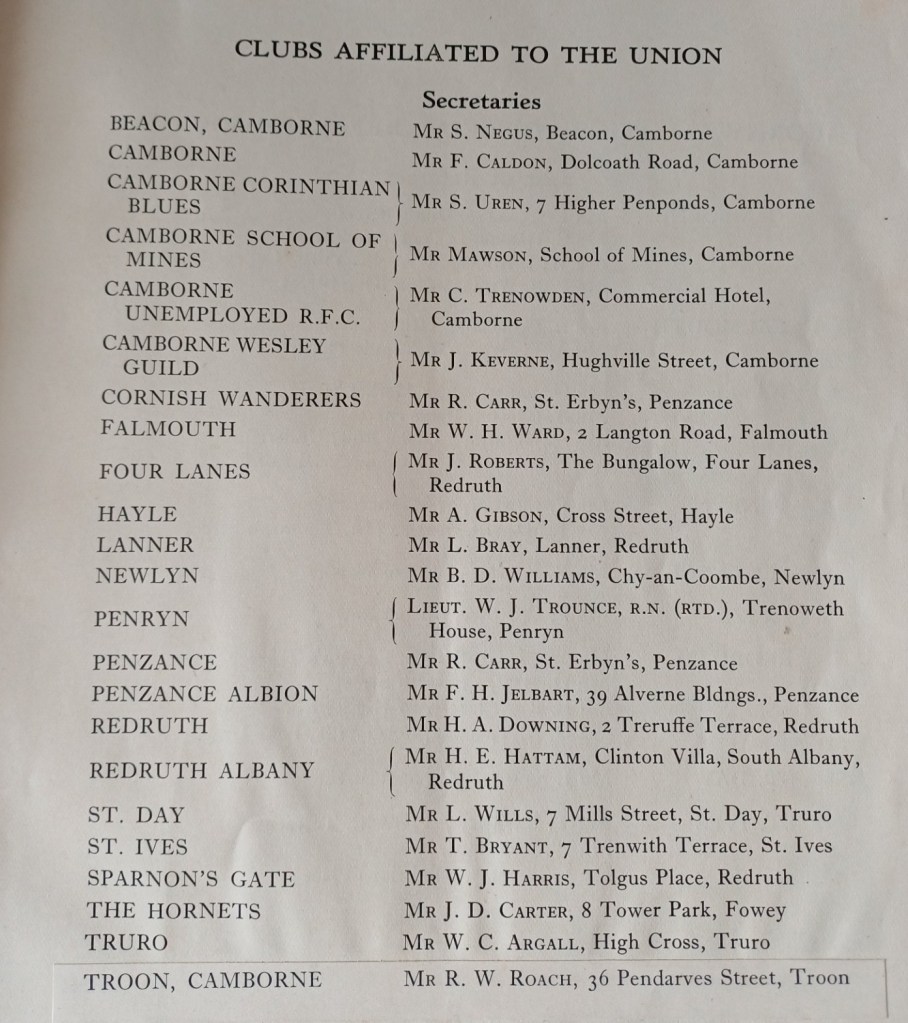
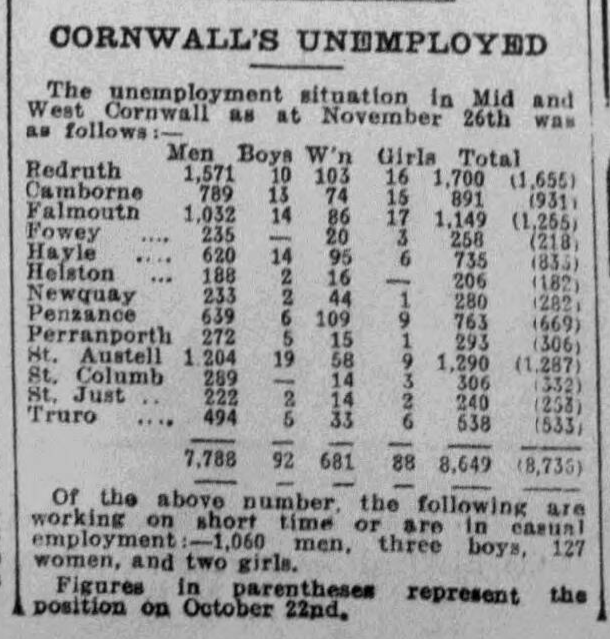
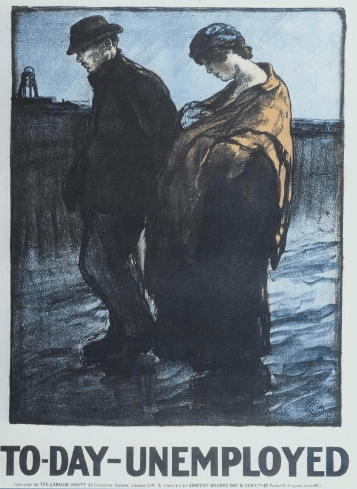
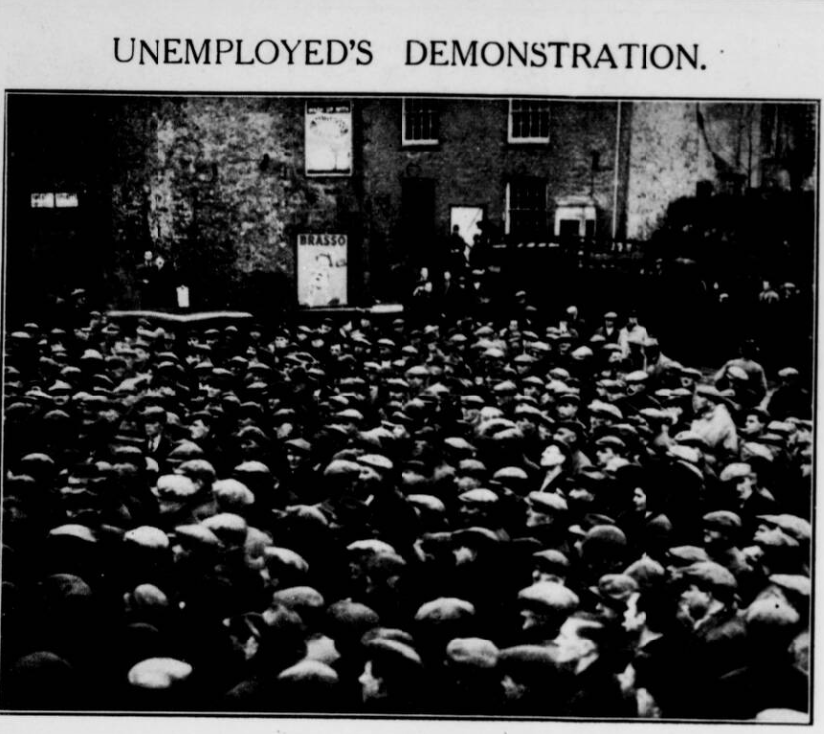
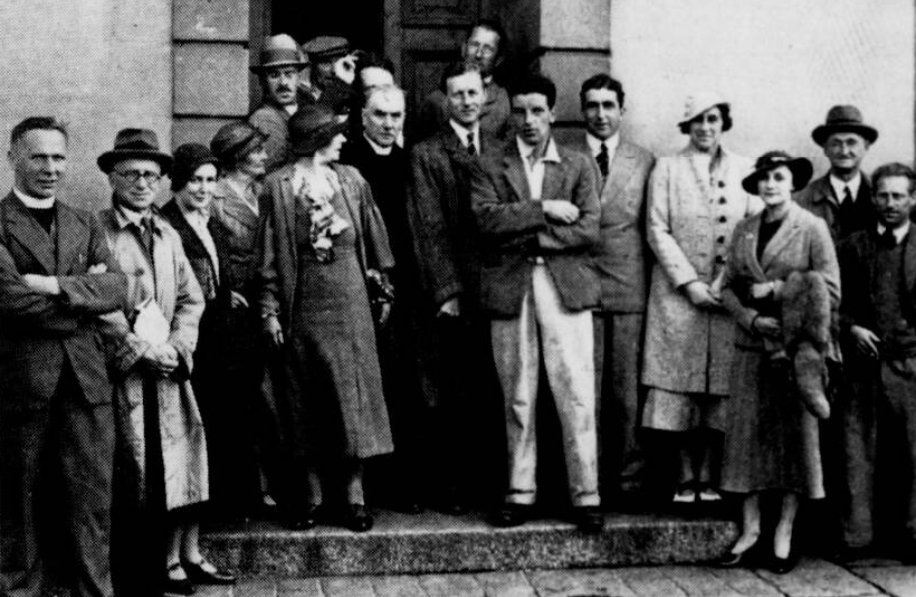
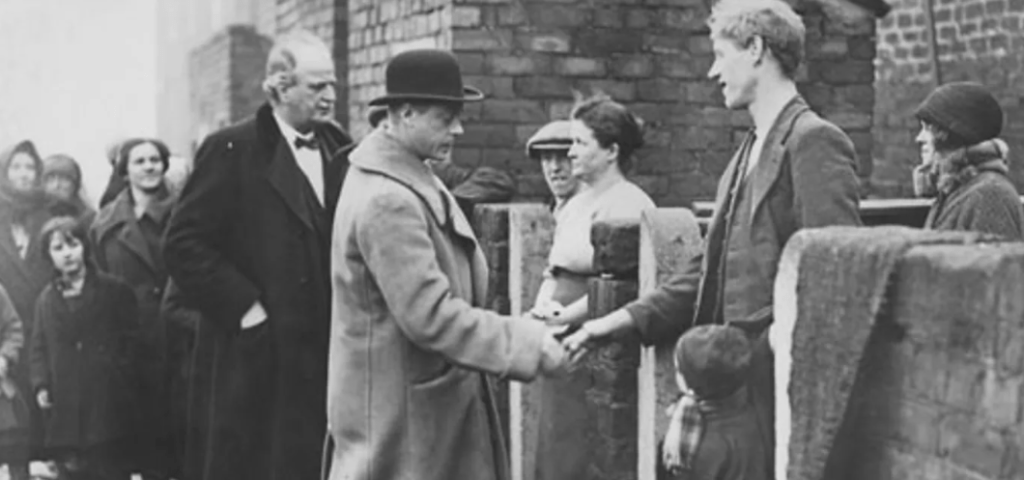
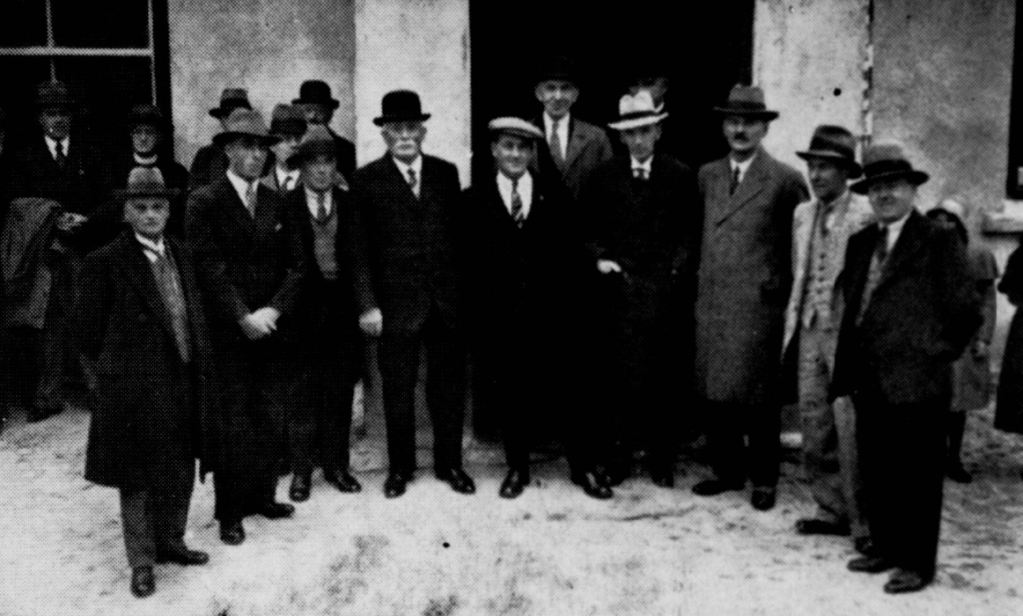
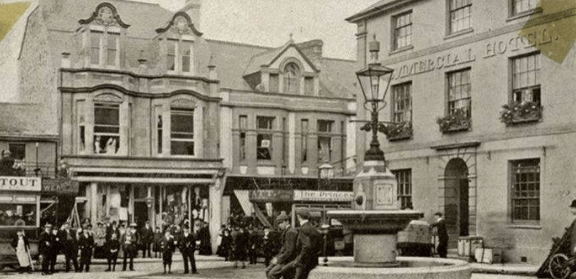
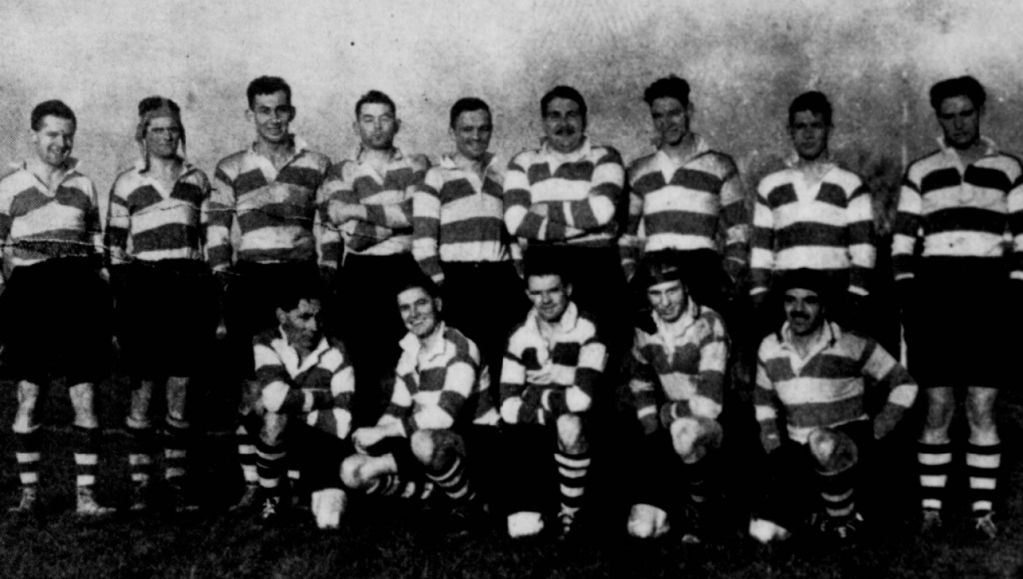
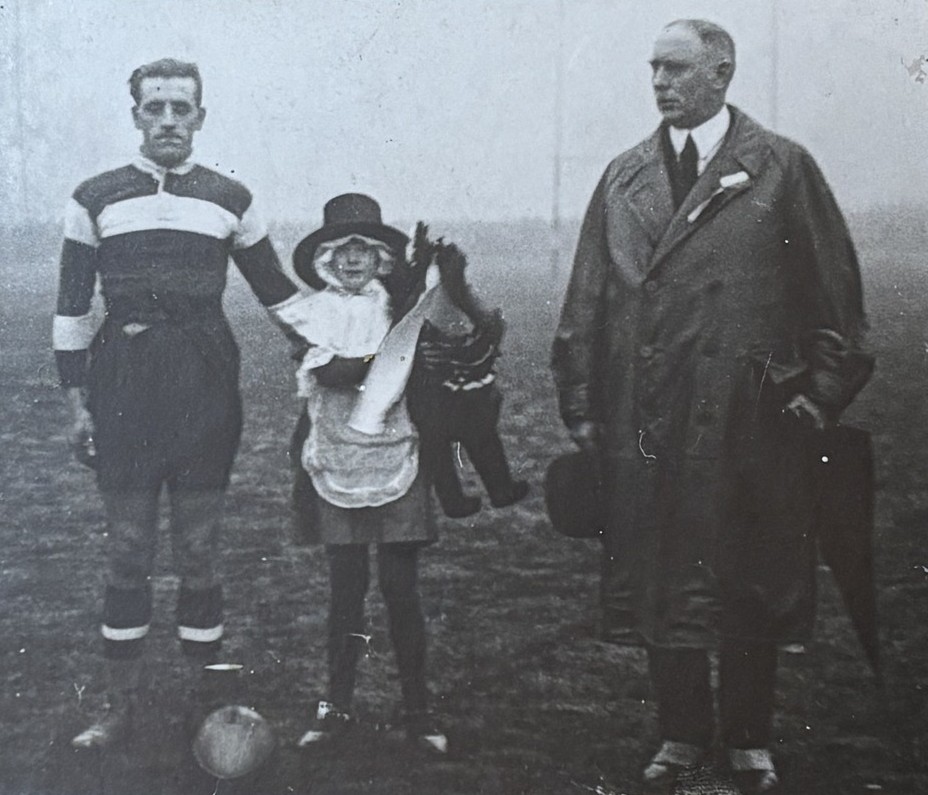
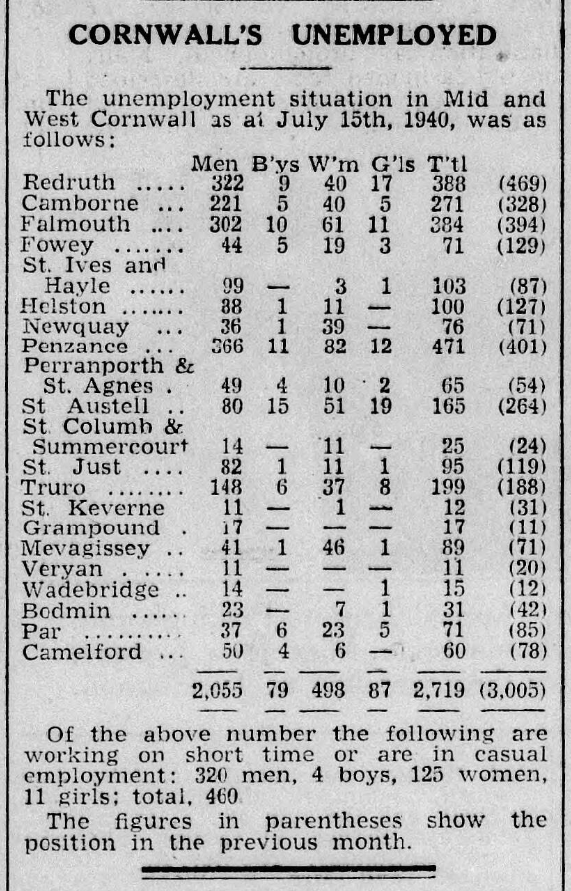
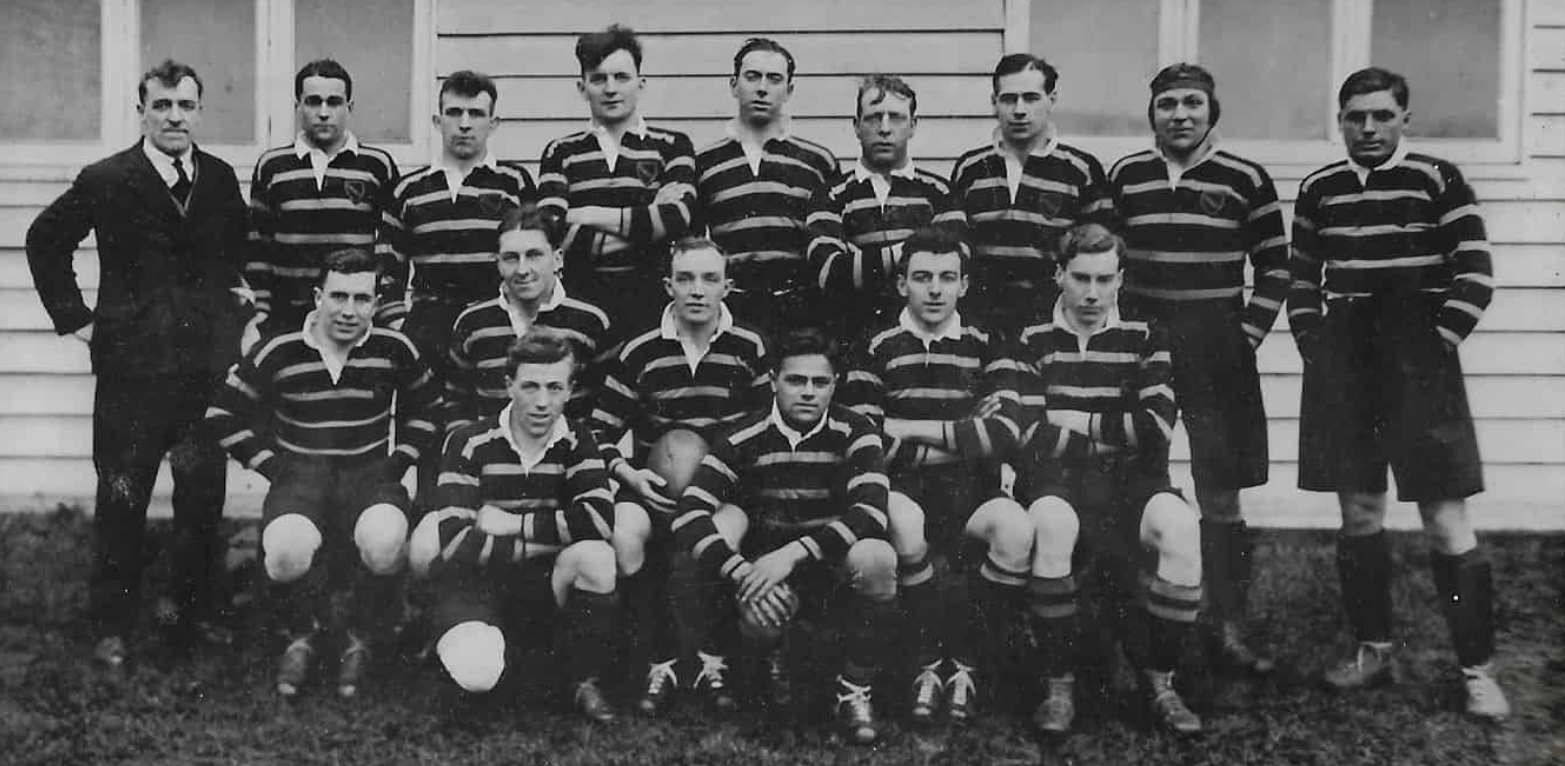
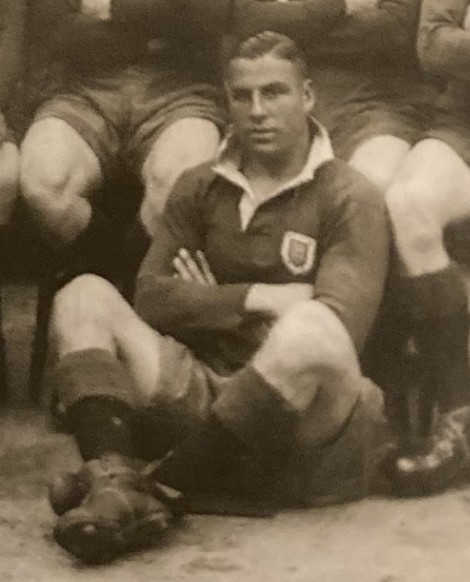
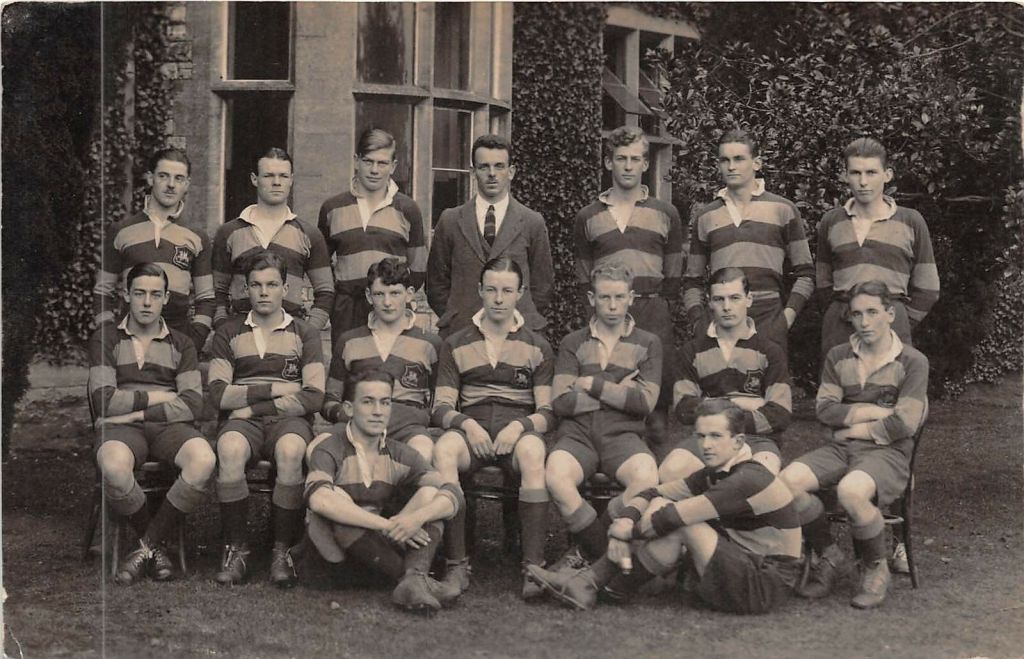
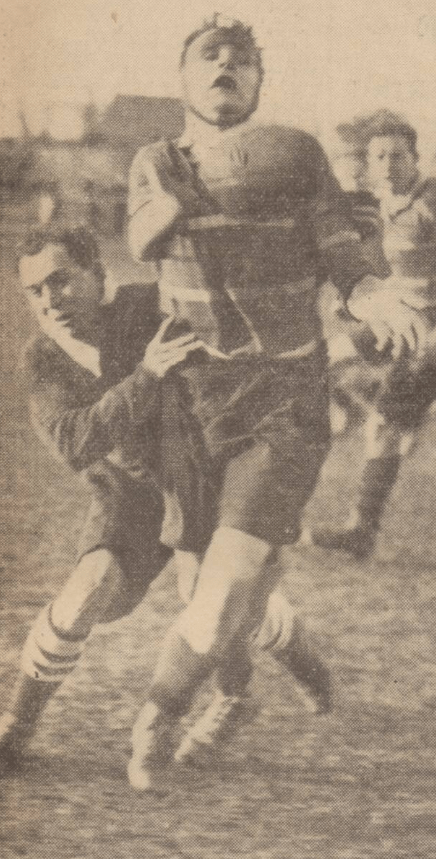
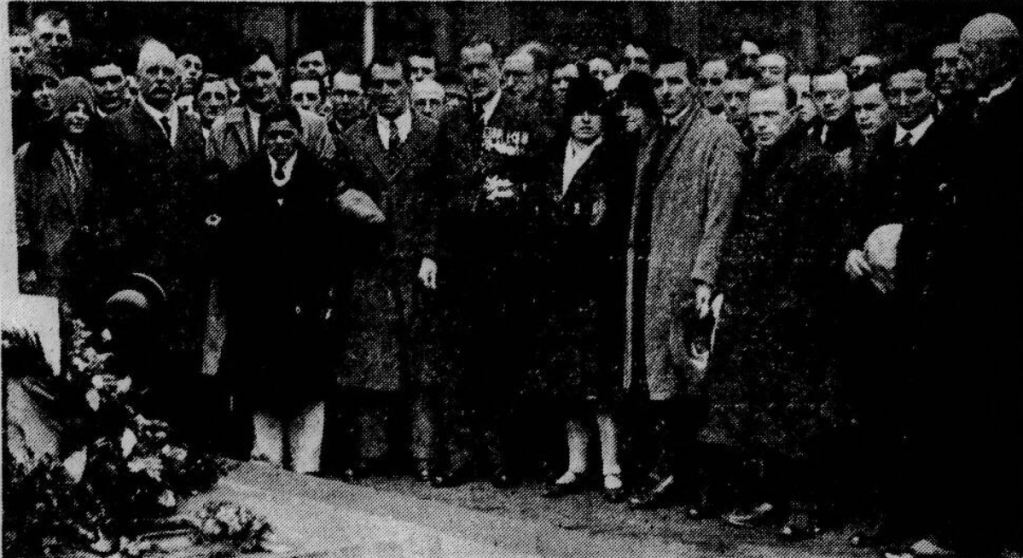
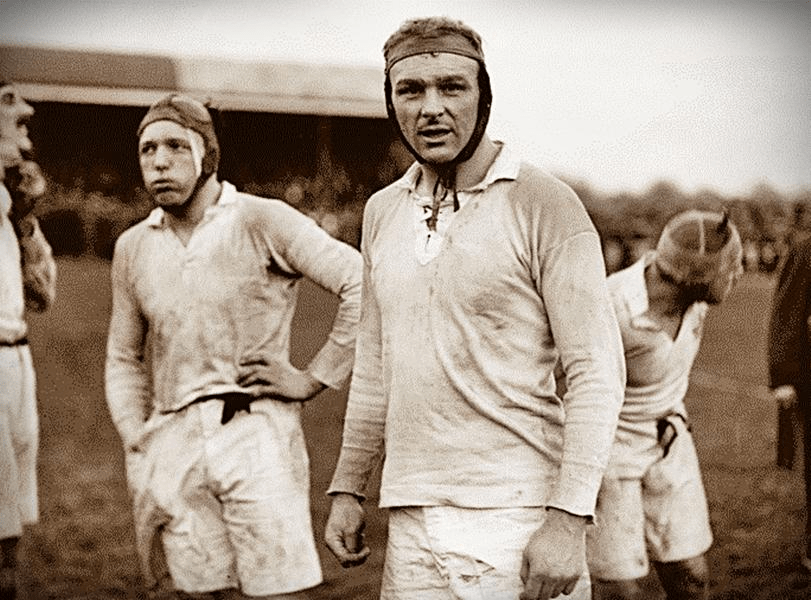
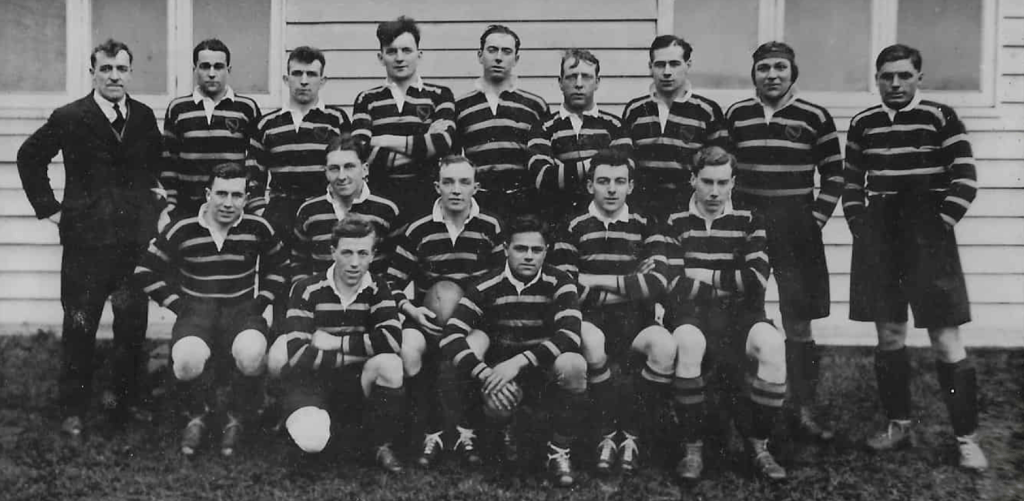
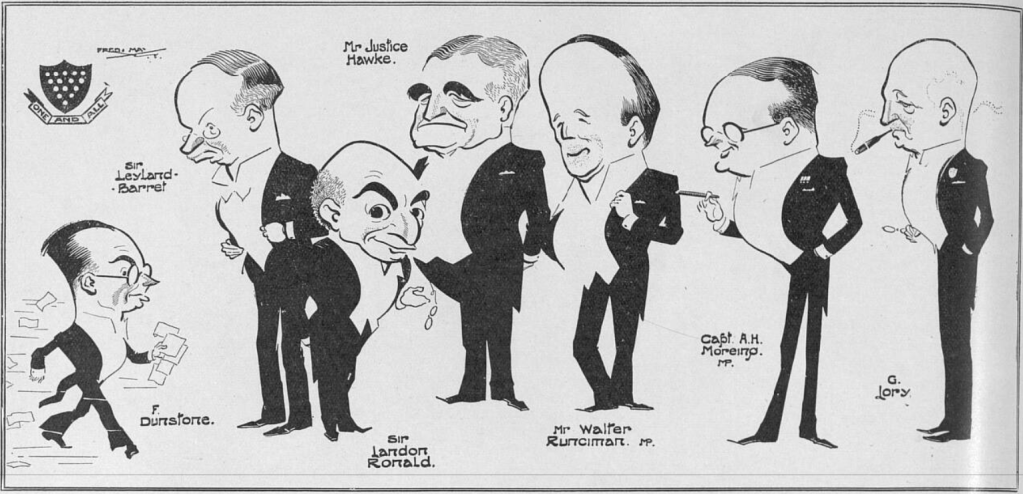
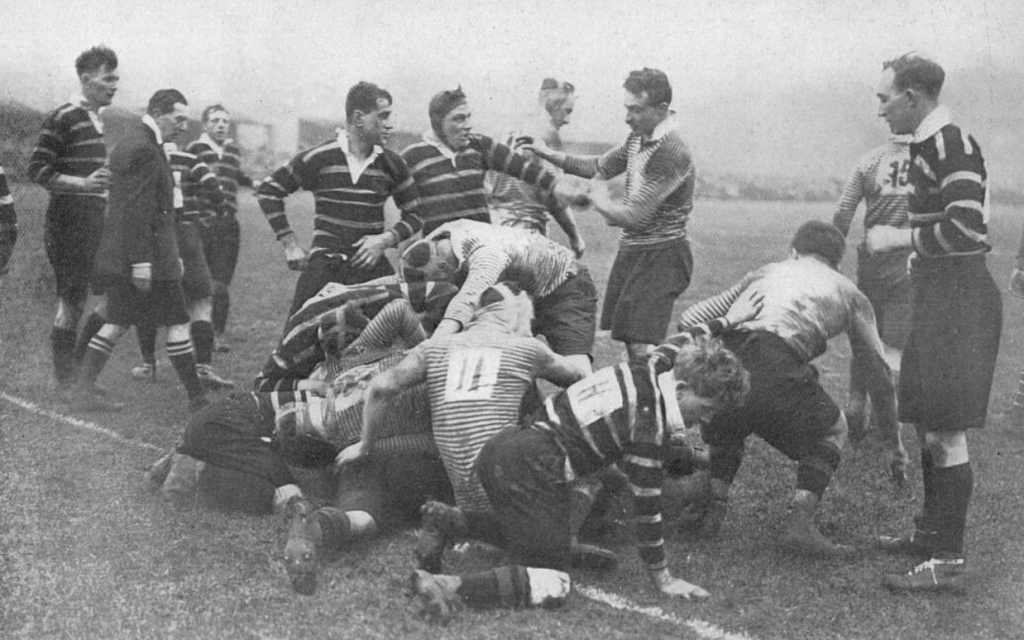
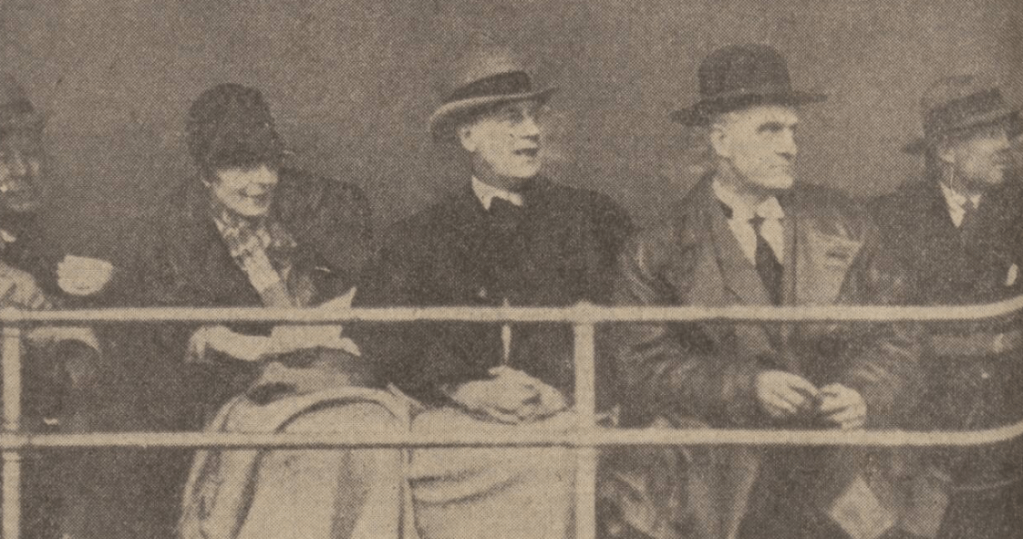

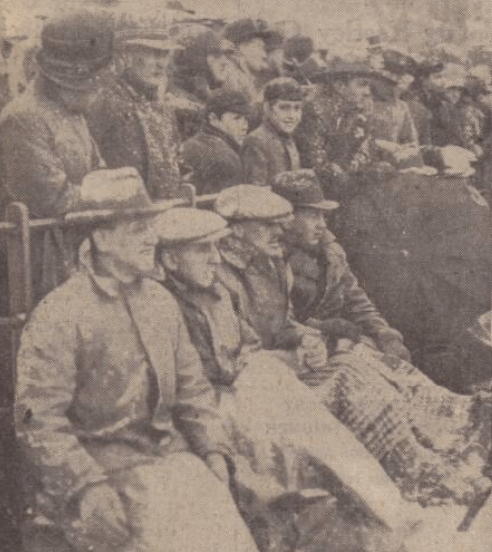
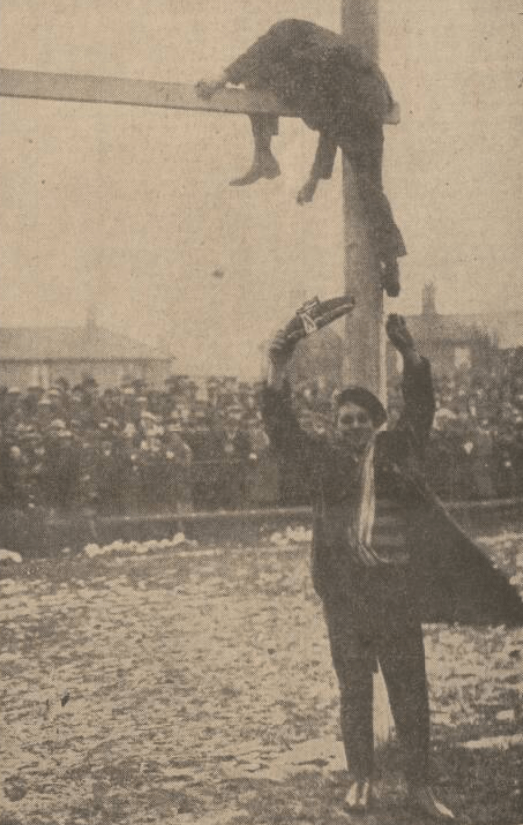
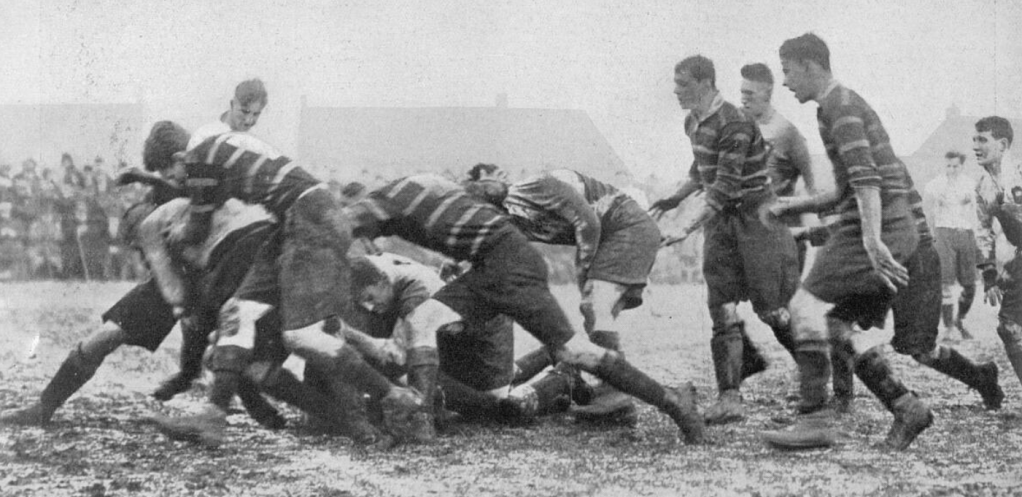
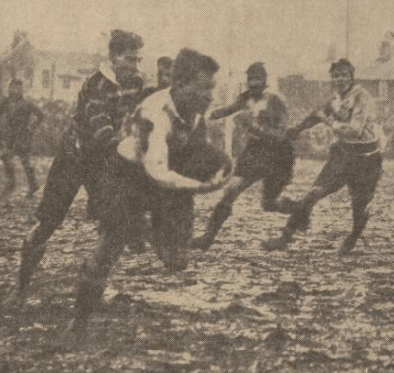


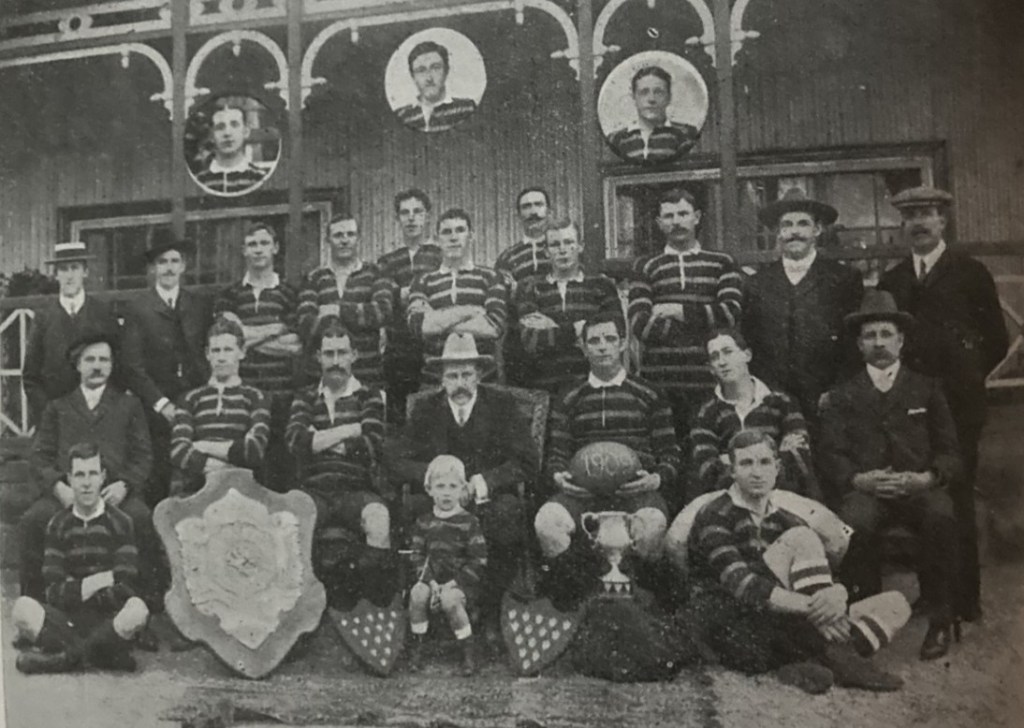


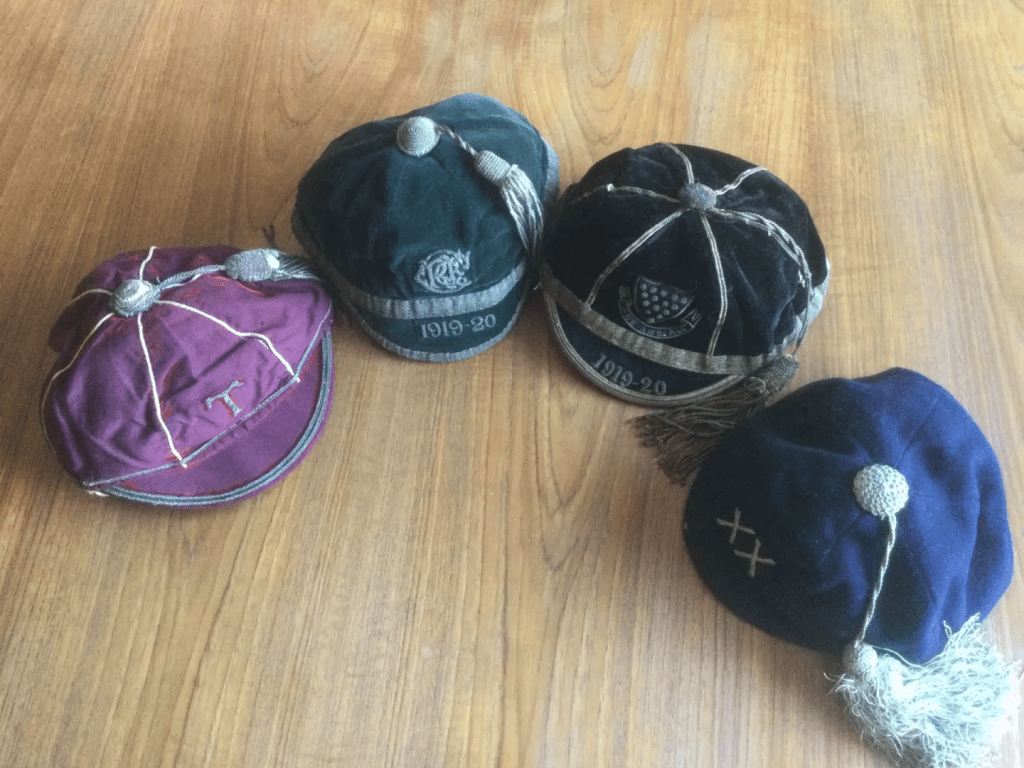

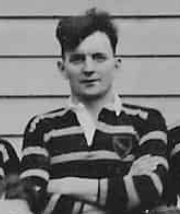
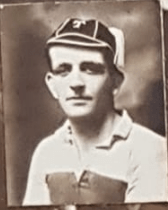


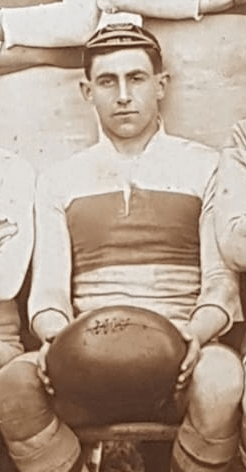

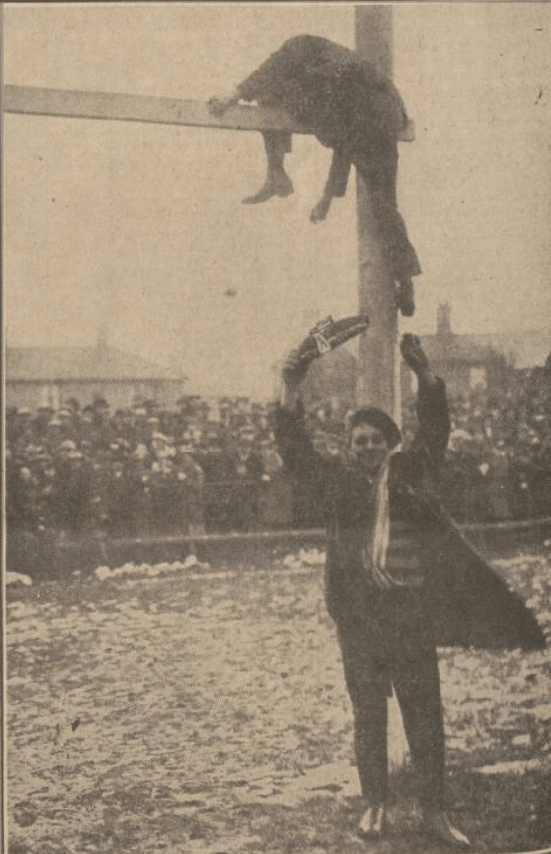

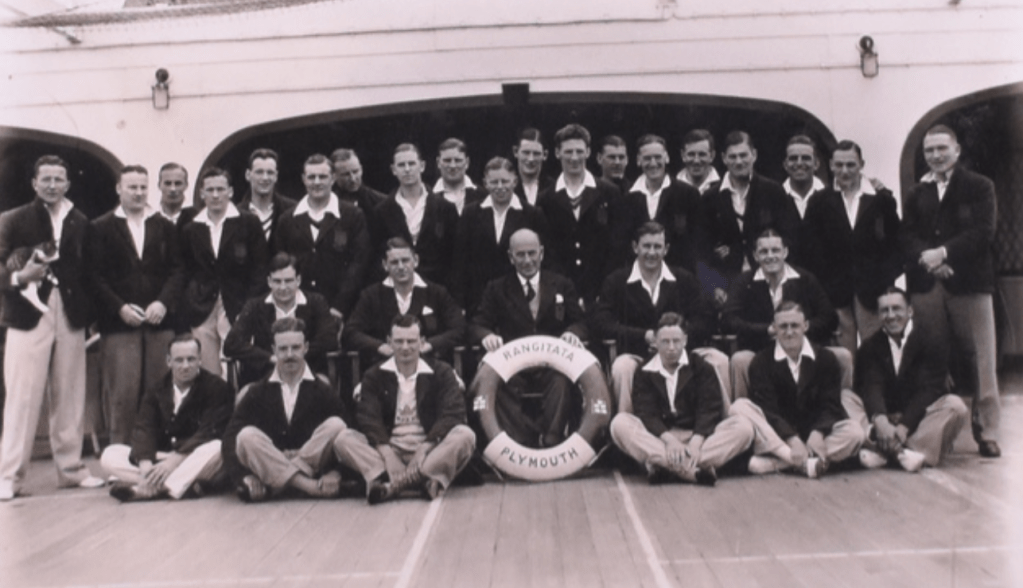

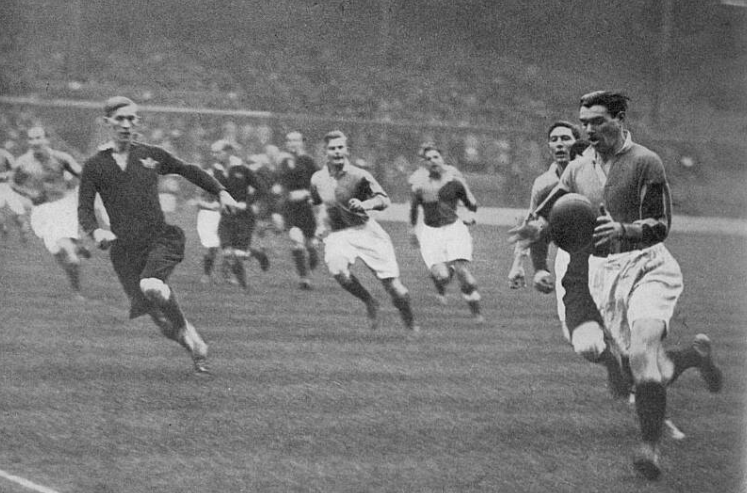


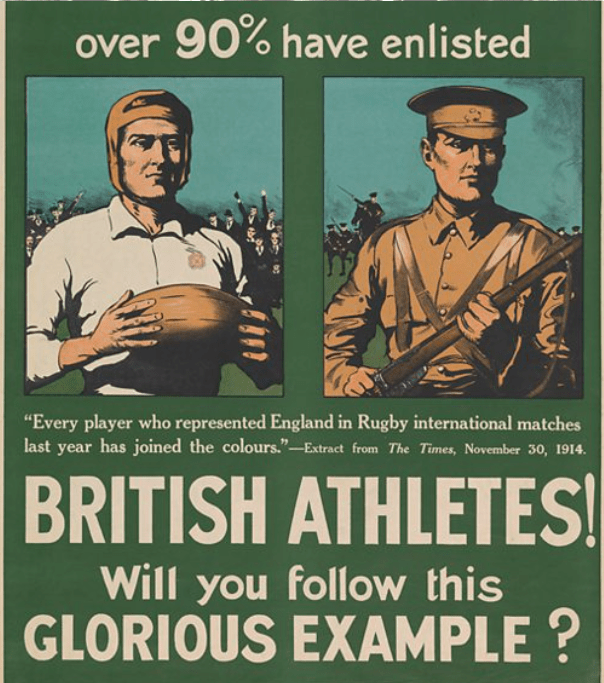
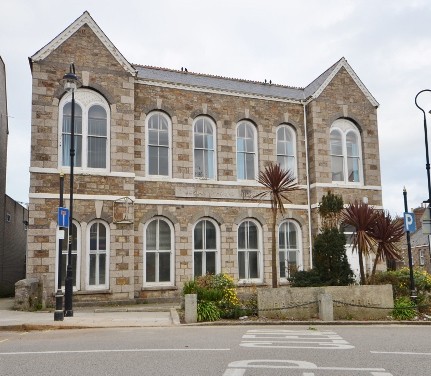
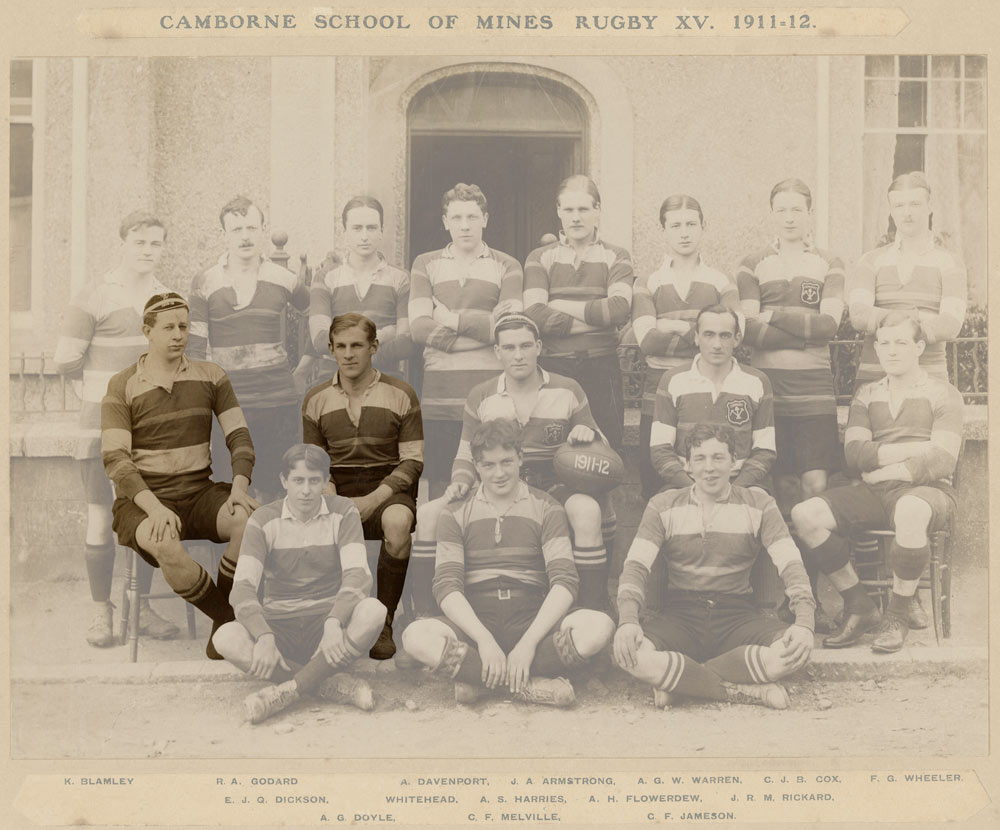
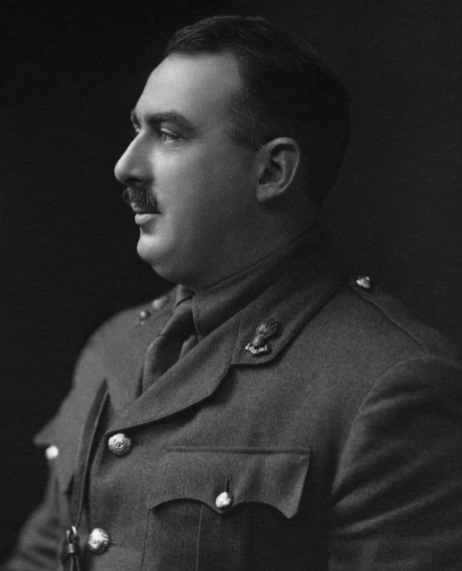
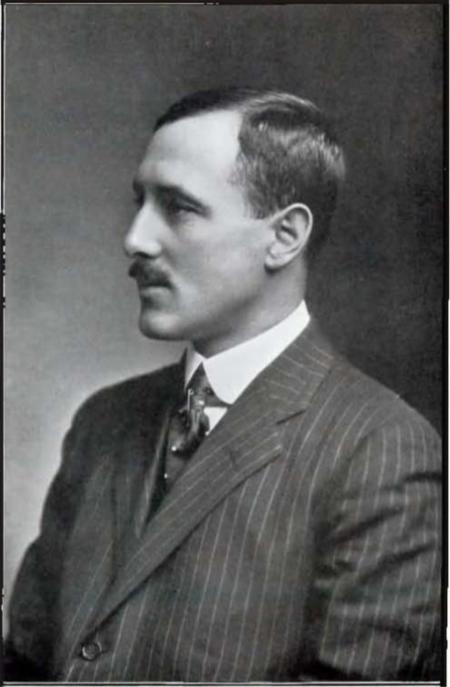

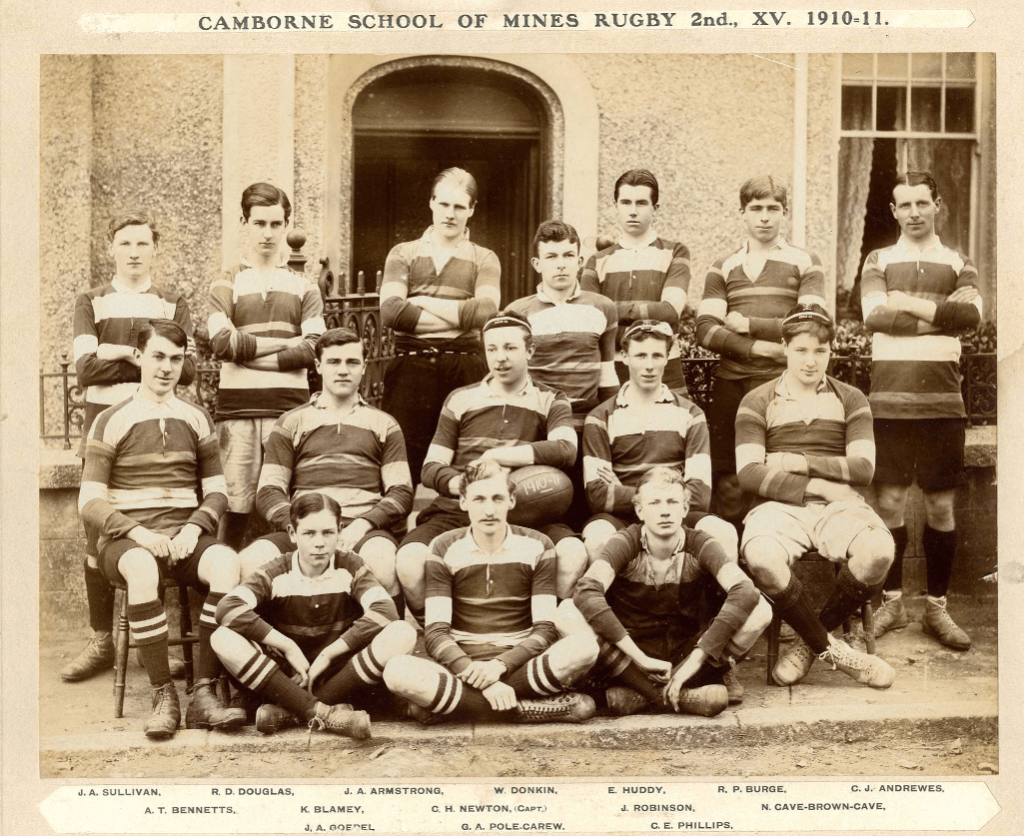
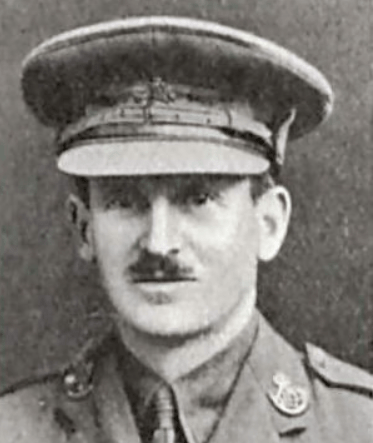
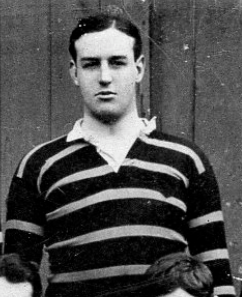
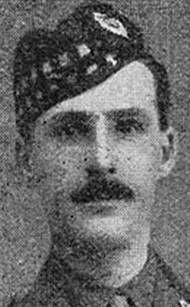

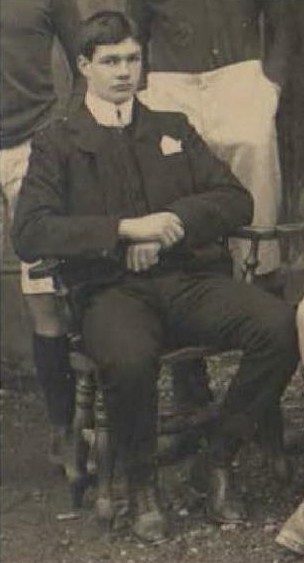
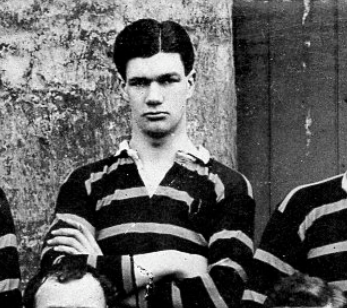

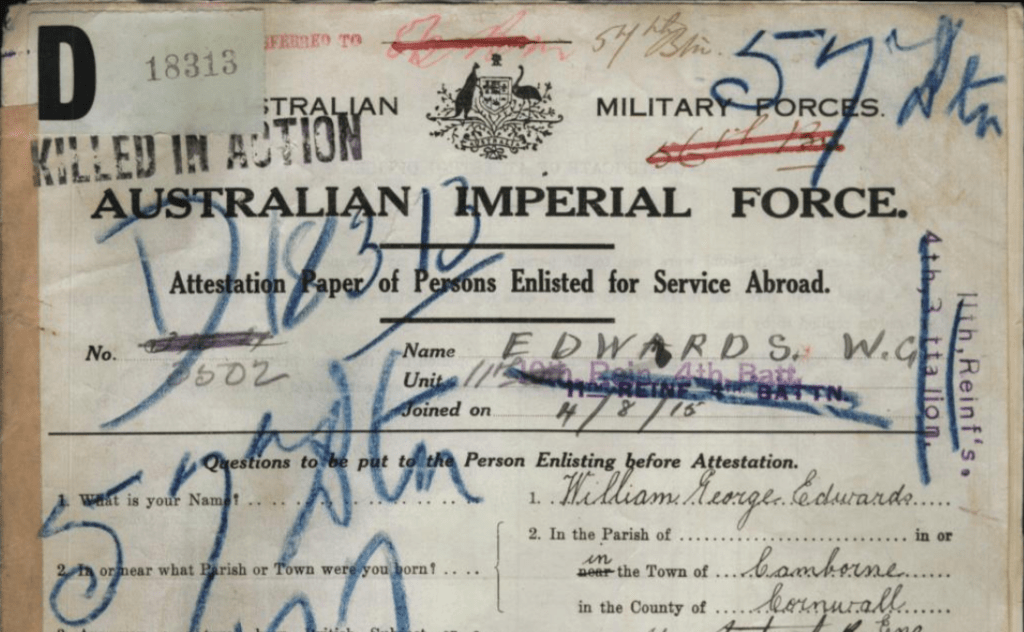
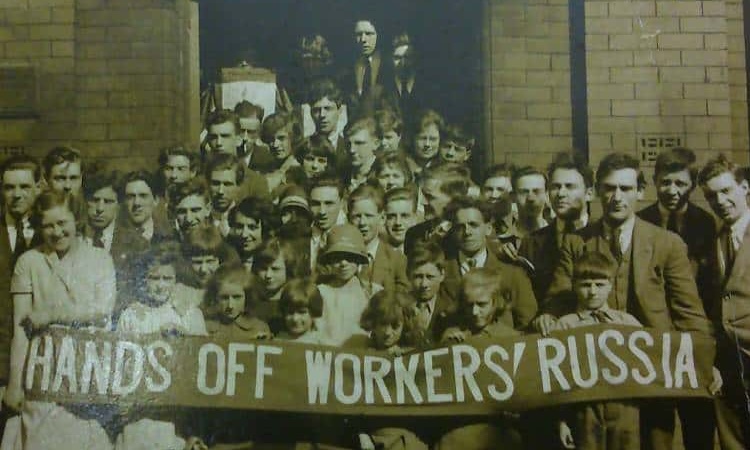




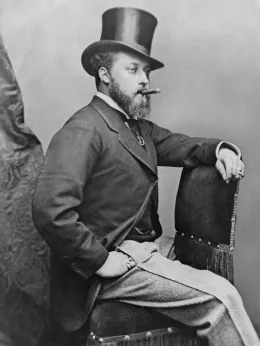

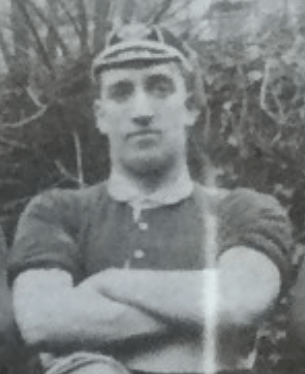

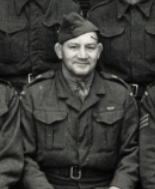
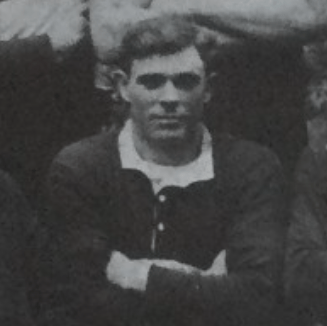
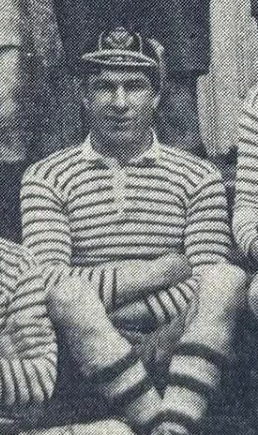
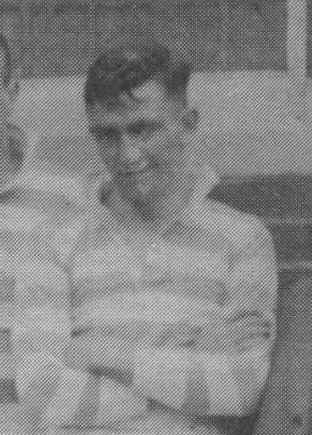
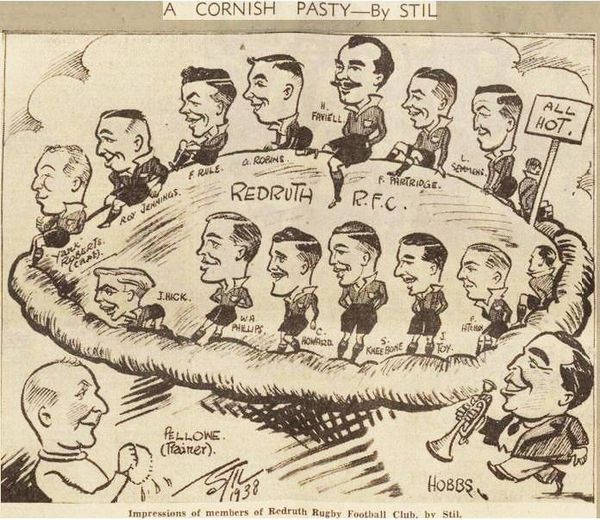
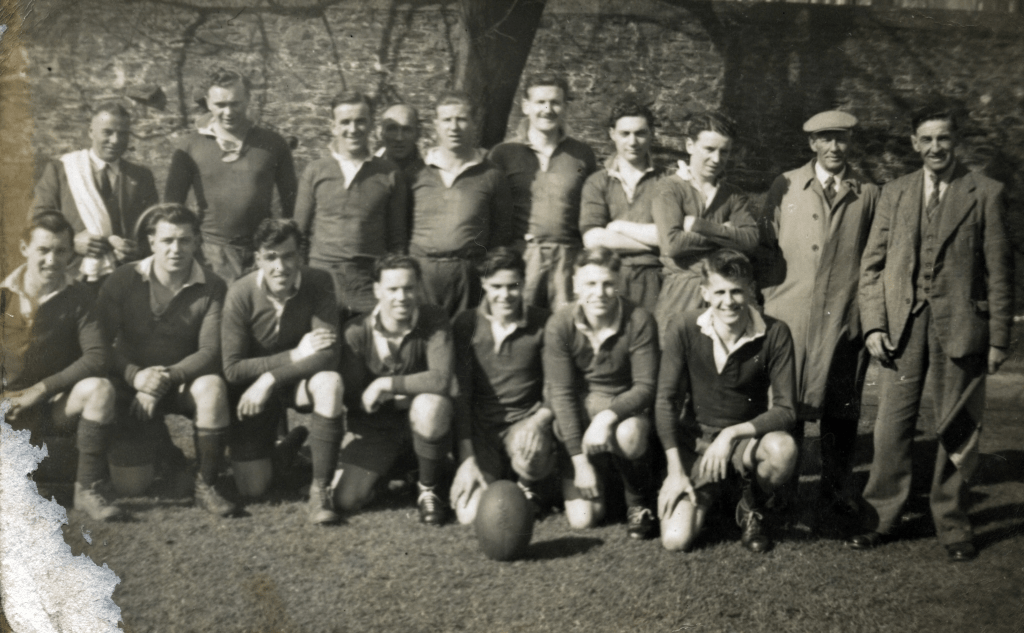
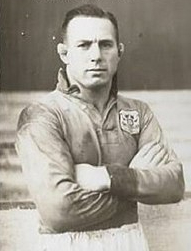
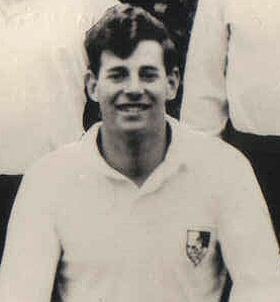

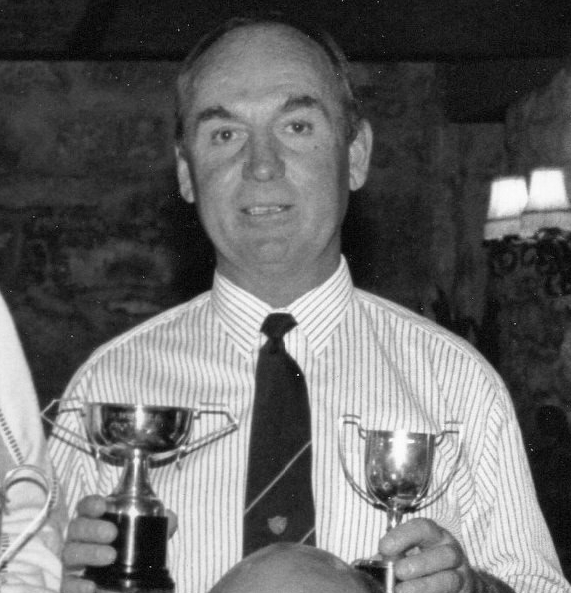

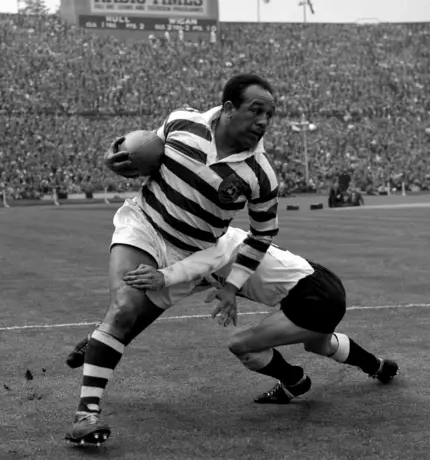




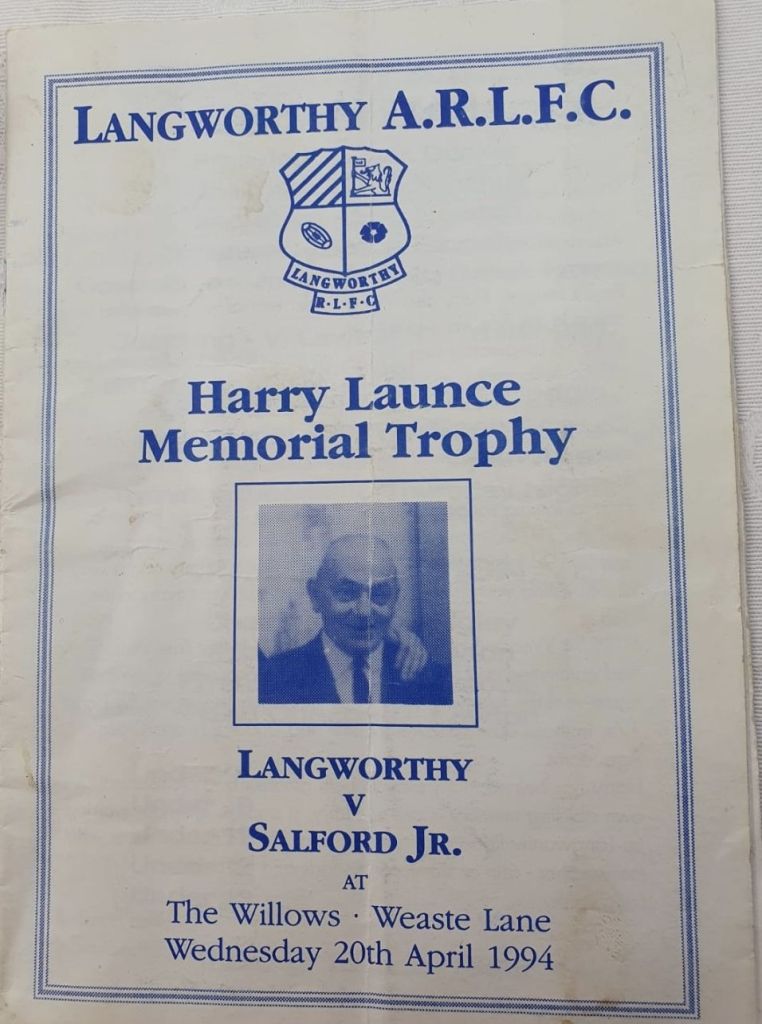
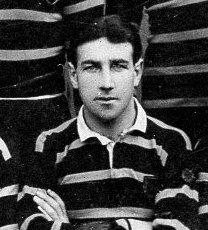
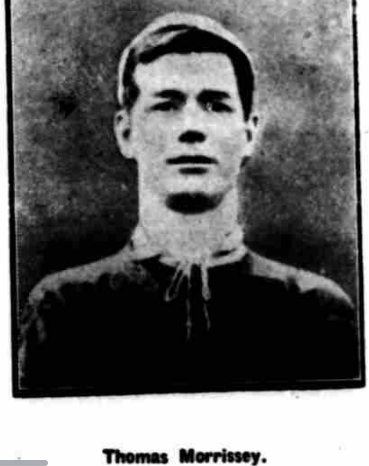


 Francis Edwards ~ The Cornish Historian