It’s Tuesday, 31st January, 1978. The number one single that week is ‘Uptown Top Ranking’, by Althea and Donna. Tory leader Margaret Thatcher comes under fire from the Labour government for allegedly wanting to use the immigration issue to attract National Front voters to her party. The previous weekend’s 100mph storms had caused extensive damage in West Cornwall, including a 12ft by 10ft plate-glass window a half-inch thick being blown clean out of the shop-front of Cocking’s Drapery, Redruth1.
Camborne have been top of the CRFU Merit Table for three days. That evening, they’re travelling to the club they dislodged from the #1 spot, St Ives, in a CRFU Cup quarter-final tie.
Tonight’s game must be won…
For The Hakes, the boot was now on the other foot. The author of their match programme notes was “D.G.”: Paul Sweeney told me this was Dave Gee, a squad member. He was obviously from the Merill Clymo school of straight shooting. Camborne were
…on top at last thanks to our inept display at Hayle on Saturday…complacency…obviously exists among established players…we have…lacked the consistency, dedication and maturity necessary to achieve any notable lasting successes…
Gee didn’t pull any punches:
Unless we are again to be relegated to “Also-Ran” status, tonight’s game must be won.
St Ives would have perhaps done better to remember that, along with Redruth, they were one of only two Cornish clubs to have bettered Camborne that season.
They also lacked the necessary bounce of knowing that Town considered them their ‘bogey’ team, a side they rarely got the better of.
Put bluntly, they’d had the wind knocked out of them.
It showed.
Packet, February 1, 1978. Courtesy Frank Butler
St Ives opted for the approach that had brought them success in their twilight Merit Table encounter with Camborne at Alexandra Road2. With gale-force winds and poor lighting, kicking high and long may have seemed an admirable tactic.
You might be able to pull that kind of thing off once against this Camborne side, but not twice. Town knew what was coming, and Nigel Pellowe at 15, with Edwards and Lees in support, had done their homework.
Indeed, the winning move came from the predictability of The Hakes’ play. David May, up swiftly from 13, charged down yet another hopeful punt.
The quick-witted May rapidly regathered and sensed a score. Breaking free, he kicked ahead and gave a metaphorical two-fingered salute to all those who questioned his supposed lack of pace, outsprinting a cover containing such notable gazelles as Roger Randall, to touch down.
Derick Taylor converted, as you would expect. 0-6, Camborne.
Town were now scheduled to play at Redruth in the semi-final: that promised to be a winner-takes-all derby for the ages.
Whoever reached the CRFU Cup Final would probably be playing Penryn. All they had to do was beat St Austell in their respective tie.
Strengthened their grip…
That Saturday, the 5th, St Ives were travelling to Surrey, to play Old Paulines RFC. They had two hopes. First, that Hayle would beat Redruth. Second, that Truro would beat Camborne.
No one really cared if St Ives beat Old Paulines.
In the same way that Hayle had obliged Camborne by doing a number on St Ives, they then threw a crumb of comfort to The Hakes themselves, upsetting Redruth 6-4.
Hayle climbed to third in the Table, enjoying a late – too late? – resurgence. Redruth slipped to fourth.
Camborne were not so charitable. In a performance that
…strengthened their grip…
West Briton, February 9, 1978, p20
on the Merit Table, they beat Truro 6-33.
Action from the Truro game. Robert Mankee flings out a pass to Nigel Pellowe. Outside Pellowe are Colin Taylor, David May and Bob Lees. 5: Durant, 8: Thomas, 6: Butler, 2: Bennetts, 4: David Richards, 3: Denholm
Chris Durant wins yet another lineout despite close attention from Truro. Richard Thomas stands poised to the right
Here, the camera has foreshortened the angle. Pellowe, Taylor, May, and (very deep) Lees hope the decision is taken to run the penalty. Courtesy Paul White
David May and Richard Thomas both scored twice; Frank Butler reckons most of Thomas’s tries that season were set up by him. Bob Lees ran in one, as did, on debut, David Richards.
David Richards, with Ian Moreton on his right, and Mark Regan on his left. Courtesy Martyn Trestrail
Richards was described as being “extremely strong” by Jumbo Reed. ‘Buzby’, as he was known (after the BT mascot of the time, a small fluffy yellow bird), had made a fine showing. Filling in for the injured Paul Ranford, he had big boots to fill…
Ranny…
Paul Ranford on debut for Cornwall against Devon, 1974. Courtesy Mark Warren
Here is a classic from the compendious anthology of Paul Ranford anecdotes, as related by Paul himself:
One Easter Friday we played Wasps…Chris [Durant] and myself agreed that any nonsense from their pack we would step in for one another…I lasted about 6 minutes and got sent off…I hit one or two in that time…
(The conclusion to this story is always the same, no matter who tells it: we beat Wasps with fourteen men…)
Or then there’s this one, courtesy of Nigel Pellowe:
…he got sent off once, was unhappy, took his shirt off and kicked it all the way to the touchline…where he then tripped over it…
Such ‘Ranford’ tales are legion.
In fact, Paul’s two flaws as a rugby player – as he readily admits, discipline and fitness – threaten to overshadow his reputation as one of Cornwall’s finest second rows, both in tight and marauding on the loose.
If all Paul Ranford could do was fight (though he obviously had ability in this area), he would not have won seventeen caps for Cornwall.
Robert Mankee reckoned that, on his day, Ranford was
…the best lineout jumper in the South West…
This was an era when no lifting in lineouts was permitted, and opposing packs stood cheek-by-jowl for throw-ins. Space to jump, and win the ball, therefore, had to be earned – how you went about this depended on your sheer physical presence, and the referee’s powers of observation.
Win the space, win the ball. Paul Ranford stood 6′ 4″ in his socks, making him one of the biggest players around at that time. And he knew it.
With the equally tall and arguably more imposing Chris Durant alongside him, Jumbo Reed is insistent when he describes them both as the
…best two locks in Cornwall by a country mile…
This isn’t just an old soldier talking a couple of comrades up; to this day, their partnership for Camborne and Cornwall both is remembered in hushed tones in bars all over the County.
Allied to this, and like his partner in many a post-match session, Bobby Tonkin, Paul had
…surprisingly good ball skills…
said David May. Alan Truscott likewise appreciated the big man’s “good hands” and turn of speed, utilising them for attacking moves. There was of course the ‘double diamond’ move, where the fly-half would switch-pass with Colin Taylor at 12, who in turn would switch with Ranford bursting out of the lineout at full bore, changing the angle and bearing down on the opposition’s 10.
Then there was the ‘1234’ move. Chris Durant would catch at the front of the lineout, and feed to Bobby, who would be peeling round the short-side. Malcolm Bennetts would grab the opposition hooker and pull him into the line (meaning Bennetts risked “a punch, or worse”), creating a gap for Bobby to pop-pass to Ranford, who would sprint through to score, often
…laughing his head off…
according to Bennetts. Sixteen tries that season, in over 39 appearances, though Paul himself reckons there’s a few more in there somewhere.
However, as Truscott notes, his short fuse was a constant. (Even in training sessions he was known to blow a gasket if a move wasn’t executed perfectly.) Ranford always sought
…immediate retribution if fouled…
remembers Truscott, meaning he became a “target” for the opposition, said Chris Durant, who could be “put off easily”, reckoned clubman Terry Symons. Wind up Ranford…he can’t help himself…get him in trouble…
Even Paul admits that, when he was sent off during that Wasps fixture, they set him up. He knew his temper was a problem:
The problem I had, our fixture list was too diverse, one week Truro etc and next Bristol or Gloucester, the latter teams were more physical, and lower league Cornish teams, players, and committee would whinge…
But he wouldn’t – or couldn’t – change. To rein in his aggression would hamper his play, lose him a lot more lineouts, and a lot of support on the terraces. It was part of who he was on the pitch.
He also had to contend with those on opposition teams who reckoned landing one on Paul Ranford would enhance their own reputation. As he told me,
Every club had chancers, they were bleddy sly guys…numerous times I would be raked or kicked from behind…
Such ‘chancers’ were to be dealt with in one manner only. Paul was a firm believer in the following maxim:
…get your retaliation in first…
Paul Ranford was the kind of player who, if provoked, would aim a haymaker at your jaw in a maul, and then buy you a pint after the game. Big, fast, physical, and with the handling skills of a centre, Paul was arguably the embodiment of pre-professional rugby, who may very well have played
…in the Premiership today…
according to David May.
*
Winter then truly came to Cornwall.
Cancelled…
On February the 11th, Camborne were due to host Hayle. Snow meant the game was cancelled, which is a great shame. Hayle had risen to third in the Merit Table, and had recently done the ‘double’ over St Ives and beaten Redruth.
Camborne, though top, had done neither of those things, and would have been aware that this was a very different Hayle side from the one they’d easily beaten on Christmas Eve.
Another shock slaying may have been on the cards, but it was not to be. Due to Camborne’s cramped schedule, the fixture was never rearranged.
Likewise Town’s match against visiting Brixham on the 18th. That weekend, “not one” senior rugby fixture was played, owing to snow and gales3.
Camborne didn’t play again until February 25th, when they hosted Penzance-Newlyn, and the elements had a say in that game too:
Courtesy Paul White
The dilapidated wreck you see above is Camborne RFC’s grandstand. Over the course of the previous week, storms and high winds had destroyed the roof. If you look closely, you might be able to spot the Wicked Witch of the East’s legs.
Kerrier District Council, the club’s landlords, pointed out the blatantly obvious in declaring the grandstand unfit for use.
Camborne’s grandstand in happier times. Courtesy Mark Warren
This was a setback for Town: repairs would be costly, and revenue would be lost as the ground’s capacity was affected.
But the pitch was playable – and play went on.
Bony old bugger…
The only thing substandard Penzance-Newlyn found about Camborne RFC on the 25th was the grandstand itself.
Although a certain degree of rustiness was evident in Town’s pack, allowing the Pirates’ forwards a late surge, the visitors were sent back down west defeated, 16-12.
Chris Durant always had issues with the Penzance front eight, in particular lock Roger Waters, whom he recalls as a
…bony old bugger…hard as nails…
Durant never enjoyed playing Waters, which I suppose is one of the highest imaginable compliments in Cornish rugby.
But even Waters’ niggardly style couldn’t thwart the hosts. “Quick thinking” (as ever) by David May put Edwards in near the corner, a Bobby Tonkin rampage set up David Kingston, and a ‘Mank’ break by Mankee gave Edwards his second4.
Elsewhere, St Ives threw away a 13-4 lead at Falmouth, to draw 13-all5. Dave Gee’s prophecy was becoming reality.
The Merit Table was looking increasingly like Camborne’s to lose, and Merrill Clymo was determined to make all the cynics and naysayers take notice:
The time will come when the ‘papers will have to acknowledge the fact that Camborne are the top team in Cornwall…
Programme notes, Camborne v Launceston, March 4, 1978. Courtesy Frank Butler
…eyes fixed on the double…
“Camborne’s eyes are fixed on the double”, ran the Packet on March 8. If this statement can offer any clue, the media had altered its stance regarding Camborne RFC.
On March 4th, they proved far too hot for Launceston, running in seven tries, and running out 33-6 victors.
Launceston couldn’t live with Town’s pack. Their wing that day, Mickey Stephens, told me his forwards were weak, and their lineout
…non-existent…
He described the Camborne front five as “massive”. Launceston couldn’t handle the fearsome Jock Denholm “at all”, and as for Chris Durant, well, you “didn’t mess” with him under any circumstances, and certainly not on a rugby field.
With such superiority, Town’s pack surged
…about the field…and Camborne threw the ball about in great style…
Packet, March 8, 1978. Courtesy Frank Butler
Contrary to what has just been said, Launceston appear to have won this lineout, while Paul Ranford’s head towers over them. The grandstand had definitely taken the mother of all batterings.
Here, we might be witnessing a ‘1234’ move. Durant has given the ball to Bobby Tonkin (1), Malcolm Bennetts (2) appears to be lining up the Launceston hooker, Paul Ranford (moustache, on the right) is sniffing a pop-pass to take around the short-side. Courtesy Paul White
In fact, at times Camborne could afford to showboat, with overly intricate passing upsetting some chances – but no matter.
This was a near-complete performance, with a hat-trick for that noted “poacher”, Richard Thomas6, and one apiece for Lees, Pellowe, Colin Taylor and Durant.
Up and coming…
Stephens knew this was an “up and coming” Camborne XV, and the next Saturday, the 11th, the torch was truly passed on.
Falmouth, the previous season’s Merit Table and CRFU Cup winners7, came to Camborne with just under a hundred loyal fans, and were beaten 17-3.
Their lock, Stephen Lightfoot, noted how the hosts had
…improved their discipline and did not give away so many penalties…
Take the discipline, combine it with that pack, and the rock-solid Pellowe at 10 (Nigel started the fixture at fly-half; Tanzi Lea was available and played at full-back), and Falmouth were left hunting for scraps. They found very few.
Camborne’s key score came as the result of an up-an-under launched by Dave Edwards at Falmouth’s 15, Trevor Hewitt. Edwards’ chase was supported by Robert Mankee, who zeroed in on Hewitt at full tilt.
Here’s Mankee. He hit Hewitt
…with the full force of the Mank tackle…it was timed to perfection…
Modestly put. Hewitt lost the ball as a result of Mank’s pinpoint smash, and Edwards was on hand to nip over the line.
Camborne had now won eight games in a row, and each match was a pressure performance, either in the Merit Table, or the Cup. There were no friendly touring teams to boss around.
CRFU Merit Table, top positions, the Packet, March 15, 1978. Courtesy Frank Butler
Merrill Clymo sensed the team were on the verge of something truly momentous:
A Centenary Season should be something special and this is precisely what our players are providing us with…
Programme notes, Camborne v Falmouth, March 11, 1978. Courtesy Frank Butler
To win the Merit Table, Camborne had to beat Falmouth again, on Monday the 20th.
To reach the CRFU Cup Final, they of course had first to win their semi, to be played on Saturday the 18th.
Step up, Redruth RFC…
Find out the result of that game in Rugby Special ~ Part Tenhere…
Many thanks for reading
References
See that day’s Daily Mirror, p2, and the West Briton, January 30, 1978, p3.
(If you missed the New Year’s Rugby Special, click here…)
As it was…
It’s Saturday, January 14, 1978. Donna Summer has released her ‘Greatest Hits’ album. That week, Bobby Charlton opened the hugely successful ‘Discover Cornwall’ tourism exhibition in Manchester1.
In the CRFU Merit Table, third-placed Camborne are hosting the leaders, St Ives.
It’s a must-win for both sides.
Tight…
As we discussed last week2, Camborne had tweaked their formation, moving Bob Lees to the wing, recalling David May at centre, and – the big change – starting Nigel Pellowe at 10.
This reflected Chris Durant’s desire to keep matters “tight” for the big game: half-backs Mankee and Pellowe would, by the physical style of their play, act like extra flankers in a pack-oriented attack.
You can appreciate Town’s risk-free tactics and a wish to play to their big strength. If they lost, the Merit Table went with it.
Although Dave Kingston said that Camborne “were always up for” a clash with St Ives, even the ten year-old ball-boy, Mark Warren, knew full well that ‘The Hakes’ were Town’s “bogey” team.
But there was no need to worry.
This was Tanzi Lea’s game.
Goldenhands…
Tanzi Lea celebrates reaching the milestone of over 10,000 flying hours, mainly in Sea King helicopters3
Lieutenant Commander Paul ‘Tanzi’ Lea joined the Royal Australian Navy from the Royal Navy in the 1990s. He became one of the RAN’s most experienced helicopter pilots, being involved in counter-terrorism operations, a Gulf deployment, fire and flood relief, and tracking nuclear submarines4.
Now retired, he leads a quiet life in New South Wales as a volunteer fireman.
As a rugby player, he represented the Royal Navy at Twickenham (the Duke of Edinburgh presented him with his cap), captained the Combined Services, and once played the All Blacks. “We came second”, he told me.
Courtesy Tanzi Lea
As you can probably imagine, such an adventurous nature was reflected in his play.
Frank Butler recalls that Tanzi was
…always wanting to run everything…
and his high-risk game was not always appreciated by Camborne’s pack. In fact, Frank continues, even Cornish fans of the era frowned upon running rugby – which gives you some idea of how matches were played then.
However, for this particular match, Tanzi was moved to 15. By his own admission, this was his favourite spot:
…where you could express yourself more…
Tanzi himself realises his style went against the grain of Cornish rugby in general, and Camborne rugby in particular. Today he reckons that coach Alan Truscott was given “grey hairs” by him merely
…running around, holding the ball in one hand…
Maybe he was, but Truscott knew talent when he saw it. He describes Tanzi as “unpredictable”, with
…outstanding attacking flair. Class…
“Goldenhands”, was Robert Mankee’s name for him; Paul Ranford remembers him as “flighty”, and Frank Butler acknowledges his qualities:
As a full-back he was ahead of his time as he ran a lot more than he kicked, and caught a lot of teams out with his pace and running ability.
Tanzi was a wildcard, x-factor kind of player: on his day, a matchwinner. Here he was finally given the freedom he craved, at full-back. Camborne had previously handed him several starts at 10, but now, at 15, against St Ives, he was the point of difference in a game where
Very little was tried or ventured…
Packet, January 18, 1978
St Ives were stymied. Slowly throttled by Camborne’s pack, their successful tactics earlier in the season, to kick up-and-unders at Town’s full-back under dodgy floodlights5, would not foil their hosts today. Indeed, whenever they did kick long, Lea would nonchalantly scoop the ball up, check where the cover was, and go for the jugular.
In fact, Tanzi was rampant, and threatened to score more than once. He broke clear to put Dave Edwards (also a menace for St Ives that day) in for a try with a chip ahead, and had the winning score himself.
Mankee, with a copyright blindside break, slipped Lea the pass. In space, with broken play ahead of him, Tanzi was only ever going to score.
Make no mistake, this was a massive win for Camborne:
West Briton, January 19, 1978, p20
Though The Hakes were still top, Town were
…now within easy striking distance should St Ives falter again.
West Briton, January 19, 1978, p20
St Ives would also have to win the Merit Table without their star flanker Peter Hendy: he had broken an ankle during the game, and would be out for the rest of the season.
Suddenly, Camborne were back in the hunt.
David May, recalled for Town at centre, had played his own part in the victory too. When Tanzi made his break to put in Edwards, May assisted by
…illegally pulling back [a St Ives player]…He backhanded me with his fist, splatting my nose and dropping me to the floor…
May pulled himself off the turf, wiping blood and snot from his chacks, just in time to see Edwards touch down.
Funny, but I can’t recall David May ever showing me that particular move when he taught me rugby at school…
Mr May…
David May with the College Road School Rugby Team, 1977. They all played for Camborne RFC Minis section and are seen here in the Cherry and White. Back, l to r: Tony Cox, Andrew Middleton, Shane Tellam, Mr May, Paul Prisk, Richard Bell. Front, l to r: David Dunstan, Jonny Rogers, Martin Symons, Michael Symons, Scott Downing. Courtesy Martin Symons
Frank Butler told me that David “hated” his nickname at the time, so I won’t repeat it here. In any case, his moniker is almost as well-known in Cornish rugby circles as the fact that he devoted most of his adult life to the game, both as a highly successful coach of youth teams and, later, as a respected referee.
In fact, many of the youngsters he coached – myself included – would be surprised to know he was also an integral part of Camborne RFC’s Centenary XV. (That said, how many kids believe their teachers only exist in school?)
Courtesy David May
In 1978, though, all this was in the future, but May had already laid the foundations for Camborne’s mini and junior rugby section. At the inaugural session in 1977, over a hundred keen-as-mustard children showed up, leaving May in a state of “shock” at the level of interest. He continues:
Tens of youngsters would eventually move on to play senior rugby…
Make that County rugby too. Cornwall representatives such as Dave Weeks, Tommy Adams and Darren Chapman were all minis at Camborne RFC.
On the pitch, what qualities May brought to to the Centenary XV are not as clear-cut as some of the more prominent players. Frank Butler admits he was criticised for allegedly being
…the slowest centre ever to play for Camborne…
Chris Durant also noted that May’s confidence was often in need of a boost. May himself confesses
I was famous for always coming off with the cleanest shirt! I wasn’t a hard man or a great tackler…definitely not one of the stars…
However, this was an XV chock-full of hard men and great tacklers – one more or less wasn’t going to make much difference. David may not have had the fastest legs, Frank Butler continues,
…but he had the fastest brain. [May was] dependable and a great talker in the match to help make decisions…
His chattiness during play proved he was a “typical teacher”, reckoned Malcolm Bennetts.
In defence, May in fact would act like a modern 13. As part of a back line that moved up very quickly, he
…would go up just ahead of the others to stop my opponent even getting the ball…
In other words, May would kill off the opposition’s attack, forcing them back inside to face Town’s hard men and great tacklers, including Butler, Kingston, Taylor, Mankee, Pellowe…
On the offensive, May was well aware that he
…had a brain, and used it…
He regularly called the miss-moves in the threequarters, and Alan Truscott acknowledges his
…good hands and timing of the pass…
He was certainly the kind of 13 wing Bob Lees preferred,
…an impact player,
capable of putting the wide men into space and leaving them to do the rest. I give the final word to Launceston’s wing, Mickey Stephens, who saw him in action on many an occasion. David May was an
…underrated man…
Underrated, that is, by those who only watched him play. Not by his team-mates or those who played against him.
As we shall see, he wasn’t all that slow either.
Pellowe for all places..?
Courtesy Frank Butler
Next Saturday, the 21st, Town travelled to Penryn, winning what must have been an underwhelming game 0-10. A Mankee try and two Durant penalties gave them victory.
Their hosts were so devoid of attacking options that, at one point, Paul ‘The Boot’ Winnan attempted a penalty kick from the Paul Thorburnesque range of sixty metres. “Miracles” were in short supply that day, and The Boot’s effort fell short6.
Obviously both sets of outsides had had an off-day, but the journalist Jerry Clarke was particularly scathing of Camborne’s threequarter line. His article in the Packet went out under the following headline:
January 25, 1978. Courtesy Frank Butler
In his piece, Clarke praises fly-half Nigel Pellowe as Town’s “threequarter star”, but added that
…Camborne have nobody of note – with the exception of Pellowe – outside their outstanding pack of forwards.
Jerry Clarke, Packet, January 25, 1978
That Pellowe distributes the ball wide from 10 so rarely, Clarke reckoned, is simply because there’s no one worth passing to.
Here we have it, the big myth of Camborne’s late-1970s rugby: a huge pack, little else.
(Clarke, of course, is trying to have it both ways. In another article he wrote that proper Cornish rugby is a game where “threequarters are mere spectators”7.)
In his piece, Clarke seems unaware of Camborne’s tactical change in moving Pellowe to 10, and forgets that Mankee and Edwards, both playing that day, were good enough for the Cornwall U23s8.
Although Bob Lees describes Camborne’s back line as “not that dynamic”, and Robert Mankee says Town “never had great, fluent outsides”, Frank Butler reckons that the forwards
…did the donkey work but the backs delivered the finishing touches and were very underrated. We scored lots of tries and most attacking moves were started by the backs…
David May takes up the cudgels:
…our backs were the equal or better than any in the county. We scored some brilliant tries but, when the tough games came around, we played 10-man rugby…We feared no other back line…
Dave Edwards and, most importantly, Chris Durant agree. For the big games, said Durant, Camborne would
…keep it tight…
What kind of game Camborne played depended on the context of the match, and the quality – or otherwise – of the opposition.
As for Nigel Pellowe, well, he was only doing his job, and never let it be said that the man lacked flamboyance. Malcolm Bennetts recalls a time when Pellowe threw a dummy pass and, with some dexterity, hid the ball behind his back, making his opponent look foolish.
Nigel also points out that, as Camborne’s pack was so strong, and so dominant, any back-line would look ordinary in comparison.
In brief…
Speaking of tight, in the Merit Table, St Ives beat St Austell that same Saturday to stay top, but Redruth lost to Falmouth. Suddenly, the business end of the Table looked like this:
Packet, January 26, 1978. Courtesy Frank Butler
The return of Derick Taylor…
Derick Taylor. Courtesy Helen Wardle
Tanzi Lea (Navy), and Steve Floyd (University) were unavailable. The Pellowe-at-10 tactic had paid off – but was it a permanent ploy?
Fortunately for Camborne, Derick Taylor suddenly made himself available. Though Chris Durant recalls him as “temperamental” off the pitch, on it he possessed a cool head, good distribution, said Bob Lees, and a massive boot, either from the spot or out of hand. In the previous season, Taylor had amassed a record 193 points in 24 games9.
Such a man was obviously a shoo-in at fly-half for the tough games that lay ahead.
The Merit Table game at Launceston on the 28th was the ideal opportunity to bed Taylor in. Before the emergence of Graham Dawe, Launceston’s pack were weak, and they currently sat at the bottom of the Table. Town also gave a game to the Reserves’ flanker, Mike ‘Delme’ Thomas.
Mike Thomas, nicknamed Delme after the great Welsh lock, sits to the left of Dave Roskilly. Dave Edwards remembers him as “fearless, and a great tackler”. Courtesy Martyn Trestrail
Maybe the injury to Peter Hendy, and the loss to Camborne, had dented St Ives’ confidence. Maybe Hayle had found a way to beat them. Whatever the reason, and on a weekend of “atrocious”11 weather, The Hakes slipped, losing 7-0.
With Redruth not having a league fixture, the top of the Table now looked like this:
Packet, February 1, 1978. Courtesy Frank Butler
That’s more like it. Starved of decent away trips all season, (Frank Butler described any and all away journeys as “wild”), the journey home from Launceston would have been, shall we say, jubilant.
Elsewhere…
In other news, St Austell had progressed to the semi-final of the CRFU Cup, beating Redruth Grammar School Old Boys 57-012.
They’d no doubt lose to Penryn in the semis anyway.
Did I mention the CRFU Cup? In three days time, Camborne travel to St Ives for yet another crunch game…it’s their quarter-final match-up…
Read all about it in Rugby Special ~ Part Ninehere…
(If you missed the Christmas Rugby Special, click here…)
…see where you are after Christmas…then you’ll know how well you’re doing…
Martyn Trestrail offers sage advice
Played
Won
Drawn
Lost
For
Against
St Ives
10
9
0
1
255
50
Redruth
12
9
1
2
236
76
Camborne
11
8
1
2
231
87
Hayle
9
5
0
4
125
70
Falmouth
11
6
0
5
125
95
Penzance-Newlyn
13
6
2
5
162
154
Newquay Hornets
13
7
0
6
160
174
Penryn
10
5
0
5
122
75
St Austell
11
2
1
8
95
285
Truro
11
1
1
9
70
355
Launceston
11
0
0
11
43
197
Cornwall RFU Merit Table, from the Packet, January 11, 1978
As it was…
It’s New Year’s Day, 1978. It’s been revealed that Starsky and Hutch star David Soul is dating two actresses. Brian Clough’s Nottingham Forest are five points clear at the top of Division One. Compair Holman announces a massive sales drive in Germany and Italy, in order to benefit from the UK’s new membership of the EEC1.
Camborne have just played their fifth game in nine days, beating a Cornwall U23 XV 20-6.
Business as usual?
Dave Edwards, Colin Taylor, and Paul Ranford all crossed the line for Town, as did a debutant, called up from the Colts: Steve ‘Sparky’ Rogers showed much promise and pace on the wing.
So, all’s well with the Centenary Season then.
Or maybe not. Even though Hayle (or, rather, David O’Mahoney’s kicking) had done them a favour on Boxing Day by beating top-placed St Ives 9-32, Camborne had slipped to third in the Merit Table. Behind Redruth.
This was far from ideal for an ambitious Centenary club.
They knew they were good – but how good? Rolling over the likes of, say, Cornwall U23s, St Austell, or Penryn was fine, but where were the ‘statement’ victories?
At this point in the season, did the other clubs with a true interest in Table or Cup glory – St Ives, Redruth – genuinely fear them?
No one will like me for saying this, but probably not. Indeed, in the press, Redruth were being talked up as likely candidates for a Merit Table and CRFU Cup double:
A win over Hornets had consolidated Redruth’s second place in the Merit Table, and beating Penzance-Newlyn put them in the semi-final of the CRFU Cup – against either St Ives or Camborne. West Briton, January 5, 1978, p16
The players would not have forgotten that, back in January 1977, they were in a similar position as regards the Cup and Merit Table. They came away with nothing3.
Camborne had yet to beat a touring club of note too.
Dave Edwards told me,
by Ernie Loze
…as the season progressed, so the atmosphere changed…
From being a season where the celebration was a hundred years of Camborne RFC itself, it gradually dawned on the players that, at the end of it all, they might very well have something more tangible to celebrate themselves.
They were still in the CRFU Cup – though their next opponents, at the end of the month, were St Ives. A win would set up a semi-final grudge-match with Redruth.
The top of the Merit Table was still in sight.
They were in with a shout. Of something.
They had two big games coming up.
Plymouth Albion, the Devon team, were due to visit on the 7th.
On the 14th, St Ives were coming to the Rec.
If Camborne lost that, catching St Ives, and with it the Merit Table, would be practically beyond them.
It was crunch time.
First, though, were the big boys from over the Tamar.
Roger lay down a while…
As Robert Mankee was keen to impress on me, if a Cornish XV dared to challenge a side from across the border, they would find them a
…little bit fitter…
…and rather more prestigious. Plymouth Albion were the top Devon club of the late 1970s. They had expanded their fixture list to regularly include teams from London, the Midlands, and South Wales. In 1977 they had celebrated their own Centenary by winning the Devon Senior Cup4.
Steve Floyd, who played them that year, recalls that Albion
…weren’t usually on our fixture list…Albion ‘gave us the honour’ of playing them…we weren’t supposed to beat them…
No, in the normal run of things, if Camborne were to play Albion, they went cap in hand to Plymouth, rather than the other way round.
Merrill Clymo certainly rolled out the red carpet in his programme notes for the fixture:
We extend a welcoming hand to Plymouth Albion who have kindly agreed to come here today, instead of our travelling to Plymouth…
Town were possibly jealous of Albion’s status, and maybe felt somewhat patronised too.
Both of which are perfectly good reasons to want to beat them…
From the Packet, January 11, 1978. Courtesy Frank Butler
Yes, Camborne lost, but Albion knew they’d been in a game. With twenty minutes to play, Town led 6-4, thanks to two penalties by Steve Floyd.
Camborne were bossing it. Boasting a pack described by journalist Roy Standring on the day as
…the meanest in Cornwall,
Western Morning News, January 9, 1978
they had control of their guests. What with Malcolm Bennetts winning strikes against the head, and Ranford and Richard Thomas dominating the line-outs, half-backs Mankee and Floyd could keep Albion pinned in their own half.
This wasn’t in the Devon XV’s script.
Albion’s flanker, a blonde giant ex-paratrooper from Launceston called Roger Spurrell, was
…beside himself with exasperation…
Roy Standring, Western Morning News, January 9, 1978.
Roger Spurrell does exasperated for Bath RFC. Getty images
Spurrell, who Paul Ranford recalls as a “bloody lunatic”, gave his pack a very public, and probably very expletive-laden, dressing-down on the pitch. It had the desired effect.
Albion had always displayed the “greater inventiveness” outside5, and now their forwards began the fightback. Camborne, on the retreat, conceded two penalties, which Albion’s 10 Les Ware belted over from 40 metres. 6-10, Plymouth.
In the dying minutes, Albion’s victory was rounded off by a solo try from winger Ray Westlake. Ware converted to make it 6-16.
The game may have been over, but the battle wasn’t.
According to Albion’s historian, David Fuge, who was spectating that day, Nigel Pellowe late-tackled Westlake as he crossed the line:
…a silly thing to do…
Especially, continues Fuge, when you consider that a pumped-up Roger Spurrell was on hand to take retribution.
The referee claimed he was too far away to witness any infringement by Pellowe.
Westlake, badly winded, was stretchered off.
Before anyone could stop him, Spurrell had squared up to Pellowe…
A young, victorious Nigel Pellowe with his coach, Jack Jarvis. He’s just boxed at the Royal Albert Hall. Courtesy Nigel Pellowe
Redruth man Brian Riddle has watched a lot of Cornish rugby – and therefore a lot of fighting. He told me, though, that only one player he ever saw
…knew how to hit properly,
and that was Nigel Pellowe. In the crowd, on a rest day, was Frank Butler:
Spurrell got hit six times before he moved his hands…
If anyone had informed Pellowe that Spurrell had been in the armed forces, it wouldn’t have made much difference. Spurrell was on his backside in a flurry of punches before he could even think about issuing a final warning. As Nigel told me, with a wink,
…Roger lay down a while…
Plymouth Albion went home, victorious but maybe not as proud. Roger Spurrell may have spent part of the journey wondering how a man who just about came up to his chin had so casually floored him6.
Camborne had a bit of thinking to do themselves. That same day, St Ives had beaten Falmouth 19-9 in the Merit Table7.
Decision time…
The brains trust for the 1st XV was Chris Durant and the well-respected coach, Alan Truscott. Although input from senior players such as Bobby Tonkin and Frank Butler was welcomed, the big decisions were the preserve of Chris and Alan.
Said Truscott:
Chris and I were in constant communication during the week and on Sundays after each match. We ‘swayed’ selection and discussed all training sessions.
Durant agrees.
By Ernie Loze
Having the final word in selection meetings (“few people argued with Chris”, said Dave Edwards), and a trusted working relationship with Truscott was “very important”, Chris told me.
And the question that would have kept them awake at night in the days leading up to St Ives’ visit to the Rec was this:
What’s the winning XV?
Here’s the team they went with:
Match programme, Camborne v St Ives, January 14, 1978. Courtesy Alan Rowling
Apart from Nigel Tregenza coming in for an injured Frank Butler, the biggest change was moving Nigel Pellowe to 10, a position he hadn’t occupied for some time.
Pellowe, like Robert Mankee, was a demon tackler who could be
…unbelievably brave…
Frank Butler
against even the biggest men – just ask Roger Spurrell. However, after several seasons at full-back he perhaps now lacked the distribution skills of a Steve Floyd or a Tanzi Lea.
As Dave Edwards put it, the tactic was to
…to ensure we didn’t lose…keep it tight…
“Tight” is also how Durant, with Truscott, wanted it.
Action from a later game, at Truro. Mankee spins a pass out to Pellowe. Waiting outside is Colin Taylor, David May and Bob Lees. Note the flat alignment of the Camborne threequarters. Courtesy Paul White
Camborne were going all-in for a forward-dominated approach. The pack, in cahoots with Mankee and Pellowe, were going to suffocate St Ives.
Elsewhere, Bob Lees, more of a finisher, moved to the wing. David May was brought in at centre, for his “good hands”, and deft passing skills, recalls Truscott.
If the ball did go wide, May could put Edwards and Lees away.
Alas, Roger Spurrell has no recollection of the event. After a notable career at Bath RFC, he ran a Newquay nightclub and now has an interest in a lobster hatchery in the area. When I spoke to him, however, he was sat at home, watching Wimbledon.
(If you missed Part Five of Rugby Special, click here…)
As it was…
It’s Saturday, December 26, 1977 – Boxing Day. The Christmas No. 1 is ‘Mull of Kintyre’, by Wings. There’s really no accounting for the musical tastes of our ancestors.
Lucky children are playing with their Rubik’s Cubes and Star Wars figures. 28 million people enjoyed yesterday’s Morecambe & Wise Christmas Show.1
Camborne 1st XV’s totemic skipper, Chris Durant, has woken up with a clear head and an empty stomach. For him, Christmas Day is one of abstinence, rather than indulgence. Many of his team have doubtless followed his example – and Durant always led by example.
Why this self-denial? Camborne are playing Redruth. Again.
Although Camborne RFC and Redruth RFC had first competed on Boxing Day back in 1877, it wasn’t until the late 1920s that the fixture became an annual event. Suffice that, in 1977 – as today – it’s the most famous rugby match in Cornwall.3
As discussed in Rugby Special ~ Part Three, a Camborne-Redruth match was “the game of all games” according to Robert Mankee.4 On Boxing Day, the intensity and local interest rose to fever pitch. To beat Redruth on Boxing Day, said Frank Butler,
…meant everything…
I will give one example, and to do this we will have to travel forward in time, from 1977 to 1994. Featuring in this Boxing Day game – indeed, refereeing – was David May. In the crowd was another member of the 1977-78 XV, Dave Edwards.
Lucky to leave the ground alive…
Here’s David May on the 1994 Boxing Day game. Three thousand spectators were in the Redruth ground:5
The game was fine for 60 minutes, until a couple of Redruth players sniped at me about being a Camborne man. I told them not to be so stupid.
In the last minute, Reds knocked on in front of their posts so I gave a scrum. Absolutely happened but the home players didn’t agree! The prop told me it was a Camborne decision, the hooker muttered ‘cheat’. I still stayed calm and didn’t penalise until the Reds captain shook his head at me.
I penalised him, Camborne kicked the penalty, I blew my whistle and Camborne had stolen a victory!
Camborne won 13-16. Dave Edwards, spectating, turned to the impressionable young man stood beside him and remarked that
…May’ll be lucky to leave the ground alive after that, bleddy hell…
May again:
On the way off, a supporter caught me by the throat with his fist raised. I calmly pointed out that he would never watch another rugby match again and he let go.
Tommy Adams [Camborne’s Captain] came into my changing room to ask if I was ok. He told me that he saw the supporter going to hit me so he hit him in the nuts!
In the bar, I sought out the supporter, who fortunately immediately apologised and bought me a drink…
May was told by the Redruth committee men that he’d never referee a derby game again. In fact, he did, several times, including the 2003 edition at Camborne. One of the more passionate moments of this match was captured by a Times photographer:
The Times caption originally read: “Christmas spirit seemed to be on the back-burner during the Boxing Day friendly between Cornish rivals Camborne and Redruth. Referee David May (far right) looks on bemused as the players become embroiled.” Camborne won, 40-17. Times, December 27, 2003. Courtesy David May6
Season’s greetings…
Back to 1977. The sides’ first meeting of the season had resulted in a 3-3 draw, at Redruth.
Camborne, hosts on Boxing Day, would have seen this as a game they ought to have won. They were the form horses, and a celebration of a hundred years of rugby at the club would not be complete without a good thrashing of Redruth.
On the other hand, Redruth knew this, and beating Camborne in their Centenary Season would be a victory to live long in the memory.
In his programme notes for the match, Camborne’s Committee man Merrill Clymo didn’t hold back…
…although we wish our opponents success in 1978 we hope to send them away as losers today.
Those of you who saw the first game at Redruth (including those Redruth supporters who are honest with themselves) will agree that, although the game ended in a draw, it was a moral victory for Camborne, and but for a bad Refereeing error Camborne would most certainly have been the victors on that occasion.
Merrill Clymo, qtd in the Camborne v Redruth match programme, 26 December 1977. Courtesy Alan Rowling
And Clymo wasn’t even playing…
Made my Christmas…
As you can imagine, both sides were pretty much at full strength:
Courtesy Alan Rowling
Tanzi Lea got the nod over Steve Floyd, who was home from Loughborough. For Redruth, skipper on the day was full-back Mike Downing.
Elsewhere, at the Redruth ground in fact, Jumbo Reed was warming up for the Reserves in the undercard fixture. Then the call came through: Jock Denholm couldn’t play.
Jumbo was needed for the Chiefs. As he said, the news
…made my Christmas…
Unstoppable…
Action from the game: either a line-out, maul, fight, or a combination of all three. Chris Durant (centre) is reaching for the ball…or has just thrown a left hook. Courtesy Paul White
Watching the game was Alan Rowling, and he reckoned that
Camborne’s pack were unstoppable against the Reds…
Maybe so. But, on that Boxing Day, at Camborne, in the Centenary Season, the unthinkable happened.
Camborne lost, 6-9.
The architect of Town’s pain was Mike Downing.
Mighty Mouse…
Mike ‘Mighty Mouse’ Downing in 1980. Redruth have just beaten Penryn 29-0 to win the CRFU Cup. From “CRFU Centenary Special”, Express Western Newspaper Group Souvenir, 1983. Courtesy Phil Meyers
Downing was Redruth’s answer to Nigel Pellowe; indeed, as Pellowe himself conceded, the man
…never dropped a penny…
at 15. He appeared over 700 times for Redruth, and in 36 derbies. And this was his derby, if the headlines are anything to go by:
Packet, 28 December 1977. Courtesy Frank Butler
On the day, in front of a vocal crowd jammed to the rafters (only County matches could rival the turn-outs for a Camborne-Redruth fixture), Downing marshalled his troops like a general in a “flawless” performance.7
For all their possession, for all their superiority up-front, Camborne were unable to break Redruth down, and two penalties from Durant were all they had to show for their territorial advantage. It was as if Downing was always a move ahead, and Camborne’s off-colour threequarters certainly made his job easier.
Phil Tiddy scored for the Reds from a Town back-line error, with Harvey converting. Brett Pedley rounded off a fine game at 10 with a drop-goal. Camborne had yet to find a way to neutralise the Redruth fly-half, much to Frank Butler’s chagrin.
A good piss-up…
As Downing himself remarked, Camborne-Redruth relations on the field were dog-eat-dog, and then some. However, whatever happened on the pitch, stayed on the pitch. As ‘Mighty Mouse’ told me,
…there was always a good piss-up down South Terrace afterward…
Well, maybe for Downing: his team had won. They’d beaten Camborne. At Camborne. On Boxing Day. In front of thousands. In Camborne’s Centenary Season.
He, and his team, had earned a drink. Their end of the bar must have been raucous. In contrast, for Camborne’s Robert Mankee at least, the beer stuck in his craw
…like gorse…
Christmas was ruined. Someone probably stuck ‘Mull of Kintyre’ on the jukebox. There was to be no heroes’ welcome at Crofty, or Holman’s, when the holiday season was over. Worse, Camborne had played poorly, and were criticised in the press:
A magnificent forward display by the Camborne pack was wasted by their backs…The Camborne outsides squandered numerous chances…
West Briton, December 29, 1977, p14
Here, incidentally, we see the Camborne RFC myth taking shape, that the Town XV of the era was merely a gargantuan pack, and little outside. We’ll discuss this at a later date.
This was not a team, though, that apportioned blame for a poor performance. You simply
…took it all on the chin,
said Robert Mankee, and cracked on. In fact, there wasn’t time to analyse where it had all gone wrong.
Next day, the 27th, St Austell were due at the Rec.
Trounced…
Packet, December 28, 1977. Courtesy Frank Butler
The Saints’ skipper, prop Simon Woolnough, was an ex-Camborne man. He may also have been one of the toughest forwards on the circuit, with a disciplinary record to match.8
Though a crowd favourite, this was no fairytale homecoming as Camborne “trounced” his side easily, 26-6.9 Town’s backs found their legs again, with Edwards and Mankee scoring a brace of tries each.
Camborne then probably forgot all about St Austell. They’d had the beating of them, and would doubtless not play them again that season.
Next to the Rec, on New Year’s Eve, was Penryn.
Too hot to handle…
Undefeated against all Cornish opposition: The Penryn XV of 1967-68. From: Tom Salmon, The First Hundred Years: The Story of Rugby Football in Cornwall, CRFU, 1983, p64
Camborne won their final game of 1977 21-7. Their visitors from the Borough were not the team of yore, and relied heavily on the kicking prowess of Paul ‘The Boot’ Winnan.
With Paul Ranford free to roam at No. 8, the headline said it all:
Packet, January 4, 1978. Courtesy Frank Butler
As the report makes clear, Ranford was more than a lineout dominator and general enforcer:
The most pleasing feature of the game was the running and interpassing of the Camborne forwards. Tonkin and Ranford are the runners, but the close snap-passing…deserves mention.
Packet, January 4, 1978
Ranford scored twice, taking his tally to 12, wing Chris Nicholas broke from a set-piece move to put in Colin Taylor, and Pellowe at 15 put on something of a show. Durant’s kicking topped off a formidable display.
But what of Penryn’s Paul Winnan?
He was the prey of David Kingston, who
…usually crunched…
Packet, January 4, 1978
the Borough’s kingpin whenever he had the ball. And perhaps when he didn’t…
Kinger…
David Kingston stares down the cameraman. Courtesy Paul White
David Kingston came to Camborne via St Ives and, earlier, Gloucester. At first a centre, he switched to flanker and found the job suited his abrasive, pugnacious style – he was a “cocky bugger”, remembers Paul Ranford. Like his regular partner and wing-forward, Frank Butler, winning the ball and thwarting the opposition was his especial talent. Kingston summarises his role thus:
To kill the half-backs…
He made sure his victims were aware that he was coming for them. Said Jumbo Reed, Kingston
…would always walk past the opposition fly-half and hint that he was going to smash him…
One can only imagine what form this ‘hint’ took.
Alan Truscott also recalls Kingston’s up-and-at-em game. He was
…aggressive, tough in defence and a good ball-carrier…[a] motivator, never liked losing…
Likewise for David May, ‘Kinger’ was an
…abrasive competitor with more talent than most thought…
Frank Butler, too, pays homage to his partner in rugby’s underworld:
David was a tough man, always a fierce competitor who demanded lots from all his team mates…[he] played centre in his early days so had all the skills too…
If you were a back in the Camborne XV, David Kingston was the kind of forward you loved. However, if you were an outside on the opposite side of the line, you probably feared him.
The ultimate number seven.
Auld lang syne…
So, into 1978. Was all going well for Camborne’s Centenary Season?
On paper, yes. They’d played 24 games, won 18, drawn 1 and lost 5. The 613 points they’d racked up dwarfed the 182 conceded.
But the big Cornish wins eluded them: Redruth and St Ives were their masters. A win against a big touring side would be nice too: the narrow loss to Pontypridd had been Town’s best effort thus far – and that had been back in September.
How fortunate, then, that two big games were coming up. The major team in Devon, Plymouth Albion, were due to visit. And then there was a crunch return fixture in the Merit Table against St Ives.
All content on my website is absolutely FREE. However managing and researching my blog is costly! Please donate a small sum to help me produce more fascinating tales from Cornwall’s past!
According to the report in the West Briton, December 29, 1994, p20.
Of course, with the advent of the RFU’s National League system from 1987, and the professionalisation of the game from 1995, the Camborne-Redruth rivalry has become somewhat diluted. As the two sides are no longer in the same league, the Boxing Day game is now a friendly (I use the term loosely), with both sides rarely being at full-strength.
It’s Thursday, December 15, 1977. Talking Heads have released their single ‘Psycho Killer’. The MP for Truro, David Penhaligon, vows to grill the Transport Minister on the delays to, and the proposed route of, Cornwall’s A30 dual carriageway. In Dortmund, Wales have pulled off a shock 1-1 draw against World Champions West Germany1.
That evening, under less-than perfect floodlights remembers Malcolm Bennetts, St Ives are hosting Camborne.
Battle of the giants…
Played
Won
Drawn
Lost
For
Against
St Ives
6
6
0
0
199
23
Camborne
5
4
1
0
118
39
Redruth
7
5
1
1
152
62
Penryn
7
5
0
2
109
35
Penzance-Newlyn
9
6
0
3
146
94
Newquay Hornets
10
6
0
4
107
104
Hayle
5
2
0
3
72
32
Falmouth
6
2
0
4
90
50
St Austell
7
2
0
5
69
199
Truro
9
1
0
8
52
329
Cornwall RFU Merit Table, from the West Briton, December 8, 1977, p26. Curiously, Launceston aren’t included.
Not only was this a top of the Merit Table clash but, in beating Hayle in the first round of the CRFU Cup, St Ives had set the stage
…for a battle of the giants when they take on mighty Camborne in the next round.
West Briton, December 8, 1977, p26
Before kick-off that evening, there was little or nothing to separate the two sides. They were the top dogs of Cornish rugby. Last season’s Cup and Merit Table winners, Falmouth, were experiencing a slump. Near the foot of the Table this time round, lowly St Austell had contrived to knock them out of the Cup2.
If Camborne wanted trophies with which to decorate their Centenary Season – and they undoubtedly did – the ‘Hakes’ were the team to beat.
For their part, St Ives may have seen themselves as harshly dealt with back in 1976-77. Despite having won as many Merit Table games as Falmouth, and scoring more points, they still came second3.
Both teams wanted this one badly.
The bogey team…
The Recreation Ground, Alexandra Rd, St Ives. The first floodlit match at the ground was in 19764
Camborne were pretty much at full strength, though Paul Ranford was out injured, with Michael Woods getting the nod:
Courtesy Frank Butler
There was talent everywhere in the St Ives XV. Young wing Roger Randall would soon earn a full County cap; Frank Butler puts 10 Ian Hart in the same troublesome bracket as Redruth’s Brett Pedley; Nigel Pellowe singles out centre Tom Bassett as a definite hard case.
The St Ives pack was “always strong”, Frank Butler told me. Malcolm Bennetts praised their skipper, John Trevorrow, as
…the best all-round hooker I played against…
Then there was the Corin brothers, a pair so volatile they would often fight each other, said Bennetts, to mention nothing of Peter Hendy and Simon Moody. Vastly experienced and very tough, Robert Mankee remembers that
…if your head was on the deck…
and they were nearby, anticipate a flashing boot in the face.
But that wasn’t all. St Ives, agree Jumbo Reed and Frank Butler, were Camborne’s “bogey” team:
…we rarely got the better of them…
Frank Butler
For whatever reason, Camborne seemed to think St Ives had the wood over them.
Whenever they played, some occurrence, or pure fate, would contrive against Town coming away victorious.
Something’s bound to go bleddy wrong…
This encounter was not an entertaining spectacle6, but would have been compellingly tough. All the senior Cornish teams had been playing each other over many seasons, with grievances, resentments, and open feuds integral to every fixture. For example, here the Corin boys would have missed another bust-up with the injured Paul Ranford: they always issued a pre-match warning that they were going to get him, and Ranford would always retaliate in kind.
(Paul recalls, though, that if he wasn’t around, the Corins had plenty of differences with the other Camborne players to satisfy themselves. He recalls an instance in another match where Roger Corin swung a meaty girt backhander at Chris Durant. Durant ducked, and Corin’s best effort buried itself into Jumbo Reed’s face, sparking him out. Ranford “couldn’t stop laughing”.)
As Robert Mankee put it:
…the first twenty minutes of any Merit Table game…was war…
And that night, St Ives exploited the home advantage. The floodlights were poor in the opinion of Malcolm Bennetts (he likened being in a scrum akin to being down a mine, and he would know), and St Ives had adapted their game accordingly.
If this was war, The Hakes opted for an aerial bombardment in the winter night, Ian Hart unleashing endless up-and-unders at full-back Nigel Pellowe.
It was truly shooting in the dark. St Ives were banking on Pellowe, normally safety itself, eventually coming a cropper in the gloom.
The tactic paid off. Pellowe got snagged in possession with his back to his own goal, and St Ives ransacked him. Tommy Bassett crashed over the line. 4-0, St Ives.
Chris Durant quickly nailed a penalty. Half-time: 4-3.
The rest of the game was attritional and tense. Although Chris Nicholas was Town’s outstanding runner, both sides had apparently abandoned all thought of scoring tries.
And then it happened.
The freak…
St Ives’ Paul Sweeney attempted a snap drop-goal, with his left foot. Paul Sweeney is actually right-footed. Mankee, doing what a good scrum-half does, attempted to charge it down.
Here’s Mankee:
if it wasn’t for me, [the kick] wouldn’t have gone over…
Indeed, Sweeney’s kick was such a dreadful shank that it was always missing the posts. However, the ball struck Mankee’s shoulder, and this impact somehow corrected its path. Mankee could only turn and watch in horror as the ball, guided by an unseen hand, floated over the crossbar. St Ives 7, Camborne 3.
Half an hour to play. In the dark.
In the crowd was Merrill Clymo, and he, like many a Camborne man, could barely believe what he’d seen either. He later described the drop-goal as a “freak” occurrence7.
Also in the crowd was a reporter for the Western Morning News. He described the kick as
…the luckiest drop-goal the fishermen are ever likely to see…
16th December, 1977. Courtesy Paul Sweeney
Paul Sweeney (with trophy, having just won the Cornwall Sevens tournament), in his mid-1970s stint at Camborne. To his right is Michael Eddy, his left, Nigel Pellowe. Back, l to r: Alan Truscott, David May, Bobby Tonkin, Frank Butler, Nicky Truscott. Simon Woolnough, St Austell’s captain in 1977-78, is not present. Courtesy Frank Butler
Durant kicks another penalty to make it 7-6. Dave Edwards, in an attempt to emulate Sweeney, tries a drop-goal with his left foot too. Edwards actually is left-footed. He misses. Edwards denies all knowledge of this today, though one imagines that, if his kick had been successful, he would wax lyrical on the memory.
Five minutes left. Camborne take the lead, 7-9, with a Nigel Pellowe penalty in front of the posts. Surely, this is the winning kick. Surely, nothing could deny Camborne now, could it?
It could.
From the Packet, December 21, 1977. Courtesy Frank Butler
Camborne conceded a penalty at a scrum, and then inadvertently failed to retire the requisite ten metres in time. The referee brought the penalty forward ten metres, and into the kicking range of the St Ives wing, Mike Rowe.
10-9, St Ives. Camborne only had themselves to blame. Watching events unfold on the bench was Jumbo Reed:
…we were really pissed off…we should’ve won that game…
But there was little time for analysis, or possible recriminations. Two days later, Newquay were travelling to the Rec.
Line-out action from the Camborne-Hornets fixture. The Camborne players are: Chris Durant (4), Malcolm Bennetts (2), Bobby Tonkin (1), Paul Ranford (in mid-air), Jock Denholm (3), David Kingston (on Denholm’s left), and Frank Butler. Robert Mankee is poised at scrum-half. The Newquay 1, 2, and 3 are Jolly, Chapman and Raddenbury. Courtesy Paul White
Although the Packet tried to talk up Newquay’s performance, a 32-10 scoreline tells you all you need to know9.
David May, who that season was actually leading the Reserve XV, deputised for an injured Pellowe at full-back, but Town didn’t lack a cutting edge. May featured in several flowing moves and was unlucky not to score himself. As he himself put it:
…there was no weakness, even when players stepped up from the Seconds…
A dominant pack allowing Tanzi Lea at 10 to do what he does best – run the ball, anytime, anywhere – meant tries for wings Edwards and Nicholas, centre Colin Taylor, Mankee and Lea himself. Durant’s kicking was assured and Camborne were comfortable victors.
Chris Durant wins the ball for Camborne; Robert Mankee’s eyes are on the prize. Courtesy Paul White
The other Centenary Season…
The Hayle RFC Centenary Squad, 1977-78. Robert Tonkin is in the back row, third from right. From: Tom Salmon, The First Hundred Years: The Story of Rugby Football in Cornwall, CRFU, 1983, p51
Like Camborne, 1977-78 was also Hayle RFC’s Centenary Season. Though runners-up to Falmouth in the 1976-7 CRFU Cup Final (which, Hayle’s Robert Tonkin remembers, they would have won had the normally deadly Dave O’Mahoney not missed a conversion), they
…didn’t fancy our chances so much in 77-78…three or four people retired and left us without a lot of experience…
Robert Tonkin, Hayle RFC
O’Mahoney was still playing, but long-serving 10 Dave Mungles had finished. When Camborne arrived at Memorial Park on Christmas Eve, the Hayle XV were fielding seven of their Reserves10.
Tonkin, normally a centre, had been moved to fly-half, and was up against Tanzi Lea. Tanzi Lea, behind a strong pack.
How to neutralise Camborne?
Hayle may have had a scratch XV but, like St Ives, they realised the importance of a gameplan against Camborne. You couldn’t expect to simply go toe-to-toe with the Town pack and win.
To beat Camborne, you had to play a way Camborne didn’t want to play. Like, for example, the St Ives method, hoisting bombs in the dark at Nigel Pellowe and making Town’s forwards track back. No forward likes the ball behind them.
Hayle’s approach was to play to their strength, which was having “a very mobile team”, Robert Tonkin remembers:
To neutralise the Camborne pack, Hayle would try to move them around the pitch…
In other words, tire Camborne out.
It didn’t work.
From the Packet, December 28, 1977. Courtesy Frank Butler
To dictate play to Camborne, or any XV, you must first win possession of the ball, and here Hayle were at fault. They couldn’t prise the ball off Camborne, with the ever-grafting Frank Butler a “conspicuous” thorn in their side11.
Yet another blindside break by Mankee put Tanzi Lea in for a try – Robert Tonkin was delighted when I reminded him of this. Durant added three penalties to the conversion, and Bob Lees scored an opportunist’s try, from a “wild” Hayle pass12.
Bob Lees…
Mr Reliable…
Courtesy Paul White
Bob Lees is a modest man, who doesn’t tend to paint too glamorous a picture of his rugby days. Listening to him, you may be guilty of wondering how he kept his place in the Camborne XV at all:
…I wasn’t too concerned with league positions…I just got on with my game…I was always a centre that played off others…I wasn’t creative…
This self-effacing style masks an independent and ambitious streak.
Chief Petty Officer Robert Lees, in fact, was the first Navy non-com permitted by the Fleet Air Arm at Culdrose to play senior rugby. To achieve this, he canvassed for permission from his Commanding Officer.
At first, he played for St Ives. However, a perceived preference for “locals” left Lees feeling that he wasn’t being given a fair go, so he joined Camborne, and quickly found his niche.
Lees’ playing experiences with the Navy found him well-prepared for the demands of Camborne’s Centenary Season. He was more than used
…to being up against classy opposition…
…and therefore not fazed by the challenges ahead.
His team-mates rapidly recognised his qualities. David May describes him as a
…quiet man with good pace, effective at centre or wing…
Jumbo Reed is also appreciative of his “hard running”, and the versatility that enabled him to play centre or wing.
Frank Butler goes into more detail. Bob was a
…most reliable rugby player…[with a] razor-sharp rugby brain…[who] always had plenty to say when discussing tactics…knew the game well and was never beaten…
Alan Truscott is more succinct. For him, Bob Lees was
Mr Reliable…
He certainly was. Bob made forty appearances for Camborne that season, scoring 15 tries. Though not, by his own admission, a playmaker (and therefore his preference was always for Tanzi Lea at 10), he knew where to be, what to do, and where the tryline was. Camborne needed its finishers, and Lees was definitely one of them.
‘Tis the Season to be Jolly…
The top ticket in Hayle…
Hayle 6, Camborne 19.
The players from both sides enjoyed a Christmas Eve at the nearby Penmare Hotel (a favoured nightspot that season). Robert Tonkin may have spent some of the evening wondering what Dickie Wells, the “main man” for pointing out any shortcomings among Camborne’s opposition, would say to him at Holman’s when he next clocked in.
For the moment, tomorrow was Christmas Day, and the players could look forward to some indulgent time at home with their families.
But maybe not too much. The day after, Boxing Day, was the date of the biggest, and one of the oldest, rugby clashes of the Cornish season.
Camborne are playing Redruth.
And you can read all about that in the Christmas Rugby Special, here…
It’s Saturday, October 8, 1977. ’20 Golden Greats’, by Diana Ross and The Supremes, is about to enter its third week at the top of the album chart. Motorists will soon be liable to face breath tests in new drink-drive laws. Pin-ups of Angela Rippon’s legs, taken from the Morecambe and Wise Christmas Show, are banned by the BBC1.
Once you cross the Tamar…
Camborne are hosting Torquay Athletic. They’ve had over a week, and two training sessions, to put their disappointing 3-3 draw against arch-rivals Redruth behind them. They’ve also had one post-training Thursday evening ‘discussion’ of the match at Tyack’s Hotel which, with its roster of live bands, was easily the best night of the week, according to Paul Ranford and Frank Butler.
(Dickie Bray, who organised the entertainment at Camborne’s clubhouse – which was David May’s preference too – may have disagreed.)
The top ticket in Town…
Torquay would not be easy opponents. The ‘Tics’ hooker, Colin Rylance, told me that at that time his club had a “very good team”. Indeed. The next season, 1978-9, Torquay would win the Devon Senior Cup, for only the second time in its history2. Merrill Clymo, in his programme notes for the fixture, acknowledged Torquay as one of the leading Devon clubs.
Plus, as Robert Mankee observed,
…once you cross the Tamar, they’re that little bit fitter…
Notable absences…
Fly-half Steve Floyd had returned to college. Wings Michael Eddy and Barry Wills were both injured; although Wills didn’t know it yet, he was out for the rest of the season. Bobby Tonkin and Chris Durant were on County duty. Number 8 Chris Lane was also unavailable.
How did the team look?
Courtesy Frank Butler. The referee was David May’s father
Bob Lees retained his position at centre, but by his own admission he was “never a creative player”, more of a finisher. Camborne had yet to find the ideal partner for Colin Taylor, who was an “excellent” inside centre, said Alan Truscott.
On the right wing was Chris Nicholas, a player Truscott describes as “big hearted, and deceptively quick”. On the left was Dave Edwards, a Cornwall U23, but only making his first appearance of the season.
Tanzi Lea slotted in at 10; although a flair player and very classy, he admitted his preferred spot was full-back.
Jumbo Reed came into the front row, with Michael Woods moving to lock. Richard Thomas, a County cap, got the nod at 8.
Nigel Pellowe assumed the captaincy he had relinquished last season.
And had a Captain’s match…
From the Packet, October 12, 1977. Courtesy Frank Butler
The Tics arrived with a big pack; on the day bigger than Camborne’s, and put it to good use3. All the early running was from the visitors, but Mankee and Butler tackled like demons. When the ball went wide, Pellowe was on hand to do what he does best, organising the cover and putting in the crucial hits himself.
Merrill Clymo was watching that day, and reckoned Pellowe’s play was
…a joy to watch as he turns defence into attack, and his tackling of the wings in full flight were of international class.
From the programme notes, Camborne v Newton Abbot, October 15, 1977
The early storm weathered, Town gradually took control. With Lea at 10, any possession was likely to be put to attacking use, and so it proved.
After 20 minutes, Mankee touched down in the corner, thanks to (you’ve guessed it) a break on the blind-side.
More slick movement in the threequarters led to a try for Chris Nicholas, which Pellowe hoofed over from way out on the touchline. The crowd must have loved that.
Camborne weren’t done yet, with Michael Woods crashing over from a line-out. Camborne 14, Torquay 4.
Town were back.
Camborne go storming on…
This, wrote the Packet, was
…a great performance…
October 12, 1977
Merrill Clymo went one better:
Camborne go storming on. Even though it was necessary to restructure the side…the cream of Devon was well and truly whipped…
From the programme notes, Camborne v Newton Abbot, October 15, 1977
They’d beaten one of the best in Devon, without several key players. It must have given the club as a whole great reassurance. With a fixture list in excess of fifty matches, clearly absences through injuries or otherwise were inevitable, and the squad needed strength in depth.
Alan Truscott’s intense pre-season work was paying off; plus, if a place in the Centenary XV was up for grabs, you could guarantee a fight to claim it. Clymo, writing in the same programme as above, praised Truscott, and his “second”, Frank Butler…
A Great Rugby Man…
Courtesy Paul White
Along with David May, Frank was integral in setting up the mini/junior section at Camborne – one of the first in Cornwall. May recalls the first session, arriving at the Rec with four assistants, and four balls:
A huge host of youngsters arrived…over a 100! Quite a shock I can tell you…
Frank’s involvement with grassroots rugby didn’t end there. From 1991-2002, he was the CRFU’s Youth Development Officer, and
…produced some of the finest players in the County…
said Malcolm Bennetts. One of them was Phil Vickery. After that, he ran the Bath RFC Academy for ten years – longer than any other coach, Frank told me. Then, from 2012-2020, he covered Dorset and Wiltshire as the England Rugby Community Coach, leaving a positive impression wherever he worked.
As a player, Frank judged his strength to be
…doing all the work on the ground so the big boys could have the ball…
Frank Butler doing what he does best – winning possession. Courtesy of the man himself
In those days, you could play the ball on the ground, whilst off your feet, but Frank’s ball-winning role wasn’t for the fainthearted. Being
…kicked and raked…
or worse, was part of the game.
Butler’s unsung yet vital style was recognised by his team-mates. For example, David May observed that he
Linked the backs to the forwards so effectively…
Jumbo Reed noted how he
…read the game well and was a great tackler…
Alan Truscott and Nigel Pellowe acknowledged his intelligence and all-round rugby nous.
Bob Lees, Paul Ranford, Barry Wills and, later, Dave Edwards might have scored the tries. Pellowe, Durant, Mankee and Tonkin might have made the crowds cheer, and grabbed the headlines. But tries can’t be scored, matches can’t be won, and fans won’t cheer, unless you have the ball – and getting the ball was Frank Butler’s special talent.
On his retirement in 2020, the verdict of one club he worked with said it all. Frank was a
Next over the Tamar, on the 15th, were Newton Abbot. With Tonkin and Durant back, Town handed them a 52-3 drubbing. No matter that Nigel Pellowe was unavailable; Graham Johns deputised at 15, and got on the scoresheet with a try. Frank Butler demonstrated a little-known facet of his game in kicking three conversions.
On the 22nd, in a Merit Table game, Camborne travelled to unfancied St Austell. Even The Saints’ captain, prop Simon Woolnough, admitted their underdog status:
…St Austell weren’t long a senior side…
Woolnough would also know what his men were up against: he’d played for Camborne from 1967 until the mid-1970s. He also has the dubious record of being sent off nine times in his career. In fact, he’s the only person I know who rates himself tougher than Jock Denholm – which is saying something.
His team were tough too. Though unlikely to win, they were hard to beat, and
…defended dourly…
Packet, October 26, 1977
But no matter. Even without the services of Tonkin and Durant again, Camborne won 9-23, running in four tries. Dave Edwards scored his first of the season.
From the Packet, November 9, 1977. Courtesy Frank Butler
Town then had a week off, and on November 5, played St Bartholomew’s Hospital, down from London. Confidence was so high that Merrill Clymo blithely likened the fixture to a practice game:
…today’s game will help to sharpen the team for their trips to Newquay and Penzance…
Qtd from the Camborne v St Bart’s match programme, November 5, 1977
Robert Mankee missed out, giving a rare opportunity to the Reserves’ 9, Paul ‘Rafie’ Hamblin. His performance was “outstanding”, and, as such a “talented player”,
…does not always get the chances his play deserves…
Packet, November 9, 1977
Dave Edwards agrees: Hamblin “never got the credit, or the recognition”, he told me.
Paul ‘Rafie’ Hamblin, with Kevin Lean on his right, and Martyn Trestrail to his left. Courtesy Martyn Trestrail
Indeed, Rafie even out-Mankee’d Mankee, setting up a try for Lea with a 35-yard break. With Ranford bossing things up front, Camborne strolled home 38-3.
From the Packet, November 16, 1977. Courtesy Frank Butler
Back to the Merit Table, and a trip to Newquay Hornets on November 12. Mankee was back, and typically reasserted his #1 status with a
…brilliant try…
Packet, November 16, 1977
Things were rounded off with another score by Edwards, following a
…magnificent movement…
Packet, November 16, 1977
4-16, Camborne.
The ‘Pirates Supporters Club’ has a brilliant logo. Courtesy Frank Butler
Next up, Camborne travelled to Penzance. They hadn’t beaten The Pirates at Mennaye Field since 1959, and were soon 9-0 down.
No matter. A Tanzi Lea break put in Chris Nicholas, Durant slammed over the conversion, and Pellowe drew the scores level with a penalty.
Pellowe then laid the Mennaye ghost to rest with a last-minute drop goal.
Lydney, like Camborne, is a rugby town. The sign that greets you as you enter its outskirts off the A48 tells you that, yes, this is The Home of Lydney RFC.
The Severnsiders had beaten Camborne last season, and were on the verge of becoming a formidable John Player Cup team6.
Camborne were without Mankee, Butler, and Paul Ranford, who was attending his sister’s wedding. The St Ives’ scrum-half, Paul Sweeney, was about to become his brother-in-law.
Courtesy Frank Butler
Rafie Hamblin, supersub, was also unavailable, and Camborne called on the services of Lanner’s centre, John Dunstan, to play at 97.
No matter.
In a “storming” performance, Camborne won 19-14. Town were in “top gear” from the word go, and though Lydney fought back, tries by Chris Nicholas and Richard Thomas were enough.
From the Packet, December 7, 1977. Courtesy Frank Butler
Truro must have hated playing Camborne that season. Their Merit Table season was going nowhere, and they’d conceded 67 points in the sides’ first fixture back in September. This was not going to be a game from which they could rebuild their fortunes.
Truro were hammered, 58-9. Colin Taylor, Paul Ranford, Chris Nicholas and Dave Edwards took a brace of tries each. And Camborne did most of the damage with only 14 men, when the unfortunate Rafie Hamblin went off injured8.
Complete togetherness…
From the Packet, 14 December 1977. Courtesy Frank Butler
The unbeaten run was brought to an end on December 10 by a Cambridge University team fresh from their Varsity Match, and featuring the England full-back Alastair Hignell. Even then, it was close: 13-16.
Alastair Hignell in 1978. Photographed by Eamonn McCabe
If the above headline is anything to go by, no-one seemed to care.
Camborne had played 18 games, winning 14, drawing one and losing three. They’d scored 500 points, and conceded only 135. The try tally stood at an imposing 85.
Their strength in depth must have been as frightening as the beatings they regularly handed out. As David May said, this was a squad that played with
…complete togetherness…
Asst. Treasurer Terry Symons pointed out that the
club spirit…formed the nucleus of the side…
If a player missed out, his replacement would selflessly give his all. There was no jealousy emanating from the Reserves toward the Chiefs, said Chris Durant. It’s the Centenary Season. We’re in this together…
On the flipside, however, as Bob Lees observed, maintaining fitness was paramount for 1st XV players. Any injury could see you lose your place.
The scorelines and figures we’ve seen also rather give the lie to the notion that the Camborne team of the late 1970s was just a massive pack, with little else.
Clearly, under the right circumstances, and with a fly-half possessing a touch of the flamboyant, such as Tanzi Lea or Steve Floyd, Camborne could be rampant when on top.
Top of the Merit Table clash…
Beating Redruth (which Camborne had yet to do), might mean you
…were treated like heroes in work for a week…
according to Jumbo Reed. Playing such luminaries as Pontypridd, Crawshay’s, Cambridge Uni, and Devon’s best, Torquay, might have given Camborne RFC much status and prestige.
But, if the Centenary XV wanted some silverware to show for their efforts – in other words, to be the undisputed best in Cornwall – they had to beat one team. And this would be a “top of the Merit Table clash”, wrote Merrill Clymo9, against…
St Ives.
No matter…
Read all about the outcome in Rugby Special ~ Part Fivehere…
Football has nothing to do with fair play. It is bound up with hatred, jealousy, boastfulness, disregard of all rules and sadistic pleasure in witnessing violence: in other words it is war minus the shooting.
George Orwell, ‘The Sporting Spirit’, from Shooting an Elephant and Other Essays, Penguin, 2003. Obviously, substitute ‘football’ for ‘rugby’…
…the first twenty minutes of any Merit Table game…was war…
Robert Mankee
As it was…
It’s Thursday, September 29, 1977. Muhammad Ali beats Earnie Shavers over 15 rounds at Madison Square Garden to retain the World Heavyweight Crown. Bianca Jagger publicly denies having an affair with Rod Stewart1. The UK’s largest tin mine, South Crofty, forecasts a pre-tax profit of £4 million for that financial year2.
But none of that matters a damn. Camborne are playing Redruth.
The Game of all Games…
The earliest known photograph of a Camborne-Redruth derby, played at Higher Rosewarne, 1895. Camborne won. The photographer is unknown, but who would bet against it being J. C. Burrow? Courtesy Mark Warren
The rivalry, jealousy, competition, suspicion and one-upmanship between Camborne and Redruth had existed for time out of mind. If one settlement was seen to prosper from its beneficial proximity to Cornwall’s industrial and mining heartland, the other felt itself sulkily hard done-by. If Camborne had a fire brigade, why not Redruth? (Unsurprisingly, the two services disliked each other3.) If Camborne was the proud possessor of a prestigious science and art school, well, should Redruth not have its own4? To presumably avoid any claims to superiority, both Camborne and Redruth’s free libraries were actually declared open on the same day5.
Such rivalry naturally extended to the recreational sphere.
Why, asked a local journalist in September 1877, hasn’t Camborne got a rugby team?
…after all, Redruth have got one…
qtd in Tom Salmon’s The First Hundred Years: The Story of Rugby Football in Cornwall, CRFU, 1983, p41
And the rest, as they say, is history. It was inevitable that the rugby teams of Camborne and Redruth would compete with each other, and, on Boxing Day 1877, Cornwall’s oldest annual sporting fixture was born6:
From the Cornish Telegraph, January 1, 1878, p2
(More will be written on the importance of the Boxing Day matches in due course.)
Thousands would turn up to watch the sporting representatives of the two towns battle to claim bragging rights over the other; sometimes however over-exuberance marred the possibility of an outcome. In 1926, the fifth Camborne-Redruth match of that season was called to a premature halt due to constant fighting between players and spectators, after three participants had been sent off7.
The most partisan, and vocal, area of Redruth RFC’s ground is of course known as ‘Hellfire Corner’
At other times, the fixture failed to live up to its own hype. In April 1977, when the BBC’s Rugby Special crew, fronted by Nigel Starmer-Smith, came to the Rec to film the Camborne-Redruth Merit Table game, it was billed as ‘The Granite Men of Cornwall’. (I’m going on hearsay here; the original recordings were sadly wiped.) Dave Edwards described the game as “crap”, and Malcolm Bennetts said it was a
…rubbish match…no fights…must have been the most boring match ever on the BBC…
Camborne lost, 3-7, and may have suffered stage-fright. At one point, when Town had a penalty, Bob Lees exhorted Chris Durant to not
…bleddy kick the penalty, run it, we’re on bleddy TV…
Durant opted to kick. At least Camborne got on the scoreboard.
The, on reflection, rather optimistic programme notes for the Rugby Special match, April 23, 1977. Courtesy Mark Warren
All of which brings us nicely back to 1977. After the County Council’s controversial amalgamation of Camborne and Redruth in the 1930s8, and the further formation of Kerrier District Council in 1974, the “long-standing” rivalry
…nowadays finds its outlet mainly on the cricket and rugby fields.
West Briton, July 28, 1983, p20
Dave Edwards recalls that the sporting cognoscenti of Camborne “disliked Redruth”, and vice versa. Banter at Crofty, Holmans and Maxam often spilled over into “raw animosity”, he said. This isn’t particularly surprising, when you recall that such establishments employed almost every working man “in a 10 mile radius”, according to Jumbo Reed.
The terraces and grandstand, Camborne Recreation Ground9
Spectators at the matches rivalled in numbers what you would expect for County fixtures, Robert Mankee told me, and they
…bleddy hated each other…
said Chris Durant. They weren’t overly keen on opposition players either. Paul Ranford, who otherwise treated the clash as any other game, endured a lot of verbal abuse from the Redruth faithful, and
…I also had a couple of encounters when coming off the field…I never experienced that at any other club.
(Any ‘encounter’ involving Paul Ranford in such a situation is likely to be brief, and physical.)
Redruth RFC’s grandstand, with Carn Brea in the background10
My uncle John, an ardent Town fan, always closed his eyes whenever travelling through Redruth – which wasn’t often. Another Camborne supporter never watched a game in Redruth; he refused to enter the ground. Redruth man Phil Meyers’ favourite jibe was that his team’s strip was coloured red on account of all the Camborne blood spilt.
In contrast, Malcolm Bennetts had an uncle who never ate a red apple, nor entertained the notion of having them in his home. Another married couple (husband, Camborne, wife, Redruth) would watch derbies with their fellow supporters, rather than with each other.
Camborne men were jealous of Redruth RFC’s status in Cornwall, believed Dave Edwards, and their fans would assert that Redruth was
…the spiritual home of Cornish rugby and the Cornwall team…11
From a young age, Edwards continues, Camborne players had the significance of the fixture drilled into them. The Colts coach, Brian Bray,
…instilled in everyone that Redruth was the ultimate enemy…
Camborne Colts, around 1972. Back, l to r: Brian Bray, Nigel Pellowe, Gregory Robinson, Robert Spargo, Roger Cottell, Nigel Tregenza, Clive Pearce, Gary Hichens, Kevin Lean, Malcolm Bennetts, Colin Cooke, David Proctor. Front, l to r: Robert Tonkin (who later joined Hayle), Dave Edwards, Alan Spurr, Robert Mankee, Kenny Waters, David Sedgman, David ‘Jumbo’ Reed. Courtesy Helen Tonkin
Understandably, then, a Camborne-Redruth rugby match was an occasion to savour, the “most important” fixture, said Jumbo Reed. Chris Durant, for one,
…wouldn’t miss it for the world…
To play, and beat, Redruth, Frank Butler recalls,
…meant everything…
Malcolm Bennetts remembers
The buzz and excitement to run out of either tunnel to a crowd of 2-3,000 spectators cheering – unbelievable…
Robert Mankee confesses that such big clashes served to bring out his inner showman (something that lurks close to the surface with Mankee anyway). He also put it best. Camborne versus Redruth was
The game of all games…
Who’s in, who’s out..?
Redruth RFC match programme, September 29, 1977. Courtesy Frank Butler
This was the game, said Chris Durant, that everyone wanted to be picked for. Steve Floyd remembers walking down Trelowarren Street to the little noticeboard on the wall of Lloyd’s Bank, where the teamsheets were displayed, and always felt
…very proud…
to see his name there. Likewise Malcolm Bennetts always felt a special “buzz” knowing he’d been picked. Conversely, Jumbo Reed told me that to not be selected left him feeling
…f___king hellish…
And he wouldn’t have been happy with the make-up of the Camborne XV for this match either. Jock Denholm was unavailable, but the selectors had gone with another Navy man, Michael Woods, at prop. Jumbo would have found this bitter news to swallow.
In the days leading up to the match, team selection and form would have been exhaustively discussed underground, on the shop-floor, and in local taverns…
Would Camborne miss Denholm? That’s still pretty much a first-choice pack…Steve Floyd’s at 10, been kicking points for fun and releasing the backs well…is Bob Lees out of position at centre? Taylor’s so solid…Wills is currently unstoppable…Eddy’s had a hat-trick already…how d’you get past Pellowe…bleddy hell…
Redruth’s Terry Pryor (r) chats to Paul Bawden before leaving to captain England B on a Romania tour, 1978. From “CRFU Centenary Special”, Express Western Newspaper Group Souvenir, 1983. Courtesy Phil Meyers
For Redruth, prop Terry Pryor was hitting the form of his life: in 1978, he was on the bench for England in two Five Nations matches, would represent the Barbarians, and skipper England B on a tour of Romania12. Malcolm Bennetts rated Phil Angove “the best, and hardest” scrummager he ever played against. Paul Ranford remembers locks Dave Parsons and Derek Collins as “good guys” and fierce competitors. Yet, for all Redruth’s power up front, Nigel Pellowe reckons Camborne were “not bothered” by any threat posed.
Outside, Frank Butler reckoned 10 Brett Pedley caused him the “most trouble”, though his fellow-flanker David Kingston said he was “easy”. David May recalls their threequarters
…were always being touted as brilliant, but I can’t remember fearing them or ever being bettered by them.
That said, centre Nick Brokenshire was an England colt. And Nigel Pellowe respected his opposite number Mike Downing who, as the man himself will doubtless tell you, was appearing in one of his 36 career derbies, and wouldn’t be phased by anyone. Brian Harvey on the wing was pushing Barry Wills hard for his County spot13. And David May wasn’t picked.
On paper, maybe Camborne had the edge overall.
Form guide…
As we saw last week, Town were on fire14. They’d won 6 of their first 8 games, notching up 252 points and conceding only 61. Along the way, they’d dished out some fearful beatings – just ask Truro. In their last three fixtures, they’d scored 135 points – unanswered. Their two losses had been at the hands of Welsh XVs – Pontypridd and Crawshay’s – who boasted international class wherever you looked. And they’d only just lost to Ponty, no matter what Chris Durant says.
Plus, this would be Camborne’s first Merit Table game of the season, and a good start was imperative.
Although they had recently racked up 76 points against St Austell, with a record 42 of those from the wing John Harvey, Redruth had lost their last three matches. This included a 16-10 defeat by Newquay Hornets, and a brief tour to the Black Country to lose against Stourbridge and Wolverhampton15.
However, as the Redruth match programme for the big game is at pains to point out, the team that lost to the Hornets was “very weakened”, and the touring team was “similarly depleted”.
In other words, Redruth in their own back yard, against Camborne, was a different beast than Redruth anywhere else.
For all that, you’d have to start Camborne as favourites. But it won’t do to predict sport. This, after all, is the derby match in Cornwall, and it’s what you do on the day that counts. Plus, as Dave Edwards reminds us,
During the Centenary, Redruth will have wanted to ruin celebrations, whereas Camborne really needed to better the ‘auld enemy’ to justify the Centenary.
A Centenary Season wouldn’t be a Centenary Season unless you stuffed Redruth.
Grandstand…
Both sides had pre-game setbacks. Terry Pryor pulled out with a rib injury, with John Kitto replacing. Camborne lost Michael Eddy, and played Tanzi Lea out of position on the wing – his daring, creative style may have been put to better use further infield.
Steve Floyd, ever studious, put in “several hours” of kicking practice the evening before the match. Preparations had been made. Tactics discussed. Several thousand people were packed into the Redruth ground, anticipating an exciting affair. The teams were on the pitch, pawing the turf, sizing each other up, geeing each other up. The talk stops here. The referee blew his whistle. The ‘game of all games’ was underway16.
It must have been a dour affair. After an hour’s play, the scores were locked at 0-0. Knock-ons and fluffed passes were “prevalent”, according to the West Briton17.
There were other, more glaring, errors.
Steve Floyd, for all his place-kicking diligence, must have left his boots at home. Three crucial penalty kicks were missed.
Chris Durant, sensing his 10 was having an off-night, opted to take a fourth penalty kick himself, but he was equally unsuccessful.
Things weren’t any prettier elsewhere on the field. Wills and Harvey, billed as the ultimate wing match-up, barely saw the ball, and Tanzi Lea must have been equally wasted.
Downing and Pellowe, who knew the other’s games as well as their own, practically cancelled each other out. The ‘papers gave the verdict on the night to Downing.
And so it was elsewhere, for sixty minutes or so of gridlock. If, for example, Durant and Ranford had the edge in the lineouts, John Kitto made the most of his opportunity to spoil possession.
Frank Butler’s problems with Brett Pedley persisted, as the Redruth fly-half made several breaks, but himself failed to capitalise on them, and his threequarters must have seen as much of the ball as Camborne’s did.
Defeat facing them…
On the hour, Camborne gave away a kickable penalty. With Floyd possibly still ruing his missed chances, John Harvey made no such error. 3-0, Redruth. Hellfire Corner was suddenly the place to be.
This served to slap Town out of their stupor and,
…with defeat facing them at last, [Camborne] let the ball go and several bouts of handling moves gave the crowd something to cheer about.
Packet, October 5, 1977
Paul Ranford came close, perhaps from Camborne’s ‘double diamond’ move (obviously named after the popular lager): Floyd would switch-pass with Colin Taylor at centre, who in turn would switch with Ranford, changing the angle, thundering through the middle, at full gas. It was often a successful ploy, but not tonight. Ranford was brought down short.
Robert Mankee, ever alert for a blind-side break (and the opportunity for some solo heroics), saw his chance and took it. The crowd (or, at least, those from Camborne in the crowd) rose to their feet and hollered him on, as he gloriously scorched over the try-line…
But the linesman’s flag was raised. ‘Mank’ had put a boot in touch. The linesman was in fact Merrill Clymo, Camborne’s own General Secretary, who wrote that he was later “congratulated” by many Redruth clubmen for this “sporting” gesture. Clymo was far from flattered:
Is there anything in the laws of Rugby Football which allows one not to put his flag up when the player is in touch..?
Merrill Clymo, qtd in his programme notes for Camborne v Torquay Athletic, October 8, 1977
In short, Clymo was aghast that it had been assumed he would cheat, and keep his flag down.
Things were getting desperate. With minutes left, Floyd attempted a drop-goal, which struck the posts. Camborne’s pack rushed to regain the ball, and Redruth obstructed. The referee awarded Camborne a penalty, ten yards from goal.
Floyd didn’t miss this time. 3-3. And so it stayed.
Honours even…
From the Packet, October 5, 1977. Courtesy Frank Butler
Merrill Clymo disagreed:
For all the territorial advantage we had, the game…should have been a cakewalk but once again luck was against us…
Qtd in his programme notes for Camborne v Torquay Athletic, October 8, 1977
As drawn by Ernie Loze
Like it or not, this was a setback for Camborne, a throwback to the previous season, where four of their Merit Table fixtures had ended in draws.
It was not the rugby expected of a Centenary Year XV in a local derby. A possible match-up in the CRFU Cup notwithstanding, Town had the return Merit Table game, on Boxing Day, and an end-of-season finale, to make good. Redruth must have been delighted, and relishing further opportunities to spoil the party.
It was also Barry Wills’ last game for Camborne that season. Several days later, playing for Cornwall against the USA, he sustained a serious knee injury, obviously a “great loss” to the squad, said Merrill Clymo18.
Steve Floyd returned to Loughborough. He’d had a game to forget, and was criticised in the press for standing “too deep” at 10.
He was better than that.
The Marcus Smith of his day…
By Ernie Loze
Still only 20 in 1977 (and playing for Cornwall U21s as well as Loughborough), Floyd had made his 1st XV debut at 17. He was still seen as the “baby” of the side, Alan Truscott told me, and Camborne looked after its young talent. Steve recalls his debut game, where he was badly raked on the head by the opposition:
…the first person to check I was OK was Paul Ranford. He wasn’t happy…
And an unhappy Paul Ranford is bad news for the opposition. Despite his youth, he quickly asserted his authority at 10, marshalling the game, calling the shots, and establishing himself as the first-choice goal-kicker. His team-mates were certainly impressed. Frank Butler noted that Floyd had a
Good eye for the game and a very reliable right boot…
His coach, Alan Truscott, marked him as a
Clever fly-half, good goal-kicker and distributor. Became an excellent first team regular…
David May is even more fulsome in praise. Floyd was the
Marcus Smith of his day. Great footballer, overflowing with flair and natural talent. Could have played at the top…
It’s a shame, then, that due to University commitments, his appearances were limited that season. As he himself says, “it wasn’t to be”.
As for his perceived fault of standing too deep, on reflection it’s apparent that Floyd was an all-round fly-half, arguably Camborne’s most complete 10 at the time, and had an eye for creating chances on the outside. That Cornish – and Camborne’s – rugby of the era was pack-dominated and relatively flair-free, is not his fault.
Weakened..?
Camborne had over a week to put this fixture behind them. Up next was Torquay Athletic, a “leading” Devon club, wrote Merrill Clymo in that game’s programme.
He also noted that Camborne were “weakened”, with Chris Durant and Bobby Tonkin on County duty, both Floyd and lock Ian Moreton back at college, and Wills injured.
Were Camborne about to falter?
Luckily, wing Dave Edwards, a Cornwall U23, had belatedly made himself available…
Find out how it went in Rugby Special ~ Part Fourhere…
Many thanks for reading
References
According to that day’s Daily Mirror, p3
West Briton, September 29, 1977, p1
Cornish Post and Mining News, November 19, 1892, p4, and the Cornish Telegraph, April 5, 1906, p6
The amalgamation was initially opposed by an “overwhelming” majority of Camborne and Redruth residents. See: Cornish Guardian, October 19, 1933, p12, and the Cornishman, November 30, 1933, p2
It’s Saturday, September 3, 1977. There’s a Labour government in power. The Number One single that week was Elvis Presley’s ‘Way Down’. There’s only three television channels. The BBC’s sports flagship Grandstand is fronted by Frank Bough.
Camborne RFC’s opening game of their Centenary Season is against the County President’s Select XV.
The Camborne side that faced the County President’s XV. Front, l to r: Nigel Pellowe, Mike Eddy, Colin Taylor, Barry Wills, Chris Durant (c), Robert Mankee, Malcolm Bennetts, Bob Lees. Back, l to r: Jock Denholm, Chris Lane, David May, Bobby Tonkin, Paul Ranford, David Kingston, Frank Butler. Steve Floyd, who played fly-half, isn’t present. The photo appears to have been taken on the Camborne School of Mines pitch, behind the grandstand. Image courtesy Paul White
And Camborne were primed. Coach Alan Truscott and RN fitness instructor Barry Wills (Come on fellas…) had whipped the squad into dynamite shape. The thought of that fixture list, featuring clashes against the best in the land, had upped the ante.
A wooden scrummaging machine, knocked together by David Kingston, had been reduced to kindling. (This was the era before the famous ‘Rhino’ designs; the RFU had provided building instructions for interested clubs.) Truscott reckons the contraption took a single, brutal hit from Camborne’s massive pack to be demolished. Kingston, prickly at this perceived slight against his skills as a joiner, claims they wrung six months of use from his creation. (I am devastated that no photograph of this machine was taken.)
Either way, pre-season training was over. Time for the real thing.
Who impressed the selectors..?
The game was, in effect, a County trial, with CRFU President Arthur Pill and his phalanx of selectors joining a full house to view proceedings. Indeed, the XV Pill named featured seven capped men: Redruth’s Dave Parsons (lock) and Nick Brokenshire (centre), Hayle’s Gary Trewartha (hooker) and no. 9 David Mungles, Falmouth’s no. 8 David Muirhead, the Penzance-Newlyn flanker Peter Trudgeon, and, as skipper, the formidable St Ives lock, Roger Corin1.
Roger Corin. From the CRFU Centenary Special, Express Western Newspaper Group Souvenir, 1983. Courtesy Phil Meyers
The rivalry between Corin and his fiery Camborne opposite number, Paul Ranford, was such that Ranford could usually expect a pre-match message from him. Corin would pass it down the line that
…he was going to whack me one…
As Paul tells it, “I always got in first…”
For their part, Camborne were not short of County experience either. Captain Chris Durant, his fellow lock Paul Ranford, prop Bobby Tonkin, and 15 Nigel Pellowe had all been capped. Besides this, scrum-half Robert Mankee was in the Cornwall U23 squad.
From left, Paul Ranford, Chris Durant, and Bobby Tonkin in Cornwall regalia, outside the Camborne clubhouse on South Terrace. Courtesy Paul Ranford
Plus, David Kingston rated wing Michael ‘Jed’ Eddy as “outstanding in Cornwall”, and Mankee reckoned centre Colin Taylor unlucky not to win a cap.
For all their firepower, lack of time together told for the Select XV, with Camborne winning 12-7. The clinching score, remembers Dave Edwards (who was in the crowd that day, still finishing the cricket season), was made by an interception from Colin Taylor. Taylor “would always” be alert for such an opportunity, said Edwards, and “poor alignment” from the opposition threequarters gifted him the chance2.
Robert Mankee flicks the ball up to Chris Lane, while St Ives’ Peter Hendy lines him up. The Packet, September 7, 1977, p26
Curiously, it wasn’t Taylor, or Camborne’s much-rated pack, that shone that day. In early scrums the Town front row of Bobby Tonkin, Malcolm Bennetts and Jock Denholm found themselves inexplicably shunted around, a sight that was to get rarer and rarer as the season wore on. No, with Steve Floyd at 10, Camborne could play a running game, and it was wing Barry Wills that “impressed the selectors”, scoring a try3.
Indeed, Wills was immediately selected for Cornwall; Jock Denholm and Robert Mankee had to wait until 1979 to wear black and gold4.
The result, said Frank Butler, put down a marker. It was a chance
…to show who we were…
The ‘Barbarians’ of Wales…
That’s how Bob Lees described Captain Crawshay’s Welsh XV, who Camborne took on four days after beating the President’s side.
The very first Camborne XV to play Crawshay’s, back in 1923. Courtesy Martin Symons
This was a fixture steeped in history, an occasion to celebrate the traditional camaraderie and sporting ethos of rugby. Captain Geoffrey Crawshay’s (1892-1954) touring sides always featured international and rising Welsh talent, and they always played a fast, entertaining game.
Crawshay’s had visited and played Camborne, with a brief interlude for war, between 1923 and 1964, when Cornwall took over the fixture5. Now, in the year of Camborne’s Centenary, they were back, fielding a team to savour:
The numbers of the Crawshay’s pack were for some reason reversed; playing in the back row that day was a young Eddie Butler. Courtesy Alan Rowling
Merrill Clymo, Camborne’s Hon. General Secretary, wrote the notes for the programmes whilst working at a local solicitors. (So dedicated was he to Camborne RFC, that his daughter Sally recalls many a Sunday morning spent helping him clean the changing rooms.) Clymo was clearly most effusive about the game:
As our most outstanding fixture for many years, we welcome you back…We shall recall with nostalgia the games of bygone days…Friendships will be renewed. Old friends, no longer with us, will be remembered.
Merrill Clymo, by Ernie Loze
No one seems to have told the players any of this…
If you don’t shut your f_____g mouth…
Crawshay’s 15, David Gullick, (who was invited to tour by dint of a father who was born in, and played for, Pontypool), told me that his club side Orrell were a
…tough team, but nothing like this…
The Crawshay’s skipper, Wales flanker Clive Burgess, was known as ‘The Steel Claw’ or, more simply, ‘The Animal’6. Apart from Orrell’s Gullick, and Cambridge Blue Eddie Butler, these were all hard-working men from the Valleys, up against a bunch of hard-working men from Cornwall.
David Kingston recalls only a few instances about the game, which is hardly surprising: he was so concussed that he turned to Nigel Pellowe and said
…I’m seeing two balls…get us my glasses…
Pellowe, who knew a thing or two about people being scat silly, wisely told Kingston to leave the field of play.
Elsewhere, Robert Mankee was getting no end of grief from his opposite number, Bridgend’s Gerald Williams.
Gerald Williams in action for Wales. Getty Images
One of the few things Kingston does remember is that Williams was “full of himself”, and kept stamping on Mankee’s toes at scrummages, amongst other things. Mankee says he was all talk, and warned him that
If you don’t shut your f_____g mouth…
he could expect repercussions. Williams apparently told Mankee to “F__k off”. Both Kingston and Malcolm Bennetts concur that Mankee
…never warned anyone three times…
…and so it came to pass. At a scrum on Camborne’s 22, in the corner by the turnstile, said Bennetts, an incensed Mankee suddenly
…let rip and punched Williams that hard he split his eye…
Or, as Mankee describes it, he split Williams’ face
…from his eye-socket to his nostril…
Legend will tell you, dear reader, that the sound of Mankee’s right hook making good its connection was heard in the packed grandstand…on the opposite side of the ground.
Williams fell away, blood pouring from between his fingers, and was stretchered off to Treliske for stitches.
Malcolm Bennetts:
There was hellup, the Crawshay’s players wanted to rip Mank’s head off…
Clive ‘Steel Claw’ Burgess instantly, and loudly, demanded vengeance on Mankee. Chris Durant, sensing yet more carnage, advised Mankee to move to the relative safety of the wing, to which Mankee is alleged to have replied,
…I’m not a f_____g winger! I ain’t ‘fraid…bring it on!
(He did, however, accept the sage advice of Frank Butler: “whatever you do, Mank, don’t go on the ground…” Butler knew the only law that existed on the deck was the law of the jungle.)
At the next line-out, said David Kingston, Camborne’s pack all stood in front of Mankee and stared the Crawshay’s men down. Burgess, Kingston told me, “dropped it”.
David Gullick remembers it differently. Crawshay’s, he said, “dealt with” Mankee, “later on…”
A lot of skullduggery…
Where, you may ask, was the referee in all this? Mankee wasn’t sent off, but a penalty was awarded to Crawshay’s. Paul Ranford told me that, in the 1970s, referees “were poor”. Dave Edwards identifies one in particular who was so afraid of Bobby Tonkin that Bobby would virtually “referee the game for him”…in Camborne’s favour.
Terry Symons, then the club’s Asst. Treasurer, and blessed with a memory of Camborne rugby stretching back to the days of John Rockett and Gary Harris, says this was a time when
…a lot of skullduggery went on…
Which is rather like saying that a lot of drinking goes on inside a pub7. Paul Ranford freely admits rugby players at the time “were no angels”, and weak refereeing meant a lot of violence went unpunished. It’s important to bear this in mind for later in the season.
Incidentally, Crawshay’s won, 18-30, with great Welsh threequarter hope Pat Daniels (he was to join Cardiff in 19788) wowing the crowd with searing breaks, though it was Gullick who Frank Butler remembers “cutting us up” that afternoon. Although Camborne “played very tight”, reckons Gullick, Barry Wills scored what David Kingston described as an “excellent” try.
If hospitality was somewhat lacking on the pitch, this was made up for after the match with, the Neath hooker Pat Langford recalls, a guided tour of Port Navas Oyster Farm. In the South Terrace Clubhouse, however, Robert Mankee and Gerald Williams had little to say to each other.
Camborne moved on.
Bobby Tonkin ~ The Smiling Assassin…
Two days later, on the evening of Friday the 9th, Camborne ran in ten tries against Bournemouth, winning 56-9. Faced with obviously lesser opposition than Crawshay’s, and with the expansive Tanzi Lea at fly-half, Town ran amok. Such sides were meat and drink to the Camborne pack in general (who were described as “magnificent”9), and prop Bobby Tonkin in particular, who scored a hat-trick.
Bobby Tonkin, courtesy of Paul Ranford
Bobby Tonks had it all, in the opinion of Alan Truscott:
…excellent ball skills, good scrummager, and, for a prop, an excellent goal kick…comfortable with ball in hand.
If ever he smelt fear on an opponent – or a referee – Bobby could dominate a game, as Bournemouth, and many others, discovered to their cost. He was a hit with the crowds, and a darling of the press: “well respected”, reckoned Bob Lees.
The caption to this snap originally read Big Bobby is watching you…The Packet, January 5, 1978
Tonkin was a “big man, with a big personality”, Jumbo Reed told me, adding
…he either liked you, or he didn’t…
Conversely, and like many other big men with big personalities, you either “liked Bobby, or you didn’t”, reckoned Terry Symons. Either way, he was vital to Camborne’s success, with countless attacks from the line-out, for example the ‘1234’ move. Chris Durant would catch at the front, and feed to Bobby, who would be peeling round the short-side, bullocking forward, body low, chin out, on the rampage. Malcolm Bennetts would grab the opposition hooker and pull him into the line, creating a gap for Bobby to pop-pass to Paul Ranford, who would sprint through to score. Such were his ball skills, said David May, that Bobby was “ahead of his time”, inasmuch that he was often to be found in the threequarters, eyeing up an opposition centre,
…like a smiling assassin.
He must have been a hell of a player.
Never a bleddy try…
The next day, a Saturday afternoon, Camborne entertained Pontypridd. This would be, wrote Merrill Clymo in his programme notes, a “formidable task”. Ponty’s historian, Alun Granfield, informed me that the club were elected Welsh champions for the 1976-77 season by the Western Mail newspaper, as well as being awarded the Sunday Telegraph trophy. Their skipper was international flanker Tom David – yes, that Tom David, a member of the Barbarians XV that beat the All Blacks in what is now seen as the quintessential 1970s rugby match.
Tom David in action for the Barbarians10: This is great stuff…Phil Bennett covering…Brilliant! Oh, that’s brilliant! John Williams, Bryan Williams. Pullin. John Dawes…great dummy! To David, Tom David, the half-way line! Brilliant by Quinnell! This is Gareth Edwards! A dramatic start! WHAT A SCORE! ~ Cliff Morgan, commentator, Barbarians v All Blacks, 1973
And it was tight. Going into the final quarter, Camborne led 9-7, thanks to three penalties by Steve Floyd. Though Ponty had scored earlier with wing Brian ‘Mad Dog’ Juliff outsprinting both Pellowe and Mankee to touch down in the corner, they were down to fourteen men. A fight had broken out at a maul, and the match official (from Cornwall) had no option but to order the visiting hooker, Steve Moule, off the pitch11.
Camborne, egged on by a baying crowd sensing a famous win, fancied their chances – but it was not to be. In the dying moments, who else but Tom David crashed through a desperate tackle to touch down in the top-right corner…or did he?
The decision to award the try, and victory, 9-11, to Pontypridd, still upsets Chris Durant – and you don’t want to upset Chris Durant. The referee gave the try after much persistent shouting and celebrating from the visitors, but Durant insists the
…try was never scored…it was never a bleddy try…
David Kingston recalled that Durant, in cahoots with Mankee, had David in a bear-hug (which must have been quite a tussle), preventing the Welsh legend from touching down. Camborne
…should’ve won…
But they didn’t. And, sadly, for all that David magnanimously praised the “power” of Camborne’s pack, and how Town had Ponty “worried” until the final whistle12, there was to be no rematch. Pontypridd have never played Camborne, or toured Cornwall, since 1977.
Next Friday, the 16th, Camborne easily beat visiting Maidstone 22-4. (Maidstone’s President, Paul Ehrhart, recalls a “very physical match”, from the start.) Highlights included ten points from the ever-trusty boot of Steve Floyd, and a try from Mankee that brought the house down “from a superb, darting solo run”13.
(Doubtless this was a trademark ‘Mank’ break, where he would look to attack on the open-side but in fact go blind, and streak into the opposition’s 22, leaving the would-be covering tacklers coughing in his dust.)
Barry Wills ~ Come on fellas…
Courtesy Paul White
Teignmouth cried off on the Saturday, but on the following Tuesday, Camborne travelled to lowly Truro for the first round of the CRFU Cup. The game was practically a bye, with Town running in fourteen tries, winning 0-67. Michael Eddy, whom Dave Edwards recalls as a fast, dangerous finisher with a lovely outside swerve, scored a hat-trick. The other wing, Barry Wills, notched up four – all in the second half. His form was white-hot, but he was to play only one more game for Camborne that season.
Wills was a Royal Navy PTI, and “one hell of a fitness freak”, according to Paul Ranford. His training sessions with the squad were described as “regimented” by Robert Mankee, and “painful” by Ranford; indeed, he confesses to throwing up after every one. (All Paul hoped for was to make it to Tyack’s on a Thursday evening in one piece.) Regardless of the whining, the squad’s stamina was excellent, thanks to – Come on fellas…and ONE and TWO and THREE and… – Barry Wills.
Malcolm Bennetts recalls a Camborne Ladies versus Camborne Players match (this long before the advent of the WRFU), in aid of the family of a Plymouth Albion player who had tragically died whilst playing Camborne Reserves. The Ladies’ XV trainer was Barry Wills. (He was the kind of man who would volunteer “for everything”, remembers Frank Butler.) Every Sunday for a month (Come on ladies…), Barry had his new recruits doing interval sprints up the banking, scrummaging work, full tackling, and were introduced to the finer points of line-outs, rucking and mauling. The women would come home bruised and exhausted, begging for it to be over. “Come the big day”, said Bennetts, the game was in fact touch rugby, with no line-outs or scrums, and the men not permitted to run. “But”, Malcolm continues, “that was Barry Wills”. All or nothing.
This was reflected in his play. David May praises his “hard, straight” running, while Jumbo Reed called him a
Top player, anywhere in the backs.
Though not much of a kicker, and a worse passer (few and-and-out wingers are), Nigel Pellowe points out his tough streak when on the defensive. If there was
…any trouble, we would sort them out.
Six matches in the Centenary Season, six tries, and four Cornwall caps – his only four – before injury ruled him out. (More on that next week.) A classic case of what might have been.
Camborne maintain brilliant start…
…was the headline in the sports pages of the Packet of September 29th. Town were on a roll. Three days after pummelling Truro, they beat Avon & Somerset Police 32-0. The day after that, Saturday the 24th, Paignton went down 36-0.
Camborne had played 8 games, winning 6, scoring 252 points, and conceding only 61.
They were flying. But the Merit Table fixtures were about to start, and first up were Camborne’s oldest of old foes…
…Redruth. Would the brilliant start be maintained?
You can find out in Rugby Special ~ Part Threehere…
Many thanks for reading
References
See Tom Salmon, The First Hundred Years: The Story of Rugby Football in Cornwall, CRFU, 1983, p142-3
The Packet, September 7, 1977, p26
The Packet, September 7, 1977, p26
See Tom Salmon, The First Hundred Years: The Story of Rugby Football in Cornwall, CRFU, 1983, p142-3
In recent times a Camborne v Crawshay’s fixture is arranged to signify an event of great import for Camborne RFC. Apart from the Centenary match, Crawshay’s played Camborne in 1991 to celebrate the opening of the Crane Park clubhouse, and again during the 125th anniversary season of 2003. I am grateful to Martin Symons for providing me with this information.
…take great pride in the history of your club…achieve new success, set your standards high…make sure that the Centenary playing record of your club…will be the envy of all other Cornish clubs.
R.E.G. “Dickie” Jeeps (1931-2016), RFU President 1976-77, from the Camborne RFC Centenary Programme 1878-1978, by Philip Rule and Alan Thomas, 1977
…we drank beer, we chased the ladies, and played some rugby in between.
Player’s name withheld
Played
Won
Drawn
Lost
For
Against
Falmouth
20
15
1
4
331
131
St Ives
20
15
1
4
390
172
Hayle
20
14
1
5
288
146
Redruth
20
13
1
6
291
138
Camborne
20
10
4
6
226
170
Penzance-Newlyn
20
10
3
7
203
174
Penryn
20
6
2
12
204
253
Newquay
20
6
1
13
155
288
St Austell
20
6
1
13
116
315
Launceston
20
5
1
14
181
313
Truro
20
2
0
18
124
411
Cornwall RFU Merit Table, final positions, 1976-77 season. Though both Falmouth and St Ives had identical records, and St Ives indeed scored more points, 390 to 331, than Falmouth, the title was decided by calculating who had the superior ratio of points for and against. Falmouth edged it with a ratio of 2.5 to St Ives’ 2.2. From the Packet, May 6, 1977, p34.
As it was…
At the conclusion of the 1976-77 season, Falmouth were undoubtedly the top Cornish rugby team. They had beaten Hayle 20-9 to win the CRFU Knockout Cup, which was then sponsored by John Player Tobacco1.
As we can see above, they were also inaugural winners of the CRFU’s “new official” Merit Table, a league formed to determine the team with the most success against their fellow Cornish clubs2.
The all-conquering Falmouth side of 1976-77. From The First Hundred Years: The Story of Rugby Football in Cornwall, by Tom Salmon, CRFU, 1983, p47
It had been a close-run affair. Falmouth took the title with their final game of the season, beating Launceston 31-3 to ensure a better points for and against ratio than their nearest challengers, St Ives. ‘The Hakes’ (as St Ives were known), had taken it to the wire a week previously, hammering Newquay Hornets 61-3 in a valiant attempt to improve their own ratio, but it was not enough, and they only had themselves to blame. They had lost at home 13-26 to Falmouth prior to their Newquay fixture – had St Ives won, the title was theirs. Falmouth, with a game in hand over St Ives (they beat Penzance-Newlyn 14-0), made no similar error against Launceston.
It was the end of an era for Falmouth. Their skipper, Graham Bate, and stalwart prop Bruce Cocking both retired after beating Launceston, and were chaired from the field3.
Falmouth’s back-row forward Stephen Lightfoot (who scored twice in that title-clincher against Launceston) told me that the squad were now
…lacking strength in depth in a number of key positions.
Next season, 1977-78, they were not going to be as tough a proposition. Likewise Hayle: long-serving half-back Dave Mungles was retiring, and several “vital” players would also be missing, said their centre Robert Tonkin. Hayle, therefore, were
…without a lot of experience…
Second-placed St Ives, licking their wounds, ruing the missed opportunity, and pondering the mathematical necromancy that saw them come second to a team who’d scored less points than them, must have fancied their chances.
All of which begs the question…
Whither Camborne?
Camborne 1st XV, January 1977. Back, l to r: Alan Truscott (Coach), Les Arnold, Mickey ‘Jesse’ James, Chris Lane, Chris Durant, Paul Ranford, Nigel Tregenza, Trevor Dunstan, Frank Butler, Selwyn Trevithick (Ref.). Front, l to r: David Kingston, Graham Johns, Nigel Pellowe (c), Dave Edwards, Derick Taylor, Robert Mankee, Chris Nicholas. Image courtesy Helen Wardle, Nostalgic Camborne, FB.
In January 1977, Camborne shared the top of the Merit Table with Falmouth and Hayle: P14, W9, D3, L2. Then they let it slip dramatically, winning only one of their last six games, thus leaving Falmouth, St Ives and Hayle to duke it out for the title.
They crashed out of the CRFU Cup in the semi-final to the eventual runners-up, Hayle. And that must have been a choker: their first semi had ended in a 3-3 draw, at Camborne, meaning a rematch at Hayle, which they lost 9-6.
As if that wasn’t bad enough, Camborne lost their final Merit Table game of the season, at home, 3-7, to Redruth. To add further shame and ignominy, the game was televised on the BBC’s weekly Rugby Special4. (If you can remember the theme tune, ‘Holy Mackerel’, you’re humming it right now.)
Various reasons have been given for this distinctly underwhelming end to the the 1976-77 season.
Frank Butler, flanker and Players’ Secretary, attributes Falmouth’s success to their gaining half of the Penryn squad after a fall-out at the Borough. In other words, they had the manpower that Camborne didn’t.
Dave Edwards, wing, reckons that, though the team took “each match seriously”, Camborne
…didn’t really pay much attention to the Merit Table and its potential and standing.
Some perspective is perhaps needed here: Camborne had played an additional twenty or so fixtures to the Merit Table clashes; like many a Cornish team, they regularly entertained touring sides from upcountry.
Dave ‘Jumbo’ Reed, prop, blamed selection decisions:
If anyone walked into the club and mentioned they had been to Cardiff they were straight in the first team.
Paul Ranford, lock, reckons it was an absence of ambition:
…we…didn’t realise how good we could have been…
Ranford also cites a lack of fitness overall, which may explain the late-season fade.
Trussy…
1976-77 was Alan Truscott’s first season as Camborne’s coach, but he was no callow rookie. Having only retired as a player the previous season, he knew his squad intimately and, with a distinguished career for Camborne’s 1st XV, crucially had their respect too. Having taken up coaching in the late 1960s as a schoolteacher, and recently guiding Helston U15s to their County Championship, the club were keen for him to take the job on. His verdict on the 1976-77 season is emphatic:
…we were considerably underachieving…
Next season, 1977-78, Trussy reckoned, would be different. A young squad (mostly aged between 19-24), would be older, stronger, and (hopefully) wiser. The challenge, as he saw it, was to be the top club in Cornwall, a sentiment echoed by Paul Ranford. They needed to grow up, he reckoned, and
…not take any nonsense from any team.
The 1977-78 season had to be better. It had to be special. The 1st XV, from a squad, Truscott remembers, of around 35-40 players, had to improve. The expectations and pressure would be that much greater.
Why? Because the 1977-78 season was Camborne RFC’s Centenary Season.
1877…1977…
Six members of the 1877-78 squad. Sadly, no names. From the Camborne RFC Centenary Programme 1878-1978, by Philip Rule and Alan Thomas, 1977
From an inauspicious start in November 1877 (Penzance beat them by three tries to nil5), Camborne RFC had grown to be one of the senior Cornish clubs. It doesn’t take academic books of cultural theory6 to state the obvious, that the Cornish instinctively identify with the sport of rugby, and Camborne was, is, a rugby town. In the inter-war years, there was eleven rugby teams in the area, not including Camborne RFC itself, and featured such XVs as the ‘Camborne Unemployed’. Whenever a member of the Unemployed XV found work, he would have to leave the club, in a bizarre kind of economic revolving-door policy7.
Camborne RFC had prospered with the town; the Unemployed XV, perhaps thankfully, hadn’t, and were no longer around in 1977. Camborne was still a good town to find work in, the mines were still open, and some Town players, such as the hooker Malcolm Bennetts and the livewire scrum-half, Robert Mankee, earned their wages underground.
Of course, with a workforce of around 3,000, the big employer in Camborne was the world-renowned engineering firm, Compair Holman.
The Holman’s frontage in Wesley St. Demolished in 1989, there’s now a supermarket on the site8
Many of the Camborne RFC squad found employment there, such as Frank Butler, Derick Taylor (who, in 1976-77, scored a record 193 points in 24 games), Kevin Lean, David Reed, Dave Edwards, Paul Ranford, Dickie Wells, and Martyn Trestrail (who today is the club’s Fixtures Secretary).
Many of Camborne’s regular opposition also worked there, such as Paul Sweeney from St Ives, and Alwyn ‘Slats’ Smitham and Robert Tonkin from Hayle (all three had previously played for Camborne). If your team had lost at the weekend, keeping a low profile when on the shop floor was advisable; Robert Tonkin remembers that Dickie Wells “never missed the chance” to wind him up. He must have been one of very, very many.
The town, and population of Camborne was inextricably linked with its industry, and its sport. For example, when a Holman’s employee married in 1978, it was important to note that the
From the West Briton, June 15, 1978, p24
The season that The Lord St Levan built…
Treve Pascoe (left), Chairman Cyril Rowling, and Alan Truscott. Truscott is obscuring Alan Roberts. Courtesy Martyn Trestrail
The ‘Lord St Levan’ was the sobriquet of Treve Pascoe, Camborne RFC’s Fixtures Secretary. Who Camborne’s 1st XV would be playing in their Centenary Season was his brainchild, an entity, he claimed, that had taken six years to realise9. Luckily, as Alan Truscott recalls, Pascoe was the County liaison officer for all teams wanting to visit Cornwall, and could thus claim first dibs on the touring creme de la creme for Camborne.
Of course, a financial guarantee had to be made to these clubs, and, according to Frank Butler, the ‘Lord St Levan’ had a habit of arbitrarily booking teams without consulting the committee, and leaving the job of scraping together the cash up to them. It may be what the Assistant Treasurer, Terry Symons, is referring to when he good-naturedly describes Pascoe as a
…pain in the ass…
£600 was the target required – that’s £2,800 today. Camborne couldn’t rely on gate takings alone, and Pascoe’s manoeuvres led to such fundraising innovations as this, which raised £40010:
Courtesy of Paul White
(Remember, these financial guarantees were to the clubs themselves, not the players11.)
No matter how he did it, Pascoe had contrived a masterpiece of a season, and Frank Butler believes this is just as well:
…we would not have got as many good fixtures if all was needed to be agreed by the committee…[normally] big clubs would not play the likes of Camborne…
And what fixtures! The original list ran to fifty-four games, and would be more provided Camborne had a good run in the CRFU Cup: 35-40 games was the average for a season, reckoned Robert Mankee.
Besides the regular Cornish opposition in the Merit Table, Camborne would be up against such luminaries as Captain Crawshay’s XV, Pontypridd, Lydney, Plymouth Albion, Saracens, Coventry, South Wales Police, Gloucester, and Cardiff. Cardiff, for crying out loud: that meant Gareth Edwards, Gerald Davies, Gareth Davies, Terry Holmes…
The general reaction to the fixture list is summed up by Steve Floyd, a young fly-half then studying Ergonomics at Loughborough. The squad were generally
Excited. You could be no other…
Dave Edwards reckoned that, though Camborne had played major sides previously,
…this season we felt we were really competing…because of the expectation…to do something special…
Treve Pascoe would also take unilateral action when recruiting players. Back in June 1975, he called on a youthful Illogan Park player, who was newly married and returned home that very day from Cardiff College, where he had qualified as a teacher.
David May began his Camborne career.
Like a machine…
In the 1970s, rugby in Cornwall was a game dominated by its forwards. The “proper Cornish game”, wrote the journalist Jerry Clarke, is one
…in which threequarters are mere spectators.
The Packet, March 23, 1978
Camborne, by common consent, had the biggest, meanest pack in the County, and this isn’t just ‘Town’ old-timers talking themselves up. Practically all of the 25-30 people I’ve spoken to – players, fans, clubmen, deadly enemies – agreed on one thing: Camborne’s forwards were the best. Mickey Stephens of Launceston rates the Camborne fixtures as the
…hardest games of the season…
for this very reason.
And in the Centenary Season, Camborne’s pack got harder. Combining with the ever-dependable hooker Malcolm Bennetts in the front five were County players Bobby Tonkin (prop), and 6ft 4″ locks Chris Durant and Paul Ranford. The new recruit from St Ives was the Royal Navy tight-head prop Jock Denholm, a player Frank Butler describes as
…uncompromising and brutally strong. A very hard man…
With Denholm as immovable as Carn Brea on the tight, Tonkin was now free to exhibit his considerable handling skills on the loose. The “front 5 jigsaw”, said Alan Truscott, “was now complete”.
On the blindside flank was Frank Butler, a genuine terrier. In the days when players were permitted to play the ball on the ground, his job was to win possession, a task, he said, which meant he was constantly
…kicked and raked…
On the openside flank was David Kingston, a tough ex-Gloucester man. When I asked him his main role, the reply was unequivocal:
To kill the opposition half-backs…
Behind them at 8 was usually Richard Thomas, a highly-rated ball player and another County cap.
Whether they meant it or not, a further statement of physical intent was to be made in the man the players elected their Captain for the Centenary Season: Chris Durant.
“When Chris spoke, we all listened”, said Dave Edwards. Courtesy of Paul Ranford
This pack, remembers the ball-boy Tim Carr, would perform “like a machine”, week in, week out.
It was only in the final, and arguably most important, fixture of that long, long season, that the machine finally met its match.
But we’re getting ahead of ourselves. The 1976-77 season was when the team “started to gel”, in the opinion of Robert Mankee. Two more Royal Navy men, hustled up by Alan Truscott, who lived near RNAS Culdrose, had complimented the squad. They were Bob Lees, a threequarter with sniping pace, and Tanzi Lea, a talented back with a sense of adventure. With another RN man from Camborne, PTI Barry Wills taking the fitness sessions (Come on fellas…), stamina became less of an issue, no matter how much the squad griped.
But the “hard edge”, as Frank Butler termed it, remained ever-present. It can perhaps be best exemplified in one of the relatively smaller players on the field…
Nigel Pellowe
A Camborne legend, County stalwart, and crowd favourite who played over a thousand games for the club, from the late 1960s on. A genuine all-round athlete with fitness to burn, in his youth he had been a promising boxer who had won the Junior ABA title, fighting at the Royal Albert Hall. (He never forgot how to throw a punch.) Legend (or rather, Alan Truscott) has it that, as a teenager, he won a cross-country race for West Cornwall, played for Camborne Colts that same afternoon (they won), and then travelled to Plymouth to box for Cornwall ABA in the evening. Needless to say, he won that too.
Nigel Pellowe in full flight, as the crowd cheers him on. From the Packet, September 14, 1977
On the pitch, his talent was such that Malcolm Bennetts reckoned
…he could have played anywhere, even hooker.
As a fly-half, he was 100% reliable, and many people have said he would tackle like an extra flanker. At full-back, he was a kind of Cornish JPR Williams – last in defence, first in attack, and full of aggression. Dave Edwards recalls his defensive work in the back line was “pivotal”, Jumbo Reed rated him the “best tackler on the team”, and Bob Lees told me he had the fundamental perquisite of any 15: a “safe pair of hands”. Offensively, Pellowe was in possession of a sidestep that, remembers Launceston’s Mickey Stephens, would
…torpedo straight through you.
Terry Symons, similarly, reckons he was
…like bleddy lightning…
Oh – and he could kick goals too. Whenever the opposition saw this man take up his position at the rear of the pitch, they must have known a tough afternoon was in the offing.
Bring it on…
Pre-season training, throughout the summer of 1977, got very intense according to Alan Truscott. Everybody wanted a piece of the action, to see how they measured up against some of the very best. That said, Truscott reckoned none of the squad were apprehensive about any of the teams they would be facing, Cornish or otherwise. On the whole, he said, the general attitude was one of
bring it on…
Camborne, then, were going to hit the ground running. They needed to. Apart from an inter-squad match on September 1 (which Martyn Trestrail recalls for the wrong reasons: Dickie Wells bested him in the scrums, and reminded him of this ever after), there was to be no gentle pre-season friendly.
Camborne 1st XV’s opening match of the Centenary Season was to be against the Cornwall County President’s Select XV…
…and you can read all about that in Rugby Special ~ Part Twohere…
Many thanks for reading
References
The CRFU Cup had been held annually since the 1967-68 season. See: Tom Salmon, The First Hundred Years: The Story of Rugby Football in Cornwall, CRFU, 1983, p144. For 1976-77, it was named the Alan Barbary Memorial Cup after the recently deceased CRFU Secretary. See the West Briton, April 7, 1977, p20. Falmouth, as winners, received a £350 prize from the sponsors, John Player; Hayle got £250, or nearly £1,900 today, for losing. See the West Briton, February 17, 1977, p26. Falmouth, in the 1977-78 season, would then compete in the RFU National Knockout Competition – the John Player Cup. Overall winners that season were Gloucester.
Quote from the West Briton, November 18, 1976, p28. The West Briton of May 6, 1976 (p20) shows a table of the inter-club matches played throughout the 1975-76 season amongst the senior Cornish teams. Falmouth were top, with 19 wins from 23, but fixtures were arranged on an ad hoc basis and their actual position at the top of this table meant little: Launceston and Redruth Albany had only played 17 all-Cornish games, while Penzance-Newlyn amassed 28. The Merit Table brought greater structure, and, as the winner went on to play in the South West Merit Table for the following season, it can be seen on reflection as part of the first steps toward a national league system. See https://en.wikipedia.org/wiki/History_of_the_English_rugby_union_system.
West Briton, April 28, 1977, p26, and May 5, 1977, p26.
West Briton, February 17, 1977, p26, 24 February, 1977, p6, 21 April, p30, and 28 April, p26.
Royal Cornwall Gazette, November 16, 1877, p5. Though rugby journalism was in its infancy, the necessity of recording any injuries or violent play is already entrenched. The reporter dutifully lists a couple of sprained ankles, plus scratches, bruises, and bloodied handkerchiefs, before giving the result.
For example: The Cornish Paradox: Identity and Rugby Union, by Aidan Taylor, MA Thesis, Amazon Kindle, 2013.
From “Between the Wars”, Camborne RFC Centenary Programme 1878-1978, by Philip Rule and Alan Thomas, 1977. Depressingly, one wonders how many sides could be formed among the unemployed of Camborne today.
Mr Holloway, the solicitor, in the prosecution of the prisoners Bawden, had to make his escape from the mob at the conclusion of the case, and had to run over a garden and climb a wall.
The Cornish Telegraph, October 15 1873, p2
He must have been terrified. He’d been a lawyer in Cornwall since 1864 and had never seen anything like this. He’d known a lot of unsavoury incidents on the circuit of the Cornwall County Assizes and Petty Sessions. Murder, stabbings, indecent exposures, assaults, even the brutal torture of a horse. He’d been privy to human nature at its most corrupt and bestial.
And now this. Five thousand Camborne miners, baying for blood because two of their own had been sent down. He’d been the lawyer prosecuting. He wasn’t about to negotiate safe conduct for himself from the town, or engage his sharp legal mind with the representatives of the mob, and give them his reasons why James and Joseph Bawden deserved six months on the treadwheel. Now was not the time for discourse. Now was the time to cut and run.
Maybe, as he vaulted that wall and made a mad dash for safety, Richard Henry Holloway asked himself, why me? Only last year, two other miners, Rule and Phillips, had been sent to Bodmin Gaol for exactly the same crime as the Bawdens – assaulting police officers – and not a whiff of trouble then. He hadn’t represented on that case, but in the insular world of West Cornwall’s legal men, he would have heard something of it1. It barely made five lines of newsprint. The Camborne riots, by contrast, which Holloway’s prosecution had inadvertently initiated, was headline news in the West Briton, Cornish Telegraph, Royal Cornwall Gazette and Lake’s Falmouth Packet2. The events made newsstands in London. It ended up with the removal of Camborne’s police force, mob rule and violence, the involvement of the militia, and the grave concerns of the Home Secretary.
But Holloway wasn’t to know all this on the afternoon of October 7, 1873. All he knew was that he didn’t want to hang around Camborne any longer than was necessary.
But he’d be back. Holloway had known adversity before. This is the story of his professional life in Cornwall, as comprehensive as I can make it. It provides a fascinating window into the murkier elements of Cornish history, the complex relationships of nineteenth-century Cornwall’s lawyers, the business practices of adventurers in the county’s primary industry, mining, and the challenges faced by professional solicitors in forging a career.
The newspaper reports of many of Holloway’s cases are beneficial to the social historian in that they detail “the lives of ordinary people caught up in extraordinary events”. Paradoxically however their extensive coverage of Cornish crime and punishment supported
…systems of law and order rather than challenging or exposing them.
Bethany Usher, Journalism and Crime, Routledge, 2024, p134 and 168
Richard Henry Holloway was born in around 1827, in Burghfield, Berkshire. His parents, Richard Snr. and Anne Maria, came from Great Tew in Oxfordshire. Richard Henry was educated, trained, and worked, at first, in London. In September 1851 he married Lavinia Grey Russell Pike (named for the two Earls, Grey and Russell, primarily responsible for the Great Reform Bill of 1832), and the newlyweds moved to Pewsey, Dorset3. Eight years later, in 1859, he was admitted as a solicitor and he and his family came to live and work in Cornwall in the mid-1860s. He became the equal partner in a firm of solicitors based in Plymouth and Redruth: Messrs. Paull and Linton became Paull, Linton and Holloway in 18654.
William Prideaux Paull (1827-94, from Tavistock) and Robert Linton (d1879), were in partnership from around 18625. Holloway was only a member of this firm relatively briefly, however; from 1867, until his death on May 3 1881, he ran his own practice, appearing mainly at the Camborne Petty Sessions and Redruth County Court.
Holloway was certainly kept busy. If mention in the Cornish newspapers is any true reflection of the amount of cases he was actually involved in, then he must have had a formidable workload. For example, he appeared either for the defendant or the plaintiff in fifty-eight reported cases in 1869. In 1870, he’s reported as one of the acting solicitors in forty-eight cases, and a further thirty-seven more in 1871. Occasionally, Holloway even appears in separate cases at the same session. For example, The Cornubian and Redruth Times of December 6, 1867 (p2) details the Redruth County Court session which had taken place on Wednesday the 4th. Holloway is representing the plaintiff in a case of debt concerning the sale of a horse. Next, he’s acting on behalf of a “poor old woman” who’s owed 30s in rent. After that, he’s involved in a miners’ dispute over their wages. We begin to get the impression of an industrious, London-educated professional, apparently much in demand with Cornwall’s litigants.
And as a solicitor, he could expect to earn well. According to data from the 1851 census, professionals in the legal sector could expect an average annual income of around £1,800: the highest earning occupational sector in the country6. The 1871 census finds the Holloways at Viaduct Cottage, Redruth. Alongside the six children – one of whom played rugby for Redruth7 – Richard’s income can afford a servant and a governess. In 1881, the family, now with only two children at home, are at Porthtowan. This is probably the 48-acre farm at Nancekuke which was advertised to let in the Cornish Telegraph of July 21, 1881, being the former “…occupation of the late Mr. R. H. Holloway” (p1).
Holloway’s cases: “…of a character unfit for publication…”
The Old Courthouse, Penryn Street, Redruth. Holloway spent a lot of his career here.
Another view of the Courthouse, with the modern viaduct in view
It’s beyond the scope of this post to itemise every case with which Holloway was involved during his career in Cornwall. I’m going to provide the reader with a summary of his more interesting ones, in order to convey some sense of Victorian Cornwall’s society and its underworld. Holloway dealt with agricultural cases, maritime cases, industrial/mining cases, bankruptcy cases, juvenile delinquents and those whose relations to society were rather more marginal. They’re all here.
In the dock at Wormwood Scrubs, 1889. By Paul Renouard (1845-1924)
In 1866, Holloway was defending a Redruth cattle dealer accused of selling two bullocks affected with rinderpest (a viral disease also known as cattle plague, with a mortality rate approaching 100% in the 1800s). The disease allegedly spread through the purchaser’s livestock, killing 22 bullocks, and he sued the dealer for losses of £250. The outcome of this case is sadly unclear8.
That same year, Holloway was defending a married Scorrier shopkeeper accused by his maidservant of getting her “in the family way”. When she attempted to challenge the shopkeeper on this delicate matter, he was alleged to have kept her “locked up for three weeks, giving her some empty flour bags to lie on”. The maid escaped, only to be held captive again for a further nine weeks, and on release was in a “most filthy state”. (She gave birth to a baby girl shortly after her confinement.) Holloway was unable to convince the court that the child was not the shopkeeper’s, and he was ordered to pay 2s 6d per week to the maid for the baby’s upkeep. As to the alleged confinement, it appears to have been dismissed as “trumped up”, although the shopkeeper was sternly cautioned by the Bench9.
1867 saw an important salvage case in Falmouth. Holloway was defending the owners of the Cardiff brig Isabella, who were sued for £200 under the Merchant Shipping Act. The Isabella was alleged to have been in distress off St Mawes Point in a gale and had been towed into Falmouth by the Lionness. The owners of this tug were seeking recompense for their services – the brig would have sunk without their assistance. Holloway must have displayed considerable verbal dexterity in his arguments for the defence, proving that the Lionness’ assistance was “not a question of salvage at all, but one of towage”. The £200 sought by the owners of the Lionness was knocked down to £7 10s10.
The Railway Tavern, Illogan Highway. From the pub’s Facebook page.
In 1868 Holloway was defending the landlord of the Railway Tavern, Redruth, who stood accused of having his house open at an illegal hour. A policeman had witnessed a local prostitute enter the pub with an empty jug. On leaving the pub, not only was her jug full, but she was in the company of a man. When the constable asked the man who the girl was, he replied “Supposing she is a servant”. (This prompted some laughter from the court.) Although the local girl claimed there was only milk in the jug, it was discovered by the officer to contain beer. The landlord’s wife was asked in court as to what she had served the girl; her response to this question was apparently so obscene the ‘paper left it blank: “______”. Holloway got the case dismissed11.
In 1869, Holloway successfully defended a 12 year-old boy accused of stealing cabbages from a farmer in Gwinear. The farmer had chased the boy to his house and accused him of the theft, which the lad “strongly denied”. Holloway proved the alleged thief’s alibi to be sound12.
Two farmers from Paul, when informed of an exhausted horse found lying on their land, decided to chain the animal to the axle of a cart. It was then “dragged 250 yards in that horrid manner, tearing the flesh and skin from its body as it went”. The horse was then thrown into a pit, where it died, “lying in that deplorable state for two nights and a day”. Holloway successfully found the farmers guilty, and donated a portion of their fine to the Society for the Prevention of Cruelty to Animals13.
At East End, Redruth in 1869 a man tried to break up a vicious streetfight between two miners. The peacemaker got stabbed in the neck for his troubles, “under the angle of the jaw on the left side”. Though Holloway appeared for the man who had allegedly carried out the knifing, bail was refused and he was committed for trial at the next assizes14.
The New Inn, Park Bottom, Redruth. Scene of a murder in 1870. From the St Austell Brewery website
“Murder at Redruth”, reported the West Briton of May 5, 1870 (p7). It occurred on Saturday night, April 30. John Martin, a miner from St Blazey, who had recently returned from America (the ‘paper noted he wore “a moustache and beard trimmed in the American fashion”), was accused of stabbing John Uren, “a quiet, orderly man”, who was a cripple and nearly blind. Martin had been making unsavoury remarks to two women running a fish stall outside The New Inn, Park Bottom. One of the women was Uren’s wife, who ran to get him him in order to see off Martin. There was then a scuffle outside the pub between Martin, Uren, and another man, Prisk, who’d come to assist Uren. Martin stabbed Uren in the “lower part of the bowels” with a knife with a 7″ blade, practically severing his main artery. It took Uren the best part of an hour to bleed to death, leaving his wife and five children unprovided for. Martin, charged with murder and facing the noose, pleaded not guilty and hired Holloway.
At the Assizes, Holloway convinced the jury that Martin had stabbed Uren in an act of self-defence – how the jury concluded Martin needed to defend himself from a partially-sighted cripple, only they will know. He was found guilty of manslaughter and sentenced to penal servitude for life15.
In August 1871 a 15 year-old boy ran naked for 200 yards in front of Four Lanes church, just as the congregation were leaving after evening service. He’d been put up to it by some older lads and the whole thing sounds like a dare that went too far. Holloway, defending the boy charged with indecent exposure, certainly felt that way and convinced the Bench at Helston Petty Sessions to give him 48 hours in gaol and then send him home, where, one imagines, he had a lot of explaining to do16.
And so Holloway’s career continued. He was unsuccessful in defending four men caught trespassing and ferreting for rabbits at Gwithian in 1872. In October of that year he appeared for the defendant in a case of assault which had happened at Lelant. The case was dismissed, but the plaintiff, obviously disgruntled at the outcome, handed Holloway a note stating that, if his client was not bound over to keep the peace, plaintiff would “keep a six-shooter about him”. This wreckless bravado resulted in the plaintiff himself being bound over, and having to pay costs17.
Camborne Town Hall, where the Petty Sessions were held. Built in the 1860s. From the Camborne Town website
The Camborne Petty Sessions of January 1873 can be summarised thus: two cases of drunk and riotous, a case of animal cruelty, two cases of assault, one case of vandalism, and someone let his bullocks stray onto the highway. Holloway was on duty for the assaults18.
In 1878 Thomas Dabb of Mount Hawke let one of his bulls into a field which belonged to his brother. Mary Dabb, his sister-in-law, pointed out to Thomas that the field was not his. Thomas Dabb then subjected Mary to a brutal assault with a whip. Holloway, defending, stated that as “a question of right being involved in the case”, it couldn’t be tried at the West Powder Petty Sessions. Case was postponed19.
In 1879 five youths were charged with “criminally assaulting” an orphaned girl of “weak intellect” from Camborne. The evidence given “was of a character unfit for publication”. Holloway appeared for the defendants, who were dismissed with a mere reprimand – the evidence, whatever it was, had failed to establish the charge20.
In October of the same year, the manager of the tin-streaming works at Reskadinnick was charged with employing under-age children. The Inspector under the Factory Act, Mr Buller, stated at the hearing that Rule, the manager, could not prove that two of his employees were over 14 years of age. Holloway, defending Rule, admitted the boys were under-age, but contended that tin-streams did not come under the Workshops Act and, if they did, many children would not be able to provide their homes with the extra income: “but for the wages earned by children on streams their families must have gone into the workhouse”. Buller then backtracked: he only “issued the summons as a warning and had no wish to press for a heavy penalty.” Indeed, in regards to children working on the tin-streams being “absolutely necessary” in Cornwall, Buller wondered if the Government should be called to the fact that the county is an “exceptional district”, and that the law might be modified in some way. Rule got off with a nominal fine of a couple of shillings21.
It’s clear, then, that Holloway was a prolific, and formidable, lawyer. Here and there we also get some intimation of what kind of person he was.
Holloway’s personality
The evening’s entertainment at a meeting of the Redruth Institute was given over to its members giving readings and monologues for the diversion of those present. Amongst those presenting a recital was Mr R. Holloway, solicitor, who
…read with considerable effect, some humourous sketches from the “Pickwick Papers”, which was a very pleasing change indeed.
Royal Cornwall Gazette, October 14 1864, p5
What does this tell us about Holloway? That he was obviously at ease addressing the public – in his line of work that was fundamental for success. He must also have been very self-assured: this is one of the earliest mentions of him appearing in public, in a new town, a new county, whose populace he’s going to serve in a professional manner. He also seems well-read, and cultured: apparently the choice of reading Dickens was a somewhat unorthodox one, but was well-received. That he was also present at the Institute’s meeting, and was its vice-president for many years, shows his interest in public affairs and the affairs of the town he now calls home. Holloway was setting himself up as a figure in the public eye22.
By 1874, Holloway’s reputation as a solicitor of note was well-established. A local publican, seeking the return of his license to sell intoxicating liquids, sought to employ him in this respect. He knew Holloway as a “painstaking” gentleman. Judging by the amount of times he appeared for the defence over the years (see above), and the amount of times his clients had their sentences/fines reduced or the case was dismissed on a technicality, one must conclude that he was, indeed, a most painstaking and tenacious individual on a case23. But there was absolutely one crime that Holloway never defended. And that was cruelty to animals.
I’ve already outlined the shocking case of cruelty towards a horse in March 1869. What I haven’t mentioned is that, as well as arranging for a portion of the fines to be donated to the Society for the Prevention of Cruelty to Animals, Holloway actually appeared on that organisation’s behalf. And this was no one-off. In 1875, Holloway represented the Society again, this time in a case of alleged cruelty towards sheep. A herd of the animals had been so crammed into a railway truck that seven suffocated and died on the short journey from Camborne to Redruth. Founded in 1824, the SPCA was in its relative infancy when Holloway was practicing; his compassion shown toward members of the animal kingdom makes him seem somewhat modern24.
It’s with heavy irony, then, that the suspected cause of Holloway’s death in 1881 was from a kick to the arm from a horse, possibly on his own farm25. He was “in the prime of life”, and “always affable and obliging”. Before the opening of Redruth County Court on May 17, 1881, the Judge, Montagu Bere, QC, was moved to speak of his former colleague as having
…the advantage of a native intelligence which always prevented him from going wrong, and he had a knowledge of the people among whom he lived, of their manners, their customs, and their habits which rendered him of most valuable assistance to the court.
Cornish Telegraph, May 19 1881, p8
None of these eulogies mention the financial troubles that dogged Holloway’s early career.
Money matters
Thomas Rowlandson – Guildhall Examination of a Bankrupt before his Creditors. Thomas Rowlandson, CC0, via Wikimedia Commons
Holloway attended The Exeter Court of Bankruptcy of 5 December, 1867, on a side of the dock he was perhaps not accustomed to. He owed £1,454 to creditors (that’s £135,454 today), £30 on bills, and £935 on his partnership account with Paull and Linton. He had assets of £12. Most of these debts Holloway had accumulated in the past three years, during his time in Cornwall and in partnership with Paull and Linton. He also owed money from as far back as 1857. The Judge looked down his nose at Holloway:
…what a pretty state of things this is, you know; only £12 assets and over £2,000 liabilities. I cannot pass a gentleman in this way, with an immense debt…
Royal Cornwall Gazette, December 12 1867, p3
Holloway’s case was adjourned for further investigation. Before stepping down, he sought to mitigate himself somewhat. When entering into partnership with Paull and Linton in July 1864 it was agreed that he would run the Redruth branch of the firm. He was to have a third of the profits from the branch and £150/year besides. Holloway stated that he “never had a farthing…nor any profits.” Any money he received was sent to Paull and Linton in Plymouth, as they were “continually writing for money to support that establishment.” Linton had already been declared bankrupt, and the firm had been liquidated – Holloway made a final payment of £300 as a goodwill gesture. All his creditors “had sympathized with him, and it was well known in the county why he was in court.” Holloway had to wait until the 20th of that month to see if his career, and his status as a gentleman, was over. If he knew his Dickens – and he did – his fears of destitution must have been profoundly felt26.
It seems that, indeed, Holloway’s creditors sympathised with his plight. Although the case had been adjourned in order to give the creditors an opportunity to oppose the bankruptcy, none stepped forward. On December 20th, Holloway was “granted an order of discharge”: he was free from his debts27.
What are we to make of all this? It’s important to remember that Holloway could not be disbarred by declaring himself bankrupt. Since the Act of 1861, every English citizen had a right to file for bankruptcy. In doing this, Holloway was committing no crime nor violating an ethical or moral code. It may be argued that his was not the most honourable path to take, but what other option did he have when faced with such crippling financial woe, and much of it supposedly not of his own making?
The formation of the English Law Society in the 1820s was the catalyst for the profession of lawyer to become, finally, “professional”. In Victorian England the lawyer-as-professional cut vertically through society’s hierarchy, becoming the indispensable litigious tool of landowners, labourers, merchants and craftsmen. Their specialist knowledge, intense training, and upwardly social mobility gave them great cache’ and status. But away from busy cities and the elite end of the lawyers’ scale, failure and bankruptcy was a near-constant spectre. Sustaining the image of professional respectability (a nice house, a servant, a governess, a private school, etc), on relatively meagre income could be exacerbated by the fact that, as a ‘gentleman’, the Victorian lawyer was supposed to look beyond economic gain and content themselves with the aura of fulfilment in public service.
Victorian society viewed bankruptcy as the penalty for inefficient business practice; to be poor was to be unclean, both physically and spiritually. And bankruptcy happened to lawyers with surprisingly regularity, especially to those in more provincial areas28.
Holloway, however, appears to have recovered relatively rapidly from his regrettable appearance at Exeter Court in 1867. As noted earlier, the 1871 census finds him living the life of a respectable professional, with a servant and governess in his employ. Maybe running his own practice suited him; maybe he just worked tirelessly to keep the income at a steady stream. Significantly, Holloway’s “peak years” of being mentioned in cases by the newspapers occur around this time: 52 cases in 1869, 48 in 1870, 37 in 1871. After that, his name occurs less frequently in relation to court hearings: 20 in 1876, 13 in 1877, 12 in 1878. Perhaps, with a new practice, a young family and a damaged reputation in the late 1860s, the increased workload was the only way to keep the wolves from the door. By the late 1870s, he could cut back on his cases and still afford to purchase a farm.
(Ironically, he represented in numerous bankruptcy cases over the years. For example, there’s one reported in the Cornubian and Redruth Times of February 2, 1868, p3.)
Rather more petty financial squabbles occupied Holloway over the years. In 1871 he was in court again, sued for £10 by a mine broker from St Day. Holloway had allegedly agreed with this man to buy shares in Wheal Uny Mine, then reneged on the deal. The broker was suing for loss of earnings. When the broker had asked why Holloway wouldn’t pay, he replied that “he had been to collect a lot of money in the neighbourhood of Helston, and had not gathered a shilling.” After a lengthy cross-examination of the broker, it became apparent that this man had offered to buy ten shares from another agent, for £9 5s a share, with the sole intention of selling them on to Holloway at £10 5s a share. This other agent hadn’t sold the shares to the St Day man, and the St Day man was suing Holloway £10 because he “would have gained [£10] by selling them.” The case was thrown out and the St Day man ordered to pay costs29.
This is as indicative of the customs and practices of mine brokers and agents in the era as it is of Holloway’s difficulties in collecting fees – and the fact that he was prepared to gamble on mining stocks. We can imagine him, or one of his clerks, tethering his horse in a remote mining district and visiting several homesteads in the hope of a redress for his services, only to be told by a weary tributer that this month’s sett was very poor and he stood to make a loss himself, or to be fobbed off with a few pence and assurances that the whole amount would be there next month. The frequency with which this must have happened was as frustrating for Holloway as it is unknowable for us.
Holloway was also summoned to court in 1880. He was called on to pay a debt of £2 to Thomas Penaluna, of Wendron. Holloway chose to defend himself, and his irritation at having been summonsed is apparent; he “considered it a most iniquitous thing”. It certainly was. Back in 1873 Holloway had paid two men £1 each to stand as bond for the administration of Penaluna’s deceased cousin’s estate. Why Holloway was being called on to pay the £2 now, when he had paid it back in 1873, was utterly beyond him. The Bench, obviously, found in Holloway’s favour30.
This, of course, was one of Holloway’s final appearances at court, a man now so self-assured he could opt to speak for himself in the dock, and with the clout to voice his displeasure at having to be there at all. One of his sons, John Edward Holloway (b.1855), followed his father into the family practice.
Tragically, his career lacked the success of the elder Holloway.
John Edward Holloway and John Rule Daniell
Mr J. R. Daniell, solicitor, of Camborne, has purchased, and will continue Mr. Holloway’s practice at Redruth…as well as the fact that Mr. John E. Holloway, the deceased gentleman’s son, will remain with Mr. Daniell as articled managing clerk.
Cornish Telegraph, May 12 1881, p5
Polstrong House, Roseworthy, Camborne From the House and Heritage website
John R. Daniell died in 1911, aged 71. He was born at Polstrong House, Roseworthy, and enjoyed a long and fruitful career as a solicitor. He it was who successfully defended Bryant and Burns, suspected rioters at Camborne in 187331. That he and Holloway were acquainted is readily apparent; they had appeared together for both accusers and accused in numerous cases over the years, in much the same way that all the lawyers in West Cornwall must have known each other. In tracing Holloway’s career, he’s regularly in court with Daniell, or Mr. Trevena, or Mr. Jenkins.
That Holloway and Daniell were acquainted, however, doesn’t necessarily make them friends. It may have been Holloway’s dying wish that Daniell purchase his practice and give guidance to his son, John, as Daniell himself claimed later. Or, alternatively, Daniell may have seen an opportunity to expand his own business, and kept John Holloway on out of respect for his dead colleague and legal opponent. Not having children of his own might possibly have been a factor in Daniell making this decision32.
Whatever the reasons, and whatever tuition and experience Daniell provided for John Holloway, he perhaps lacked the intellect, tenacity and survival instincts of his father. The frequency with which he appears in cases reported by the Cornish newspapers fails to challenge that of Richard Holloway. From 1881 to 1897 he is mentioned on only 47 occasions. In November 1897 his request for a retrial in a case was refused, his reasoning for the request being verbally mocked by the judge, and provoking laughter from those present. By 1898, he had sold his practice to a Mr Harris33.
Lemon Street, Truro, 2021
In October 1899 John Holloway was living in Lemon Street, Truro. For some weeks past he had been complaining of head pains, but on the morning of Friday 6th he awoke and bathed as normal, then returned to his room.
He then put a revolver to his head, and shot himself. His suicide note, along with the Coroner’s inquest, was recorded in the Royal Cornwall Gazette, October 12 1899, p3:
I attribute my unsuccessful professional career in the beginning and end to John Rule Daniell, solicitor, Camborne, who, when I was his articled clerk and he an experienced man, had all my ready cash, £3,000, and crippled me for years. He knows the transaction and promise made me. Now he refuses to answer a letter just to relieve me in a pinch. May God Almighty forgive me and bless my wife and family. We have been a happy one. – J E. HOLLOWAY.
I can’t stand this no longer. I feel my head daily getting worse. – J.E.H.
The jury at the inquest returned a verdict of “Suicide whilst in a state of temporary insanity.”
But before doing so, the Coroner spoke to John Rule Daniell.
Daniell stated that Richard Holloway had asked him “when very ill to do what he could for his son in case anything happened.” Daniell then went on to convincingly refute the claim made by John Holloway in his note that he had held Holloway’s “ready cash” as a young man. Daniell was at pains to point out that Holloway had lost £600 on a land transaction around fifteen years previously and that he still felt Daniell in some way responsible – he wasn’t, as Daniell was at pains to point out. As to the letter Daniell never replied to, Daniell presented it the Coroner and explained that he had never replied to it because, shortly after it was delivered, Holloway visited him, asking for money. Holloway was “in a pinch” as he had wound up his practice in Redruth, had plans to start a new one in Truro, and had lost money in shares at Carn Brea Mine. Daniell claimed he told Holloway that he wouldn’t mind the loan normally, but “he had plenty of demands, and it was not practicable for him to make the advance.”
Daniell was exonerated. The Coroner “would not believe the loss of £600 so many years ago would cause him to take his life”, and wondered why Holloway hadn’t approached his family for assistance rather than Daniell.
Richard Holloway’s career of legally representing (and prosecuting) Cornwall’s working class in the 1800s goes largely unremarked now. I am grateful that Holloway’s great-great-great grandson, Tim Kent, mentioned his name to me.
Devizes and Wiltshire Gazette, September 25 1851, p3.
Cornish Telegraph, May 12 1881, p5.
The Tavistock Gazette, July 4 1881, p1.
Information from: “A comparative analysis of the relative occupational status of lawyers and accountants in nineteenth-century England and Wales”, by Kevin Clarke and Jack Flanagan, Accounting History Review, 29:3, 2019, p345.
Cornubian and Redruth Times, September 13 1872, p5, and October 25, p5.
West Britain, January 30 1873, p5.
Cornishman, December 5 1876, p6.
Cornish Telegraph, September 9 1879, p5.
Cornish Telegraph, October 22 1879, p8.
Royal CornwallGazette, September 29 1865, p8.
West Briton, October 22 1874, p10.
Cornish Telegraph, May 12 1875, p2.
Cornubian and Redruth Times, May 6 1881, p5.
Royal Cornwall Gazette, December 12 1867, p3.
Cornubian and Redruth Times, December 27 1867, p3.
From: “Bankrupt Accountants and Lawyers: Transition in the Rise of Professionalism in Victorian Scotland”, by Thomas Lee, from Accounting, Auditing, and Accountability Journal, 24:7, 2011, 879-903. It may not consider England, or indeed Cornwall, but Lee’s more general conclusions are helpful and applicable.

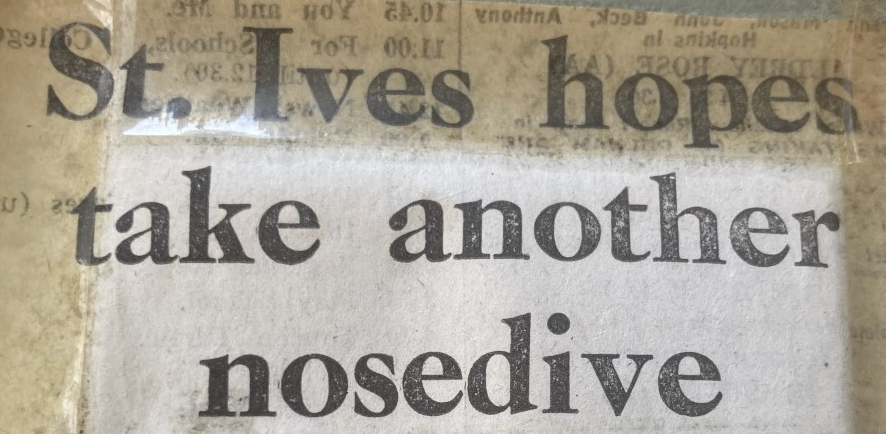
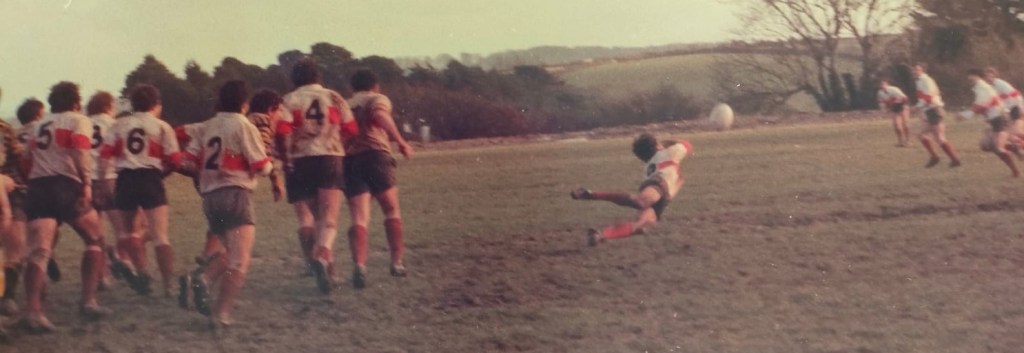
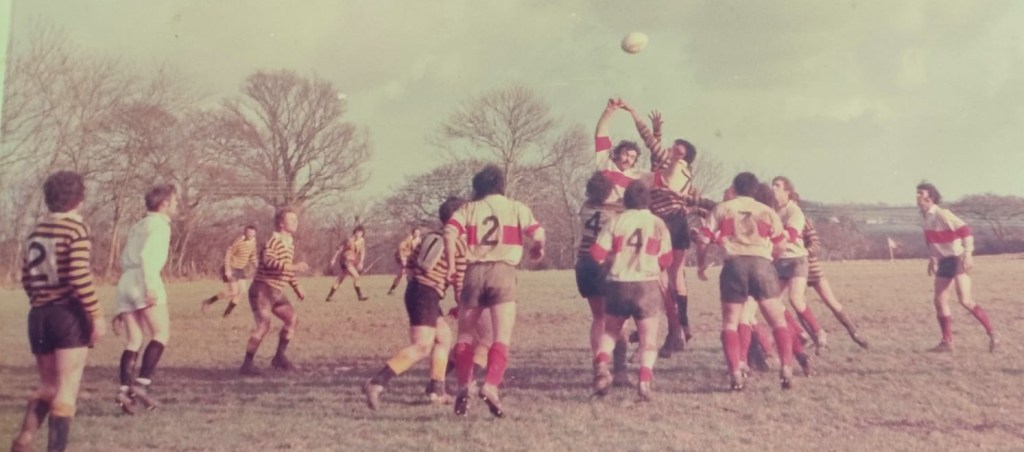


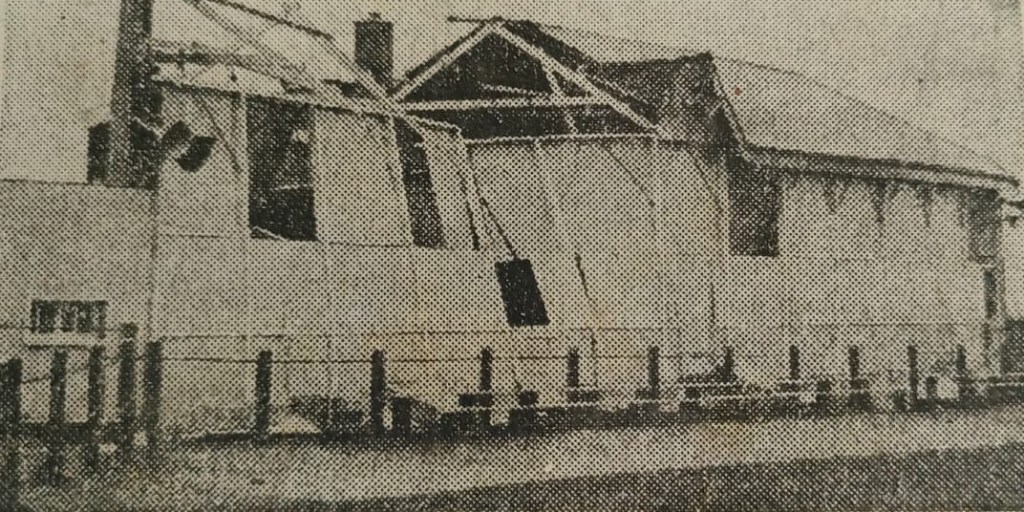
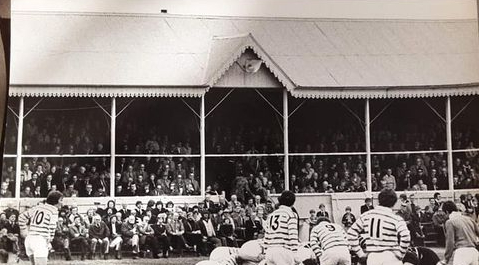
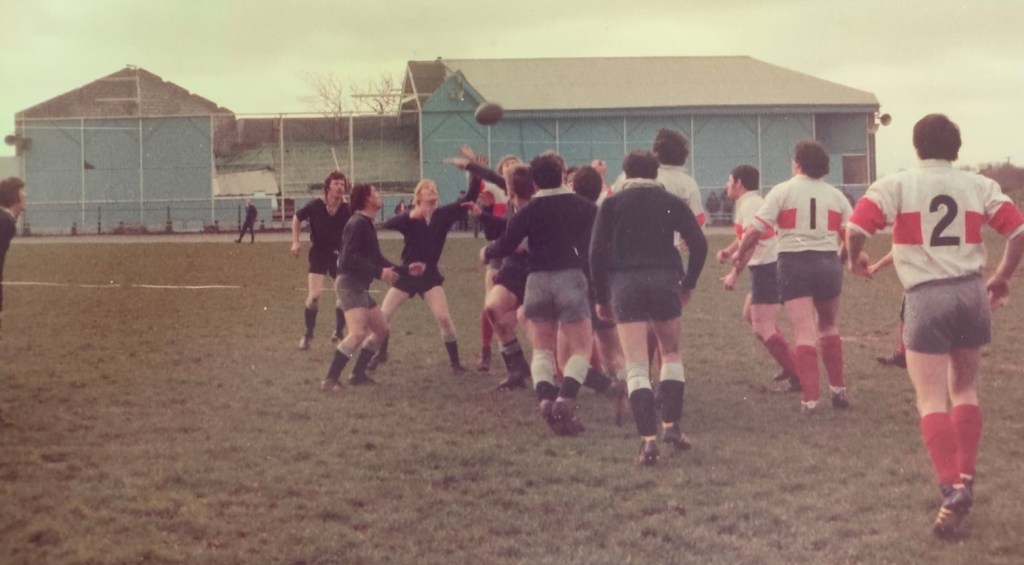
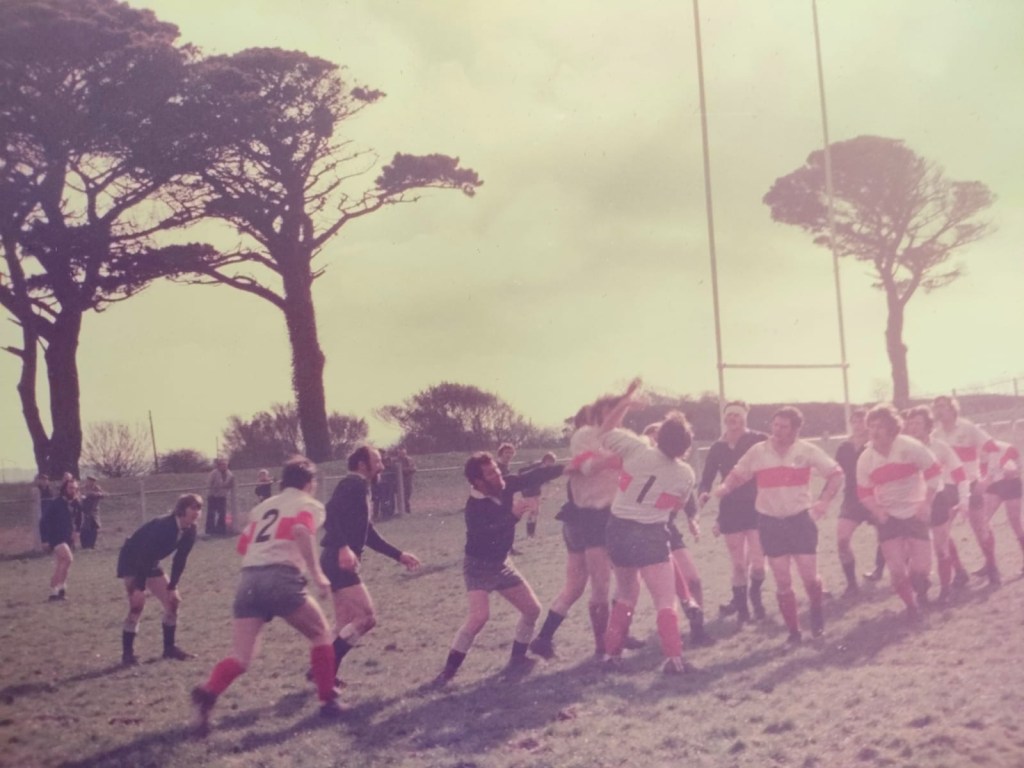
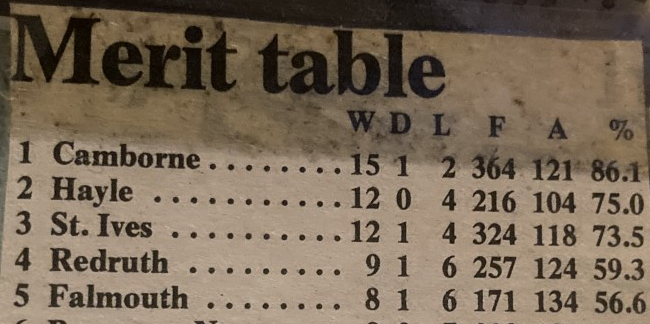

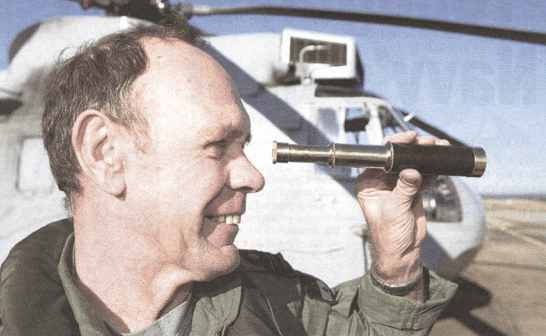
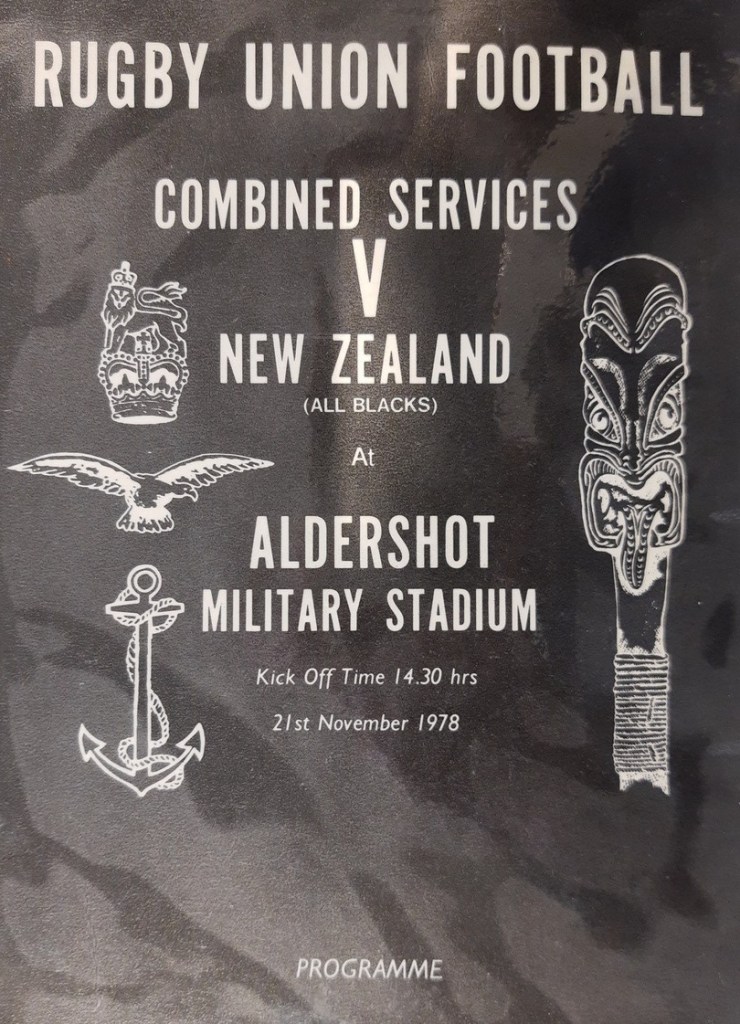

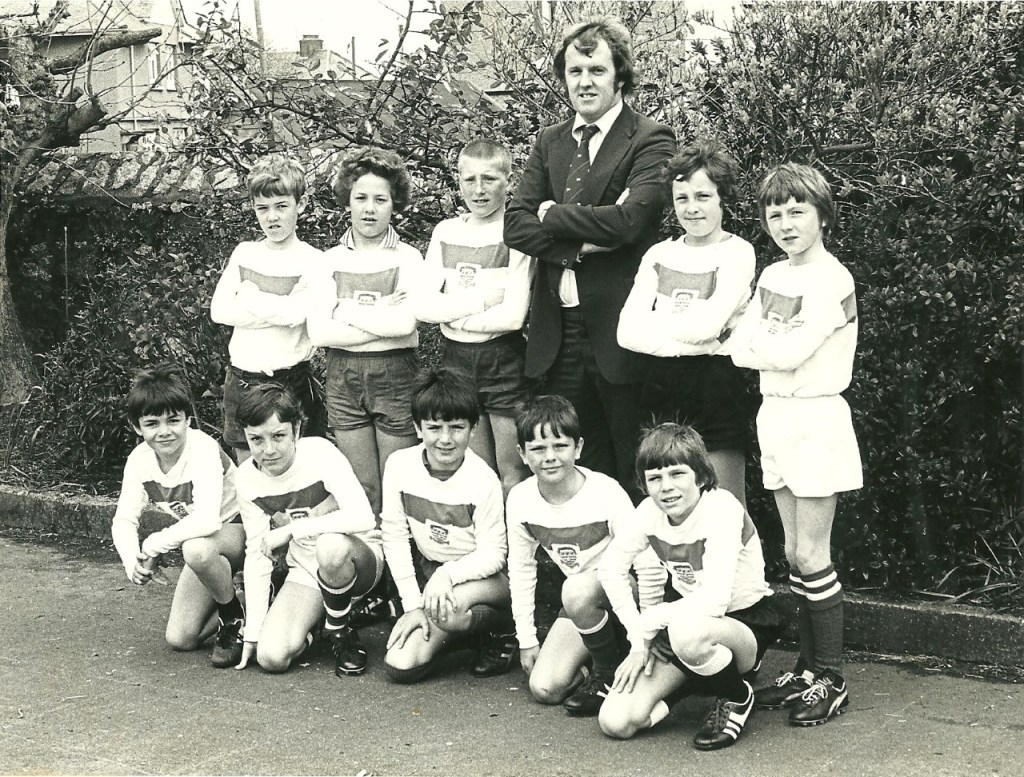




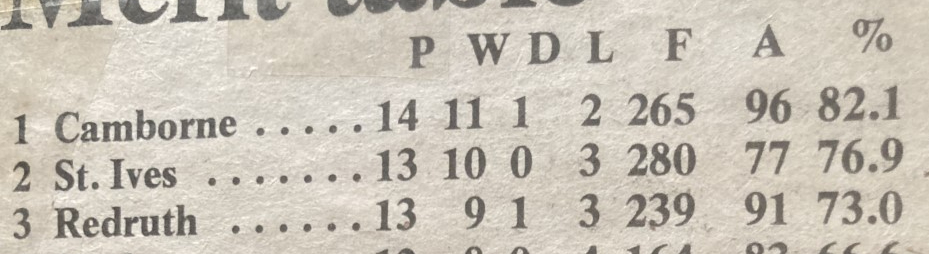

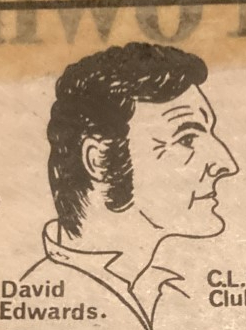

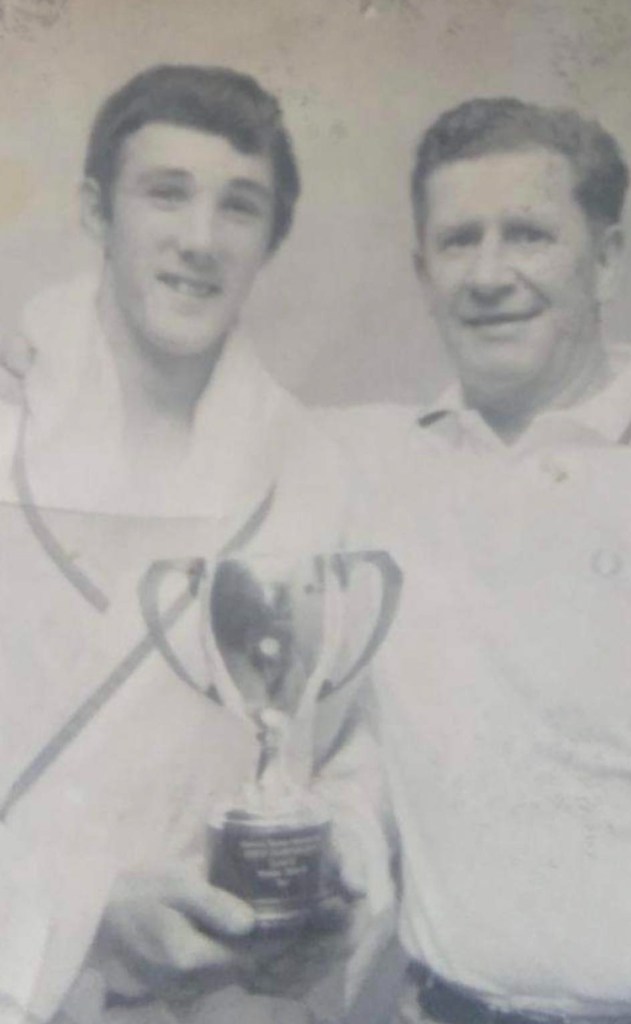


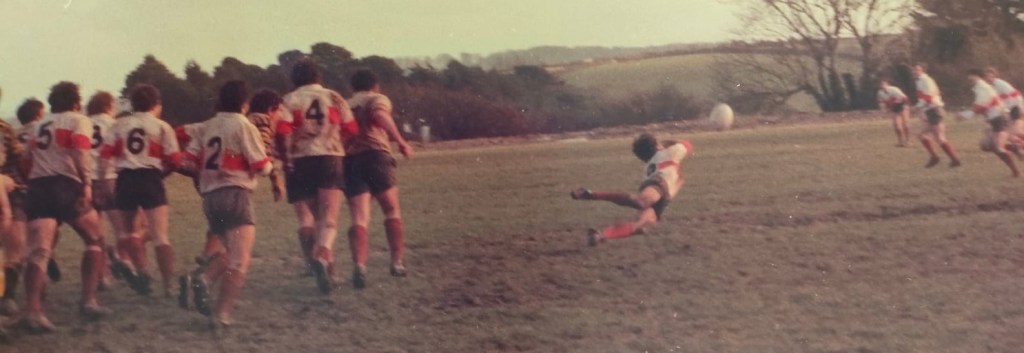
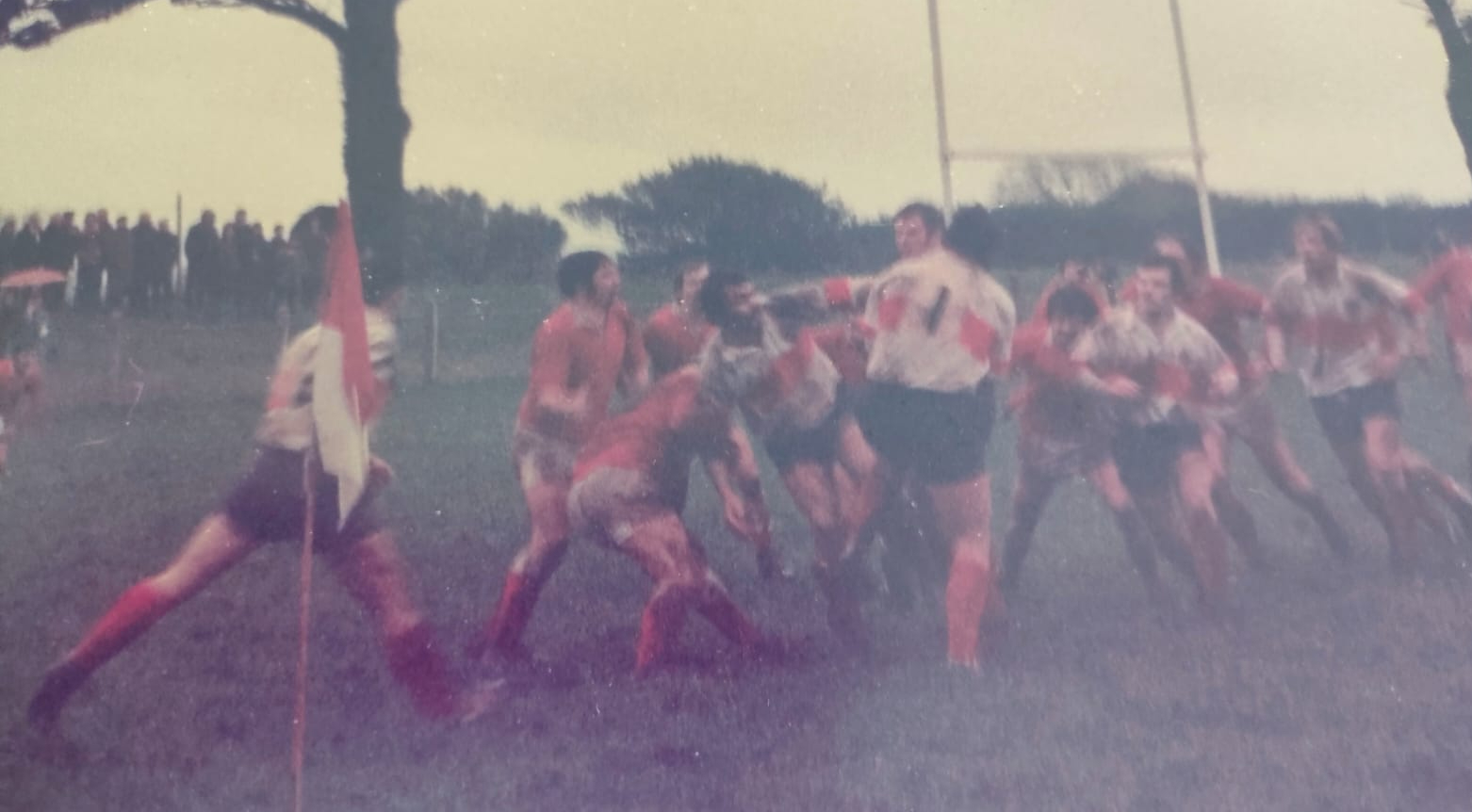
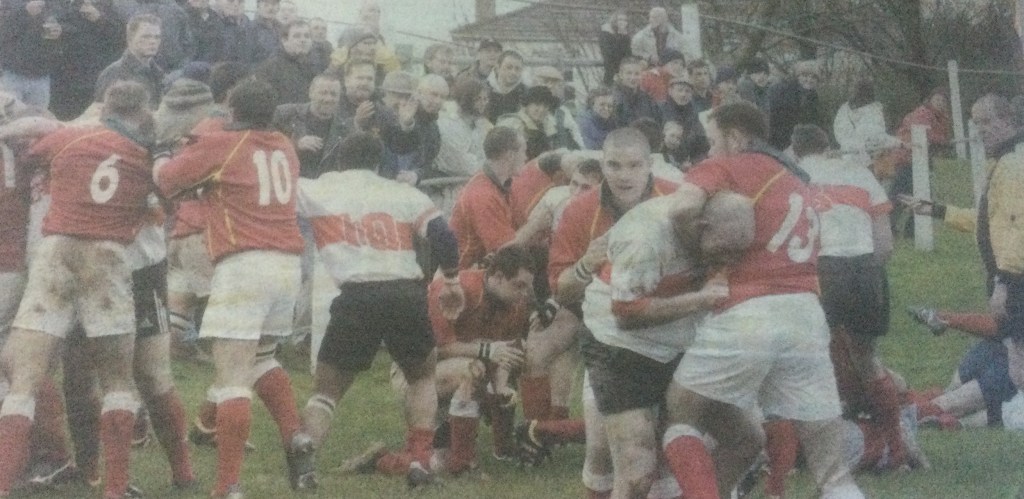
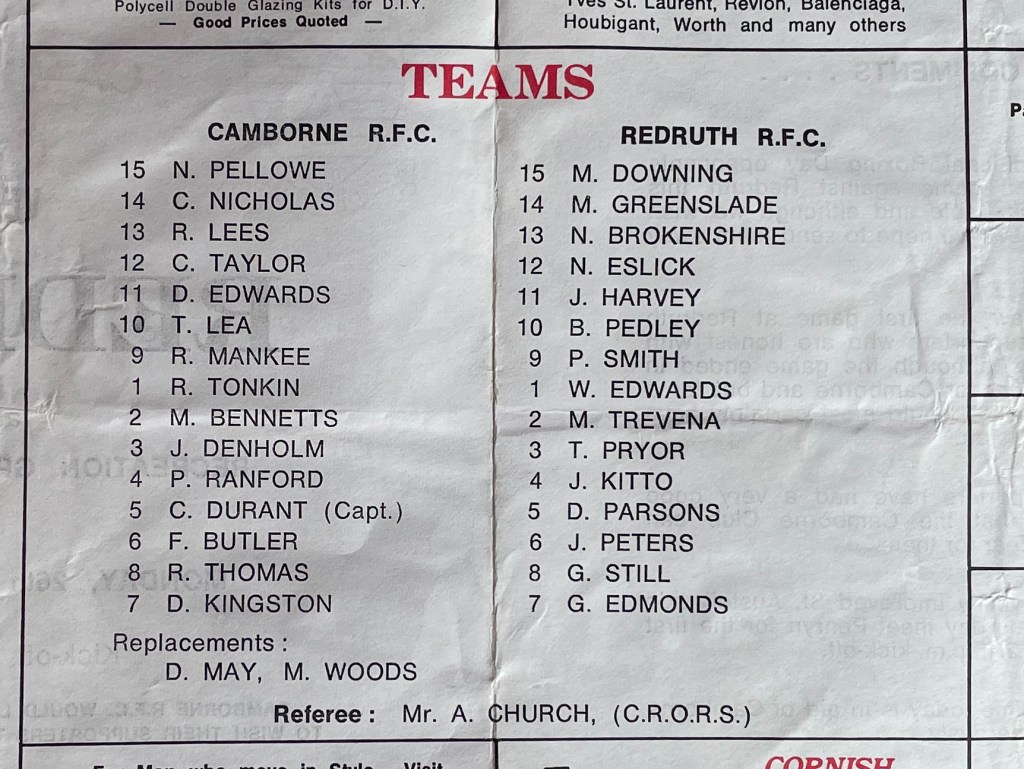
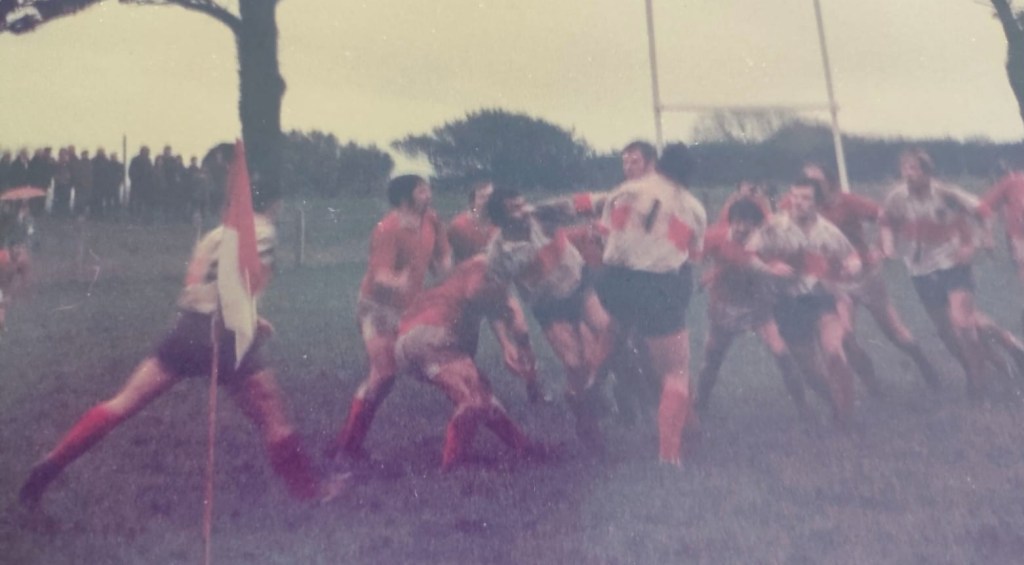


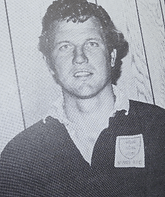
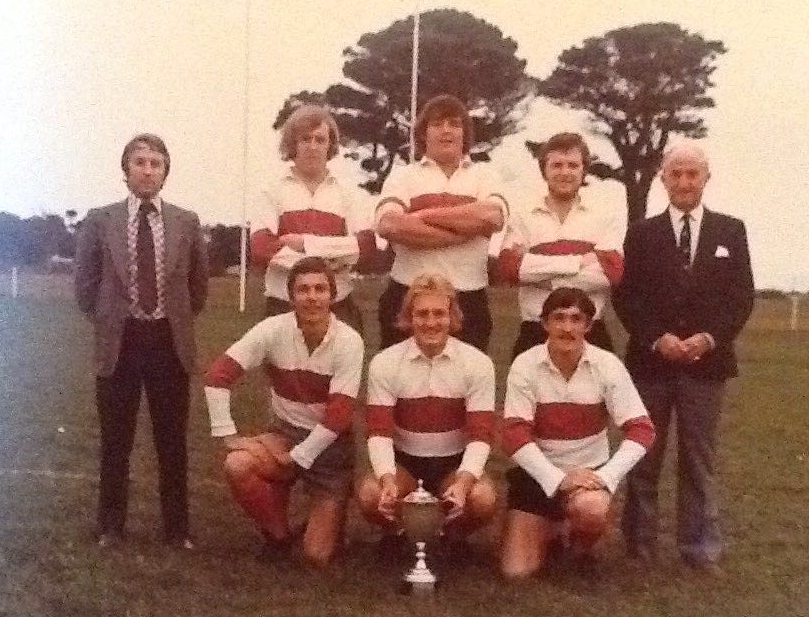


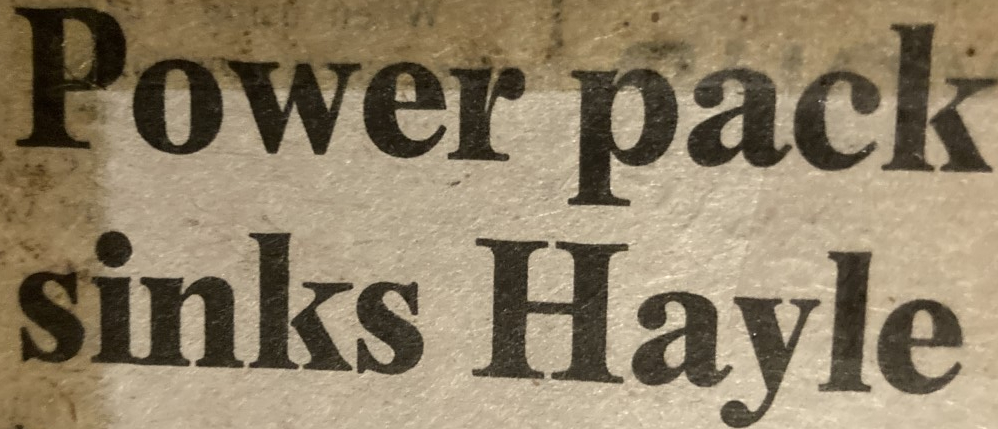


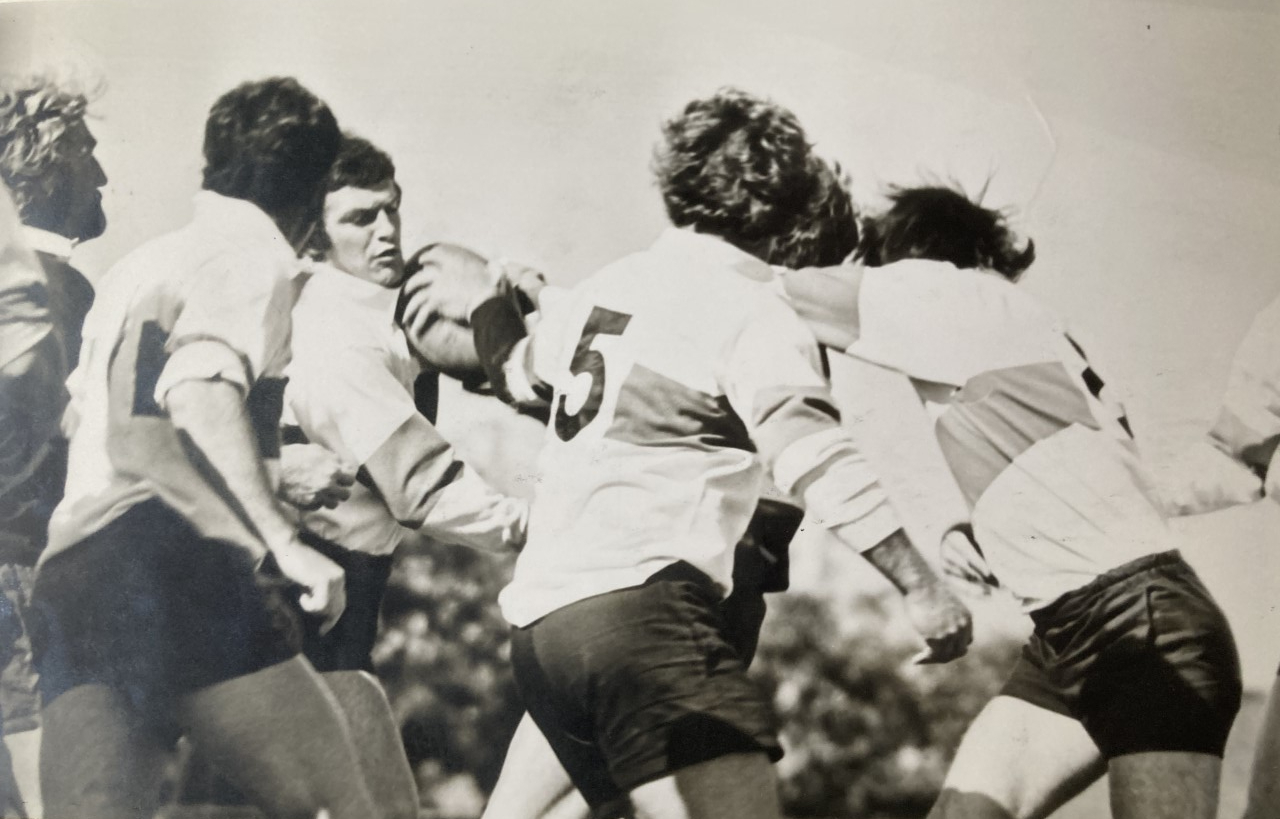

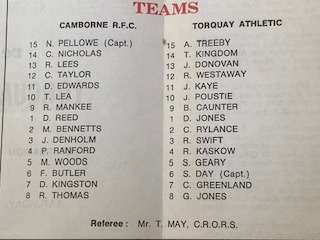
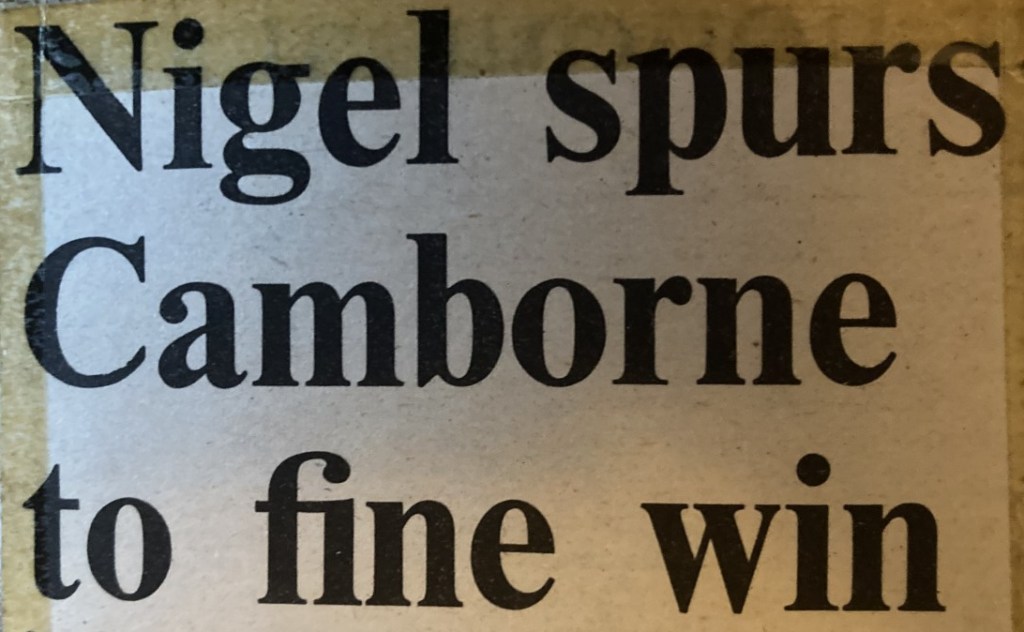

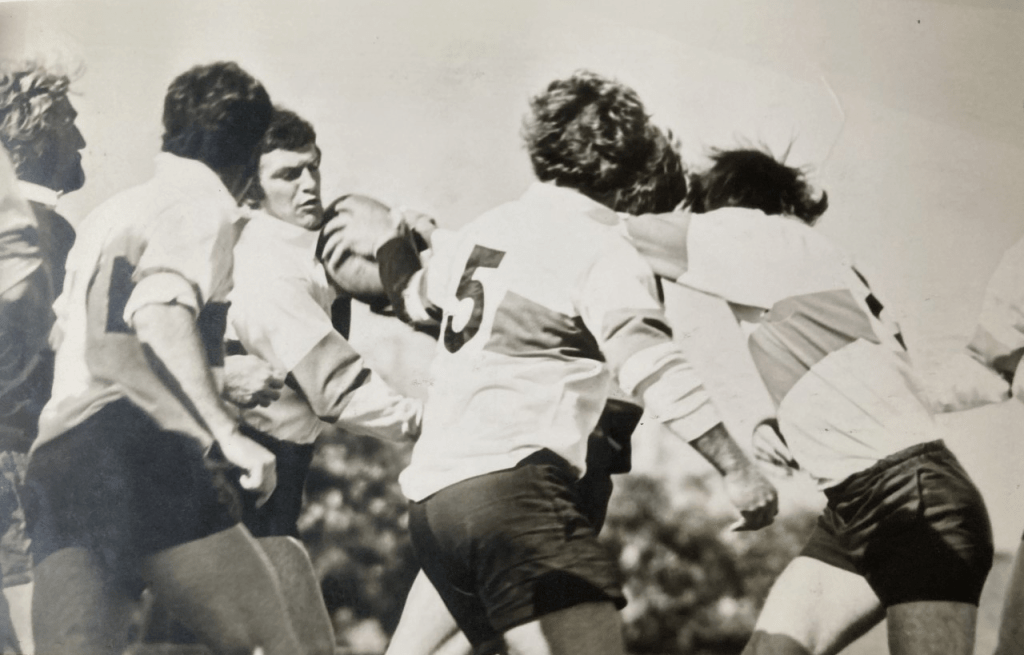
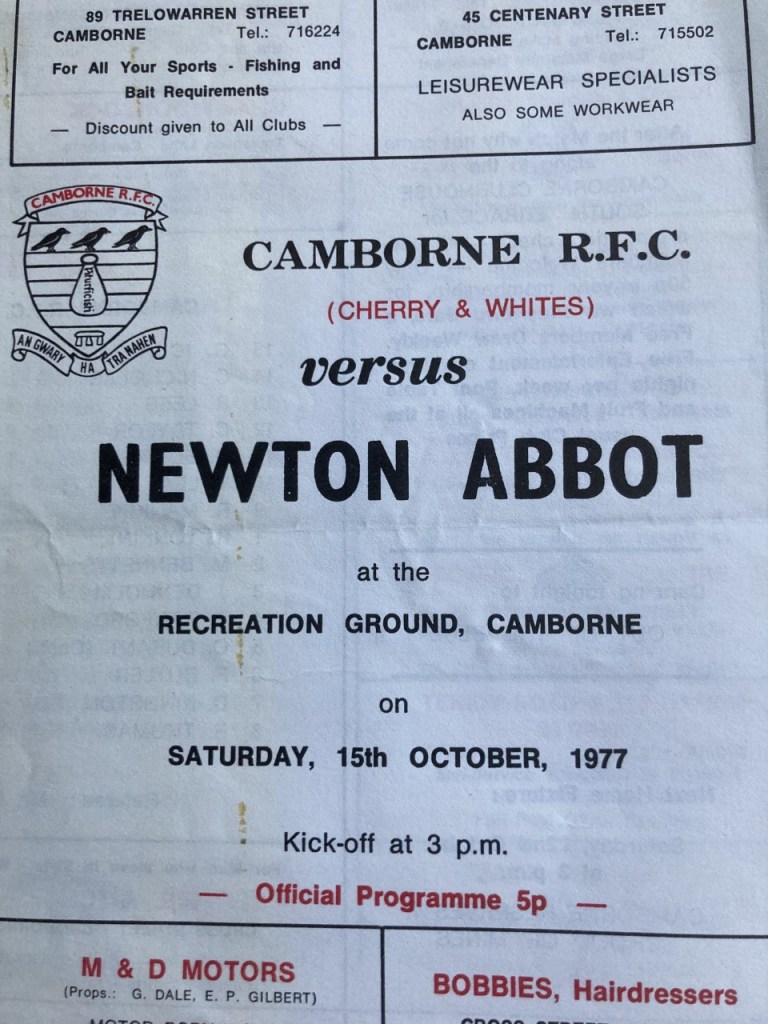

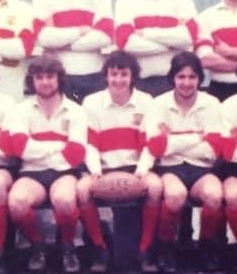
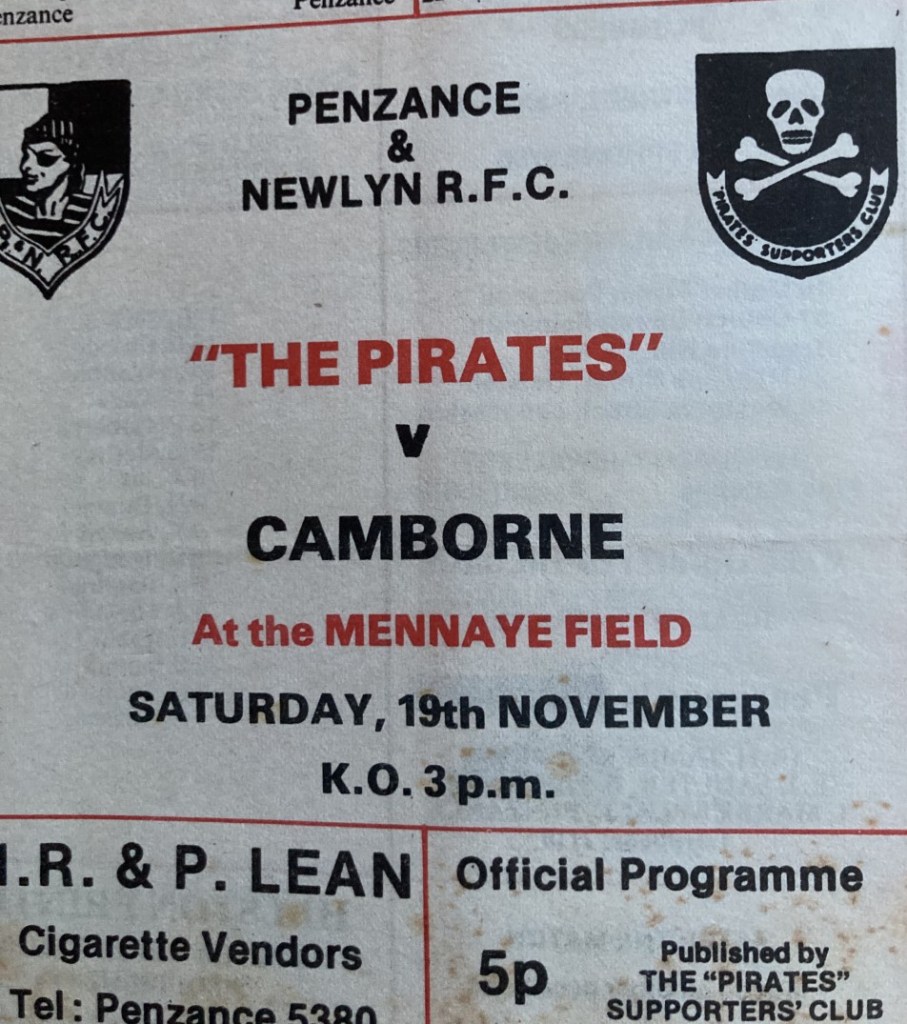


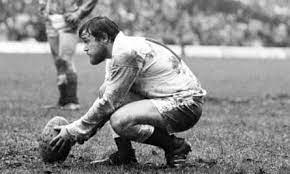

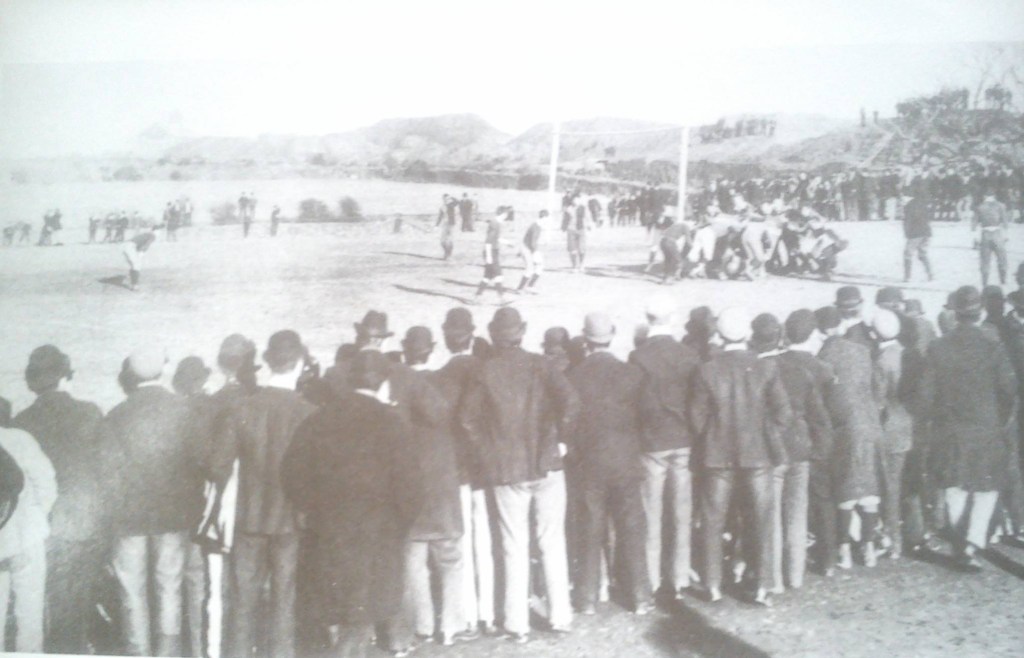



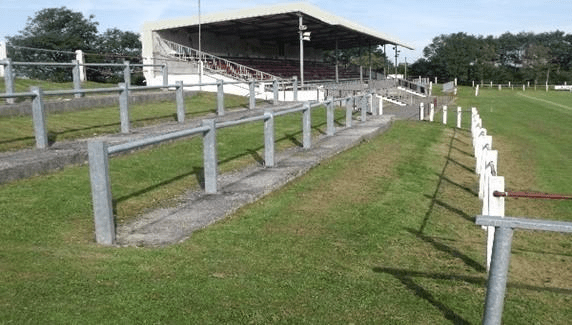
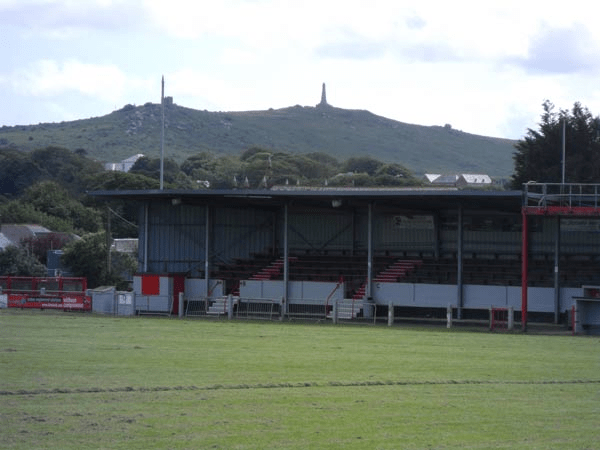
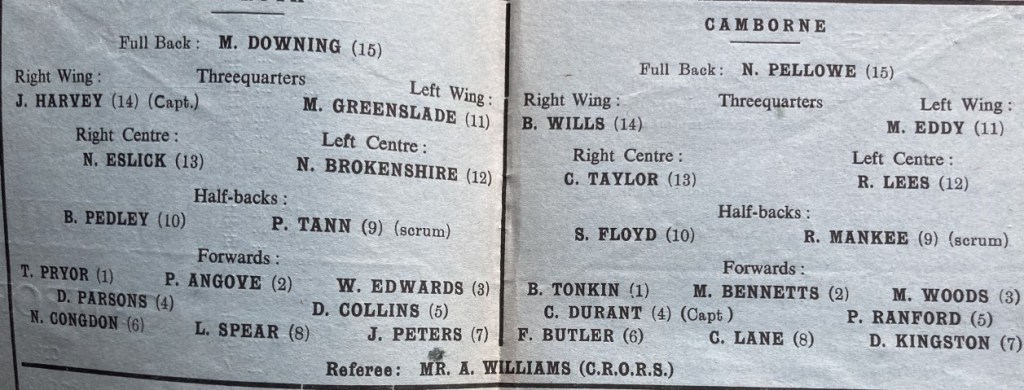
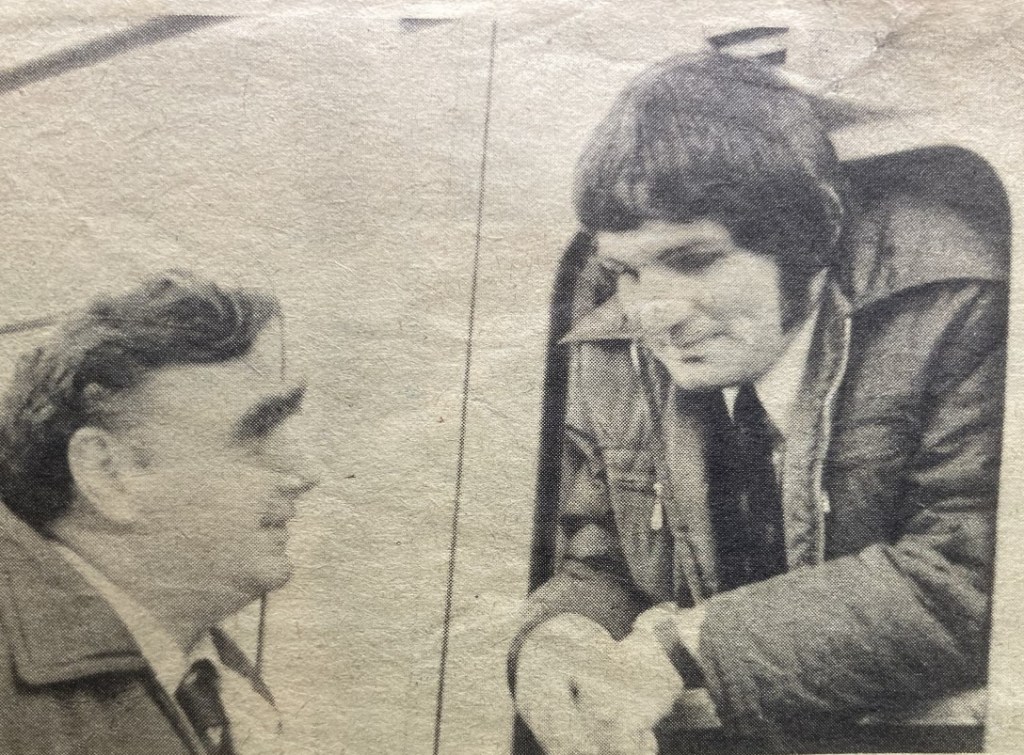


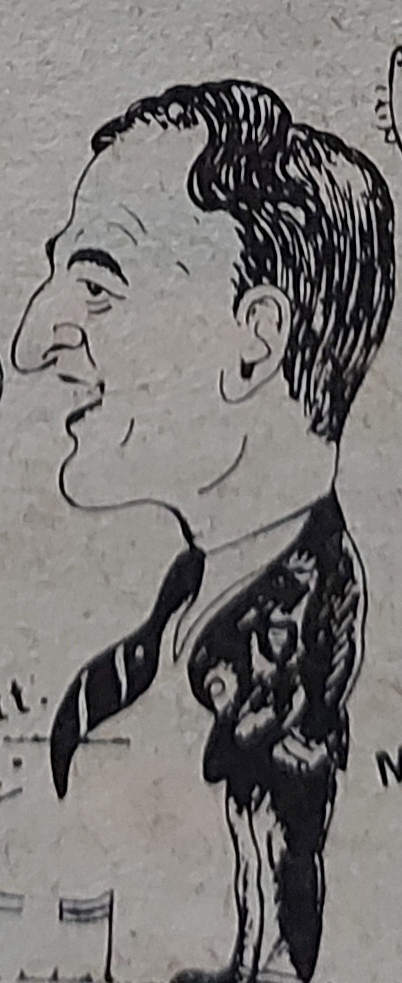

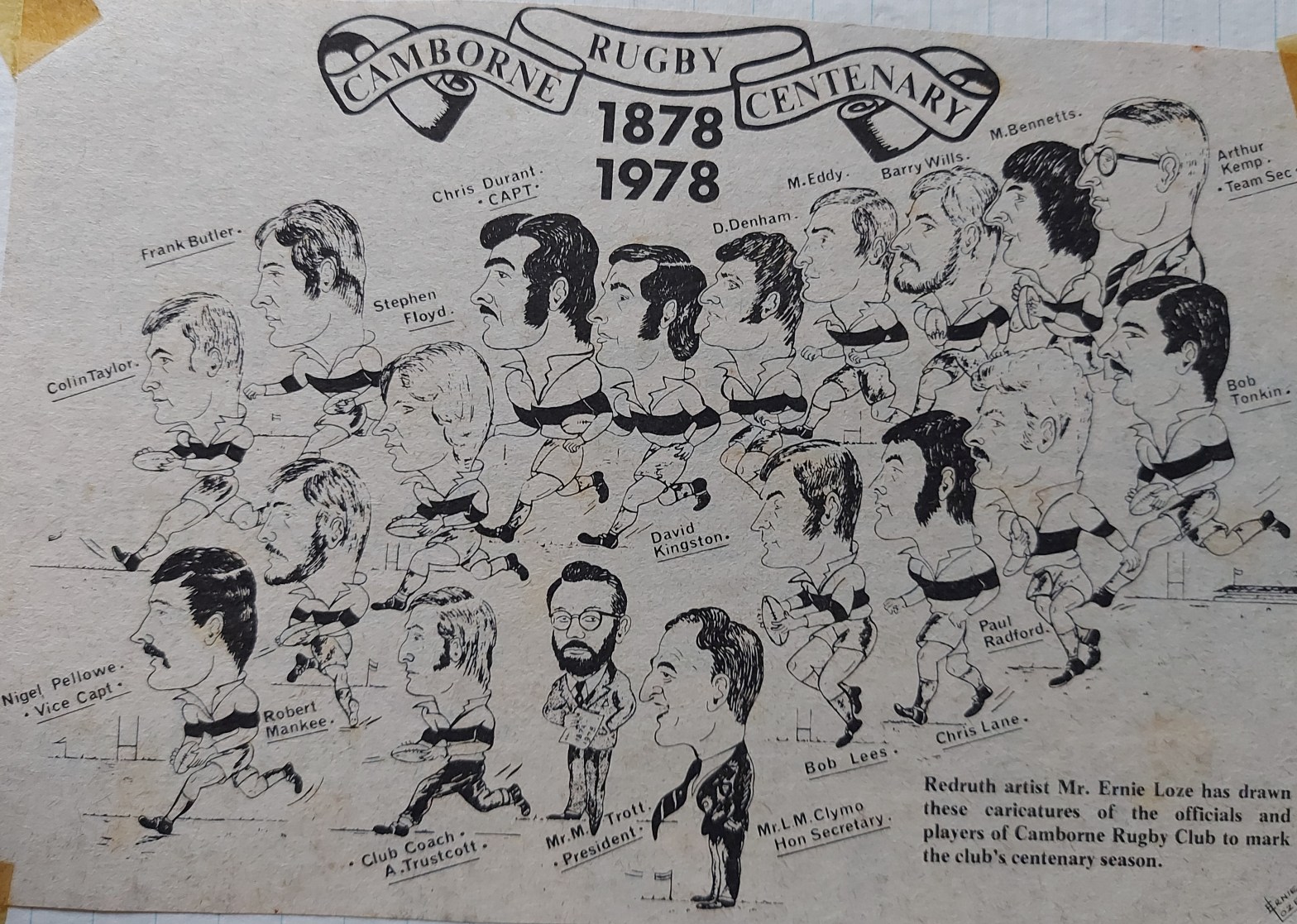
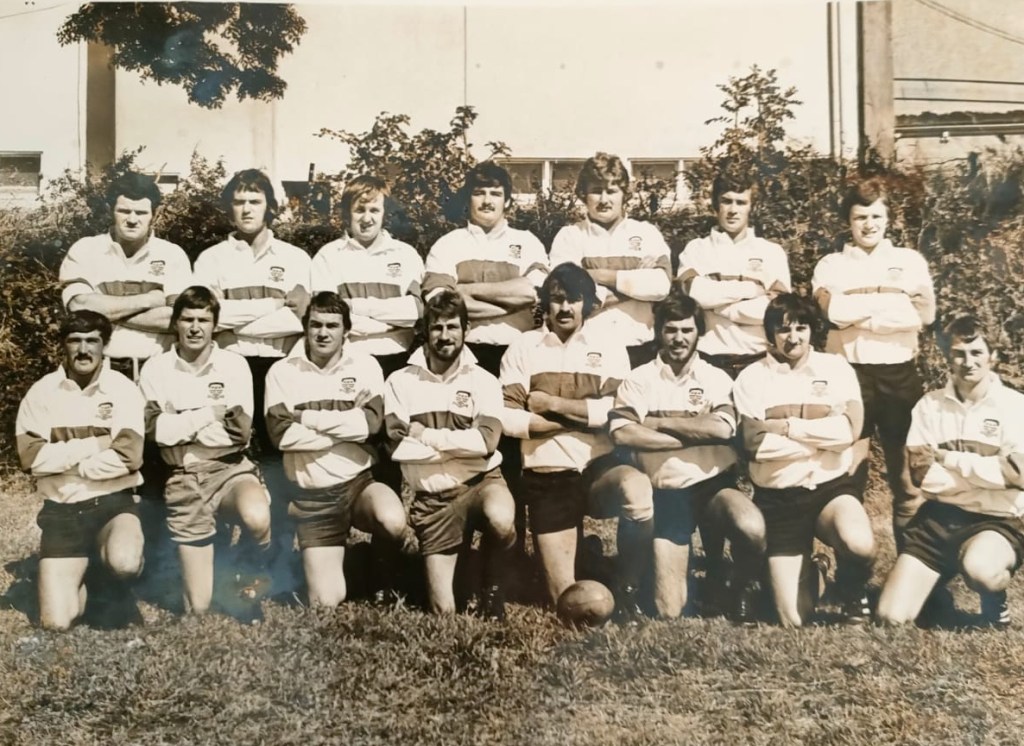
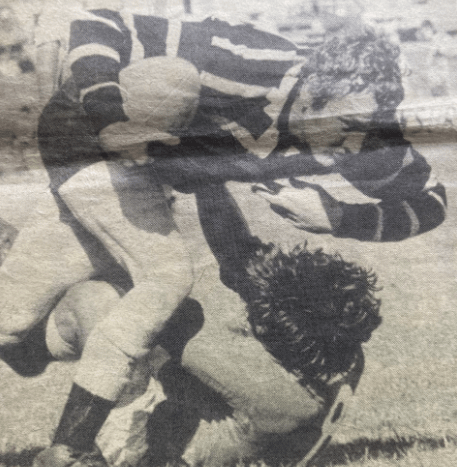
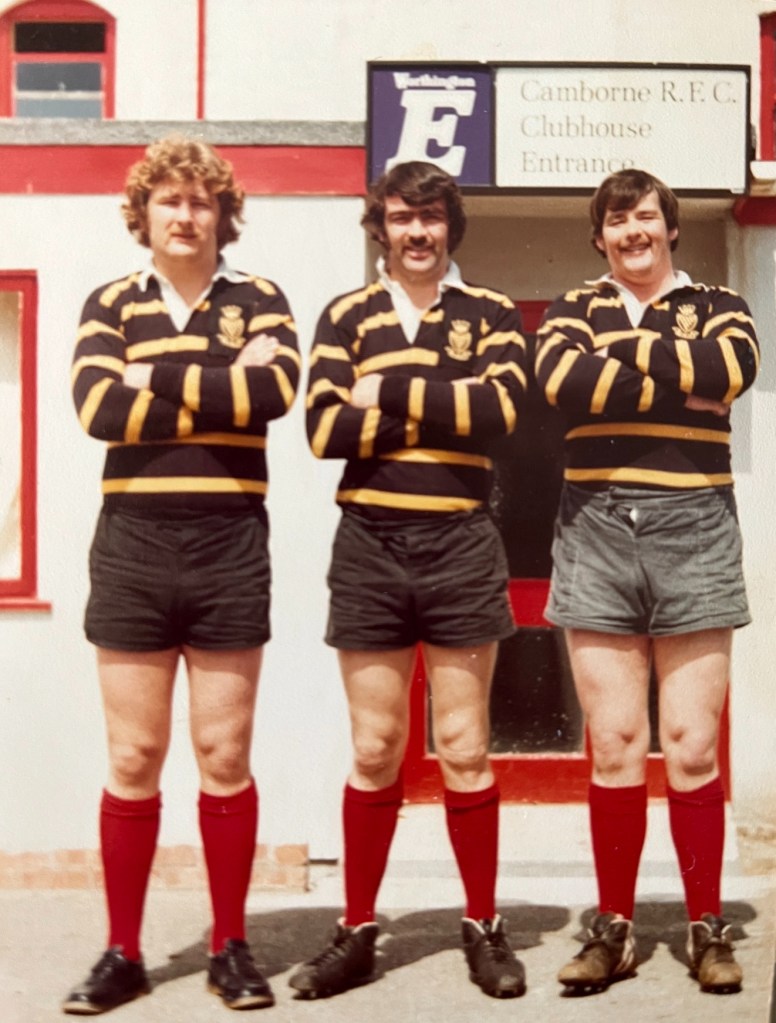

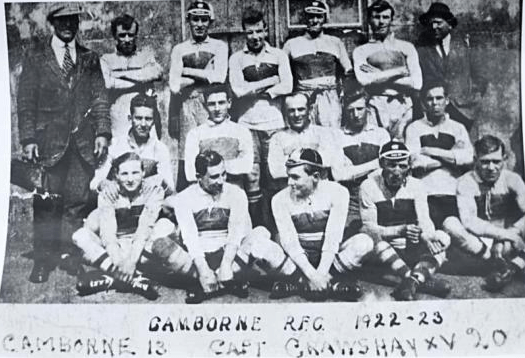
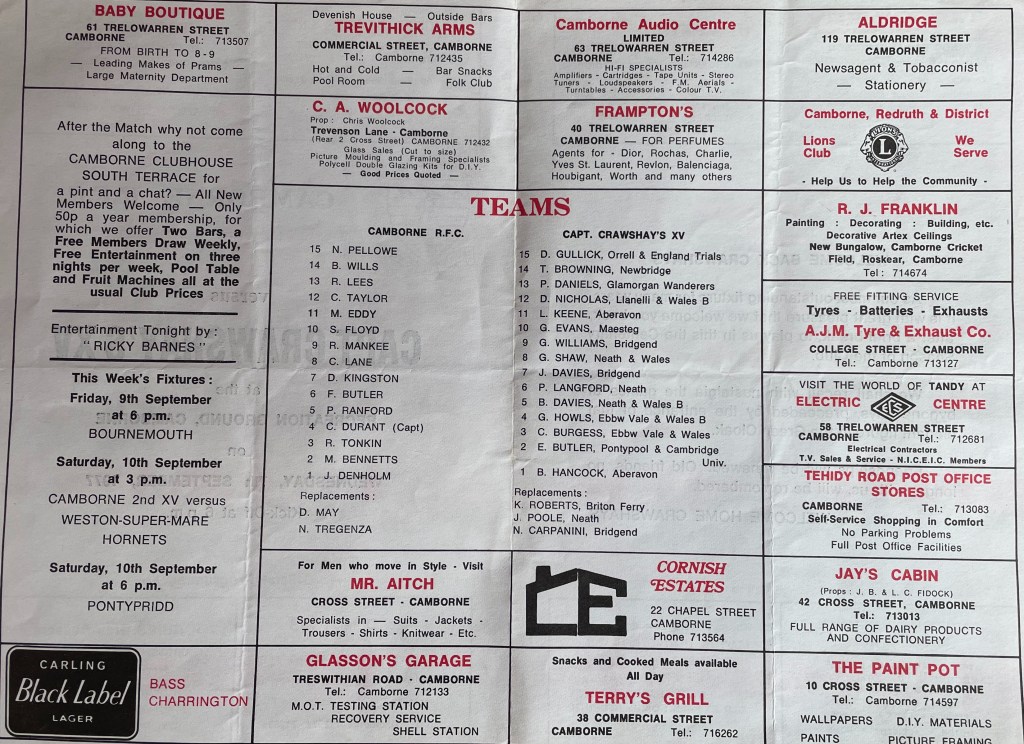


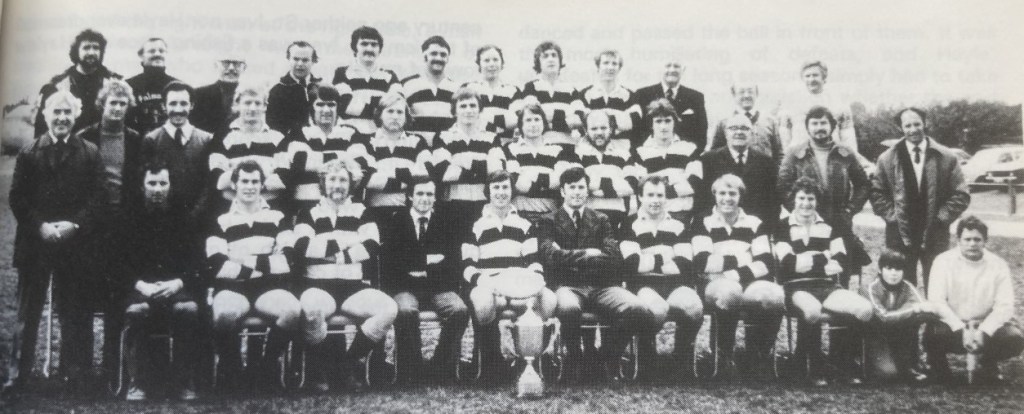
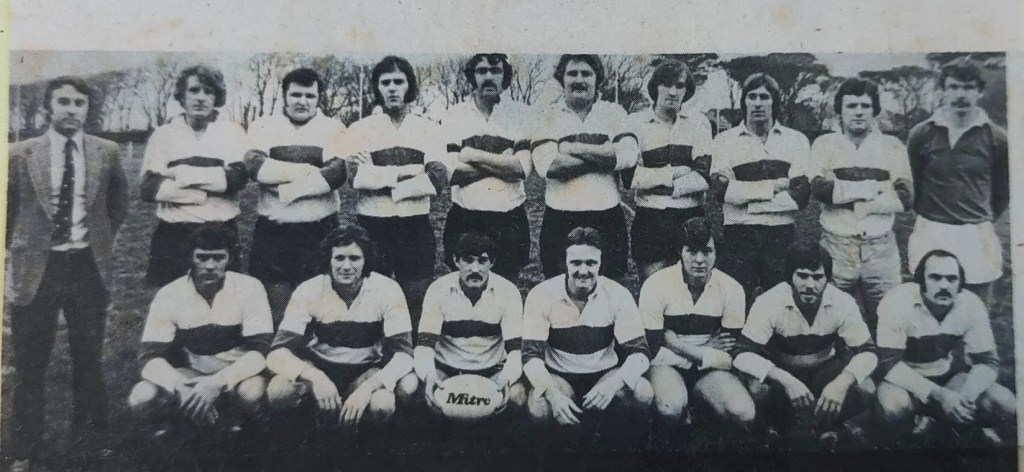
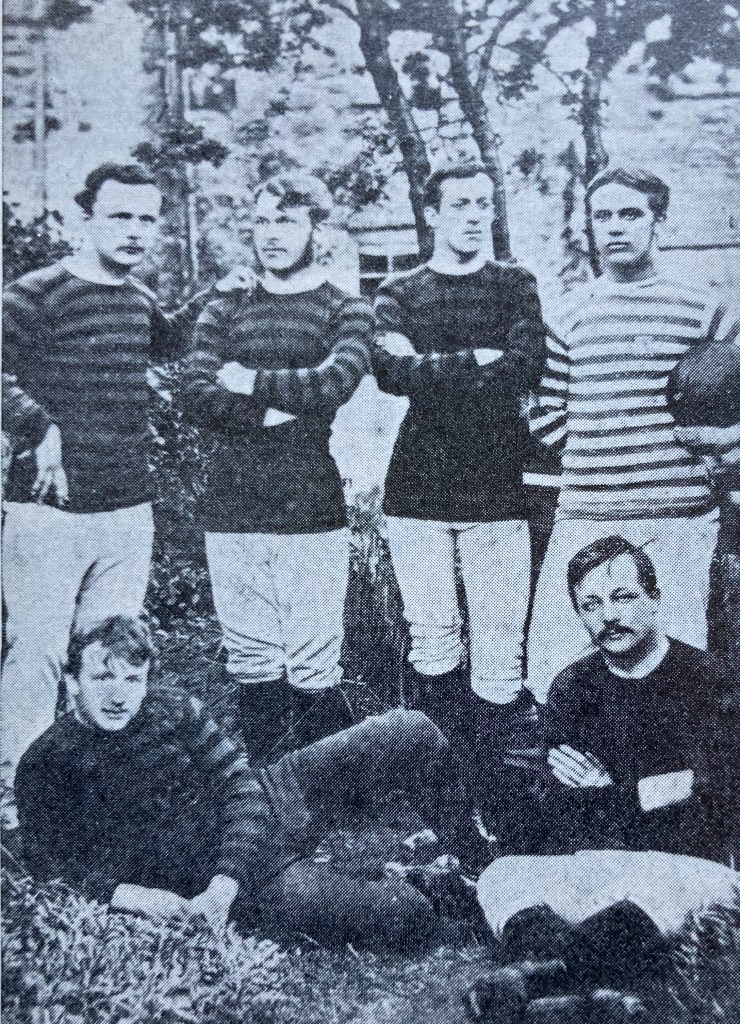
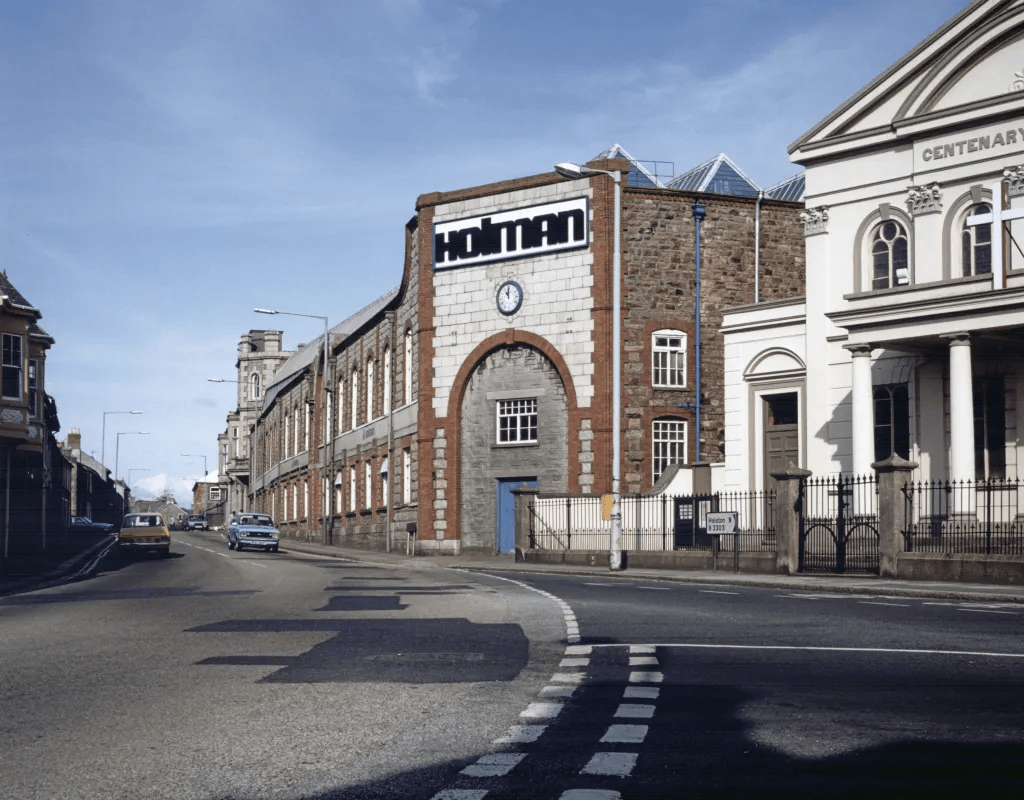
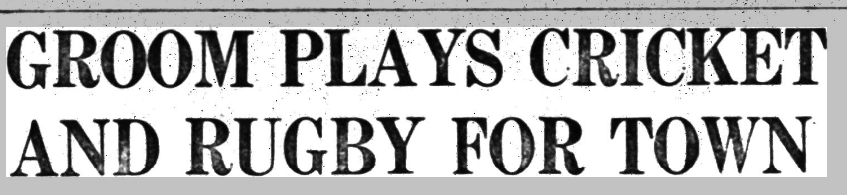


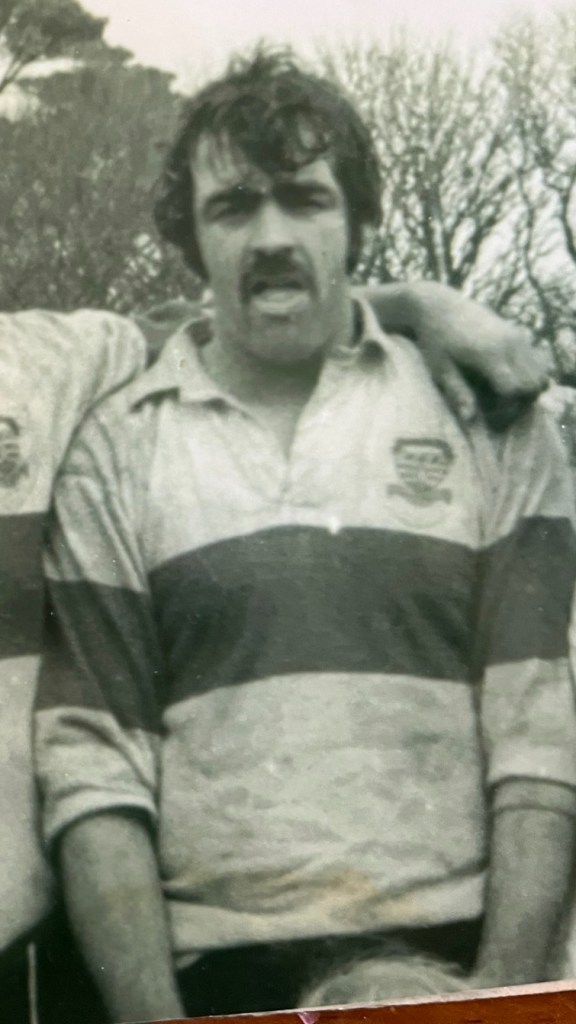






 Francis Edwards ~ The Cornish Historian