Book Review: Mine to Die, by Rob Donovan

Reading time: 5 minutes

Mine to Die, by Rob Donovan

Troubadour Publishing, 2024

218 pages, 27 images

£9.99

Rob Donovan has given us a compelling and moving whistle-stop tour of Cornwall’s industrial history. It is not, I hasten to add, a comprehensive history; readers are here directed to A. K. Hamilton Jenkin, John Rowe, and J. A. Buckley. Rather, Donovan’s work is a history of exploitation and neglect, which seeks to demonstrate that,

…in a capitalist industrialising society where profit is more valued than people, the unregulated pursuit of greater personal wealth will come at the expense of the health and even life of those at the bottom of this hierarchy…

Mine to Die, p185

Throughout the history of mining in Cornwall (and Donovan’s focus is very much here on the industrial heartlands of Camborne, Redruth and St Just), the health and wellbeing of the miners themselves is a secondary consideration to the bank balances of the mines’ owners.

Donovan, an experienced historian and writer living in St Ives, argues his case forcefully through elaborating on contemporary newspaper articles and snippets. Through this technique he creates a Victorian Cornwall groaning with disparities of wealth and living standards.

As you might expect, all the big names (the Bassets, the Thomases) and the major disasters (Wheal Owles, Dolcoath, Levant) are examined, but it’s in the smaller, less-familiar stories where Donovan excels. You are left in absolutely no doubt that a career as a miner in 1800s Cornwall was little more than a prolonged death sentence, and that what safety regulations as existed then were woefully disregarded.

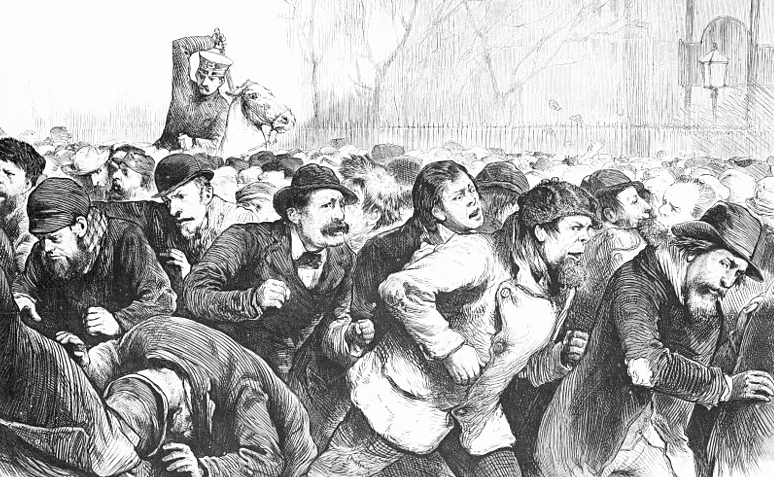
Cornwall was a dangerous place, especially in the mining districts. A mine manager travels with a personal bodyguard. Death or serious injury was an everyday occurrence. Children can easily acquire gunpowder for their games. An underground drill is nicknamed the ‘widowmaker’. Your lungs can rupture after twenty years down the shafts. A local source of drinkable water isn’t a given. Policemen are assaulted en masse, as happened in Camborne in 1873.

And some men made vast fortunes. Donovan tells us this is wrong, and it’s hard to disagree with such a well-written, forcefully argued book.

Highly recommended.

Many thanks for reading; follow this link for more top blogs on all things Cornwallhttps://blog.feedspot.com/cornwall_blogs/

Do you enjoy my work?

All content on my website is absolutely FREE. However managing and researching my blog is costly! Please donate a small sum to help me produce more fascinating tales from Cornwall’s past!

£5.00
£10.00
£15.00

Your contribution is greatly appreciated.

Donate

The Piskie Trap Podcast: Beatrice Small and Ill-wishing

Listening time: one hour

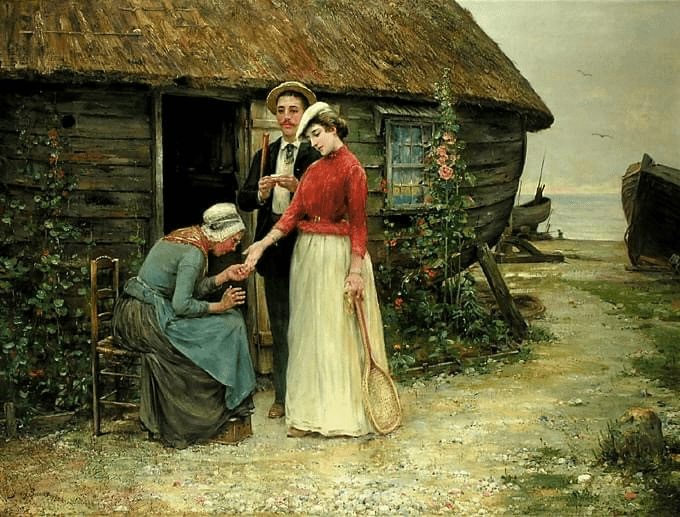
The Fortune Teller, by Henry Bacour, late 1800s

‘The Piskie Trap’ is a podcast produced by Keith Wallis, a local folklorist from Tywardreath. In his broadcasts he discusses the ghostly legends of Jamaica Inn and Bodmin Gaol, witchcraft trials and mermaid legends.

Keith was kind enough to invite me to talk on his latest show, specifically about fortune-tellers and the phenomenon of ‘ill-wishing’ in Cornwall and Devon. I examine how superstition and credulity could be exploited by people looking to make a passable living out of such things…and few did it better, in my opinion, than the notorious Beatrice Small!

Click the link below, sit back, and enjoy…


https://shows.acast.com/the-piskie-trap/episodes/beatrice-small-ill-wishing-case-update?

Many thanks

Do you enjoy my work?

All content on my website is absolutely FREE. However managing and researching my blog is costly! Please donate a small sum to help me produce more fascinating tales from Cornwall’s past!

£5.00
£10.00
£15.00

Your contribution is greatly appreciated.

Donate

Gallows Bell: The Murder of Joseph Burnett

Reading time: 20 minutes

…as soldiers returned from the Napoleonic Wars, newspapers highlighted the convictions of men with guns and reignited an old moral panic whereby veterans were transformed with the stroke of a pen from blood-bathed heroes to bloody villains who risked the social order.

~ Bethany Usher, Journalism and Crime, Routledge, 2024, p102

Rule, Britannia

During the Napoleonic Wars, the British radicalism inspired by the French Revolution of 1789 dissipated in the face of the threat of invasion, and a popular patriotism gripped the nation.

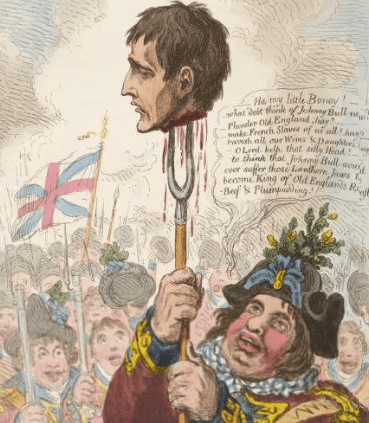
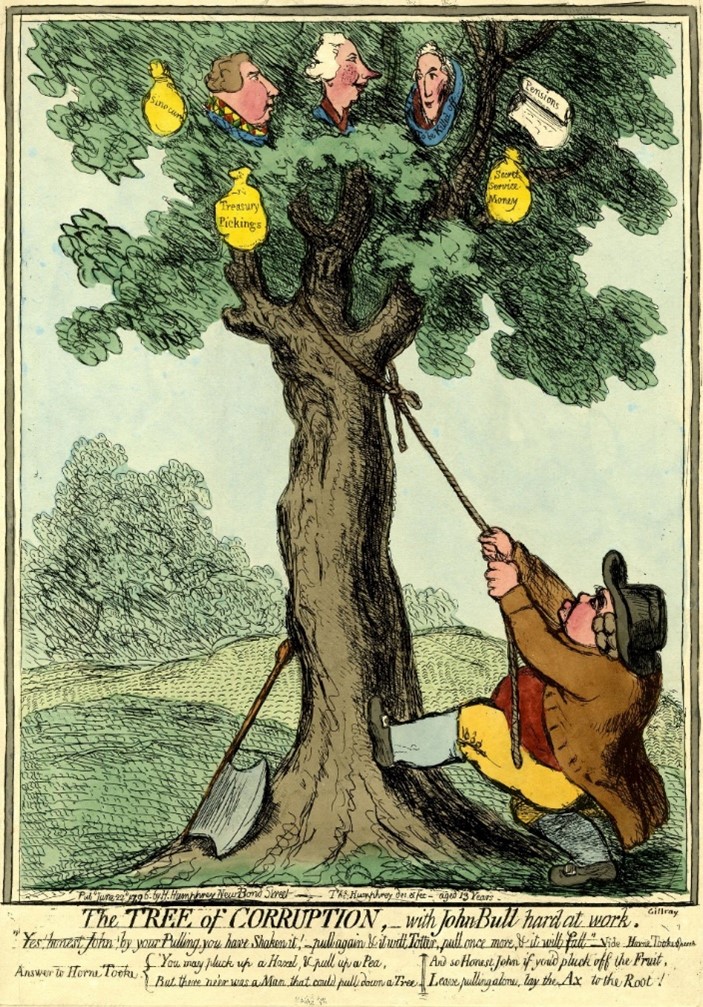
This was the era of Trafalgar, Waterloo and John Bull, when people conveniently forgot George III was German (at least he wasn’t French), and his son The Prince Regent wasn’t a dissolute philanderer1.

James Gillray, Bonaparte, 48 Hours After Landing, 1803. John Bull, a yokel soldier, has Napoleon’s head impaled on a pitchfork.

By 1812 the British Army had a regular fighting force of 250,000 men, the Royal Navy 140,0002. “Never before”, one historian has written,

…and never since, have so many Britons been given weapons.

David Cannadine, Victorious Century: The United Kingdom 1800-1906, Penguin, 2018, p74

This was the largest military operation in British history. In towns and villages across the land, most gained a rudimentary knowledge of the armed forces’ weapons and procedures. Everybody had a family member, or was acquainted with someone who had joined up. Most, therefore, had a family member or had been acquainted with someone who had been killed. Townspeople got used to the regular sight of regiments marching through their streets.

Of course, the jingoism was short-lived. The war’s conclusion heralded high unemployment, rising costs and civil unrest. The British Government realised that keeping the peace at home could only be achieved by the threat of force: in 1816 the peacetime army totalled 150,00 men, largely to

…keep the lower orders in place.

Vic Gatrell, Conspiracy on Cato Street: A Tale of Liberty and Revolution in Regency London, Cambridge University Press, 2023, p89

Already, we are into the era of the Spa Fields Riots, the Peterloo Massacre and the Cato Street Conspiracy. The old ways of law and order enforcement were to be replaced by more repressive and violent methods (the sentences got worse too)3.

The old, and what were to become the new, forces of law and order met tragically in Lostwithiel in August 1814.

Yomp

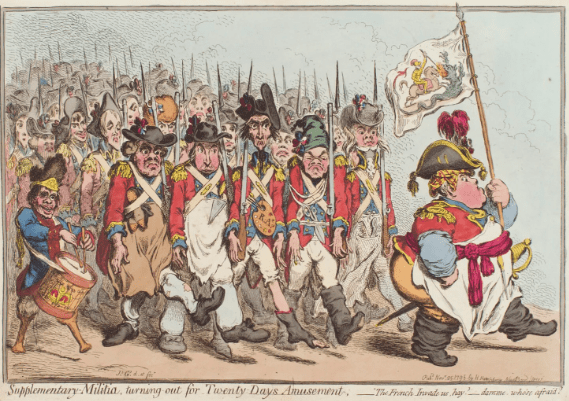
James Gillray, Supplementary Militia, 1796. National Portrait Gallery

The 28th (North Gloucestershire) Regiment of Foot, under General Robert Prescott, had certainly seen some action – possibly too much. From 1811 to the date of our interest, its ranks took part in the following battles on Spanish turf: Barossa (March 1811), Albuera (May 1811), Arroyo dos Molines (October 1811), Vitoria (June 1813), and in the Pyrenees (July 1813).

Crossing the border into France, the ‘Silver Tailed Dandies’, as they were known, were given little respite. They fought at Nivelle (November 1813), Nive (December 1813), Orthez (February 1814), and Toulouse (April 1814), at which point Napoleon abdicated4.

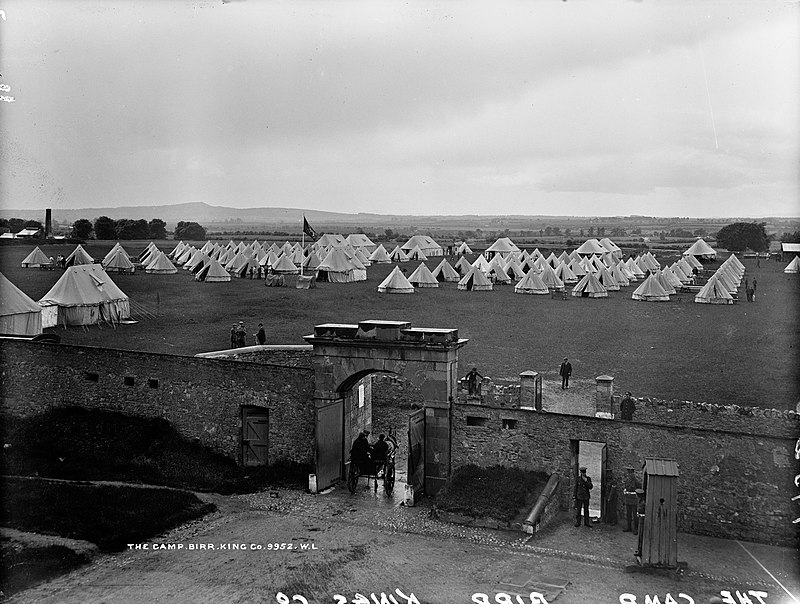
The Peninsular War (for the moment) being over, the 28th was then shipped to the newly-completed barracks at Birr, in central Ireland. As the image below suggests, entertainment was thin on the ground5. At least there would be no more fighting for a while.

Birr Barracks in 19006

Britain however was still at war, with the USA. Three weeks after stepping off in Ireland, the 28th’s footsoldiers were ordered to move again, this time to the States.

Probably feeling not much like dandies any more, the men sailed to Falmouth, and were quartered at Pendennis Castle. From there they were to march on up to Plymouth, where their vessels were waiting7.

800 men, horses, wagons, carts, supplies, equipment, cooks and such hangers-on as ‘camp women’ noisily set off on their stank through Cornwall’s summer countryside. Not for the last time, locals were treated to the disruptive sight of visitors from upcountry clogging the lanes and byways during the month of August.

One private of the 28th, John Simms (or Sims), was never to leave Cornwall.

Lostwydhyel: ‘tail of a wooded area’

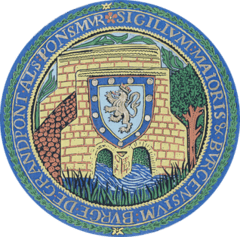
Ancient seal of the Borough of Lostwithiel

Once the medieval “administrative centre”8 of Cornwall, by the time the 28th trudged through in 1814 Lostwithiel had lost much of its historic prestige. A parliamentary borough from 1268, its dwindling size (around 300 houses and a population of a thousand in 1814), and the influence of the Earls of Mount Edgcumbe meant that as a ‘rotten borough’ its status would be abolished by the 1832 Reform Act9.

Nevertheless, Lostwithiel could boast a mayor (which it still does), and a parish constable. This role, that of an unpaid, part-time (and much lampooned) law enforcement officer, belonged in 1814 to William Hicks, a local glazier10.

Fortunately for Hicks, keeping order in Lostwithiel wasn’t just down to him. The town also had a sergeant-at-arms (or sergeant-at-mace), who was an assistant and ceremonial macebearer of the mayor, with varied (and onerous) law enforcement duties11.

Lostwithiel’s sergeant-at-arms in 1814 was Joseph Burnett, a heel maker living on Fore Street. Baptised in 1772 and married to Grace Hodge in 1794, by 1814 the Burnetts had nine children12.

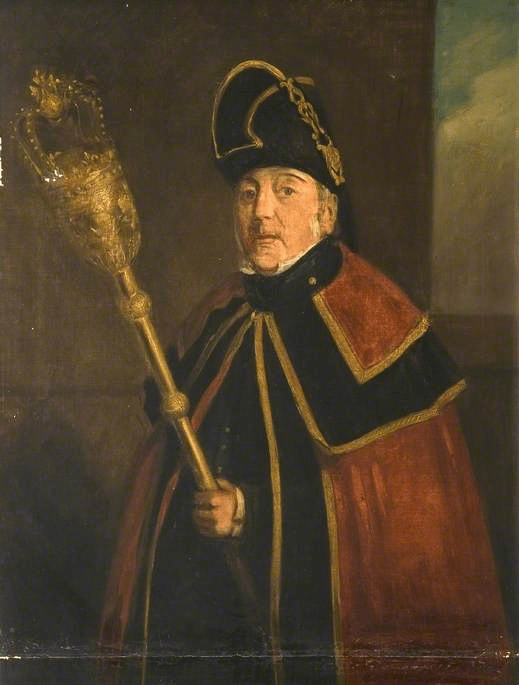
Burnett would have taken an oath on his appointment13, and have worn ceremonial garb when performing the duties of his office. In fact, he probably looked very much like the gentleman below:

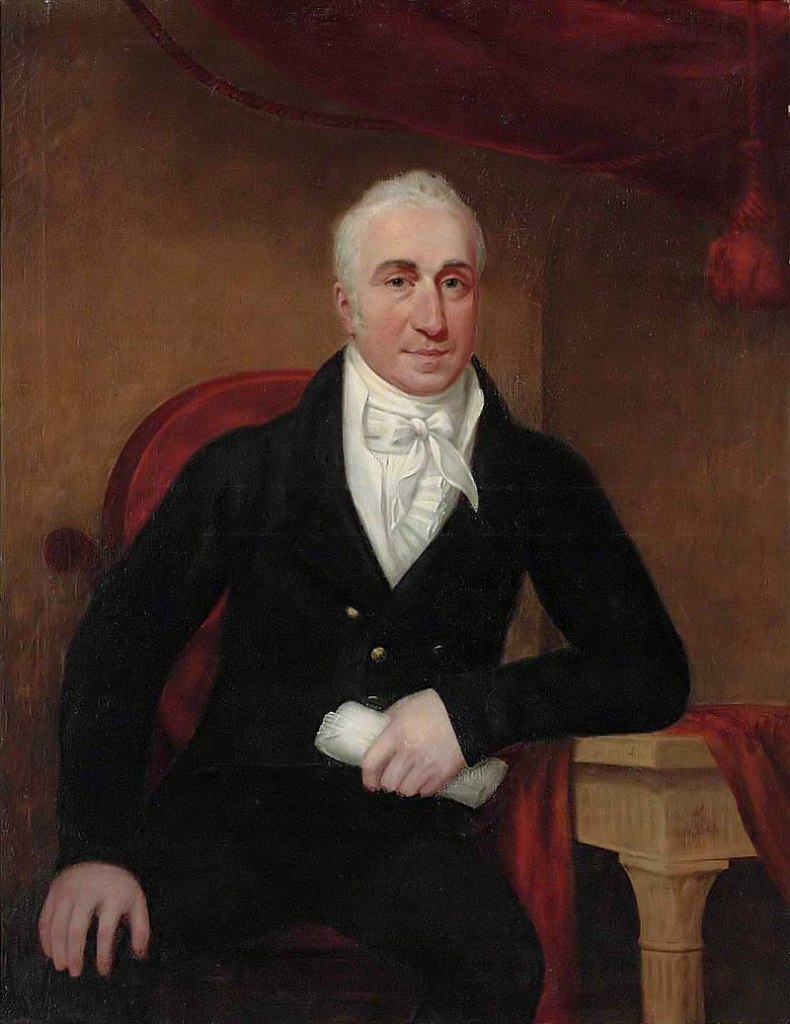
Thomas Brown (b. 1767), Sergeant at Mace for Poole. Artist unknown14

It’s unclear how much time Burnett would have had to earn his living as a heel maker. Besides any mayoral pageantry that might be required of them, town sergeants in those days acted as bailiffs and gaolers. They were frequently summonsed by solicitors to give depositions, or to fulfil the thankless task of rounding up market traders for some transgression or other. The job was of an indeterminate duration and could be as unglamorous as throwing the local drunk in the slammer15. Any disturbance in Lostwithiel too weighty for Hicks to deal with on his own (indeed, he probably acted as a deputy), would have come under Burnett’s remit.

Joseph Burnett, therefore, was an important man in Lostwithiel. Not as important as the mayor, obviously, but maybe a more familiar representative of the government to the townspeople. How good or popular a sergeant-at-arms he was, however, is unknown.

But he didn’t lack guts.

Sunday, August 21, 1814

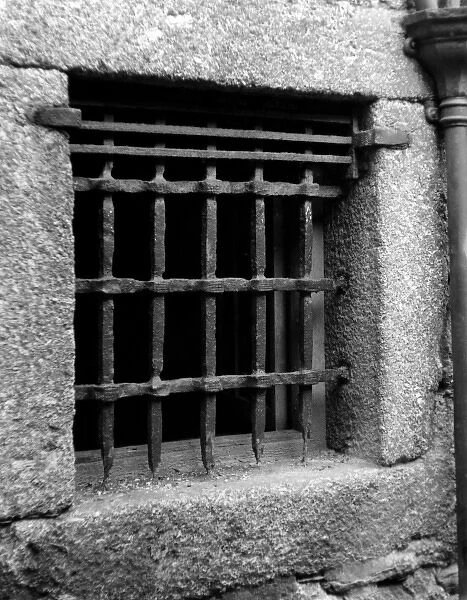
Lostwithiel’s gaol, located in the Duchy Palace on Quay Street. A place Burnett would have probably been familiar with. Copyright Mary Evans Picture Library 201516

It’s tempting to think that, at the fag-end of the biggest war Europe had yet seen, the passing of the 28th through Lostwithiel that day elicited little excitement – at first17. Children probably didn’t cease their play to gawp at the sweating, toiling footsoldiers, or scarper from the attendant commotion.

Certainly neither Burnett nor Hicks paid them much mind. Both were at home on Sunday afternoon, possibly enjoying the sun.

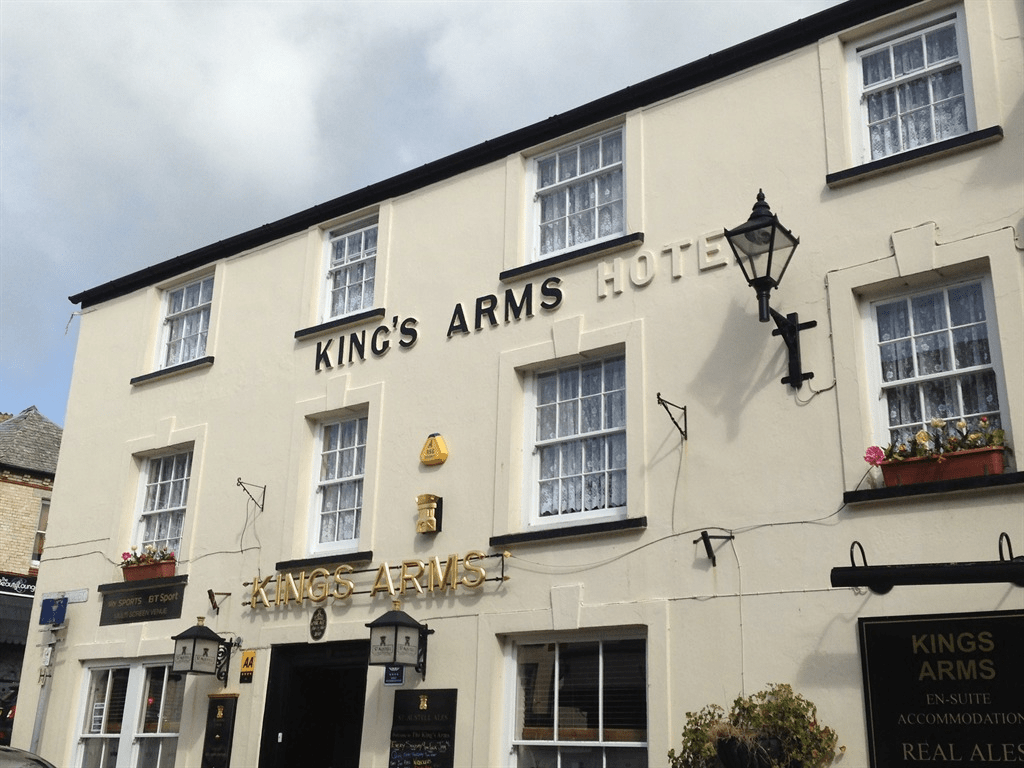
And it must have been hot. Bringing up the regiment’s rear (as always), was the baggage train. To four of the soldiers present, including John Simms, 30, and Richard Rogers, 26, the presence of the King’s Arms on Fore Street was too good an opportunity to miss18.

The King’s Arms, as it is today19

As the last cart trundled round the bend in the road, the quartet slipped in to slake their thirst.

Time passed. Before they knew it, Simms et al were reeling drunk, and the rest of the 28th well on its way to Liskeard.

Panic must have rapidly set in. If the drunkards truly had desertion on their minds, then getting toasted in a town their regiment had recently vacated was not a sensible option going forward. Punishment for recaptured deserters was harsh. If the men failed to quickly and quietly slip back into their ranks before they were missed, as hardened veterans they knew to expect a brutal flogging, or worse, being branded20.

Henry Aitken, The Drummer, c182021

A few slurred enquiries in the snug later, and Simms, with Rogers in tow, was rapping on William Hicks’ door. The other two soldiers were in no fit state to walk; a cart was required to get to Liskeard.

Hicks drew himself up. And just who would pay for said cart?

The government, replied Simms. Hicks’s response displayed a sounder grasp of the procedures of military requisitions than we might expect from a humble parish constable:

…officers were bound to pay for baggage carts…

Royal Cornwall Gazette, April 22 1815, p4

Probably slightly affronted, Simms nudged Rogers to cough up 12 shillings for the cart. Hicks was no mug:

Let me see the money, and I will…

Royal Cornwall Gazette, April 22 1815, p4

Their bluff called, Rogers told Hicks to go to hell, and the two men staggered off down Fore Street.

This unlooked-for turn of events had put Simms and Rogers in a bad humour. Being sent to America to fight after all they’d been through was bad enough, but now their two mates were comatose back at the pub, and they had no immediate means of returning to their unit. They were looking at thirty lashes or worse.

If they couldn’t get what they wanted by barter, well, force was next.

Muttering oaths, Simms and Rogers charged their muskets, and fixed their bayonets. It had worked in France after all.

It was getting ugly. The street nervously filled with onlookers. One of them was James Deccan, a local militiaman whose mother owned the King’s Arms. As a fellow man-of-arms, he tried to pacify the menacing soldiers.

Simms charged him with his bayonet; Deccan had sufficient combat experience – or Simms was too drunk to be effective – to parry the thrust aside.

Retreating, Simms joined Rogers in the middle of Fore Street, and they stood back-to-back in the middle of the thoroughfare, rifles raised. Deccan recognised this as

…the priming position…

Royal Cornwall Gazette, April 22 1815, p4

Suddenly, and aiming at no one in particular, Rogers pulled his trigger. The gun failed to fire, commonly known at the time as a “flash in the pan”22. One bystander had already observed that Rogers had loaded his musket poorly.

He proceeded to reload.

Enter Joseph Burnett.

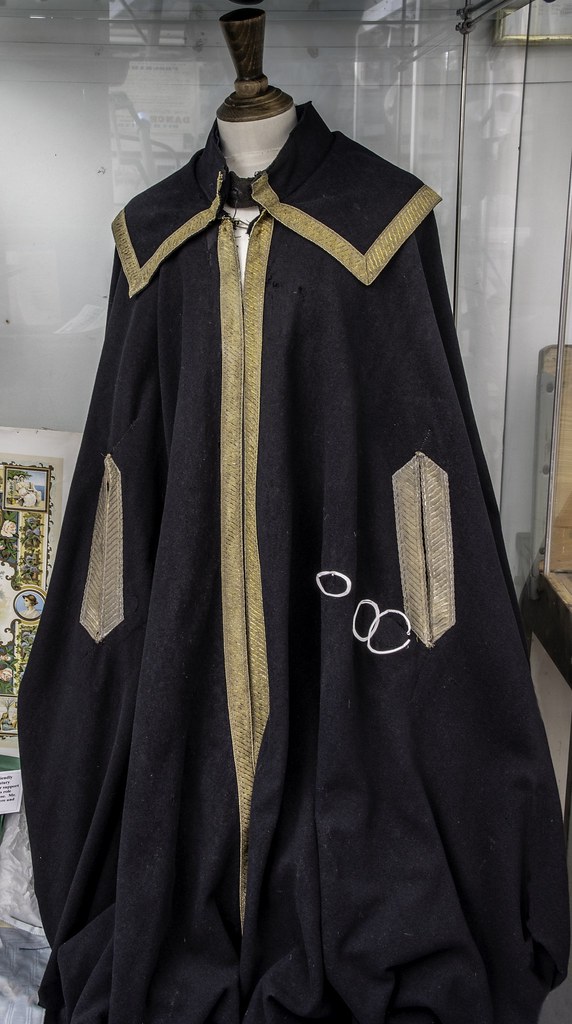
Whether someone (Hicks?) had alerted him to the danger is unclear. Certainly he was in a hurry; he had only time to don his hat of office before leaving his house. A fine cloak, the key symbol of his authority, remained at home.

Joseph Burnett’s cloak. By kind permission of Lostwithiel Museum (https://www.lostwithielmuseum.org/)

He must have known that, as sergeant-at-arms, it was his responsibility to diffuse the situation. And the situation was this: two armed, drunk and violent soldiers were loose on the streets. One of them had tried to fire his weapon, the other had charged a man with his bayonet. It’s a wonder no-one was dead already.

Burnett must have known he was putting himself in harm’s way.

Burnett strode toward Simms and Rogers, with Deccan and another man, Walter Davey (or Davies) warily following. Deccan nervously warned Burnett that the men would surely

…shoot some person…

Royal Cornwall Gazette, April 22 1815, p4

But Burnett was not to be put off. His people were in danger, and he must protect them.

Standing at the door of another inn, belonging to a George Reed, Burnett addressed Simms, who stood some twenty feet away:

I require the peace; come in here, and deliver your arms to me.

Royal Cornwall Gazette, April 22 1815, p4

Simms called over that he

…would be d____d if he did not shoot him first…

Royal Cornwall Gazette, April 22 1815, p4

…then rested his musket on a cart, and drew a bead on Burnett. Deccan got the hell out of the way. Davey started to move back also. Burnett realised too late that Simms wasn’t joking. Simms pulled the trigger. His aim was true.

Henry John Wilkinson, Rifle Practice in Ireland, 1848. The ‘Brown Bess’ musket used by Simms had an effective range of 80m23

The musket ball pierced Burnett’s waistcoat and passed straight through his chest. The bullet then struck Davey. Burnett staggered into Reed’s parlour.

The local surgeon, Burgess, was hastily summonsed, but to no avail. Burnett died at his home less than an hour later. Davey lingered until Wednesday the 24th before he too expired.

The men of Lostwithiel fell on Simms and Rogers. The latter, possibly stunned at what Simms had just done, and with, it had been observed, another defectively-loaded weapon, was easily overpowered. Simms, by now sober enough to realise that fighting his way out of town and going on the run was a better option than rejoining his regiment, fought like the devil.

But he was on his own, and with only a bayonet for protection. Both he and Rogers were probably dragged at first to the town lockup, and from thence conveyed to Bodmin Gaol.

Their two companions were presumably still stuporous back at the King’s Arms.

Gallows Bell

Thomas Rowlandson, Launceston, Cornwall During the Assizes, 180224

Burnett’s widow, Grace, had no police pension to live off – simply because a police force was yet to exist. With nine mouths to feed besides her own, Grace’s grief would have been compounded by the spectre of the workhouse, and her children being separated from her. A Quaker report from 1804 described Launceston workhouse as

…a scene of filth, rags and wretchedness…a stench almost insupportable…

James Neild, 180425

However, public sympathy for her plight was great, and a charitable subscription was organised on her behalf. In 1818 Grace remarried, to a John Cock26.

What became of the widow of Walter Davey and their five children is unknown. You like to think that the hat was passed round.

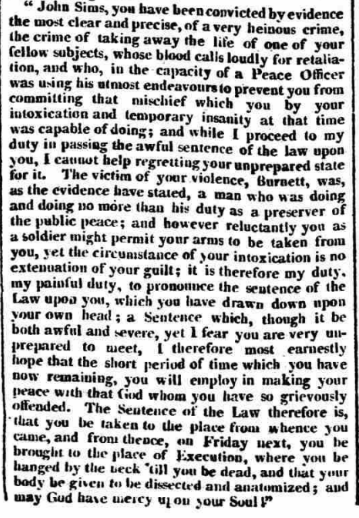
On March 29 1815 Simms and Rogers were tried at Launceston Assizes for the murder of Burnett. Rogers was acquitted, and promptly burst into tears. Simms was found guilty, and “appeared unconcerned”27.

The judge’s summing up is worth quoting in full:

Royal Cornwall Gazette, April 22 1815, p4

Whether Simms’ body actually was dissected is unclear. He was publicly hanged at Launceston on March 31, presumably in the grounds of the ruined castle, thus becoming one of the last to be executed there28.

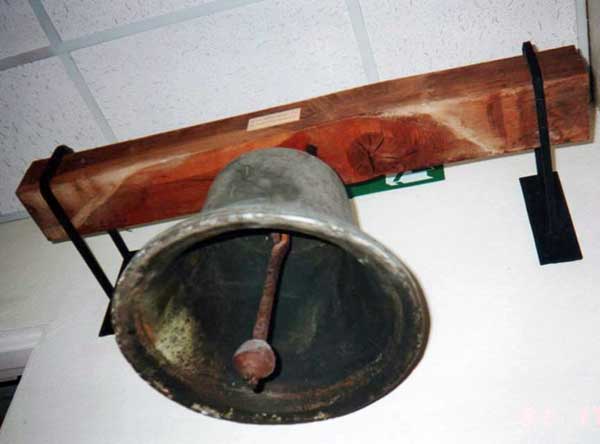
His mother visited him at the last, and he finally displayed “penitence and resignation”. Launceston’s gallows bell tolled the final journey from his confinement to the noose, before which Simms stood with “contrition and manly fortitude”29.

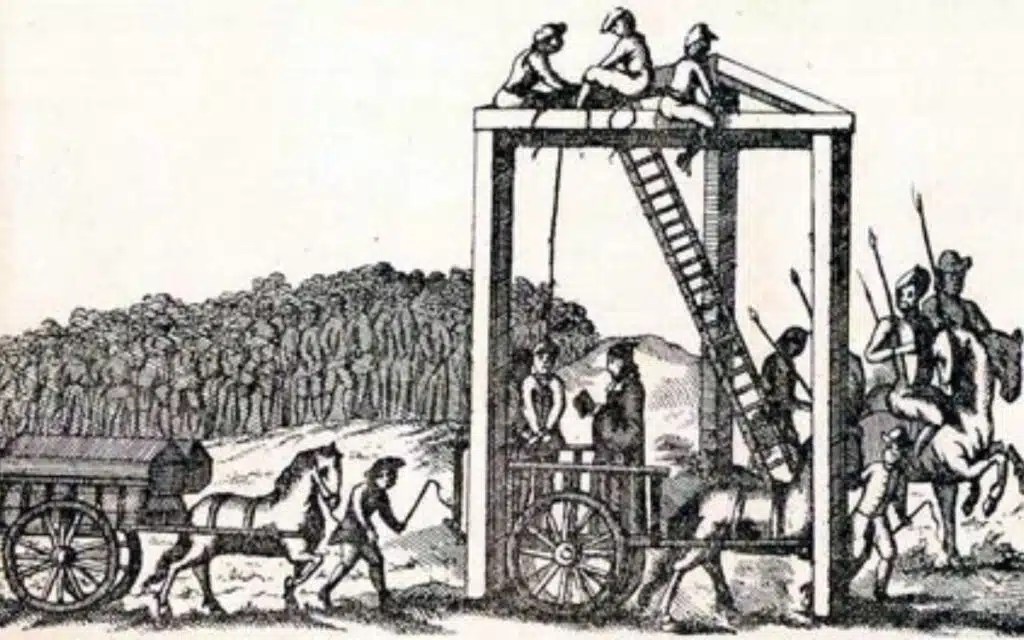
Indeed, the press made much of Burnett’s killing and Simms’ repentance. Readers in the capital knew all about the “Atrocious Murder” days after it happened, and the narrative of the sinner making his peace with God before the gallows already had a long tradition in the nascent crime journalism of the era30.

Engraving of Tyburn Tree, London
Launceston’s gallows bell31

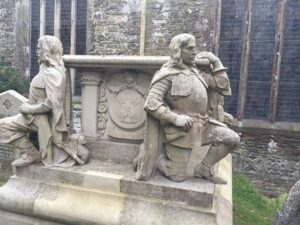
Simms is buried somewhere in the grounds of Bodmin Gaol. Joseph Burnett rests in St Bartholomew’s Church, Lostwithiel32.

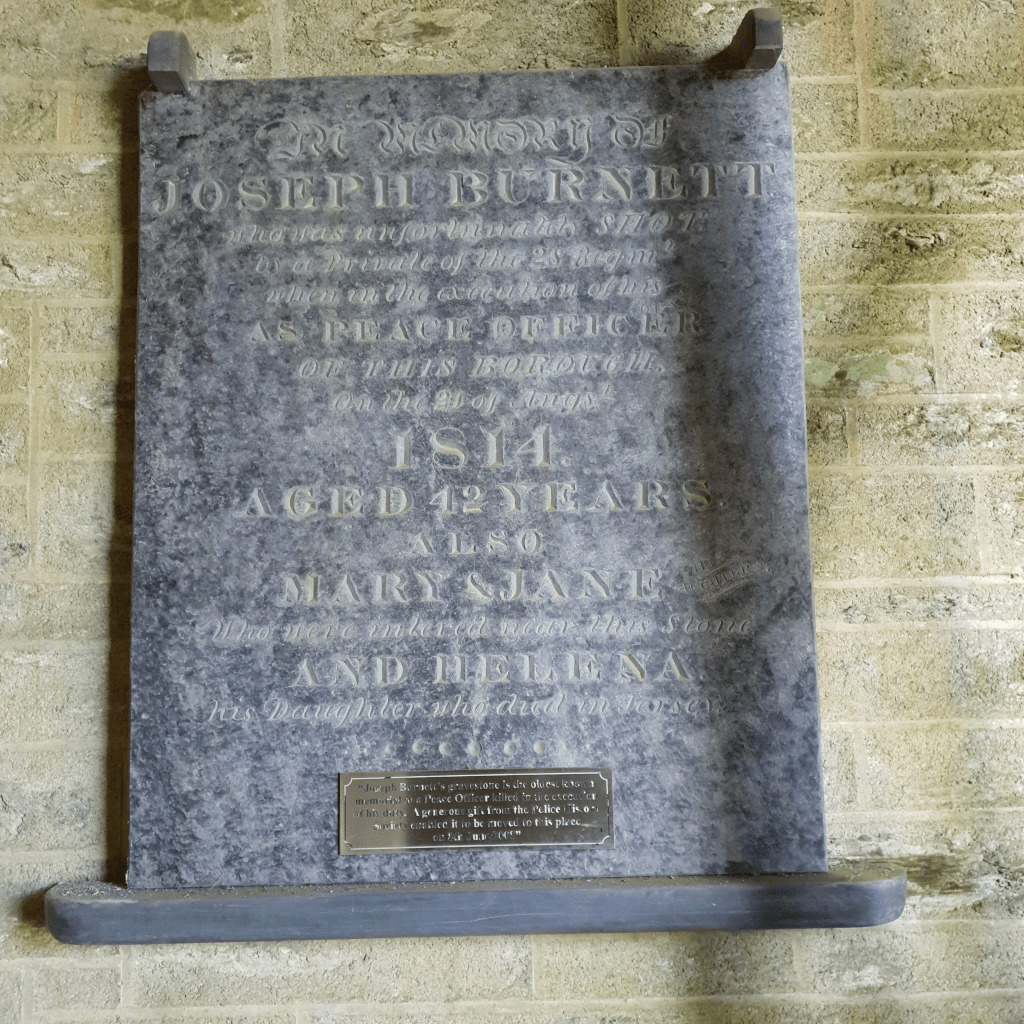
In 2008, Burnett’s original headstone was moved to the wall just inside the church’s main entrance:

It reads:

In memory of JOSEPH BURNETT Who was unfortunately SHOT By a Private of the 28th Regmt When in the execution of his AS PEACE OFFICER OF THIS BOROUGH On the 21 of Augst 1814. AGED 42 YEARS. ALSO MARY & JANE Who were interred near this stone AND HELENA his daughter who died in Jersey.

The brass plaque beneath the engraving tells us that

Joseph Burnett’s gravestone is the oldest known memorial for a Peace Officer killed in the execution of his duty. A generous gift from the Police Mission Society enabled it to be moved to this place on 8th June 200833.

Many thanks for reading; follow this link for more top blogs on all things Cornwallhttps://blog.feedspot.com/cornwall_blogs/

Do you enjoy my work?

All content on my website is absolutely FREE. However managing and researching my blog is costly! Please donate a small sum to help me produce more fascinating tales from Cornwall’s past!

£5.00
£10.00
£15.00

Your contribution is greatly appreciated.

Donate

References

  1. See: David Cannadine, Victorious Century: The United Kingdom 1800-1906, Penguin, 2018, p74-80; and Linda Colley, Britons: Forging the Nation 1707-1837, Yale, 2005, p291-319.
  2. Figures from Colley, Britons, p287.
  3. See: Vic Gatrell, Conspiracy on Cato Street: A Tale of Liberty and Revolution in Regency London, Cambridge University Press, 2023.
  4. For a brief overview of the 28th, see: https://en.wikipedia.org/wiki/28th_(North_Gloucestershire)_Regiment_of_Foot. Bonaparte’s abdication in April 1814 is noted on Cannadine, Victorious Century, p69.
  5. The 28th’s billeting at Birr is noted in The Sun (London), August 15 1814, p3.
  6. Image from: https://en.wikipedia.org/wiki/Birr_Barracks
  7. America declared war on Great Britain in June 1812. See: Cannadine, Victorious Century, p70. The 28th’s travels is noted in The Sun (London), August 15 1814, p3, and The Star (London), August 30 1814, p4.
  8. Philip Payton, Cornwall: A History, Cornwall Editions, 2004, p77.
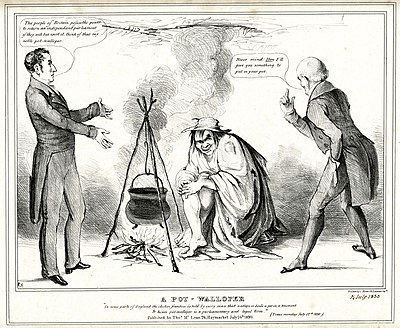
  9. Lostwithiel, however, was not Cornwall’s most notorious rotten borough; that title must go to Grampound. See my post here: https://the-cornish-historian.com/2024/01/06/the-grampound-potwallopers-corruption-in-georgian-cornwall/. For more on Lostwithiel’s medieval status, see: https://www.historyofparliamentonline.org/volume/1386-1421/constituencies/lostwithiel, and https://en.wikipedia.org/wiki/Lostwithiel_(UK_Parliament_constituency)
  10. Hicks is noted as the constable in the Royal Cornwall Gazette, April 22 1815, p4. His actual occupation is in his marriage entry in the Lostwithiel parish register: https://www.cornwall-opc-database.org/search-database/more-info/?t=marriages&id=605901. For more on the role of parish constables, see Joan Kent, “The English Village Constable, 1580-1642: The Nature and Dilemmas of the Office”, Journal of British Studies 20:2 (1981), p26-49.
  11. For a brief overview of what was demanded of a sergeant-at-mace of the time, see: https://en.wikipedia.org/wiki/Town_serjeant. For more on how law and order was enforced before the advent of the police force, see: Clive Emsley, The Great British Bobby: A History of British Policing From the 18th Century to the Present, Quercus, 2009, p13-38.
  12. Burnett’s baptism record is available here: https://www.cornwall-opc-database.org/search-database/more-info/?t=baptisms&id=2218812. His occupation is noted in his and Grace’s marriage entry: https://www.cornwall-opc-database.org/search-database/more-info/?t=marriages&id=1206487. That the Burnetts resided on Fore Street is noted in Royal Cornwall Gazette, April 22 1815, p4. The size of their family is reported in the Royal Cornwall Gazette, September 10 1814, p14.
  13. At Kresen Kernow is a copy of the oath taken by Richard Westron, sergeant-at-mace for Falmouth, in 1829. Ref: DCCRK/3.
  14. Image from: https://artuk.org/discover/artworks/thomas-brown-b-1767-sergeant-at-mace-for-poole-60253
  15. William Williams, sergeant-at-mace for Grampound, was summoned to give a deposition in 1740. Kresen Kernow, ref. CF/1/4578. Edward Daniell of Truro had to do similar in 1692. Kresen Kernow, ref. BTRU/440. Helston’s Market Clerk wanted all local sergeants-at-arms to send all the traders to his office regularly from the 1780s to the 1830s. Kresen Kernow, refs. RO/4949, RO/4950, RO/4951, RO/4952, RO/4954, RO/4955, RO/4956, RO/4957. In 1822 another William Williams, the town sergeant of Penryn, died; it was noted he had been in the position for “many years”. See: Royal Cornwall Gazette, January 26 1822, p2. In 1848 Falmouth’s town sergeant, probably not for the first time, arrested a man heavily under the influence. From: Penzance Gazette, July 4 1848, p3.
  16. Image from: https://www.mediastorehouse.co.uk/mary-evans-prints-online/lostwithiel-gaol-7213639.html
  17. Unless otherwise stated, the main sources for this section are The Star (London), August 30 1814, p4, and the Royal Cornwall Gazette, April 22 1815, p4.
  18. Certainly, the pub was named such in this period. A reference to it is made in the Cornish Gazette, September 25 1802, p1.
  19. Image from: https://www.thekingsarmslostwithiel.co.uk/en-GB/photos
  20. For more on military discipline in this period, see: Richard L. Blanco, “Attempts to Abolish Branding and Flogging in the Army of Victorian England Before 1881”, Journal of the Society for Army Historical Research 46:187 (1968), p137-145.
  21. Image from: https://collection.nam.ac.uk/detail.php?acc=1996-04-205-1
  22. Royal Cornwall Gazette, April 22 1815, p4.
  23. Image from: https://collection.nam.ac.uk/detail.php?acc=1972-07-6-75-1
  24. Image from: https://www.bonhams.com/auctions/11406/lot/28/
  25. See: https://www.workhouses.org.uk/Launceston/
  26. The subscription was advertised in the Royal Cornwall Gazette, September 10 1814, p1. The details of Grace’s second marriage can be seen here: https://www.cornwall-opc-database.org/search-database/more-info/?t=marriages&id=1254956
  27. Royal Cornwall Gazette, April 22 1815, p4.
  28. See: https://bernarddeacon.com/2021/03/11/hang-em-high-cornish-executions/
  29. The quotations are from the report of Simms’ execution in the Star (London), April 12 1815, p4.
  30. See the Star (London), August 30 1814, p4, and April 12 1815, p4. For more on crime reporting in this period, see Bethany Usher, Journalism and Crime, Routledge, 2024, p64-133.
  31. Images from: https://www.spookyisles.com/tyburn-tree/, and https://launcestonthen.co.uk/index.php/the-place/gallows-bell/
  32. See: https://www.findagrave.com/memorial/115916334/john-simms#source, and https://www.findagrave.com/memorial/139191191/joseph-burnett
  33. Burnett’s entry on the Police Roll of Honour is here: https://policememorial.org.uk/memories/joseph-burnett/. See also https://en.wikipedia.org/wiki/Devon_and_Cornwall_Police

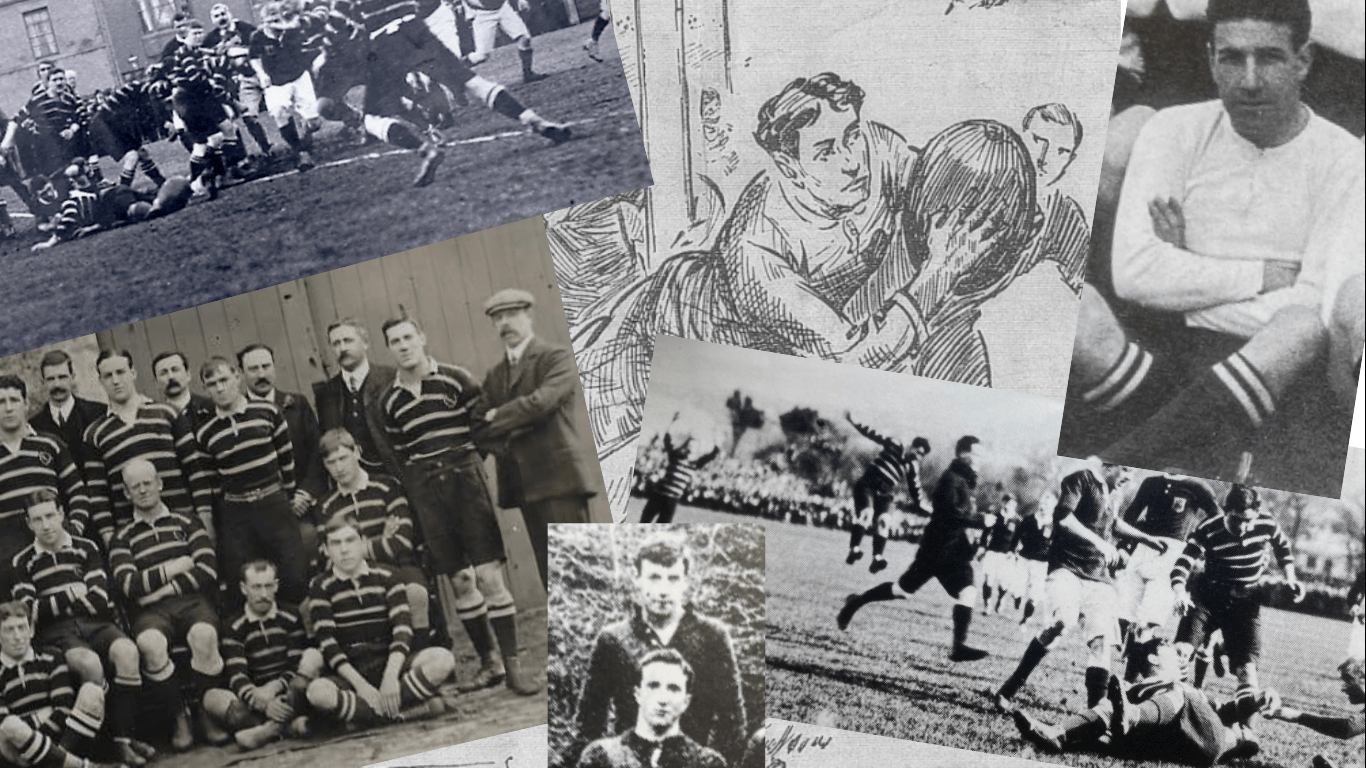
The Great Cornish Rugby Split?

Reading time: 40 minutes

…I have sat in my living-room with my mother and father at home and seen a rugby league representative take sheafs of pound notes out of his pocket…but…I have never wanted to be paid for playing rugby…

~ Gareth Edwards, Gareth: An Autobiography, Stanley Paul & Co., 1978, p91. As Edwards makes clear in The Autobiography (Headline, 1999), his 1978 book professionalised him in the eyes of the WRU and he was barred from coaching.

…when I went, I said the right things in the Press…I ‘needed a new challenge’…that was bullshit…I needed security for my family…

~ Jonathan Davies, The Rugby Codebreakers, BBC documentary, 2018

In a parallel universe

It’s December 26, 2023. Camborne Town RLFC are hosting their traditional Boxing Day clash with arch-rivals Newton Albion RLFC. Today’s edition marks 110 years of the fixture, which kicked off back in 1913. Both Western Super League teams are at full strength, and the Town Stadium carpark (once a recreation ground), is jam-packed. A capacity crowd of 20,000 is anticipated.

Before the 26 players take the field, Sky’s Brian Carney and Jenna Brooks interview the teams’ coaches pitchside in front of a film crew. Over in the Bill Biddick Stand (Biddick being of course the legendary Town skipper who led them to their first Challenge Cup victory in 1927), one gnarled old-timer turns to his mate and asks,

Didn’t Town used play another team on Boxing Day, years ago?

To which his pard replies,

Yeah, used be Redruth, but that’s going way back now…

Camborne haven’t played Redruth RFC since 1912…

Of course, none of the above is true. Camborne RFC has only ever played Rugby Union. ‘Newton Albion’ never existed. The Boxing Day game between Camborne and Redruth is part of Cornwall’s most famous – and bitter – sporting rivalry1.

Yes, it’s fiction. I made it up. But, once upon a time, Camborne strongly considered leaving the RFU and throwing their lot in with the Northern Union (from 1922, The Rugby Football League) to become a professional sporting body. They would have joined what was known as the ‘Western League (Northern Union)’, an entity based in Devon.

Therefore, something like the little fantasy above may very well have happened. ‘Camborne Town RLFC’ may have actually existed, mainly because of the antics of two Camborne players, back in 1912…

The day their lives changed

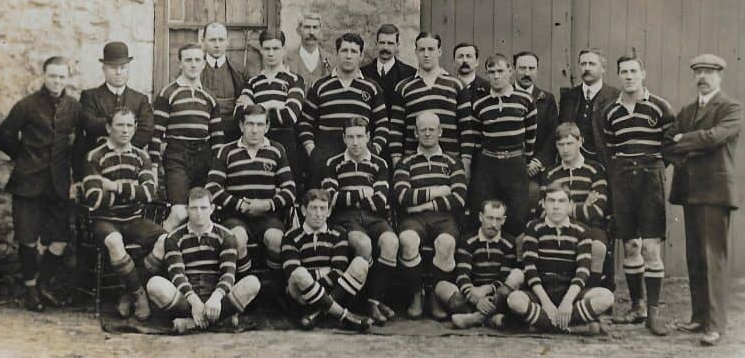
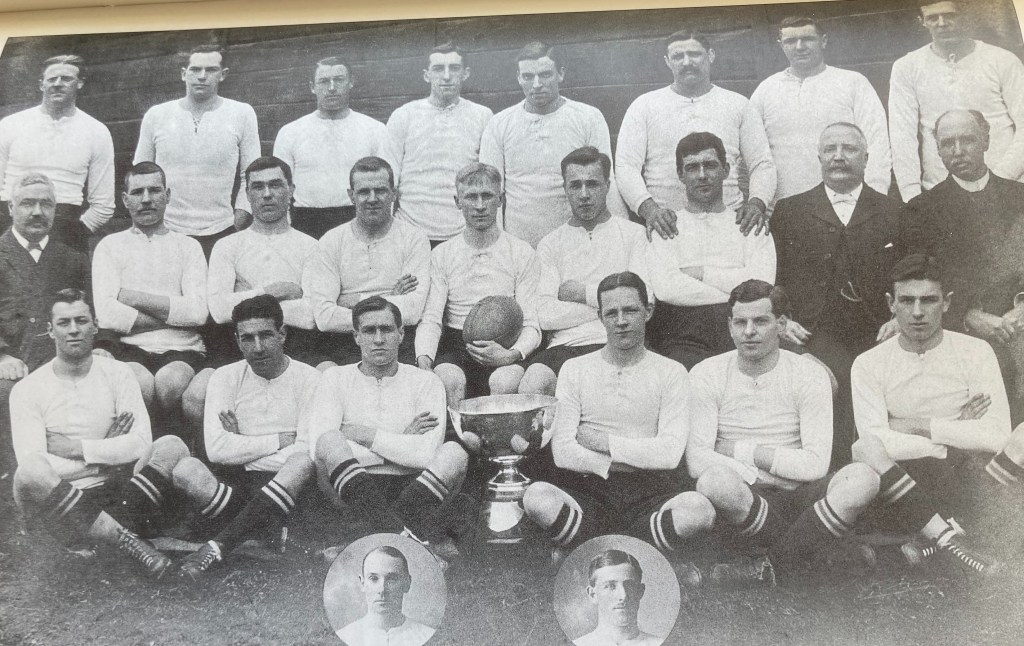
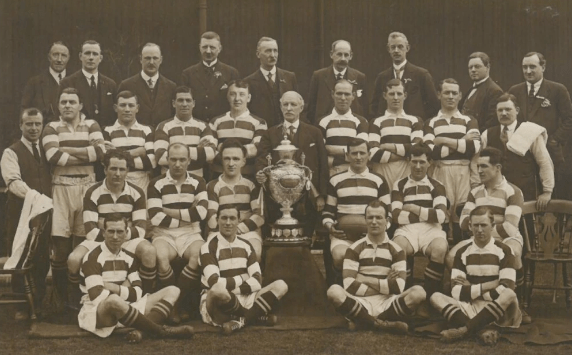
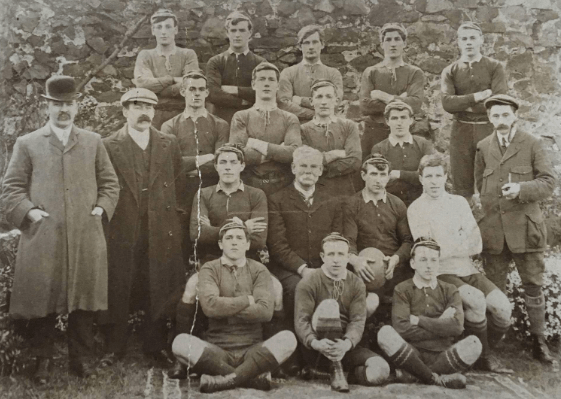
Camborne RFC, Cornish Champions, 1910-11. Image courtesy Kresen Kernow, ref. corn05420. Standing back, l to r: William Henry ‘Harry’ Lance, Charles Lovelock, William Mills, W. Bassett, Walter (or William) Eustice. Standing middle, l to r: John R Buddle (Treasurer), Albert Chenoweth (Committee), Eustice Rice, Tom Morrissey, Charles Thomas Bath, William Lovelock, William Trounson (Committee). Seated, l to r: Sam Carter, Charles Bryant (President), Arthur Thomas Stephens, B. Thomas. Ground, l: Jimmy Boase. Other two unknown. Lance, Lovelock, Eustice, Rice, Morrissey and Carter were capped by Cornwall.

It’s Saturday, April 13, 1912. Cornwall’s rugby season is drawing to a close. Redruth are the Cornish Champions. So are Camborne – obviously, the Press couldn’t decide who should be awarded the title. There was nothing to split the two deadly enemies on the field either; after three fixtures, both had a victory apiece, with one draw2.

The only thing for it was a deciding rubber, to be played today, in Redruth3.

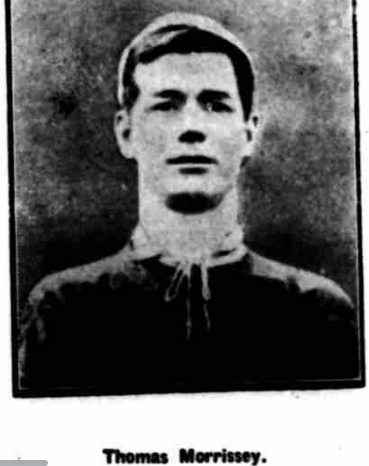
In front of a crowd of several thousands, Redruth went on to win, 6-0. Before he had even stepped on the pitch, Camborne’s big (6ft, 14st4), fiery enforcer-style forward, Tom Morrissey, was subjected to what we would term racist abuse. Though he was a miner from Beacon, his father hailed from Tipperary, and the Redruth faithful in the grandstand let him have it:

Morrissey, you _______ Irishman…

West Briton, April 29 1912

Such barracking was sustained throughout the game. Morrissey was only recently back from a two-week suspension for rough play5, and had been reported to the Cornwall RFU (CRFU) three times in the last four months, but he wouldn’t tolerate that. To the shock and horror of many, he bared his arse to the grandstand.

Female spectators left in disgust. A local man of the cloth vowed he’d never watch rugby in Redruth again.

The President of Redruth RFC, S. H. Lanyon, later stated that the heckling that day had been relatively unexceptional.

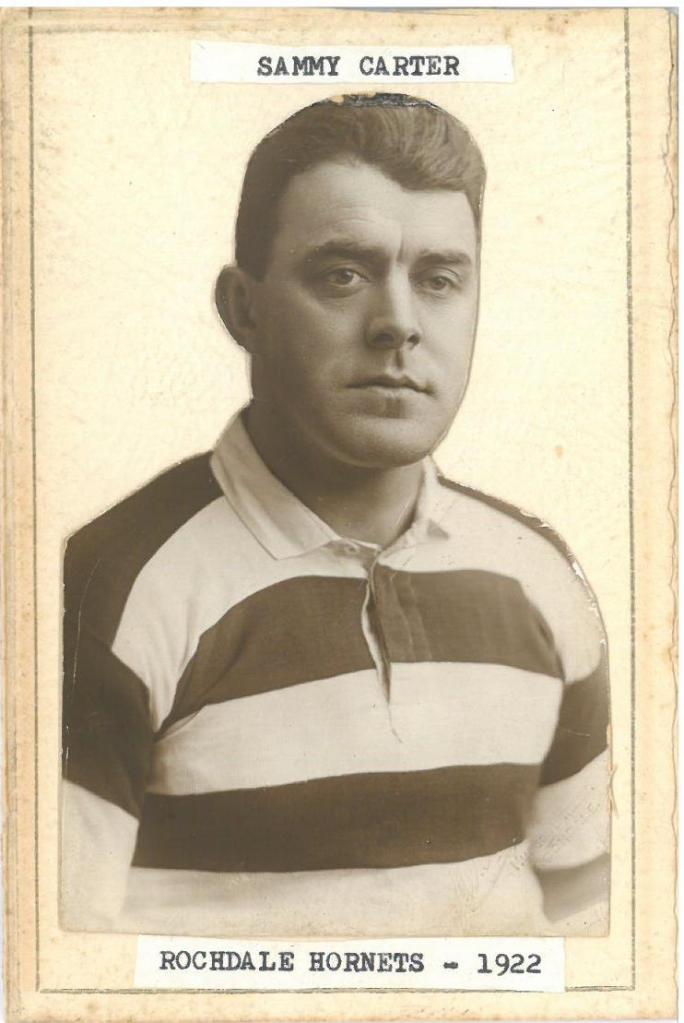
One of Morrissey’s team-mates was Sam Carter, a miner from Barripper who had worked in America and British Columbia. A talented forward with enough handling skills to pop up in the threequarters (he started life as a back), Carter had scored 16 tries for Camborne that season, and twice for Cornwall6.

Both Carter and Morrissey had turned out for Cornwall with Redruth’s John Menhennett, a USA-born miner from Four Lanes7.

However, that didn’t in any way make the three men friends.

Whilst allegedly gouging Morrissey’s eyes in a ruck (accounts vary), Menhennett was dragged to his feet by Carter. Menhennett then squared up to Carter, who teed off and got away one roundhouse above Menhennett’s eye that knocked him cold. (Menhennett would still be receiving treatment for the wound weeks later.)

The referee, W. Dennis Lawry, threatened to send Carter off the pitch. Carter, in the heat of the moment, told the official that

If you order me off, I will _______ half kill you.

Western Daily Mercury, April 22 1912, p3

He wisely (and rapidly) apologised for his remarks, and was allowed to play on.

But that wasn’t the end of it. After Lawry had blown no-side, Morrissey and Menhennett were still knocking lumps out of each other on the pitch, and were joined by several hundred fans in what deteriorated into a mass brawl.

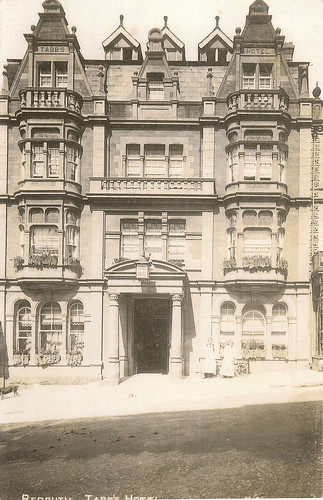
In those days, after a match both XVs would walk back to Tabbs Hotel on Fore Street to change, headed by Redruth Town Band.

Tabbs Hotel. A fine building sadly no longer in existence

Morrissey family legend maintains that Tom and another Camborne man (very possibly Carter, or a brother of Tom) walked back to Tabbs with their boots over their fists, daring anyone in the hostile, vocal crowd accompanying the teams to come ahead. They got no takers.

Redruth immediately cancelled the charity match that was to be held in Camborne the following Saturday.

W. Dennis Lawry, the referee, was a Penzance man. He was also Honorary Secretary of the CRFU8.

There was going to be trouble. In fact, Carter and Morrissey never played a game of Rugby Union again.

Kangaroo Court9

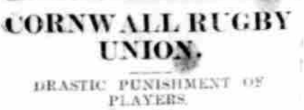
Cornishman, May 2 1912, p3

The verdict of the CRFU Committee on the behaviour of Carter, Morrissey and Menhennett was read at Tabbs Hotel, Redruth, on April 25.

From September 1 – the start of the 1912-13 season – Menhennett was given a one month ban. Carter, three months. Morrissey was not permitted to play rugby union for two whole years.

Even a member of the committee thought the sentencing drastic, if not draconian. That said, the judgements of the CRFU must be seen against a background of increasing instances of on-pitch violence and bad language prevalent in Cornish rugby, and Camborne-Redruth derbies were notorious in this regard. One commentator observed that

These are the best two Rugby teams in the county, and included in them are men who have donned the county colours with credit, but the rivalry between the two clubs has sometimes produced a feeling that does harm to sport, and the sooner this lesson is learnt the better it will be for Cornish Rugby Football.

‘Argus’, West Briton, April 29 1912, p2

There’s little doubt that the three players – Carter and Morrissey especially – were made examples of.

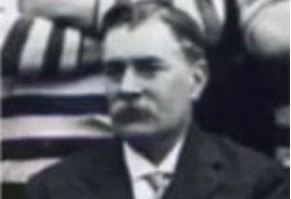
The prime mover in this was the CRFU’s Honorary Treasurer, Dr William Hichens (or Hitchins), formerly President of the CRFU from 1896-1905, and also President of Redruth RFC from 1893-190310. Indeed, the length of the bans were originally his motion.

Hichens so dominated proceedings one might be forgiven for thinking he was still President. The incumbent in 1912, Henry Vercoe, a Camborne man, is utterly silent in the reports11.

Hichens threatened resignation unless stern measures regarding the unsavoury events in Redruth were taken. At one point he admonished his colleagues for acting, in his enlightened opinion, like a bunch of women.

Suffice, Carter and Morrissey had few friends in the room. Those that were in their corner – Camborne’s President, Charles Bryant, and committeeman Albert Chenoweth - had little room to manoeuvre.

Charles Bryant
Albert Chenoweth

When Bryant attempted to suggest that the Redruth crowd’s barracking had provoked Morrissey to act as he did, Hichens slapped him down:

I am astonished, Mr Bryant. No provocation would justify the action of Morrissey.

West Briton, April 22 1912, p3

Lanyon, Redruth’s President, did in fact try and preach lenience regarding the subject of Morrissey’s gesture, but only on the grounds that he thought Morrissey was “uneducated”, and knew no better12.

This remark may tell you more about anti-Irish stereotyping than it ever will about the personalities of either Lanyon or Morrissey. Indeed, only a few years before the latter’s birth in 1889, the Camborne area was subject to vicious anti-Irish riots. Morrissey himself spent many a Saturday night brawling with those who sought to mock his roots13.

Let’s just say this: Lanyon was lucky that Morrissey wasn’t anywhere within earshot when he opened his mouth, and nobody questioned the mental faculties of those who had taunted him from the stands.

Carter, despite having a previously unblemished disciplinary record, would receive no reduction of his sentence either, despite Bryant’s pleas for forbearance.

Exasperated, Bryant moved that Carter’s and Morrissey’s bans be permitted, but only if a Redruth player recently reported for rough play received a similar duration of suspension. But Hichens held sway.

Chenoweth, outraged, said that

…the committee appeared to rule one team with an iron hand…Excuses were made for the conduct of any Redruth man, but when a Camborne man was before them…

West Briton, April 29 1912, p4

Chenoweth also moved to have the Redruth ground suspended, for provocation. It wasn’t seconded.

But there was further grist to Camborne’s mill. Bryant, on hearing how long his players were going to be out of the game, observed that they had been the very verdicts contained in rumours doing the rounds in Camborne, before the actual meeting.

Whether this is true or not, the ruling of the CRFU stood.

The immediate reaction of Camborne RFC was to cancel all fixtures with Redruth for the coming season14.

Sam Carter
Tom Morrissey

Neither Carter nor Morrissey bothered to attend their own hearing; hence the personal thoughts and reactions of both men are lost to us.

There’s little doubt, though, that they viewed the length of their suspensions as excessive in the extreme. If they wished to further their rugby careers – and they obviously had ambition to match their talent – there was really only one route open to them.

A recurring theme of the history of Rugby Union (and this post) is that, in the frequently heavy-handed enforcement of its own stringent regulations, the RFU (here represented by the CRFU) inadvertently pushed its own players toward the Northern Union (NU)15. Such a thing was to happen in the case of Sam Carter and Tom Morrissey.

It’s possible they may have been considering (or negotiating) the option before the events of April 1912. But, over the summer, either they approached the Northern Union, or the NU collared them.

The Hornets rebooted their club crest in 2021

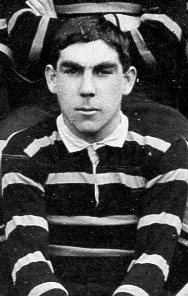
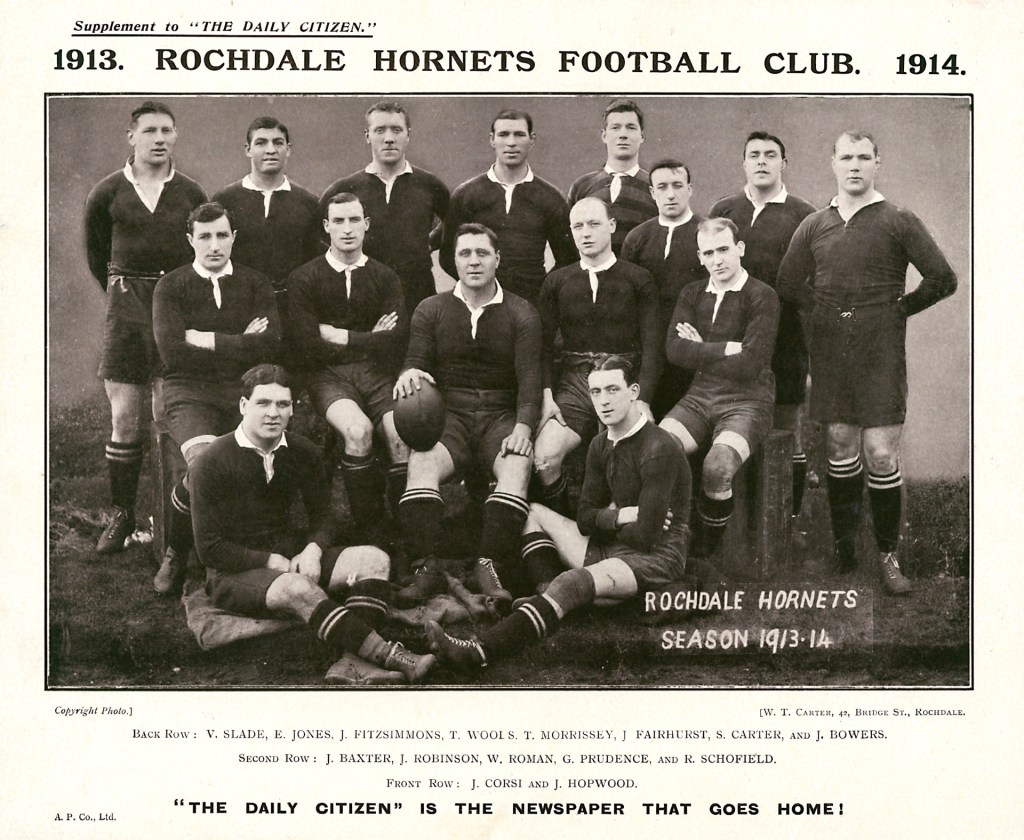
Carter and Morrissey eventually signed contracts with the NU’s Rochdale Hornets. Miners no longer, they were now professional sportsmen. Both men, Morrissey with a young wife in tow, arrived in Rochdale on Wednesday, September 4, 191216.

The CRFU had given them both a two-fingered salute; Carter and Morrissey gave the CRFU – and by extension, the RFU – one in return. The draconian suspensions handed to them by the CRFU essentially put them on the train north, into the hands of the NU.

Sam and Tom knew there was no going back. As the RFU’s Bye-Laws and Laws of the Game for the 1911-12 season made quite clear,

Professionalism is illegal.

p75

One of the myriad acts of professionalism as defined by the RFU was “signing any form of the Northern Union”, the consequences of which would see you

…expelled from all English clubs playing Rugby Football, and [you] shall not be eligible for re-election or election to any club.

p78-81. Courtesy of the RFU Museum, Twickenham

Sam and Tom had utterly burned their bridges. They knew they could never play Rugby Union again, join or visit an RFU Club, or speak to a Rugby Union player. They may not even see Cornwall again. But they had done it on their own terms.

Camborne RFC, seething with the CRFU at the senseless loss of two star players, very nearly declared for the NU as well.

Cornish codebreakers and veiled professionals

Graham Paul (left), ‘The Cornish Express’, in action for Hull KR. Paul played Union for Penzance-Newlyn and Cornwall when they were runners-up in the 1958 County Championship, before signing to Rugby League. He returned to Cornwall on retiring in 1964, but it was over twenty years before he was allowed to visit his old Union club, on account of RFU regulations in force at the time17
Paul did, however, travel to Cornwall in 1962 to play a series of exhibition matches for Hull KR. Courtesy Mark Warren

You won’t find much on Morrissey, Carter or others like them in official histories of Cornish rugby. Both men are very briefly mentioned in Camborne RFC’s standard history, in a list of players capped for Cornwall18. Abandon the RFU for the NU and, Soviet-style, you were written out of history.

From the moment the NU splintered from the RFU in 1895 (and just why this happened need not concern us here19), the latter’s Secretary, Rowland Hill, decreed that

…no club belonging to our Union will be permitted to play matches with any club which is in membership with the Northern Union.

Qtd in Lake’s Falmouth Packet, September 14 1895, p320

From the get-go, then, the NU, its clubs and its players were “outside the pale of Rugby football”21.

The RFU cultivated a rigidly amateur, public school persona in the early 1900s, whereas the NU projected an image of not caring how you spoke or where you came from. How you played was what mattered, and the game was played by working-class men, and run, by and large, by men with similar backgrounds. Furthermore, if you played under the auspices of the NU, generally speaking, you got paid.

By the time Sam and Tom signed with Rochdale Hornets, the NU was a fully professional organisation. Already, it had evolved into the game of ‘Rugby League’ that we recognise today. Professional teams from the Antipodes, playing under NU rules, had already toured the North, and the NU, in return, sent a representative side Down Under22.

Harry Glanville, the last player from Camborne RFC to join the Rugby League, in 1947. In 1950, his transfer fee from Oldham was advertised as being £900 – that’s £25K today23

The NU’s clubs were replete with talent scouts and agents. They targeted players from the Westcountry, particularly labouring men and miners24.

The explanation for this is obvious. The RFU’s County Championship, then the yardstick of the country’s Union talent, was dominated by Westcountry XVs from the years 1901-191325. This made the region a priority for NU recruitment, and throughout the history of Rugby League its officials have always attempted to prise working men away from their communities:

…usually it’s a working-class type of fella who takes the bait – or makes the right decision…

Unidentified Rugby League representative, The Rugby Codebreakers, BBC documentary, 2018

Playing sport for prizes – or cash rewards – had long been a feature of working class culture26. The notion of going to where you would get the best return for your efforts and talent was reinforced in Cornwall by the tradition of the ‘tribute’ mining system, where miners would negotiate the terms of their contract with the Captains. Add to this the history of Cornish migration in the face of economic hardship, and it’s easy to understand why Cornwall nurtured, and even sympathised with men who went North to seek their fortunes on the playing field27.

And Cornish rugby was a working-class game. Though admittedly a small sample, look again at the Camborne side of 1910-11:

Image courtesy Kresen Kernow, ref. corn05420. Standing back, l to r: William Henry ‘Harry’ Lance, Charles Lovelock, William Mills, W. Bassett, Walter (or William) Eustice. Standing middle, l to r: John R Buddle (Treasurer), Albert Chenoweth (Committee), Eustice Rice, Tom Morrissey, Charles Thomas Bath, William Lovelock, William Trounson (Committee). Seated, l to r: Sam Carter, Charles Bryant (President), Arthur Thomas Stephens, B. Thomas. Ground, l: Jimmy Boase. Other two unknown.

Of the players’ occupations that I’ve been able to trace, seven were miners (both Lovelocks, Mills, Eustice, Morrissey, Carter and Stephens), and two (Lance, Bath) were engineers or fitters. Of the management, only the President, Charles Bryant, had a middle-class occupation, that of Bank Manager. John Buddle was an explosives agent, Albert Chenoweth a painter/decorator, and William Trounson a carpenter28.

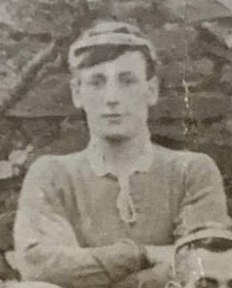
Carter and Morrissey didn’t need to look far for inspiration to join the NU either. In August 1911, their team-mate, Plymouth-born Cornwall full-back Harry Launce, signed for Salford. Launce lived to be 80, his 40-year involvement with the amateur Langworthy Reds club in Salford memorialised annually with a game played for The Harry Launce Memorial Trophy29.

Harry Launce – in Camborne his surname was spelt Lance. He played over 150 games for Salford’s Chiefs, and in 1917 played all 31 fixtures30

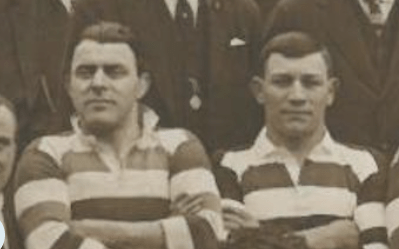
The NU’s agents, or “poachers” for “players of note” were at work in Cornwall from as early as 190031. In 1920 one poacher had a real coup in signing the Redruth and Cornwall star forward Tommy Harris to Rochdale Hornets for £300 (that’s £11K today). He and Sam Carter would play together32. What the Cornish rivalry meant to both men whilst in Lancashire is anyone’s guess.

Sam Carter (left) and Tommy Harris in their Rochdale days. Image courtesy Rochdale Hornets Heritage Archive. Harris had a notable career, being capped for Cornwall, winning the Challenge Cup with Rochdale in 1922, and being capped for England RL in 192433

Although the official RFU policy toward such men was to banish them forever, the reaction of Cornish people to those who signed with the NU could be summarised thus:

Good luck…

Cornubian and Redruth Times, November 30 1900, p7. A Penzance player called Triggs had signed for Rochdale

One might add, ‘and well done’. William Trembath, a Newlyn man who also joined Rochdale, had an interview published in a Cornish ‘paper, the tone of which was overwhelmingly positive34. Tommy Harris’ selection for the England Rugby League team was noted with pride35. When Sam Carter married a Rochdale girl, Bessie Winnard, in 1914, it was written that the

…event will be received with much gratification by his numerous sporting friends in Camborne.

Cornish Telegraph, June 4 1914, p3

Even post World War II, both Carter and Morrissey were noted as “fine players” in both codes, with Carter being described as “magnificent”36.

No doubt, many a Cornish rugby club will have stories of those who ‘went away’, and it’s important to remember that the players I’ve described here are the high-profile signings. How many miners with a love of sport left Cornwall to work in the northern collieries, and found themselves playing Rugby League?

People in Camborne must have regretted the departure of Sam Carter and Tom Morrissey, but they would have understood why they left.

I mean, imagine the furore if they’d done the unthinkable and signed for Redruth37

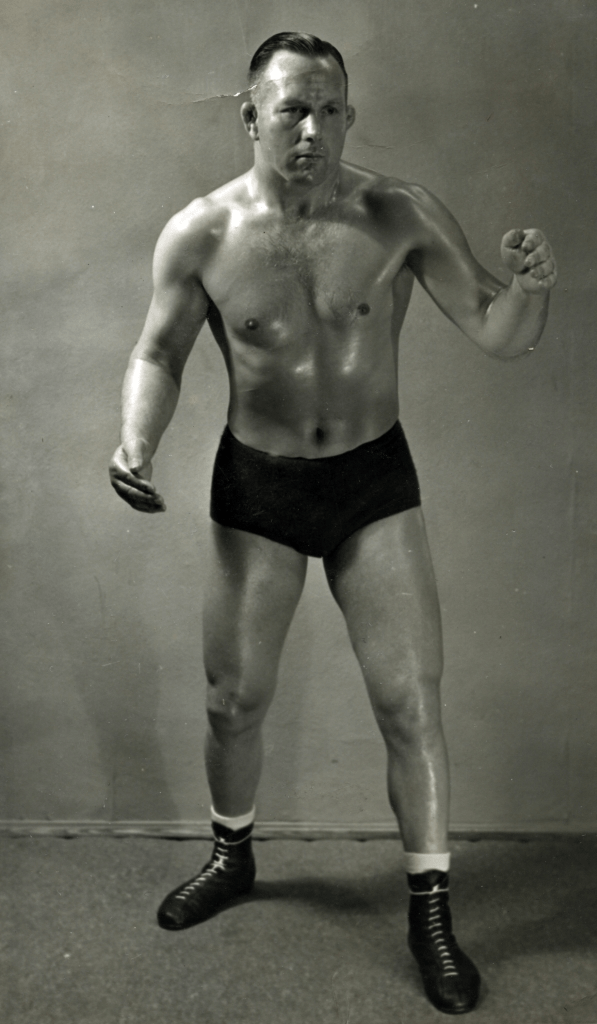
Francis St Clair Gregory. Redruth forward, champion wrestler, pro boxer, and League player for Wigan, Warrington and England38

Quality rugby players in the Westcountry, then, were a much sought-after commodity – on both sides of the game’s divide. Union clubs knowingly broke their own governing body’s laws on professionalism to keep their teams’ sweet, and to lure a big name into their fold.

As far back as 1899 Torquay Athletic were suspended for offering players a financial incentive to sign on39. In 1907 an RFU Commission was investigating charges of professionalism against Devonport Albion and Plymouth RFC, with evidence helpfully provided by representatives of the NU – covert NU policy being to sow discontent in the ranks of the RFU40.

The transfers of two of Cornwall’s 1908 County Championship XV, John Jackett (Falmouth to Leicester), and James ‘Maffer’ Davey (Redruth to Coventry), were always viewed cynically41. Jackett and his new club were exonerated after an investigation, but the verdict caused the President of the RFU, C. A. Crane, to resign in disgust42. Coventry had been discovered paying Davey’s lavish hotel bills when he stayed in their town, and both were suspended in 190943.

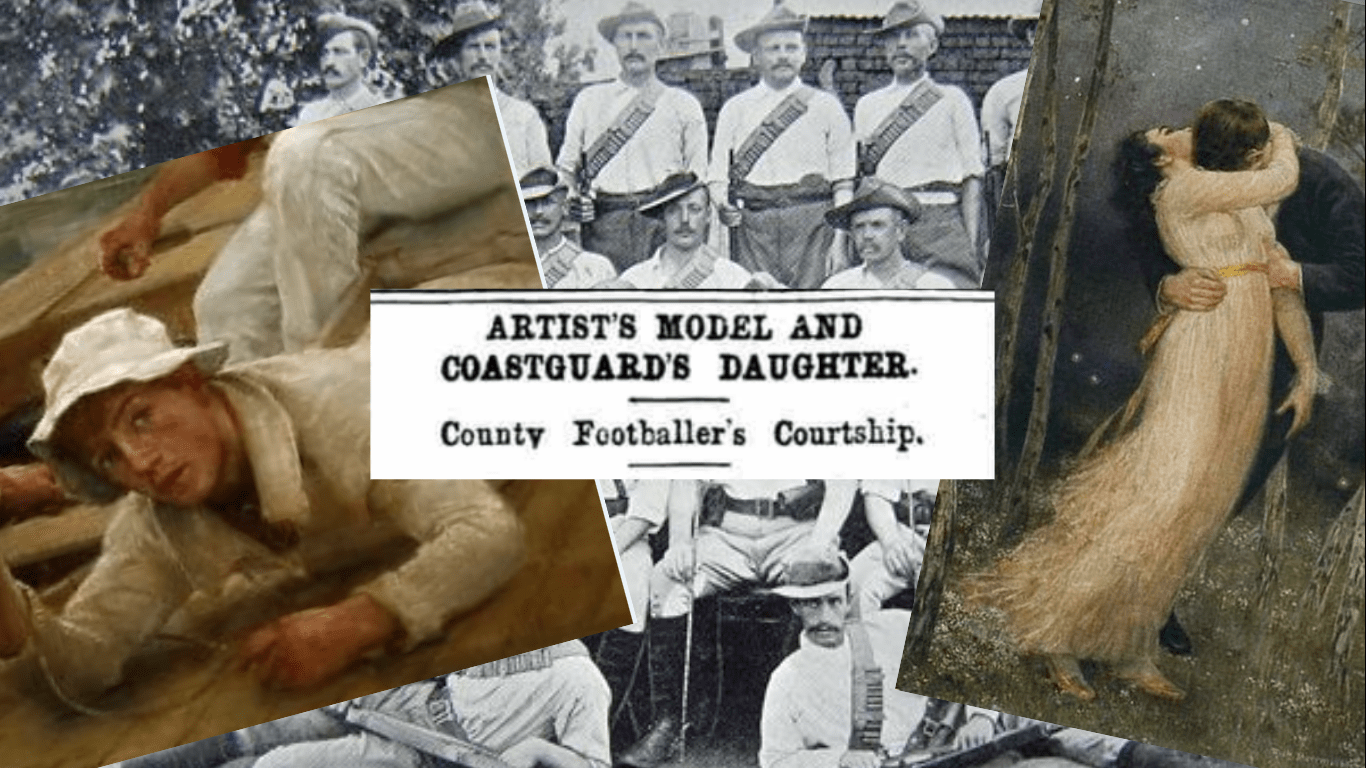
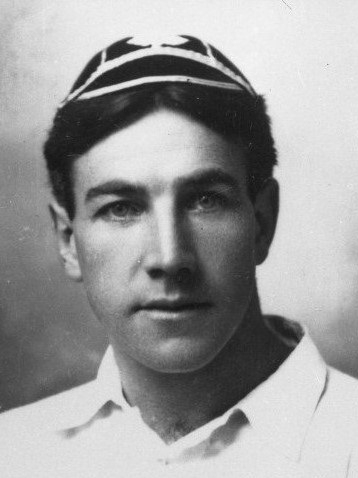
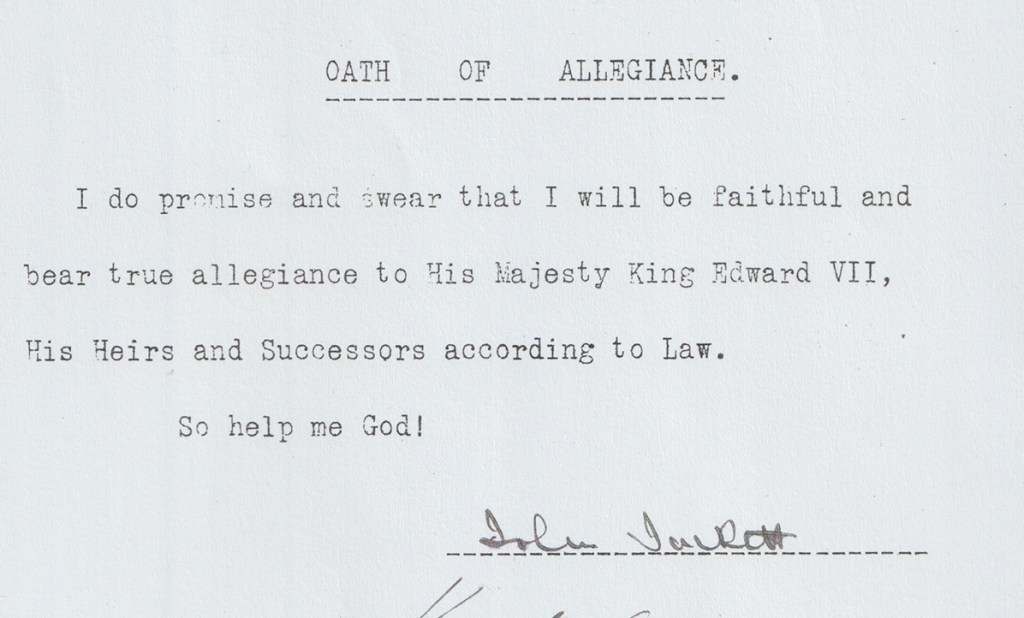
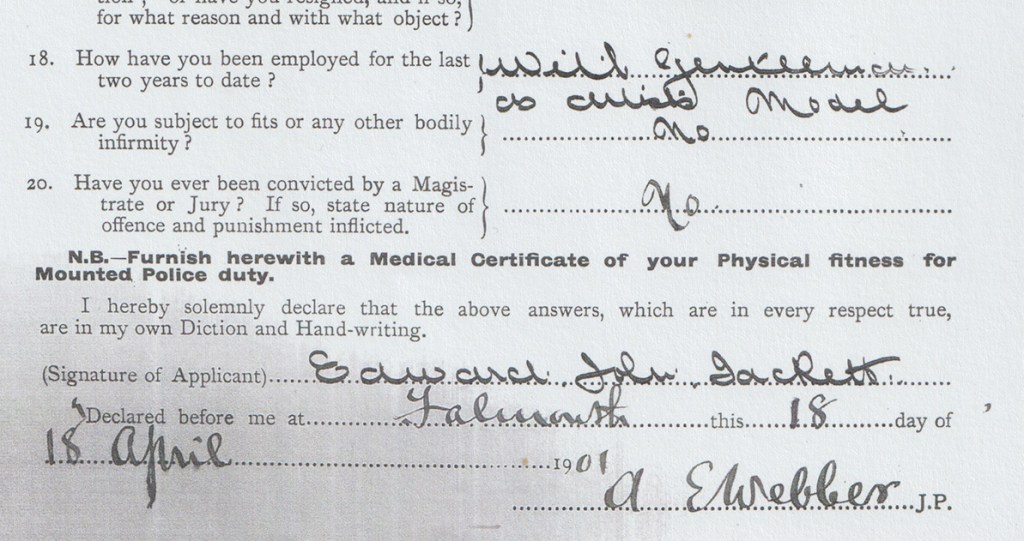
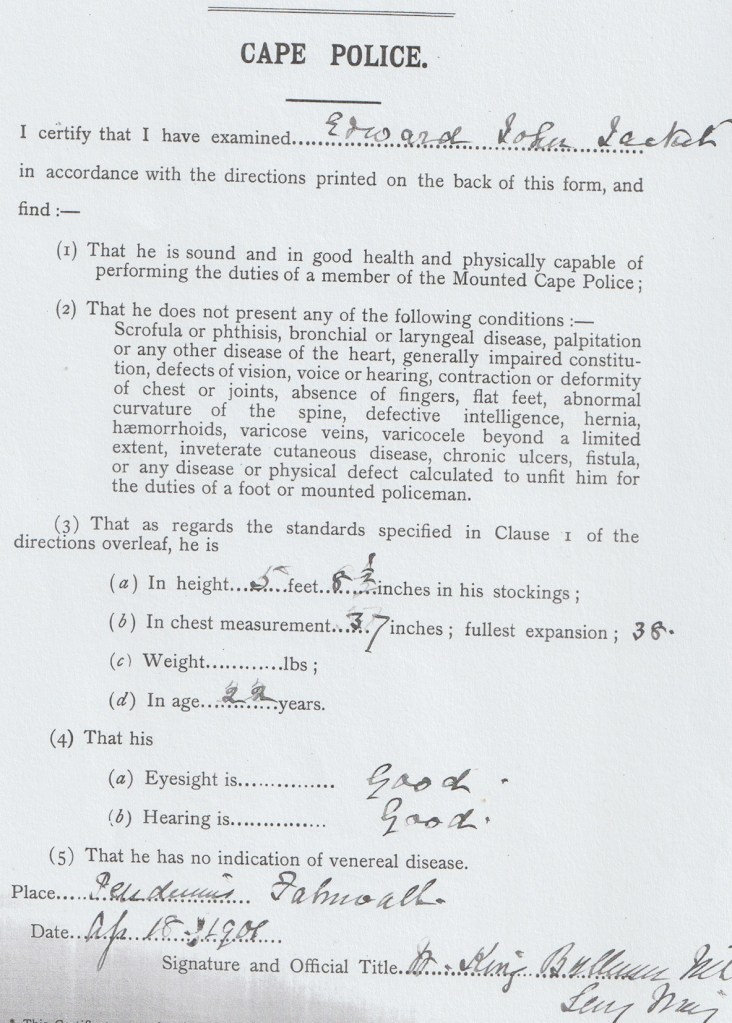
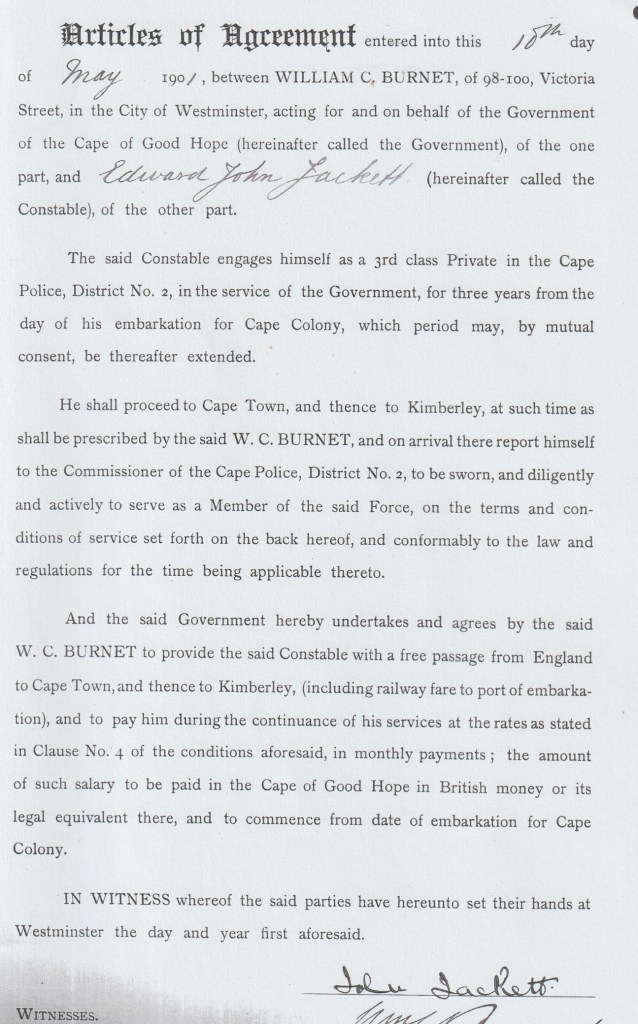
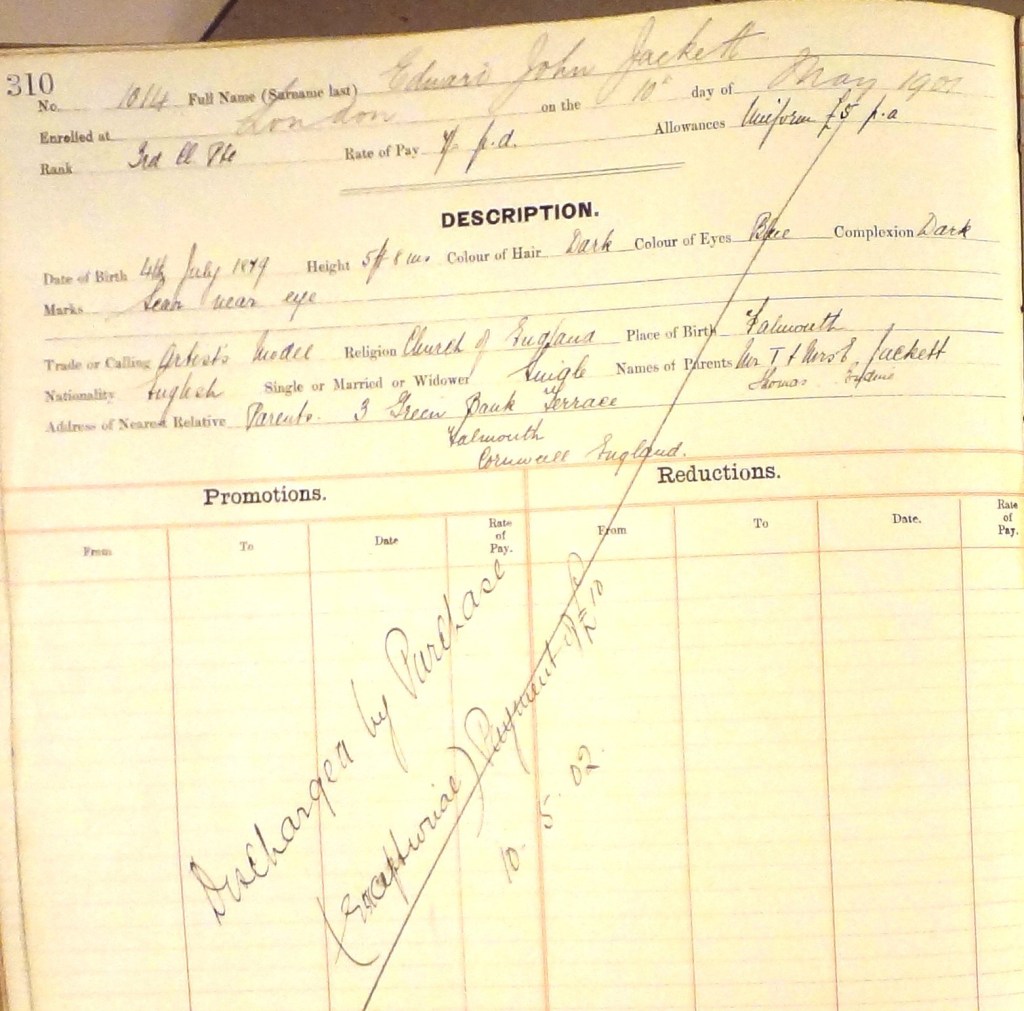
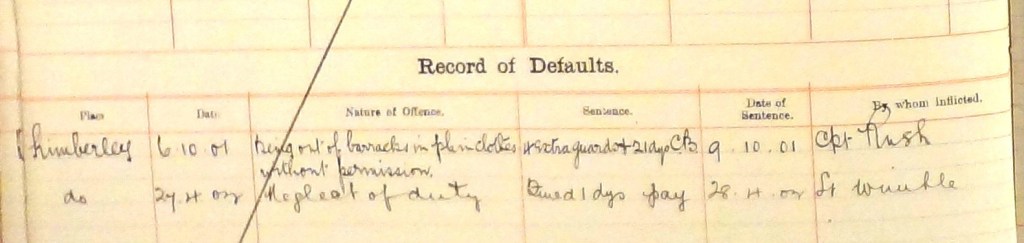
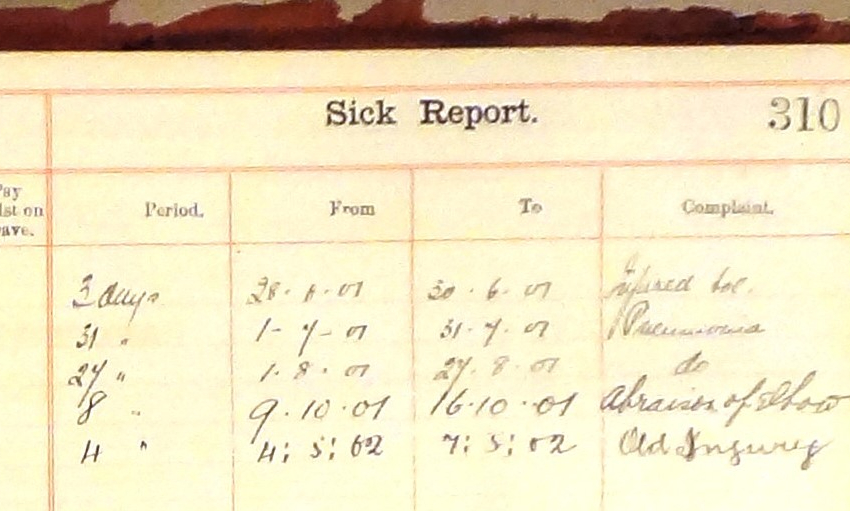
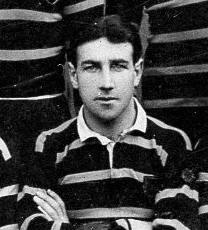
It may not surprise readers to learn that Jackett was an artists’ model, or that he played NU for Dewsbury
James ‘Maffer’ Davey also skippered the Transvaal XV when prospecting44

It’s important to remember that ‘veiled professionalism’, as it was known, was possibly more widespread than these investigations suggest. How many clubs managed to cook their books so effectively the RFU commissioners found nothing? How many RFU commissioners forgot their holier-than-thou principles when a burly clubman quietly offered them some ‘boot money’ of their own? That said, would any club be foolish enough to risk bribing the RFU’s Untouchables?

Sam Carter and Tom Morrissey, therefore, were two of many. It’s rather ironic that, as they were making their preparations to leave, it looked as if Camborne were going to commit to the NU game.

Rugby’s Kerry Packer?

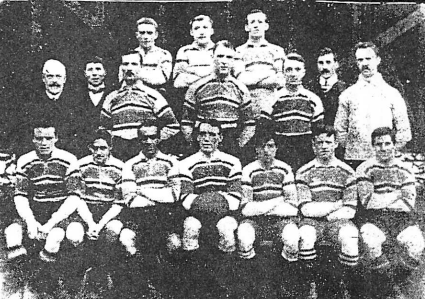
Plymouth Northern Union Team, 1913. Back, l to r: Martin, Hosking, Wallace. Middle, l to r: Mr W. S. Knight, Mr A. E. Bryant, Moss, Davey, Jamieson, Mr F Bryant, Edwards (trainer). Front: Wannell, Moore, Peters, Knight (c), Horne, Small, Coneybeare.45

Plymouth man Edwin Henry Searle had a vision, and he wanted to make money – maybe making money was his vision. He succeeded in acquiring wealth; on his death in 1927 he left £914, or £47K today. This was certainly a worthy effort for a humble commercial traveller, the kind of man George Orwell identified as being condemned to a thankless life of transient door-to-door drudgery46.

Commercial travellers were regularly a target for satire47

Searle was also Hon. Secretary of the Plymouth Grounds and Stands Company, which owned South Devon Place – the home of Plymouth RFC.

The company had a problem: Plymouth RFC wasn’t paying48. Falling attendances due to the success of Devonport Albion RFC and Plymouth Argyle FC had saddled the club with debts it couldn’t pay. In April 1912 the Devon RFU (DRU) gave them two weeks to cough up, or face suspension.

The Plymouth Grounds and Stands Company decided to abandon Plymouth RFC, and the club folded that summer49.

Not wanting to lease their ground to a club that was broke, Searle and his cohorts had started to look elsewhere to put bums back on seats, and cash in their coffers. They needed as big a draw as soccer, they needed novelty, and they needed spectacle. They wanted something they thought was better than Rugby Union. They wanted

Brighter and more spectacular football.

Gloucestershire Chronicle, August 17 1912, p9

They wanted the Northern Union. Now they had to convince the Westcountry that it wanted the NU, and the NU that it wanted the Westcountry.

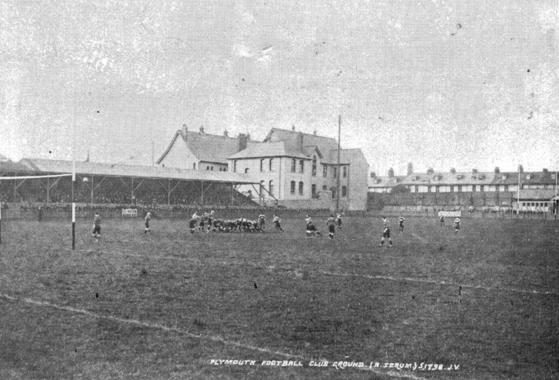
South Devon Place in the early 1900s
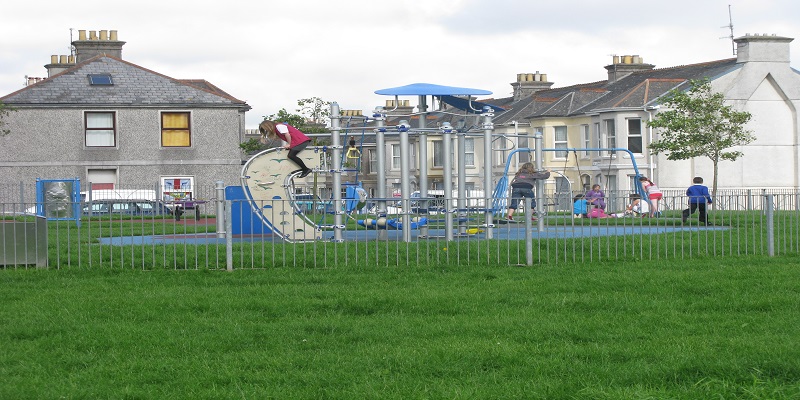
In 1914 South Devon Place was due to be built over, until purchased by Waldorf Astor MP and turned into a public park. Astor Park is named after Lady Nancy Astor who became the first female MP to take her seat in the House of Commons when she was elected to parliament for Plymouth Sutton in 191950.

In late April 1912 a “well-known Plymouthian” travelled to an NU conference in Manchester, the result of which was

…said to have completely paved the way for the introduction of professional Rugby in the West.

Western Daily Mercury, April 22 1912, p3

The Plymouth man, though unnamed, must have been Searle – he was a travelling salesman, after all. Doubtless he talked big when given the opportunity – he may have even fed the above line to the Press – and the NU decided to take a gamble.

The NU, for their part, must have been overjoyed. It was a win-win situation. If Searle & Co could establish a pro ‘Western League’ under Northern Union rules, they (the NU) would have a toehold in the region and opportunity for expansion. If it all came to naught, the RFU would doubtless suspend or expel any player associated with the movement, who would then be compelled to travel north for their rugby.

For the time being, then, everyone conveniently forgot that Plymouth was a helluva long way from Wigan, or Hull.

On Saturday May 11 1912, 10,000 people filled South Devon Place to watch an NU exhibition match between Oldham and Huddersfield, the latter winning 31-26. Searle and the other owners of the ground must have been grinning behind their cigars. 10,000 was easily their biggest gate all season51.

By July, it was announced that South Devon Place had been acquired by an NU club, which was in fact the hastily-formed Plymouth NU club. It goes without saying that the Plymouth Grounds and Stands Company would have done well out of this arrangement. Indeed, Searle was on the committee of the new club52.

It was looking promising. But there was one big obstacle: they only had one team, Plymouth, and probably very few players. The NU’s secretary, Joseph Platt, had stipulated twelve Westcountry clubs to constitute a league. Get twelve teams, and the NU would give them prized Welsh asset Ebbw Vale.

Joseph Platt. Founding Secretary of the NU from 1895-192053.

From his home on Grafton Road, Searle cast his net. He didn’t merely write to twelve clubs pitching his big idea, he probably wrote to every club of note in the Westcountry.

Searle’s definition of ‘Westcountry’ was incredibly inclusive. Cinderford, up in the Forest of Dean, received (and publicly repudiated) his missive54. Likewise Bath RFC, who wanted to avoid an investigation by the RFU for allegedly associating with the NU. The “letter shall lie on the table”, Bath announced, and the Club, rather fawningly,

…had no idea of forsaking its loyal allegiance to the Rugby Union.

Bath Chronicle, August 17 1912, p7

All of which begs the question: did Camborne receive a letter? Alas, the committee minutes for the 1911-12 season do not survive but, as a premier Cornish club, and one known to be discontented (to say the least) with its own Union, it’s inconceivable that Searle didn’t write to them.

Bath Chronicle, August 17 1912, p7

Camborne were certainly linked to the movement from an early stage, as were Redruth and, later, Falmouth55. That said, every senior club in the Westcountry was associated with the movement at one time or another, mainly because Searle contacted them all. As with the ‘Rebel’ Cricket Tours to South Africa in the 1980s, you never knew for sure who was going until they stepped aboard the plane.

Redruth opted out early. So did Devonport Albion, who described the whole affair as “utterly impracticable”56.

And Camborne? W. Dennis Lawry, Hon. Secretary of the CRFU, had sounded out an “official” of Camborne RFC. Any notion that the club was going over, stated Lawry,

…is not true.

Western Echo, July 27 1912, p2

Camborne, Lawry was assured, were ploughing forward with the forthcoming Union season.

We can accept the Camborne official’s statements to Lawry at face-value. Or, we can bear in mind the RFU’s tough policy on clubs known to be flirting with the NU, and recall that Lawry had refereed the fateful match that saw Carter and Morrissey suspended.

Of course the official was going to deny all knowledge, especially to a representative of the CRFU. The Press weren’t overly convinced:

…those who have a strong feeling against the Cornish Union would favour the introduction of the Northern Union or any other game.

West Briton, July 29 1912, p3

Camborne fit the bill perfectly. One resident stated that everyone in the town was

…yearning for the new code.

Western Evening Herald, December 7 1912, p4
Western Echo, August 3 1912, p3

Friday August 30, 1912, may have been one of the biggest dates in the history of Camborne RFC. The club was “unofficially represented”57 at a meeting of the NU movement in Newton Abbot. Also present were men from Plymouth and Torquay, and doubtless several other clubs. It was tense.

Camborne – and any other Cornish teams present – needed the Devon clubs to go over. Devon needed Cornwall. Torquay wouldn’t commit unless Newton Abbot did so first.

And Newton Abbot did commit. The Western League was on. Cheroots were lit. Pipes stuffed. Trebles all round. The hawks in the room wanted the movement made public there and then.

Suddenly, it was all off again. Newton Abbot did a complete volte face; the promoters (Searle and Co) had only managed to secure six teams, too small a number to constitute a league.

Camborne chivvied Torquay to force the issue, but it was all for naught. Ultimately the movement was too small, and the clubs too mistrusting of each other, to make it a reality.

Searle didn’t have the network, the force of character, or the bank balance, of Kerry Packer58.

Then the Union backlash began.

The Purge

Western Daily Mercury, September 28 1912, p4

Firstly, Camborne were in a parlous financial state, despite a slim profit for the 1911-12 season of £35 (£3,000 today). A demand from the CRFU in the form of a letter that they cease issuing cheques was ignored. No fixtures with Redruth had been arranged for the 1912-13 season, which meant a big loss in revenue. As the committee minutes held at Kresen Kernow make clear, it wasn’t until April 1913 that Camborne were prepared to open talks with Redruth.

It was agreed that the 1912-13 programme be run with a reduced fixture list, on a tight budget. Now was not the time to commit to the NU59.

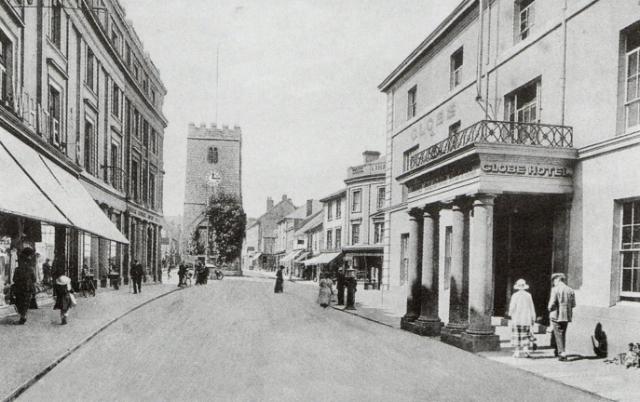
The Globe Hotel, Newton Abbot. Now part of Austins Department Store60

On Saturday September 21st, the DRU summoned a number of officials from Devon clubs (Plymouth, Brixham, Torquay, Teignmouth and Newton Abbot) to the Globe Hotel in Newton Abbot. The DRU then suspended seven of them, without hearing, for their involvement with the NU.

But the seven men, with Searle in an observatory/inflammatory role, wouldn’t go quietly. As one historian has observed,

Rather than ‘throttling the hydra’ of professionalism, the RFU found that severing one head had only resulted in the creation of more.

James W. Martens, “They Stooped to Conquer: Rugby Union Football, 1895-1914”, in Journal of Sport History 20:1 (1993), p30

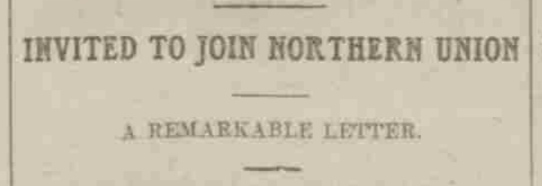
So it proved here. Searle produced a letter from Arthur Havill, the Exeter skipper, expressing interest in recruiting for the Westcountry movement. Searle’s intimation was that the DRU ought to be investigating more.

A. E. Bryant, one of the seven and a key figure in the nascent Plymouth NU club (see the image above), went further. He condemned the actions of the DRU Secretary, T. Stanley Kelly. Kelly, an Exeter man, had met with the NU reps too and, like Havill, had given the impression that his old club was all for switching. In fact, Kelly had been gathering information for the DRU all along. Bryant’s verdict on the public-school, former Harlequins and England captain was the most damaging that any gentleman amateur could bear. Kelly was

…unsportsmanlike…

Western Daily Mercury, September 23 1912, p3
T. Stanley Kelly61

Bryant then went public with more accusations of payments made to players by several Devon clubs, including weekly wages and win bonuses, urging the RFU to put their own house in order62.

Bryant’s call to expose the allegedly rampant ‘shamateurism’ in the Union game put the RFU in an invidious position. Do nothing, and they would be hoisted by their own clubs’ hypocrisy. Yet if they acted and found Bryant’s case carried weight, the inevitable suspensions would play into the NU’s hands.

Put another way, Bryant had the RFU by the balls. One man present at The Globe that day predicted that

…Northern Unionism would be established within a month.

Western Daily Mercury, September 23 1912, p3
The Rougemont Hotel, Exeter63

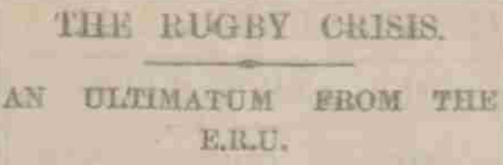
The RFU decided to come down heavily. By October a commission, headed by RFU President A. M. Crook, was ensconced at the Rougemont, Exeter. There was a Press blackout. The investigation was deemed to be “the most important of its kind”64.

Besides upholding the suspensions made by the DRU, the RFU summoned W. Dennis Lawry of the CRFU to provide that Union’s accounts. Ditto T. Stanley Kelly for the DRU. Evidence needed to be sifted. Witnesses sought.

Western Times, December 31 1912, p6

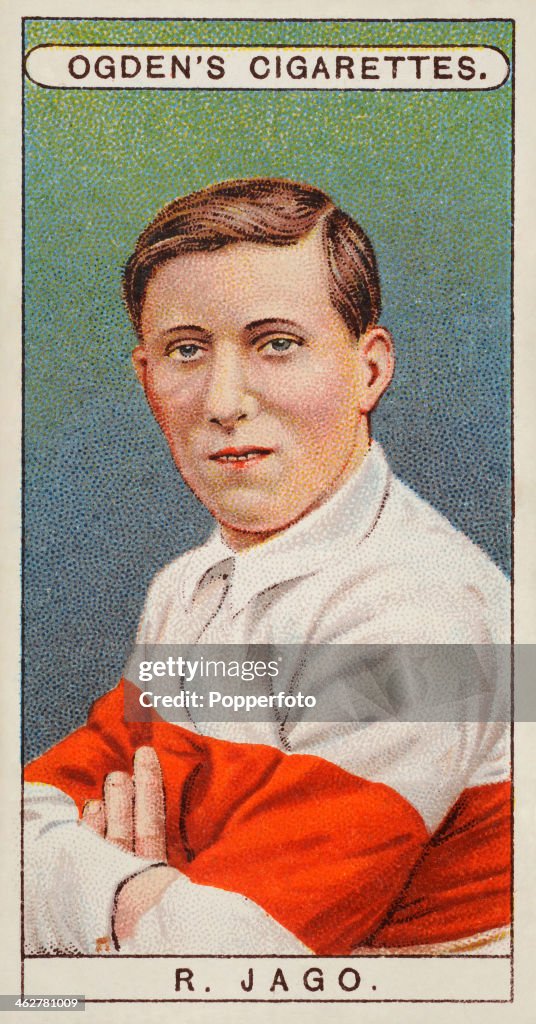
Exeter were exonerated. Torquay Athletic were suspended, as were practically all of Devonport Albion’s 1st XV. This latter included a Cornishman, Fred Gilbert, and a Devon and England scrum-half who had begun his career at Falmouth, Raphael Jago. In all, 23 officials were suspended, and 17 players65.

Raphael Jago of Devonport Albion Rugby Club, featured on a vintage cigarette card published in London, circa 1908. (Photo by Popperfoto via Getty Images/Getty Images)

The RFU didn’t conclude its investigations into the CRFU and its clubs until June 1913. After digging as far back as 1901-2, the commission found…nothing.

The RFU then charged the CRFU £40 expenses (£3,800 today) for the privilege66.

Opinion was divided on the RFU’s actions. One ‘paper called it “the finest step that could have been taken for rugby in Devonshire”67. Another reckoned that

…the commission…has played into the hands of the Northern Union disciples.

Cornish Echo, December 6 1912, p7

As the Echo had feared, the Western League decided to grimly battle on. Coventry played Plymouth under NU rules at South Devon Place on Christmas Day 191268, but overall the movement was a failure.

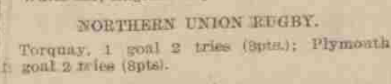
The very brief record of that week’s NU results in the Westcountry, Western Times, January 20 1913, p3

Five clubs (Plymouth, Teignmouth, Paignton, Torquay (NU, that is, Torquay Athletic remained separate) and Newton Abbot) stubbornly played a few NU matches. Attendances were poor, and players thin on the ground. Torquay had to make up numbers for one match by filching men from their fellow NU teams69.

Camborne, even at this stage, were approached. Torquay wrote to them in early 1913 requesting fixtures in the new code, but the committee decided that, this time, they

…could not entertain their proposals.

Minutes and Team Selections, Camborne Rugby Club, 1912-1915. Kresen Kernow, ref: X1280/1/2

Although Plymouth and Torquay also entertained St Helens, and England NU played Wales at South Devon Place before 7,000 in February 1913, it was all over by April.

Torquay NU, 1913. Back, l to r: Mr Vinnicombe, Mr Lemon, ?, Farr (trainer), Huxham, Mr H. Vanstone, Mr W. A. Bond, Mr Phillips. Middle, l to r: Mr Durbin, ?, ?, Coombe, Walling, Mason. Front, l to r: Mr Vanstone, Yeoman, ?, Wotton (c), Bovey, Adam70

The Plymouth NU committee, Searle included, resigned that April. South Devon Place was put up for let. The NU, it was written, had been “cracked” in the Westcountry71. Its players went north, or faded away.

For a few, short, tantalising months, the history of Rugby in Devon and Cornwall looked very different. Northern Union/Rugby League wasn’t seen again in the Westcountry until 1947, when Leigh and Barrow played a series of exhibition matches72.

In the meantime, Sam Carter and Tom Morrissey were making their marks for Rochdale Hornets. A Rugby League historian believes both men held fire on moving north until Camborne’s non-involvement with the Western League became a certainty, but makes no mention of their suspensions in April 1912. It’s more likely they began canvassing for Northern Union interest shortly after their harsh sentences were passed. The NU actually paid lip-service to one of its own bylaws in requesting of the CRFU information on why they had been suspended, but true to form the CRFU ignored it. One gets the impression that, throughout 1912 and early 1913, masses of letters sat on various committee room tables, never to be acknowledged73.

The Hornets’ new signings were free to play…

Ginger Morrissey

Rochdale Times, September 4 1912, p7. Lancashire’s first look at the Hornets’ imposing new signing.

There’s a question every young sportsperson must ask themselves when they first turn professional, and that question goes something like:

What if I don’t make it?

It’s a shame to write, but Tom Morrissey didn’t make it – largely through no fault of his own.

The Hornets made quite a fuss of his and Carter’s signing. Like prominent Americans defecting to the USSR, it was a propaganda coup. Of Morrissey it was written that he

…is a big, lusty fellow, who should make his mark in the Northern Union game…He has a splendid reputation as a scrimmager in the West Country.

Rochdale Times, September 4 1912, p7

His height, weight (at 14st, it was noted that he would be heftiest in the Hornets’ squad74) and ginger hair would make him an instant hit with the fans, not to mention his aggressive, in-your-face style.

But it didn’t quite work out like that. Getting capped for Cornwall was easier than getting a regular slot for Rochdale’s Chiefs.

Tom’s appearances until spring 1914, by and large, were limited to the ‘A’ team. He couldn’t quite force his way up to the top level. Whenever he did get a chance, such as over Christmas 1912 when Rochdale pulled off a shock victory over St Helens, he didn’t exactly cover himself in glory.

In that particular match, his old Camborne pal Sam Carter scored a nifty try; Tom himself knocked on at a crucial moment75.

While Sam flourished, Tom languished in the ‘As’76. A chance came in February 1914. A good performance for the ‘As’ against St Helens put him in the running. Hornets Chiefs, having lost heavily on the same day to Barrow, were short for the next game at home to Dewsbury. Tom got the nod. He had to make the most of it77.

Five games in 15 days had taken their toll on the Hornets. From the Rochdale Observer, February 11 1914, p6

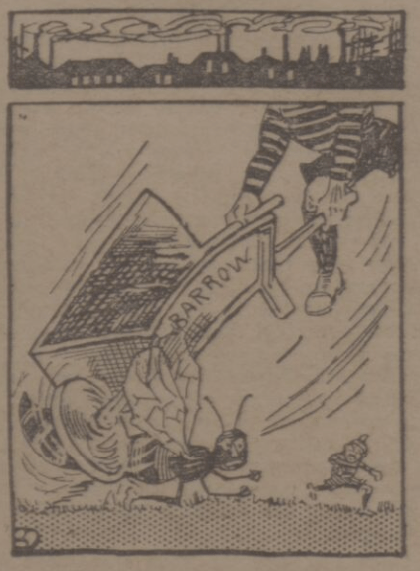
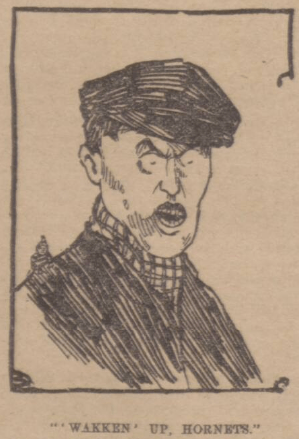
8,000 spectators turned up to watch what must have been one of the worst games of professional rugby in history, if the reports are to be trusted78. A nil-nil draw left the Hornets’ faithful looking very much like the irate gentleman below:

Rochdale Observer, February 11 1914, p6

Although Dewsbury lost a player on account of him having some ribs broken, the game is noteworthy for its significance in the story of Tom Morrissey. It was the last game of rugby he ever played.

A knee injury sustained in the match via an opponent’s stud became violently inflamed. Septic poisoning had set in, and Tom required an emergency operation:

…it is a question whether Morrissey will be able to play for a considerable time.

Rochdale Times, March 4 1914, p7

Family history maintains that the presence of arsenic in a weedkiller infected Tom’s knee. Whatever the cause, he was desperately unlucky. The leg was left permanently stiff.

For a time, he remained in the Hornets’ fold, organising and selling match programmes. By 1939, he and his wife, Rita, were living in Moss Street, Rochdale, and Tom was an iron driller with Petrie and McNaught, a job he had been holding since at least 192179.

He visited Cornwall in 1950, and is remembered as a big, yet quietly spoken man.

Tom Morrissey died in 1953, aged 6480.

Tom’s rugby career is a classic case of what might have been, on two counts. With the Northern Union, had he secured a regular first team berth, glory awaited. Had he remained in Union, his size, ability up-front and reputation suggest he could have been spoken of today in the same breath as the likes of Camborne and Cornwall legends Gary Harris, Paul Ranford or Chris Durant.

Get Carter

Rochdale Times, January 14 1914, p6

Sam Carter made it. A forward who fancied himself as a threequarter was an object of derision in Cornish rugby81, but a man with skill and versatility was a welcome asset for Rochdale Hornets.

Carter became a back-row forward in NU, but that was only a starting-point. He could deputise on the wing, at least in his early years82. He could scrum. He could tackle. He could pass. He could dribble – an important facet of the game in those days. He had vision. What’s more, he could make it difficult for the opposition. Even late in his career, the man replacing him in a match was judged

…not equal to Carter as a breaker-up and worrier.

Rochdale Times, May 7 1919, p4

A player-profile of the time said he was

…one of the finest loose-forwards…Quick away from the scrums (as visiting half-backs know to their cost)…always quick to sense an opening, often combines with the backs and is a consistent try-getter.

Courtesy Rochdale Hornets Heritage Archive

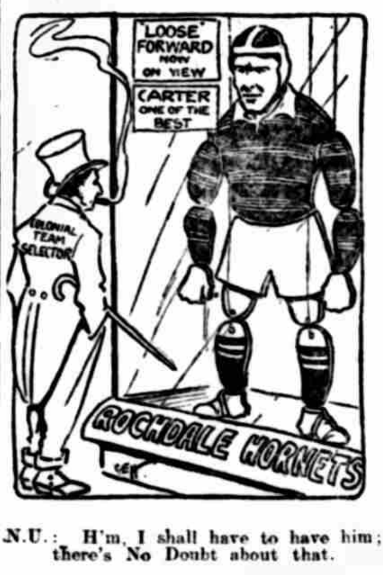
During what was probably his peak season, 1913-14, he played 38 of 39 fixtures for the Hornets, and was in with a shout of international recognition, if the illustration above is any yardstick83.

Courtesy Reg Bennett

Sam is standing, second from the right. Note the broad shoulders, bull neck and lantern jaw – a player in his prime. To his right is Tom Morrissey, in his final season of rugby.

Had international NU matches continued despite the war, it’s arguable that Sam would have been capped by England, such was his form. But here, he was unfortunate84.

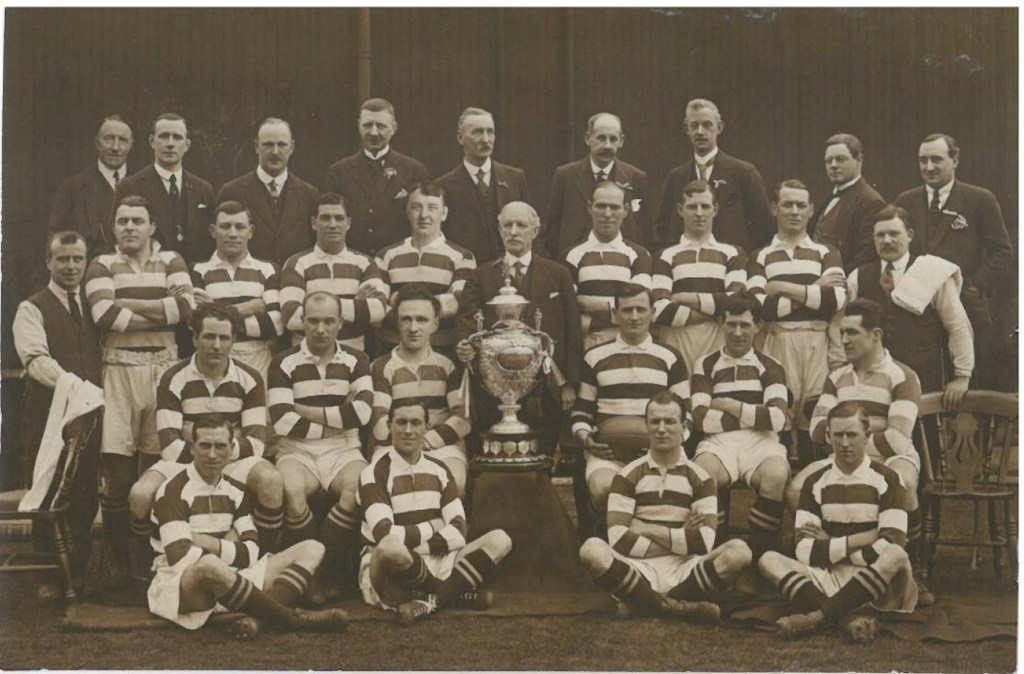
By the time the Hornets won their first (and to date, only) Challenge Cup in 1922, Sam was 34 and past his best.

Sam, standing right, c1920. The Hornets, and their mascots, are taking on Broughton Rangers. Courtesy Rochdale Hornets Heritage Archive

However, he was still part of the squad, and played two of the five games of Rochdale’s campaign. This included a 54-2 mauling of Broughton Moor in the first round, and an eyewateringly tight 5-2 quarter-final win over Oldham. This last saw a record gate for a Hornets match – 26,50085.

But, for the crunch games, younger and faster men were preferred, such as Tommy Harris and the Cardiff-born Corsi brothers. Before the final versus Hull at Headingley, the Rochdale Times ran profiles of the Hornets’ squad. Sam was described as a versatile player, being

…the safest with his hands of any of the forwards. Has an old head on him which stands him in good stead.

April 26 1922, p7

‘Old head’ sounds worryingly close to ‘veteran’. Sam (like Tom) missed out on Hornets’ glorious – and narrow – 10-9 victory in front of 35,000 spectators86.

The Hornets with the Challenge Cup. Sam is standing middle row, second from left. To his left is the former Redruth player Tommy Harris. Courtesy Rochdale Hornets Heritage Archive
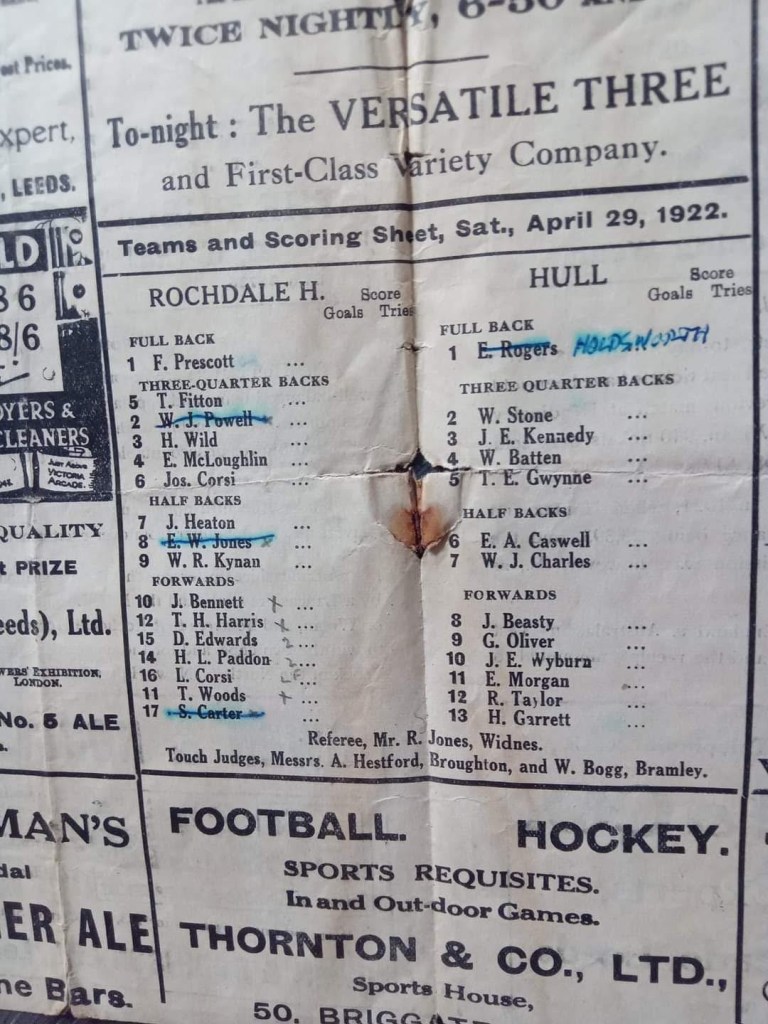
A precious match programme: Sam’s name has been crossed through as a non-starter. Courtesy Grant Bargh

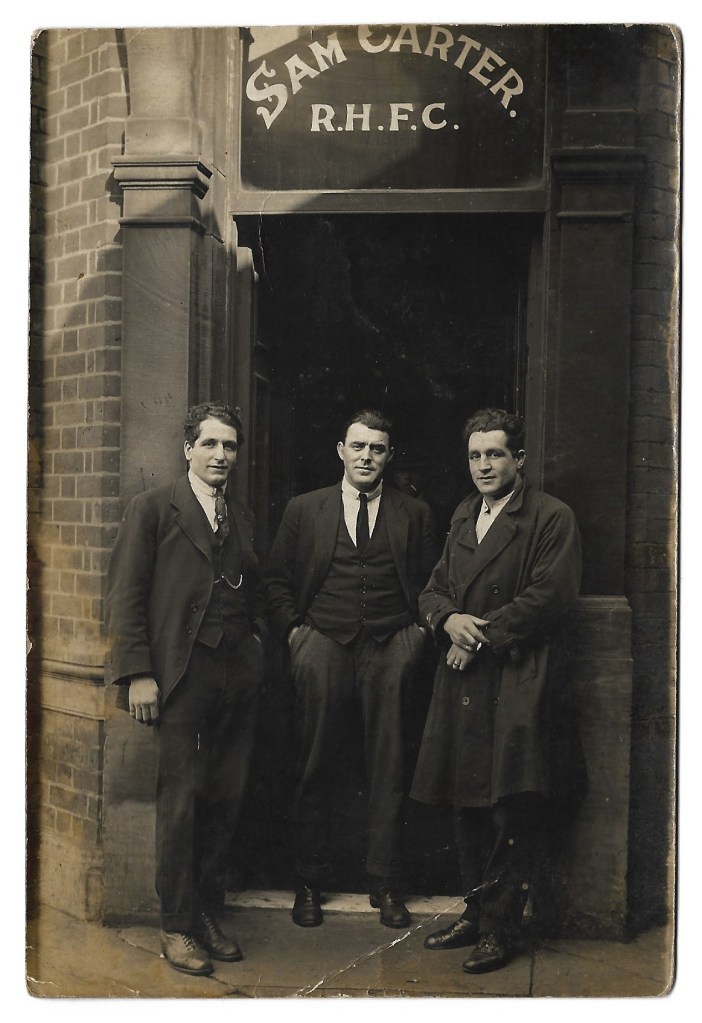
To be honest, by 1922 Sam was perhaps thinking about life beyond rugby; indeed, he only played 19 games that season87. The 1921 Census tells us he was already landlord of the (now long demolished) Golden Fleece on Oldham Road.

Sam at the entrance to the Fleece. Flanking him are old team-mates Joe (left) and Louis Corsi. Advertisements for the Fleece were regularly included in match programmes, exhorting thirsty fans to “Come and see your old pal Sammy Carter”. Courtesy Rochdale Hornets Heritage Archive

Sam, as noted earlier, wasn’t lacking ambition. As he himself said,

…Rochdale had been good to him, and it was his desire to do something for the town of his adoption.

Rochdale Observer, October 26 1932, p4

Thus in 1932 he stood as the Conservative candidate for Rochdale’s Castleton East district. His qualifications were drawn from

…the school of experience, and he considered that that experience fitted him to represent a working class ward.

Rochdale Observer, October 26 1932, p4

He wanted improved hospital services, clean streets, better housing, public baths and unemployment schemes. He opposed the unpopular Means Test88 as a tool for men who

…made the misfortunes of the unemployed an excuse for reaping political advantage.

Rochdale Observer, October 29 1932, p6

He lost. Though an immensely popular man with his heart in the right place, politics was perhaps not his game, and Depression-era Rochdale, with 10,000 cotton operatives on strike, not the easiest place to embark on such a career89.

A Hornets player-profile noted that Sam was “a general favourite and no wonder”:

…he is a thorough gentleman…Another characteristic is his cheerfulness…

Courtesy Rochdale Hornets Heritage Archive

Sam’s character was put to the test. The 1939 Register notes that he and Bessie were both unemployed, and living in Buersil Avenue. Maybe the time had come for him to return to Cornwall. After all, as of one of an astounding thirty-two siblings, Sam would have plenty of support in the Westcountry90.

The Carters took up residence in Treswithian Road, Camborne – the house was named ‘Buersil’. Though out of work in Rochdale, they must have been comfortable. Sam’s estate on his death in 1967 was valued at £4794 (£73K today). Bessie followed him in 198091.

Did Sam ever visit his old Union club? Officially, as a one-time professional, he would have been barred and, knowing this, he probably stayed away. Certainly nobody I’ve spoken to from those times remembers him, though a younger brother, James, was a regular spectator.

An old man deserved better, especially one who, to the best of my knowledge, remains the only Camborne player to be capped for Cornwall and win the Rugby League Challenge Cup.

Courtesy Rochdale Hornets Heritage Archive

With special thanks to Jim Stringer of the Rochdale Hornets Heritage Archive, Professor Tony Collins, Adrian Wallace (a relative of Sam Carter), and Jean Charman and Reg Bennett (relatives of Tom Morrissey).

Many thanks for reading; follow this link for more top blogs on all things Cornwallhttps://blog.feedspot.com/cornwall_blogs/

Do you enjoy my work?

All content on my website is absolutely FREE. However managing and researching my blog is costly! Please donate a small sum to help me produce more fascinating tales from Cornwall’s past!

£5.00
£10.00
£15.00

Your contribution is greatly appreciated.

Donate

References

  1. See my posts on the rivalry here: https://the-cornish-historian.com/2023/09/02/camborneredruth-the-oldest-continual-rugby-fixture-in-the-world-part-one/
  2. The Cornish Post and Mining News (April 4 1912, p7) gives it to Redruth. The Cornish Echo (March 15, 1912, p6), plumps for Camborne. Certainly Redruth’s playing record that season was formidable: P30, W24, D3, L3, F518, A79 (Cornish Post and Mining News, April 18 1912, p7). Camborne believed they’d won it at a meeting in September (West Briton, September 12 1912, p5).
  3. The main narrative for this section, unless otherwise stated, is from reports in the following newspapers: Royal Cornwall Gazette, April 18 1912, p3; Cornish Post and Mining News, April 18 1912, p7; Western Daily Mercury, April 22 1912, p3; West Briton, April 22 1912, p3, April 29 1912, p4; Cornishman, May 2 1912, p3; Lake’s Falmouth Packet, May 3 1912, p6. The biographical details of Morrissey, Carter and Menhennett, unless otherwise stated, are from the 1911 Census.
  4. On signing for Rochdale Hornets, Morrissey’s and Carter’s vital stats were recorded. For the record, Carter was 5ft 9″ and 12st 7lbs. Rochdale Times, September 4 1912, p7. The team photograph that heads this section illustrates how big, for the time, Morrissey was.
  5. Noted in the Cornishman, March 29 1912, p3.
  6. From the Cornubian and Redruth Times, November 16 1911, p10, and the Rochdale Times, September 4 1912, p7. Carter’s working overseas is mentioned in Lake’s Falmouth Packet, September 6 1912, p2. Jim Stringer of the Rochdale Hornets Heritage Committee informs me that Sam worked in Bute City and Idaho, and that his earliest playing position in Union was fullback.
  7. The three men’s involvement with Cornwall is noted in the Western Times, November 16 1910, p3, and the Western Echo, October 22 1910, p4.
  8. Lawry’s Penzance connections are noted in the Western Echo, November 30 1907, p3. For a list of past and present officials of the CRFU, see: https://www.crfu.co.uk/home/officers-patrons/
  9. As previously, the main narrative for this section, unless otherwise stated, is from reports in the following newspapers: Royal Cornwall Gazette, April 18 1912, p3; Cornish Post and Mining News, April 18 1912, p7; Western Daily Mercury, April 22 1912, p3; West Briton, April 22 1912, p3, April 29 1912, p4; Cornishman, May 2 1912, p3; Lake’s Falmouth Packet, May 3 1912, p6.
  10. For a list of past and present officials of the CRFU, see: https://www.crfu.co.uk/home/officers-patrons/
  11. For Vercoe’s connections to Camborne, see: Western Echo, July 5 1913, p3.
  12. Cornishman, May 2 1912, p3.
  13. For the riots, see: Louise Miskell, “Irish Immigrants in Cornwall: the Camborne Experience, 1861-1882”, in Roger Swift and Sheridan Gilley (eds.), The Irish in Victorian Britain: the Local Dimension, Four Courts Press, 1999, p31-51. Morrissey’s family maintain he retaliated swiftly to any expressions of prejudice as regards his Irishness. Certainly he was arrested and fined for fighting on more than one occasion. See: Cornishman, December 31 1908, p5.
  14. Noted in the Cornish Post and Mining News, July 4 1912, p5.
  15. Regarding the suspension of both men, the CRFU and the RFU were complicit. Camborne RFC appealed to the RFU, but the original ruling was upheld. See the West Briton, May 23 1912, p7.
  16. Morrissey had married Rita Tonkin in Camborne earlier that summer. England & Wales, Civil Registration Marriage Index, 1837-1915, 5c, 314. Their arrival was noted in the Rochdale Times, September 4 1912, p7.
  17. See: https://cornwallrlfc.co.uk/news/graham-paul-the-cornish-express/, and https://hullkr.co.uk/graham-paul-calls-it-a-day/
  18. For example, The First Hundred Years: The Story of Rugby Football in Cornwall, by Tom Salmon, CRFU, 1983, or Rugby in the Duchy: An Official History of the Game in Cornwall, by Kenneth Pelmear, CRFU, 1959, and The Story of a Proud Club: Camborne RFC Centenary Programme 1878-1978, by Philip Rule and Alan Thomas, 1977.
  19. Those wanting to know why there are two different forms of Rugby Football are directed to the following books by Tony Collins: Rugby’s Great Split: Class, Culture and the Origins of Rugby League Football, Frank Cass, 1998, and A Social History of English Rugby Union, Routledge, 2009, p29-47.
  20. For a brief overview of Hill’s career, see: https://en.wikipedia.org/wiki/George_Rowland_Hill
  21. As observed in Lake’s Falmouth Packet, September 14 1895, p3.
  22. See Tony Collins, Rugby’s Great Split, p196-230. The only aspect missing from the modern game of Rugby League was limiting the number of tackles a team in possession of the ball could have. Four tackles was introduced in 1966, and six in 1971. See: https://en.wikipedia.org/wiki/Laws_of_rugby_league
  23. From: https://orl-heritagetrust.org.uk/player/harry-glanville/, and the Western Morning News, January 28 1950, p8.
  24. Harry Edgar, “The Best From the West”, Rugby League Journal, Spring 2005, p22-3. Courtesy Tony Collins.
  25. Devon won the title in 1901, 1906, 1911 and 1912; Gloucestershire won in 1910 and 1913; and Cornwall, of course, won in 1908. See: https://en.wikipedia.org/wiki/County_Championship_(rugby_union)
  26. Tony Collins, Rugby’s Great Split, p29-66.
  27. For more on the tribute mining system, see John Rule, Cornish Cases: Essays in Eighteenth and Nineteenth Century Social History, Clio, 2006, p98-115. For the story of Cornish migration, see Philip Payton, The Cornish Overseas: The Epic Story of the ‘Great Migration’, Cornwall Editions, 2005.
  28. Information from the 1911 census.
  29. West Briton, August 17 1911, p6; Cornishman, August 17 1911, p7; Manchester Evening News, December 20 1980, p4 and August 8 1992, p9; Salford City Reporter, 28 April 1994, p87. Injury truncated Launce’s playing career for Salford, though he was still a ticket inspector at the ground until the 1950s: Green Final (Oldham Evening Chronicle Sports Edition), March 8 1958: https://orl-heritagetrust.org.uk/app/uploads/2019/12/greenfinal_1958-03-08.pdf, and https://www.manchestereveningnews.co.uk/sport/rugby-league/the-willows-salford-reds-field-of-dreams-853738
  30. From: https://www.thereddevils.net/the-club/the-story-so-far/, and https://en.wikipedia.org/wiki/List_of_Salford_Red_Devils_players
  31. Royal Cornwall Gazette, August 30 1900, p3.
  32. West Briton, December 2 1920, p4.
  33. See: Manchester Evening News, December 1 1920, p3, Cornubian and Redruth Times, October 30 1924, p6, and https://en.wikipedia.org/wiki/Thomas_Harris_(rugby)
  34. Cornish Telegraph, December 19 1900, p5.
  35. West Briton, December 2 1920, p4.
  36. West Briton, June 12 1947, p2.
  37. Working-class communities in Wales, by contrast, tended to shun anyone who left to play Rugby League, as the 2018 BBC documentary The Rugby Codebreakers makes clear. Players who switched allegiances between Camborne and Redruth RFC have found themselves ostracised by their original clubs and followers. In fact, the treatment of such men is not dissimilar to that of how the RFU dealt with defectors to the NU. See: https://the-cornish-historian.com/2023/09/09/camborneredruth-the-oldest-continual-rugby-fixture-in-the-world-part-two/
  38. See: https://en.wikipedia.org/wiki/Francis_Gregory_(sportsman)
  39. Western Daily Press, January 7 1899, p6.
  40. Lake’s Falmouth Packet, May 10 1907, p6.
  41. See: West Briton, June 1 1908, p2, and Western Echo, January 16 1909, p3.
  42. See: James W. Martens, “They Stooped to Conquer: Rugby Union Football, 1895-1914”, in Journal of Sport History 20:1 (1993), p25-41, and Lake’s Falmouth Packet, February 5 1909, p7.
  43. Coventry Herald, October 1 1909, p5, and Lake’s Falmouth Packet, November 26 1909, p2.
  44. See: https://en.wikipedia.org/wiki/Edward_Jackett, and https://en.wikipedia.org/wiki/James_Davey_(rugby_union). Images from: https://www.trelawnysarmy.org/ta/Pictures/cornwall-team-1908.html. John Jackett’s extraordinary career may be enjoyed here: https://the-cornish-historian.com/2024/06/29/in-search-of-john-jackett-king-of-cornish-sport-part-one/
  45. Image from: Graham Williams, “How the West Was (Almost) Won!”, in Open Rugby, 51 (1983), p29. Courtesy Tony Collins.
  46. George Orwell, “The Road to Wigan Pier” in Orwell’s England, ed. Peter Davison, Penguin, 2001, p57-61. The information on Searle is from the 1911 census, and the England and Wales National Probate Calendar 1858-1995, 1928, p239.
  47. Image from: https://www.mediastorehouse.co.uk/mary-evans-prints-online/new-images-august-2021/comic-postcard-marriage-proposal-commercial-23455214.html
  48. Unless otherwise stated, the main source of the narrative for this section is: Graham Williams, “How The West Was (Almost) Won!”, Open Rugby 51 & 52, Mar-Apr, 1983, courtesy Tony Collins. I give Searle much more prominence than Williams’ articles. The Western League is also briefly mentioned in: James W. Martens, “They Stooped to Conquer: Rugby Union Football, 1895-1914”, in Journal of Sport History 20:1 (1993), p25-41.
  49. As noted in the Portsmouth Evening News, September 7 1912, p2.
  50. Images from: https://www.greensonscreen.co.uk/argylehistory.asp?era=1902-1903_2, and https://www.plymouth.gov.uk/astor-park. See also Western Morning News, July 24 1914, p5.
  51. Williams, “How the West Was (Almost) Won!”, and the Western Times, May 13 1912, p3.
  52. Yorkshire Evening Post, July 26 1912, p3; West Briton, August 1 1912, p3. That Searle was on the committee of the Plymouth NU team is noted in the North Devon Journal, December 5 1912, p3.
  53. See: https://www.rugby-league.com/article/23654/joseph-platt-added-to-the-rfl-roll-of-honour
  54. Gloucestershire Chronicle, August 17 1912, p9.
  55. Western Daily Mercury, August 1 1912, p3; West Briton, February 6 1913, p3.
  56. Western Daily Mercury, August 1 1912, p3 and August 10 1912, p3; quote from the West Briton, August 1 1912, p3.
  57. Western Echo, August 3 1912, p3. Redruth RFC’s historian Nick Serpell informs me that, on the very same day, Redruth held their AGM. It was stated that they had a received a letter regarding the Western League, but would have nothing to do with the matter.
  58. From: Lake’s Falmouth Packet, September 6 1912, p2.
  59. From: West Briton, September 2, p3; September 12, p5; September 26, p8. Kresen Kernow, Minutes and Team Selections, Camborne Rugby Club, 1912-1915. Ref: X1280/1/2.
  60. Image from: https://www.closedpubs.co.uk/devon/newtonabbot_globe.html
  61. See: https://en.wikipedia.org/wiki/Thomas_Kelly_(rugby_union)
  62. From: Western Daily Mercury, September 23 1912, p3.
  63. Image from: http://www.exetermemories.co.uk/em/_pubs/rougemont.php
  64. Western Times, October 19 1912, p3.
  65. See: Western Times, October 19 1912, p3; Exeter and Plymouth Gazette, October 21 1912, p4, and December 12, p4; Western Times, December 3 1912, p6; West Briton, December 5 1912, p7; North Devon Journal, December 5 1912, p3.
  66. Cornishman, June 3 1913, p4.
  67. Graham Williams, “How The West Was (Almost) Won!”, in Open Rugby #52, April 1983, p36. Courtesy Tony Collins.Devon and Exmouth Gazette, January 13 1913, p4.
  68. Sporting Life, December 19 1912, p1.
  69. Teignmouth Post, April 3 1913, p4.
  70. From: Graham Williams, “How The West Was (Almost) Won!”, in Open Rugby #52, April 1983, p36. Courtesy Tony Collins.
  71. Quote from the Western Times, June 2 1913, 3. See also: Western Guardian, February 13 1913, p7 and April 17, p3; Wigan Observer, March 4 1913, p3. For a sample of the few matches that were played, see: Western Times, January 20, 27 and February 3 and 10, all page 3; Teignmouth Post, April 3 1913, p4.
  72. West Briton, June 12 1947, p2. The report noted that the teams wowed the crowd with their deft handling skills, but felt a proper Cornish rugby fan yearned for a good hard scrummage.
  73. Graham Williams makes the assertion in “How The West Was (Almost) Won!”, in Open Rugby #52, April 1983, p36. Courtesy Tony Collins. The CRFU’s stance is noted in Lake’s Falmouth Packet, December 27 1912, p6. Rochdale Hornets played both men in an “A” match in October 1912 whilst the NU was still investigating the circumstances of their Union suspensions. Adopting a holier-than-thou attitude, the NU fined the Hornets £2 (£189 today) for playing men under suspension by another body, and then forgot all about it. From: Rochdale Times, October 9 1912, p5.
  74. Hull Daily Mail, September 3 1912, p8.
  75. See: Rochdale Times, December 25 1912, p5. Tom’s ‘A’ appearances are noted, for example, in the Wigan Observer, November 5 1912, p3; and the Leigh Chronicle, November 22 1912, p7.
  76. In early 1914, whilst Sam was having a star game for the Chiefs, Tom was still plugging away in the second-string outfit. Rochdale Times, January 4 1914, p6.
  77. Rochdale Observer, February 11 1914, p5 & 6.
  78. Rochdale Observer, February 18 1914, p6; Yorkshire Post, February 16 1914, p4.
  79. 1939 Register, 1921 Census.
  80. England and Wales, Civil Registration Death Index 1916-2007, Vol. 10d, p81.
  81. As observed in the Cornubian and Redruth Times, November 16 1911, p10.
  82. Rochdale Times, October 20 1915, p4.
  83. Sam’s tally of matches for the season is noted in the Rochdale Times, April 15 1914, p7.
  84. See Tony Collins’ essay on Northern Union rugby during World War One here: https://tony-collins.squarespace.com/rugbyreloaded/2014/8/5/rugby-league-in-world-war-one
  85. From the Rochdale Times, March 1 1922, p6, and March 29, p5 & 6.
  86. The Hornets beat Leeds in the second round, and Widnes in the semis. See the Rochdale Times, March 15, p6, April 12, p6, and May 3, p6.
  87. Sam’s total appearances are noted in the Rochdale Times, May 3 1922, p6.
  88. The Means Test was introduced in 1931 as a means to cut expenditure on dole money. Households were assessed on their ability to support an unemployed member of the family. Many found their benefits reduced on account of their being a child in part-time employment, or a grandparent living in the house rent-free, and caused much social unrest. See: https://www.bbc.co.uk/bitesize/guides/z86vxfr/revision/2
  89. The Labour candidate observed that, while there may not be a better sportsman that Carter, there were certainly better politicians. See: Rochdale Observer, October 29 1932, p6, and November 2, p5. The strike of the cotton operatives is mentioned on page four of the latter edition of the Observer.
  90. Sam’s 1911 census entry makes mention of this remarkable feat in a note, and is confirmed by Adrian Wallace, a relative of Sam.
  91. England & Wales, National Probate Calendar, 1858-1995, 1968, p73, and 1980, p441.

The Grampound Potwallopers: Corruption in Georgian Cornwall

Reading time: 20 minutes

(Also available at Cornish Story Online.)

I do swear, that I have not received or had by myself, or any person whatsoever, in trust for me, or for my use or benefit, directly or indirectly, any sum or sums of money, office, place, or employment, gift, or reward, or any promise or security, for any money, office, employment, or gift, in order to give my vote at this election; and that I have not been before polled at this election. So help me God.

~ The Bribery Oath. The 1729 Bribery Act was introduced to address corruption in elections1

Everybody comes out ahead.

~ Joseph Heller, Catch-22, 1962, p248

Issues and Personalities

Ancient Seal of the Borough of Grampound2

The 1818 General Election saw many electoral campaigns champion the burning issues of the day, such as parliamentary reform and Catholic emancipation. Future giants of Victorian politics won seats in the Commons, such as the Whig Lord John Russell, and Tory Robert Peel3.

No such grandiose policies or political heavyweights were on display in Grampound, however. But that in no way meant its hustings were tamely played out. Quite the contrary.

The 1818 election in Grampound uncovered a scandal so immense the village was stripped of privileges it had enjoyed (and exploited) since Tudor times. The antics of the characters involved in this scandal set the wheels in motion for the Great Reform Act of 1832, itself the bedrock of modern parliamentary democracy4.

Pot-wallop

In 1818 Grampound’s population was similar to what it is today, around 6-700, and great were the levels of unemployment and distress in the village5. Poor in Georgian times it may have been, but Grampound had once been an important town in medieval Cornwall. During the reign of the Boy King, Edward VI (1547-1553), Grampound was made a Borough constituency, commanding two seats in Parliament6.

By the 1800s, however, and probably long before, Grampound’s star had fallen significantly, and it was judged by many reformers to be a ‘Rotten Borough’. These were settlements with a poor, tiny electorate that nevertheless returned Members to Parliament, and were obvious targets for exploitation and bribery.

Those readers who recall the episode of Blackadder The Third will be aware that a Rotten Borough was a

…tuppenny-ha’penny place…Half an acre of sodden Marshland…Population: three rather mangy cows, a dachsund named Colin, and a small hen, in its late forties…

Rowan Atkinson as Edmund Blackadder, Dish and Dishonesty, BBC, 1987

Comic maybe, but the description is actually not far from the truth. The most notorious Rotten Borough was Old Sarum, in Wiltshire. In the 1800s it still returned two MPs, even though nobody actually lived there7.

Hot on Old Sarum’s heels in the notoriety stakes was Grampound. Of its population of 700 in 1818, only sixty men (and only men) were allowed to vote, and they were judged the lowest on the franchise rung. When an interested party made enquiries as to the number and calibre of Grampound’s electorate, the answer was

Pot-wallop…

Royal Cornwall Gazette, July 24 1819, p4

A Potwalloper was the pejorative term for the male head of any household with a hearth large enough to boil a cauldron. This qualified him to vote8. Potwallopers, the lowliest form of voter, were known to be targets for bribery in pre-reform Britain:

The more enlarged the suffrage, the more unassailable is the constituency by corruption and bribery; while the narrower, the more is it open to that influence.

Leeds Times, editorial on Potwallopers, March 16 1839, p4

The smaller the electorate, the easier to control by money. But, as the illustration below makes clear, the Potwallopers were all too aware of their worth in the election market:

A Potwalloper, by Robert Seymour, Times, July 12 1830. The gentleman on the left exhorts him to use his vote for the common good; on the right he is offered ‘something for his pot’ in return for his loyalty. The Potwalloper slyly rubs his hands with glee.

Indeed, considering Grampound, it has been noted that the

voters…far from being controlled by the patron, could themselves control him. They supported him only while he satisfied their financial requirements…

R. C. Jasper, “Edward Eliot and the Acquisition of Grampound”, English Historical Review, 58:2 (1943), p475

As we shall see, the 1818 election at Grampound was not to be decided by the most forceful personality or the most crucial issues; what would swing the day boiled down to who had the most capacious wallet.

The Boroughmongers

Tomb of Sir Christopher Hawkins (1758-1829) at Probus Church9
Sir Manasseh Masseh Lopes (1755-1831), c182510

In Georgian times, Boroughmongers were well-heeled gentlemen of dubious morals, who looked to exert their power and influence through the buying and selling of Rotten Boroughs. Often MPs themselves, they set up ‘patrons’ (front men) in other constituencies by purchasing enough votes for them to ensure a majority.

Two of the worst, especially in Cornwall, were Sir Christopher Hawkins and Sir Manasseh Masseh Lopes. They were certainly recalled as men who

…corrupted constituencies.

Cornishman, May 5 1889, p6

Though today Hawkins’ seat at Trewithen is a popular attraction, and he was an early investor in steam-power, in his lifetime he was infamous. As miserly as he was immoral, he wielded much power in Cornwall. In the 1806 Election, MPs at Grampound, Helston, St Ives, Mitchell and Penryn were all in his pocket.

His main Cornish competitor in these years was Sir Francis Basset, 1st Baron de Dunstanville, against whom Hawkins publicly issued a vendetta. The two men fought a duel in London in 1810, each getting two rounds off at the other before sanity prevailed11.

Lopes had been born a Jew in Jamaica, inheriting a family fortune made from sugar and slavery. He emigrated to England, converted to Christianity (at the time, Jews were barred from Parliament), and bought a pile in Devon – Maristow House12.

From here, he greased his way into power, becoming High Sheriff of Devon in 1810. By 1818, he was an MP, and had already bought (and sold, at a profit) several Rotten Boroughs. But it seems that those at the very top never forgot his Judaism, or that he was a nabob.

The Nabob Rumbled, by James Gillray, 1783. A nabob was a man who had made his fortune overseas, often by dubious means. Here the nabob spews sovereigns into the hat of a government minister to avoid arrest. Copyright National Portrait Gallery

The two Boroughmongers lined up over Grampound in 1818.

The Teeding13

John Bull pulling down the Tree of Corruption, by James Gillray, 1796. Copyright The British Museum

The General Election of 1812 returned the following MPs for Grampound: John Teed (1770-1837), a merchant banker from Plymouth, and Andrew Cochrane-Johnstone (1767-1833), a Scottish soldier14.

By 1818, Johnstone had already parted company with Grampound, being replaced by Ebenezer John Collett (1755-1833), from Hemel Hempstead15. Johnstone had been convicted of fraud in 1814, and whilst in the army had indulged in smuggling, embezzlement, and using his troops as personal servants.

Walter Pomeroy, of St Austell and Johnstone’s election agent, told of how Johnstone in 1807 had donated £200 (over £15K today) to the Grampound Potwallopers, for distribution “among the needy”, and had secured promotion in the Navy for another man of the village16.

John Edwards, a local solicitor who would canvas for John Teed in 1818, said that Johnstone controlled the Grampound electorate by

…creating Terror…

Lopes Indictments, p18

He would threaten to get the borough disenfranchised (thus robbing the voters of a valuable source of income) unless he was made an MP17.

With the by-election of Collett in 1814, Grampound was now firmly in the clutches of Sir Christopher Hawkins: both MPs, Collett and Teed, were his men18.

Ebenezer Collett, print by William Holl, 1823. Copyright The British Museum

But the Grampound Potwallopers felt they weren’t getting enough from their MPs. Enough cash, that is. Of Collett it was said that

…he has treated us ill, and we are determined to oppose him.

Royal Cornwall Gazette, July 24 1819, p4

While of Teed it was observed that

…we do not think he has money enough to stand the election.

Royal Cornwall Gazette, July 24 1819, p4

(Which is ironic, when you consider that the term ‘Teeded’ was local parlance in Grampound for taking a bribe19.)

To this end, in 1815 William Hoare (or Hore), then Mayor of Grampound, travelled to London to find a new source of income. Traditionally in Grampound, the Mayor had a privilege in these matters “beyond the others”, and received £40/annum (just under £15K today),

…for his Kitchen…

Lopes Indictments, p16

Hoare visited the Town residence of Masseh Lopes, because he and his fellow electorate wanted

…to be Teeded again…

Lopes Indictments, p53

Through the good offices of Lopes’ secretary, George Hunt, 40 men of Grampound’s total electorate of 62 were guaranteed £35 (£2,500 today) each, for voting the way Lopes’ conscience told them. Others received greater sums; Hoare himself received a whopping £306 (£22K). After all, he was Mayor, and had his “Kitchen” to think of20.

In all, Lopes sunk over £2,000 of his gelt into the pockets of the Grampound Potwallopers. That’s around £145K today.

Hunt instructed Hoare to note the money in his accounts as to be

…applied for Public Purposes…

Lopes Indictments, p27

All above board, you see.

Hunt’s error was to give Hoare a list of moneys paid, and to whom. Here it is:

Lopes Indictments, p30

Hoare’s error was to let this list fall into the hands of John Teed – the very MP he and his fellow Potwallopers wanted out21.

Lopes’ error was to only bribe enough men to ensure a majority; in any case, he never

…lent any money to a distressed person who had not a vote.

Royal Cornwall Gazette, March 27 1819, p4

You have to remember that all

…the Electors of Grampound consider the Sale of their Vote…the great Privilege they possess…

Lopes Indictments, p27

In 1817, Teed himself confronted Lopes with the list of names procured from Hoare, and threatened to blow his gaffe. Lopes, expressing surprise at the list’s accuracy, struck a deal with Teed – and, by extension, with Sir Christopher Hawkins22.

Joseph Childs, an attorney from Liskeard and in the pay of Lopes, would recall that his Master and Hawkins intended to

…unite their interest together…

Lopes Indictments, p62

Simply, each would control an MP for Grampound. Hawkins – Teed; Lopes would pick from two Scottish businessmen who resided on Broad Street, London: John Innes (1767-1838), or Alexander Robertson (1779-1856)23.

Two gentlemen would get an easy ride to Parliament. The Boroughmongers got an MP each. The Potwallopers (most of them) got paid.

Everybody comes out ahead…

The Hustings

Grampound’s Town Hall, where elections were held. In 1818, the ground floor was open and the upstairs supported by four pillars24

Maybe Hawkins and Teed decided they couldn’t trust Lopes. Maybe Hawkins surmised he could resurrect his own reputation25, and Teed enhance his, by revealing the level of corruption in Grampound. Both men, and possibly Lopes too, were also aware that the Grampound Potwallopers were not to be trusted either.

Shortly before the 1818 Election, Phillip Luke, Isaac Watts, Samuel Croggan (three voters bought by Lopes), along with John Cooke (who received no bribe) and Nicholas Middlecote of Tregony travelled to London, in search of another Boroughmonger. (Teed’s men rumbled them.) Collett, Teed and therefore Hawkins hadn’t the necessary readies, and nor, in their opinion, did Lopes. His offer of £35 a man wasn’t enough, and in any case not every Potwalloper had been given something for his pot26.

Indeed, it was later observed that

…the rule of Grampound, if there is a rule, is to get as much as they can…

Lopes Indictments, p14

To the Hustings.

Canvassing for Votes, by William Hogarth (1697-1764)

As the above image suggests, a Georgian election was often a raucous affair. Secret ballots, part of the Chartist campaign of the 1830s, were unheard-of in 1818 and would not become law in the UK until 187227. Previous to this, the voter ‘voted’ by simply standing beside, or proclaiming, his candidate of choice.

The Grampound Election of June 1818 would prove raucous also.

To much “Hissing”28, John Teed demanded the Bribery Oath be taken by one of the voters, Thomas Devonshire. John Edwards, the attorney from Truro, was in the Town Hall and said that Devonshire

…appeared very much agitated…very pale and trembled…the Book [Bible] appeared as if falling from his Hand…[that]…appeared lifeless…

Second Reading, p34

Devonshire had been bought by Lopes for £35 (see the list above); he couldn’t – or wouldn’t – take the Oath without perjuring himself. Furthermore, Edwards had warned him earlier that day that Teed was on the warpath29.

(In fact, it was commonly known that Teed was preparing indictments; the Grampound Potwallopers were facing jail sentences. In desperation, before Election Day some actually returned their ‘loans’ to Lopes’ secretary, William Hunt. Hunt, naturally, charged 5% on any monies received30.)

In the hubbub and confusion, another voter, Robert Forde (or Ford) declined to vote and beat a hasty retreat. Clearly, he hadn’t repaid Hunt his £3531.

Teed, however, couldn’t sustain his demanding of the Oath without having it demanded of him in turn, and perjuring himself also. The Potwallopers knew this32, and further threatened his agent, Alexander Lambe, with a “pelting” if he persisted33. Teed himself was told that

…there would be Murder…

Second Reading, p24

if he did not withdraw. Teed, however, had one more ace to play.

And this ace, if he can be described as such, was William Allen, a wool merchant from Truro, who had unexpectedly announced himself as a candidate. Although one of Lopes’ £35 men, he’d been put up (doubtless for a consideration) by John Edwards, Sir Christopher Hawkins and Teed to demand the Bribery Oath. The more Teed could muddy the waters and sow doubt in the Potwallopers’ minds, the more chance Teed had of winning34.

In keeping with the shambolic nature of the Election, Allen was blind drunk35.

Allen managed to keep himself together for long enough to demand the Oath, but he didn’t get much further. An incensed local innkeeper, John Brown, dragged Allen out of the Hall, into the street, and beat him black and blue36. Brown, of course, was down on Hunt’s list for £140.

In fact, very few people in Grampound could, with purity of conscience, demand the Bribery Oath. Even the-then Mayor, David Vercoe (or Varcoe), a tailor, was told that

…you know yourself you are as bad as any of us…

Lopes Indictments, p11

The list tells us that Vercoe had received £50 from Lopes.

Vercoe did have enough clout to get the Election postponed for a day and, for better or worse, two MPs were finally returned. John Innes and Alexander Robertson carried the day, each receiving 36 votes apiece. Teed received eleven, and only one man voted for William Allen37.

Robertson was nowhere near Grampound at the time, but did have the good grace to write a letter of thanks to the Potwallopers38.

If far from being a victory for democratic procedure, it was nevertheless a victory for Masseh Lopes.

A pyrrhic one.

Disenfranchised

How to Get Made an MP, by W. Heath, 1830

Teed’s solicitors’ bills for the indictments he had prepared against the Potwallopers were offered to be paid – by the Potwallopers themselves. The “Sitting Members” (ie Innes and Robertson) were prepared to slip him £5K (over £350K today), if he dropped the charges. For once, Teed was not for sale39.

At the Devon Assizes in March 1819, Teed’s own motivations for highlighting the corruption at Grampound were questioned. Was he really

…the unspotted champion of Parliamentary purity?

Royal Cornwall Gazette, March 27 1819, p4

Probably not, but then nor was Masseh Lopes. As the “scapegoat Jew”40 of

…an evil and corrupt Mind and Disposition…

Bribery and Corruption, p9

…he received a £16,000 fine and a prison sentence of two years, later commuted to one41. He was also the butt of much caricature and satire:

In this detail, Lopes is a scrawny dealer of second-hand goods42
In this etching of 1829, Lopes is the figure drowning in the mire of impurity, bribery and corruption. Copyright The British Museum

Twenty-four of the Grampound Potwallopers were sent to Bodmin Gaol, for sentences of between three and six months43.

The case came to the attention of Lord John Russell (1792-1878), at the time a young MP but a future Prime Minister and one of the key architects of the 1832 Reform Act.

Russell as a young man, by Thomas Carrick and Samuel Bellin

The Grampound election scandal was just the kind of issue a young reforming MP on the rise was looking for, and he shortly moved to have the borough disenfranchised44.

The reports of the House of Lords’ investigation into the goings-on at Grampound made clear that corruption, bribery and exploitation had been a feature of elections for years.

For example, the Liskeard attorney Joseph Childs was made to produce an account sheet from 1808:

Lopes Indictments, p60. ‘The men’ receiving £1000 were the voters themselves

Despite a petition to the Commons from the Potwallopers “praying” that Grampound would not be disenfranchised, the borough’s “glory”, stated Lord Russell,

…was gone for ever.

Royal Cornwall Gazette, May 27 1820, p2

Innes and Robertson were the last MPs ever returned for Grampound; its seats were transferred to Yorkshire45.

The Potwallopers were as much a product of a corrupt system as victims of it; greed was their downfall. Likewise Masseh Lopes, though one cannot ignore the antisemitism prevalent in the way his fall was engineered, and mocked.

The Great Reform Act of 1832 disenfranchised 56 Rotten Boroughs, but Grampound, back in 1821, had been the first46.

Many thanks for reading; follow this link for more top blogs on all things Cornwallhttps://blog.feedspot.com/cornwall_blogs/

Do you enjoy my work?

All content on my website is absolutely FREE. However managing and researching my blog is costly! Please donate a small sum to help me produce more fascinating tales from Cornwall’s past!

£5.00
£10.00
£15.00

Your contribution is greatly appreciated.

Donate

References

  1. Quoted from: https://ecppec.ncl.ac.uk/features/bribery/
  2. For more information, see: https://www.johnhampden.org/the-society/society-activities/the-grampound-plaques/
  3. See: https://www.historyofparliamentonline.org/volume/1790-1820/parliament/1818, https://en.wikipedia.org/wiki/John_Russell,_1st_Earl_Russell, https://en.wikipedia.org/wiki/Robert_Peel
  4. For more on the Reform Act, see: Victorious Century: The United Kingdom, 1800-1906, by David Cannadine, Penguin, 2018, p154-66.
  5. Royal Cornwall Gazette, March 27 1819, p3; https://en.wikipedia.org/wiki/Grampound
  6. See: https://en.wikipedia.org/wiki/Grampound_(UK_Parliament_constituency)
  7. See: https://www.historyofparliamentonline.org/schools/content/constituency/ks3-political-reform-constituencies-old-sarum
  8. As defined here: https://www.merriam-webster.com/dictionary/potwalloper#:~:text=pot%C2%B7%E2%80%8Bwal%C2%B7%E2%80%8Blop,pot%20at%20his%20own%20fireplace
  9. For more on Hawkins, see: https://www.historyofparliamentonline.org/volume/1790-1820/member/hawkins-christopher-1758-1829, https://www.cornwallheritage.com/ertach-kernow-blogs/ertach-kernow-sir-christopher-hawkins-boroughmonger/, https://trewithengardens.co.uk/trewithen-gardens/visiting-the-gardens/trewithen-exhibition/
  10. For more on Lopes, see: https://en.wikipedia.org/wiki/Manasseh_Masseh_Lopes, https://www.historyofparliamentonline.org/volume/1820-1832/member/masseh-lopes-sir-manasseh-1755-1831
  11. For more on Basset, see Elizabeth Dale’s article here: https://cornishbirdblog.com/the-death-of-sir-francis-basset-the-dunstanville-memorial-carn-brea/. The duel is mentioned in the Royal Cornwall Gazette, April 7 1810, p3; and the Morning Advertiser, April 3 1810, p2.
  12. For more on Maristow House, see: https://jch.history.ox.ac.uk/article/maristow-house-land-power-and-citizenship
  13. Unless otherwise stated, the main source from this point forward in my narrative is the House of Lords Sessional Papers, 1801-1833, Vol. 127, 1821. These papers include the following three sets of documents: i) Minutes of Evidence Taken Upon the Second Reading of the Bill Entitled An Act to Exclude the Borough of Grampound, hereafter Second Reading; ii) Minutes of Evidence Taken in a Committee of the Whole House on Indictments Against Sir Manasseh Masseh Lopes, Baronet, and Others, for Bribery at the Last Election for Grampound, hereafter Lopes Indictments; iii) Extracts of Material Parts of Indictments Whereon Sir Manasseh Masseh Lopes, and Others Were Found Guilty of Bribery and Corruption, hereafter Bribery and Corruption. These Sessional Papers can be found on Google Books.
  14. For their biographies, see: https://www.historyofparliamentonline.org/volume/1790-1820/member/teed-john-1770, and https://en.wikipedia.org/wiki/Andrew_Cochrane-Johnstone
  15. For more on Collett, see: https://www.historyofparliamentonline.org/volume/1790-1820/member/collett-ebenezer-john-1755-1833
  16. Lopes Indictments, p54-5.
  17. Lopes Indictments, p17-18. That Edwards canvassed for Teed on behalf of Sir Christopher Hawkins is mentioned on p62.
  18. Hawkins’ attorney, Alexander Lambe, also worked for Teed: Lopes Indictments, p42. See Collett’s connections here: https://www.historyofparliamentonline.org/volume/1790-1820/member/collett-ebenezer-john-1755-1833
  19. Second Reading, p43.
  20. This reference to Hoare’s ‘kitchen’ is made in Lopes Indictments, p26; his visit to Lopes is covered in the Royal Cornwall Gazette, March 27 1819, p3.
  21. Lopes Indictments, p3.
  22. Royal Cornwall Gazette, March 27 1819, p4.
  23. For more on Innes and Robertson, see: https://www.historyofparliamentonline.org/volume/1820-1832/member/innes-john-1767-1838, and https://www.historyofparliamentonline.org/volume/1820-1832/member/robertson-alexander-1779-1856
  24. From: https://en.wikipedia.org/wiki/Grampound_Town_Hall
  25. See: https://www.historyofparliamentonline.org/volume/1790-1820/member/hawkins-christopher-1758-1829
  26. Royal Cornwall Gazette, July 24 1819, p4; Lopes Indictments, p22.
  27. From: Victorious Century: The United Kingdom, 1800-1906, by David Cannadine, Penguin, 2018, p181-3, 349-50.
  28. Second Reading, p24.
  29. Second Reading, p33.
  30. Second Reading, p17-18.
  31. Second Reading, p24-5.
  32. Lopes Indictments, p3.
  33. Lopes Indictments, p5.
  34. Lopes Indictments, p63.
  35. This is confirmed by several who were present. Second Reading, p39; Lopes Indictments, p5.
  36. Lopes Indictments, p28.
  37. The numbers are from: https://en.wikipedia.org/wiki/Grampound_(UK_Parliament_constituency), and obviously must be viewed sceptically.
  38. This brief missive is reproduced in the Royal Cornwall Gazette, July 4 1818, p3.
  39. Lopes Indictments, p31-7.
  40. From: https://www.historyofparliamentonline.org/volume/1790-1820/parliament/1818
  41. From: https://www.historyofparliamentonline.org/volume/1820-1832/member/masseh-lopes-sir-manasseh-1755-1831
  42. Detail from ‘Blown From Oxford’, 1829. Plate from: Alfred Rubens, “Anglo-Jewry in Caricature 1780—1850”, Transactions & Miscellanies (Jewish Historical Society of England), Vol. 23 (1969-1970), p96-101.
  43. They were: Thomas Devonshire, William Allen, Till Baker Johns, Francis Brown Jnr, James Coul, Phillip Luke, George Watts, William Courtis, George Hoyte, Edward Paynter, Richard Ham, James Brown, John Ham, Isaac Watts, Thomas Coade, Samuel Croggan, Thomas Courtis, William Teague, William Nancarrow, Edward Luke, Joseph Vercoe, John Brown, Francis Brown, and Robert Cooke. Bribery and Corruption, p16, 18, 19, 20.
  44. For more on Russell, see: https://en.wikipedia.org/wiki/John_Russell,_1st_Earl_Russell, and https://www.historyofparliamentonline.org/volume/1820-1832/member/russell-lord-john-1792-1878
  45. See: https://hansard.parliament.uk/Lords/1821-05-21/debates/1abd9236-215d-451b-ad01-9840d7eea7a0/GrampoundDisfranchisementBill
  46. From: Victorious Century: The United Kingdom, 1800-1906, by David Cannadine, Penguin, 2018, p161-2.

Who Killed ‘Judas’ Penrose?

Reading time: 30 minutes

He was outspoken in his opinions and feared no man.

~ The Anaconda Standard, June 11 1891, p5

Human life was the cheapest thing in Butte.

~ Hell With the Lid Off: Butte, Montana, by Horace Smith, New Bay Books, 2021. Kindle edition, p178

From Gas Street to Montana

The only known image of William John Penrose, from the Butte Weekly Miner, June 11 1891, p1

One of Butte, Montana’s more controversial citizens – and there were many in his day – was born in Camborne in 1855. In 1861, young William John Penrose was living with his family in Gas Street1.

His father was a miner and a “religious enthusiast”, and Penrose may have inherited his flair for the dramatic and sense of self-promotion. Hundreds of people once flocked to witness Penrose Senior’s spiritual trance that was alleged to have lasted over a week2.

Trelowarren Street, Camborne. Taken c.1875, it’s a view that Penrose would have been familiar with. Gas Street is on your right past the Commercial Hotel. From Images of England: Camborne, by David Thomas, History Press, 2010, p9.

Although in 1871 the Penroses were still residing in Camborne, by the end of the decade they had emigrated to the United States. The US Census of 1880 finds W. J. Penrose in Braidwood, Illinois, and making a living as a coal miner.

Though we may question claims that he had been an itinerant preacher and a gun-packing lawman, he was certainly well-travelled. Before shaking the dust off his boots in Butte in around 1885, Penrose, acquiring a wife along the way, had also passed through Vermont, Pennsylvania, and Eureka and Virginia City in Nevada3.

During his adventures, he also developed a taste for hard liquor, strong tobacco, working-class activism, sport, politics, the night-life, fast women, and journalism (though not necessarily in that order).

All these, along with a caustic tongue, he brought to Butte.

Hell With the Lid Off

Butte in 19094

Butte (pronounced bewt, as in bewty), Montana. Even its name sounds tough, though perhaps not as intimidating as the nearby settlement of Anaconda. In 1874, Butte’s residents were a measly 61 scrabbling prospectors. By 1917, it had a population of a 100,000, and was a bona fide Wild West boomtown5.

With the accelerated industrialisation, population growth and attendant disparities of wealth, Butte bore many characteristics of your classic frontier settlement. We are blessed that a personal memoir exists, describing Butte in the 1890s. It’s called

Hell With the Lid Off

Never has a book had a better title, or there been a town with a more fitting description6. Not only was Butte

…the wickedest town in the United States, but with the added offense of boasting of that fact…

Horace Smith, Hell With the Lid Off: Butte, Montana, New Bay Books, 2021. Kindle edition, p78
Main Street, Butte, 18927

Butte had it all: saloons, spittoons, joyhouses, opium dens, card-sharps, horse-thieves and pickpockets. There was corruption, brawls, vigilantes, lynchings and, of course, gunfights. So regular an occurrence were shootouts that

There was never anything approaching a panic at ordinary little encounters of this kind…

Horace Smith, Hell With the Lid Off: Butte, Montana, New Bay Books, 2021. Kindle edition, p35

Murder, therefore, was rather commonplace. Human life was reckoned

…the cheapest thing in Butte…

Horace Smith, Hell With the Lid Off: Butte, Montana, New Bay Books, 2021. Kindle edition, p178

So ornery were Butte’s residents that, when World Heavyweight Champion James J. Jeffries breezed through in 1903, a local hardman challenged the man they called ‘The Boilermaker’ to an unofficial four-round exhibition bout (prizefights being of course illegal). Jack Munroe, or ‘Shagnasty’ as he was known8, not only went the distance with the Champ, but was awarded the decision by the referee as well. It remained the only blot on the formidable Jeffries’ record until his defeat at the hands of Jack Johnson in 19109.

James J. Jeffries
Jack Munroe10

(Of course, in the fight that really mattered, a rematch for the actual World Title in 1905, Jeffries beat Shagnasty Munroe to a quivering pulp inside of two rounds11.)

Shamrock City

Underground in Butte12

With its abundance of gold, silver and copper mines, not for nothing is Butte known as the “Richest Hill on Earth”13. Rich maybe, but in Penrose’s era,

…Butte’s mines were among the most dangerous in the world.

David M. Emmons, “Immigrant Workers and Industrial Hazards: The Irish Miners of Butte, 1880-1919”, Journal of American Ethnic History, 5:1, 1985, p41-64.

For 1906-7, the mining fatality rate for Butte has been calculated at 5.3 per 1,000 men – the worst anywhere. Not only that, Butte’s death-rate for respiratory illness in 1916 was over 500 per 100,000 – twice the USA’s average. 277 miners died of such conditions that year; their average age was 4214. Horace Smith wrote that, at night,

…the smoke from the smelters would envelop the camp in a yellow vapor that produced violent fits of coughing.

Hell With the Lid Off: Butte, Montana, New Bay Books, 2021. Kindle edition, p84

Although people came from all over the world to work in Butte, the city was predominantly populated by first- and second-generation Irish men, women and children, and it was they who bore the brunt of Butte’s dangers15.

Adrift in a strange, hazardous land, the Butte Irish at least had strength in numbers, and a tradition of organisation and self-help. By the early 1880s, the Butte branch of the largely Catholic and nationalist Ancient Order of Hibernians had been established16.

From the AOH Wikipedia entry

A pro-Irish society projected a pro-Irish workplace. Studies have noted that, whilst the AOH and the more militant Clan na Gael took care of its members at home, these same members also campaigned for better working conditions through the auspices of the Butte Miners’ Union17.

Obviously, the Union had its work cut out. One of its more protracted campaigns was for the introduction of an eight hour working day, which would

…allow the miner to return to work refreshed and more alert in addition to reducing…the number of hours spent breathing the air three thousand feet below the surface…

David M. Emmons, “Immigrant Workers and Industrial Hazards: The Irish Miners of Butte, 1880-1919”, Journal of American Ethnic History, 5:1, 1985, p41-64.

This would not be realised until 191918. Of course, Butte’s Irish miners didn’t have a monopoly on their trade in the city. Cornish and English miners, along with other groups, competed for prominence too. Indeed, Butte’s two principal mine owners almost exclusively championed one nationality of workforce over the other.

And both men hated each other.

The Copper Kings

Marcus Daly (1841-1900)
William A. Clark (1839-1925)19

The two biggest cocks on Butte’s dunghill weren’t just interested in making money, though obviously both were extremely talented in this regard20. In the true traditions of America’s Gilded Age21, the activities and enmity of these two ‘Robber Barons’, Marcus Daly and William A. Clark,

…affected almost every aspect of the political and economic life of…Montana. Gigantic corporate mergers, the location of the state capital, the election of US Senators and Congressmen…

David M. Emmons, “The Orange and the Green in Montana: A Reconsideration of the Clark-Daly Feud”, Arizona and the West, 28:3, 1986, p225-245.

Daly was an Irish Catholic from County Covan, and a member of the Ancient Order of Hibernians. The Irish nationalist and advocate of Home Rule, Charles Stewart Parnell, was a friend22. Unsurprisingly, Daly was known to give exceedingly preferential treatment to Irish Catholics in his mines. It was even rumoured that posters adorned the entrances of his establishments, bearing the following legend:

NO MAN OF ENGLISH BIRTH NEED APPLY.

Qtd from: David M. Emmons, “The Orange and the Green in Montana: A Reconsideration of the Clark-Daly Feud”, Arizona and the West, 28:3, 1986, p225-245.

Clark had a Scottish-Irish Presbyterian lineage, was a Grand Master Mason, and possibly may have been a member of the anti-Irish American Protective Association. His mines, on the main, employed Cornishmen; one such working was even nicknamed ‘The Saffron Bun’23.

Daly devoted a lot of time, energy and money to keeping Clark out of the US Senate; Clark by contrast expended similar trying to get in. When it was revealed that Clark had bribed members of the Montana Legislature for their votes, Daly’s ‘paper, The Anaconda Standard, did not hesitate in lampooning him:

28 October 1900, p1. Apologies to readers also for the dreadful racial caricature.

Naturally, Daly made sure his Standard was available on every Butte newsstand24. Clark used his own organ, The Butte Miner, to curry Irish favour and successfully promote Helena as the state capital of Montana – Daly of course wanted Anaconda25.

Clark also needed to allay suspicions amongst his Cornish workforce that he was going soft on the Irish – Cornishmen of the time being, as a rule, no great lovers of people from the Emerald Isle26. In short, his pro-Cornish credentials needed a boost.

Enter William J. Penrose.

‘Pen’

Champ John L. Sullivan (left) and Jake Kilrain come up to scratch in their World Heavyweight Championship fight, Mississippi, July 8, 1889. It was the last championship fight under London Prize Ring Rules, with bareknuckles. After over 70 rounds and two hours of bloodshed, Sullivan came out victorious27.

Penrose may not have been judged a man of “scholastic education”28, but he possessed many of the characteristics that make a good journalist: honesty, guts, tenacity, a good eye, and a way with words. That said, it may have been the very qualities he utterly lacked (diplomacy, humility, restraint) that made his newspaper, The Butte Mining Journal, a success.

He must have also known what sold. In Gilded Age America, the most popular newspaper was The National Police Gazette, whose owner, Richard K. Fox (1846-1922), packed its lurid pages full of tales of sex, scandal, murders, more sex, fantastical achievements, and sports. The Gazette‘s contents changed the face of journalism, and made Fox a fortune29.

A dapper Richard K. Fox
…and a typical front page of his ‘paper from Penrose’s day30

Like many others, Penrose took the hint. His ‘paper may have had ‘Butte’ on its masthead, but it was certainly national and popular in scope. For example, in 1889 Penrose travelled to Mississippi and covered the Sullivan-Kilrain boxing epic for his bloodthirsty readers back in in Montana – and doubtless had a high old time rubbing shoulders with the insalubrious sporting cognoscenti present31.

Penrose didn’t forget his roots either, and would have also been aware that Butte’s Cornish population was struggling for recognition under the dominant Irish culture. The Journal began to regularly feature a ‘News From Cornwall’ column, where the homesick Cornish of Butte could glean all the latest from Liskeard, or Tolgarrick32.

The Journal also regularly carried reports of local wrestling matches and tournaments, and was sure to keep its public in the know whenever an all-Cornish affair was in the offing – and what the stakes were33.

As well as reinforcing a Cornish identity in Butte, Penrose and his Journal sought to improve the status of his fellow Cousin Jacks and Jennies. When the pro-Cornish William A. Clark first ran for Senate – as a Democrat – in 1888, Penrose’s championing of his campaign has been accurately described by one historian as “sycophantic”34:

…Mr Clark is the superior of his competitor…so able a gentleman, so progressive a man, and so upright a citizen…

Butte Mining Journal, October 31 1888, p3

Penrose sounded the clarion-call for the Butte Cornish to get behind their principal employer in his bid for office. The Cornish must

…relieve themselves of a political thraldom…they are a mighty power…

Butte Mining Journal, October 31 1888, p3

But it was all for naught. Marcus Daly (like Clark, a Democrat) influenced the numerically superior Irish electorate (who, of course, largely worked for him) to vote Republican, something the Irish were rarely inclined to do35. Thomas H. Carter was elected, much to Penrose’s ire:

Lots of wind, but no honesty…As a promiser and gay deceiver Carter is a success…but…He has been tried and found wanting…

Butte Mining Journal, September 21 1890, p1

Daly, meanwhile, had

…sacrificed his principles upon the altar of policy…the Anaconda Standard…is…dishonorable in the extreme…trash…

Butte Mining Journal, January 18 1891, p4

Such utterances would not have gone unnoticed by the Butte Irish, Daly, or his employees at the Standard. But, for the time being, Penrose’s star was in the ascendant, especially among the Butte Cornish.

‘Pen’, as he was known in Butte36, became familiar to

…hundreds of men in Cornwall and thousands in Montana and other American mining camps…

Cornishman, July 2 1891, p7

Others from Cornwall making their way in the States sought him out. One such was Herbert Thomas (1865-1951), who was taken on as a stringer at Penrose’s Journal before returning home to edit the Cornishman for over fifty years37. He recalled Penrose as

…a great figure in those days…with his pungent pen…

Cornishman, May 1 1913, p4
Fuller, Leonard John (1891-1973), The Man in the Panama Hat (Herbert Thomas, Editor of ‘The Cornishman’); Penlee House Gallery & Museum. It’s hard to imagine the young Herbert Thomas enjoying a wrestling tournament in Grass Valley, California, but indeed he did – in the company of Penrose, in 188938

Not that Penrose was all pungence and spleen. He could be kind-hearted and charitable39, with a soft-spot “for all mankind”40.

Penrose’s standing was such in Butte that he was voted onto the Montana State Legislature, as well as being elected President of the Butte Press Club41. Miners and working men of whatever creed must have thought they had someone to fight their corner in print, and in matters of government.

And then, in around early 1891, it all started to unravel.

Judas Penrose

Butte’s Atlantic Bar, on West Park Street, opposite Galena, early 1900s. Note the spittoon42

Penrose’s chickens were coming home to roost. Two separate women with whom he had been recently involved had both allegedly pulled guns on the wayward reporter. One husband (that we know of) had also threatened to stab him43.

His most persistent paramour however was a lady known in Butte as Belle Browning, being euphemistically described as a “woman of the town”44. Her real name was Emma Turner, and she plagued Penrose – and his wife – in the months before his murder45.

She was known to have threatened to kill Penrose unless he left his wife for her – and her fearsome reputation ensured he took this seriously. Browning was not above disguising herself as a man in order to go about her nefarious business undetected, and would turn up, at all hours, in the Journal‘s offices, with

…a fiendish look in her countenance that did not betoken any good.

Butte Daily Post, June 18 1891, p4

Letters, by turn begging and menacing, came from her hand to Mr and Mrs Penrose. Unsurprisingly, Penrose sought solace in the bottle, and would cut a distressed figure in the streets.

What his good lady wife thought of all this is unknown, but she would have been aware that, in the event of her husband’s death, $10,000 insurance would have been paid out to her and their daughter46.

Several of Butte’s ‘women of the town’ at a local hotel47

What made Penrose many more enemies than his roving eye, however, was his political stance on a crucial issue for Butte’s working class. In February 1891 the eight-hour day mining bill was brought before the Montana Legislature…and was defeated.

Mining magnates Clark and Daly both voted aye for the bill. Powerful men, they nonetheless appreciated the strength of the Butte Miners’ Union. Penrose, a Cornishman and one-time miner, inexplicably in the eyes of many, voted nay48.

From the Anaconda Standard, February 12 1891, p4

The bill’s defeat caused outrage, and not just among Butte’s miners. Many other unions in the town expressed anger and solidarity. The naysayers in the Legislature were condemned in no uncertain terms, particularly those naysayers who had previously been on the miners’ side:

W. Judas Penrose deserves the contempt of all workingmen. As a professed friend of labor in the past his actions on the eight-hour bill will have placed him in his proper colors among the traitors.

Butte Weekly Miner, March 5 1891, p5

Why did Penrose oppose a bill ostensibly drafted to better the miners’ lot? Historians have suggested that, being raised in the Cornish tradition of contract- and tribute-mining systems, he would have seen the introduction of an eight-hour day as prohibiting to these methods49.

Being Cornish, Penrose would have also naturally bridled at what was an Irish-backed bill. Collapsing his Cornishness into Englishness, Penrose had founded in Butte the masonic order of the Sons of St George, in direct opposition to the varied, and dominant, Irish organisations50. They may have been in America, but many Cornish/English would have seen this as no reason to cease viewing the Irish as anything other than an inferior race51.

The Sons of St George Hall in Butte52

Something of the flavour of your typical ‘Sons’ gathering can be determined by a speech Penrose made at one such meeting, after he opposed the bill:

…we are Americans in the broadest sense of the word; but it must not be thought for a moment that we have ceased to respect, revere and love the land that gave us birth…for England’s traditions and honor among the nations of the world are something we are all proud of…

Butte Mining Journal, April 26 1891, p7

Evidently, ‘Ireland’ and ‘Irish’ were dirty words; the phrase ‘eight-hour bill’ must have been similarly verboten. Penrose’s seemingly illogical and immoral stance on the bill was under attack.

Above the masthead of the Butte Mining Journal, March 1 1891, p1…
…and from the Journal of March 4 1891, p1. Clearly for Penrose there was no such thing as bad publicity.

Not only was he slandered in the Press as ‘Judas’ Penrose, his own newspaper was subjected to a boycott by the Butte Miners’ Union. Through loss of readership and advertising revenue, his very own mouthpiece might wither and die.

Penrose, typically, came out fighting.

Penrose would have recognised the boycott as Irish-influenced53, and dismissed it as the

…lowest, meanest, most despicable instrument of malice that was ever imported…[an]…un-American principle…

Butte Mining Journal, May 10 1891, p1

He also vehemently defended his position, arguing that his denial of the bill was intended to protect the miners from themselves, stating that, while unions

…confined their efforts to legitimate work we stood by them, but when they began to interfere with the personal rights of others…we objected to their methods as un-American in principle…

Butte Mining Journal, April 22 1891, p4

And Penrose certainly thought some tenets regarding the enforcement of the eight-hour bill (were it to come to pass) to be draconian. In particular, the proposal that those found to be violating the rule (ie, working longer than eight hours), could face fines of up to $100 and possible imprisonment54.

But neither side would back down. In the Miners’ Union Hall was a large blackboard entitled ‘Traitors to Labor’: Penrose’s name was emblazoned for all to see at the very top of that list55.

For his part, Penrose cruelly satirised his enemies, publishing an eyewatering article on how Butte’s prostitutes (the “Chippies”) had supposedly formed their own Union. The fictional ladies bore names like “Madame De-The-Irish-World”, as well as the surnames of several prominent members of the Miners’ Union. At least one miner, Philip Hickey, was known to have taken particular umbrage56.

And maybe, just maybe, some thought Penrose had overstepped the mark.

The badge of the modern Montana Highway Patrol. Note the numbers57

Penrose received many threats and warnings. Perhaps the most chilling was written on a note found tacked to his office door:

3-7-77

This was the code of Montana’s vigilantes. It can be taken to represent the dimensions of a grave (3ft wide, 7ft long, and 77″ deep), or the length of time you had to get your keister out of town: three hours, seven minutes, 77 seconds58.

It may have been a prank. But not in Butte, Montana. Such things there are deadly serious. We all know what happened to Judas…

Penrose is killed

Funeral procession of some of the victims of the Butte Explosion of 1895. W. J. Penrose’s was equally grand59

June 10, 1891 had just become June 11. Butte’s streets were coated in their customary sulphurous vapour. Penrose, three parts intoxicated and one part drunk, leaves his house to treat with some union agitators. En route, he bumps into a local man, Dan O’Donnell, and unburdens himself of his concerns for his life60.

150 yards from his home, he turns onto the corner of Montana and Galena. Three men, in black and wearing rubber-soled shoes, come at him through the smog. Penrose is coshed, or “sandbagged” unconscious. One of his assailants holds a revolver flush to the skull of the body prone on the sidewalk, and pulls the trigger61.

That’s all it takes. Penrose is dead.

O’Donnell heard the shot, but kept on walking. As he would later admit, the sound of gunfire, deadly or otherwise, was such an everyday part of life in Butte that, unless you were shooting (or being shot at), you paid it no mind62.

He paid more attention seconds later when three masked men loomed up behind him. A gun was waved in his face and he was ordered off the thoroughfare63. Shortly afterward, Penrose’s body was discovered, rendering Butte in a state of shock. Liked or loathed, everybody knew him, and the word spread like wildfire:

Penrose is killed…

Butte Weekly Miner, June 11 1891, p1
Penrose’s Death Certificate. By kind permission of the Butte-Silver Bow Public Library

He hadn’t been robbed, and it didn’t take much inspired deduction to conclude that his murder had been

…the result of a personal grudge.

Butte Weekly Miner, June 11 1891, p1

Working on this assumption, in the early hours of June 11, the authorities arrested a near-hysterical Belle Browning in her bed. Witnesses stated a woman resembling her had been seen “hastening” along the sidewalk, only minutes after the murder64.

She was released for lack of evidence on June 24, and fades from our story65.

The Butte Press Club, and not the sectarian Sons of St George, made the funeral arrangements. Mrs Penrose insisted on this, stressing her late husband’s “cosmopolitan” nature66, and his pallbearers were all fellow journalists. The good, bad, ugly and rich (who may have been all three) of Montana attended, as Penrose had touched them all: 300 men, and over a hundred vehicles, came to pay their final respects. Until the disaster of 1895, it remained Butte’s largest funeral67. Indeed,

Those who had been counted his enemies and those who were his pronounced friends alike paid respect to the dead man…

Anaconda Standard, June 11 1891, p5

Penrose was under the earth when the news broke in Cornwall, where he was remembered as a “sociable, bold, reckless and able man”68.

*

The murder of William John Penrose was a truly hideous, cowardly act. The nature of his passing did not sit well with the people of Butte:

Had he been killed in a fair fight or given any show whatever for his life…but the assassin’s act was so foul and fiendish…

Butte Mining Journal, June 14 1891, p1

That much was clear. Exactly who the culprits were – and it became rapidly apparent Penrose was the victim of a conspiracy – was less so.

It was the Miners’ Union. It was a death-squad of vigilantes. It was hired hitmen from Indianapolis69. Find the killers, and you would find the person who ordered the killing. The Governor of Montana, Joseph Toole, posted a $1,000 reward, as did the Mayor of Butte and the Irish-born tycoon James A. Murray70.

Governor Toole’s letter to the Butte Mining Journal, posting his reward. By kind permission of the Butte-Silver Bow Public Archives

But, for six weeks or so, there was not so much as a sniff.

Hang ’em high

In Butte, life went on. Philip Hickey left the subterranean life behind him to open a hotel in Boise City, Idaho71. Fellow lodgers and miners William Deeney and Eugene Kelly took in a new tenant, another miner called Ryan. Deeney and Kelly both found they had much in common with their new pal, and would often sample Butte’s nocturnal delights together, with Ryan regularly drinking to excess72.

In fact, Ryan was, as they say, peddling snake-oil. He was an undercover detective with the famous Pinkerton’s Agency, one of six such men in Butte hunting down suspects – and the fat reward – in the Penrose murder case73.

Hickey was arrested in Boise on July 26. Deeney and Kelly were taken the next day, en route to the Acquisition Mine. All had previously been linked to Penrose’s death, yet there was general bewilderment in Butte at them being hauled in74.

The men knew each other, having all held prominent positions in the Butte Miners’ Union back in 188875.

All three had been championed on their election by Penrose. Kelly had “more than average ability”, Hickey possessed the “respect and confidence” of his brother miners, and Deeney was one of “God’s noblemen”76.

But by 1891, matters were very different. For example, in Penrose’s eyes Hickey was only fit to

…smell into all the cesspools and sinks in the city…

Butte Mining Journal, May 24 1891, p1

By now being a fully-fledged member of the Sons of St George, he would have altered his opinions on Deeney and Kelly too, who were both of Irish parentage77. On hearing of Penrose’s death, Kelly had been heard to wish him in hell; Hickey was planning a retaliatory pamphlet to Penrose’s ‘Chippies’ article before he’d been killed78.

Dan O’Donnell, the last man to speak to Penrose and latterly come face to face with his probable killers, identified Hickey as one of the gunmen79.

All three were in Butte on the fatal night, ostensibly at a Union meeting80.

The weapon used to sandbag Penrose was a mining tool common in Cornwall known as a gouger. It was discovered to be the property of the Acquisition Mine, where Deeney and Kelly worked81.

Hickey, Deeney and Kelly were facing the rope:

…the guilty parties, whoever they are, will be convicted and hanged, for a more infamous crime never blackened the good name of a state…

Butte Daily Post, July 28 1891, p2
Butte’s imposing Courthouse82

But the case was never brought to trial. After an arduous 41-day preliminary hearing, Hickey, Deeney and Kelly were released. There was not enough evidence to bring about a conviction83. They knew their names were connected with the crime, even if they were innocent, and had thus had ample time to prepare alibis84. Not only that, but several witnesses were demonstrated to be less-than reliable; some, like the Pinkerton detectives, failed to even testify85. Plus, crucial evidence had been found to be tampered with.

The gouger that knocked Penrose unconscious had, after its examination by the coroner, been entrusted to a police officer called Tom Waters. Waters was English, and a member of the anti-Irish Sons of St George. The coroner had found no mark on the gouger linking it to the Acquisition Mine but, mysteriously, the mark had appeared after Waters had had it in his care. Tellingly, Waters had also worked at the Mine, and would have known how its tools were etched86.

Only one man ever confessed to the murder of William John Penrose, and that wasn’t until 1893. A man calling himself Joseph McCormick gave himself up in Lake Crystal, Minnesota.

He gave the Marshal a fantastic story of Union conspiracy, secret societies, pro-Irish businessmen ordering Penrose killed, and a clandestine murder-meeting in which the triggerman was nominated by drawing a black ball from a bag.

McCormick, or whoever he was, then promptly escaped from jail, and his tale was dismissed as hokum87. Perhaps so. But Penrose was either simply in the wrong place at the wrong time, or he was the victim of a plot. We’ll never know.

Penrose’s grave, Mount Moriah Cemetery, Butte. Erected by the Sons of St George88

Many thanks for reading, and with special thanks to Kimberley Kohn, Butte-Silver Bow Public Library, and Shannon Hopewell, Butte-Silver Bow Public Archives.

Follow this link for more top blogs on all things Cornwallhttps://blog.feedspot.com/cornwall_blogs/

References

  1. 1861 Census, Ancestry.
  2. 1861 Census; Cornishman, July 2 1891, p7.
  3. Butte Weekly Miner, June 11 1891, p1. Herbert Thomas, who knew Penrose in Butte, wrote that he had once been a preacher and lawman in the Cornishman, May 1 1913, p4. Presumably, Penrose had told Thomas this himself.
  4. From: https://westernmininghistory.com/towns/montana/butte/
  5. From: https://westernmininghistory.com/towns/montana/butte/
  6. Shortly after Penrose’s untimely demise, another reporter, Horace Herbert Smith, came to Butte. By the time of his death in 1936, Smith had enjoyed a successful career as a New York journalist, hobnobbing with such literati as Zane Grey (Riders of the Purple Sage) and Upton Sinclair (The Jungle). His manuscript, entitled Hell With the Lid Off: Butte, Montana, was only recently discovered and published.
  7. From: https://westernmininghistory.com/towns/montana/butte
  8. Horace Smith makes reference to Munroe’s nickname in Hell With the Lid Off, p 205.
  9. From: https://www.montanapress.net/post/famous-and-not-forgotten-underdog-pugalist-jack-munroe. For more on the ‘Fight of the Century’ between Johnson and Jeffries, see Unforgivable Blackness: The Rise and Fall of Jack Johnson, by Geoffrey C. Ward, Pimlico, 2006.
  10. Both images are from: https://www.montanapress.net/post/famous-and-not-forgotten-underdog-pugalist-jack-munroe
  11. See: https://boxrec.com/wiki/index.php/James_J._Jeffries_vs._Jack_Munroe. Another noted slugger of the day who made his name in the backrooms of Butte’s bars was middleweight Stanley Ketchel – ‘The Michigan Assassin’. See: https://boxrec.com/wiki/index.php/Stanley_Ketchel#Early_Years
  12. Image from: https://westernmininghistory.com/towns/montana/butte/
  13. Butte produced more mineral wealth than any other mining district in the world up to the middle of the 20th century. At time of writing, over $48 billion dollars of wealth have come up out of the ground in Butte. From: https://westernmininghistory.com/towns/montana/butte/
  14. From “Immigrant Workers and Industrial Hazards: The Irish Miners of Butte, 1880-1919”, by David M. Emmons, Journal of American Ethnic History, 5:1, 1985, p41-64.
  15. In 1900, the Irish population of Butte was over 17,000 out of a total of 47,000 – 36%. 5,300 of that Irish total were working men, and of them, nearly 3,600 or 68%, were miners. From: “Immigrant Workers and Industrial Hazards: The Irish Miners of Butte, 1880-1919”, by David M. Emmons, Journal of American Ethnic History, 5:1, 1985, p41-64.
  16. From: “Immigrant Workers and Industrial Hazards: The Irish Miners of Butte, 1880-1919”, by David M. Emmons, Journal of American Ethnic History, 5:1, 1985, p41-64.
  17. See David M. Emmons articles: “Immigrant Workers and Industrial Hazards: The Irish Miners of Butte, 1880-1919”, Journal of American Ethnic History, 5:1, 1985, p41-64; and “The Orange and the Green in Montana: A Reconsideration of the Clark-Daly Feud”, Arizona and the West, 28:3, 1986, p225-245. Butte was, is, a union town. Besides the Miners’ Union, in Penrose’s day there was the Workingmens’ Union, the Clerks’ Union, the Typographical Union, and the Cooks and Waiters’ Union, who were nicknamed ‘The Hashers’. From the Butte Mining Journal, March 4 1891, p4, and Horace Smith’s Hell With the Lid Off, p121.
  18. See Robert Whaples, “Winning the Eight-Hour Day, 1909-1919”, Journal of Economic History, 50:2, 1990, p393-406.
  19. Images from their respective Wikipedia entries: https://en.wikipedia.org/wiki/Marcus_Daly; https://en.wikipedia.org/wiki/William_A._Clark
  20. For example, on Clark’s death in 1925 his estate was estimated at $300 million, the equivalent to $3.7 billion in 2021. This makes him one of the wealthiest Americans ever. From: https://en.wikipedia.org/wiki/William_A._Clark
  21. The Gilded Age was a “period of gross materialism and blatant political corruption in U.S. history”. For a brief explanation of this epoch, see: https://www.britannica.com/event/Gilded-Age
  22. For more on Parnell’s life and career, see: https://en.wikipedia.org/wiki/Charles_Stewart_Parnell
  23. Both Clark’s and Daly’s backgrounds are surveyed in: David M. Emmons, “The Orange and the Green in Montana: A Reconsideration of the Clark-Daly Feud”, Arizona and the West, 28:3, 1986, p225-245.
  24. Horace Smith, Hell With the Lid Off: Butte, Montana, New Bay Books, 2021. Kindle edition, p96-7. Smith was an employee at Daly’s Standard; even when he wrote Hell With Lid Off in the 1930s, his praise of Daly remained absolute (although the man died in 1900), and his dislike of Clark all-encompassing.
  25. Smith, Hell With the Lid Off, p113-7.
  26. For evidence of anti-Irish feeling amongst the Victorian Cornish, see: Louise Miskell, “Irish Immigrants in Cornwall: the Camborne Experience, 1861-1882”, in Roger Swift and Sheridan Gilley (eds.), The Irish in Victorian Britain: the Local Dimension, Four Courts Press, 1999, p31-51. A Camborne rugby player of the early 1900s, Tom Morrissey, endured such heckling from Redruth fans regarding his Irish parentage that he bared his arse to them on the pitch. See my post which details the event here: https://the-cornish-historian.com/2023/09/02/camborneredruth-the-oldest-continual-rugby-fixture-in-the-world-part-one/
  27. From: Strong Boy: The Life and Times of John L. Sullivan, America’s First Sports Hero, by Christopher Klein, Lyons Press, 2015, p145-171. I mentioned earlier that prizefights were illegal in Gilded Age America; the Mississippi authorities did indeed attempt to call a halt to the brawl. The local Sheriff climbed into the ring before the first bell, proclaimed the lawlessness of what was about to ensue, accepted his $200 bribe, and settled down on a ringside seat (doubtless with a bottle of forty-rod for company) to enjoy the action.
  28. Butte Weekly Miner, June 11 1891, p1.
  29. See: Liam Barry-Hayes, “Richard K. Fox and His National Police Gazette“, History Ireland, 28:1, 2020, p26-8. Irish-born Fox loved boxing, yet hated John L. Sullivan, whose parents hailed from Kerry and Westmeath. The Sullivan-Kilrain grudge-match of 1889 was engineered, in the main, by Fox himself. For more on their feud, see Strong Boy: The Life and Times of John L. Sullivan, America’s First Sports Hero, by Christopher Klein, Lyons Press, 2015.
  30. The image of Fox is from: “Richard K. Fox and His National Police Gazette“, History Ireland, 28:1, 2020, p26-8; the Gazette image is from: https://policegazette.us/
  31. Butte Mining Journal, July 10 1889, p1.
  32. Butte Mining Journal, April 22 1891, p1.
  33. For example, Butte Mining Journal, July 10 1889, p1, and February 4 1891, p4. Of course, if you wish to know more, see Cornish Wrestling: A History, by Mike Tripp, Federation of Old Cornwall Societies, 2023.
  34. David M. Emmons, “The Orange and the Green in Montana: A Reconsideration of the Clark-Daly Feud”, Arizona and the West, 28:3, 1986, p225-245.
  35. David M. Emmons, “The Orange and the Green in Montana: A Reconsideration of the Clark-Daly Feud”, Arizona and the West, 28:3, 1986, p225-245.
  36. As noted in the Cornishman, April 28 1892, p7.
  37. Cornishman, May 1 1913, p4. Thomas’ obituary is given in the West Briton, December 20 1951, p6.
  38. As observed in The Butte Miner, May 8 1888, p4.
  39. Anaconda Standard, June 11 1891, p5.
  40. Image from: http://www.artuk.org/artworks/the-man-in-the-panama-hat-herbert-thomas-editor-of-the-cornishman-15048. Thomas recalls his experiences as a spectator of wrestling in the Cornish Post and Mining News, August 17 1935, p4.
  41. As noted in the Butte Mining Journal, June 14 1891, p1; and the Butte Weekly Miner, June 18 1891, p3.
  42. Image from: https://www.verdigrisproject.org/butte-americas-story-blog/butte-americas-story-episode-222-the-atlantic-bar
  43. Butte Weekly Miner, July 2 1891, p7.
  44. Butte Mining Journal, June 14 1891, p1.
  45. Butte Weekly Miner, June 11 1891, p1.
  46. From Anaconda Standard, June 11 1891, p5; Butte Mining Journal, June 14 1891, p1; Butte Daily Post, June 18 1891, p4; Butte Weekly Miner, July 2 1891, p7.
  47. Image from: https://www.distinctlymontana.com/tycoons-petticoats. Prostitution was big business in Butte.
  48. Anaconda Standard, February 12 1891, p4.
  49. See: Zena Beth McGlashan, Buried in Butte, Wordz and Ink Publishing, 2010, p231-4.
  50. See: Zena Beth McGlashan, Buried in Butte, Wordz and Ink Publishing, 2010, p231-4.
  51. UK Government policy had of course helped to shape this view. See: David Cannadine, Victorious Century: The United Kingdom, 1800-1906, Penguin, 2017, p11-58.
  52. Image from: https://buttehistory.blogspot.com/2014/11/cricket-in-butte.html
  53. See David M. Emmons, “The Orange and the Green in Montana: A Reconsideration of the Clark-Daly Feud”, Arizona and the West, 28:3, 1986, p225-245.
  54. Butte Mining Journal, May 17 1891, p1.
  55. Butte Weekly Miner, September 24 1891, p3.
  56. Butte Mining Journal, May 3 1891, p1; also mentioned in: Zena Beth McGlashan, Buried in Butte, Wordz and Ink Publishing, 2010, p231-4. Hickey’s reaction to the Chippies article is from the Butte Weekly Miner, September 24 1891, p2.
  57. Image from: https://southwestmt.com/blog/what-on-earth-does-3-7-77-mean/
  58. Anaconda Standard, June 11 1891, p5; Butte Mining Journal, June 14 1891, p1; Butte Daily Post, June 18 1891, p4. The meanings behind ‘3-7-77’ is from: https://southwestmt.com/blog/what-on-earth-does-3-7-77-mean/
  59. Image from: https://westernmininghistory.com/1527/total-devastation-the-butte-montana-explosion-of-1895/
  60. Anaconda Standard, June 11 1891, p5.
  61. Anaconda Standard, June 11 1891, p5; Butte Weekly Miner, June 11 1891, p1. The phrase ‘sandbagged’ is Herbert Thomas’ description of how his friend was waylaid, from the Cornish Post and Mining News, August 17 1935, p4.
  62. Butte Daily Post, August 12 1891, p4.
  63. Anaconda Standard, June 11 1891, p5.
  64. Anaconda Standard, June 11 1891, p5; Butte Mining Journal, June 14 1891, p1.
  65. Butte Weekly Miner, July 2 1891, p7.
  66. Butte Weekly Miner, June 18 1891, p3.
  67. Butte Mining Journal, June 14 1891, p1.
  68. Cornishman, July 2 1891, p7.
  69. Butte Mining Journal, June 17 1891, p2; Butte Daily Post, June 18 1891, p4; Butte Weekly Miner, June 18 1891, p4.
  70. Butte Mining Journal, June 14 1891, p1; Butte Daily Post, June 18 1891, p1, and July 3 1891, p1. For more on James Murray, see: https://www.dib.ie/index.php/biography/murray-james-andrew-a10263
  71. Butte Weekly Miner, July 30 1891, p5.
  72. Butte Daily Post, July 28 1891, p4.
  73. Butte Daily Post, July 27 1891, p4. For more on the Pinkertons, see: https://en.wikipedia.org/wiki/Pinkerton_(detective_agency)
  74. Butte Daily Post, July 27 1891, p4.
  75. Butte Mining Journal, March 7 1888, p4.
  76. Butte Mining Journal, March 10 1888, p4.
  77. 1900 US Census, Ancestry.
  78. Butte Daily Post, August 21 1891, p4; Hickey’s reaction to the Chippies article is from the Butte Weekly Miner, September 24 1891, p2.
  79. Butte Daily Post, August 12 1891, p4.
  80. Butte Weekly Miner, July 30 1891, p1.
  81. Butte Daily Post, August 13 1891, p4.
  82. Image from: https://www.mtmemory.org/nodes/view/75421
  83. Butte Weekly Miner, October 8 1891, p6.
  84. Butte Daily Post, July 27 1891, p4.
  85. Butte Daily Post, August 20 1891, p4. One witness pointed to Hickey in the dock, when he believed he was identifying Kelly. The Butte Weekly Miner of August 13 1891 (p1) noted that, when their turn to to be called came, the Pinkertons’ were already a hundred miles away from Butte.
  86. Butte Daily Post, August 14 1891, p4; Butte Weekly Miner, September 24 1891, p2.
  87. From the Anaconda Standard, October 26 1893, p1; Neihart Herald, November 4 1893, p1; Daily Appeal, November 7 1893, p3.
  88. Image from: https://www.findagrave.com/memorial/98643953/william-john-penrose

The Camborne Riots of 1873: Part Two

Reading time: 25 minutes

(If you missed Part One, click here…)

As we saw in Part One, Camborne’s Police Force in the early 1870s was believed by many townspeople to be taking their duties to oppressive extremes. Over the first weekend of October 1873, two brothers, James and Joseph Bawden, were arrested for assaulting several officers. When in prison awaiting trial, they were alleged to have been beaten up by the constables.

Several thousand angry and armed people crowded around Camborne Town Hall on Tuesday, October 7 to hear the outcome of their hearing. It was hoped that the counter-accusation of police brutality would get the brothers off. Failing that, rescue was contemplated…

4pm…

A Cornish Police Force modelling the new-issue helmets in 18711

Suddenly the doors of the Town Hall fly open, and out rush a half dozen PCs. No doubt screaming like banshees and waving their staves, they fall on the crowd. Taken by surprise, the mob falls back but rapidly regroups to recommence hurling stones at their assailants2.

But this is only a feint. Col. Walter Gilbert, Cornwall’s wily Chief Constable, had the officers sent out front whilst, quietly and around the rear of the Town Hall, the now-sentenced Bawden brothers, with Gilbert himself, are slipped away in a carriage. They escaped via Treswithian Turnpike and on to Bodmin Gaol3.

A handcuffed prisoner awaits transportation to Bodmin Gaol from St Columb in the 1880s4

James and Joseph Bawden were to endure five harsh months on the treadmill at Bodmin for their assault on PCs Harris and Osborne5.

Whilst the subterfuge was taking place, the police were busy taking retribution out on the crowd that had been pelting them with rocks for several hours. One was PC 28, Sgt Currah, who, upon coming across a “tall youth in dark clothes and a billycock hat” engaged in the act of hurling a rock,

…cut him down with my staff, right enough…

Cornish Telegraph, October 15 1873, p2-3

The distraction had done its job. The Bawdens were gone. The officers retreated indoors, doubtless pleased to have meted out some rough justice.

Dreadful

James and Joseph may have been halfway to Bodmin, but the crowd wasn’t going anywhere. When the discovery was made that the brothers had exited, quite literally stage-left, a cry of anguish from the outraged mass went up that was

…positively dreadful…

Cornish Telegraph, October 15 1873, p2-3

What followed can only be described as carnage. Rocks fell on the Town Hall with renewed vigour. Miners, bal-maidens and their brats joined in. Windows were shattered. Glass spilled onto the streets as well as covering those cowering inside. The noise was terrific. The heat was on. It was too hot for some.

Richard Holloway, prosecuting, must have realised that the man who’d sent the Bawdens to prison and come from Redruth to do so was in serious danger. He took no chances and escaped by running through a garden and climbing a wall6.

Supt. Stephens was the detested commander of the Camborne force. Like some kind of Oriental despot he was said to have had female prisoners stripped naked in his presence7. But with his back to the wall, he abandoned his post, and his men, in a carriage. For this, he was denounced in the Press as being as

…great a coward as he was a tyrant…

West Briton, October 16 1873, p4

He was never seen in Camborne again. Citizens rejoiced, and the men under his command must have been glad to see him go as well. Because right now, they were in trouble.

Toughing it out in the Town Hall was quickly abandoned as unfeasible for the 30 or-so besieged and injured police force. All around them lay broken glass. All they could hear was people outside baying for their blood. Stephens had deserted them. Gilbert had gone with the Bawdens. What the hell are we going to do?

The beleaguered officers had no choice but to make a run for it to the relative safety of Moor Street station. And this meant charging through an armed mob thousands strong under a hail of rocks.

To get themselves out of trouble, they first had to get into more trouble.

Gathering themselves and their weapons, they hurtled out of the Town Hall and met the townspeople head on. Staves striking flesh. Stones finding their mark. Screams of pain and anguish. Grunts of masculine effort. Fists pounding faces. Claret spilled. This maelstrom of a brawl continued up Market Place and into Trelowarren Street. Nowadays we would identify it as having happened between The White Hart, JJ Kebab, and USA Chicken8.

Market Square, 1905, where the pitched battle took place. Tyacks Hotel is just out of shot on the right. The remaining policemen would have charged up here in an attempt to reach the station on Moor Street. Kresen Kernow, ref. corn05068

You’ve got company…

Here and there, through the haze of battle, individuals can be discerned. Inspector George Pappin, pressganged into coming to Camborne that day (and probably regretting it), was struck on the head by a rock. His alleged assailant, a man called James Kent (and more on him later), felt the full force of law and order when Pappin cracked him one in retaliation over the face with his stick9.

PC 124 George Bowden may well have been the officer who was noted to have “hewed his way through the maze” with his bludgeon. He was the last to leave the Town Hall, at 5pm. He later said, with brilliant understatement, that there was

…plenty of company…

Cornish Telegraph, October 15 1873, p2-3

On the whole, however, the Police were outnumbered and outgunned.

They didn’t know whether to make for Moor Street or quit the town completely. Several of them obviously weren’t sure how to get back to the station. They couldn’t know if anyone they came across was going to attack them, offer them shelter, or, if their erstwhile protector might have a change of heart and turn them over to the rioters. Every bend in the road, every new street, might result in fresh dangers.

Sketch of the contemporaneous Tompkins Park Riot, New York, January 1874. By Matt Morgan, from: Frank Leslie’s Illustrated Newspaper, January 31 1874, p344

PC 17 Richard Oliver’s normal beat was Devoran. He was found hiding in a van by the mob and set upon. On later examination, he was found to be concussed, with a heavily bruised back, legs and shoulders. One leg was lame, and an eyeball was seriously inflamed10.

PC 58, Aaron Dingle, was from Hayle. He hid in a kindly citizen’s house, who guarded Dingle by standing in his doorway, brandishing an axe11.

An anonymous policeman was found hiding under a bed in an upstairs room of a restaurant by members of the mob. He was dragged out, screaming, one imagines, and beaten up in the street.

Eight PCs ran down Gas Street, pursued by a large number of attackers. So desperate were they to make their escape, the officers nobly abandoned two of the slowest among them to their fate; one of whom, allegedly, fought off two hundred rioters with his stave. They dashed pell mell through a cobbler’s shop – one can picture them upending stock in their panic, the stooped, bespectacled cobbler narrowing his eyes at the intrusion – and got to Moor Street12.

As a Camborne officer, PC 4 Martin Burton was a marked man. Of him, the mob demanded

…severe treatment…

West Briton, October 9 1873, p4

Thomas Hutchinson, a surgeon, advised him to scarper to Redruth on the Redruth-Helston conveyance. Hutchinson even went so far as to advise the driver to take an alternative, quieter route.

Well, that’s the story Hutchinson gave the authorities at any rate. Somehow, Burton’s escape vehicle was located and its windows smashed. Burton was hauled into the road and kicked senseless13.

And so it went on, all afternoon and evening. The people of Camborne were sick of their policemen. They wanted them kicked out of town. And in this, they were victorious. They’d taken back the streets.

In recognition of their triumph, an officer’s helmet was jammed onto a pole and paraded about the streets, in a time-honoured mob ritual14.

It was grudgingly conceded that

the whole town, was from about five o’clock in the afternoon until about four o’clock the following morning at the mercy of the mob.

West Briton, October 9 1873, p4

Moor Street

Camborne Police Station, Moor Street, in 1959. Built 1859. Courtesy Ralph Elcox, Nostalgic Camborne, Facebook

For those officers that did make it back to Moor Street, the station offered them as much shelter as the Town Hall previously. But many had no choice – their wives were inside.

They must have known that, sooner or later, the miners would come knocking. Like a Norman keep oppressing the Saxon peasants in its shadow, the capture and ownership of this building must have represented to the rioters the final transfer of authority and justice in Camborne from the Police to themselves.

From 6pm onwards, the station was ransacked. Supt. Stephens’ trap was dragged outside, then smashed and hacked to pieces. Windows were shattered. Stable doors turned to kindling.

The officers and their spouses, described as terrified and snivelling, were allowed to leave unmolested, apart from one. He was fool enough to hand over his jacket, with assurances of a safe passage. Thus emasculated, he was soundly thrashed before his distraught colleagues.

The truce, if truce there was, didn’t last long. One of these policemen was later discovered in Trelowarren Street, beaten unconscious amidst the debris that had been made of the Superintendent’s conveyance.

The station was completely vandalised, with furniture, utensils and decorations being destroyed. Prisoners were released. Fires lit. Ruination reigned – think of the animals entering Jones’s house in Animal Farm. A handful of the Bawdens’ belongings was discovered and spirited away to their families.

William Bickford-Smith (1827-99), JP for Cornwall at the time of the riots. By John Collier

As if from nowhere, fuse magnate William Bickford-Smith appeared at the entrance to the station on horseback, in an attempt to justify the sentencing of the Bawdens to the mob. It may have fallen on deaf ears, but you have to admire the man’s courage15.

For he was on his own. He couldn’t read the Riot Act, as there was nobody in town with which to enforce it. The nearest armed force was in Plymouth. And swearing in willing deputies was also a non-option, for he would have been all-too aware that

…prejudice against the police force was by no means confined to working miners…

Royal Cornwall Gazette, October 11 1873, p8

Nowhere in Camborne was safe.

Night shift

In 1873, this Camborne pub was known as The Reynolds Arms, and was still named as such in 195016
It wasn’t until the early 1970s that ‘The Red Jackets’ was finally unveiled. Image courtesy Karen Hicks, whose father, Keith Tonkin, was the landlord

The Reynolds Arms, on the corner of Trevenson Street and Stray Park, was attacked in the evening. Either the gang of emboldened rioters, led by a local cobbler called George Pascoe17, had suspicions that landlord William Newming was harbouring an officer, or they had some scores to settle.

The pub doors were forced open, and the bar completely trashed. A barrel of ale was rolled on to Trevenson and smashed up. While his wife and niece hid upstairs, Newming was coshed. Some enterprising young spark then daubed the hostelry’s exterior with the following warning:

A Camborne mob, its mark.

Cornish Telegraph, October 15 1873, p2-3

Several hundred shadowy characters were now abroad, using the circumstances of the riot as an excuse for general anarchy. They menaced Bickford-Smith’s mansion on Beacon Hill, harangued the residence of a lieutenant of the volunteers, and supposedly tore the railings off a magistrate’s house18.

All was done with complete impunity. Camborne’s police force and its reinforcements were lying low and sleeping rough. It can’t have been a comfortable night.

At or around this time, the combined forces of St Ives and Redruth’s miners made contact with their compatriots in Camborne. The plan was simple, yet outrageous: to blow up Redruth County Court, a building long unpopular with working men for

…frequent summonses…for small debts…

West Briton, October 16 1873, p4

No rebellious horde from St Ives or the other side of Carn Brea materialised. Redruth County Court wasn’t blown to smithereens, like a bank in a spaghetti western. No longer a court, the building still stands, on Penryn Street.

The Old Courthouse, Penryn Street, Redruth. Built in 1850. Never dynamited. Image by Ms Jenny Leathes, courtesy of Historic England, ref. IOE01/02312/2719

Another figure of authority had returned to Camborne by the evening. This was Colonel Gilbert, Cornwall’s Chief Constable, fresh from delivering the Bawdens to Bodmin Gaol20. Where he stayed however is not known.

Surely, though, he and Bickford-Smith must have conversed. And if they did, they must have concluded that enough was enough.

Dawn, Wednesday 8th October

The early hours. Whoever took the decision is unclear, but we can posit Bickford-Smith or Col. Gilbert. Time to pull things back. Time to send a hasty telegraph message.

The old railway station, Camborne, c1895. The new buildings are under construction on the left. Kresen Kernow, ref. corn05120

Camborne was now about to experience martial law.

At around 4am, a hundred soldiers of the 11th Regiment alighted at Camborne Railway Station and set about patrolling the town. Some Red Jackets were billeted at the Reynolds Arms. Indeed, until their departure on the Saturday, this military presence was highly visible.

Curtains twitched. Doors locked. Miners hurried to their shifts. Glances were exchanged. Were they ordered to shoot on sight? No one knew.

Pubs were ordered shut. Plainclothes policemen sauntered about, eyeing up any likely lad, hoping for a name. Shards of glass were on the streets outside the Town Hall. The Reynolds Arms was covered in graffiti and vandalised. Moor Street station was a sorry wreck. Detritus of the events of yesterday spread over the streets21.

It wasn’t until Thursday 9th that around 50 Special Constables were sworn in, with instructions to

…proceed instantly, in case of any outbreak, to the police-station in Moor-street…

Cornish Telegraph, October 15 1873, p2-3

Clearly the local magistrates had little hope of maintaining order after the departure of the Redcoats, though the men they deputised can’t have instilled them with much confidence either. For example, one unenthusiastic Special gave the following statement to the magistrates, the object being to

…justify my dislike to taking this oath, and to state that I do it under protest – in fact I would not do it at all were I not compelled to…

Cornish Telegraph, October 15 1873, p2-3

But the authorities had two important jobs to perform. The first was a straightforward find-the-rioters. Second, and more delicately, they would have to be, to some extent, investigating themselves. The allegedly heavy-handed, tyrannical conduct of Camborne’s policemen couldn’t be brushed under the carpet.

A petition signed by prominent tradespeople and presented to Col. Gilbert highlighted the ill-feeling Camborne’s force had cultivated amongst the citizens of the town – not just the miners and the working classes.

It emphasised the harsh nature of the officers’ conduct and the (not-unfounded) accusations of brutality toward arrested suspects. The charges, stated the petition,

…can be partially, if not wholly, substantiated…

Cornish Telegraph, October 15 1873, p2-3

This petition was the silk glove of respectability around the mob’s fist.

The magistrates must have looked at each other. The lower orders griping about the forces of law and order was nothing new, but respected tradespeople? The great majority of Camborne’s population had lost faith in the police.

Time to restore trust. Col. Gilbert gathered himself. He stated that he would

…in a spirit of fairness…investigate any charge, and also the general charges, brought against the police…

Cornish Telegraph, October 15 1873, p2-3

Trial and dismissal

Robert Lowe (1811-92), Home Secretary at the time, pressed Gilbert for reports of the riots22

Gilbert was as good as his word. By October 18,

…with reference to the late Camborne riots, the Chief Constable of Cornwall has decided upon careful inquiry that the police exceeded their duty. All the men will be removed.

London Graphic, October 18 1873, p363

Supt. Stephens was dismissed on October 12. PC 51 John Harris was moved to the Helston borough. PC 4 Martin Burton was forced to resign on October 21. PC 136 Francis Bartlett was transferred to Truro on October 13. PC 61 James Osborne was transferred, then forced to resign in December. PC 21 Charles Nicholls was transferred to Truro in November 187323.

The trial of the alleged rioters, which took place a week later in a Town Hall still devoid of windows, was a complete farce.

George Pascoe, the man who led the attack on the Reynolds Arms, was never caught. He skipped town before being arrested, though he was later back living in Union Street24.

Three men eventually stood in the dock: James Kent, of Tuckingmill Foundry; Inspector Pappin had lashed him one across the chacks at the height of the riot; Cornelius Burns, a miner from Dolcoath alleged to have been throwing stones; and James Bryant, another Dolcoath man who may have been present during the sacking of the Reynolds Arms.

They were all acquitted for lack of evidence. Indeed, the witness statements barely establish evidence of a riot at all in Camborne, let alone anything else. Here’s a sample, all made by respectable citizens:

…I cannot recognise any rioter…Boys mostly threw the stones…[I] could not give the Bench the name of any one who rioted…I did not know any of the rioters…

Cornish Telegraph, October 15 1873, p2-3

Either the witnesses had been ‘got at’ by the miners, or they were suffering the biggest case of collective amnesia in human history, or they knew very well who the perpetrators were – but decided to keep quiet.

No one was ever convicted of participating in the Camborne Riots of 1873.

It remains the biggest anti-police riot in Cornish history.

Many thanks for readingfollow this link for more top blogs on all things Cornwallhttps://blog.feedspot.com/cornwall_blogs/

References

  1. From: One & All: A History of Policing in Cornwall: The Cornwall Constabulary 1857-1967, by Ken Searle, Halsgrove, 2005, p18.
  2. West Briton, October 9 1873, p4.
  3. Royal Cornwall Gazette, October 11 1873, p8.
  4. From: One & All: A History of Policing in Cornwall: The Cornwall Constabulary 1857-1967, by Ken Searle, Halsgrove, 2005, p18.
  5. From: Cornwall, England, Bodmin Gaol Records, 1821-1899, Reg. #12, Vol. no. AD1676/4/11, Ancestry. For more on Bodmin Gaol’s treadmill, see: https://www.bodminjail.org/discover/about-bodmin-jail/punishments/
  6. Cornish Telegraph, October 15 1873, p2-3. For more on the interesting career of Richard Holloway, see my post here: https://the-cornish-historian.com/2022/09/06/murder-debt-riot-richard-holloway-redruth-solicitor/
  7. See Part One of the Camborne Riots here.
  8. West Briton, October 9 1873, p4.
  9. Cornish Telegraph, October 15 1873, p2-3.
  10. Cornish Telegraph, October 15 1873, p2-3.
  11. Royal Cornwall Gazette, October 11 1873, p8.
  12. Cornish Telegraph, October 8 1873, p2.
  13. West Briton, October 9 1873, p4; Lake’s Falmouth Packet, October 11 1873, p1.
  14. Cornish Telegraph, October 8 1873, p2. Few riots or popular disturbances in 18th and 19th century England were seemingly without this trope: that of the object of the mob’s anger being symbolically paraded before them, be it a loaf of bread or ear of corn in a food riot or, as here, a policeman’s helmet. See E. P. Thompson, Customs in Common, Penguin, 1991, p257.
  15. From: West Briton, October 9 1873, p4; Lake’s Falmouth Packet, October 11 1873, p4; Cornish Telegraph, October 15 1873, p2-3.
  16. As mentioned in the West Briton, July 31 1950, p2. The pub was reported as being discovered to be open after licensable hours. Not for the last time.
  17. 1871 census.
  18. From: Lake’s Falmouth Packet, October 11 1873, p1; Cornish Telegraph, October 15 1873, p2-3.
  19. See: https://historicengland.org.uk/listing/the-list/list-entry/1142565
  20. West Briton, October 9 1873, p4.
  21. From: West Briton, October 9 1873, p4; Lake’s Falmouth Packet, October 11 1873, p1; Royal Cornwall Gazette, October 11 1873, p8; Cornish Telegraph, October 15 1873, p2-3.
  22. West Briton, October 16 1873, p4.
  23. From: One & All: A History of Policing in Cornwall: The Cornwall Constabulary 1857-1967, by Ken Searle, Halsgrove, 2005, p81, 86, 99, 106, 111, 113.
  24. Cornish Telegraph, October 15 1873, p2-3, 1881 census.

The Camborne Riots of 1873: Part One

Reading time: 20 minutes

Miners and tinners were archetypal male rioters, yet also it is notorious that whole communities shared in their movements

~ E. P. Thompson, Customs in Common, Penguin, 1991, p310

Town and Police

Camborne in 1873 was a mining boomtown, the Wild West minus guns and Hollywood glamour. Between 1841 and 1871, its population expanded dramatically by 5,000, making a total population of just under 15,000 by 1873. To illustrate the lack of growth since, Camborne’s population was only 20,000 in 20111.

Camborne looked very different in 1873. There was no library, just a terrace of Georgian houses:

The Cross, Camborne, c1890. Image courtesy Kresen Kernow, ref. corn04369

There was no Camborne School of Mines. No Fire Station. No fountain in Commercial Square. No Recreation Ground. No rugby club. No statue of Trevithick. But lots of mines:

Dolcoath Mine in the 1890s, by J. C. Burrow2

And, you might think, lots of work. In the 1850s this was true, with around 50,000 miners employed underground in Cornwall. However, by the early 1870s mining was on the verge of collapse, which resulted in the great years of Cornish emigration3.

Not only were the mines slowly closing and the jobs drying up, but the nature of the work was incredibly hazardous and poorly paid. The life expectancy of a miner in this era was 45 years, chest complaints and lung disease causing 50% of deaths. Cornwall’s infant mortality was horrifying: 64% of males and 45% of females died before the age of 54.

The miners may have suffered, but the Captains and Adventurers profited handsomely. Josiah Thomas, a Wesleyan preacher and Captain of Dolcoath Mine, had a workforce with no choice but to defecate in the shafts5. Thomas’ fine place of residence was Tregenna House, on Pendarves Road:

Tregenna House, at the time Thomas resided there. Kresen Kernow, corn05093

So, Camborne in 1873. Disparities of wealth. Overcrowding. Economic uncertainty. Unemployment on the rise. Low life-expectancy. High infant mortality. Poor sanitation, housing, and diet, especially amongst the working classes. Dangerous, life-threatening conditions in the mines. Disease. Low wages. Illiteracy. Hard men and hard women, living hard lives. Methodists and prostitutes. Mansions and slums. Taverns and chapels. Hard drinkers and temperance unions. Hellfire preachers and fistfights.

Now, all this Wild West town needs is a good lawman to clean it up…

The old Police Station (built 1859) on Moor Street in the 1950s. Courtesy Ralph Elcox, Nostalgic Camborne, Facebook

An established police presence in Camborne at this time was still an unwelcome novelty. Although from 1835 Penzance Borough Police Force had its HQ at Camborne, it only had seven officers to cover such a vast area. It wasn’t until the forming of Cornwall County Constabulary in 1857 (Penzance Borough HQ remaining in Moor Street) that a more visible police presence became apparent6.

The new officers of law enforcement had it tough. Instead of preventing crime, their presence, especially in rural areas, seemed to incite it. Seen as a provocative symbol of authoritarian oppression, they were often attacked and assaulted by gangs of locals. Subsequently, the recruits who were able to make a decent fist of this occupation came from the same school of hard knocks as their tormentors, and patrolling armed with staves and coshes became the norm. Periodically, these raw policemen would overreach their new-found authority, taking out their frustrations on suspects in custody with the odd beating7.

A Victorian Policeman, with suspect. Note the big stick. By kind permission of Essex Police Museum

In 1873 Camborne’s Superintendent was Alfred Stephens. It’s hard to form a positive view of this man, as all the contemporary ‘papers are unanimously negative concerning his character. He was noted as an

…exceptional officer in his arrogance and tyranny…a great coward…

West Briton, October 16 1873, p4

His men received a pretty bad press too. The Camborne force were noted as taking “arbitrary, severe, and frequently illegal action” concerning suspects8. Stephens and his force were, by the early 1870s, figures of

…popular animosity…

Lakes Falmouth Packet, October 11 1873, p1

…throughout the town. For example, in 1872 two miners were convicted of assaulting Camborne’s policemen and endured sentences on the treadmill9.

Tensions were heightened in late September and early October 1873. A married woman of Stray Park Lane, Elizabeth Bennetts, had been arrested on suspicion of theft and incarcerated for over a week. She was found not guilty and released from Moor Street, to much fanfare and cheering, on Friday October 3.

Such was her alleged mistreatment at the hands of Stephens and his men, that the Chief Constable of Cornwall, Colonel Walter Gilbert, heard her complaints in person10. What is beyond doubt is that Stephens had arrested her on minimal evidence, pressurised the lawyers into denying Bennetts bail (though she was pregnant), and refused to provide a conveyance to transport the unwell prisoner from gaol to court, a distance of half a mile11.

But word got round that worse had befallen Bennetts in Moor Street, including the rumour that she had been stripped naked in Stephens’ presence. Such tales fell on sympathetic, and increasingly angry, ears:

No story to discredit the police is too absurd to obtain belief, and the inference is that this exceptional state of feeling could not have been created without a good deal of provocation.

Royal Cornwall Gazette, October 11 1873, p8

(Public sympathy has a brief shelf-life. In 1875, and now living in Redruth, a mob burned Mrs Bennetts’ effigy in Bullers Terrace after stories abounded of her involvement with another man12.)

Suddenly Camborne was on a short fuse.

Enter James and Joseph Bawden.

Saturday night’s alright…

Commercial Street/Market Street, 1905, where, in 1873, PCs Osborne and Harris met the Bawdens. Image courtesy Kresen Kernow, ref. corn05917

James was 30, hard of hearing, with a light beard, scarred forearms and a curious blue spot on his forehead. Joseph was 26, and similarly scarred. They came from Relubbus, and both were miners13. In Camborne, they lived on Trelowarren Street. It was noted of them that they bore

…good characters…are a little rough in speech, but [are]…decent, honest, hard-working fellows – just the sort of men who can be easily led but are hard to drive…

Cornish Telegraph, October 15 1873, p2-3

The Bawdens were also street-fighters par excellence. James may very well have been the same James Bawden who was fined in 1870 for “drunk and riotous” behaviour in Camborne’s streets14.

It’s around 7pm, Saturday October 4, 1873. PC 61 James Osborne is jostled (whether this was deliberate, accidental, or down to inebriation is unclear) by James Bawden in Market Street. Words are exchanged, and Bawden makes another lunge for Osborne, who then tries to grab Bawden in turn. Bawden, keyed up, declares that

No damned policeman would take him into custody…

West Briton, October 9 1873, p4

At this moment, seemingly from nowhere, Joseph Bawden appears, and the numbers are made even by the arrival of PC 51 John Harris. The four men square up…

It didn’t last long. James put Osborne on the deck with one hit, leaving Joseph to administer the prone officer a few kicks for good measure. Harris took such a hiding he was later carried to the White Hart pub for treatment.

Osborne would later state in court that the Bawdens were spirited away from the long arm of the law by 400-500 raucous townspeople. To be a policeman thwarted in your duty by half a legion of angry locals sounds better than being savagely beaten by two unarmed miners. Lest we forget, both Harris and Osborne would have carried cudgels of some sort, and would have surely used them, had the Bawdens been accommodating15.

(The brothers’ version of events is unrecorded.)

Round one to James and Joseph.

10.30pm. Osborne, with a still-groggy Harris, go to the Bawdens’ house on Trelowarren. And they’ve brought their colleagues: PCs 4 Martin Burton, 136 Francis Bartlett, and 21 John Nicholls. The brothers fight like wildcats.

Osborne was scat down with yet another roundhouse right, and Bartlett wore one on the face as well before being ferociously bitten. Harris, who must have been praying for the night to end, was booted repeatedly in the bowels. Even when the brothers are finally handcuffed, he is knocked into the gutter several more times, and declared unfit for duty for several days16.

It must have been one hell of a fight.

…a very strong sentiment…

Trelowarren Street in the late 1860s, where the Bawdens went down swinging. Kresen Kernow, ref. corn05773

Over the Sunday and Monday, in their cells on Moor Street, the Bawdens were given a good going-over.

As much as Osborne and Harris would later testify that, on entering the station the brothers injured themselves whilst yet again attacking the officers17, others disagreed.

Anthony Cock, a resident on Moor Street and a man of impeccable honesty18, stated he saw the brothers being hit with staves as they were being manhandled into the station. He and others testified to hearing cries of

Give it to the b_____s!

Cornish Telegraph, October 15 1873, p2-3

…later emanating from the vicinity of the cells, accompanied by the grisly sound of wood striking flesh.

Word travelled round town of the supposed police brutality, and rapidly roused

…a very strong sentiment against the county force…

Cornish Telegraph, October 8 1873, p2

Truth be told, sentiments had been running that way for some time.

The date for the Bawdens’ hearing was set.

Tuesday, October 7, 1873

Camborne Town Hall, 1870. Opened in 1867. Kresen Kernow, ref. corn04262

11am. Three thousand people lined the roads from Moor Street, to Trelowarren Street, and down to the Town Hall, where the hearing was to be held. If Camborne’s total population in 1873 was around 15,000, then a fifth of its inhabitants were out that morning. And this was no peaceful protest. These people were armed with whatever came to hand. All the shops in this part of town were closed and boarded up19.

The hearing had originally been set for Monday 6th, in Redruth. However, before the Bawdens and their escorts could depart, a large and intimidating crowd had gathered on Moor Street, forcing the officers and their charges to retreat. William Bickford-Smith, local magistrate and JP for Cornwall, wisely diffused the situation, resetting the trial for Tuesday20.

It was at this point that the authorities realised something was badly wrong. Colonel Walter Gilbert was notified, strings were pulled, and by Monday night between 30-50 extra policemen were present in Camborne21.

Colonel Walter Raleigh Gilbert (1813-1896), first Chief Constable of Cornwall from 1857

Trouble was brewing. And it’s not even high noon.

The Bawdens’ conveyance, flanked by an escort of 30 officers, endured a gauntlet of shouts and abuse from the crowd as it gingerly made its way to the Town Hall. The reinforcements must have wondered what they’d been drafted in for22.

Somehow, the majority of this party entered the Town Hall, yet a dozen or so policemen were left on guard outside. What they’d done to deserve this is anyone’s guess.

The crowd let them have it, constantly heaving rocks and stones their way. PC 29, Sgt Edward Currah, was one of the men guarding the doors. He testified to being hit endlessly by missiles, yet curiously remarked that the crowd

…did not want to hurt strange policemen…

Cornish Telegraph, October 15 1873, p2-3

The mob’s true hit-list featured the detested members of the Camborne force: Stephens, Bartlett, Osborne, Burton, Nicholls. Oh, and John Harris, of course.

He arrived to give his statement by a separate carriage and, as soon as he alighted, was savagely attacked by an elderly woman with her umbrella23. (I always picture the offending brolly to have a handle shaped like a duck’s head.)

Before the wretched Harris was laid low yet again, he was rescued by Bickford-Smith, who took a stone over the eye for his troubles. Richard Holloway, counsel for the prosecution and therefore a highly unpopular man, was another target for a hail of rocks24.

The situation, then, whilst the trial was in progress, was deteriorating. The crowd was becoming increasingly emboldened. Outside the Town Hall, remarked one commentator, the scene was like a

…seething of the cauldron soon to boil over…

Cornish Telegraph, October 15 1873, p2-3

Another journalist noted that the

…case lasted for three hours and a half, and during the whole of this time the Market Place was so full of people that ingress to and egress from the magistrates’ hall were exceedingly difficult. Indeed, it was very dangerous to be anywhere near, for stones were thrown and sticks used with great freedom…

Royal Cornwall Gazette, October 11 1873, p8
In the dock at Wormwood Scrubs, 1889. By Paul Renouard (1845-1924)

As the trial drew to a conclusion, things weren’t looking good for the Bawden brothers. Despite various testimonies in their favour, and Anthony Cock’s insistence that they’d been assaulted inside Moor Street station25, the crowd sensed an unfavourable outcome. Many miners present, in desperation,

…contemplated a rescue…

West Briton, October 9 1873, p4

Was the Town Hall stormed like a Cornish Bastille, the Bawdens set at liberty, and the authorities thoroughly routed?

Find out by clicking here

Many thanks for readingfollow this link for more top blogs on all things Cornwallhttps://blog.feedspot.com/cornwall_blogs/

References

  1. Source: https://www.genuki.org.uk/big/eng/CON/Camborne#Population
  2. From: https://en.wikipedia.org/wiki/Camborne
  3. Joanna Thomas, Lost Cornwall: Cornwall’s Lost Heritage. Birlinn, 2007, p67-69 (employment figure from p55); John Rowe, Cornwall in the Age of the Industrial Revolution, Second revised edition, Cornish Hillside Publications, 1993, p305-326; Allen Buckley, The Story of Mining in Cornwall, Cornwall Editions, 2007, p118-131.
  4. John Rowe, Cornwall in the Age of the Industrial Revolution, Second revised edition, Cornish Hillside Publications, 1993, p312-3.
  5. From: https://en.wikipedia.org/wiki/Dolcoath_mine
  6. Ken Searle, One and All: A History of Policing in Cornwall: the Cornwall Constabulary, 1857-1967 Halsgrove, 2005, p13-14.
  7. Clive Emsley, The Great British Bobby: a History of British Policing from the 18th Century to Present. Quercus, 2009, p50-6, 84-90.
  8. West Briton, October 16 1873, p4.
  9. Source: All Cornwall, England, Bodmin Gaol Records, 1821-1899, ref AD 1676/4/10. From Ancestry.
  10. Royal Cornwall Gazette, October 18 1873, p4-5.
  11. West Briton, October 16 1873, p4.
  12. Cornish Telegraph, May 5 1875, p4. For more on the Cornish cult of effigy burning, see my article here: https://cornishstory.com/2022/07/02/effigy-burning-in-nineteenth-century-cornwall/
  13. The Bawdens’ descriptions are from: Cornwall, England, Bodmin Gaol Records, 1821-1899, Reg. #12, Vol. no. AD1676/4/11, Ancestry.
  14. West Briton, January 20 1870, p5.
  15. West Briton, October 9 1873, p4.
  16. West Briton, October 9 1873, p4; Cornish Telegraph, October 15 1873, p2-3.
  17. West Briton, October 9 1873, p4; Cornish Telegraph, October 15 1873, p2-3.
  18. 1871 census. The Royal Cornwall Gazette of October 11 1873 (p8) emphasises Cock’s trustworthy character.
  19. Cornish Telegraph, October 8 1873, p2; West Briton, October 9 1873, p4.
  20. Cornish Telegraph, October 8 1873, p2.
  21. West Briton, October 9 1873, p4.
  22. Cornish Telegraph, October 8 1873, p2; West Briton, October 9 1873, p4.
  23. Cornish Telegraph, October 15 1873, p2-3.
  24. West Briton, October 9 1873, p4.
  25. While Cock’s claims caused a sensation, Supt. Stephens’s evidence was thrown out on a technicality. He refused to leave the court when all the witnesses were ordered out, and the defence quickly protested against his evidence being taken. After some “smart repartee” between the opposing lawyers, Stephens, and his statement, was dismissed. Royal Cornwall Gazette, October 11 1873, p8.

Camborne~Redruth: The Oldest Continual Rugby Fixture in the World? Part Two

(For those that missed Part One, click HERE)

(With the invaluable collaboration of Nick Serpell, club historian, Redruth RFC.)

Reading time: 25 minutes

…expect a punch to come through the scrum from them…

~ sage advice to a Redruth hooker making his Boxing Day debut, 2000s

You can f___ off, you turncoat…

~ how a player who switched clubs was once greeted by an aggrieved fan, 2000s

As we saw last week, Camborne and Redruth only met on Boxing Day on 20 occasions between 1877 and 1927, which included periods of seriously strained relations between the two clubs. Fixtures were suspended between March 1926 and April 1928. After this date, tempers cooled – slightly…

The Camborne School of Mines controversy: the 1930s to the 1950s

The embodiment of Cornish rugby. From the Nostalgic Redruth Facebook page

Camborne may have wished they’d played Redruth between their prime years of 1926 and 1928, or not renewed fixtures with them at all. Between 1928 and 1939 they only beat Redruth twice on Boxing Day1.

The 1930s belonged to Redruth RFC. From 1930-1936, they played 248 games and lost only 33. Their 1934-5 squad boasted 16 players with Cornwall caps, such as Harry Faviell, Les Semmens, Billy Phillips and Francis Gregory, the famous wrestler2.

Francis St Clair Gregory well caught in the 1920s3

Before war led to the CRFU officially suspending play in late 1939, Redruth gave Camborne a final reminder of their superiority with a 15-0 Boxing Day drubbing. 2,000 watched The Reds run in five tries4.

In the dark days of 1940, there was no rugby at all on Boxing Day. Holmans, understandably, remained open, and

…no Christmas music was heard in either town…

West Briton, January 2 1941, p5

Charity and invitation matches were organised later in the war, however. For example:

West Briton, November 26 1942, p8

Of course, war or not, rugby had to be played, and rivalries observed:

Even for a Home Guard fixture, the referee had to be neutral. Courtesy Mark Warren

The Home Guards of both towns regularly raised XVs too, such as in 1944 when Redruth’s played the Australian Air Force5. One assumes that, as many Cornish rugby players held reserved occupations, the standard of play amongst the ‘Dad’s Army’ teams was rather high – but more work needs to be done on wartime rugby in Cornwall.

Camborne’s Home Guard. Former Camborne and Cornwall skipper Bill Biddick wears the moustache in the back row. From the Nostalgic Camborne Facebook page
Redruth’s Home Guard XV

It seemed that the bad old days of the pre-war era had mercifully vanished; if nothing else, it made sound business sense for Camborne and Redruth to play each other as often as was feasible. The CRFU observed in 1950 that

The spirit in which the game had been played had much improved and happily, there were no strained relations between clubs.

Cornishman, June 15 1950, p8

Behind the scenes, however, matters were slightly different. Camborne had won the 1946 and 1947 Feast Monday fixtures, and pushed Redruth mighty close in the 1947 Boxing Day clash6. Echoing the episodes of the early 1920s, Camborne’s ranks for these games were bolstered by students from the Camborne School of Mines (CSM). Legend has it that the then-President of Redruth RFC complained to the CRFU about what they obviously felt to be an unfair practice. The result was the CRFU introducing a bylaw which restricted CSM players to guesting for clubs outside of term-time only.

In fact, it’s all true. In a CRFU minute-book from March 1950 is a reference to bylaw #33. Regarding CSM players,

…it has been ruled that when the school is out of normal session, its members shall be free to play for another club if invited…On occasional holidays the school is not considered as being out of session.

with thanks to Bill Hooper, CRFU

Thankfully, the ruling didn’t lead to yet another cessation of fixtures between the clubs, and Redruth enjoyed another period in the ascendancy, being unbeaten in Boxing Day matches from 1951-1962.

Of course, they boasted players in these years such as Bill Bishop, Bonzo Johns and the great Richard Sharp. (Johns, a coal-merchant, used to arrive for matches completely covered in soot, so I’m told; but then Camborne’s George Blake, a vet, used to rock up plastered in pig-shit.) The only players really in this bracket for Camborne were John Collins and Gary Harris, and Collins’ career was sadly truncated due to injury. Harris’ opponents, recalls a man who knew him, “deserved all they had coming to them”, if they were foolish enough to provoke him. But two men don’t make a XV. John Collins remembers Camborne as “very poor” during this time: small wonder they fielded ringers from the CSM when they could get away with it.

No mention of Richard Sharp is permissible without including this image. A University man, Kevin James regularly took the reins at 10 when Sharp was at college – but he was always home for Boxing Day…

But no structure as yet existed to genuinely encourage player improvement. There were no coaches, Collins said, nor any such thing as a training session. There were no team-talks, or tactical discussions “whatsoever”. You played on your natural ability alone.

It may sound archaic and gung-ho to us, but that’s how rugby was played then; any whiff of any XV taking a professional approach to their sport was viewed with suspicion and contempt. The RFU pathologically clung to the public-school, gentleman-amateur Victorian ethos long after it had become anachronistic. Take, for example, the image below. It’s a team, warming up before their match in a carpark. The XV in question, however, aren’t players from the ranks of junior rugby, making a half-arsed attempt to sweat out last night’s beer. This is the Wales international XV of the 1960s, and the carpark is Twickenham’s. The occasion is the Five Nations Championship.

Still from the BBC series Slammed: The Seventies7

The RFU’s stance on professionalism hamstrung the game for decades8. From the 1960s on, all that started to change.

The times they are a-changin’: the 1960s to the 1980s

Camborne RFC, January 1977. Their coach, Alan Truscott, is standing left

Unsurprisingly, Camborne and Redruth were in the vanguard of Cornish rugby’s new approach to coaching and preparation: if it was good enough for the successful Welsh XV of the late 1960s and 1970s, it was good enough for them. Nick Serpell tells me that Redruth first appointed a coach, former Penryn player John Cobner, around this time. Previous to this date, coaching was handled by senior players; a club that actually had a physical coach would have been suspected of professionalism by the RFU.

For Camborne, George Blake and, from 1976, Alan Truscott, were the club’s first coaches. In 1977 David May and Frank Butler inaugurated Cornwall’s first mini/junior section at the club, and were overwhelmed to see over a hundred keen-as-mustard youngsters turn up for the first session. The CRFU ran its first coaching course at Redruth in 1974, and the club’s legendary prop, Terry Pryor, went on to complete the nationally-run scheme9.

Terry Pryor (right), in action for the Barbarians10

The youth schemes generated a conveyor-belt of talent. They also produced several generations of Camborne and Redruth players who were told from an early age (that’s if they needed telling) who their biggest rivals were. Now it wasn’t just the colts or seniors who had a big festive derby to contemplate:

West Briton, January 8 1998, p6

From the 1970s to the 2000s, all the players I spoke to emphasised one thing: their coaches at youth level stressed the importance of a game against Camborne or Redruth above all others. In the 1980s, I was told,

…there would even be interest from senior players, who would come and support colts derbies…

But perhaps we’re getting ahead of ourselves. Coaching and new levels of fitness made little difference to the results of Boxing Day matches in the 1960s and early 1970s.

From 1963 to 1977, Camborne only won four such fixtures. They were “battered” 17-3 in 1970, and posed “little threat” when going down 13-3 in 197111.

Even the promise of fame on the small screen failed to inspire Camborne. In April 1977 the BBC’s Rugby Special crew, fronted by Nigel Starmer-Smith, came to the Rec to film the Camborne-Redruth Merit Table game in what was shamelessly hyped as ‘The Granite Men of Cornwall’. (I’m going on hearsay here; the original recordings were sadly wiped.)

Camborne lost 7-3, and one player told me it was a

…rubbish match…no fights…must have been the most boring match ever on the BBC…

Put it this way: Rugby Special didn’t make a return trip12.

The, on reflection, rather optimistic programme notes for the Rugby Special match, April 23, 1977. Courtesy Mark Warren

Success for Camborne was limited as Mike Sweeney took over from Sharp at 10 for Redruth. The most memorable victory from this period was on Boxing Day 1967, when Camborne, inspired by their wing John Rockett, won 15-513. Rockett is remembered by one fan as a man who “didn’t know no fear” and, had his brother Eric not tragically died young, they would have formed a fearsome pairing in those years. But it was not to be.

But a period of superiority by one club doesn’t make a rivalry any less intense. Indeed, one Camborne stalwart was heard to remark, on the rare occasion his side managed a win, that

…as someone who wouldn’t even eat a red apple, after tonight’s result I can die a happy man…

It wasn’t until the late 1970s that Camborne’s fortunes against Redruth – and in Cornish rugby generally – began to change14. Alan Truscott’s coaching began to pay dividends, and a new generation of players came to the fore: Robert Mankee, Nigel Pellowe, Paul Ranford, Dave Edwards, Bobby Tonkin, and later David Weeks, Jon Bowden, Chris Alcock, David Rule, Sireli Matavesi and Steve Rogers. But above all, it was the captaincy and formidable reputation of Chris Durant, a man remembered as 

…no respecter of his opponents’ hairstyles…

West Briton, December 22 1977, p16

…that paved the way for Town15.

“When Chris spoke, we all listened”, a former player told me

In 1981 Camborne won 30-6, and were the Sunday Telegraph’s (then sponsors of the South West Merit Table) Team of the Week16. In 1985, Redruth endured a

…hammering from the ‘old enemy’…

West Briton, January 2 1986, p38

…losing 33-3. Not that Camborne had it all their own way in these years. Redruth were still a force to be reckoned with (especially against Camborne), and could boast such players as Mike ‘Mighty Mouse’ Downing (a veteran of over 30 derbies), Nigel Eslick, Brett Pedley, Nick Brokenshire, Marcel Gomez and, when home from Loughborough, Alan Buzza17. In 1986 they chalked up their first Boxing Day win since 1980, a sequence recognised at the time as “humiliating”18.

By 1988, the fixture was undisputedly the “top Boxing Day rugby clash” in Cornwall. 3,000 saw Redruth prevail 19-919.

But this was no CRFU Merit Table game, or even (and I use the term in full knowledge that there’s no such thing where the two clubs are concerned) a friendly. As the two XVs were in Area League South, this was a league match: the first, RFU-recognised occurrence of such a game on Boxing Day.

All things must pass. The integrity, standing and future in Cornwall of the Camborne-Redruth Boxing Day match was, on the face of it, about to encounter its two biggest threats. And it wasn’t to do with crowd invasions, fighting, internecine bickering or selectorial sleight-of-hand. No, the damage caused to the Boxing Day derby was to come, paradoxically, from two seismic shifts in Rugby Union that sought to improve and modernise the game: a national league structure and, from 1995, professionalism.

Rodda’s Cup: The Modern Era…

Redruth’s Chris Fuca accepts the Rodda’s Cup on Boxing Day 2016. Yes, it’s that big…20

The Boxing Day game is…not a true fixture any more…

a veteran player

It’s a damning verdict, and one that deserves attention. I remember being in school back in 1992 and taking malicious delight from the fact that Camborne had stuffed Redruth 40-9; it made for an incredibly cheerful Boxing Day. It wasn’t until I came to look into the history of the fixture for these posts that I discovered that Redruth had fielded an “understrength” XV, and that the clubs had been at loggerheads as to whether the game should go ahead at all, so tight were their league commitments at the time21.

How did that discovery make me feel? Cheated. Had we really beaten Redruth? It was like watching Lance Armstrong ride effortlessly away from the peloton to notch up yet another crushing Tour de France win only to be told years later he was in fact off his face on drugs. Sorry, banned substances.

In 1987 though, all this was in the future. Camborne, the highest-placed Cornish club in the new structure (Area League South), had one thing on their mind:

Promotion…and [to] climb further up the ladder to national recognition.

West Briton, August 27 1987, p5

Redruth, a level below Camborne in South West 1, were simply

…hoping to impress in the new league system.

West Briton, August 27 1987, p5

In other words, beating Redruth or beating Camborne wasn’t high on the agenda; the Boxing Day game for 1987, therefore, was purely for local prestige only. For the record, Camborne won 10-722.

By the end of the 1990-91 season, the boot was firmly on the other foot. Redruth, undefeated, gained promotion to National 3, while Camborne were forced to languish in National 4 South23.

The Courage League fixture of Easter Monday 1991 was the last league fixture between Camborne and Redruth for over thirty years. A 22-6 victory for the Reds gave them promotion to National 324. Marcel Gomez for Redruth and John Polglase for Camborne were the last players to have scored a try in a league fixture against their rivals until 202325.

Apart from the odd CRFU Cup clash, Camborne and Redruth have not played in the same league since 1991. Of course, for the 2023-4 season, all that is set to change. From 1991-2022, the Boxing Day match, reinforced from the early 2000s with the introduction of the Rodda’s Cup, has been the only regular opportunity the two clubs get to meet.

Camborne with the Rodda’s Cup in 201826

As we saw with the 1992 Boxing Day fixture, at first glance, and maybe to outsiders, the game’s prestige has lessened in recent years. Certainly, at least one current player I spoke to believes so. The impact of professionalism in the game has been the direct cause of this.

From the get-go, back in 1995, alarm bells were ringing in Cornwall over the RFU’s decision to overturn over a hundred years of stubborn (or pigheaded) insistence on amateurism:

A businessman could come along and build a club up by bringing in players…[they] could sponsor individual players, perhaps bring in an international who was just past his prime.

Bill Bishop, CRFU President, qtd in the West Briton, August 31 1995, p19

There was a fear that smaller, less affluent clubs would get left behind. Camborne, then in the fifth tier, possibly fell into this bracket. One of their committee definitely thought so:

…scrapping amateurism was a tragedy…Most clubs could not afford to pay their players…

qtd in the West Briton, August 31 1995, p19

And it all came true. Penzance-Newlyn RFC became the big-budget Cornish Pirates. Camborne’s star players, such as Richard Carroll, Paul Gadsdon, Stuart Hood and Kevin Penrose all joined the Pirates. Carroll, along with tough and talented scrum-half Mark Richards, even did what many believed to be unthinkable and played for Redruth.

Richard Carroll (left), and Mark Richards. Courtesy Mark Richards

Of course, in the money era a player joining a club for the promise of a decent pay is hardly earth-shattering news, but even now, a Camborne player going to play for Redruth, or vice versa, carries a serious stigma. It could see you sent to Coventry.

Alfred, the son of Redruth legend Bert Solomon, joined Camborne from Redruth in the 1930s, and was ostracised by friends from the latter town because of this. Legend has it he was never picked for Cornwall on account of the prejudice of the Redruth members of the selection committee27.

Similar rules apply now. One player who more recently switched clubs said that

…I knew it was a big no-no…it wasn’t received very well by many…I was glad I wasn’t living at home at the time…

Another was at a Cornwall training session with a clubmate when he was approached by a representative of the rival team. He remembers his pal having a

…look of absolute horror on his face…

…as the offer was metaphorically slapped on the table. But he declined:

If I left…my friends would have disowned me…

Another who joined the arch-enemy was approached by a former fan of his in a pub:

…you can f___ off, you turncoat…

But players followed the money. By 2002, Camborne were in the Western Counties West league – tier seven. Redruth, by contrast, flourished, and have consistently remained in the third or fourth tier for over thirty years. Notable players from this period include Craig Bonds, Rob and Paul Thirlby, Richard Newton and Joel Matavesi – who, of course, began his career at Camborne.

Rob Thirlby on the attack for Redruth. From the West Briton, January 8 1998, p6

The contrasting fortunes of both clubs is borne out in the Boxing Day results. From 1995 to 2022, Redruth have won 19 matches; Camborne, 6. In 2016 Redruth won by a whopping 54-7. Before full-time, the

…Camborne faithful had already begun to depart…

Redruth RFC report28

Redruth began to field less-than full-strength XVs, in order to keep key players fresh. There was an “A” XV in 200029, and a “development” XV in 200930. One Camborne player from the time found this “humiliating”:

I remember at the time being hugely angry that they saw themselves as too good to play us, for me personally I wanted to challenge myself against the best players and best side in Cornwall at the time…

(This player does now concede, however, that Redruth were “right” in playing such XVs, purely in order to even up the competitiveness of the fixture.)

Prop Sean Oates gave Camborne stalwart service in these years, as did such players as Jason Mitchell, Phil Wells, Nigel Endean, Martin Woolcock, Wayne Bennetts, Kelvin Smitham and Chris Hewitt. From the Packet, January 4 2003, p46

The general nature of the Boxing Day fixture in these years can be summarised by reading the comments by Redruth’s Director of Rugby on the 2012 edition, which they won 17-5:

Camborne played well and put us under the pump at times and some of the guys had to raise their game…fair play to Camborne they played well and gave it a real go…

Redruth RFC report31

(Just the kind of thing you would expect to say about a combative but ultimately inferior opponent.)

However, Camborne started to field second-string XVs also, for the same reason as Redruth, such as in 200832. In 1997, both clubs played their full Reserve XVs33. Crowd attendances dwindled: only 700 turned up in 2010, 1,200 in 202134.

The last Boxing Day clash before the advent of professionalism, 1994. Camborne won 16-13 in Redruth. Such big crowds would soon become a rarity. From the Times, December 27, 1994. Courtesy Sean Oates

So…is the Camborne-Redruth Boxing Day fixture still a ‘true’ fixture?

Of course it isn’t, especially in terms of league and professional rugby. It’s a tradition, a symbol representative of the timeless rivalry between the two towns, known locally as the ‘mining derby’. Its importance is now in and of itself. Yes, Camborne and Redruth are competing in the same league for the 2023-4 season, but on Boxing Day 2023, the only thing at stake is the Rodda’s Cup…and local prestige.

And if you think the Rodda’s Cup doesn’t matter, think again. In 2019 the

…Cherry & Whites are the holders but the Reds are determined to get the trophy back, so are sending their full 1st team squad of 25 players to the REC…

Camborne RFC report35

Redruth won 39-6. A Camborne player told me that, if they had been in a higher league at this time, 

I would have pushed for us to field a full strength side on at least one occasion to put them in their place!

Camborne against Redruth, players from the 1970s have said, is

…the game of all games…you wouldn’t miss it for the world…

…and that sentiment holds true, especially when you speak to the last couple of generations of combatants. The game is

More important than league positions outside of promotion or relegation…

Or:

…it is just iconic and everyone looks forward to it…

I was told that playing your first Boxing Day match

…meant more to me than my league debut…

The reason given for this is simply that

Camborne and Redruth is the heartbeat of Cornish rugby…

The following is from a current player. For him, the game is

Massive. Redruth never wanted to lose to Camborne as they were the higher ranked club. For Camborne it was a chance to take a scalp…Because they weren’t in the same league it was bragging rights for 12 months…

Coaches emphasised this. I’ve been informed that at Redruth, under Nigel Hambly, the policy for a Boxing Day game was to treat it as a serious league fixture. You don’t want to lose to Camborne. Camborne, under Liam Chapple, would play to their underdog tag and look to harry their superiors into mistakes. Beating Redruth would be fantastic.

Therefore, what better fixture in which to blood the players of the future? For example, in the 2007 edition Camborne picked a promising 17 year-old called Josh Matavesi, who kicked a 78th-minute conversion to give his side a 7-6 victory36.

Packet, January 9 2008

Imagine that: a crowd of a thousand, all the expectation, all the history, all the occasion. If you can handle that pressure, you can handle anything. And lest we forget, to lose on Boxing Day is

…devastating. I would sulk for a week…

And it doesn’t take much for a modern Boxing Day fixture to revert to the mad, bad old days of the 1920s:

The Times caption originally read: “Christmas spirit seemed to be on the back-burner during the Boxing Day friendly between Cornish rivals Camborne and Redruth. Referee David May (far right) looks on bemused as the players become embroiled.” Camborne won, 40-17. Times, December 27, 2003. Courtesy David May

Before this particular match, the captains of both sides came to a gentleman’s agreement: any nonsense, we’ll step in and put a halt to it right away.

In the opening seconds of the game, a Camborne player “ploughed straight into” his opposite number, and “it all kicked off”.

The captains ran up, looked at each other, possibly exchanged a word or two, forgot their earlier vows and proceeded to go at it themselves. As one player who took part (in both game and brawl) said, it

…pretty much set the tone, and it happened right in front of the west bank and that set the crowd up nicely too…

The referee finally prevailed, yet there were no cards, no sendings-off, just a few stern words of no more of that please, lads. This was, a player said,

…proper rugby…

Though some might disagree. One reporter opined that

…spectators gloried more in seeing their pets give hard knocks to members of the opposite side than in witnessing good football…there was the disgraceful spectacle of a fight in front of the grandstand…a large number of spectators gathered round, evidently pleased with the diversion afforded.

But this wasn’t written in response to the events of the 2003 match; it was written after a Camborne-Redruth match that took place back in 190237. It may very well be that while the game changes and evolves, and players come and go, and the fortunes of both clubs rise and fall, one thing remains resolutely and utterly constant: 

The rivalry…

Indeed, it’s hard to disagree with the following statement:

This traditional Boxing Day fixture seems to have a special place in the hearts of Cornish rugby supporters…

Packet, December 31, 2008

As one lifelong rugby fan put it,

…local derbies bring out a little bit more…

From 1877 to 2022, Camborne and Redruth have met on Boxing Day on 111 occasions. Redruth have 73 victories on this date to Camborne’s 28.

On September 9 2023, 3,000 incredibly thirsty people from both towns came to Camborne RFC to watch the first league fixture (National League 2) between the two clubs since 1991. It was as much an occasion and a reunion as a game of rugby. Under a blazing sun, Camborne finally prevailed 36-29.

By Mark Collett

Such days are what sport is all about.

Many thanks for reading; follow this link for more top blogs on all things Cornwall: https://blog.feedspot.com/cornwall_blogs/

Do you enjoy my work?

All content on my website is absolutely FREE. However managing and researching my blog is costly! Please donate a small sum to help me produce more fascinating tales from Cornwall’s past!

£5.00
£10.00
£15.00

Your contribution is greatly appreciated.

Donate

References

  1. With thanks to Nick Serpell for providing this information.
  2. Tom Salmon, The First Hundred Years: The Story of Rugby Football in Cornwall, CRFU, 1983, p72.
  3. From: https://www.cornishmemory.com/item/BRA_17_004. For more on Gregory, see: https://en.wikipedia.org/wiki/Francis_Gregory_(sportsman)
  4. West Briton, December 28 1939, p5; Cornish Post and Mining News, December 30 1939, p5.
  5. West Briton, December 21 1944, p6.
  6. West Briton, November 14 1946, p7; November 20 1947, p2; January 1 1948, p2.
  7. See the trailer for this brilliant series, which traces the genesis of modern rugby coaching, here: https://www.bbc.co.uk/sport/rugby-union/64375494
  8. See: Tony Collins, A Social History of Rugby Union, Routledge, 2009.
  9. From: Tom Salmon, The First Hundred Years: The Story of Rugby Football in Cornwall, CRFU, 1983, p103-5.
  10. For more on Pryor, see: https://www.redruthrugbyclub.co.uk/news/terry-pryor–rip-2525196.html
  11. West Briton December 31 1970, p14; December 30 1971, p14.
  12. See: https://the-cornish-historian.com/2022/12/01/__4-12-22_rugby_special_part_three/
  13. West Briton, December 28 1967, p12.
  14. A period I’ve traced here: https://the-cornish-historian.com/2022/11/20/rugby-special-part-one/
  15. See my profile on Chris here: https://the-cornish-historian.com/2023/02/03/rugby-special-final-part/
  16. West Briton, December 31 1981, p28.
  17. See more on Alan Buzza here: https://www.therugbypaper.co.uk/features/my-life-in-rugby/18204/my-life-in-rugby-alan-buzza-loughborough-students-strategy-manager/
  18. West Briton, December 31 1986, p20.
  19. West Briton, December 30 1988, p21.
  20. From: https://www.redruthrugbyclub.co.uk/teams/38088/match-centre/0-3344661/report
  21. West Briton, July 9 1992, p20; the match report can be found in the West Briton, December 31 1992, p17.
  22. Packet, January 2 1988, p34.
  23. Both clubs’ progress through the leagues can be traced on their respective Wikipedia pages.
  24. I am grateful to Nick Serpell for providing this information.
  25. West Briton, 4 April 1991. With thanks to Nick Serpell and Martin Symons.
  26. From: https://www.pitchero.com/clubs/cambornerfc/teams/24388/match-centre/0-4235472/report
  27. From: Bert Solomon: A Rugby Phenomenon, by Allen Buckley, Truran, 2007, p45.
  28. See: https://www.redruthrugbyclub.co.uk/teams/38088/match-centre/0-3344661/report
  29. Packet, December 30 2000, p29.
  30. Packet, December 30 2009.
  31. See: https://www.redruthrugbyclub.co.uk/teams/38088/match-centre/0-1562003/report
  32. Packet, December 31 2008.
  33. West Briton, December 21 1997, p7.
  34. See: https://www.pitchero.com/clubs/cambornerfc/teams/24388/match-centre/0-308608, and https://www.pitchero.com/clubs/cambornerfc/teams/24388/match-centre/0-5082028/report
  35. See: https://www.pitchero.com/clubs/cambornerfc/teams/24388/match-centre/0-4610916
  36. Packet, January 9 2008.
  37. West Briton, January 16 1902, p5.

Camborne~Redruth: The Oldest Continual Rugby Fixture in the World? Part One

(With the invaluable collaboration of Nick Serpell, club historian, Redruth RFC.)

Reading time: 25 minutes

You that follow foot-bal playing…you are to be condemned from God…it must be laid down in the dust.

~ George Fox (1624-1691), The Vials of the Wrath of God, London, 1655, p11

We wish each other the compliments of the season then get stuck in…

~ W. A. “Billy” Phillips, Redruth RFC, 1952; courtesy Nick Serpell

Rugby anarchy…

Daily Mirror, March 10 1958, p23

In 1958 Warwickshire beat Cornwall at Coventry to win the RFU County Championship. They should have been jubilant, but far from it. The winning XV’s skipper complained bitterly about the 5,000 Cornish fans’ allegedly endless barracking, and Cornwall’s play was noted as being

…frankly disgusting…

Daily Mirror, March 10 1958, p23

Boots and fists were swung with gay abandon. So tough were the Cornishmen that one of their XV played most of the game with a broken jaw; Camborne man Terry Symons, who watched the game, states that Warwickshire were no milksops either.

Cornish rugby was clearly somewhat different, and rather more robust, than the upcountry version.

Quite simply, it’s the way Cornish rugby was – and often still is – played. The opponents are treated as deadly enemies because, all too regularly, that’s just what they are. Historians have realised that, in

…Devon and Cornwall, the game resembled soccer or rugby league in being a vehicle for fierce community rivalry.

Tony Collins, A Social History of English Rugby Union, Routledge, 2009, p110

Although there was no official league structure until the 1987-88 season, it didn’t take the prospect of promotion, relegation or a title to add spice to a fixture1. Cornish clubs played each other as often as they liked, and the gentlemanly notion of playing for sheer recreation2, was rapidly forgotten as working men from one town or village competed with other working men from a nearby town or village for, well, bragging rights.

The first twenty minutes of any local derby, a former player told me,

…was war…

Sometimes, twenty minutes wasn’t quite long enough.

From the 1870s, when Cornwall’s first rugby clubs were formed, and the outbreak of World War Two, rugby existed in a state of nigh-on lawless anarchy. Formed in 1883, the CRFU tried (often in vain) to bring some semblance of structure to the game.

Consider page six of the Cornishman from February 12, 1903. There is a report of a CRFU meeting. The items on the agenda were as follows:

  • Falmouth wanted Illogan RFC fined for non-attendance of a fixture;
  • Falmouth also claimed expenses from Penryn for not fulfilling another fixture;
  • The “occurrence” at St Ives was debated: in a match versus Penzance a player from the latter XV struck an opponent, which led to a brawl between players and spectators both;
  • Another discussion centred around a game between Penzance and Falmouth: after the match, two Penzance players had allegedly climbed aboard their opponents’ team bus and carried out a “brutal assault” on a Falmouth player.

(Remember, that’s just one newspaper, from one week.)

By 1921, an exasperated CRFU believed that “extreme town rivalry” was leading to the decay of Cornish rugby:

…it would be a good thing if the English Rugby Union came down and closed all the grounds in the county…a disgrace…too much antagonistic spirit…

Cornubian and Redruth Times, December 1 1921, p6

But nothing happened. In 1929 a member of Newlyn RFC’s committee stormed onto the pitch and put his knuckles through the jaw of a Penzance player. Further fixtures between the two clubs were postponed, and the committee man suspended, which is perhaps the sole reason why Newlyn didn’t pick him for their next match3.

In 1931, Troon’s match with their neighbours from the other side of Black Rock, Porkellis, was abandoned with twenty minutes to play:

…the game was one continuous fight, in which spectators also had a part.

Cornishman, March 19 1931, p6

(It’s unclear whether the game was abandoned, and the fighting continued.)

So long as we beat Porkellis…Troon RFC, 1926-7. The author’s grandfather is in the middle row, second from left.

Rivalries were so intense between clubs they couldn’t even bear to play one another: Penzance wouldn’t play Newlyn. Falmouth wouldn’t play St Ives. Redruth wouldn’t play Penryn4. And so on.

So, what’s the greatest Cornish rugby rivalry? Before they combined in 1944, the animosity between Penzance and Newlyn was legendary. Others will stake a claim for St Ives and Hayle. Some will plump for Falmouth and Penryn.

Maybe that’s a question that cannot be answered.

But there is one rivalry that, apparently, is played out every year, without fail, on Boxing Day.

Is it the oldest?

The earliest known photograph of a Camborne-Redruth derby, played at Higher Rosewarne, 1895. Camborne won. The photographer is unknown, but who would bet against it being J. C. Burrow? Courtesy Mark Warren

It is claimed that the festive fixture between Camborne and Redruth RFC has been honoured for so long – since 1877 – that it now holds the title of the oldest continual rugby fixture in the world5.

It’s one of the few things both clubs agree on:

…a rivalry which has lasted 134 years, making the game the world’s longest continuous rugby fixture.

Redruth RFC Boxing Day preview, 20186

One of the oldest continuous Club fixtures in World rugby…

Camborne RFC Boxing Day preview, 20197

Similar assertions are made on both clubs’ Wikipedia entries8. Let’s answer the question right now:

The Boxing Day game between Camborne and Redruth is not the oldest continual rugby fixture in the world.

That other XVs assert that their fixture is in fact older, is actually irrelevant9. The now-annual Boxing Day derby between Camborne and Redruth cannot be the oldest continual fixture, because Camborne and Redruth haven’t met every Boxing Day since 1877, even when we allow for the obvious qualifications, such as two world wars.

In fact, not counting the years 1939-45 (and even wartime exceptions are far from clear-cut), or the 1998 edition that was abandoned on account of a waterlogged pitch (yet was replayed in May 1999)10, Camborne and Redruth have played every consecutive Boxing Day since…1928.

That’s 89 matches, over 94 years from 1928 to 2022. That’s still impressive.

But it’s not the oldest.

A false belief has developed over time that

Originally the Boxing Day fixture was always played at Redruth and the main Camborne home fixture against Redruth played on Feast Monday.

West Briton, July 9 1992, p20

As we saw last week11, Camborne didn’t in fact play Redruth on Feast Monday until 1900, and enjoyed annual ‘Feast’ fixtures with Surrey’s Old Blues RFC from 1921-1934. The Camborne-Redruth Feast Monday fixture only became a nailed-on certainty from 1945 until its demise in 1963.

The disbandment of the Feast match left the Boxing Day derby with no real competition in the season’s calendar, and it quickly gained precedence.

Feast Monday rugby was forgotten, and Camborne’s John Collins (one of the few men still around to have played in both derbies) readily admits that, in truth, Boxing Day was always the one, for both XVs.

John Collins remains the only Camborne player to be capped by England12

Here we come to the crux of the matter. The importance of the Boxing Day game, indirectly cemented by the loss of the Feast clash, is so great for both clubs nowadays, people believe this to have always been the case. It’s a short leap from thinking this to convincing yourself that Camborne and Redruth have always, therefore, played on Boxing Day.

Without getting too technical, this is what historians call an invented tradition:

…a set of practices…of a ritual or symbolic nature…which automatically implies continuity with the past.

Eric Hobsbawm, “Introduction”, in: The Invention of Tradition, ed. E. Hobsbawm and T. Ranger, Cambridge University Press, 2012, p1

A set of practices – a game of rugby on Boxing Day – has, over time, come to represent or symbolise the immutable historic rivalry between Camborne and Redruth.

And what rivalry…

No great love lost…

Redruth Fire Brigade, late 1800s13

The towns of Redruth and Camborne have historically treated each other with one-upmanship, suspicion, jealousy and, yes, contempt. It’s permeated every aspect of life, especially before the controversial amalgamation of Camborne and Redruth in the 1930s, and the further formation of Kerrier District Council in 197414. After this, the rivalry generally expressed itself in the sporting sphere15.

To give but one example. In 1892 it was felt that Redruth ought to have a fire brigade. Apart from the obvious reasons posited why this should be so, it was also stated that

…there is no getting over the fact that Camborne possesses a fire brigade…while Redruth has none of any sort.

Cornish Post and Mining News, November 19 1892, p4

Redruth got its fire brigade, to the obvious chagrin of Camborne’s. By 1906 competition was such that one brigade would not allow the other to assist in fighting a fire on its own turf, with tragic consequences. The verdict was that

…there was no word bad enough to condemn the rivalry which existed in connection with the brigades of the two towns.

Cornish Telegraph, April 5 1906, p616

I could go on all day with this kind of thing, but I cite the issue of the two fire brigades because it illustrates the towns’ rivalry blurring between the civic and the recreational. Camborne’s fire chief, Josiah Rowe, also played rugby for the town. Redruth’s chief, W. E. Tamblyn, played rugby too, for Redruth17.

The lawyer C. V. Thomas, in debating the pros and cons of a proposed Camborne-Redruth tramway, observed that

…there appeared to be no great love lost between the two towns.

Cornishman, November 17 1898, p6

Thomas had brought rugby to Camborne from his public school18, and would have therefore known that the rivalry was present in all socio-cultural aspects of the towns’ relationship.

In fact, Redruth and Camborne had been competing at sports for centuries before the advent of rugby football. The Camborne Parish Registers of 1705 note that William Trevarthen was

…disstroid to a hurling with Redruth men at the high dounes the 10 day of August…

The ‘high downs’ were probably Carn Brea. I am grateful to Nick Serpell for showing me this19.

In the late 1800s though, hurling (an ancient inter-parish game involving two opposing mobs, a ball, and few if any rules), was old hat. By 1875, Redruth had a rugby team…so why not Camborne?

Redruth RFC, 1875. Kresen Kernow, ref. corn04340

Nick Serpell, whose forthcoming book to mark the 150th anniversary of Redruth RFC promises to be a blockbuster (and I’m a Camborne man that says it), has searched in vain for the source of the following quote which purportedly appeared in a local ‘paper in 1877 and prompted the formation of Camborne RFC:

…after all, Redruth have got one.

qtd. in Tom Salmon, The First Hundred Years: The Story of Rugby Football in Cornwall, CRFU, 1983, p41

I can’t find it either. The quote may be apocryphal, but the sentiment in Camborne obviously wasn’t. By November 1877, Camborne RFC had played – and lost – its first match20. By Boxing Day 1877, they had played – and also lost – their inaugural game against Redruth.

1877-1914: I would half kill you…

Camborne 1st XV, 1911. Tom Morrissey is the tallest figure standing in the middle row. Sam Carter sits between the two suited gentlemen. Courtesy Mark Warren

As Nick Serpell has pointed out, the inaugural Camborne-Redruth match wasn’t even played by their first XVs. The report of the match notes it was the clubs’ “juvenile” teams that took the field: at this embryonic stage of its existence, Camborne had fifty players on its roster, and Redruth could presumably boast a similar number.

On Boxing Day 1877, Camborne’s Chiefs were at Penzance; Redruth’s were away to Bodmin. The very first Camborne-Redruth Boxing Day match was battled out by the Reserve XVs21.

Traditions don’t come ready-made; they evolve over time. So do fixture lists. Hence, Camborne and Redruth didn’t meet again on Boxing Day until 1885, and then again not until 1890, when Redruth’s grandstand collapsed, injuring several unfortunate spectators. There was then another gap up to 1900, from which there was an unbroken sequence of Boxing Day matches up to 1910, when Camborne finally overcame a Bert Solomon-inspired Redruth and recorded their first Boxing Day victory22.

Before 1900, Redruth enjoyed festive matches with Bodmin, St Ives or Liskeard, and Camborne even travelled to Plymouth Athletic in 1883.

In the fifty years between 1877 and 1927, Camborne and Redruth only met on Boxing Day on 20 occasions.

But that doesn’t mean there wasn’t any kind of rivalry; indeed, like most other Cornish clubs in this era, the rivalry threatened the very existence of Cornish rugby itself.

From the Nostalgic Redruth Facebook page

By April 1912 Redruth were Cornish champions for the 1911-12 season (P30 W24 D3 L3), but there was one last game to play, perhaps the most important one: a deciding rubber at home against Camborne. The previous three fixtures had seen one draw and a victory apiece, hence there was a lot to play for. The atmosphere was incendiary.

Before he had even set foot on the pitch, Camborne’s county player, Tom Morrissey, had to endure what we would call racist abuse. Hecklers kept up the taunt that he was a

_______ Irishman…

West Briton, April 22 1912, p3

…throughout the match. Several times, Morrissey bared his arse in protest to the Redruth grandstand. Horrified female spectators walked out in disgust. Redruth’s Rector later spluttered that

…he should not go in the ground again.

West Briton, April 29 1912, p4

(A Redruth committee man later stated that there had been “no more [barracking] than usual” during the game.)23

Morrissey also got into a fight on the field with a Redruth player, Menhennett. Whilst they were going hard at it, another Camborne and Cornwall man, Sam Carter, dragged Menhennett up, teed off, and knocked him cold with a haymaker. The referee remonstrated with Carter, who told the match official that

If you had ordered me off I would half kill you…

West Briton, April 22 1912, p3

Oh, Redruth won, 6-0. At the conclusion of the match, two opposing players were still pummelling each other, which seemed to be the cue for several hundred spectators to enjoy a brawl of their own on the pitch.

The CRFU convened meetings in Redruth which was already, much to Camborne’s ire, known as the “seat” of Cornish rugby24. The Union deplored the fact that rugby was becoming “a disgrace” in Cornwall25. Redruth’s secretary threatened resignation unless the matter was resolved, and resolved it was.

Menhennett was suspended for one playing month; Carter, a year. Morrissey received a two-year ban. A Camborne committee member condemned the CRFU and Redruth RFC both:

…excuses were made for the conduct of any Redruth man, but when a Camborne man was before them he must be cautioned or suspended…the Redruth ground [should be] suspended…for provocation…

West Briton, April 29 1912, p4

Camborne RFC protested to the RFU, but to no avail. Carter and Morrissey gave the CRFU – and Rugby Union in general – the ultimate two-fingered salute in signing professional contracts with Rochdale Hornets…but that’s a story for another day26.

Camborne and Redruth didn’t meet on a rugby field for the entire 1912-13 season.

When they finally did feel like facing one another again, for the 1913-14 season, the “hatchet was buried”. The two XVs would meet four times a season: Easter Monday in Redruth, Feast Monday in Camborne, Boxing Day and the final Saturday match to be alternated, gates were to be shared, and referees to be appointed from outside Cornwall – no Cornish official could be deemed neutral enough to manage a game between Camborne and Redruth. All was sweetness and light. It’s peace in our time27.

But it wasn’t to be peace, in Camborne, Redruth or Europe. At the outbreak of hostilities, the CRFU vowed to “keep the game going as far as possible”, but by November 1914 all rugby had officially ceased28.

That’s officially. On Boxing Day 1914, Camborne beat Hayle 12-0, with all proceeds going to the war effort. The only reason given as to why Camborne didn’t play Redruth is that attempts to arrange a fixture “failed”. So much for the solemn vows made in 1913. Although such unofficial matches were in a good cause they generated some controversy, as in why aren’t these healthy young men at the Front?29

As conscription got tighter, though, even these fixtures dried up. There were no Boxing Day matches between 1915 and 1918.

Crowds and fans: the good, the bad…

From all the Camborne and Redruth players I’ve spoken to, from the 1950s right up to the present, the impression one gets of the crowds at derbies, and fans of the clubs in general, is one of immense passion that, at times, can overstep the mark.

The Boxing Day game always “generated a great atmosphere”, I was told, and like turkey and presents, it was

…just something that was in everyone’s calendar each Christmas…

Crowd sizes in the 1970s would rival the gates for Cornwall’s fixtures. A recent Redruth player told me that a home Boxing Day match would draw bigger attendances than most of their National One (or tier 3) games. In 2004, 1,500 came to Redruth to watch Adrian Downing score a last-gasp try for Camborne to scrape a 10-all draw: it was the club’s biggest crowd of the season30.

3,000 turned up in 1988 to see a Jonathan Willis and Tony Cowling-inspired Redruth prevail 19-9 over Camborne31. In the immediate post-war era, with perhaps less distractions, crowds could total 7-8,000. Special Roy of the Rovers-style courtesy buses would transport Camborne’s faithful to the enemy’s lair. Those that couldn’t make the trip would gather in Commercial Square until dusk, waiting for the telegram informing them of the result.

In 1947, they would have been disappointed to hear in dispatches that Camborne had lost 6-3, but could take heart from the performance of a 20 year-old wing, guesting from Truro. His name? Robert Shaw32.

Yes, that Robert Shaw…

In the years when, I was told, “every working man in a ten-mile radius” was employed by Crofty, Holmans, Maxam or Sweb, discussions at work and home regarding the build-up and aftermath of the Boxing Day match would last for weeks. It would be the same in local schools. When Camborne, led by Tommy Adams, “humiliated” Redruth 40-9 in 1992 (Darren Chapman helped himself to 15 points), lame jokes made the rounds in class ever after33.

Tommy Adams, from the Packet, January 2 1988, p34. Harder to stop than a Ford Transit van…

Such loyalty and interest is obviously, and fundamentally, good for the game. Indeed, a Camborne man from the 1990s couldn’t be more right when he states that the Boxing Day derby is the one for both towns that

…even non-rugby people want to know the result for…

But it doesn’t take much for workplace banter to spill over into raw animosity, and passionate support for your club to become something more parochial and unpleasant.

A Redruth player from the 2000s said that, even though his club were several tiers above Camborne at the time (and only lost four Boxing Day games from 2000-2022),

…some supporters wouldn’t care less if you had a bad season in the league so long as you won on Boxing Day…

Suffice, his overriding emotion after a Boxing Day victory was simple “relief”: he’d let no-one down. Likewise a Camborne player from the 1970s told me that fans weren’t happy unless

…we put fifty points past the bastards…

The grandstands, “ever vocal” (Tom Morrissey would agree), can get out of hand. One Camborne player invited a barracker to meet him for a further ‘discussion’ after enduring insults from that quarter the entire match. Not even match officials are safe. At the controversial conclusion of the 1994 derby, which Camborne won 16-13, the referee had to be protected from outraged Redruth fans by the Camborne XV, with Tommy Adams actually planting a fist on a couple34. But it can also carry on outside the grounds.

A prominent 1980s player actually had to go ex-directory due to the volume of abusive phone messages he would receive around Christmas and New Year. When I asked for examples, he told me they were all “unprintable”.

Speaking of unprintable, Tom Morrissey sadly isn’t the only man to play a derby and be subject to racist abuse. Camborne won the 2003 edition 40-17, but one of their XV was alleged to have been racially taunted by a section of the crowd. As Redruth’s Secretary said at the time,

There is no place in sport for behaviour of this kind…

Roger Watson, Packet, January 3 2004

The Roaring Twenties…

Redruth RFC, 1925. From: The First Hundred Years: The Story of Rugby Football in Cornwall, by Tom Salmon, CRFU, 1983, p71

Redruth won the first peacetime Boxing Day match in 1919; a year later it was Camborne’s turn. The 1919-20 season is noted for Camborne returning the best record in Cornish rugby to that date: P37 W31 D1 L535. But it was a false rugby dawn. The Cornish economy was struggling; Dolcoath Mine closed in 1920. At the first Camborne-Redruth match of the 1921-22 season (which Redruth won 6-5), pre-match and half-time singing was provided by The Unemployed Tin Miners’ Choir, and a hat was passed round36.

Men were coming home only to leave again. Representatives of the Northern Union were ever-present with open wallets to prise away the cream of Cornish sporting talent; some rugby players even took jobs in the Arctic Circle37.

In the 1920-21 season, Camborne and Redruth both withdrew from the CRFU’s league competition. They were joined by Penzance in this lack of interest the following season38.

In 1921, Redruth complained to the CRFU regarding Camborne’s playing of a Camborne School of Mines (CSM) student in the recent Feast Monday match. A by-law was cited,

…that men should not be allowed to play for different clubs…

Cornubian and Redruth Times, January 20 1921, p3; Bill Hooper of the CRFU has found no reference of such a by-law existing at the time.

The result of this dispute was that the two clubs didn’t meet on Boxing Day – or Feast Monday – in 1921, 1922, and 1923. Camborne won the 1924 and 1925 editions.

Cornish Post and Mining News, March 20 1926, p3

Then, in March 1926, all hell broke loose at Camborne in front of a 2,000 strong crowd. Two Camborne players were sent off for fighting. One Redruth man, likewise. Another Redruth player had his collarbone broken. The referee, a neutral from Devon and probably wondering what he’d done to deserve such carnage, blew no-side with ten minutes still to play. This served to incite a pitch invasion, with Redruth’s skipper being assaulted39.

Redruth’s fixture list for December 1927 – with one conspicuous absence40

The clubs didn’t meet again until April 1928. In terms of revenue and prestige, this was a serious split. A Camborne vice-president was banned from all grounds for an entire season for his part in the post-match ruck41. There were calls from within the CRFU to have all Camborne men removed from the board of selectors42. Redruth estimated between 30-40% of a season’s gate money came from matches with Camborne; their total receipts for the 1925-6 season was £729 – £36,600 today. For each season they didn’t play Camborne, 40% of Redruth’s loss would be £291, or £14,640 in 202343.

Money might talk, but it all took some patching up. 7,000 watched Redruth prevail 6-3 at home in the kiss-and-make-up game billed as “the true spirit of rugby”. The crowd – many of whom had been crammed into the ground over ninety minutes before kick-off – were on their best behaviour. There was no foul play or fighting, and the CRFU hosted a post-match celebration at Redruth Market for both teams, where toasts were given, sincere pledges made and many healths drunk44.

Camborne RFC, 1926-7. From The First Hundred Years: The Story of Rugby Football in Cornwall, by Tom Salmon, CRFU, 1983, p43

This two-year hiatus raises an interesting point. 1926-7 has gone down in the history of Camborne RFC as one of its greatest seasons, boasting a XV containing such luminaries as Bill Biddick, Fred Rogers, Reg Parnell and Phil Collins. The playing record backs this up: P38 W32 D2 L4; F651, A15145.

But how great a season was it, if you didn’t register a win over or, indeed, play a solitary match against Redruth? Bill Biddick said of this legendary playing year that

No matter where we played, they were all after our blood because we were the tops…

qtd in Tom Salmon, The First Hundred Years: The Story of Rugby Football in Cornwall, CRFU, 1983, p43

But you didn’t play Redruth…

To read more of the history of the rivalry up to the present, click HERE

Many thanks for reading; follow this link for more top blogs on all things Cornwall: https://blog.feedspot.com/cornwall_blogs/

Do you enjoy my work?

All content on my website is absolutely FREE. However managing and researching my blog is costly! Please donate a small sum to help me produce more fascinating tales from Cornwall’s past!

£5.00
£10.00
£15.00

Your contribution is greatly appreciated.

Donate

References

  1. This statement needs some qualification. By the early 1900s, Cornwall had a league competition, but it was never recognised by the RFU, nor did it involve promotions or relegations. Likewise the CRFU’s Merit Table, which ran from the 1976-7 season until the formation of the National Leagues. The South West Merit Table, which comprised the best clubs in the region, was also never recognised by the RFU. However, a former player described matches in this league as “hard, fast, and physical”. A useful article on the convoluted path to a National League system can be read here: https://therugbymagazine.com/gallagher-premiership/the-birth-of-the-english-champion. See also Tony Collins, A Social History of English Rugby Union, Routledge, 2009, p110-113.
  2. For more on the early ethos of rugby union, see my post on the formation of Camborne RFC here: https://the-cornish-historian.com/2023/08/26/cambornes-feast-day-rugby/
  3. Western Morning News, May 11 1929, p13.
  4. As noted in the Cornishman, March 19 1931, p6.
  5. Cornish Telegraph, January 1 1878 p2. Redruth won by two tries to nil.
  6. From: https://www.redruthrugbyclub.co.uk/news/redruth-v-camborne-or-reds-v-town-or-choppers-v-square-heads-2374590.html
  7. From: https://www.pitchero.com/clubs/cambornerfc/teams/24388/match-centre/0-4610916
  8. See: https://en.wikipedia.org/wiki/Camborne_RFC, and https://en.wikipedia.org/wiki/Redruth_R.F.C. Allen Buckley makes the same claim – with reservations – in Bert Solomon: A Rugby Phenomenon, Truran, 2007, p26.
  9. See here for one example: https://www.heraldscotland.com/default_content/12765683.oldest-rugby-match-celebrates-150-years/
  10. West Briton, December 31 1998, p45. The May 1999 replay of the 1998 abandonment is included in the list of ‘Boxing Day’ fixtures, as both club obviously felt at the time that the tradition ought to be honoured in some way. It was played in Redruth on May 3, and the home XV won 66-27. West Briton, May 6 1999, p55.
  11. See my post on Camborne’s Feast Monday rugby here:
  12. Read John Collins’ memories of his playing days here: https://www.epcrugby.com/2006/12/07/rugby-legend-john-collins-reminisces/
  13. From: https://www.the-saleroom.com/en-gb/auction-catalogues/truro-auction-centre/catalogue-id-srtru10089/lot-59befb3f-9bb9-40aa-ad78-afb101057fcd
  14. The amalgamation was initially opposed by an “overwhelming” majority of Camborne and Redruth residents. See: Cornish Guardian, October 19 1933, p12, and the Cornishman, November 30 1933, p2.
  15. As asserted in the West Briton, July 28 1983, p20.
  16. This awful tale can be traced in, for example, the West Briton, March 5 1906, p2; Royal Cornwall Gazette, March 8 1906, p3; Cornishman, March 8 1906, p4; and Royal Cornwall Gazette, April 5 1906, p3.
  17. Tamblyn’s connections to both rugby and firefighting are noted in the Cornubian and Redruth Times, October 18 1895, p2, and May 12 1899, p7. See my post on the formation of Camborne RFC for more information on Josiah Rowe: https://the-cornish-historian.com/2023/08/26/cambornes-feast-day-rugby/
  18. For more information on Thomas’ background, see my post on the formation of Camborne RFC here: https://the-cornish-historian.com/2023/08/26/cambornes-feast-day-rugby/
  19. The fate of William Trevarthen is also noted in Allen Buckley’s Bert Solomon: A Rugby Phenomenon, Truran, 2007, p26. The ancient game of hurling survives in several rural enclaves, and is played annually in St Columb. See footage of the Atherstone ball game in Warwickshire to gain a sense of its violent nature: https://www.facebook.com/watch/?v=1206767323547097
  20. See my post on the formation of Camborne RFC: https://the-cornish-historian.com/2023/08/26/cambornes-feast-day-rugby/
  21. The first Boxing Day derby merits two sentences in the Cornish Telegraph, January 1 1878, p2. Camborne’s impressive squad numbers are noted in the Royal Cornwall Gazette, October 19 1877, p4. That the clubs’ senior XVs weren’t playing each other is listed in the Royal Cornwall Gazette, December 21 1877, p5. With thanks to Nick Serpell.
  22. Nick Serpell has kindly provided me with this early information regarding the two clubs. In the 1911 game, which Redruth won 8-0, their committee had authorised a charity collection for the widow of a Camborne player called William Bassett, who had been recently killed in an explosion at South Crofty. See also: Cornish Echo, December 22 1911, p7.
  23. West Briton, April 29 1912, p4.
  24. Cornish Post and Mining News, Redruth Edition, October 27 1898, p9.
  25. Cornish Post and Mining News, Redruth Edition, October 27 1898, p9.
  26. Cornish Post and Mining News, April 18 1912, p7; Royal Cornwall Gazette, April 18 1912, p3 and May 23 1912, p5; West Briton, April 22 1912, p3, April 29 1912, p4, September 26 1912, p8. What happened to Sam Carter and Tom Morrissey, along with Camborne’s flirtation with Northern Union rugby, is told here: https://the-cornish-historian.com/2024/02/03/the-great-cornish-rugby-split/
  27. West Briton, September 11 1913, p6.
  28. Cornish Telegraph, August 27 1914, p3; West Briton, November 30 1914, p2.
  29. West Briton, December 28 1914, p3; St Ives Weekly Summary, December 31 1914, p3; West Briton, November 30 1914, p2.
  30. Packet, January 1 2005.
  31. West Briton, December 30 1988, p21.
  32. West Briton, January 1 1948, p2. For more on Shaw’s career, see: https://en.wikipedia.org/wiki/Robert_Shaw_(actor)
  33. West Briton, December 31 1992, p17.
  34. West Briton, December 29 1994, p20; For more information on the referee’s experiences, see here: https://the-cornish-historian.com/2022/12/26/christmas-rugby-special/
  35. Cornishman, August 25 1920, p7.
  36. Cornubian and Redruth Times, October 20 1921, p6.
  37. Cornishman, July 28 1920, p6; West Briton, October 14 1920, p2.
  38. West Briton, December 2 1920, p3; Cornishman, October 19 1921, p3.
  39. Cornish Post and Mining News, March 20 1926, p3; see also the Cornishman, March 17 1926, p5.
  40. Cornish Post and Mining News, August 28 1927, p8.
  41. Cornishman, September 15 1926, p6; October 20 1926, p6.
  42. Cornishman, May 26 1926, p2.
  43. Cornishman, August 4 1926, p7.
  44. Cornish Post and Mining News, May 3 1928, p6.
  45. Tom Salmon, The First Hundred Years: The Story of Rugby Football in Cornwall, CRFU, 1983, p43.